The Spanish Postal Delivery System

[Image credit CC: Ian Britton]

If you choose to live in a town or village in the Axarquía, there will probably be a postal delivery to your house on most week days, just as you would expect in many countries.  Depending on where you live in the world, you might think it strange, but most front doors here in Spain don’t have letter boxes set into them, making mail delivery a little more complicated.

Your correspondence will usually be left in a lockable post box fastened to the wall at the front of your house.  That’s always assuming, of course, that you have a lockable post box.   If you don’t, it’s likely that the postman will push the letters in the gap under your front door.  I can recall when we rented a house in the beautiful white village of Frigiliana, before we bought our present house,  seeing letters poking out from underneath many of the doors, as I walked through the narrow village streets.
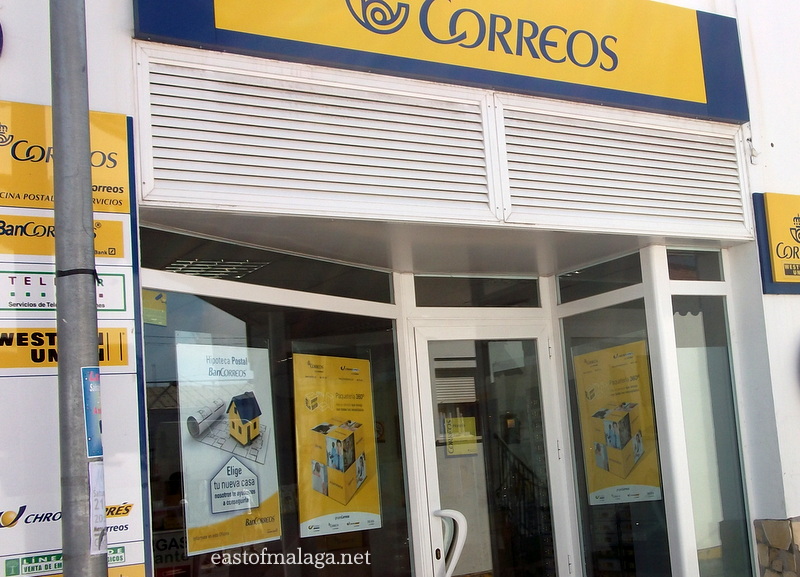
Post Office, Competa, Spain

If you choose to live in the countryside (el campo), you will not have your post delivered to your home, but instead you will need to go to your local village post office to collect it.

Before the post office in the village of Cómpeta moved into new premises a few years ago, this service was free to residents in the area where I live.    We had all been allotted Post Office box numbers (Apartado de Correos) and we would then queue up, as we Brits are so good at, waiting our turn to be given our goodies!

You knew you had truly been accepted into the local community when the Spanish postmistress didn’t need to ask for your post office box number ….she just went to the pigeon-hole, situated behind the counter, and took out your bundle of post!

The Post Office queue was always a sociable event, with locals and expats chatting and listening in to each other’s conversations.  It was always a place to learn what was happening in the village, particularly as you had chance to read the notice board, as you shuffled past it, whilst you were waiting.

Sometimes, of course, the wait would stretch to half an hour, as the queue snaked around the Post Office and out of the door, which would result in people grumbling and moaning about what an old-fashioned system it was.  Personally, I always found it rather charming.

Sadly, the social aspect of mail collection all changed when Cómpeta Post Office moved into a new building and the system was dragged, kicking and screaming, into the 21st century.
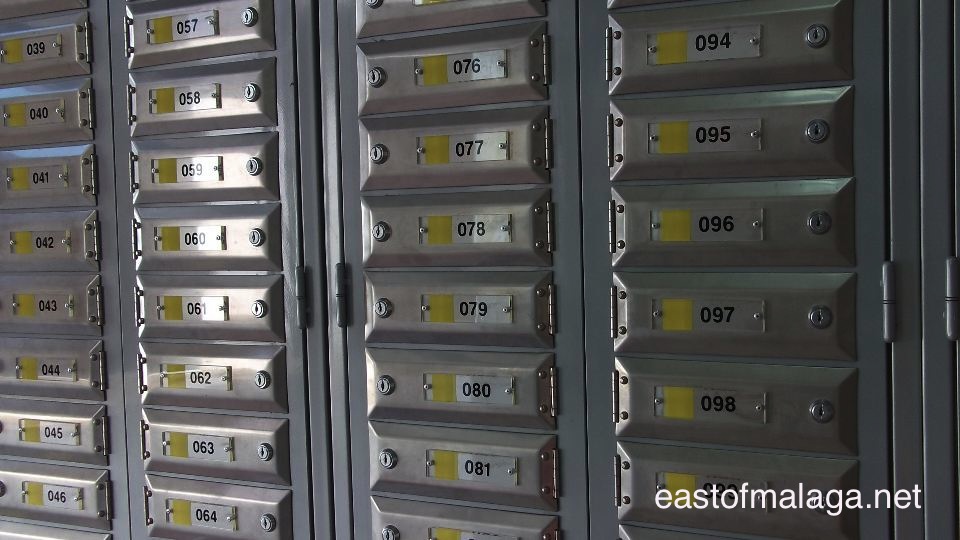
Post Office box, Spain

In order to retain your Apartado de correos address, it would now cost you more than 50 Euros a year.  Each household was issued with a key, so you can visit to collect your mail from your own personal lockable mail box, in racks on the public side of the counter, anytime during post office opening hours.

So nowadays, people drop in – open the box, and are off again within a moment or two and without a drop of gossip in sight!

Shame that …. 😉

What is an aspect of modern life that you think has changed for the worse?

You might also enjoy:

Death in the Afternoon: The Round Cemetery of Sayalonga

A Slice of Life: Garden and Plant Irrigation

Zafarraya Pass: Walking with Neanderthal Man

Looking across to Frigiliana

Across to Frigiliana, Spain


Whenever we have visitors staying with us, we always take them for a scenic drive along the back road from Torrox pueblo to the beautiful white village of Frigiliana.

The views across to Frigiliana and Nerja are stunning! 

This photograph was taken from the terrace of Los Caracoles Restaurant and Hotel.  Towards the bottom left you can see the white village (pueblo blanco) of Frigiliana and, over to the right, the nearby town of Nerja, with the Mediterranean Sea in the background.

This view never fails to take my breath away …. no matter how many times I see it!

I’ve never posted any black and white photos before, but I wanted to show support for a new venture set up by my blogger friend, Sonel.   I hope you will, too!


You might also enjoy:

Sayalonga: The narrowest street in the Axarquía

Photographs I love – and why!

CBBH Photo Challenge: SAME SUBJECT, DIFFERENT TIME


Death in the Afternoon: The Round Cemetery of Sayalonga

I love discovering and exploring burial sites wherever I am in the world, not because of any morbid fascination with death, but in the expectation of visually recording their beauty, history and existence.  To me, cemeteries are places where art, history and world religion meet. 

Of course, visiting the graves of our ancestors is a ritual dating back as long as bodies have been buried, allowing families not only to grieve but also to honour and celebrate lives that have passed. 

In Spain, cemeteries still form an integral part of community life.

The Round Cemetery, Sayalonga, Spain

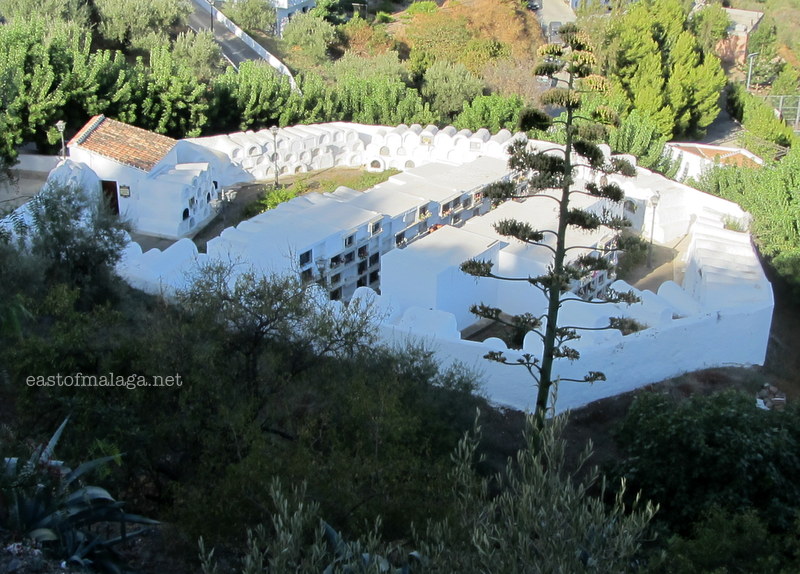
The only round cemetery in Spain can be found in Sayalonga, a typical whitewashed village some 40 kilometres east of the city of Málaga and 9 kilometres from the coast, deep in the heart of the Axarquía region.  You might remember Sayalonga from my recent post about the narrowest street in the Axarquía.

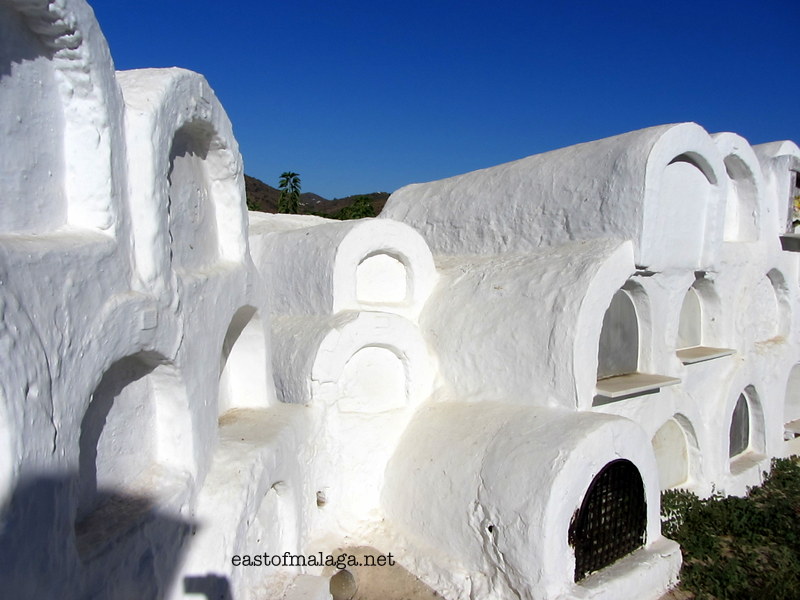
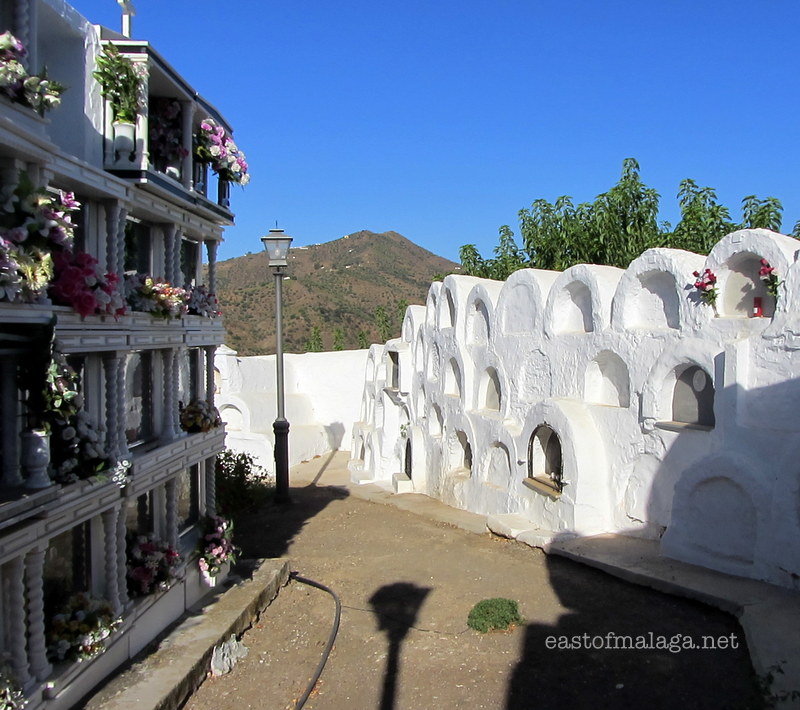
Despite it’s name, the outer walls of Cementerio Redondo, as you can see from the photos, are actually octagonal with rows of parallel, oblong traditional graves added more recently, in the centre.  The older, individual dome-shaped tombs are constructed on top of each other giving the impression of a giant, white honeycomb.

The Round Cemetery, Sayalonga, Spain

Originally, the village cemetery was in the courtyard of the local church of Santa Catalina, however, the Round Cemetery was constructed during the first half of the 19th century and, for hygiene reasons, placed just outside of the village limits.

The motive for this curious shaped cemetery isn’t known, but one explanation is that it was built in imitation of the old cemetery.  I prefer the more romantic interpretation that it was so that the dead could not turn their backs on one another.

There is a small visitor centre at the entrance, which shows and explains the history of the cemetery to more than 3000 tombstone tourists each year.

So, where is Sayalonga’s Cementerio Redondo?

About a forty minute drive east of the city of Málaga along the A7-E15 Autovía del Mediterraneo to km 277, take the exit signposted A 7206 inland towards Algarrobo (pueblo), Sayalonga and Cómpeta.  Stay on the A7206 through the village of Algarrobo and drive up the winding mountain road for a further five minutes until you reach Sayalonga.

There is a mirador (viewpoint) on your left as you are leaving the village heading towards Cómpeta, which gives a good view of the Round Cemetery.

The Round Cemetery, Sayalonga, Spain

Are you a fellow taphophile?  Do you enjoy visiting cemeteries when you are on vacation?  Where’s the most unusual cemetery you’ve ever visited?

Related posts:

Weekly Photo Challenge: Curves

The Day of the Dead: A Celebration of Life

Sayalonga: The narrowest street in the Axarquía

Sayalonga: The narrowest street in the Axarquía

Callejon de la Alcuza, Sayalonga, Spain

As my contribution to this week’s Travel Theme: PathwaysI’d like to show you Callejon de la Alcuza in the white village of Sayalonga in southern Spain.

With a width of only 56 cms at one end, this is officially the narrowest street in the Axarquía region.

As you might imagine, there’s not much of a traffic problem here!

Callejon de la Alcuza, Sayalonga, Spain


Other Photo Challenges you might enjoy:

CBBH Photo Challenge: KNOBS AND KNOCKERS

WordPress Photo Challenge: THANKFUL

Travel Theme: MULTIPLES

Zafarraya Pass: Walking with Neanderthal Man
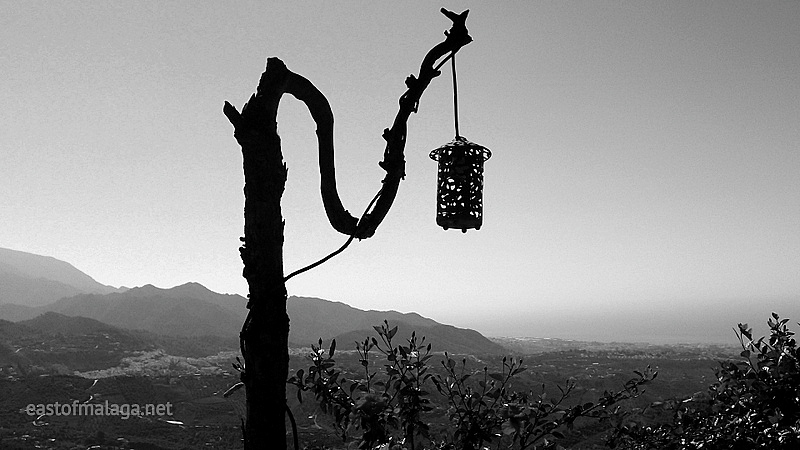
Zafarraya Pass, Spain

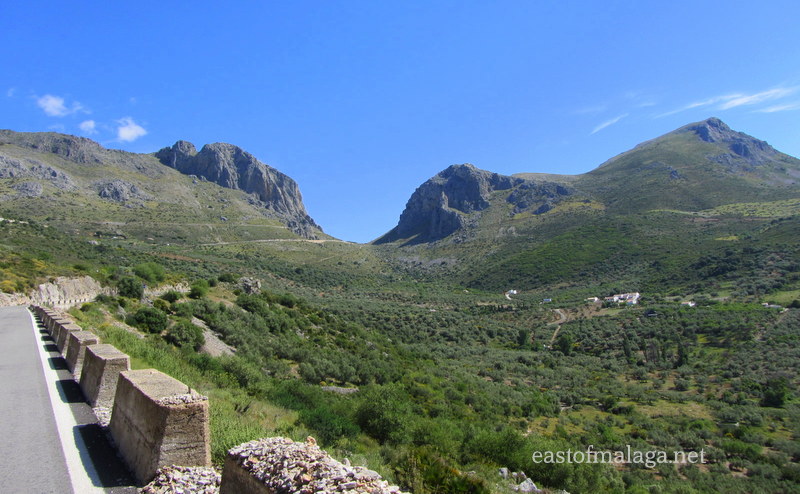
The spectacular U-shaped Zafarraya Pass (El Boquete de Zafarraya) which marks the boundary between the provinces of Málaga and Granada can be seen for miles around.   Standing impressively over 900 metres above sea level, the Pass has been used for centuries as a key route through the sierras, linking lands south-west of Granada, with the towns and villages along the coast, east of Málaga.

Although I have made the journey through the Pass many times, I never fail to be impressed by this ancient route through a huge cleft in the mountain spine of the Sierra de Alhama.

The name Zafarraya may have come from the Arab Fahs al-raiyya meaning “field of shepherds”, although there are people who think it derives from Saiarraya, meaning “territory limit”, referring to the fact that at one time Zafarraya belonged to the province of Málaga.

To get there, we drove north from the A7/E15 Autovía del Mediterraneo, past the town of Vélez-Málaga and briefly alongside Lake Vinuela, before heading up the A402, a winding mountain road towards the Pass.

Zalia castle near Zafarraya, Spain

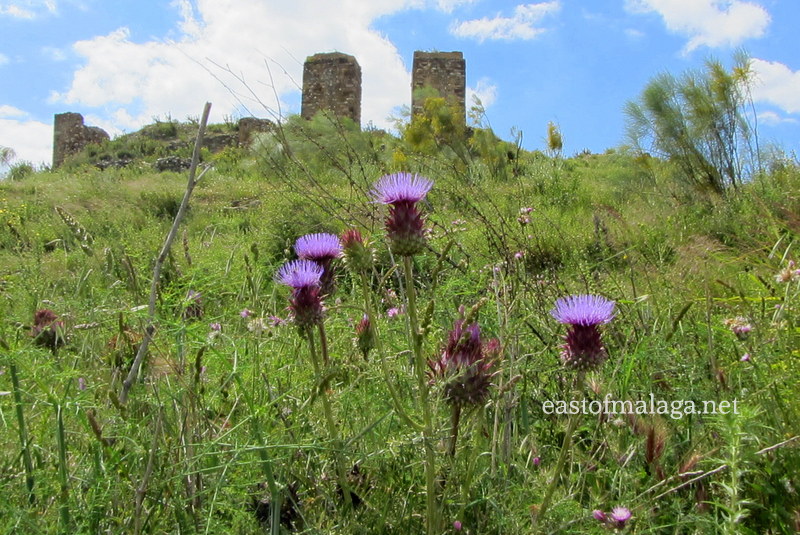
Along the way we stopped at the ruins of Zalía castle (castillo de Zalía) which sits on a hill opposite the white Andalucían village of Alcaucín.  It is thought that the Phoenicians established the foundations of the fortress, but the castle was later built by the Moors around the 10th century to guard the ancient Nasrid Route through the Zafarraya Pass from Granada to Málaga.

Even though many of the wildflowers I have told you about over recent weeks have now started to die back near to where I live, they are still flourishing in abundance further inland, so we stopped many times to take in the natural beauty as well as many photographs.

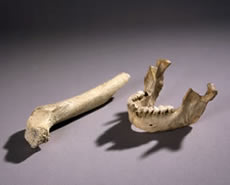
In 1979, a cave was discovered near to the Zafarraya Pass (Cueva del Boquete de Zafarraya), with a subsequent archaeological dig unearthing the best preserved remains of Neanderthal man (radiometrically dating back 30000 years) ever found in Western Europe.

Importantly, the find was one of the first pieces of definite evidence showing that Neanderthals co-existed with modern humans for almost 10,000 years, disproving earlier theories that they had been quickly replaced by modern man.

Mandible and femur from ZafarrayaImage from: Museo de Málaga

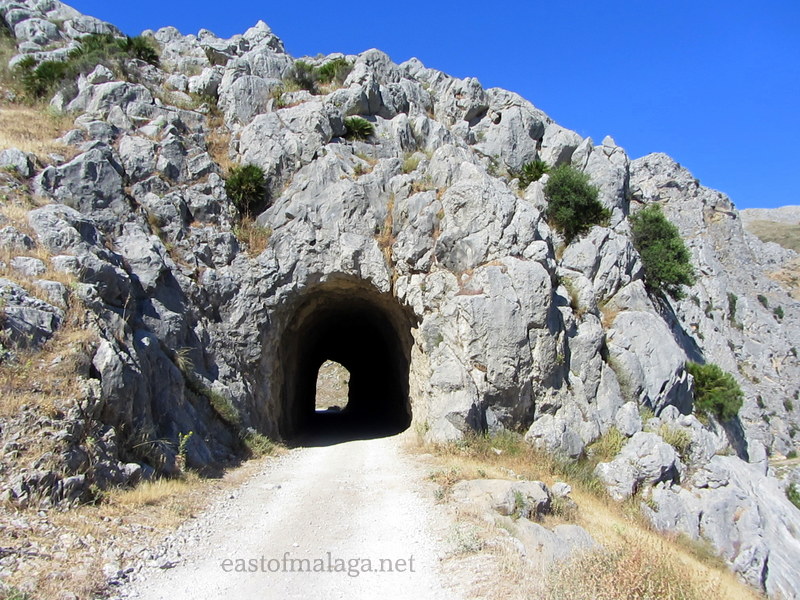
Tunnel through the rock, Zafarraya

As we approached the gap in the mountains, the entrance to a small tunnel through the rock can be seen, which was once part of the former Periana to Zafarraya railway line, abandoned fifty years ago.  The tunnel is now used by walkers who enjoy strolling along the former railway line, which is now a dirt road.

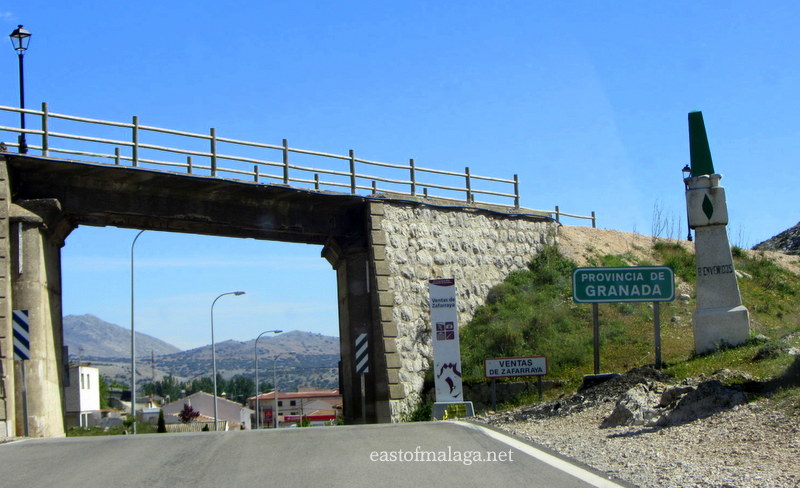
Old railway bridge, Zafarraya, Spain

The old railway bridge across the road as you drive through the Zafarraya Pass is a more obvious relic of the old railway line.

It is here that you can find the village of Ventas de Zafarraya, so named because in times long past, travellers would stop for food and shelter at one of the local inns (ventas), where they could also exchange and refresh their weary horses and oxen, before continuing on their long journeys.

These days, Ventas de Zafarraya is almost entirely dedicated to vegetable growing on the fertile, flat land just beyond the village, where many different vegetables including lettuces, artichokes and beans are grown up rustic canes cut from nearby river banks.

Many of them are not much bigger than my little veggie plot at home!

Related articles:

Classic Andalucía: La Alhambra, Granada

Wildflowers of Andalucía: Dutchman’s Pipe

The Green, Green Vegetables of Home