The World Through My Eyes: Seeing Red

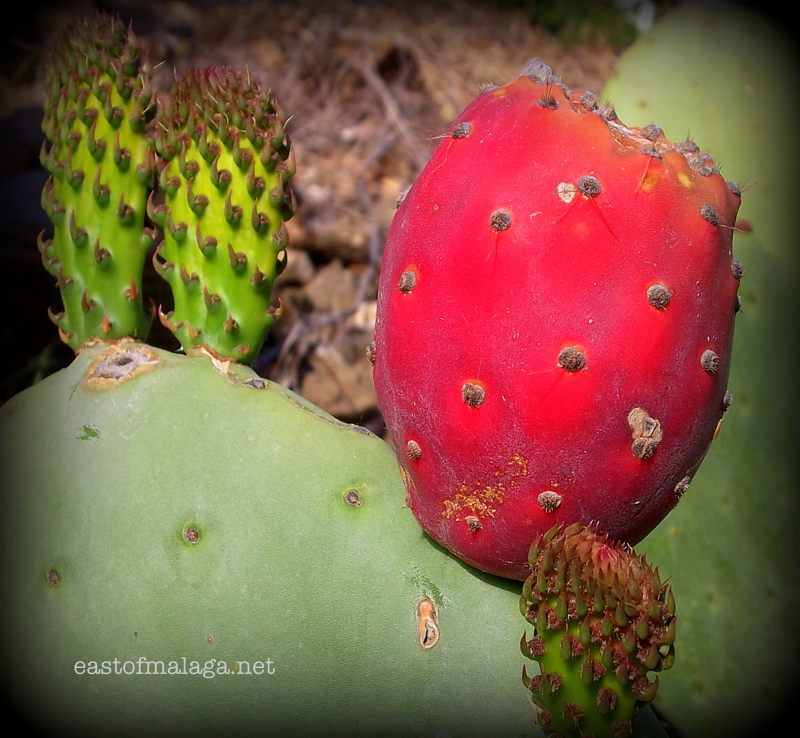
Prickly pear cactus

As a result of this week’s WordPress system update, I couldn’t access the Dashboard of my blog for almost 24 hours.  

When finally I managed to log-in, I was preparing the draft of a post which was scheduled for yesterday (Friday) in which I would offer the followers of East of Málaga the chance to WIN 6 HANDWRITTEN POSTCARDS FROM SPAIN.

I pressed the “Preview” button and …. up popped a box to say that my draft had been posted!   GRRRR!

Strangely, the post didn’t appear on the blog, but that didn’t stop the message going out to followers via Notifications in the Reader, by email, on Facebook and Twitter.  Of course, this meant that when anyone clicked on the link to the post – they received the Error 404 message that the post could not be found!  

Sorry about that, folks.

Annoyingly, when yesterday came around and the scheduled post finally posted to the blog, NO NOTIFICATIONS were sent out by WordPress in the Reader, by email, on Facebook or Twitter!  

Technology, huh ….. SHEESH!!

I don’t want anyone to miss out on the chance to WIN just because WordPress screwed up – so if you didn’t receive the notification, please head over to yesterday’s post for your chance to WIN 6 HANDWRITTEN POSTCARDS FROM SPAIN – which is my way of saying a GREAT BIG THANK YOU to everyone who has supported and followed my blog.

Always assuming that when I press “Publish” – you get notified about THIS POST, of course!

Related articles:

WordPress Photo Challenge: The World Through my Eyes

CBBH Photo Challenge: Same Subject, Different Time

La Noche de San Juan: Families, fires and football!

East of Málaga: Flying the Blue Flags

Blue flag beach at Torrox Costa, Spain

At the end of May each year, the independent non-profit organisation Foundation for Environmental Education (FEE) awards its prestigious Blue Flags to beaches and marinas in the northern hemisphere for their water quality, safety standards, environmental education and amenities.

The Blue Flag is a voluntary eco-label awarded to more than 3850 beaches and marinas in 48 countries around the world.    With a total of 648 ensigns, Spain has maintained its position at the top of the list in the northern hemisphere.

Here is the list of current blue flag beaches on the eastern Costa del Sol:  Algarrobo Costa in Algarrobo;  Ferrara in the municipality of Torrox;  Burriana and Torrecilla beaches in Nerja;  Benajarafe  and Torre del Mar in the municipality of Velez-Málaga and last, but not least, Cala del Moral in Rincón de la Victoria

The Blue Flag is awarded on an annual basis, and can only be only held for one season before it will be judged once again by FEE.

Beach, east of Malaga

Related posts:

East of Málaga: The Weather in Summer

La Noche de San Juan: Beaches and Bonfires

Photographs I love – and why

Sayalonga: The narrowest street in the Axarquía

Callejon de la Alcuza, Sayalonga, Spain

As my contribution to this week’s Travel Theme: PathwaysI’d like to show you Callejon de la Alcuza in the white village of Sayalonga in southern Spain.

With a width of only 56 cms at one end, this is officially the narrowest street in the Axarquía region.

As you might imagine, there’s not much of a traffic problem here!

Callejon de la Alcuza, Sayalonga, Spain


Other Photo Challenges you might enjoy:

CBBH Photo Challenge: KNOBS AND KNOCKERS

WordPress Photo Challenge: THANKFUL

Travel Theme: MULTIPLES

Zafarraya Pass: Walking with Neanderthal Man

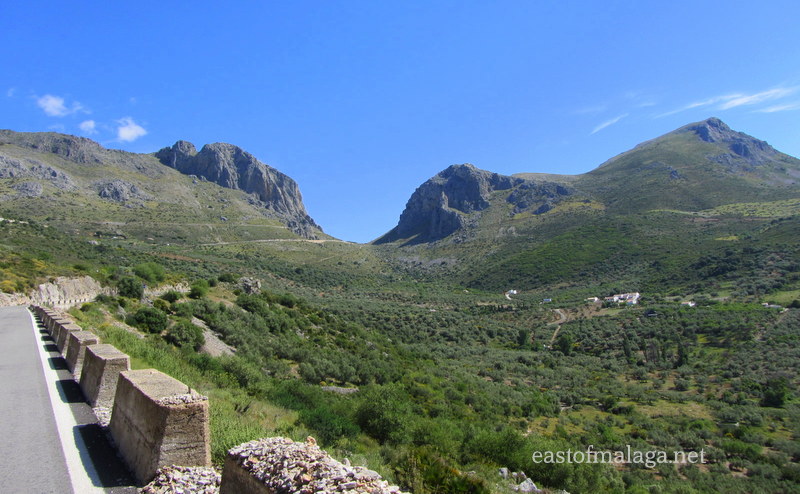
Zafarraya Pass, Spain

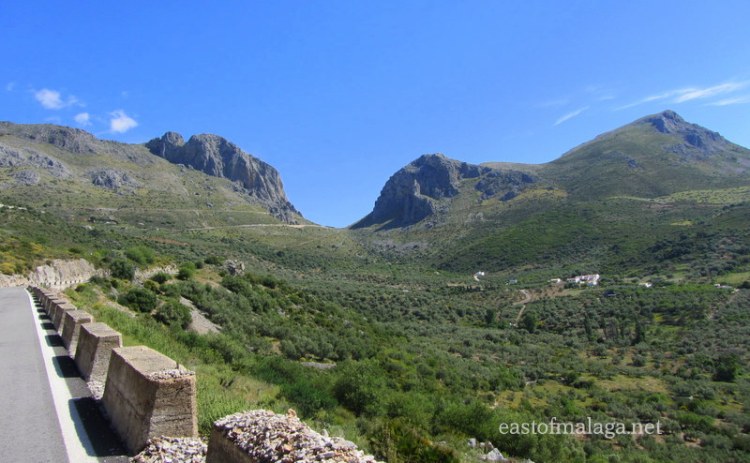
The spectacular U-shaped Zafarraya Pass (El Boquete de Zafarraya) which marks the boundary between the provinces of Málaga and Granada can be seen for miles around.   Standing impressively over 900 metres above sea level, the Pass has been used for centuries as a key route through the sierras, linking lands south-west of Granada, with the towns and villages along the coast, east of Málaga.

Although I have made the journey through the Pass many times, I never fail to be impressed by this ancient route through a huge cleft in the mountain spine of the Sierra de Alhama.

The name Zafarraya may have come from the Arab Fahs al-raiyya meaning “field of shepherds”, although there are people who think it derives from Saiarraya, meaning “territory limit”, referring to the fact that at one time Zafarraya belonged to the province of Málaga.

To get there, we drove north from the A7/E15 Autovía del Mediterraneo, past the town of Vélez-Málaga and briefly alongside Lake Vinuela, before heading up the A402, a winding mountain road towards the Pass.
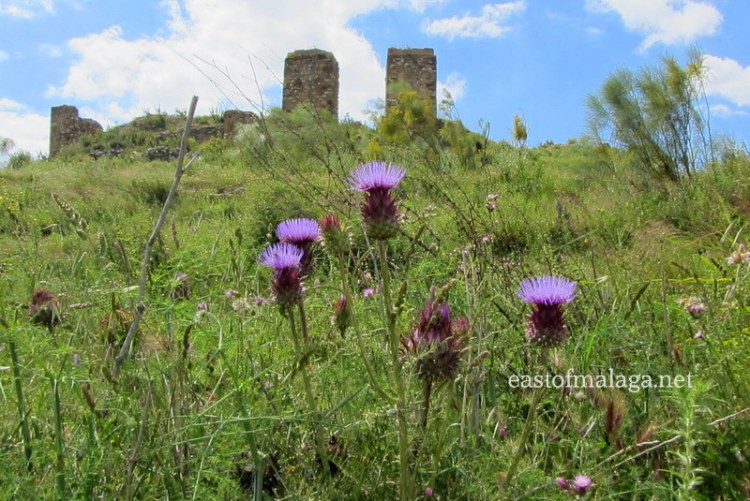
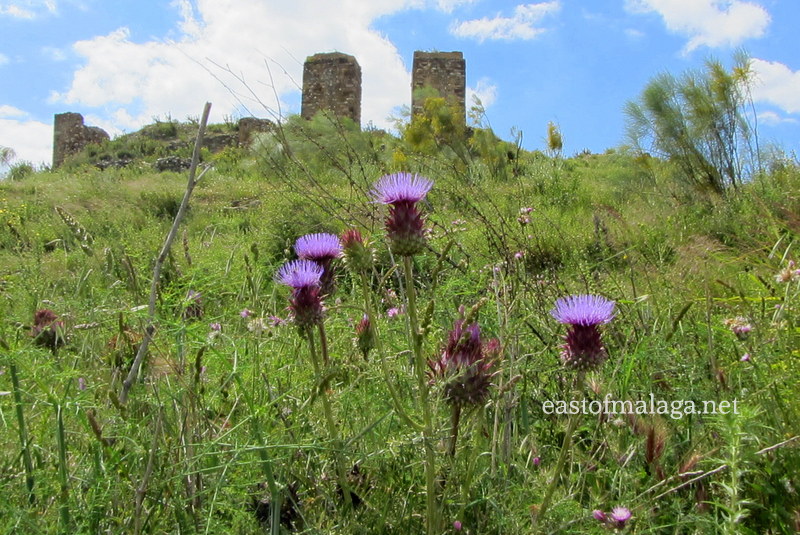
Zalia castle near Zafarraya, Spain

Along the way we stopped at the ruins of Zalía castle (castillo de Zalía) which sits on a hill opposite the white Andalucían village of Alcaucín.  It is thought that the Phoenicians established the foundations of the fortress, but the castle was later built by the Moors around the 10th century to guard the ancient Nasrid Route through the Zafarraya Pass from Granada to Málaga.

Even though many of the wildflowers I have told you about over recent weeks have now started to die back near to where I live, they are still flourishing in abundance further inland, so we stopped many times to take in the natural beauty as well as many photographs.

In 1979, a cave was discovered near to the Zafarraya Pass (Cueva del Boquete de Zafarraya), with a subsequent archaeological dig unearthing the best preserved remains of Neanderthal man (radiometrically dating back 30000 years) ever found in Western Europe.

Importantly, the find was one of the first pieces of definite evidence showing that Neanderthals co-existed with modern humans for almost 10,000 years, disproving earlier theories that they had been quickly replaced by modern man.
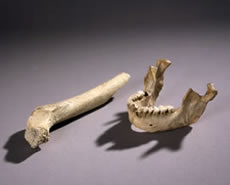
Mandible and femur from ZafarrayaImage from: Museo de Málaga

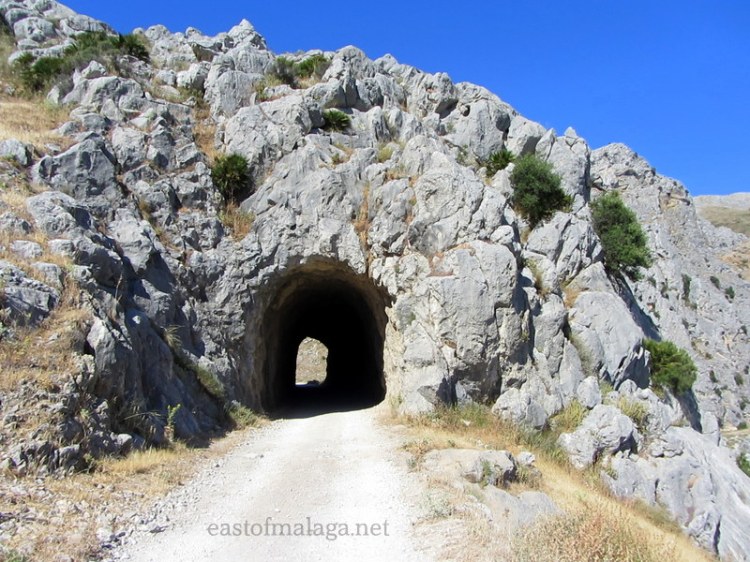
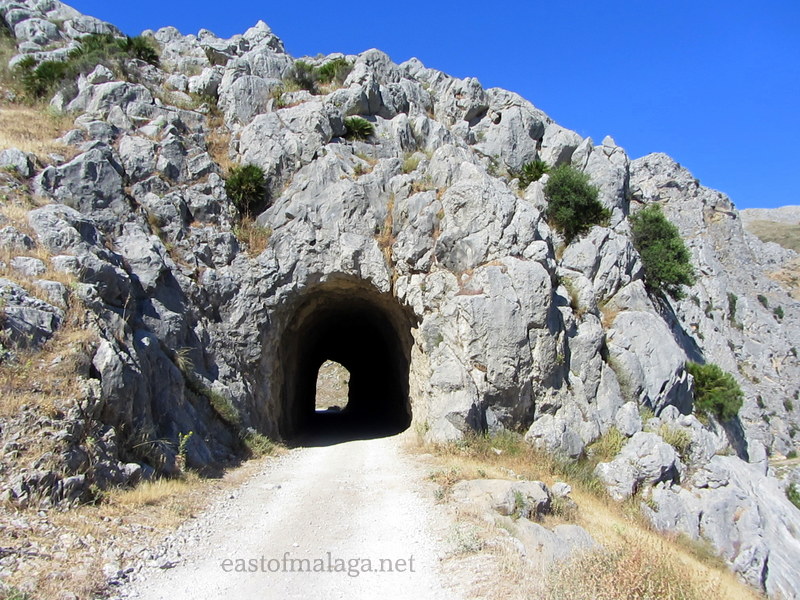
Tunnel through the rock, Zafarraya

As we approached the gap in the mountains, the entrance to a small tunnel through the rock can be seen, which was once part of the former Periana to Zafarraya railway line, abandoned fifty years ago.  The tunnel is now used by walkers who enjoy strolling along the former railway line, which is now a dirt road.
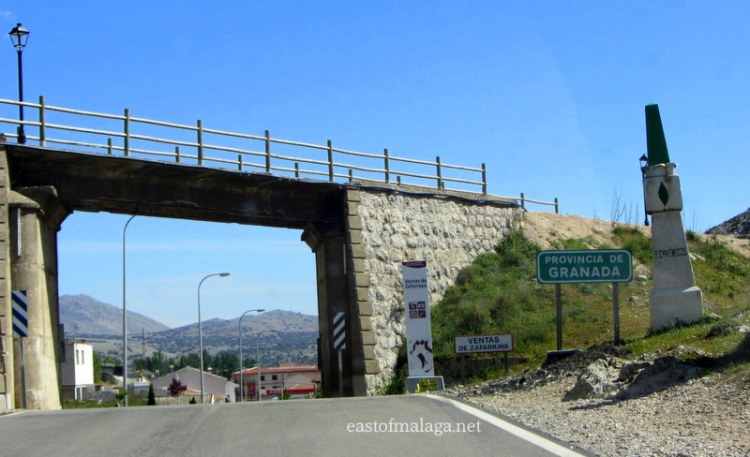
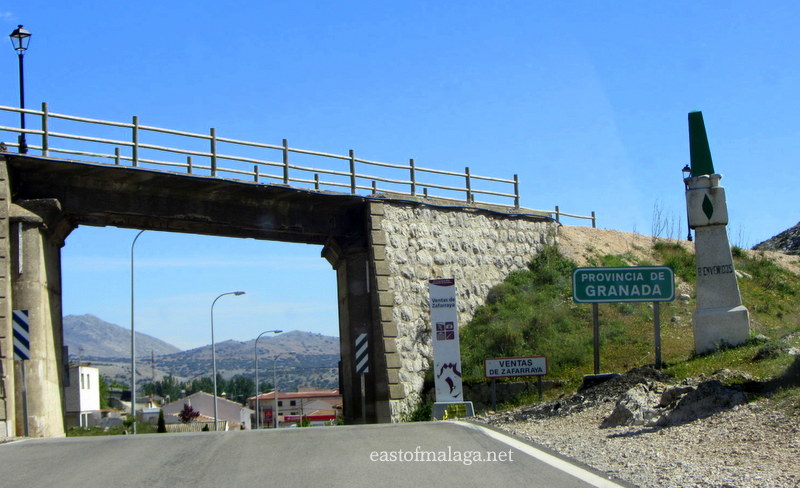
Old railway bridge, Zafarraya, Spain

The old railway bridge across the road as you drive through the Zafarraya Pass is a more obvious relic of the old railway line.

It is here that you can find the village of Ventas de Zafarraya, so named because in times long past, travellers would stop for food and shelter at one of the local inns (ventas), where they could also exchange and refresh their weary horses and oxen, before continuing on their long journeys.

These days, Ventas de Zafarraya is almost entirely dedicated to vegetable growing on the fertile, flat land just beyond the village, where many different vegetables including lettuces, artichokes and beans are grown up rustic canes cut from nearby river banks.

Many of them are not much bigger than my little veggie plot at home!

Related articles:

Classic Andalucía: La Alhambra, Granada

Wildflowers of Andalucía: Dutchman’s Pipe

The Green, Green Vegetables of Home
Seriously: Would you buy these products?

I often have a little chuckle to myself when I am shopping in a Spanish supermarket.

Seriously, would YOU buy some of these products?

Nelly hairspray

Nelly hairspray

Bonka coffee Bonka coffee

Bimbo bread

Bimbo bread

Colon detergent

Now, call me fussy, but I can’t bring myself to wash my clothes in Colon Vanish washing detergent!

Flota washing powder

or (possibly) even worse, Flota Spa washing powder!

Somat diswasher tablets

But, being a northern lass (originally from Lancashire in England), I always find some consolation knowing that at least I can always find Somat f’ert dishwasher!  LOL


Have you spotted any products in other countries that sound strange or amusing in your own language?  You will let me know, won’t you?  LET’S HAVE SOME FUN!

Other posts you might enjoy:

Roadside Advertising: Not just a Load of Bull

Travel Theme: Signs

Classic Andalucía: La Alhambra, Granada