Spanish football: It doesn´t get any bigger than this!

Spain is buzzing with excitement as the countdown to La Liga´s El Clásico begins, when all eyes will be firmly fixed on the two Spanish footballing giants.

Sunday evening (7th October) sees old rivals Barcelona and Real Madrid battling it out at the Camp Nou stadium, in an eagerly awaited clash that could prove pivotal in Real Madrid’s title defence, as their Catalan rivals are already eight points clear after only six games.

Let battle commence.

This is futbol.  Not soccer.

futbolImage credit Flickr CC: Mingo.nl

MAKE SURE TO CLICK ON THE TWO LINKS ABOVE TO SEE GREAT PROMOTIONAL VIDEOS OF THE GAME ON YOUTUBE

UPDATE 7TH OCTOBER: After an exciting 90 minutes, the match ended up a 2-2 draw which, under the circumstances,  seemed a fair result!

Related posts:

Top 10 Best Football Players in Spain today

La Noche de San Juan: Families, fires and football!

Brother, Can You Spare a Dime?: The One-Armed Lady of Málaga

Málaga Cathedral has only one tower - the other is as yet unfinished

Málaga Cathedral was constructed between the early sixteenth and late eighteenth centuries and has one very unusual feature.

Have you spotted it yet?

Although the Cathedral´s North Tower is 84 metres high, making this building the second-highest cathedral in Andalucía, after the Giralda Tower in Sevillethe South Tower remains unfinished.

A plaque at the base of the tower informs us that funds raised by the parish to finish it were used instead to help the British colonies (which later became the United States of America) to gain their independence from Great Britain.

This unfinished state has led to the Cathedral being known affectionately as “La Manquita”, which translates into English as  “The One-Armed Lady”.

This post is my response to the Weekly Photo Challenge: Solitary

Related posts:

When life gives you curves, flaunt them!

Travel Theme: Texture

In Plane View: Inside Out

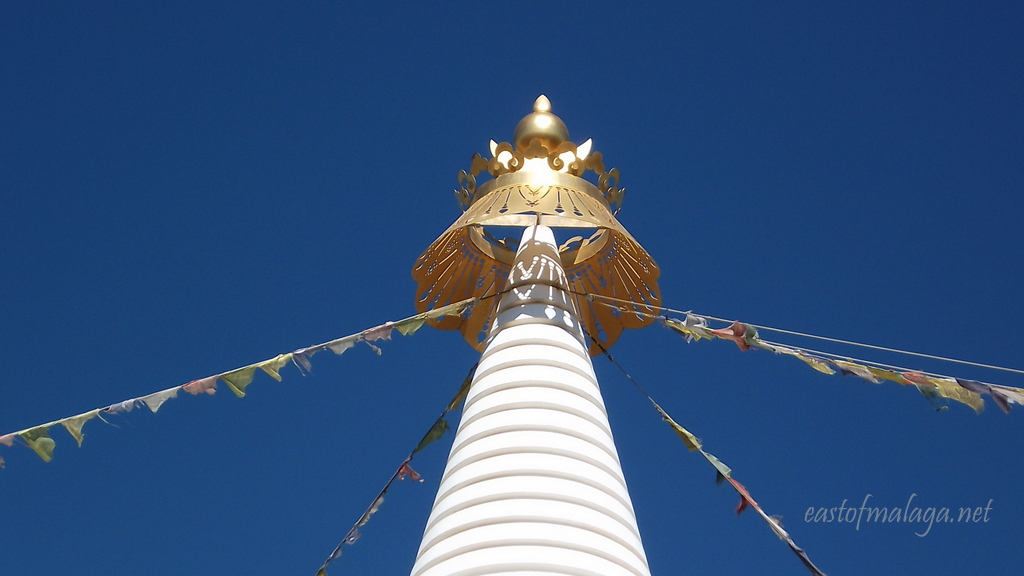
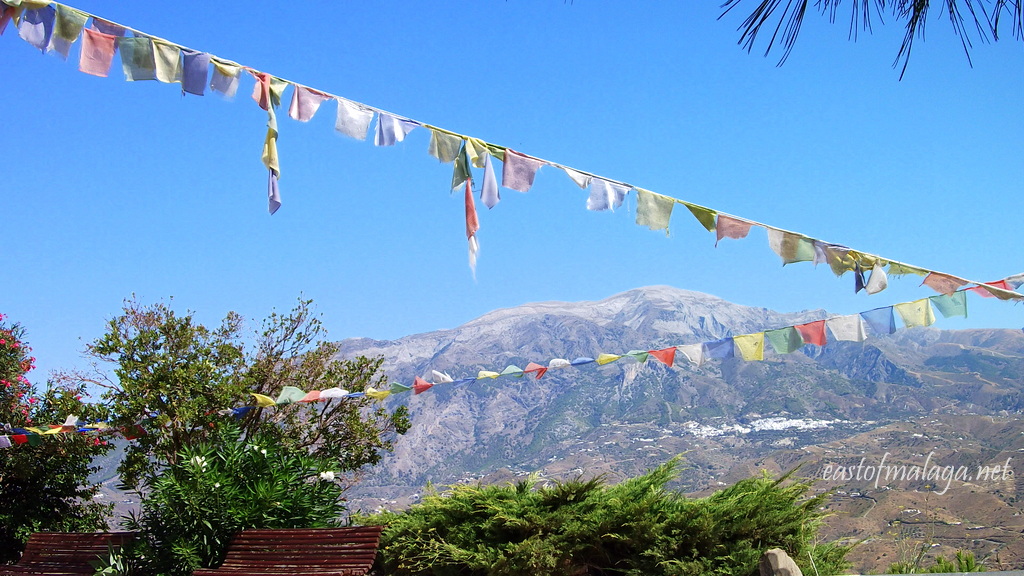
The Buddhist Stupa of the Eastern Costa del Sol

If you are visiting the eastern Costa del Sol, you might not anticipate that there is a beautiful Buddhist Stupa within easy reach of the Mediterranean coast.

The first Buddhist Kalachakra stupa built in the western hemisphere can be visited about 40 kilometres east of Málaga, north of the town of Vélez-Málaga, near to the Karma Guen Buddhist meditation centre.

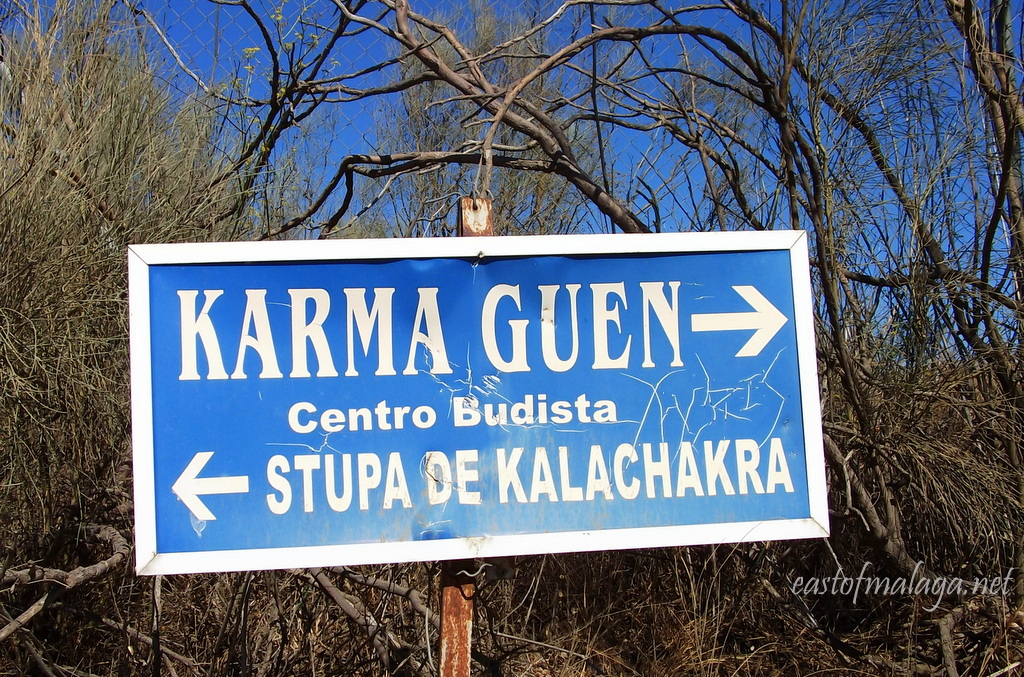
Signpost to the Kalachara Stupa in Velez-Malaga

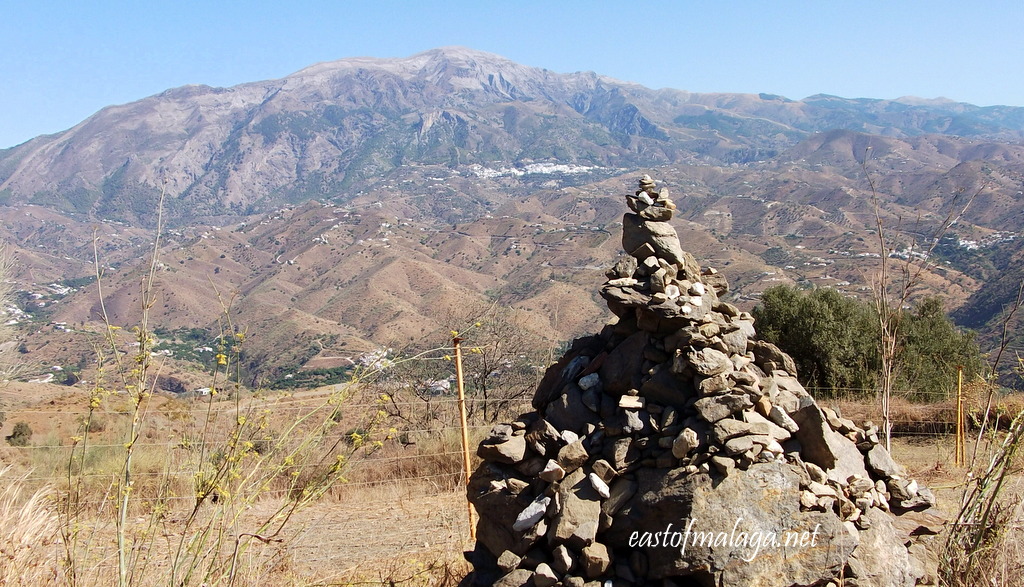
At the entrance to the Buddhist Stupa, with Monte Maroma behind

The stupa is not easily seen from the surrounding countryside, so where is it?

About a forty minute drive east of the city of Málaga along the A7-E15 Autovía del Mediterraneo to km 272,  take the exit signposted A 356 towards Vélez-Málaga, Viñuela, Colmenar and Zafarraya.  Stay on the A356, bypassing the town of Vélez-Málaga and, after about 7 kilometres, turn left at the junction signed towards El Trapiche.  Approximately one kilometre further, (opposite the Jardines del Trapiche) there is a small sign on the right for the Karma Guen Buddhist centre.  Take this concrete and tarmac road for two kilometres, and then the unmade track up the hill for another two kilometres.

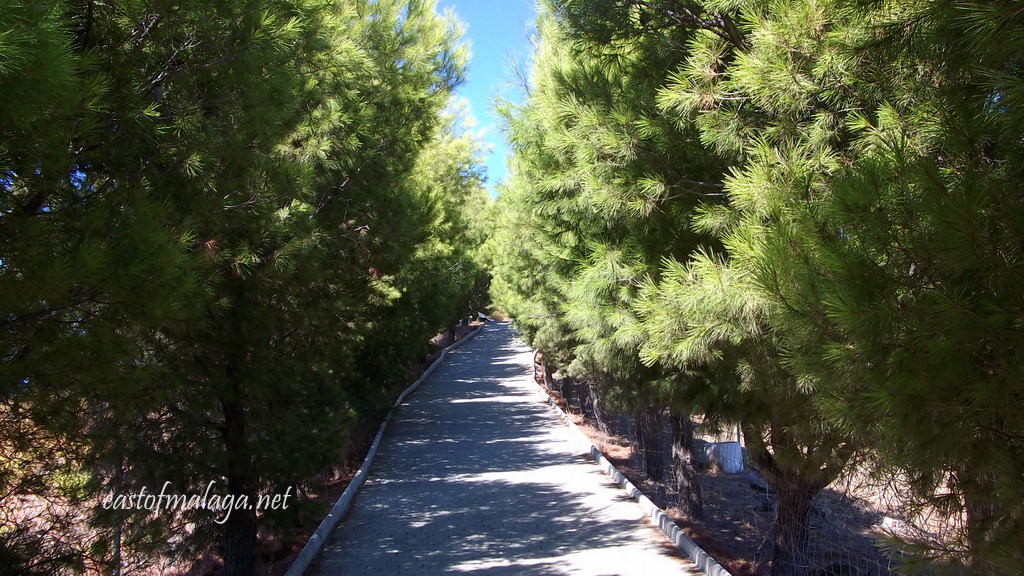
Park and walk through the avenue of pine trees and, all of a sudden, there it is!

Avenue of pine trees leading to the Buddhist Stupa, Vélez-Málaga, Spain

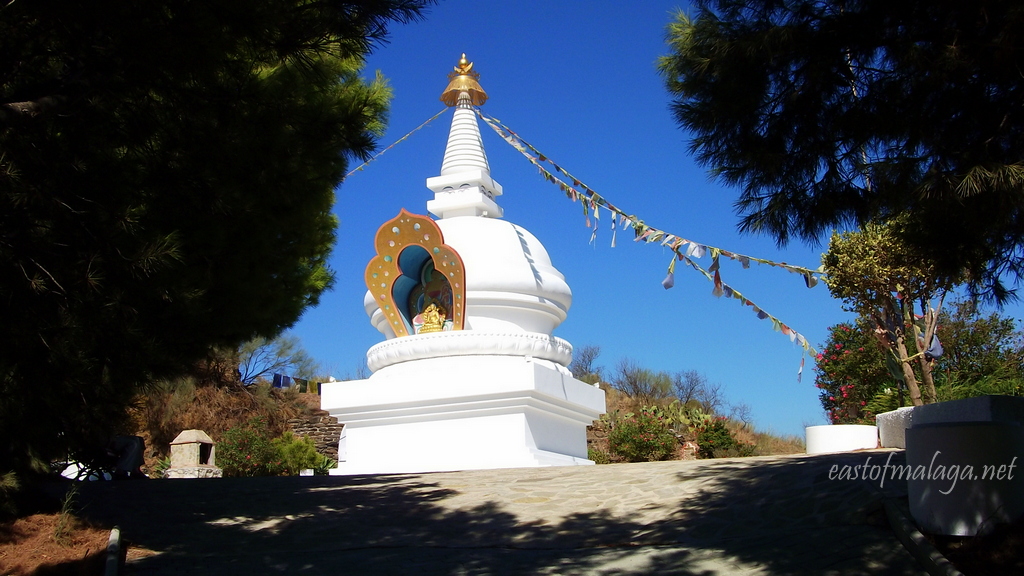
First sight of the Buddhist Stupa in Vélez-Málaga, Spain

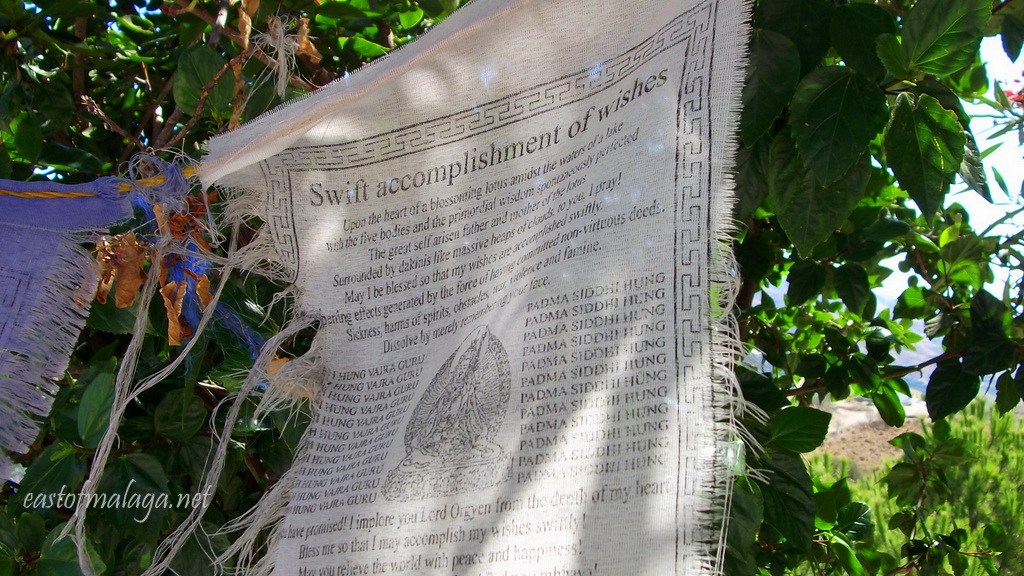
Swift accomplishment of Wishes

Sign at the Buddhist Stupa, Vélez-Málaga, Spain

Within Buddhism, the Stupa is a symbol of universal peace and unity.  It is claimed that they have protective powers and bring about compassion, love and happiness, as well as social, physical and spiritual well-being.

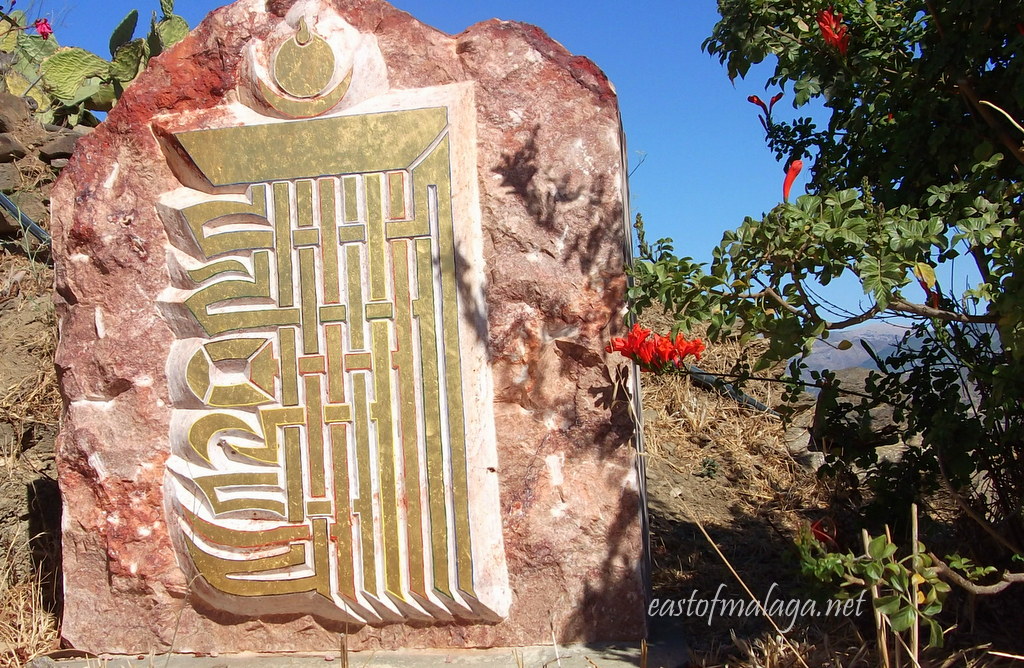
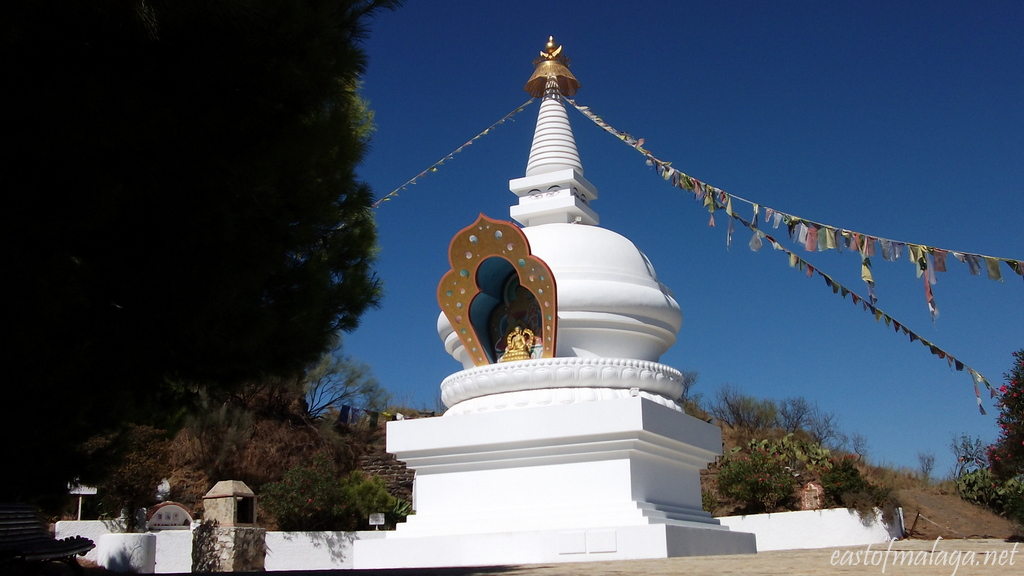
The Kalachakra is the rarest type of stupa.  At the present time, there are only five Kalachakra stupas in the world and this one, near to Vélez-Málaga, was the first to be built in the West.  It was hoped that building this stupa would help to protect Europe against negative energies.

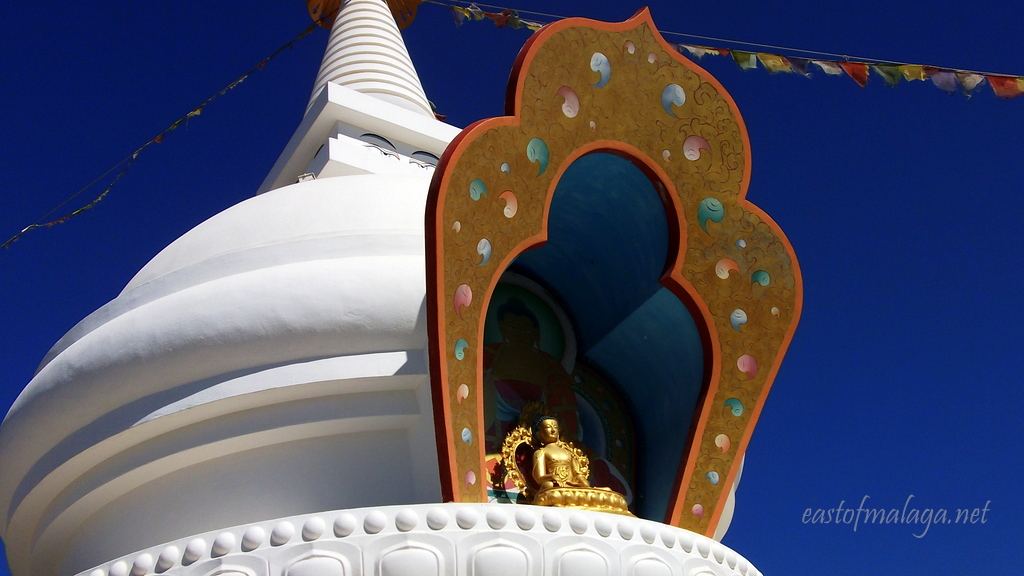
The Golden Buddah statue at the Stupa at Vélez-Málaga, Spain

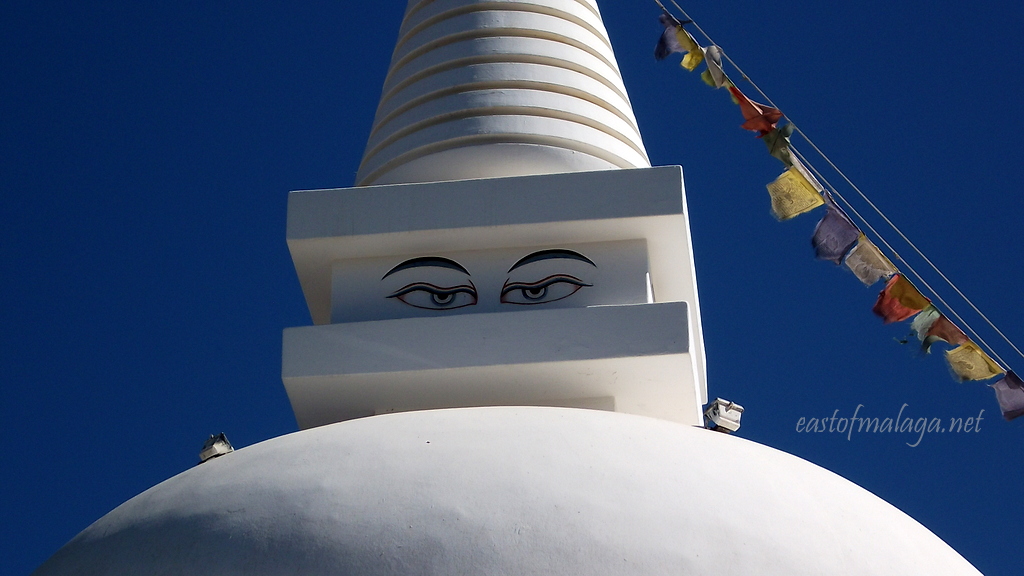
The eyes of the Buddhist Stupa, Vélez-Málaga, Spain

Just like the famous Boudhanath stupa in Kathmandu, this Kalachakra stupa has eyes painted on it, which is a Nepalese custom.

The golden dome of the Stupa glistens in the beautiful sunshine

View across to Monte Maroma from the Buddhist Stupa, eastern Costa del Sol

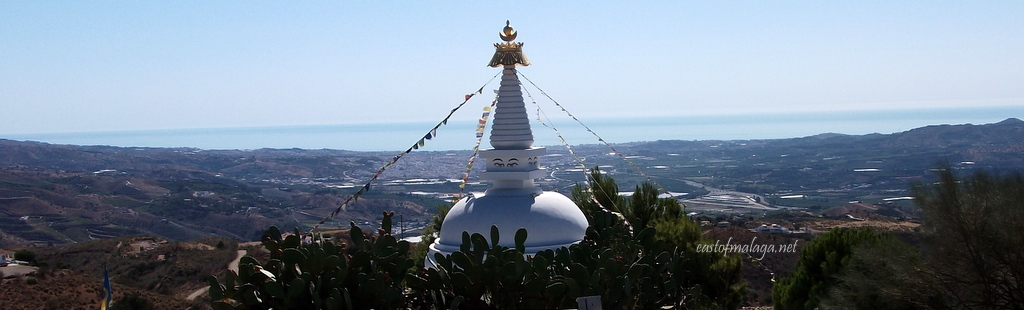
The Buddhist Stupa overlooks the eastern Costa del Sol

The journey to see the Kalachakra stupa at Karma Guen is a relatively easy one (bearing in mind the mountain roads) but the views on arrival both towards the mountains and the sea are magnificent.

The stunning Stupa of Kalachakra at Vélez-Málaga, Spain

I often take visitors to see the Stupa because it´s an unusual and memorable place to visit. 

Where do you take your visitors that surprises them?

This peaceful post is my contribution to this week´s Travel Theme: White and to celebrate the 30th Anniversary of the UN International Day of Peace.

If you enjoyed this post, you might also like to look at:

Bus Services: East of Málaga

A Weekend Away: Santiago de Compostela

Slice of Life: Spanish bars

Autumn: It´s a Game of Three Halves!

Kick off at Rugby Axarquia

Even though the intense heat of summer has now passed, the throngs of August tourists have finally returned home, the evenings are getting darker just that bit earlier, and the X Factor has returned to our TV screens – nothing says “autumn” to me more than the start of the rugby season!

When we lived in the north-west of England, we were season-ticket holders at Fylde Rugby Club, standing shoulder-to-shoulder with ex-England captain, Bill Beaumont, on the terraces at the Woodlands Memorial ground for every match.  Season after season we stood in the rain and cold, with pride and passion, shouting support for our local club.

But, when we moved to southern Spain and based ourselves east of Málaga, we thought our live rugby-watching days were over.

Of course, we can still enjoy the excitement of the Six Nations tournament, or an emotionally-charged Haka performed by the mighty All Blacks, in glorious close-up on the huge TV screens in many of the local bars, but there´s nothing quite like watching rugby in the flesh, so to speak.

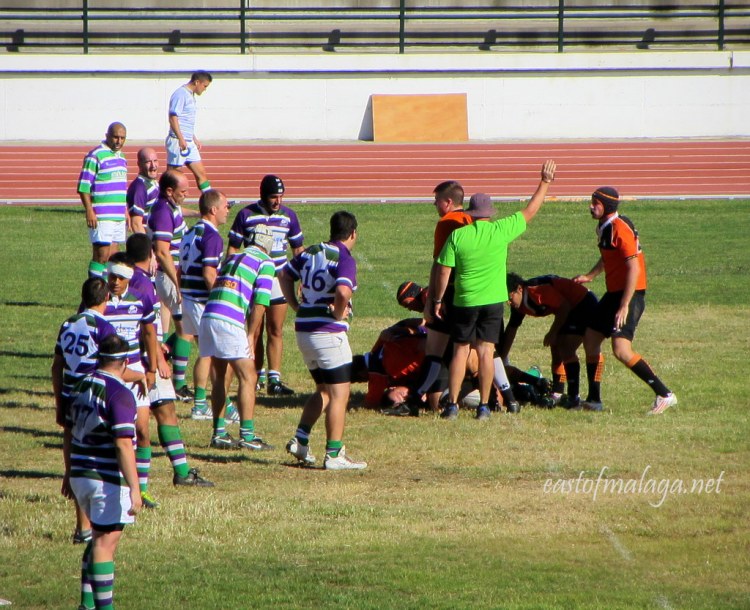
Poster advertising the match for Rugby AxarquiaImagine our delight when we discovered (by accident and at the last minute) that rugby was indeed alive and kicking in La Axarquía.  The poster advertised a match taking place between the Axarquía and Málaga Rugby Clubs at the Fernando Ruiz Hierro stadium in Vélez-Málaga on Saturday afternoon at 17.30, with free entry, so we went along to find out what it was all about.
Rugby Axarquia

Rugby Axarquia

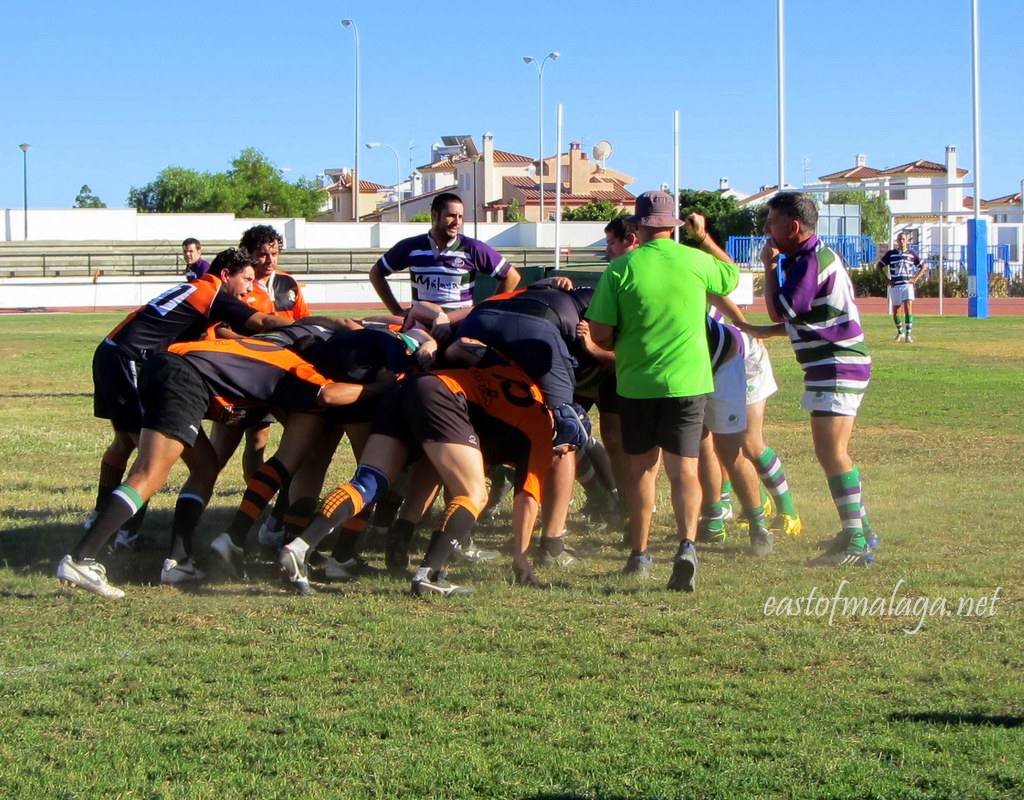
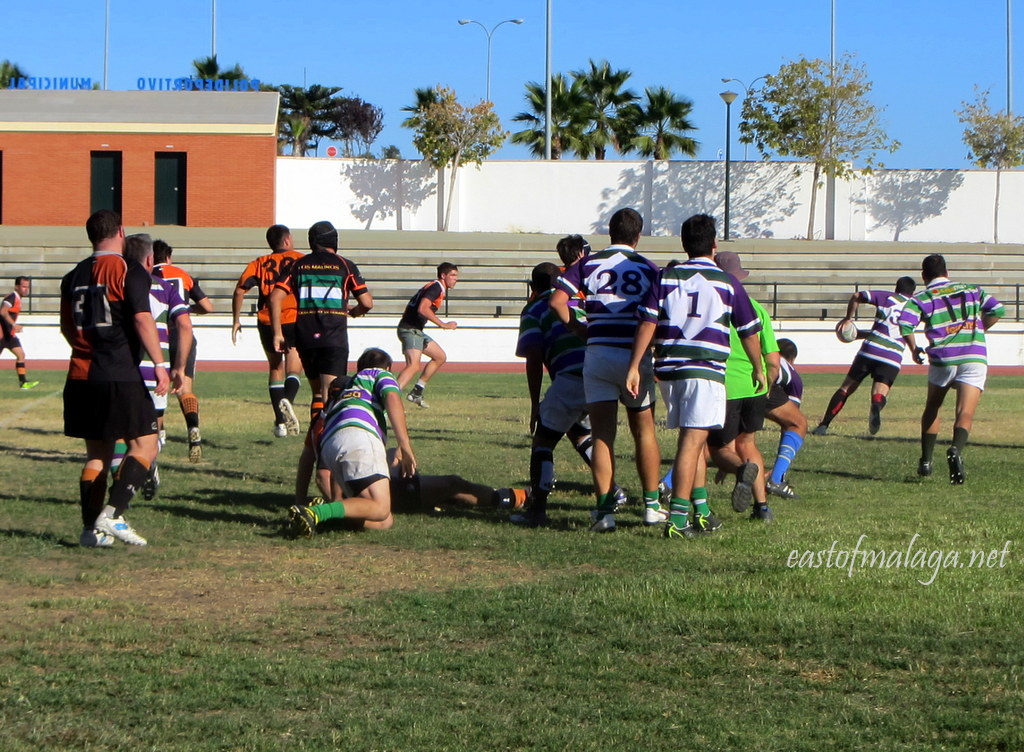
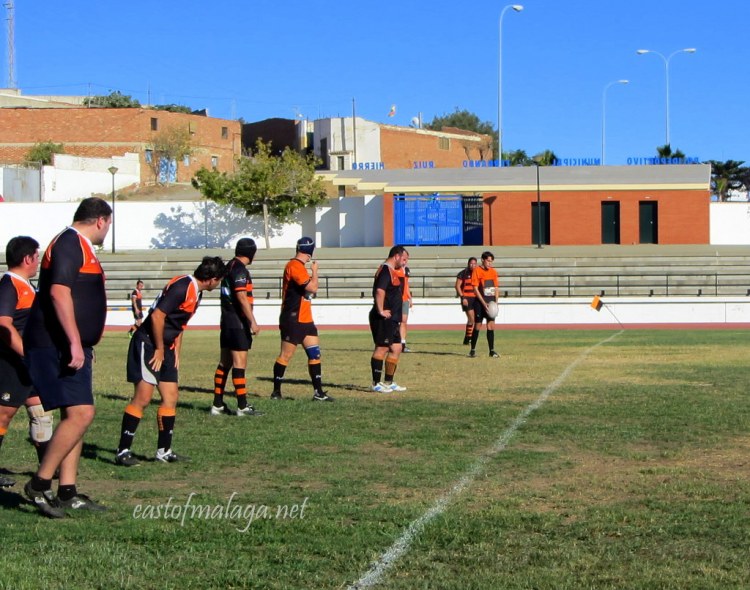
Rugby Axarquia We witnessed a physical and entertaining game of rugby, fought out between two great rivals, in front of an enthusiastic and vocal crowd of around a hundred people.  With squad members keen to impress their respective coaches ahead of the new rugby season, both teams put on a spirited display.

Without a scoreboard, it was difficult to keep track of the points and, even though Málaga appeared to score more tries (and some of the conversions of both kickers looked rather dubious to me), it was eventually agreed by the powers-that-be, that a 33-33 draw would be a fair result!  Well, it was only a pre-season friendly match.

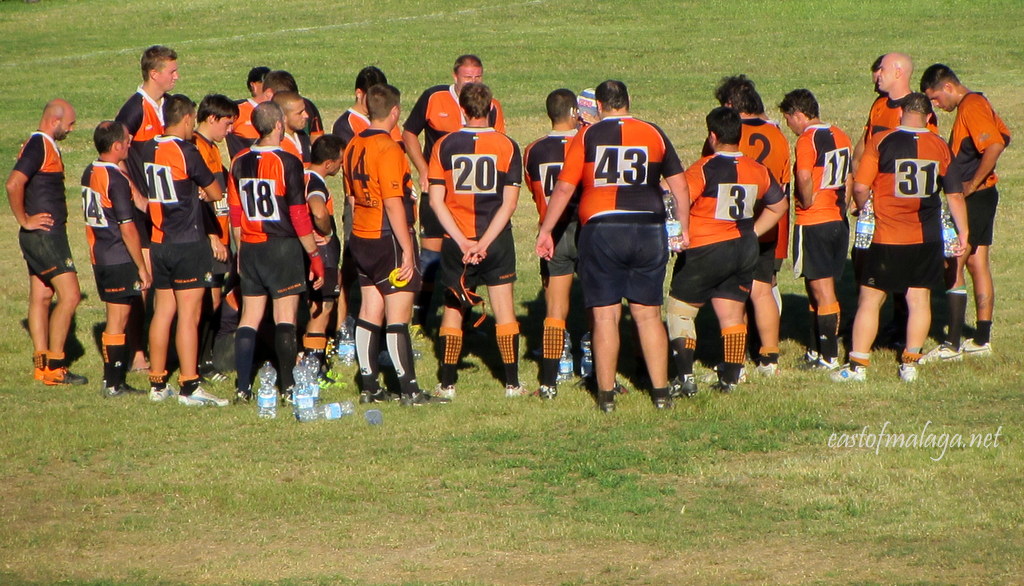
Rugby Axarquia team huddle

What was even more curious was that at the end of the second half, when we naturally presumed that the match was over, both teams congregated for another huddle on the pitch – and then resumed with a third half!   At least this allowed more time for the players waiting on the Substitute´s Bench to take their turn to impress.

Subs Bench at Rugby Axarquia

I later mentioned about it being “a game of three halves”  to the club´s Press Officer, and when he sent me a copy of the Press Release yesterday, I´m sure you can guess the title of the article written for the Costa del Sol News“Rugby Season Starts – It´s a Game of Three Halves!”.  You read it here first, folks! 

During the match at Rugby Axarquia

The Axarquía Rugby Club provided us with an afternoon of good sport, friendship and a club shop (well, more of a club table) selling cool drinks, tee-shirts and where social memberships can be bought for the princely sum of €15, which includes free entry to all games.

We´ll be back to watch more of the fastest growing sport in Spain.

This post is my contribution to the Sunday Post: Autumn

Other articles you might like to look at:

East of Málaga: Following in the footsteps around Comares

Cheeky Monkey: Now you see him, now you don´t!

Back to the Future: An Evening at the Medieval Market

The heart of Cómpeta: El Paseo de las Tradiciones

Paseo de Las Tradiciones, Competa, Spain

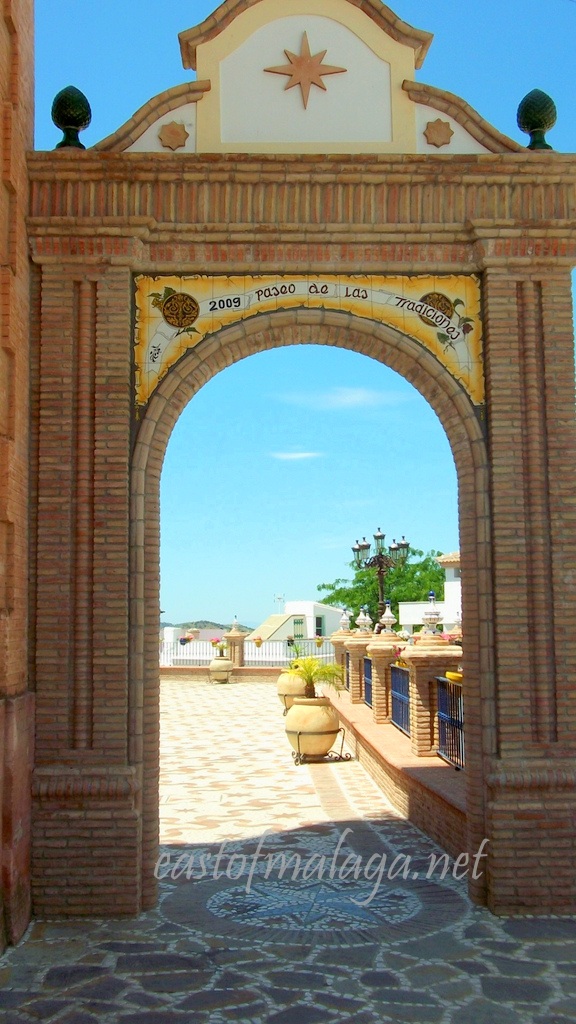
El Paseo de las Tradiciones (The Walk of the Traditions) is just off  the main square, Plaza Almijara, of the white, mountain village of Cómpeta.  Completed in 2009 on the site of the old municipal market, El Paseo de las Tradiciones is annexed to the Church of Our Lady of the Assumption (La Iglesia de Nuestra Señora de la Asunción).

Archway into El Paseo de las Traditiones, Cómpeta, Spain

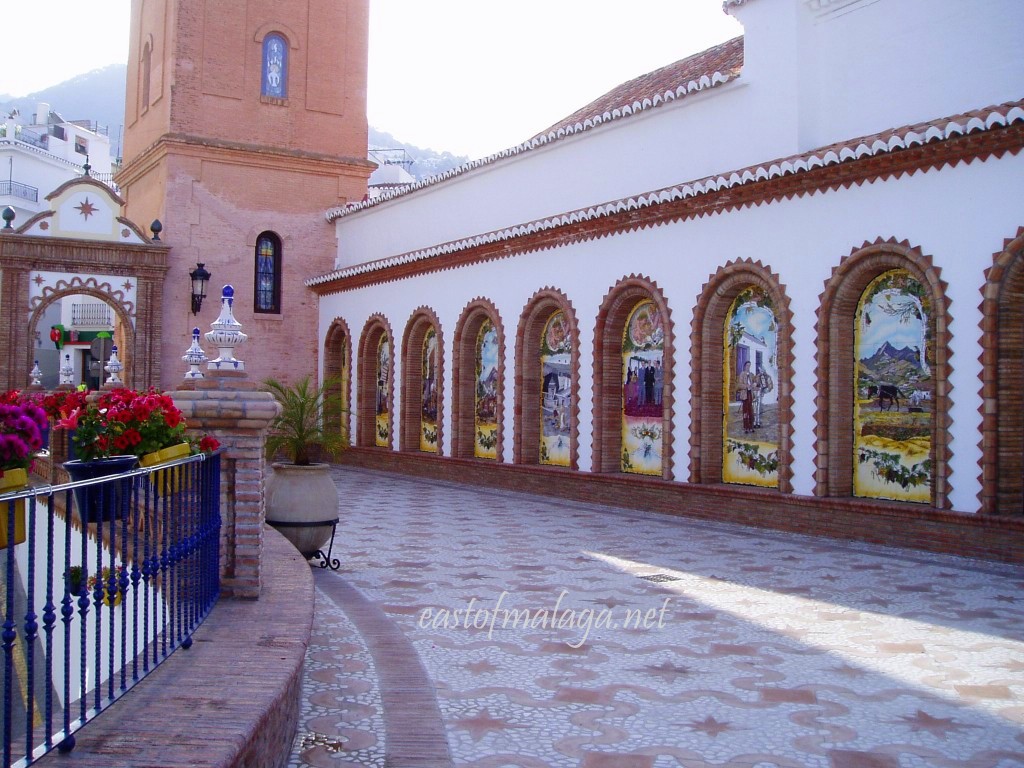
As you stroll from the busy square, through the archway into the Paseo de las Tradiciones you will discover an oasis of calm.   The floor is decorated with an intricate Moorish pattern of terracotta and white tiles, alongside a series of stunning ceramic murals celebrating the lives of generations of the ordinary working people of the village.

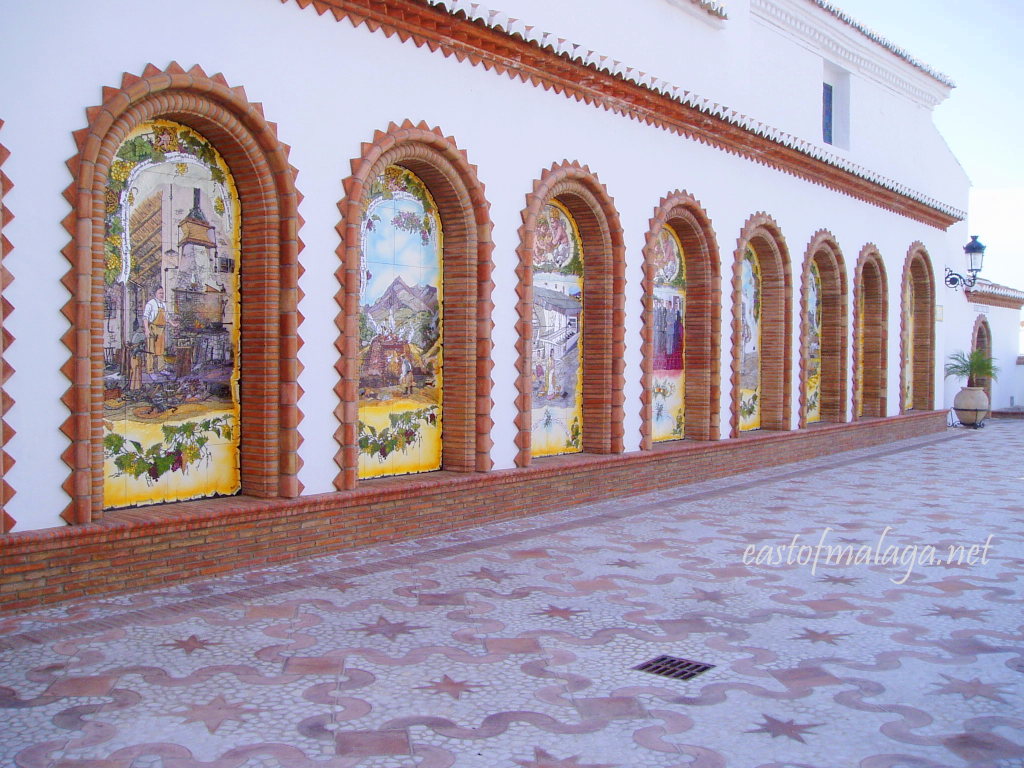
Alcoves in El Paseo de Las Tradiciones, Cómpeta, Spain

One wall of the Paseo de las Tradiciones pays testament to the trades and deeply-rooted traditions of the people of Cómpeta through the ages. The beautifully modern, brightly-coloured tiling in each of the alcoves was developed in the workshop of potter and sculptor, José Antonio Rivas.

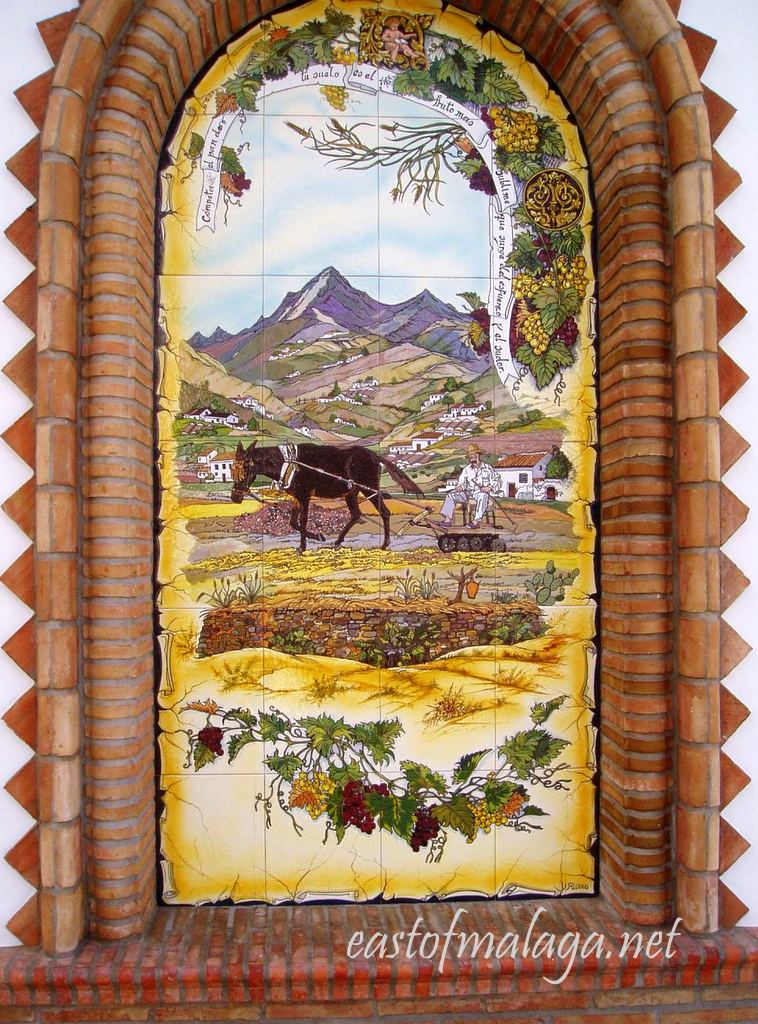
The nine alcoves, each 3 metres high and 2 metres wide, not only depict the history of the collecting of the local vines, the muleteers and village smithy, old olive oil factory and the public laundry, but also recognize the contribution made by the Moors, who for 800 years did so much to improve the cultivation of the summer-dry, winter-wet sierras, bringing the first prosperity to the village.

East of Malaga: Competa´s Paseo de las Tradiciones Alcove

The 500 years since the building of the Church of Our Lady of the Assumption have not been easy for the people of Cómpeta.

The expulsion of the Moors, two great earthquakes followed shortly afterwards by a cholera epidemic, and the vine disease phylloxera, which devastated crops all over Europe in the mid-19th century, have all taken their toll.   But the spirit of the villagers continues to thrive, as epitomized throughout the Paseo de las Tradiciones.

Where is your “oasis of calm”?

Whilst you´re here, why not have a look at:

The elegant,  main shopping street of Málaga

I can see Africa from my terrace!

All at sea with the Virgen del Carmen