CBBH Photo Challenge: PINK

Did you enter the “Capture the Colour” photoblogging contest last year?  I did – along with thousands of others, and you can see my entry here.  The idea was simple –  publish a blog post showcasing five of your favourite travel photographs which best capture the colour of the five categories: red, blue, green, yellow and white.  

The Capture the Colour Contest proved so popular that it’s back again for 2013 and this is my invitation to each of you to search through your photo libraries and see what you can come up with.

To get you in the mood, whilst you are searching for your multi-coloured photographs, I thought you might like to pluck out one or two PINK photographs for this month’s CBBH Photo Challenge. 

Don’t forget that the CBBH Photo Challenge is a little different from some other challenges, in two ways.  First, it’s only once a month – giving you lots of time to consider your entry before the end of the calendar month.  Secondand most important, this is a BLOG HOP (after all, it is the CBBH – Conejo Blanco Blog Hopmeaning white rabbit in Spanish), so DON’T FORGET that in your post you need to add links to two blogs that you have visited and commented on, during the past month.  That way, when we visit each other, we can HOP OVER to your links, connect with others and share a little blog love around!

Wild orchids in the garden

I’ve written about some of the wildflowers of Andalucía before, but of the many different colours, the pink blooms are my favourite!  The photo above is of one of the wild orchids growing on our land.  Their colour is so vivid, and the markings on the petals are very distinct.  

Wild poppies, Andalucia

Here is one of the delicate dusky-pink wild poppies, whose blooms disappear after just one day.  I love to see both orchids and the poppies as they herald the coming of the summer months, here in Andalucía.
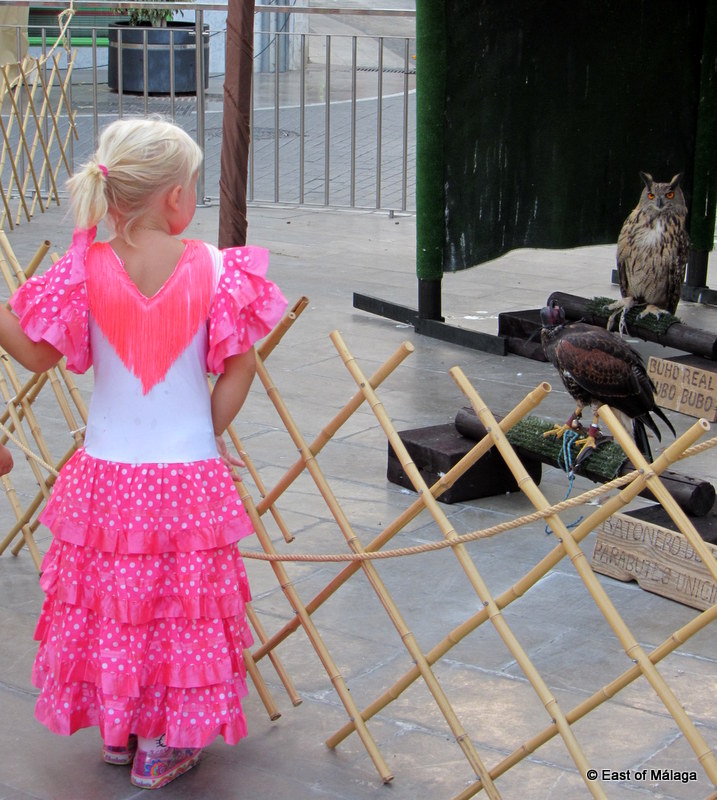
Little girl in traditional flamenco dress at the medieval market, Torrox pueblo.

This little lady in her bright pink flamenco dress was cautiously eyeing up some of the beautiful birds of prey at the Medieval Market in Torrox pueblo last year.

Pink cape of a bullfighter

Love it or hate it, bullfighting is a long standing tradition in Spain.  This is one of the auxiliary toreros (bullfighter or matador) in his elaborate embroidered costume, assisting the featured torero.   As evidenced here, it’s a myth to think that bulls are attracted by the colour red.  Cattle are colour-blind, and it is the movement of the cape (capote) that attracts them.  During the first phase of a bullfight, the bull is tested for it’s strength and aggressiveness by toreros using magenta and yellow capes.
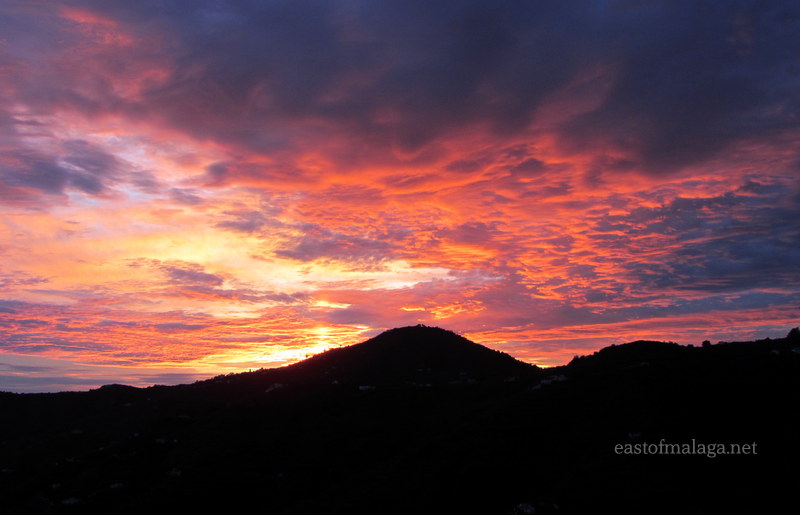
Sunset over nearby hills

I’ll finish with one of the beautiful sunsets, featuring shades of pink and yellow, developing into reds and purple that we regularly experience around the Axarquía region – east of Málaga.

My Featured Blog Links for this month:

**  Village Life in Andalucía reveals some of the secrets of living in a small inland village, deep in the heart of Andalucía.  John, sometimes referred to as “Pueblo Man” writes with a very easy style, and his latest offering,  The Not-so-Common Chameleon, reminds us that this beautiful little creature is on the endangered list.  I discovered the Village Life in Andalucía blog whilst I was trying to find out more about one of my favourite Spanish fish dishes – Rosada.  Fortunately, John answered my question, “What is Rosada?” by informing me that it’s not even a Spanish fish at all!  Sure is tasty though!  

**  Loren over at Cemetery Travel: Adventures in Graveyards Around the World describes herself as acemetery enthusiast devoted to cemeteries“.  Her latestCemetery of the Weekfeatures Drummond Hill Cemetery at Niagra Falls in Canada, but if you are interested in interment in Italy, France, China, India, England or around the USA, there’s something here for you.  So, if like me you are a taphophile, a tombstone tourist or a cemetery hunter, why not pop over to Loren’s blog, and tell them Marianne sent you!?

Conejo Blanco BLOG HOP Photo Challenge

So that´s the CBBH Photo Challenge for September, guys!

Remember, all you have to do is post your entry by the end of the month, tag your entry ‘CBBH Photo Challenge’,  link back to this blog and, most importantlydon´t forget to add links to any two blogs that you´ve commented on during the past month, so that we can all HOP OVER and have a look.  Make sure you FOLLOW THIS BLOG so you don´t miss next month´s exciting challenge!

For more information on how the CBBH Photo Challenge works click here.

I hope everyone taking part enjoys the exposure the CBBH Photo Challenge offers to featured blogs and, who knows, you may end up finding a new favourite!  I´m looking forward to seeing your interpretations.

[CBBH logo Image credit: (cc) Mostly Dans]

Let’s FOCUS on being a little kinder to each other

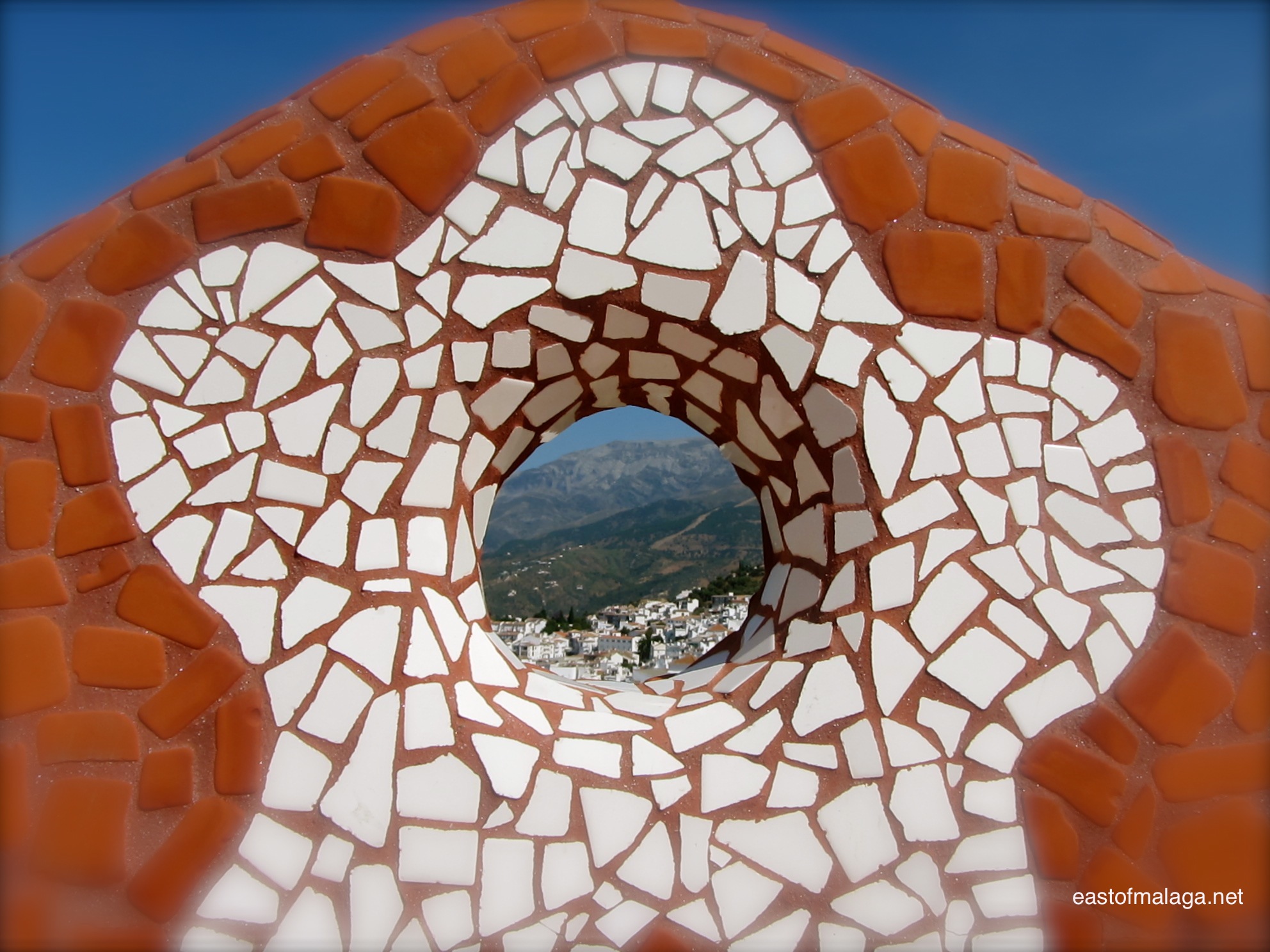
Focus on the village of Competa

Yesterday, I read with some surprise and sadness that Anita Mac, the travel blogger behind Travel Destination Bucketlist, had ended her own life, at the age of 43.  I’d never met Anita in person, but we exchanged messages from time to time, particularly last year when she was walking the Camino, in northern Spain.

Anita’s blog is filled with wonderful photographs of her travels and, not only was she inspired to continue to travel and experience more of the world, she inspired others to do the same.  Yet, despite her confident and adventurous outer facade, Anita was struggling with her own pain, as evidenced in her final post on August 22nd, “What do you do with a broken heart?”

We’ve all seen reports on TV of teenagers who have taken their own lives after being taunted by anonymous online trolls.  The anonymity of the internet sometimes makes people say things that they wouldn’t (or daren’t) say to your face.

I’m not suggesting that’s what happened with Anita, but many of us have some kind of ongoing battle in life that we may or may not choose to share with others – especially somewhere as public as on the internet.

And, who knows where the tipping point lies to push any one of us over the edge?

In the past few weeks, amongst the hundreds of ordinary, everyday comments this blog, East of Málaga …. and more has received, there have also been vile ones with no back-link, and filled with bad language.

What did I do to deserve these tirades?

One person not only left a vile comment, but also took to Twitter to tell the world about my bull**** blog, because they didn’t agree with the price of one item on my recent Cost of Living in Spain list.

Another has attacked me on their own blog because they “question the way my monthly CBBH Photo Challenge works“.    It seems that WordPress didn’t send a pingback for a “featured blogger” link they made, meaning that they weren’t “thanked personally” by that blogger they featured!  Somehow this is meant to be my fault.  Go figure!

As a result of the actions of these trolls, I’ve now switched my options so that I moderate all comments before they appear on the blog – and for that I apologise to the 99.9% of you who leave perfectly normal comments.

I’m not saying I’m above criticism – hey, if there’s something you don’t agree with – let me know.  I might even change my mind and agree with you.  But there are ways of saying things without making a complete jerk of yourself.

Maybe the actions of such trolls display some form of petty jealousy, envy of a lifestyle or of some kind of perceived success.  Who knows?

Like most people, my life is the way it is because I have planned it that way with lifestyle and monetary choices.  Some might choose to be envious – others could well be bored, but it would do us all well to focus on what we have, rather than what we don’t have.

This post is my response to this week’s WordPress Photo Challenge: FOCUS.

I’ll leave you with the following quotes:

“Always be a little kinder than necessary.”  ~ J.M. Barrie

“Be kind, for everyone you meet is fighting a hard battle.” ~  Plato

Ermita de la Candelaria, Colmenar

Last summer, I was invited by another expat blogger to join her for a walking tour around her adopted home village of Colmenar.

Set in the heart of the Montes de Mâlaga, a range of mountains close to Málaga city,  Colmenar gets it’s name from the Spanish word for the bee hives (las colmenas de abejas) that were the basis of the local economy for a long time.  Indeed, Colmenar boasts a museum dedicated entirely to honey (Casa Museo de la Miel),  although for some strange reason the museum was closed when we visited.

Ermita de la Candelaria, Colmenar, Spain

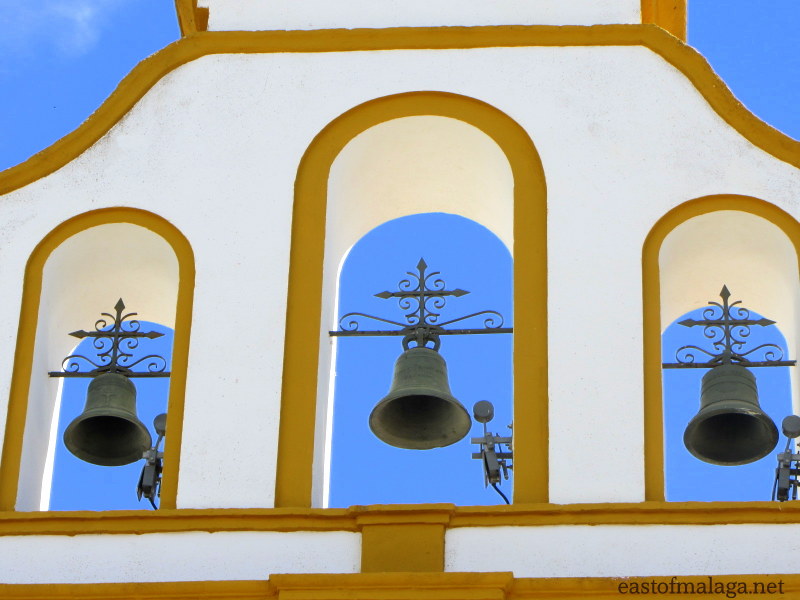
At the highest point of the village stands the Chapel of Our Lady of Candelaria.  The Virgin of Candelaria is the patron saint of Colmenar, as well as the Spanish-owned Canary Islands, and the chapel was built in gratitude for the lives of Canarian sailors spared during a fierce storm off the Málaga coast, during the 17th century.

Ermita de la Candelaria, Colmenar, Spain

This post is my response to the Weekly Photo Challenge: One Shot, Two Ways

Related articles:

The Bullfighters’ Chapel, Ronda

Triana Bridge, Seville

Weekly Photo Challenge: Fleeting

The Bullfighters’ Chapel, Ronda

Bullfighters' Chapel, Ronda, SpainHere’s my interpretation of this week’s WordPress Photo Challenge: Foreshadow, which is a verb meaning  to act as a warning or sign of indication of a future event”.  


Whilst you’re here, you might like to have a look around:

Riddle Me This: The Mysterious Case of the Disappearing Statues

Photos I love – and why!

Patatas a lo pobre: Poor man´s potatoes

Triana Bridge, Seville

Triana Bridge, Seville

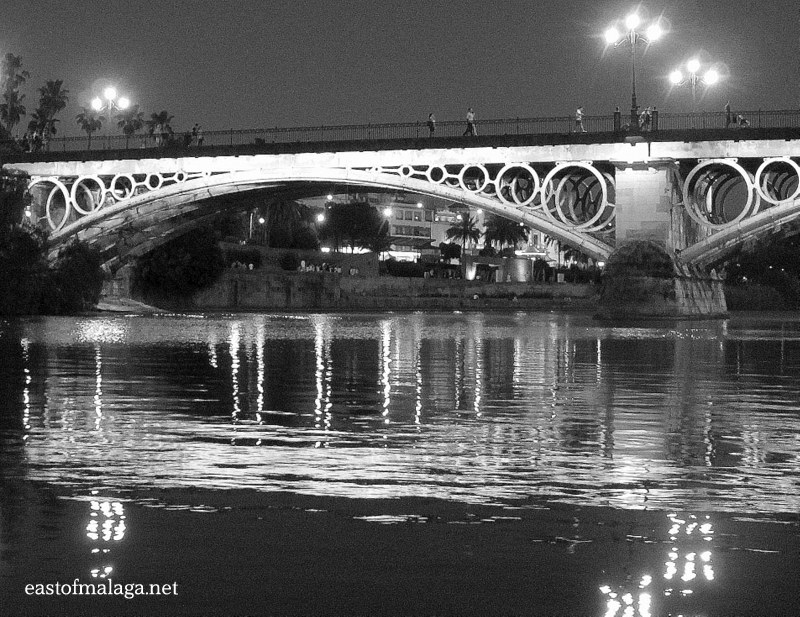
At the stroke of midnight on December 31st 1999 I was standing in Plaza Nueva in the centre of the Andalucían city of Seville with thousands of other people, to welcome in the new millennium.  So, it was with some nostalgia that I returned for a few days recently, to be reminded of the delights that Seville has to offer – both old and new.  I’ll be letting you know all about that in another post coming up soon, but for now, I want to show you the Isabel II bridge, more popularly known as Puente de Triana.

Until 1852, the only way across the Guadalquivir River was by using a makeshift bridge, originally formed in 1171 by chaining 13 boats together between the river banks. In 1847, French engineers Fernando Bernadet and Gustavo Steinacher began work on the Isabel II bridge, linking the Gypsy neighbourhood of Triana with the city centre of Seville.

It’s a pleasant stroll across Triana bridge which has become known for its love-locks, a custom by which padlocks are fixed to a gate, fence or bridge by sweethearts as a symbol of their eternal love.  Because of the numbers involved, this practice has now become frowned upon, and the locks are periodically removed.

As you will gather, I took the above photo whilst enjoying an evening cruise along the Rio Guadalquivir.  I love the way the lights from the bridge are reflected in the gently flowing water.

I also want to take this opportunity to announce the winner of my recent draw to win 6 handwritten postcards from Spain is …… Sylvia of Another Day in Paradise!  

CONGRATULATIONS – I WILL BE SENDING YOUR FIRST POSTCARD VERY SOON 🙂

Related posts:

Black & White Photo Challenge: Bridges

Weekly Photo Challenge: Nostalgic

Travel Theme: Motion