The Buddhist Stupa of the Eastern Costa del Sol

If you are visiting the eastern Costa del Sol, you might not anticipate that there is a beautiful Buddhist Stupa within easy reach of the Mediterranean coast.

The first Buddhist Kalachakra stupa built in the western hemisphere can be visited about 40 kilometres east of Málaga, north of the town of Vélez-Málaga, near to the Karma Guen Buddhist meditation centre.
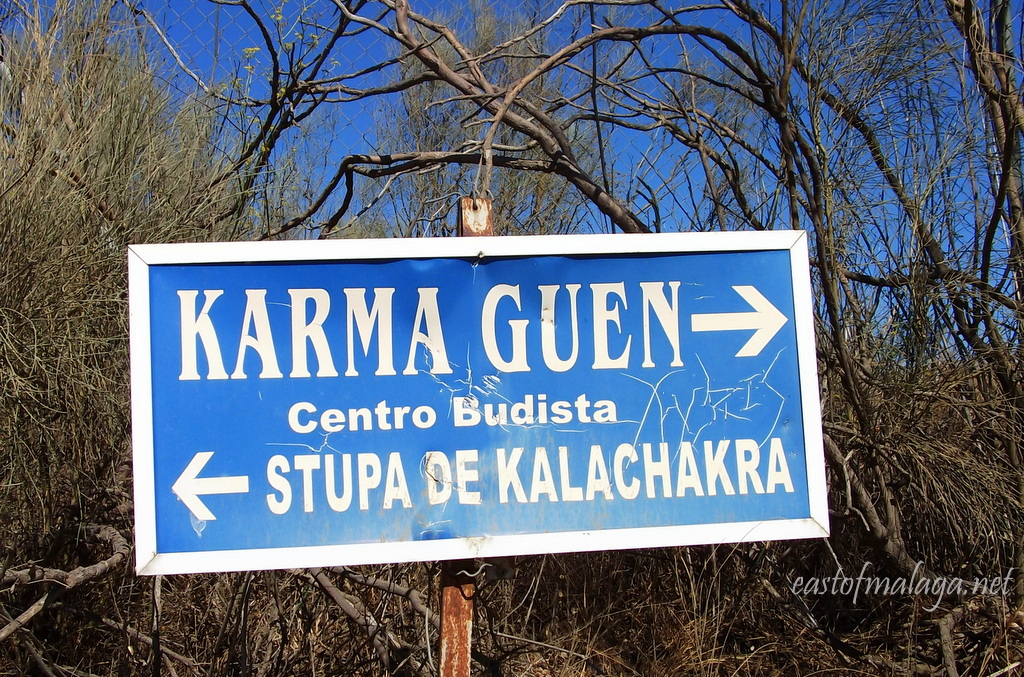
Signpost to the Kalachara Stupa in Velez-Malaga

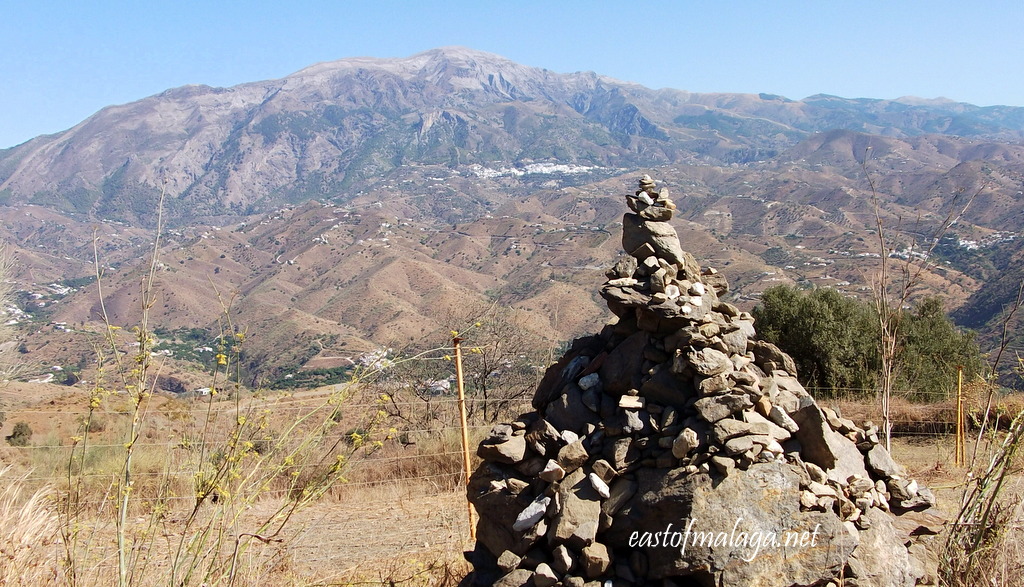
At the entrance to the Buddhist Stupa, with Monte Maroma behind

The stupa is not easily seen from the surrounding countryside, so where is it?

About a forty minute drive east of the city of Málaga along the A7-E15 Autovía del Mediterraneo to km 272,  take the exit signposted A 356 towards Vélez-Málaga, Viñuela, Colmenar and Zafarraya.  Stay on the A356, bypassing the town of Vélez-Málaga and, after about 7 kilometres, turn left at the junction signed towards El Trapiche.  Approximately one kilometre further, (opposite the Jardines del Trapiche) there is a small sign on the right for the Karma Guen Buddhist centre.  Take this concrete and tarmac road for two kilometres, and then the unmade track up the hill for another two kilometres.

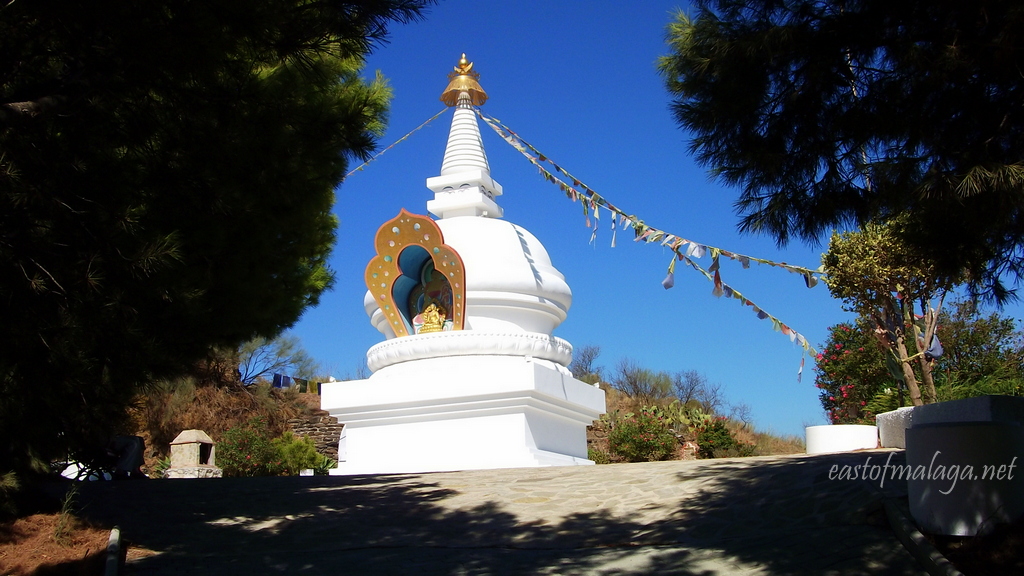
Park and walk through the avenue of pine trees and, all of a sudden, there it is!
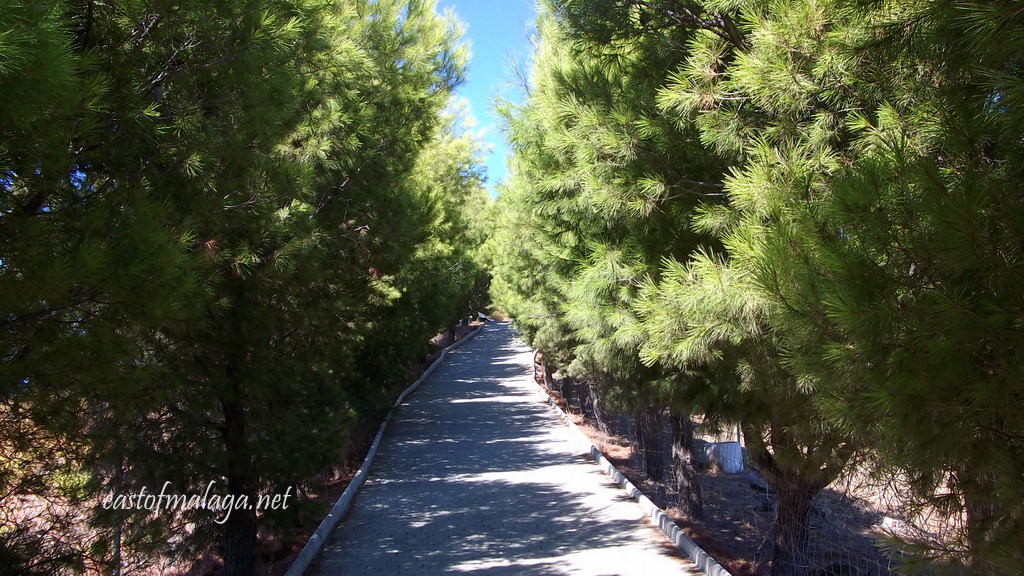
Avenue of pine trees leading to the Buddhist Stupa, Vélez-Málaga, Spain

First sight of the Buddhist Stupa in Vélez-Málaga, Spain

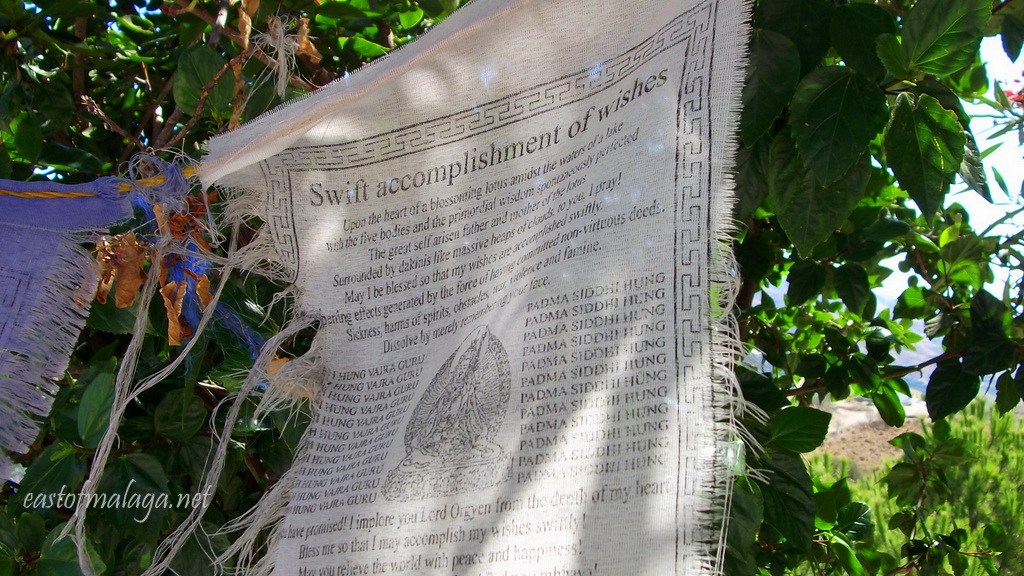
Swift accomplishment of Wishes

Sign at the Buddhist Stupa, Vélez-Málaga, Spain

Within Buddhism, the Stupa is a symbol of universal peace and unity.  It is claimed that they have protective powers and bring about compassion, love and happiness, as well as social, physical and spiritual well-being.

The Kalachakra is the rarest type of stupa.  At the present time, there are only five Kalachakra stupas in the world and this one, near to Vélez-Málaga, was the first to be built in the West.  It was hoped that building this stupa would help to protect Europe against negative energies.
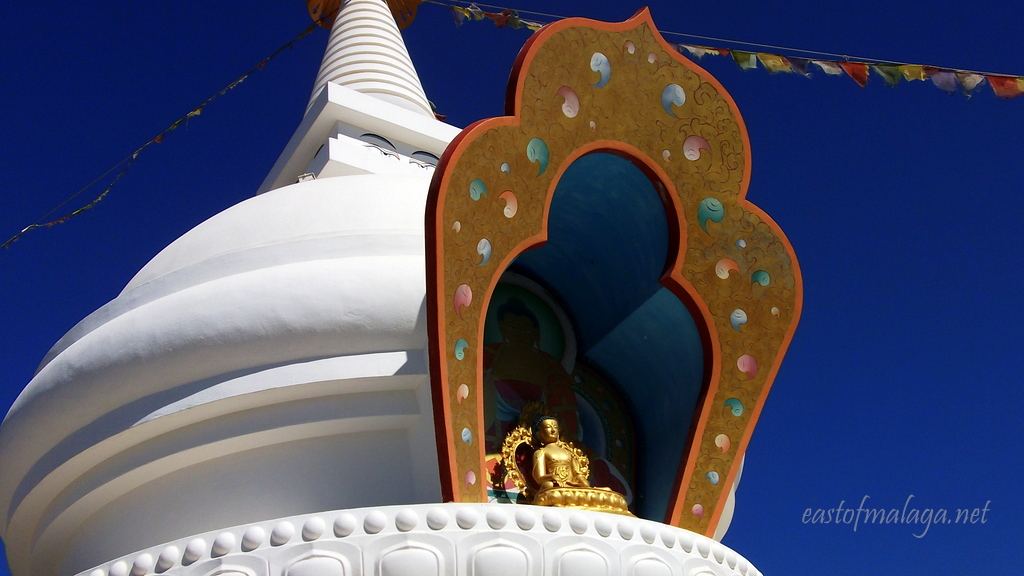
The Golden Buddah statue at the Stupa at Vélez-Málaga, Spain

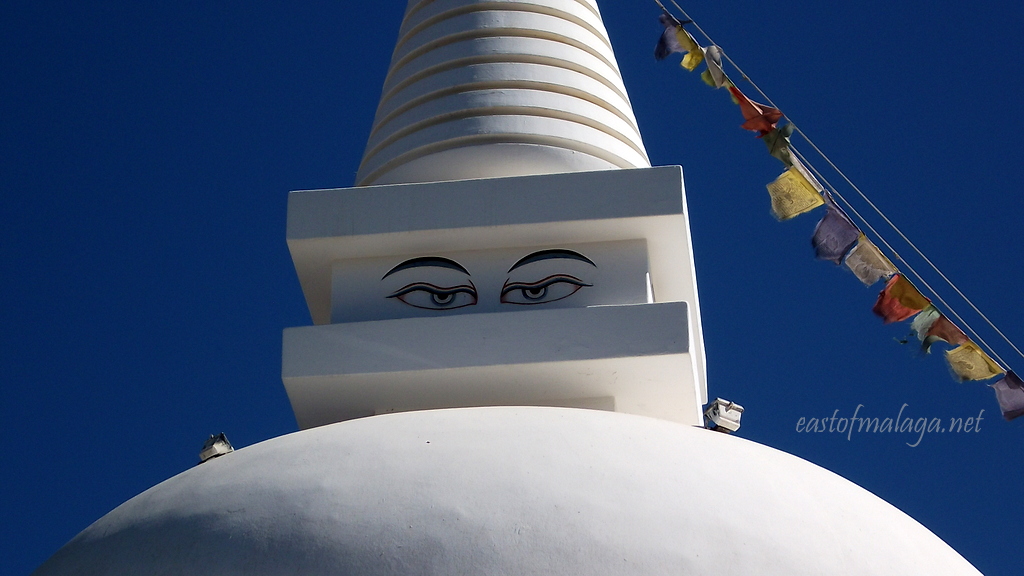
The eyes of the Buddhist Stupa, Vélez-Málaga, Spain

Just like the famous Boudhanath stupa in Kathmandu, this Kalachakra stupa has eyes painted on it, which is a Nepalese custom.
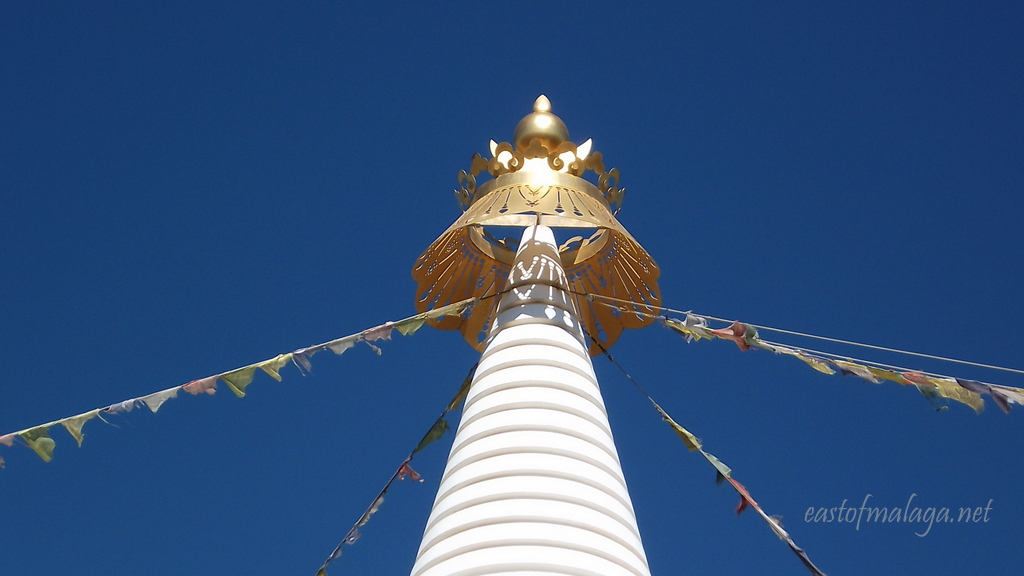
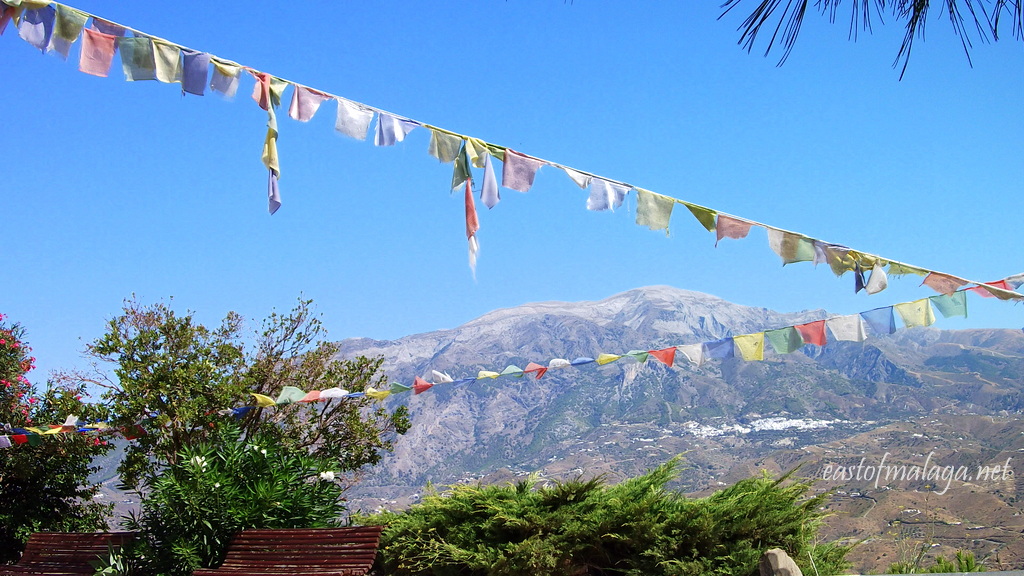
The golden dome of the Stupa glistens in the beautiful sunshine

View across to Monte Maroma from the Buddhist Stupa, eastern Costa del Sol

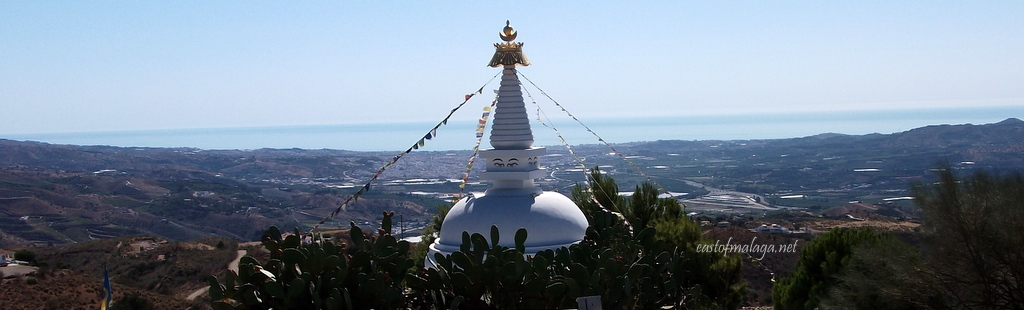
The Buddhist Stupa overlooks the eastern Costa del Sol

The journey to see the Kalachakra stupa at Karma Guen is a relatively easy one (bearing in mind the mountain roads) but the views on arrival both towards the mountains and the sea are magnificent.
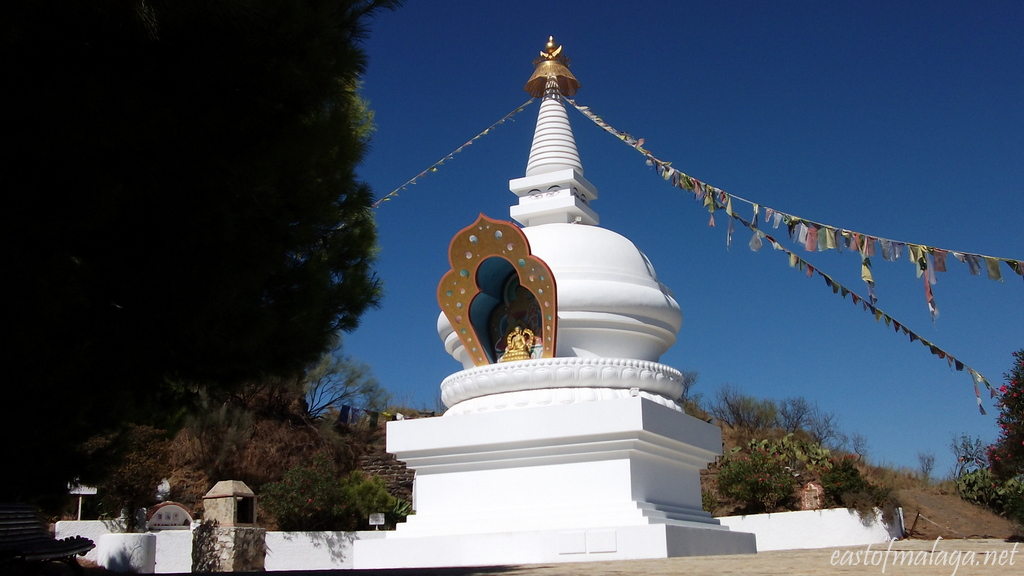
The stunning Stupa of Kalachakra at Vélez-Málaga, Spain

I often take visitors to see the Stupa because it´s an unusual and memorable place to visit. 

Where do you take your visitors that surprises them?

This peaceful post is my contribution to this week´s Travel Theme: White and to celebrate the 30th Anniversary of the UN International Day of Peace.

If you enjoyed this post, you might also like to look at:

Bus Services: East of Málaga

A Weekend Away: Santiago de Compostela

Slice of Life: Spanish bars

Autumn: It´s a Game of Three Halves!

Kick off at Rugby Axarquia

Even though the intense heat of summer has now passed, the throngs of August tourists have finally returned home, the evenings are getting darker just that bit earlier, and the X Factor has returned to our TV screens – nothing says “autumn” to me more than the start of the rugby season!

When we lived in the north-west of England, we were season-ticket holders at Fylde Rugby Club, standing shoulder-to-shoulder with ex-England captain, Bill Beaumont, on the terraces at the Woodlands Memorial ground for every match.  Season after season we stood in the rain and cold, with pride and passion, shouting support for our local club.

But, when we moved to southern Spain and based ourselves east of Málaga, we thought our live rugby-watching days were over.

Of course, we can still enjoy the excitement of the Six Nations tournament, or an emotionally-charged Haka performed by the mighty All Blacks, in glorious close-up on the huge TV screens in many of the local bars, but there´s nothing quite like watching rugby in the flesh, so to speak.

Poster advertising the match for Rugby AxarquiaImagine our delight when we discovered (by accident and at the last minute) that rugby was indeed alive and kicking in La Axarquía.  The poster advertised a match taking place between the Axarquía and Málaga Rugby Clubs at the Fernando Ruiz Hierro stadium in Vélez-Málaga on Saturday afternoon at 17.30, with free entry, so we went along to find out what it was all about.

Rugby Axarquia

Rugby Axarquia

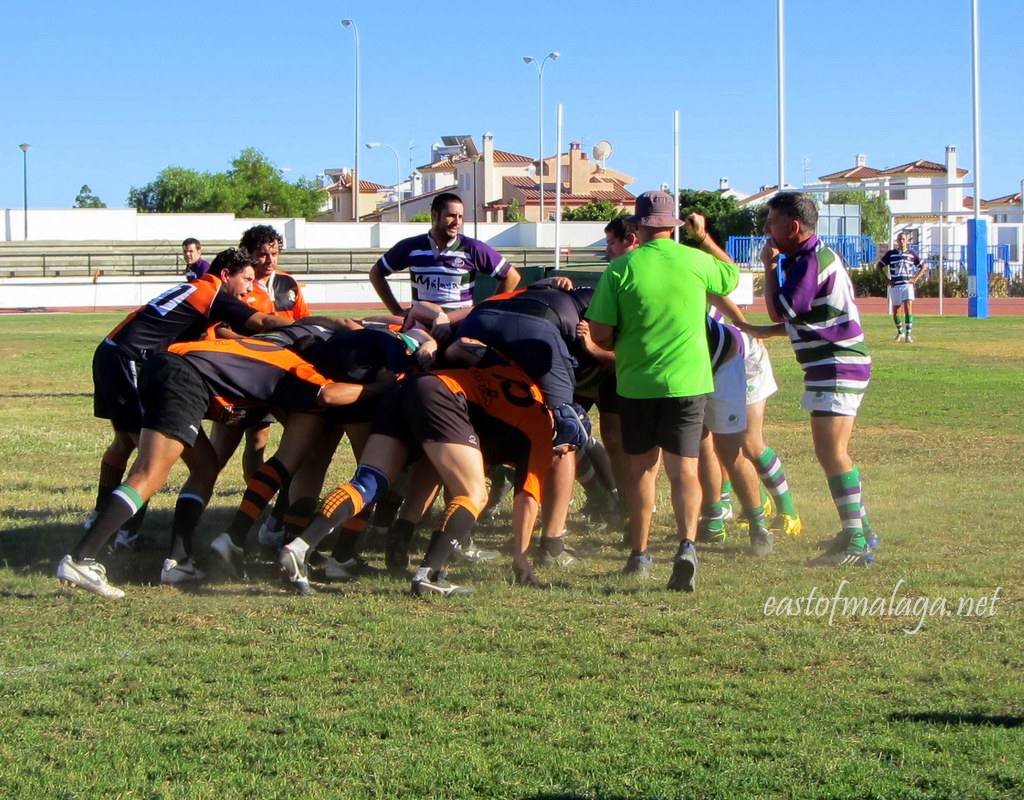
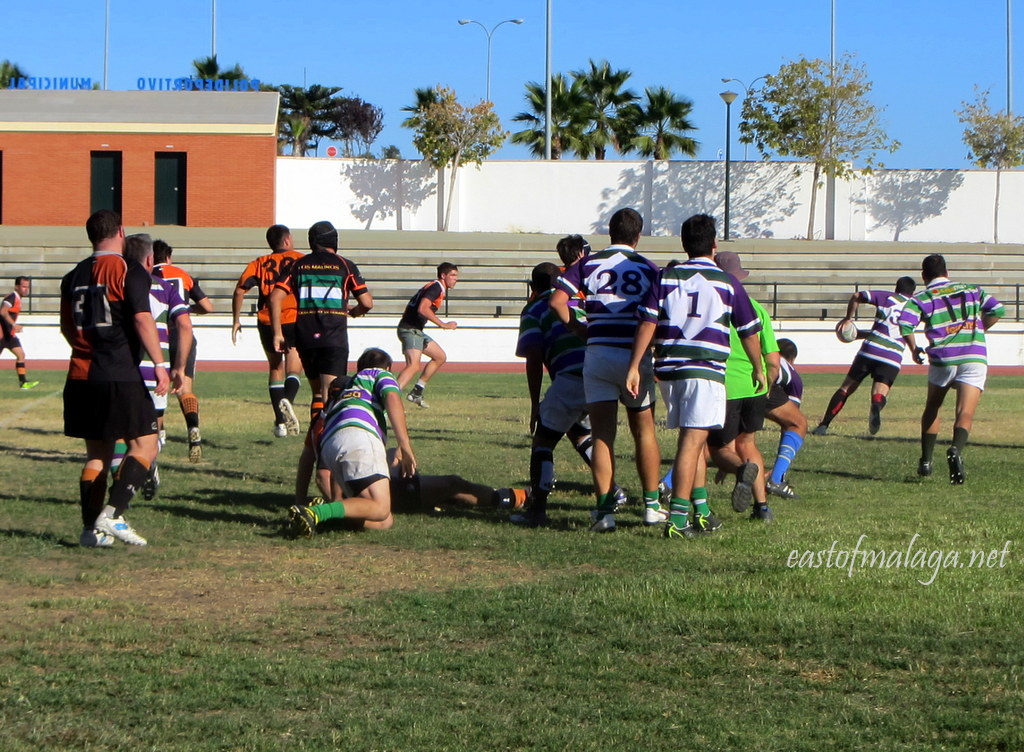
Rugby Axarquia We witnessed a physical and entertaining game of rugby, fought out between two great rivals, in front of an enthusiastic and vocal crowd of around a hundred people.  With squad members keen to impress their respective coaches ahead of the new rugby season, both teams put on a spirited display.

Without a scoreboard, it was difficult to keep track of the points and, even though Málaga appeared to score more tries (and some of the conversions of both kickers looked rather dubious to me), it was eventually agreed by the powers-that-be, that a 33-33 draw would be a fair result!  Well, it was only a pre-season friendly match.

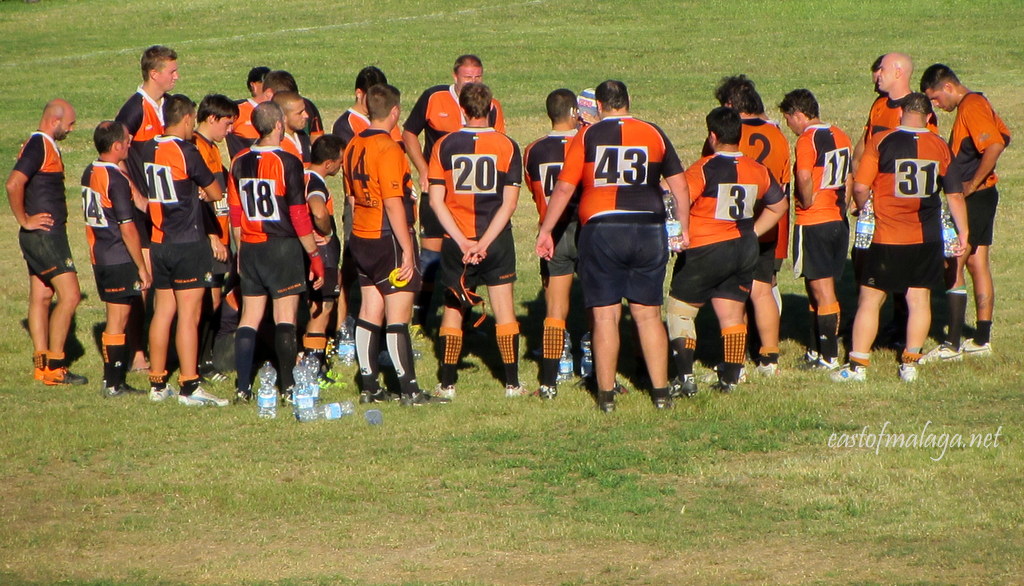
Rugby Axarquia team huddle

What was even more curious was that at the end of the second half, when we naturally presumed that the match was over, both teams congregated for another huddle on the pitch – and then resumed with a third half!   At least this allowed more time for the players waiting on the Substitute´s Bench to take their turn to impress.

Subs Bench at Rugby Axarquia

I later mentioned about it being “a game of three halves”  to the club´s Press Officer, and when he sent me a copy of the Press Release yesterday, I´m sure you can guess the title of the article written for the Costa del Sol News“Rugby Season Starts – It´s a Game of Three Halves!”.  You read it here first, folks! 

During the match at Rugby Axarquia

The Axarquía Rugby Club provided us with an afternoon of good sport, friendship and a club shop (well, more of a club table) selling cool drinks, tee-shirts and where social memberships can be bought for the princely sum of €15, which includes free entry to all games.

We´ll be back to watch more of the fastest growing sport in Spain.

This post is my contribution to the Sunday Post: Autumn

Other articles you might like to look at:

East of Málaga: Following in the footsteps around Comares

Cheeky Monkey: Now you see him, now you don´t!

Back to the Future: An Evening at the Medieval Market

Travel Theme: Texture

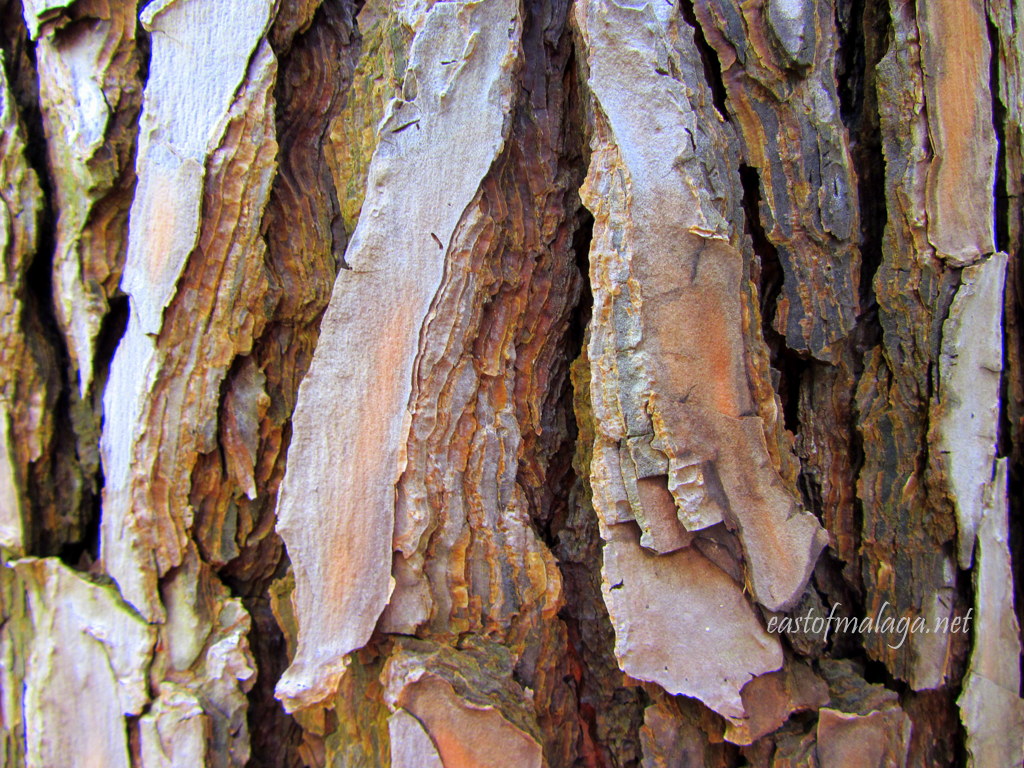
Tree bark texture at the Jardin Concepcion, Málaga.

Botanical gardens around the world are often well worth a visit while travelling, and Málaga’s La Concepción Gardens are no exception.   Just to the north of the city, the stunning  Jardín Botánico-Historico La Conceptión has justifiably attracted a reputation for being amongst the best in Europe.

I´d been meaning to visit for a while, but somehow never got around to it, but this beautifully-coloured tree bark was just one of the many reasons why I´m so glad I did.  I´ll share the rest with you in another post, very soon!

This post is my response to this week´s Travel Theme: Texture


Related posts:

When life gives you curves, flaunt them!

Travel Theme: Silhouette

Travel Theme: Signs


East of Málaga: So near, yet so far away

Cactus and mountains

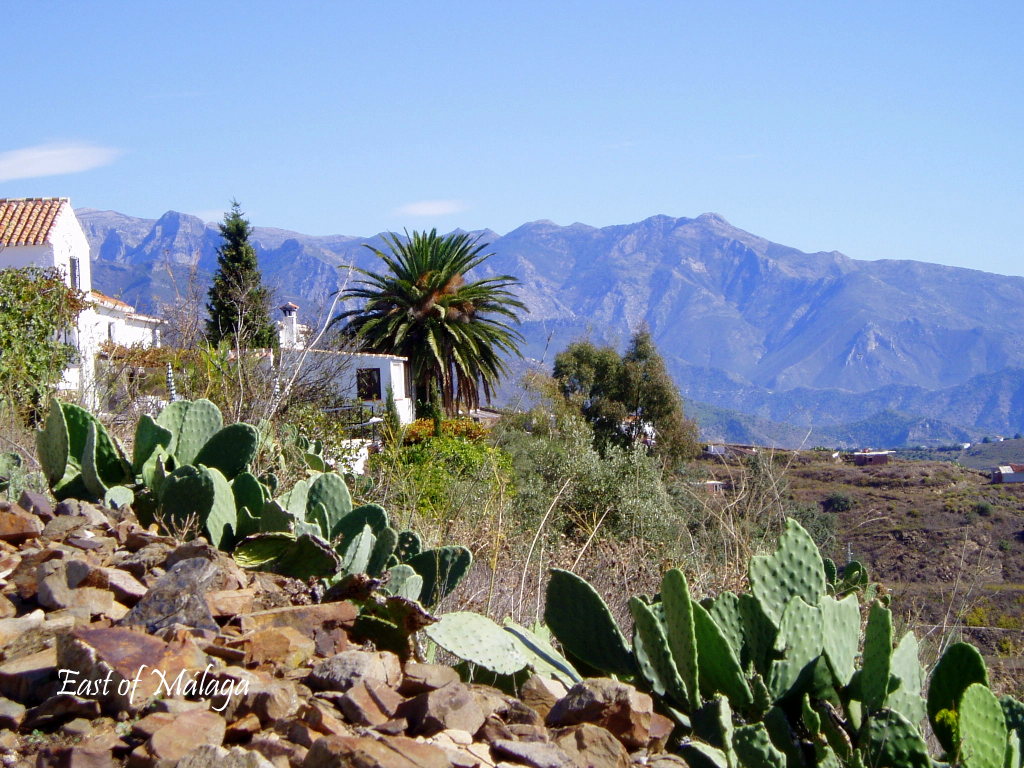
Here´s my response to the Weekly Photo Challenge: Near and Far.

I climbed up the nearest hill to where I live in the countryside between the villages of Torrox and Cómpeta, to capture the cactus in the foreground leading the eye towards the whitewashed house and the distant peaks of the Sierras de Tejeda, Almijara y Alhama Mountains.

Whilst you´re here, why not have a look at:

Following in the footsteps around Comares

In Plane View: Inside Out

Capture the Colour: Red, Green, Blue, Yellow and White

When life gives you curves, flaunt them!

Casa Batlló, Barcelona

The curvy windows of  Gaudí´s fabulous Casa Batlló in Barcelona. 

Casa Batlló is a key feature in the architecture of modernist Barcelona.  It was built by Antoni Gaudí between 1904 and 1906 having been commissioned by the textile industrialist Josep Batlló.

Nowadays, the spectacular facade is an iconic landmark in the city, as well as being one of my favourite buildings in the world!

This post is my response to the Travel Theme photo challenge: Curves


You might also enjoy looking at:

CBBH Photo challenge: REPETITION

Churros served with thick hot chocolate

Photographs I love …. and why!