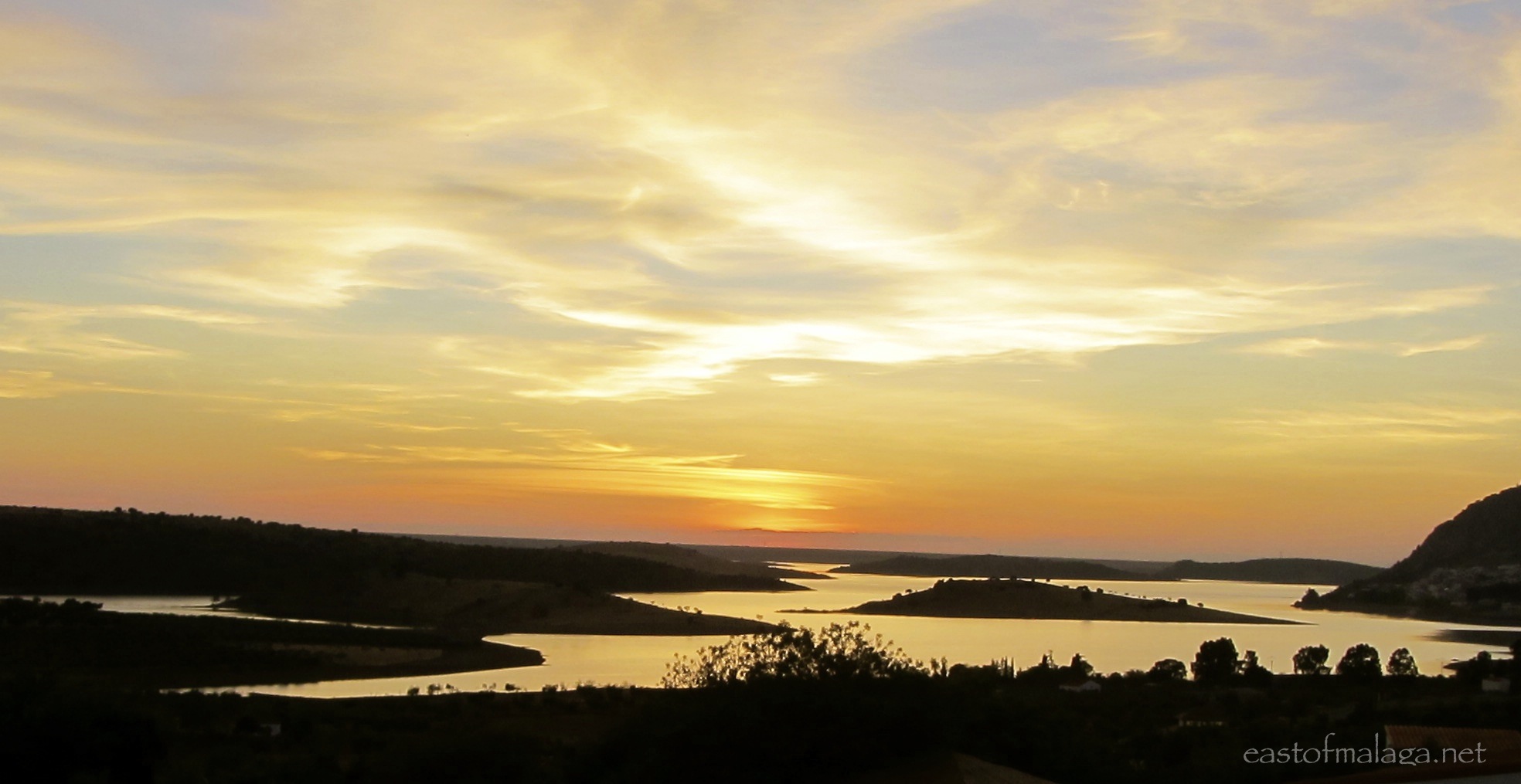
Weekly Photo Challenge: Horizon

Sunset on the horizon in Alange, Extremadura

This is the gorgeous sunset view overlooking the reservoir at Alange in Extremadura, Spain.   What a perfect photo for the Weekly Photo Challenge: Horizon –

I just had to share it!


You might enjoy these other articles, too:

The Buddhist Stupa of the eastern Costa del Sol

Photographs I love – and why!

East of Málaga: Shall I compare thee to a Summer’s Day in England?


East of Málaga: The Weather this Autumn

View across to the coast, east of Málaga, in autumn

Towards the end of August we usually start to look forward to some relief from the long hot summer.

The early autumn thunderstorms arrived on time this year to bring some relief for the parched ground.    The normal pattern would be that these first autumn rains arrive anywhere from mid September to early October, after which the weather cools down a little.

This year has proved to be an exception, as by mid October, we still await a break in the weather and the glorious summer goes on.

Typically these warm sunny days will continue towards Christmas-time with a few rainy periods in between.  The main difference between here and the UK, for example, is that we don’t end up with grey skies for weeks at a time.

The autumn and early winter sun can be surprisingly warm, but this year has proved warmer and drier than normal, with virtually unbroken sunshine and temperatures between 24-29C, which would make a beautiful midsummer day in northern Europe.

A by-product of this has been brilliant clear blue skies.

Looking east from the Balcón de Europa, Nerja

Certainly, along with May and June, the climate here during September and October can be the most pleasant of the year. Visitors from the north would still be wise to take similar precautions against the sun as in summer, but the nights are more comfortable to sleep with overnight temperatures in the range 17C to 19C compared with the low to middle twenties Celsius during July and August.

All in all, it’s a wonderful time of year to visit the area to the East of Málaga.


You might also enjoy:

Cost of Living in Spain: August 2013

CBBH Photo Challenge: PAIRS

A Weekend Away: Santiago de Compostela


All the fun of the Ferias!

Viking ship at Torrox feria, Andalucia, Spain

The ferias are in full flow in the Axarquía region with the latest at Torrox pueblo last weekend.    By day, unassuming white Andalucían village – but by night, OH BOY is it a feast for the senses!

The bright flashing lights of the fairground rides, beautiful flamenco dresses, dancing, live music, the smell and taste of great food and drink, very late nights and, of course, the fireworks!

If you miss one of the nights, don’t worry there are plenty more, as most ferias take place over several days.

This coming weekend it’s Nerja’s turn, with the Feria held on the land between Carabeo and Los Huertos.  Full programme of events, HERE.

See you there! 

Do they know how to party, or what? 🙂

You might also enjoy these related articles:

A Celebration of Fried Breadcrumbs: Migas Festival in Torrox Pueblo

Calle Beso (Kiss Street) in Torrox

Balcón de Europa (Balcony of Europe), Nerja

Let’s talk about tapas, shall we?

Well stocked tapas bar in Spain

I’m going to be starting a new feature all about tapas soon, so let’s start by finding about what they are.

It’s thought that originally in the wine-making regions of Andalucia, a cover in the form of a small plate or lid was placed over glasses of wine to keep fruit flies away.  Titbits of food were later placed on the lid to be eaten with the wine.

The word “tapar” in Spanish means “to cover”, which is where we get the word “tapas” from.

How wonderful that Spaniards thought it unacceptable that a fly ends up in your drink, but it´s fine if it lands on the accompanying snack!

Other stories suggest that tapas were invented by a bar owner in Seville, who decided to put a cover (tapa) over his guests´ glasses of wine, using a slice of bread to keep out flies.  He later put a piece of ham or cheese on top, so that his customers could have a bite to eat with their drink.

Rioja and scrummy tapas!

Either way, the idea spread, so that nowadays the types of food served as tapas are limitless.  Most Spaniards don´t drink alcohol without a tapa and many bars, especially in southern Andalucia, provide them free of charge.

The original Spanish “fast food” is usually displayed in refrigerated glass cabinets on the bar and served in small terracotta glazed dishes. Some examples of the type of tapas normally available include gambas (whole cooked prawns in their shells), boquerones (fresh anchovies in olive oil, vinegar and garlic), chorizo (spicy Spanish sausage), albondigas (meatball…often in a creamy almond sauce), queso (cheese…often manchego), habas con jamon (broad beans with ham), ensalada rusa (Russian salad) or just a few olives.

Delicious tapas

Your choice of tapas is usually accompanied by a small piece of crusty bread which helps to counteract the adverse effects of the alcohol through drinking on an empty stomach.

What a sensible idea!

In many establishments, if you stand at the bar along with the locals you will be given one tapa free with each drink you buy.  

That’s right …. free food!

Tapas in Spain

Should you choose to sit away from the bar, you can pay for a tapas or two (usually about one euro in this part of Spain), or opt for a larger serving known as a ración (ration) or medio ración (half ration). This is a great way to eat a variety of dishes, and a pretty sociable activity as groups generally tend to share their dishes.

The food is generally very good, even in remote villages around the Axarquia.

Where is your favourite tapas bar?   Which tapa do you choose, time and time again?


You might also like to look at:

All at sea with the Virgen del Carmen

La Noche de San Juan: Families, fires and football!

Bus Services: East of Málaga