All the fun of the Ferias!

Viking ship at Torrox feria, Andalucia, Spain

The ferias are in full flow in the Axarquía region with the latest at Torrox pueblo last weekend.    By day, unassuming white Andalucían village – but by night, OH BOY is it a feast for the senses!

The bright flashing lights of the fairground rides, beautiful flamenco dresses, dancing, live music, the smell and taste of great food and drink, very late nights and, of course, the fireworks!

If you miss one of the nights, don’t worry there are plenty more, as most ferias take place over several days.

This coming weekend it’s Nerja’s turn, with the Feria held on the land between Carabeo and Los Huertos.  Full programme of events, HERE.

See you there! 

Do they know how to party, or what? 🙂

You might also enjoy these related articles:

A Celebration of Fried Breadcrumbs: Migas Festival in Torrox Pueblo

Calle Beso (Kiss Street) in Torrox

Balcón de Europa (Balcony of Europe), Nerja

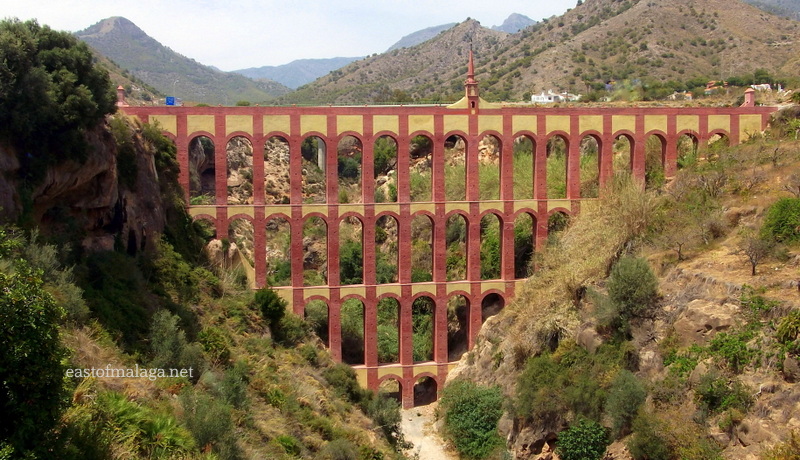
The Eagle Aqueduct, Maro

Eagle Aqueduct, Maro, Spain

The Eagle Aqueduct (El Puente del Águila) was built in the 19th century as a means of supplying water to the San Joaquín sugar factory on the outskirts of the town of Nerja.

Damaged during the Spanish Civil War, but recently restored, the Eagle Aqueduct comprises four storeys of superimposed brick arcades with 37 arches.   Soaring high above the spire at the central point of the structure is a weather vane in the shape of a double-headed eagle, from which the aqueduct takes its name.  The structure is 40 metres tall and 90 metres wide, with it’s design being typical of the period of construction, when the Mudéjar-style was very popular.

Situated on the Barranco de la Coladilla and spanning a ravine close to the Nerja Caves and the village of Maro, the aqueduct is visible from the old N340 coast road linking Nerja with Maro.   With a backdrop of the Sierra Almijara, it´s easy to see why this is one of the most photographed images of the local area.   There is a lay-by at the side of the road where you can leave the car to get a good view or to take photographs of the monument.  The area surrounding the aqueduct is public land and free to visit.

Strangely, the facade visible from the viewpoint is the rear of the construction, as the aqueduct faces north.   The Eagle Aqueduct was NOT built by the Romans, as many believe, though the remains of a Roman bridge and the old Roman road to Malaca (Málaga), were unearthed nearby.

Despite the closure of the San Joaquín sugar mill many years ago, the aqueduct continues to be used for the irrigation of local farmland.

Related articles:

Sweet memories: San Joaquín sugar mill

La Viñuela reservoir: Water levels

Travel theme: Architecture

Looking across to Frigiliana

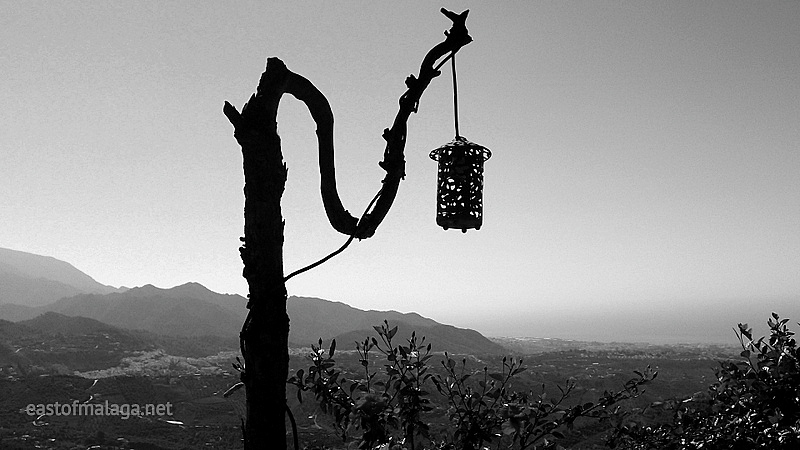
Across to Frigiliana, Spain


Whenever we have visitors staying with us, we always take them for a scenic drive along the back road from Torrox pueblo to the beautiful white village of Frigiliana.

The views across to Frigiliana and Nerja are stunning! 

This photograph was taken from the terrace of Los Caracoles Restaurant and Hotel.  Towards the bottom left you can see the white village (pueblo blanco) of Frigiliana and, over to the right, the nearby town of Nerja, with the Mediterranean Sea in the background.

This view never fails to take my breath away …. no matter how many times I see it!

I’ve never posted any black and white photos before, but I wanted to show support for a new venture set up by my blogger friend, Sonel.   I hope you will, too!


You might also enjoy:

Sayalonga: The narrowest street in the Axarquía

Photographs I love – and why!

CBBH Photo Challenge: SAME SUBJECT, DIFFERENT TIME


East of Málaga: Flying the Blue Flags

Blue flag beach at Torrox Costa, Spain

At the end of May each year, the independent non-profit organisation Foundation for Environmental Education (FEE) awards its prestigious Blue Flags to beaches and marinas in the northern hemisphere for their water quality, safety standards, environmental education and amenities.

The Blue Flag is a voluntary eco-label awarded to more than 3850 beaches and marinas in 48 countries around the world.    With a total of 648 ensigns, Spain has maintained its position at the top of the list in the northern hemisphere.

Here is the list of current blue flag beaches on the eastern Costa del Sol:  Algarrobo Costa in Algarrobo;  Ferrara in the municipality of Torrox;  Burriana and Torrecilla beaches in Nerja;  Benajarafe  and Torre del Mar in the municipality of Velez-Málaga and last, but not least, Cala del Moral in Rincón de la Victoria

The Blue Flag is awarded on an annual basis, and can only be only held for one season before it will be judged once again by FEE.

Beach, east of Malaga

Related posts:

East of Málaga: The Weather in Summer

La Noche de San Juan: Beaches and Bonfires

Photographs I love – and why