Weekly Photo Challenge: Fleeting


The wild flowers are mostly at an end now, here on southern coast of Andalucía – but there are still a few of these gorgeous poppies about.


But, they only last for a few precious, fleeting hours until the petals fall to the ground and each individual flower has gone forever.


Related posts:

Wildflowers of Andalucía: Dutchman’s Pipe

Wildflowers of Andalucía: Bloomin´ lovely!

Zafarraya Pass: Walking with Neanderthal Man


Easy-to-Make Aromatic Lemon and Rosemary Salt Scrub

Click any image to open a slide show

Even though I always wear gloves for gardening, my hands were still left a bit grubby after preparing the vegetable plot last week, as I still insist on poking around in the soil even when I’ve taken them off!   So I decided to make a very simple salt scrub and my hands were soon good-as-new.  Want to know how I made it?  Here’s how:

 Aromatic Lemon and Rosemary Salt Scrub

I wanted to only use ingredients I have at home, without going out to buy anything – besides which, I needed to use the salt scrub in quick-style!  I used 1 cup of sea salt, 1/2 cup of baby oil, the zest of two lemons and a couple of sprigs of rosemary from the garden.

First of all, I put the sea salt into a bowl, added the baby oil and gave it a little stir.  Then I zested two lemons, pulled the individual rosemary leaves from the sprigs and chopped them roughly.  All that was left was to tip the lemon zest and rosemary into the mixture, give it a final stir and spoon into a pretty jar .

I then added a label and tied something pretty around the outside of the jar and that’s it – done!

Easy peasy lemon squeezy ….. so to speak!

What rewards do you treat yourself with for a job well done?

You might also enjoy:

Easy No-Bake Chocolate, Peanut Butter and Oatmeal Cookies 

Fresh Figs Stuffed with Goat´s Cheese and wrapped in Smoked Bacon

I can see Africa from my terrace!

Thrifty Thursday (Week 31)


The Green, Green Vegetables of Home

Click any image to open a slide show

I’ve mentioned before that we don’t live in a town, city or even a small village.  We live in the open countryside (known locally as el campo), so our garden isn’t the kind of cultivated area we used to have back in England.   Our house was built onto a hill-side of almond trees and indeed, when we moved here almost eight years ago, the only things that were already planted (apart from the naturally-placed wildflowers) were 47 established almond trees, on almost an acre of land.   Of course, the area immediately around the house, car park, swimming pool and terraces is flat but the rest of our land is sloped, and we have chosen to leave a more “natural” look  further away from the house, to blend in with the surrounding countryside.

As time as gone by we have added many more trees, shrubs and bushes and I have previously posted photographs of lemons, apple blossom, bird of paradise flowers, figs, oranges and some of the many beautiful wildflowers at present gracing the garden.

Despite the apparent poor quality of the soil, the valley where we live is extremely green with trees and vines growing down the hillside.  Newly planted trees need care for the first year or two, but once established seem to thrive, provided they are given sufficient irrigation.  

The nature of the ground is generally sloping, rough and rocky with poor, shallow soil over bedrock.  Untended ground is usually very hard (with need for a pick-axe to dig holes for planting) allowing deluges of rain little chance to penetrate the soil, thereby creating deep channels where the water has run off .

However, it’s not all bad news as there are patches of slightly deeper soil here and there, and it’s one of these that last week we decided to transform into a small vegetable patch.

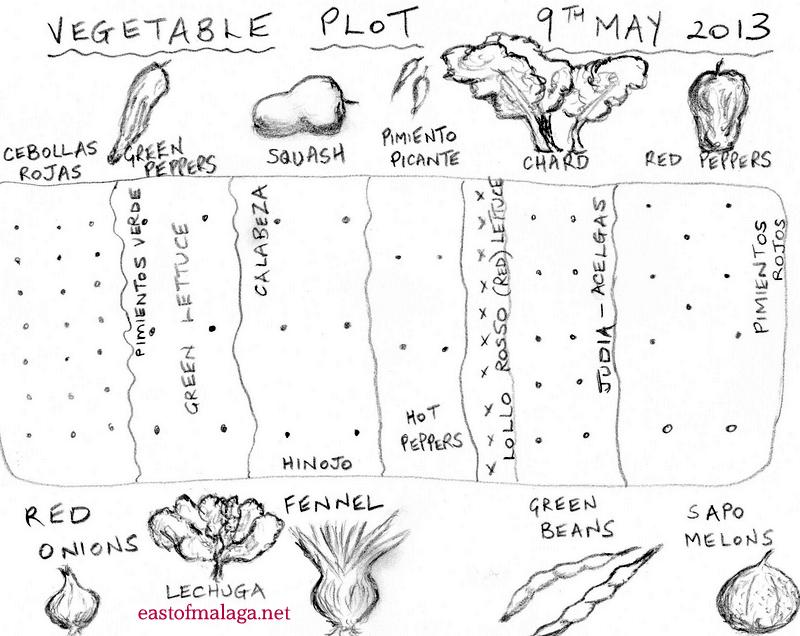
We were able to buy some little plug plants in Vélez-Málaga, at a total cost of just over 11 euros and, after quite a bit of digging, raking and throwing out stones, we finally got to plant red, green and hot peppers, chard, squash, green beans, red and green lettuce, red onions, fennel and melons.

After three days, I can report that the little plants appear to be doing well.  I’ll keep you posted on their progress!
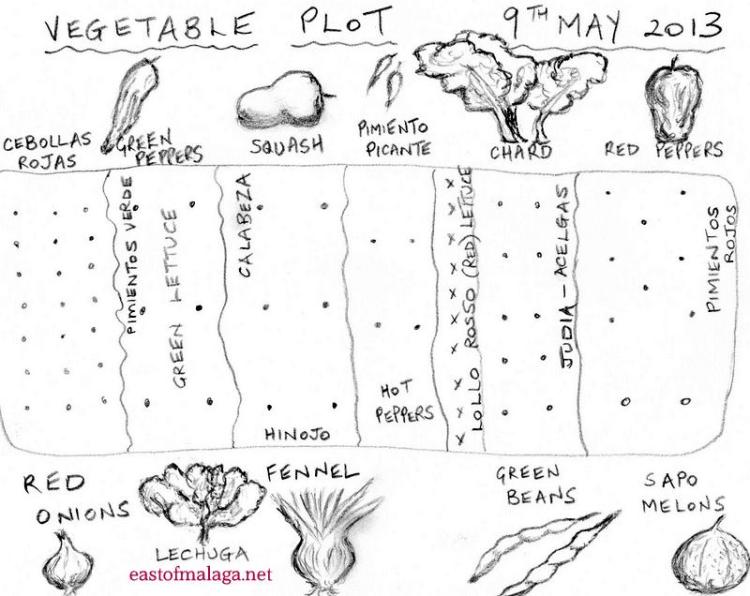
Vegetable plot - planting plan

Previous posts you might find interesting:

A Slice of Life: Garden and Plant Irrigation

Flowering snapshot of a January day around the garden

Wildflowers of Andalucía: Dutchman’s Pipe

Wildflowers of Andalucía: Dutchman’s Pipe

Wildflowers of Andalucia

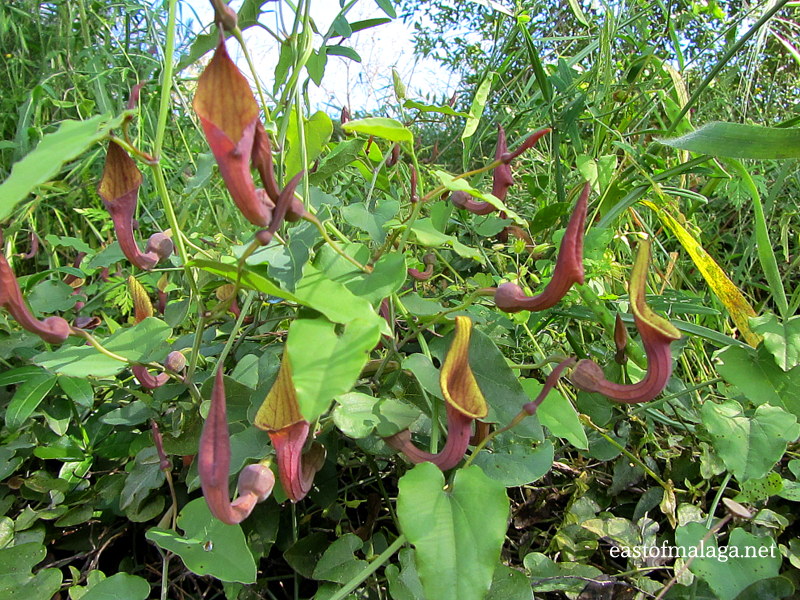
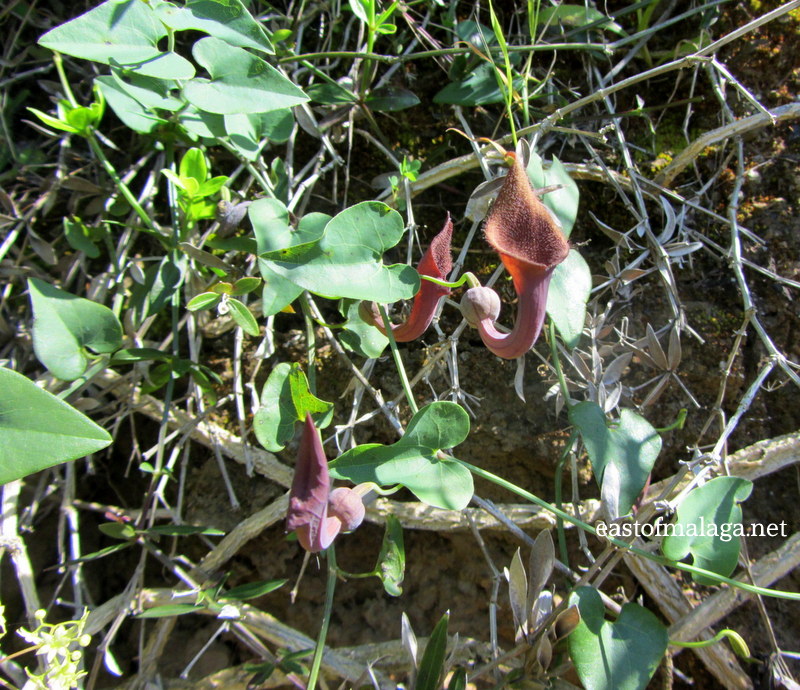
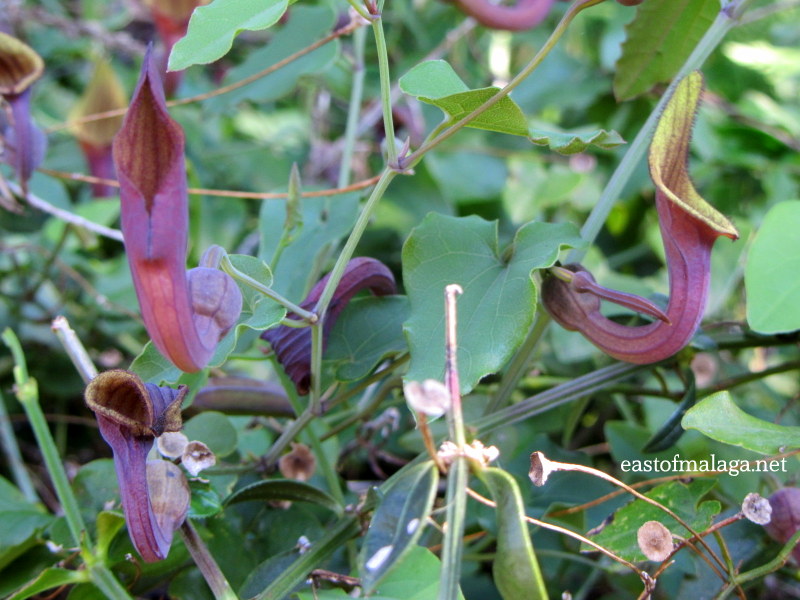
When I was wandering in the garden the other day, I noticed these gorgeous wildflowers growing in the shade of some of the almond trees.  Strangely enough, there is just this one patch of them, and I’ve never noticed them before!  They are a purple/brown colour (some with a yellow/beige interior), have heart shaped leaves, and are a climber/vine.

I looked in my flower book, but couldn’t identify them, so I posted a photo onto Facebook and sure enough, someone knew what they were – Aristolochia baetica.

Wildflowers of Andalucia

According to Wikipedia they belong to the Aristolochia/birthwort family, with their common names “Dutchman’s pipe” and “pipevine” being an allusion to old-fashioned meerschaum pipes at one time common in the Netherlands and Northern Germany.

Birthwort” (e.g. European birthwort A. clematitis) refers to these species’ flower shape, resembling a birth canal.

Dutchman's Pipe

I think they look like a bird’s nest full of baby birds with their beaks open, waiting to be fed!  What do YOU think?

You might also enjoy:

Wildflowers of Andalucía: Bloomin´ lovely!

A Slice of Life: Garden and Plant Irrigation

CBBH Photo Challenge: KNOBS AND KNOCKERS

Wild Orchids

wild orchid

“When two friends understand each other totally, the words are soft and strong like an orchid’s perfume.” 
Martin Luther King Jr.

Just look at this stunning orchid growing wild in my garden.  It is so vibrant!  Isn’t nature wonderful?

You might also enjoy:

Flowering snapshot of a January day 

Travel Theme: Foliage

Cost of Living: East of Málaga