CBBH Photo Challenge: PAIRS

The common meaning of the word pair, (derived from the Latin par meaning’equal’) refers to two of something.

A pair is a set of two things used together or regarded as a unit.

Whether this is something joined, like scissors or pants, or separate as with socks or earrings – there’s a definite connection.

Of course, the word pair can also used in the context of pairing off, up or with – but while you’re having a think about what it means to you, here are a few of my examples.

Don’t forget that the CBBH Photo Challenge is a little different from some other challenges, in two ways.  First, it’s only once a month – giving you lots of time to consider your entry before the end of the calendar month.  Secondand most important, this is a BLOG HOP (after all, it is the CBBH – Conejo Blanco Blog Hopmeaning white rabbit in Spanish), so DON’T FORGET that in your post you need to add links to two blogs that you have visited and commented on during the past month.  That way, when we visit each other, we can HOP OVER to your links, connect with others and share a little blog love around!
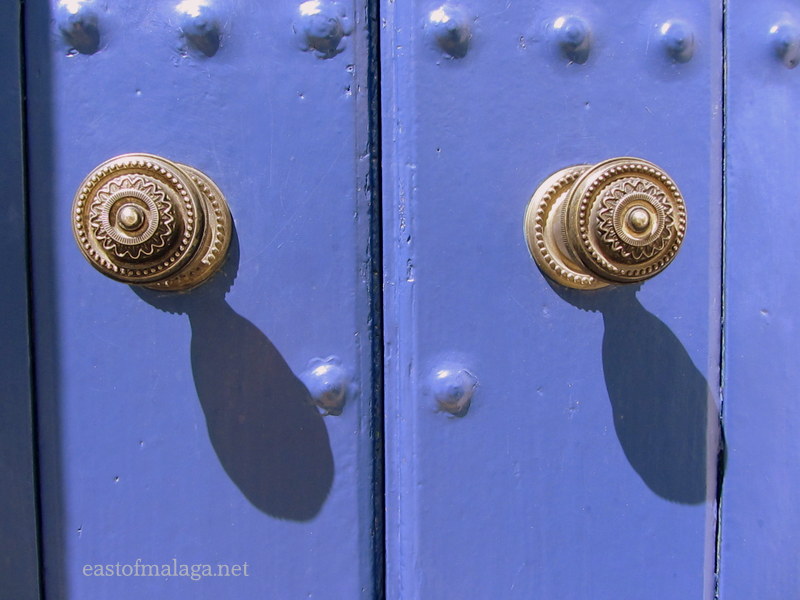
Pair of door knobs in Frigiliana

My first photo shows a pair of door knobs and their shadows, taken in the pretty, white mountain village of Frigiliana.  This blue door is in the top part of the village, only accessible on foot, up a series of stone steps cut into the streets.  There is no motor vehicle access up the steep streets to this part of the village, which remains largely how it must have looked hundreds of years ago, when the village was occupied by the Moors.
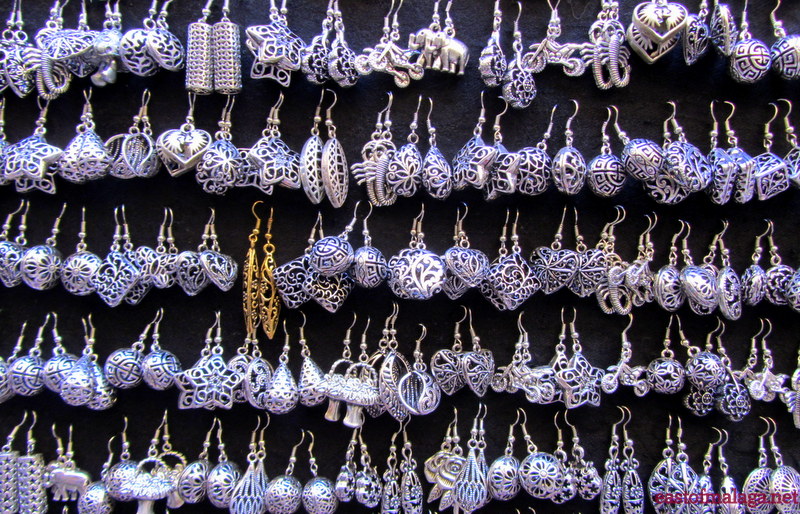
Earrings in the old silk market in Granada

I spotted these earrings for sale in the old silk market, whilst we were visiting Granada earlier in the summer.  I particularly like the fact that amongst all the silver coloured pairs, there is just one pair that is different.
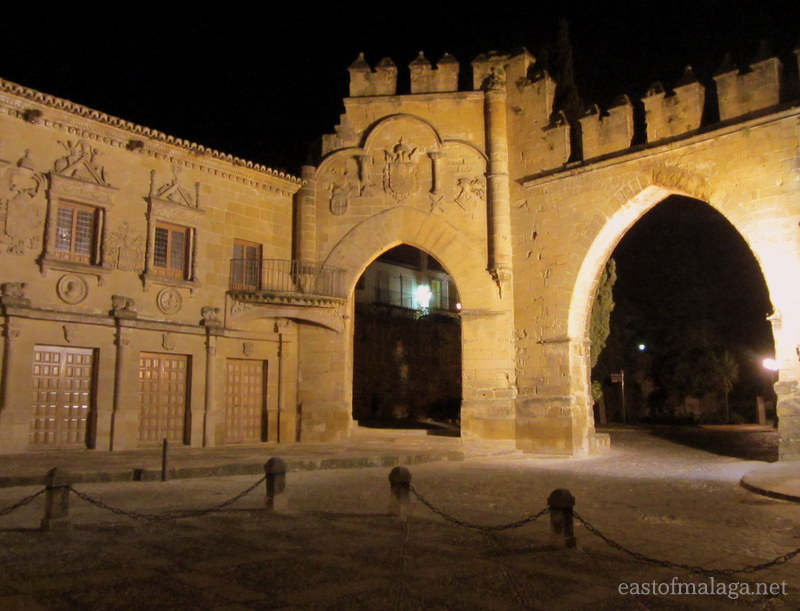
Archways through old city walls, Baeza

July 2013 was the tenth anniversary of the Andalucian town of Baeza being granted UNESCO World Heritage status.  The lovely Renaissance-styled town is a fascinating place to visit and here you can see two arches through the old city walls, beautifully lit to enhance their features.
1-vigen del carmen 2012 005

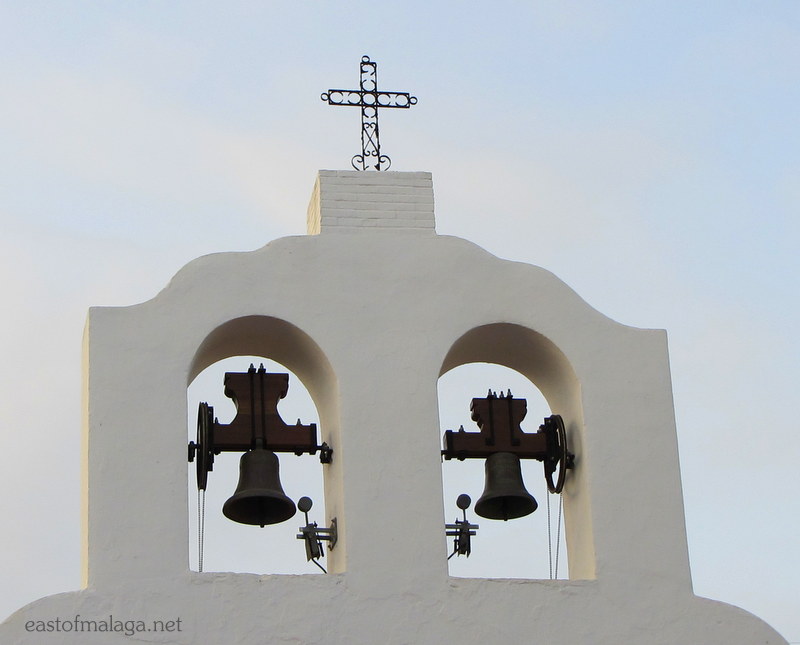
In a festival that dates back several hundred years, many coastal towns and fishing villages in Spain celebrate the Fiesta del Día de Virgen del Carmen as the protector of mariners and fishermen.  Of the many fiestas and festivals celebrated around here, this is one of my favourites, as the statue of the Virgen del Carmen is paraded through the streets before being loaded onto one of the decorated fishing boats and taken out to sea to bless the fishing grounds.   In this photograph you can see the pair of bells situated above the village church from where the statue emerges, used to call the faithful to prayer.
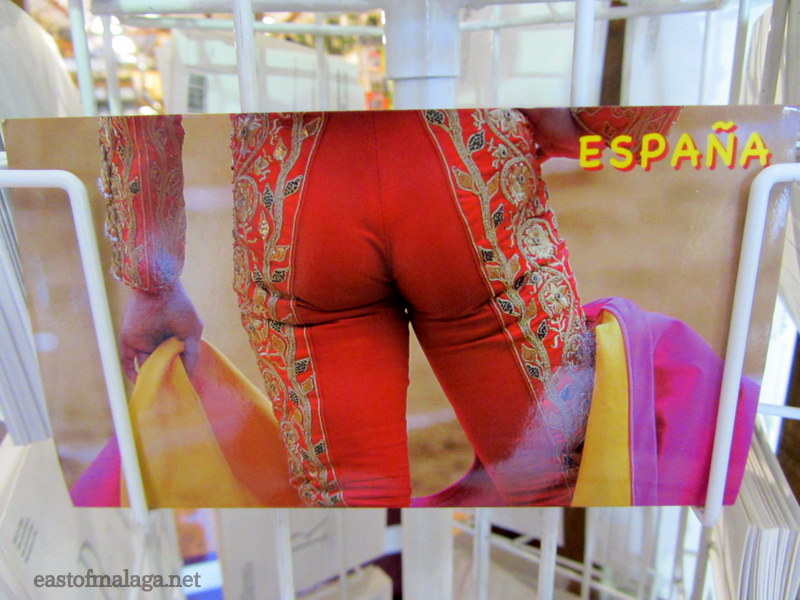
A cheeky pair of bullfighter´s buttocks!

And finally, especially for you ladies, how could I resist taking a quick snap of this postcard for sale displayed on a stand outside a local shop showing a cheeky pair of buttocks belonging to a bullfighter?!

My Featured Blog Links for this month:

** Nicole at thirdeyemom.com is a blogger and social-good advocate living in Minnesota, USA who travels and experiences the world using her “third-eye”, meaning with an open heart and mind.  She works hard to build awareness on some of the biggest social issues in the world and has written about global health, poverty, education, safe water and sanitation, human rights, and most of all, how all of these issues have especially impacted women and girls in the developing world.   Nicole takes the most amazing photographs and maybe you can learn about some of the tips she picked up recently from National Geographic photographer, Kelley Miller.

** Red Hen Run follows the Adventures of an Irish Mother of three teenagers, who is a half marathon and marathon finisher.  Always preferring to be on the go – she runs, but also pecks at photography, cooking, reading and history.  As I am not a runner, I particularly liked the look of her Prawn and Leek Fricasee,  but if running is your thing, you can find lots of useful information about training, sports bras, the use of earphones or just the plain old wisdom of running.

So that´s the CBBH Photo Challenge for October, everyone!

Remember, all you have to do is post your entry by the end of the month, tag your entry ‘CBBH Photo Challenge’,  link back to this blog and, most importantlydon´t forget to add links to any two blogs that you´ve commented on during the past month, so that we can all HOP OVER and have a look.  Make sure you FOLLOW THIS BLOG so you don´t miss next month´s exciting challenge!

For more information on how the CBBH Photo Challenge works click here.

I hope everyone taking part enjoys the exposure the CBBH Photo Challenge offers to featured blogs and, who knows, you may end up finding a new favourite!  I´m looking forward to seeing your interpretations.

[CBBH logo Image credit: (cc) Mostly Dans]

Let’s talk about tapas, shall we?

Well stocked tapas bar in Spain

I’m going to be starting a new feature all about tapas soon, so let’s start by finding about what they are.

It’s thought that originally in the wine-making regions of Andalucia, a cover in the form of a small plate or lid was placed over glasses of wine to keep fruit flies away.  Titbits of food were later placed on the lid to be eaten with the wine.

The word “tapar” in Spanish means “to cover”, which is where we get the word “tapas” from.

How wonderful that Spaniards thought it unacceptable that a fly ends up in your drink, but it´s fine if it lands on the accompanying snack!

Other stories suggest that tapas were invented by a bar owner in Seville, who decided to put a cover (tapa) over his guests´ glasses of wine, using a slice of bread to keep out flies.  He later put a piece of ham or cheese on top, so that his customers could have a bite to eat with their drink.

Rioja and scrummy tapas!

Either way, the idea spread, so that nowadays the types of food served as tapas are limitless.  Most Spaniards don´t drink alcohol without a tapa and many bars, especially in southern Andalucia, provide them free of charge.

The original Spanish “fast food” is usually displayed in refrigerated glass cabinets on the bar and served in small terracotta glazed dishes. Some examples of the type of tapas normally available include gambas (whole cooked prawns in their shells), boquerones (fresh anchovies in olive oil, vinegar and garlic), chorizo (spicy Spanish sausage), albondigas (meatball…often in a creamy almond sauce), queso (cheese…often manchego), habas con jamon (broad beans with ham), ensalada rusa (Russian salad) or just a few olives.

Delicious tapas

Your choice of tapas is usually accompanied by a small piece of crusty bread which helps to counteract the adverse effects of the alcohol through drinking on an empty stomach.

What a sensible idea!

In many establishments, if you stand at the bar along with the locals you will be given one tapa free with each drink you buy.  

That’s right …. free food!

Tapas in Spain

Should you choose to sit away from the bar, you can pay for a tapas or two (usually about one euro in this part of Spain), or opt for a larger serving known as a ración (ration) or medio ración (half ration). This is a great way to eat a variety of dishes, and a pretty sociable activity as groups generally tend to share their dishes.

The food is generally very good, even in remote villages around the Axarquia.

Where is your favourite tapas bar?   Which tapa do you choose, time and time again?


You might also like to look at:

All at sea with the Virgen del Carmen

La Noche de San Juan: Families, fires and football!

Bus Services: East of Málaga

Usually Hidden and From An Unusual POV

Dama de Noche on a rainy day in Spain


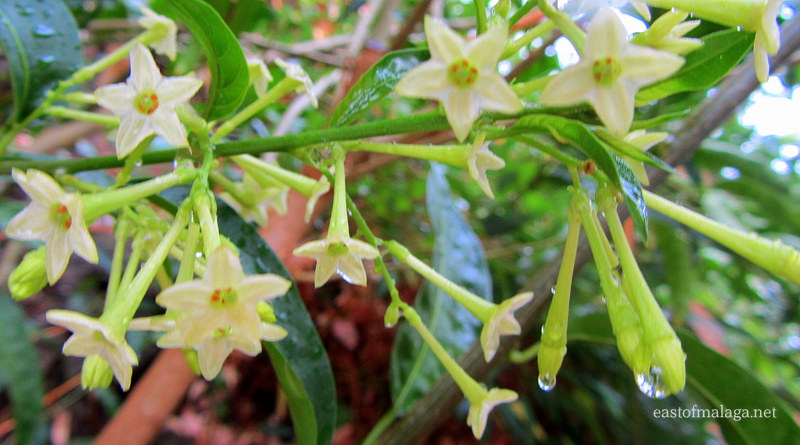
We don’t see this beautiful little flower very often because it is usually hidden in the daytime and opens during the hours of darkness to release it’s beautiful perfume.  I’ve written about the Dama de Noche (or night-scented jasmine) before, but it made an appearance today because we had heavy rain for most of the morning, and have had a dismal, cloudy afternoon.  The poor plant must think the evening is upon us already!

Still, we have had a long hot summer and the ground desperately needed the rain.  I know that the sunshine will soon be back 🙂

Anyway, it gave me the opportunity to photograph raindrops on the flowers from An Unusual POV, which just happens to be this week’s WordPress Photo Challenge!

Have YOU had a Silver Lining, recently?


You might also enjoy these other entries from:

Ese’s Voice

Le Drake Noir

The World is a Book

Meg Travels


Venturing further afield: A long weekend in Zaragoza

We love to travel not only locally, but throughout Spain, so I will also include information, from time to time, about where we have visited.  Usually these places can either be driven to within a few hours of our home, east of Málaga, or we will have flown there from Málaga (AGP) airport.

Zaragoza and the River Ebro, Spain

We managed to find some cheap return flights from Málaga with Ryanair  to Zaragoza in northern Spain.  If you take only hand luggage, there are often bargains to be had,  so if you have a few days to spare, it is well worth spending a long weekend in this beautiful city.

Situated in the northeast of the country on the river Ebro, Zaragoza was once an important Roman colony, a thriving Muslim city and a cornerstone of the Catholic Spanish empire.   This ancient city has the fortune of being located between Madrid, BarcelonaValencia and Bilbao, which probably accounted for it’s prominence.

Zaragoza is Spain’s fifth largest city and is the capital of the immense autonomous region of Aragon.

Roman walls in Zaragoza, Spain

Deriving its name from the Roman Emperor Caesar Augustus,  Zaragoza has a real Roman theme to it, with an 80 metre section of  the old city walls still surviving, as well as a forum, theatre and baths.

We lost no time in getting to know this charming city which, despite having a population of over 700,000,  feels surpringly small and easy to get around.

Zaragoza cathedral

We visited the beautiful Baroque Catedral-Basílica de Nuestra Señora del Pilar and took the scenic elevator inside the highest tower for magnificent views over the River Ebro and the city.

Palacio de la Aljafería, Zaragoza

We were amazed by the Palacio de la Aljafería  which pre-dates the Moorish Alhambra Palace in Granada, and is the home of the regional parliament of Aragon.  The Mudéjar Architecture of Aragon, including the Basilica, La Seo Cathedral and the  Aljafería Palace have been designated a UNESCO World Heritage Site.

Zaragoza is a city that may not figure on the typical tourist trail around Spain but, nevertheless, may just be one of its best kept secrets! 


You might also enjoy:

A weekend away: Santiago de Compostela

Venturing further afield: San Sebastián in the heart of Basque country

A long weekend in Santander