The World Through My Eyes: Seeing Red

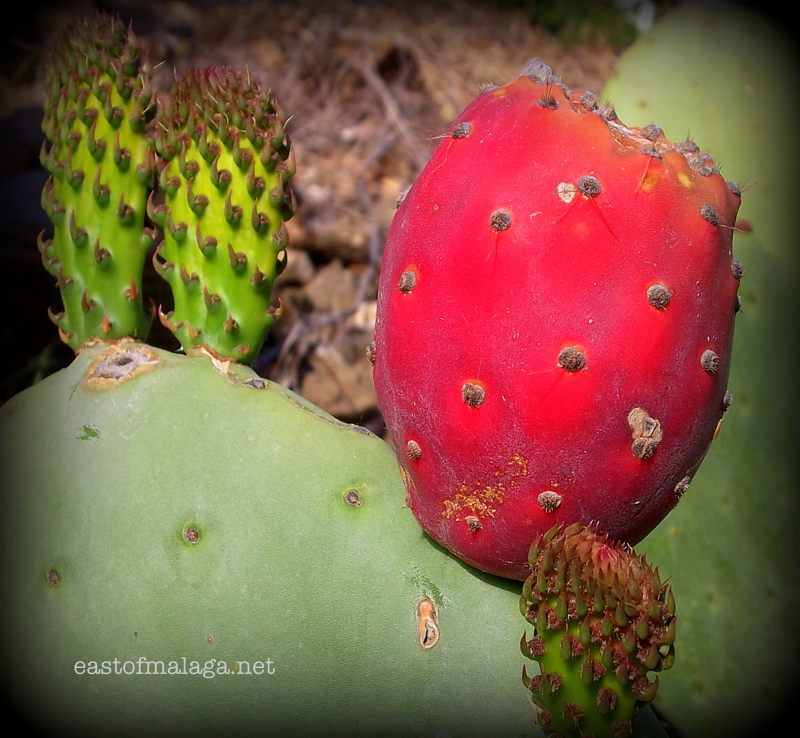
Prickly pear cactus

As a result of this week’s WordPress system update, I couldn’t access the Dashboard of my blog for almost 24 hours.  

When finally I managed to log-in, I was preparing the draft of a post which was scheduled for yesterday (Friday) in which I would offer the followers of East of Málaga the chance to WIN 6 HANDWRITTEN POSTCARDS FROM SPAIN.

I pressed the “Preview” button and …. up popped a box to say that my draft had been posted!   GRRRR!

Strangely, the post didn’t appear on the blog, but that didn’t stop the message going out to followers via Notifications in the Reader, by email, on Facebook and Twitter.  Of course, this meant that when anyone clicked on the link to the post – they received the Error 404 message that the post could not be found!  

Sorry about that, folks.

Annoyingly, when yesterday came around and the scheduled post finally posted to the blog, NO NOTIFICATIONS were sent out by WordPress in the Reader, by email, on Facebook or Twitter!  

Technology, huh ….. SHEESH!!

I don’t want anyone to miss out on the chance to WIN just because WordPress screwed up – so if you didn’t receive the notification, please head over to yesterday’s post for your chance to WIN 6 HANDWRITTEN POSTCARDS FROM SPAIN – which is my way of saying a GREAT BIG THANK YOU to everyone who has supported and followed my blog.

Always assuming that when I press “Publish” – you get notified about THIS POST, of course!

Related articles:

WordPress Photo Challenge: The World Through my Eyes

CBBH Photo Challenge: Same Subject, Different Time

La Noche de San Juan: Families, fires and football!

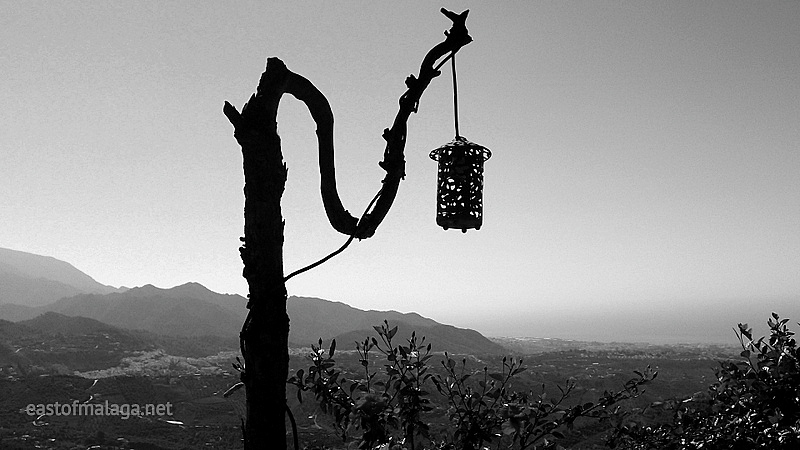
Looking across to Frigiliana

Across to Frigiliana, Spain


Whenever we have visitors staying with us, we always take them for a scenic drive along the back road from Torrox pueblo to the beautiful white village of Frigiliana.

The views across to Frigiliana and Nerja are stunning! 

This photograph was taken from the terrace of Los Caracoles Restaurant and Hotel.  Towards the bottom left you can see the white village (pueblo blanco) of Frigiliana and, over to the right, the nearby town of Nerja, with the Mediterranean Sea in the background.

This view never fails to take my breath away …. no matter how many times I see it!

I’ve never posted any black and white photos before, but I wanted to show support for a new venture set up by my blogger friend, Sonel.   I hope you will, too!


You might also enjoy:

Sayalonga: The narrowest street in the Axarquía

Photographs I love – and why!

CBBH Photo Challenge: SAME SUBJECT, DIFFERENT TIME


Death in the Afternoon: The Round Cemetery of Sayalonga

I love discovering and exploring burial sites wherever I am in the world, not because of any morbid fascination with death, but in the expectation of visually recording their beauty, history and existence.  To me, cemeteries are places where art, history and world religion meet. 

Of course, visiting the graves of our ancestors is a ritual dating back as long as bodies have been buried, allowing families not only to grieve but also to honour and celebrate lives that have passed. 

In Spain, cemeteries still form an integral part of community life.

The Round Cemetery, Sayalonga, Spain

The only round cemetery in Spain can be found in Sayalonga, a typical whitewashed village some 40 kilometres east of the city of Málaga and 9 kilometres from the coast, deep in the heart of the Axarquía region.  You might remember Sayalonga from my recent post about the narrowest street in the Axarquía.

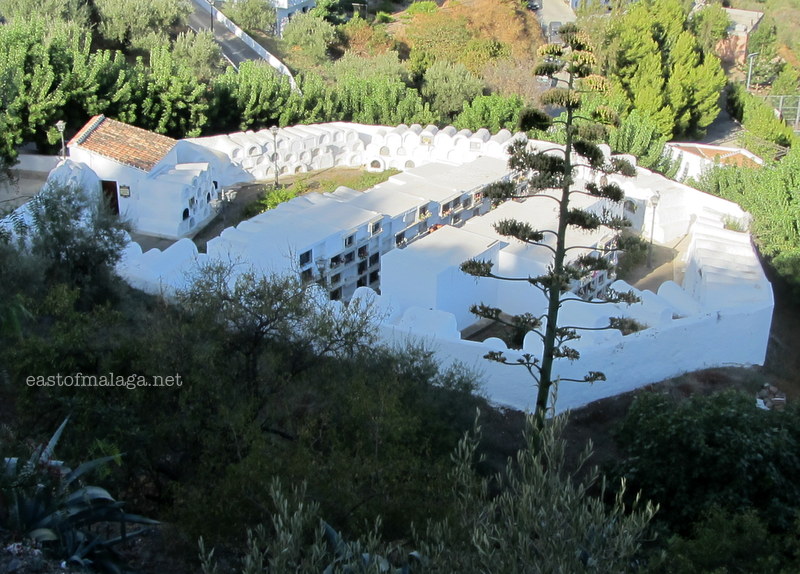
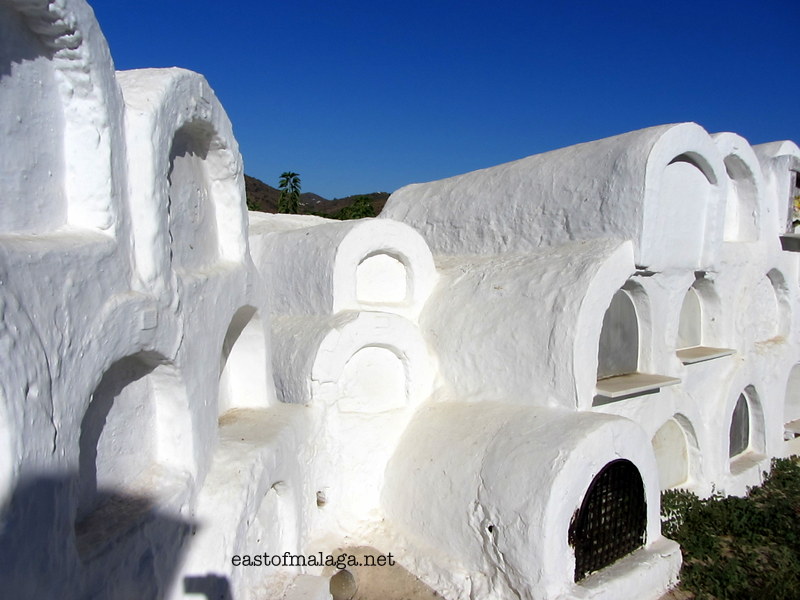
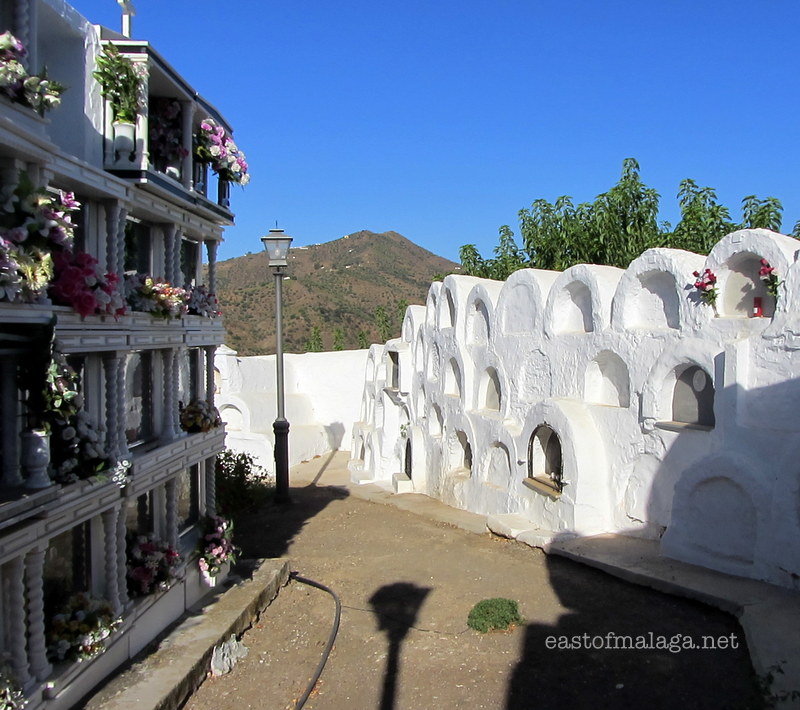
Despite it’s name, the outer walls of Cementerio Redondo, as you can see from the photos, are actually octagonal with rows of parallel, oblong traditional graves added more recently, in the centre.  The older, individual dome-shaped tombs are constructed on top of each other giving the impression of a giant, white honeycomb.

The Round Cemetery, Sayalonga, Spain

Originally, the village cemetery was in the courtyard of the local church of Santa Catalina, however, the Round Cemetery was constructed during the first half of the 19th century and, for hygiene reasons, placed just outside of the village limits.

The motive for this curious shaped cemetery isn’t known, but one explanation is that it was built in imitation of the old cemetery.  I prefer the more romantic interpretation that it was so that the dead could not turn their backs on one another.

There is a small visitor centre at the entrance, which shows and explains the history of the cemetery to more than 3000 tombstone tourists each year.

So, where is Sayalonga’s Cementerio Redondo?

About a forty minute drive east of the city of Málaga along the A7-E15 Autovía del Mediterraneo to km 277, take the exit signposted A 7206 inland towards Algarrobo (pueblo), Sayalonga and Cómpeta.  Stay on the A7206 through the village of Algarrobo and drive up the winding mountain road for a further five minutes until you reach Sayalonga.

There is a mirador (viewpoint) on your left as you are leaving the village heading towards Cómpeta, which gives a good view of the Round Cemetery.

The Round Cemetery, Sayalonga, Spain

Are you a fellow taphophile?  Do you enjoy visiting cemeteries when you are on vacation?  Where’s the most unusual cemetery you’ve ever visited?

Related posts:

Weekly Photo Challenge: Curves

The Day of the Dead: A Celebration of Life

Sayalonga: The narrowest street in the Axarquía

Weekly Photo Challenge: Fleeting


The wild flowers are mostly at an end now, here on southern coast of Andalucía – but there are still a few of these gorgeous poppies about.


But, they only last for a few precious, fleeting hours until the petals fall to the ground and each individual flower has gone forever.


Related posts:

Wildflowers of Andalucía: Dutchman’s Pipe

Wildflowers of Andalucía: Bloomin´ lovely!

Zafarraya Pass: Walking with Neanderthal Man


East of Málaga: Flying the Blue Flags

Blue flag beach at Torrox Costa, Spain

At the end of May each year, the independent non-profit organisation Foundation for Environmental Education (FEE) awards its prestigious Blue Flags to beaches and marinas in the northern hemisphere for their water quality, safety standards, environmental education and amenities.

The Blue Flag is a voluntary eco-label awarded to more than 3850 beaches and marinas in 48 countries around the world.    With a total of 648 ensigns, Spain has maintained its position at the top of the list in the northern hemisphere.

Here is the list of current blue flag beaches on the eastern Costa del Sol:  Algarrobo Costa in Algarrobo;  Ferrara in the municipality of Torrox;  Burriana and Torrecilla beaches in Nerja;  Benajarafe  and Torre del Mar in the municipality of Velez-Málaga and last, but not least, Cala del Moral in Rincón de la Victoria

The Blue Flag is awarded on an annual basis, and can only be only held for one season before it will be judged once again by FEE.

Beach, east of Malaga

Related posts:

East of Málaga: The Weather in Summer

La Noche de San Juan: Beaches and Bonfires

Photographs I love – and why