VOTE, VOTE, VOTE for David against Goliath!

Cómpeta, Andalucía, Spain

OK, OK …. I admit, it’s not really for David – it’s for ME!  But we ALL love an underdog, don’t we?  🙂

In my analogy, Goliath is a professional photographer currently leading the vote in a photographic competition I have entered on Facebook.   So, even though I AM that underdog, I’m running a close second, only a few “Likes” behind, but with only five more days left to vote.

Faithful followers: I NEED YOUR HELP TO DEFEAT THIS GOLIATH!

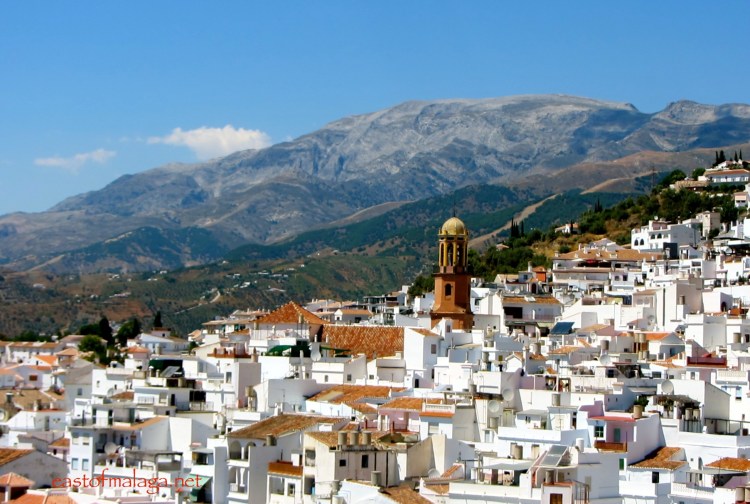
If you are logged into your FB account, click on the photo above (it’s of my home village of Cómpeta) and you will be taken through to to my voting page.  All you need to do is LIKE and COMMENT on that post.

THE PRIZE is a day trip for 4 people (with lunch), to one of the most picturesque parts of Andalucía along a scenic train line known as Mr Henderson’s Railway – a British-built Victorian train line from Algeciras to Ronda.

If I’m lucky enough to win this competition, there are two further benefits:

1.   I will SHARE MY PRIZE by inviting two local bloggers to join me for the day.

2.   You will be able to read all about my trip in a blog post, where I will include lots of lovely photos.

Will you help me to share the joy by voting for my photograph?  

Thank you.

EDITED TO ADD:    So many of you clicked through to my photograph and added your vote that I am delighted (and amazed) to tell you that David did indeed defeat Goliath.  I WON!  I have invited two local bloggers to join me and sometime over the next three months we will be enjoying the prize of a trip on Mr Henderson’s Railway.  I’ll let you know all about it.    Thank you to each and every one of you who took the time to vote.  I am truly grateful for your continuing support.  You are AMAZING!

The Old Railway Line at Zafarraya

Zafarraya Pass, Spain

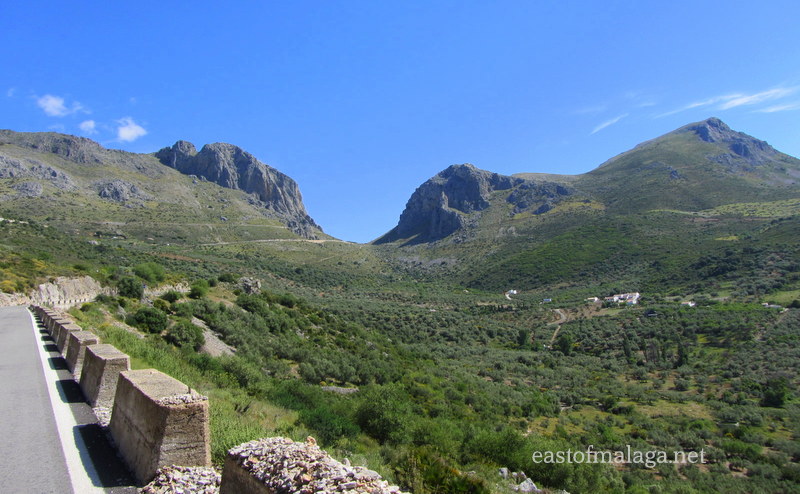
You might remember, I’ve told you before about the spectacular U-shaped Zafarraya Pass (El Boquete de Zafarraya) marking the boundary between the provinces of Málaga and Granada, and which can be seen for miles around.

Standing over 900 metres above sea level, the Pass has been used for centuries as a key route through the sierras, linking lands south-west of Granada, with the towns and villages along the coast, east of Málaga.
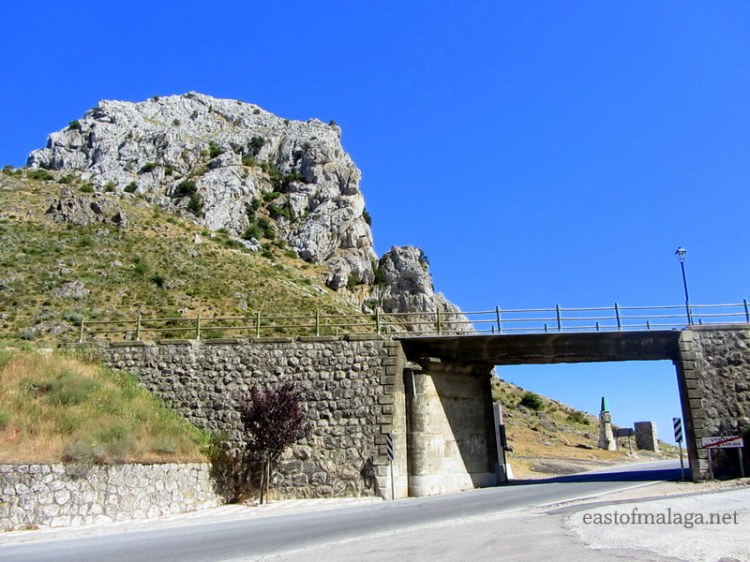
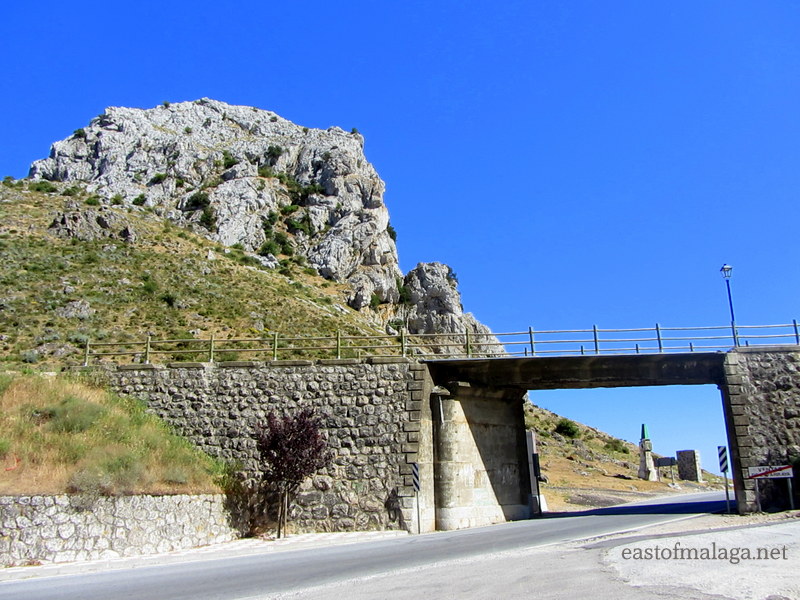
Old railway bridge at Zafarraya

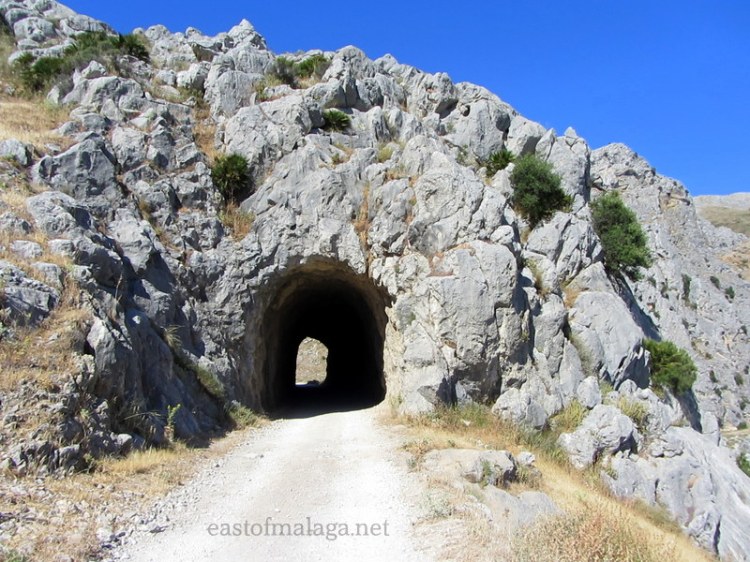
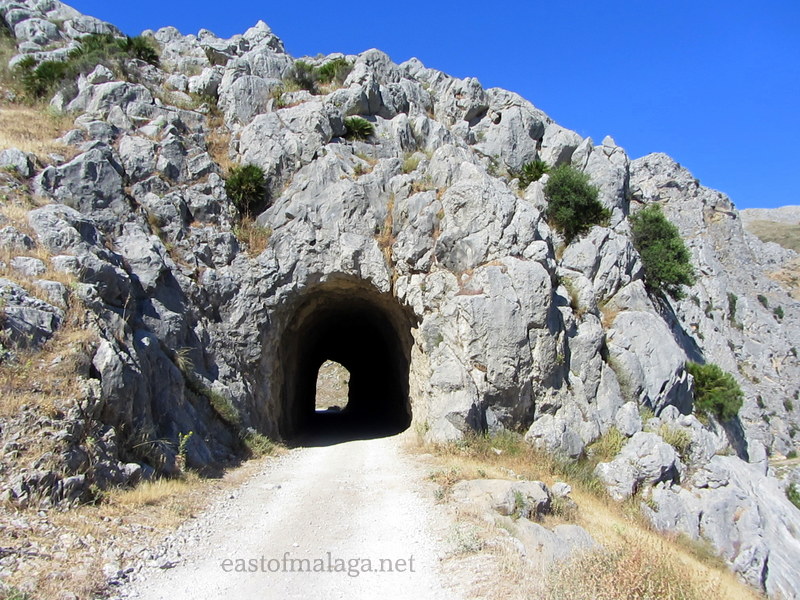
On the approach to the gap in the mountains, above the road on the left, a small tunnel through the rock can be seen.   This once formed part of the Periana to Zafarraya railway line, abandoned fifty years ago.  The tunnel is now used by horse-riders and walkers who enjoy strolling along the dirt road where the railway once ran.

Last time I went through the Zafarraya Pass, instead of whizzing by, I decided to stop and have a look.  After driving under the the old iron railway bridge, I parked in the small car park on the left side of the road.
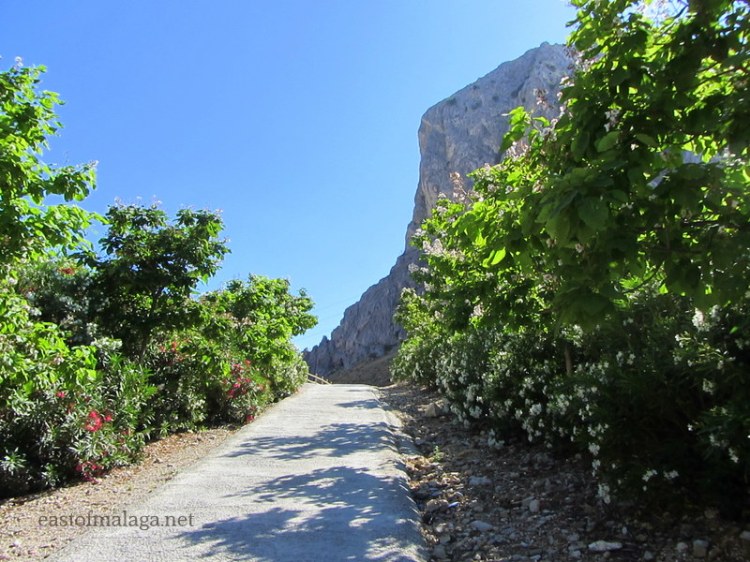
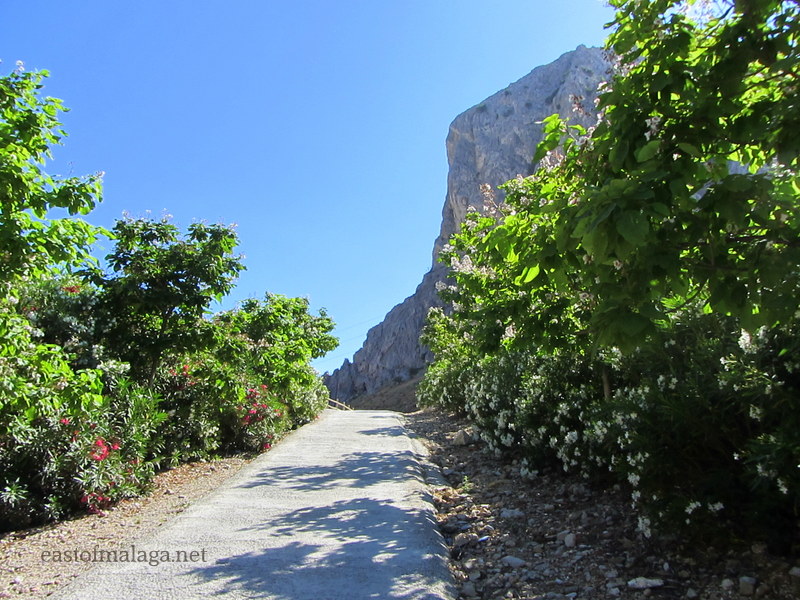
Pathway to the railway

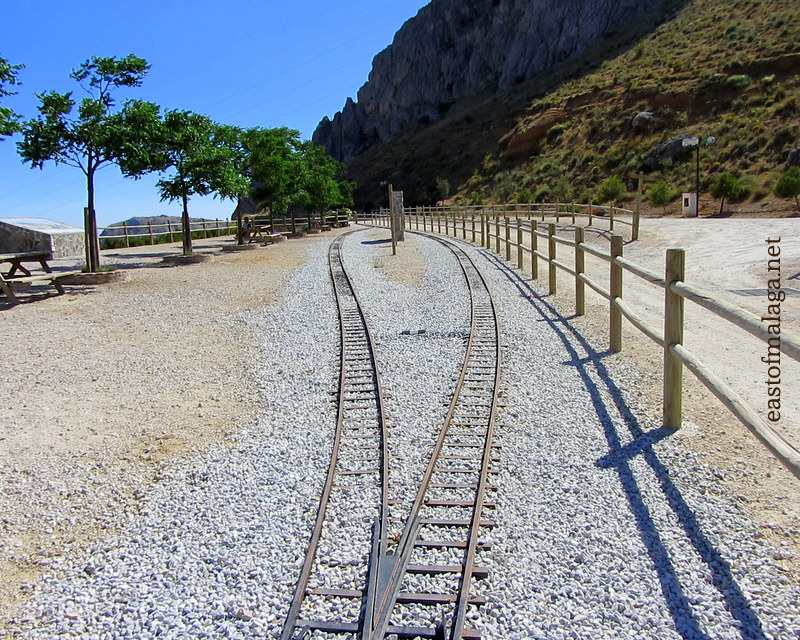
It’s only a few steps up the gentle slope to where the narrow gauge railway once ran.  The main tracks were removed long ago, but there is still a short length remaining to illustrate what it must have looked like.

Narrow gauge line running towards Zafarraya, Spain

Old train line, Zafarraya

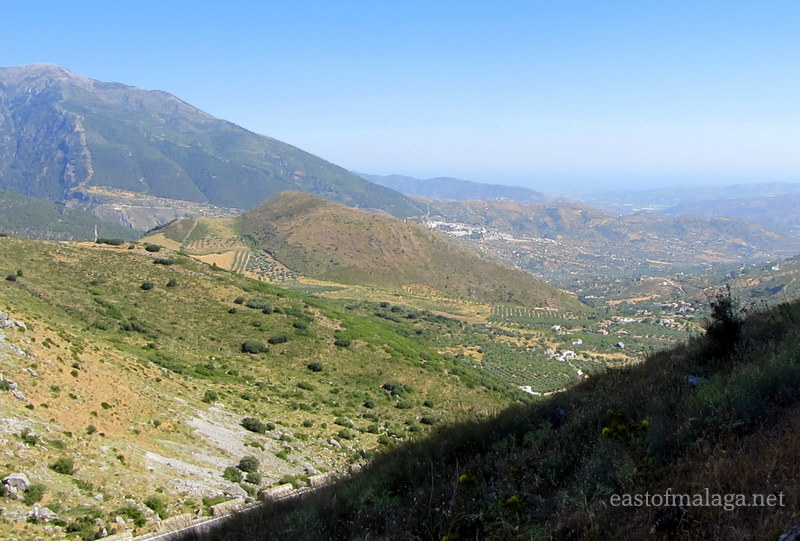
The views from the Mirador El Boquete (lookout point) both across the Pass and down towards the coast are stunning.  This is a lovely peaceful place to stop for a picnic, and there are a couple of picnic tables for public use.

From here you can see the peaks of Tajo de la Cueva and El Morron de La Cuña, the hamlets of Espino, Los Cortijillos, Los Pavitos and Los Morales as well as numerous white houses, dotted like paint spots on a canvas, as far as the eye can see.  The village of Alcaucín and the Parque Natural lie ahead, overseen by La Maroma, the highest mountain in the Axarquía region at 2066 metres.

If you cast your eyes further down the valley, La Viñuela reservoir and the Mediterranean Sea glimmer in the distance.
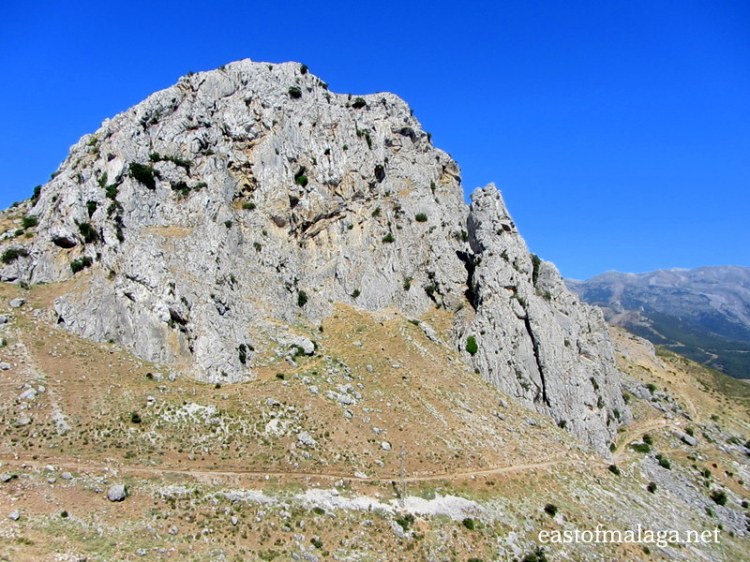
El Boquete de Zafarraya, Spain

Mirador del Boquete, Zafarraya

View towards the coast from Zafarraya

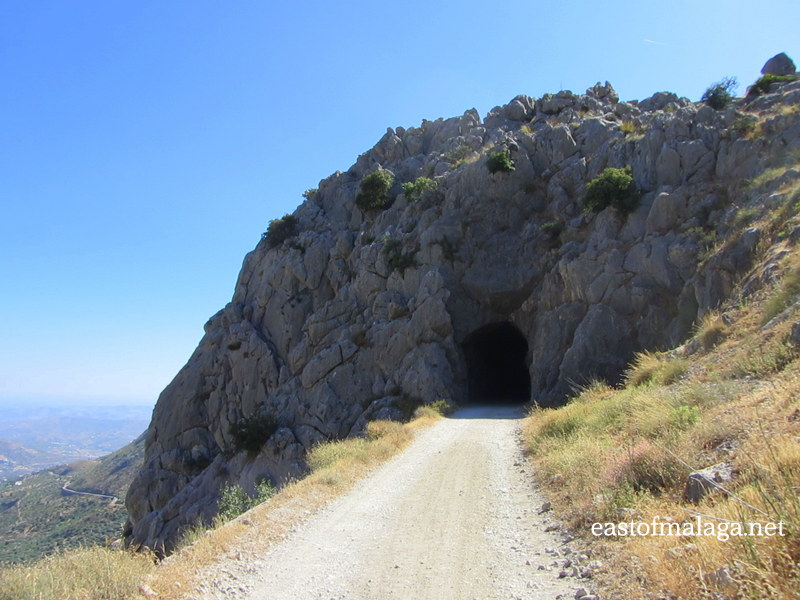
I wandered along the dirt track, and ahead of me I could see the old narrow railway tunnel.  

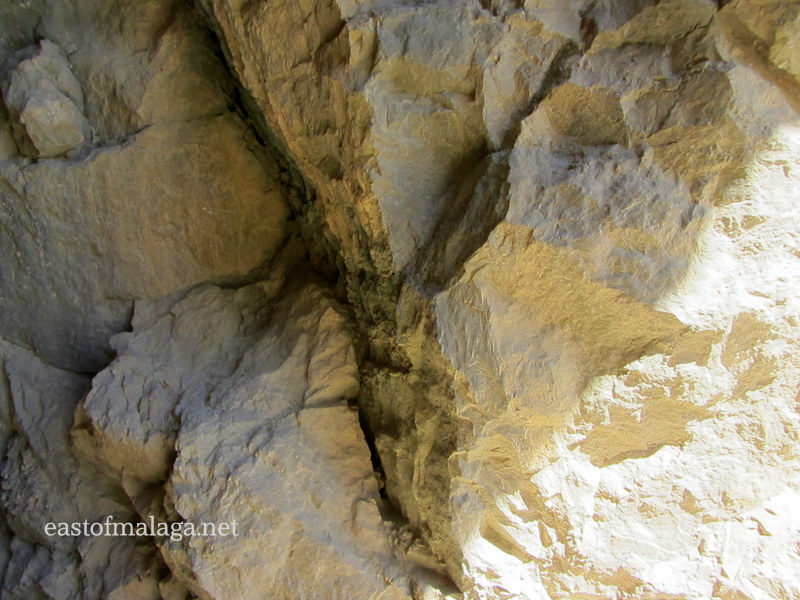
As I approached, the enormity of the task in building the tunnel was obvious.  It had been hewn through the rock by hand.   What a job!
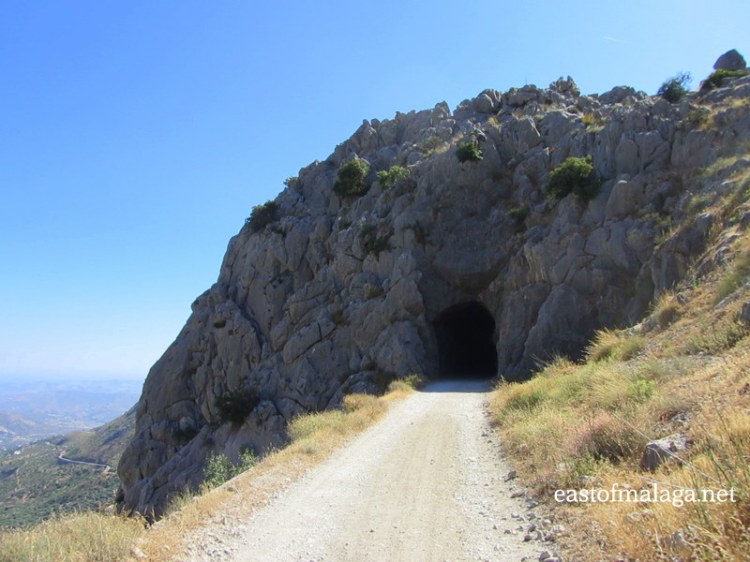
Entrance to old railway tunnel, Zafarraya, Spain

Inside the old railway tunnel, Zafarraya

Hand carved stone inside the tunnel

Tunnel through the rock, Zafarraya

Rather than just strolling as I did, and depending on how fit you are, you might enjoy an adventurous walk or a more gentle ramble from Periana, the source of the old railway line, back to the Boquete de Zafarraya.  

Whatever you choose, be sure to watch out for the fabulous birds.

Views along the track towards the coast

How to get there

To get to the Zafarraya Pass, drive north from the A7/E15 Autovía del Mediterraneo, past the town of Vélez-Málaga and briefly alongside Lake Vinuela, before heading up the A402, a winding mountain road.  

You will see the gap in the mountains ahead, getting closer and closer the higher you climb.

Where do you enjoy walking when you need to find some peace and quiet?
The First Almond Blossoms of the Year

First almond blossom in Andalucia, 2014

We’ve had to wait two weeks longer than usual in our garden, but they’re finally here ….. the first almond blossoms of 2014.

Flowering time: Early January to end of February.

Which flower do you always look forward to seeing in the garden?

Related articles:

A Year in the Life of an Almond Tree – Andalucían Style!

Pretty in Pink: The Almond Blossom of Andalucía

Men Bearing Gifts: Celebrating Three Kings Day

Until I moved to live in Spain, January 6th only meant one thing to me – the twelfth night – or, more importantly, the day you are meant to have all your Christmas decorations packed away until next year.

three kings parade[Image credit: Flickr (CC) Paul and Jill]

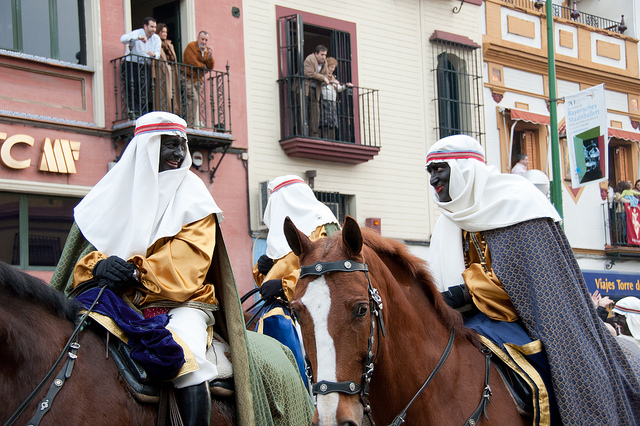
Now, of course, I know that it’s the day that La Fiesta de Los Reyes takes place throughout Spain to celebrate the day the Three Kings arrived in Bethlehem to present the baby Jesus with their gifts of gold, frankincense and myrrh.   It is also the most important day for Spanish children, as they receive their festive gifts from the Three Kings rather than Father Christmas (although every year Santa is becoming increasingly popular).

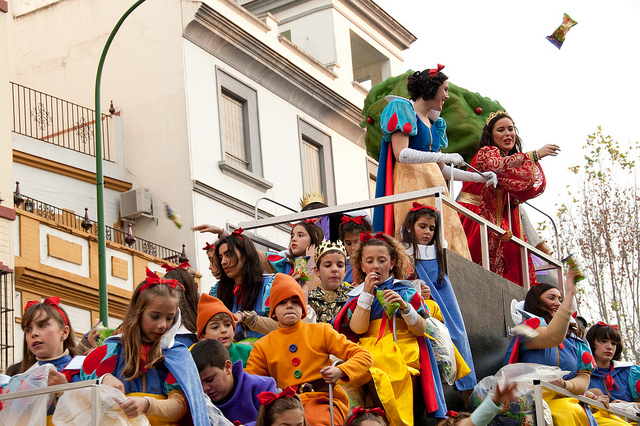
The fun starts on the previous evening, usually with processions passing though most towns and cities.  During the late afternoon, the crowds grow in anticipation of the arrival of the Three Kings on huge motorised floats, horseback, camels or, in the case of my local mountain village a year or two ago – in the back of a police car!

three kings float[Image credit: (cc) Paul and Jill]

As daylight fades away, you might hear the drums and music of the approaching parade, heralding the arrival of the Three Kings.

People on the floats throw boiled sweets towards the waiting crowds on either side.  But beware!  Some of the younger people on the floats can be rather enthusiastic throwers, with sweets being hurled out like missiles!  If you’re not careful you’ll get your eye taken out!  Many in the crowd come prepared, holding up-turned umbrellas to catch the booty, whilst others just scrabble around the ground, stuffing the fallen sweets in their pockets or bags.

It´s quite a sight to see adults scuttling around grabbing sweets off the floor totally without embarrassment – in fact, it´s easy to get caught up in the excitement of it all!

After the parade, most families head home where, before going to bed,  the children will put out something nice to eat and drink for the Three Kings, plus water for their camels. They also leave out their best pair of shoes to be filled with presents.  The next morning, if the children have been good then they will find presents in and around their shoes, if not, then only a lump of coal will have been left for them – though I suspect that doesn´t happen very often.

Roscon de Reyes

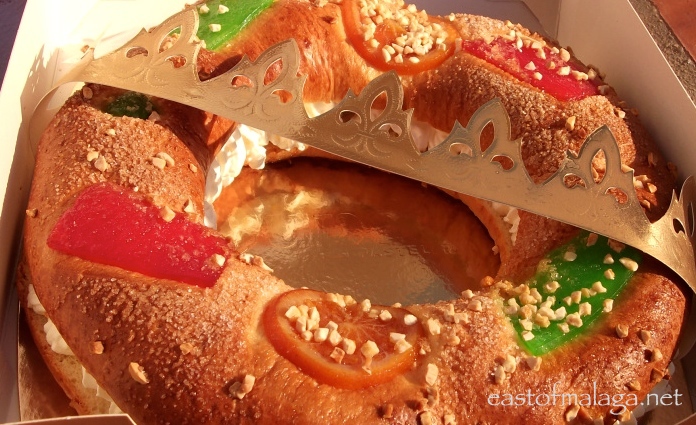
On January 6th, most families gather around the table to enjoy their Roscón de Reyes.   This is a ring-shaped bun or sweet bread, sugar-frosted and decorated with fruit flavoured jellies and fruit. The bun is sliced in half and filled with a mock cream mixture.  Hidden somewhere in the cream will be a novelty such as small model king and, if you are lucky enough to find one of the hidden figurines in your portion, then tradition has it that you will be blessed with good luck for the coming year.  Though I guess it would be bad luck if you inadvertently swallowed it and choked!

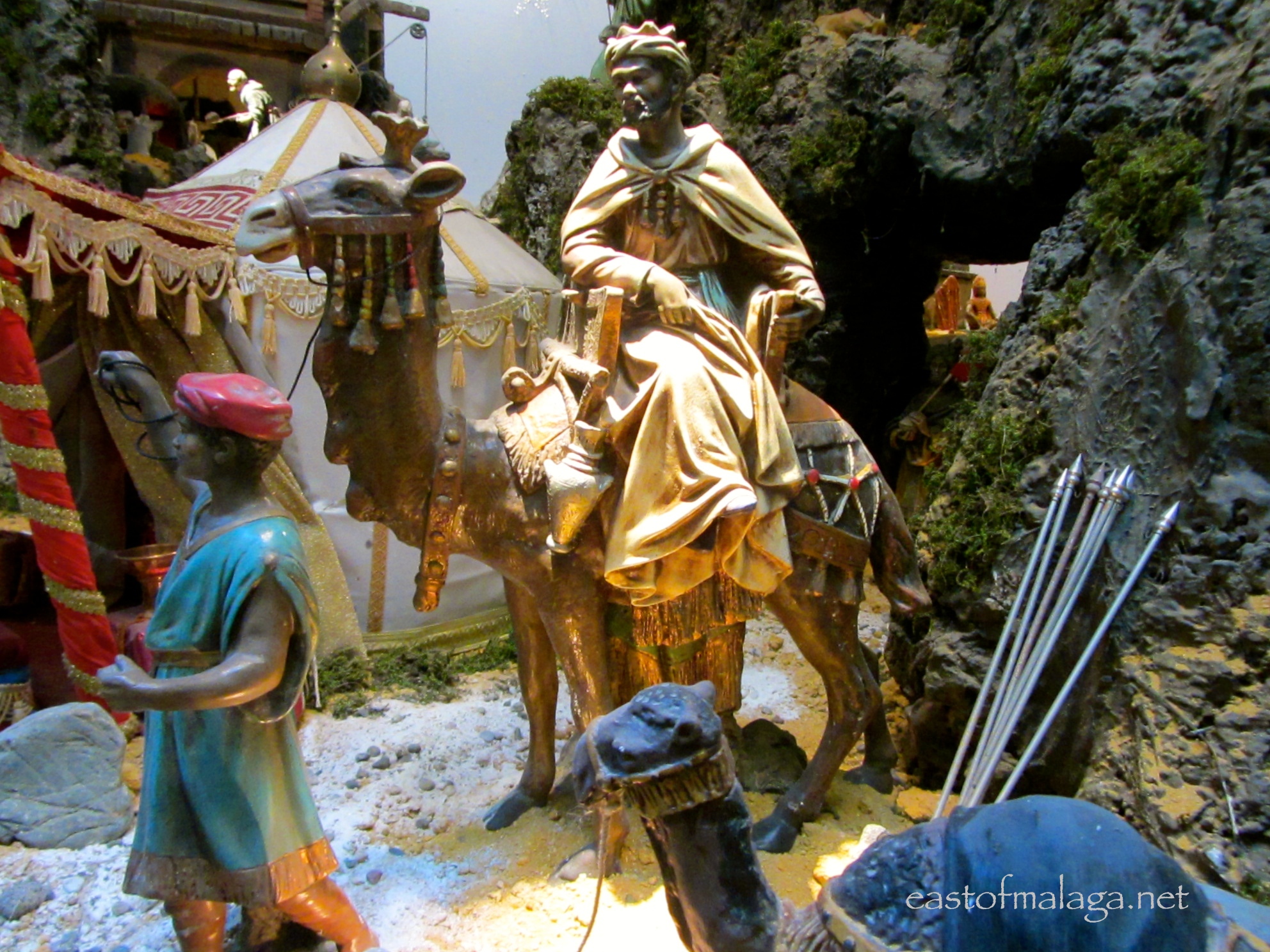
Belen in Malaga Town Hall

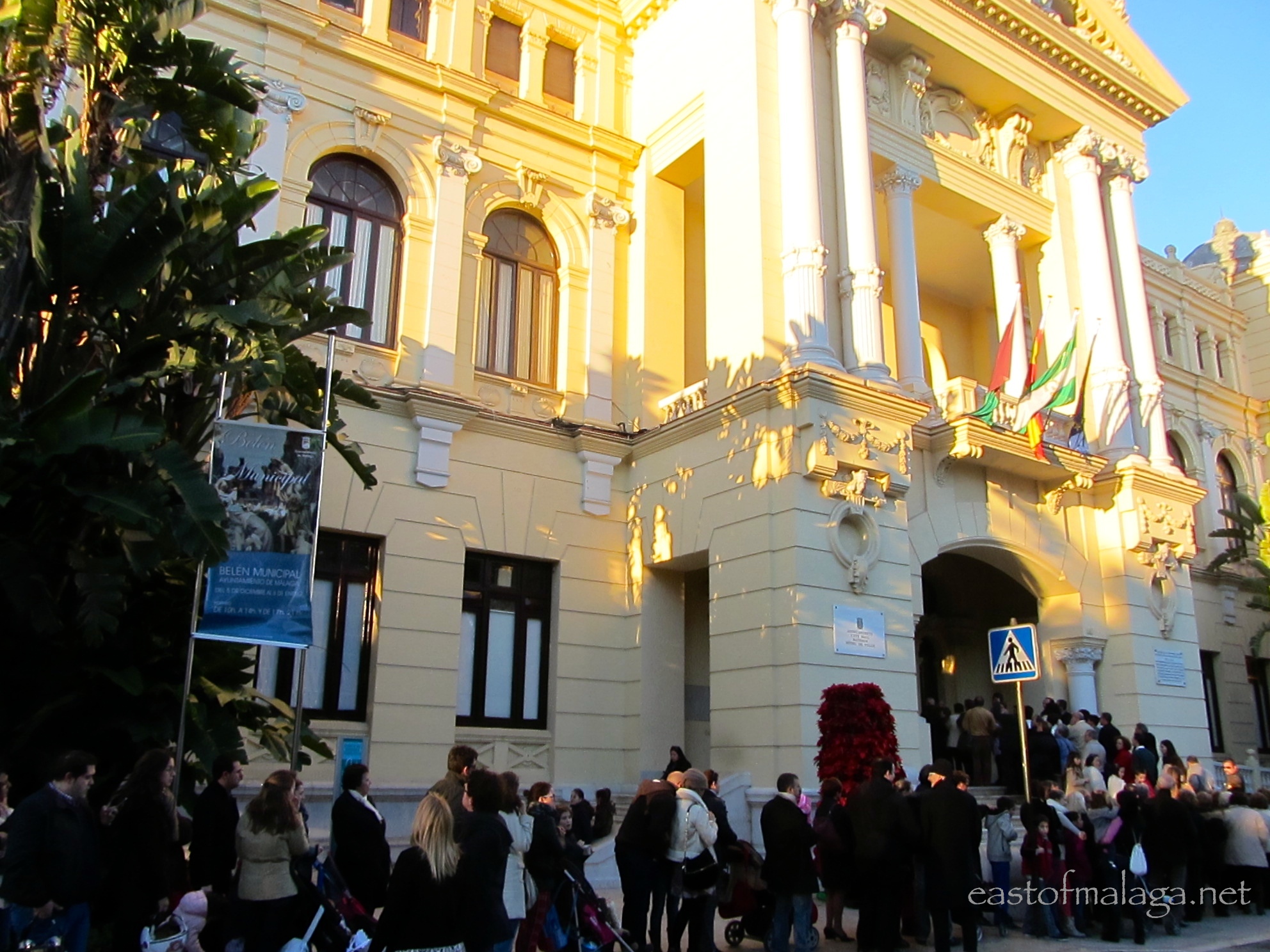
Nativity scene at Malaga Town HallThis is also the final opportunity to see one of the many Belénes (Nativity scenes) around the town or city.  I photographed this one inside Málaga Town Hall (Ayuntamiento de Málaga) last Sunday.  There was quite a queue to get in by the time I left.

Queue of people to see the Belen at Malaga Town Hall

Which is your favourite fiesta or festival?

You might also like to look at:

My Travel Reflections on 2013

Malaga’s Urban Street Art

The Buddhist Stupa of the Eastern Costa del Sol

CBBH Photo Challenge: STREET ART

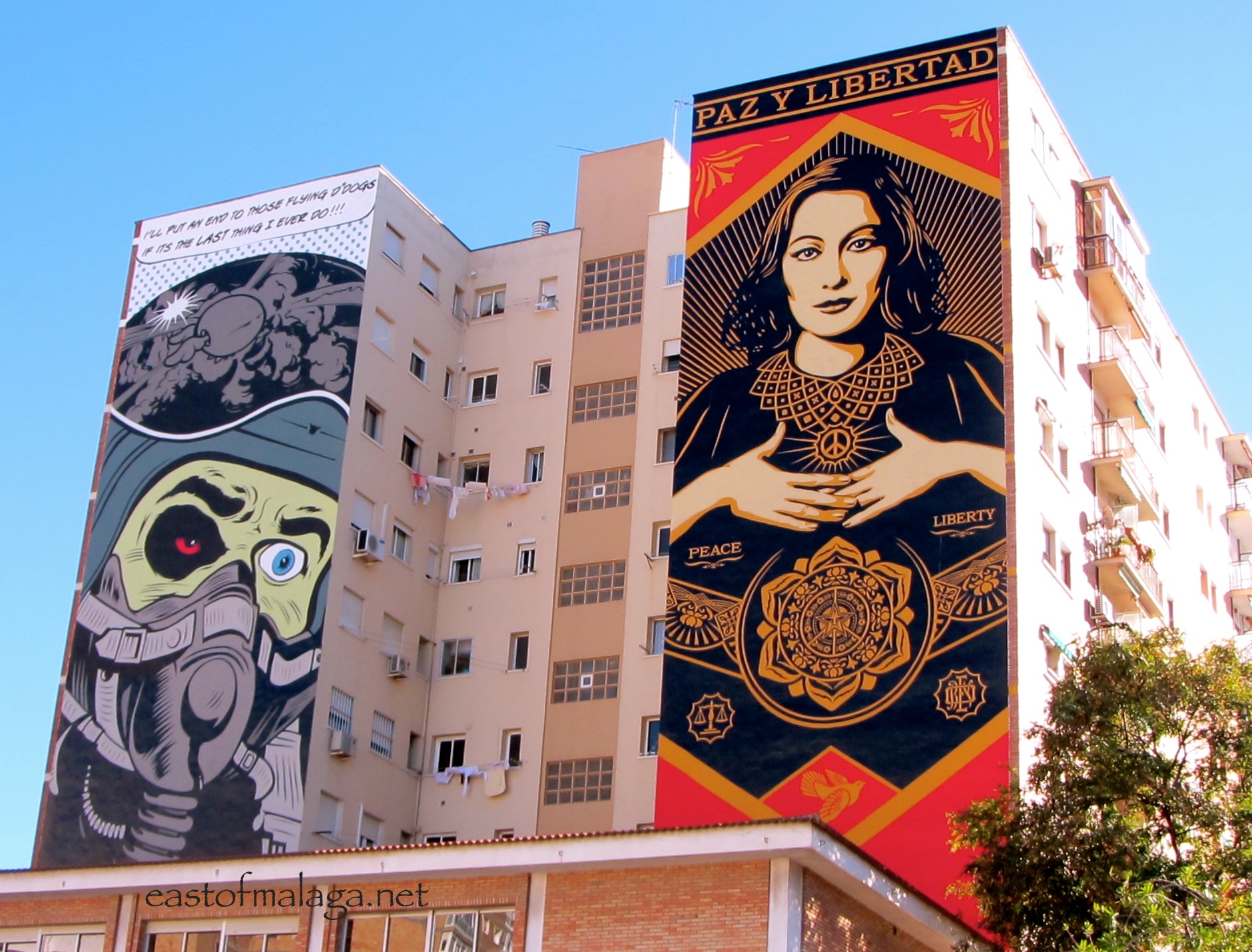
Street art in Malaga, Spain

In November, I featured some of the fabulous urban street art in the Soho district of Málaga – which proved to be a very popular post!

Since then, more murals have been commissioned by the city, including these two on the facade of the Colegio García Lorca.  The one the left is by British street artist D*Face whilst the other, (Peace and Liberty) comes from American contemporary street artist,  Shepard Fairey (aka OBEY).

There’s great street art in many cities around the world, so please share some with us in this month’s CBBH Photo Challenge: STREET ART.

Don’t forget that the CBBH Photo Challenge is a little different from some other challenges, in two ways.  First, it’s only once a month – giving you lots of time to consider your entry before the end of the calendar month.  Second, and most important, this is a BLOG HOP (after all, it is the CBBH – Conejo Blanco Blog Hop, meaning white rabbit in Spanish), so DON’T FORGET that in your post you need to add links to two blogs that you have visited and commented on during the past month.  That way, when we visit each other, we can HOP OVER to your links, connect with others and share a little blog love around!

Conejo Blanco BLOG HOP Photo Challenge

My Featured Blog Links for this month:

Casa Az provides an online scrapbook of daily events in the life the Queen of Tapas!  Canadian by birth, Shawn is a cancer survivor now living with her little friends in the Andalucían capital of Seville, where she conducts tapas tours for visitors to the city.

Caroline Angus Baker is a self-professed Duende-loving Kiwi novelist, commentator on modern and historical Spain and Spanish Civil War nerd, full of bullfighting praise.  She’s had a busy 2013, too!

I’d love to you pop along and say HOLA to both of these ladies.  Tell them Marianne sent you!

So that´s the CBBH Photo Challenge for January, everyone!

Remember, all you have to do is post your entry by the end of the month, tag your entry ‘CBBH Photo Challenge’,  link back to this blog and, most importantlydon´t forget to add links to any two blogs that you´ve commented on during the past month, so that we can all HOP OVER and have a look.  Make sure you FOLLOW THIS BLOG so you don´t miss next month´s exciting challenge!

For more information on how the CBBH Photo Challenge works click here.

I hope everyone taking part enjoys the exposure the CBBH Photo Challenge offers to featured blogs and, who knows, you may end up finding a new favourite!  I´m looking forward to seeing your interpretations.

[CBBH logo Image credit: (cc) Mostly Dans]