Seriously: Would you buy these products?

I often have a little chuckle to myself when I am shopping in a Spanish supermarket.

Seriously, would YOU buy some of these products?

Nelly hairspray

Nelly hairspray

Bonka coffee Bonka coffee

Bimbo bread

Bimbo bread

Colon detergent

Now, call me fussy, but I can’t bring myself to wash my clothes in Colon Vanish washing detergent!

Flota washing powder

or (possibly) even worse, Flota Spa washing powder!

Somat diswasher tablets

But, being a northern lass (originally from Lancashire in England), I always find some consolation knowing that at least I can always find Somat f’ert dishwasher!  LOL


Have you spotted any products in other countries that sound strange or amusing in your own language?  You will let me know, won’t you?  LET’S HAVE SOME FUN!

Other posts you might enjoy:

Roadside Advertising: Not just a Load of Bull

Travel Theme: Signs

Classic Andalucía: La Alhambra, Granada

The Green, Green Vegetables of Home

Click any image to open a slide show

I’ve mentioned before that we don’t live in a town, city or even a small village.  We live in the open countryside (known locally as el campo), so our garden isn’t the kind of cultivated area we used to have back in England.   Our house was built onto a hill-side of almond trees and indeed, when we moved here almost eight years ago, the only things that were already planted (apart from the naturally-placed wildflowers) were 47 established almond trees, on almost an acre of land.   Of course, the area immediately around the house, car park, swimming pool and terraces is flat but the rest of our land is sloped, and we have chosen to leave a more “natural” look  further away from the house, to blend in with the surrounding countryside.

As time as gone by we have added many more trees, shrubs and bushes and I have previously posted photographs of lemons, apple blossom, bird of paradise flowers, figs, oranges and some of the many beautiful wildflowers at present gracing the garden.

Despite the apparent poor quality of the soil, the valley where we live is extremely green with trees and vines growing down the hillside.  Newly planted trees need care for the first year or two, but once established seem to thrive, provided they are given sufficient irrigation.  

The nature of the ground is generally sloping, rough and rocky with poor, shallow soil over bedrock.  Untended ground is usually very hard (with need for a pick-axe to dig holes for planting) allowing deluges of rain little chance to penetrate the soil, thereby creating deep channels where the water has run off .

However, it’s not all bad news as there are patches of slightly deeper soil here and there, and it’s one of these that last week we decided to transform into a small vegetable patch.

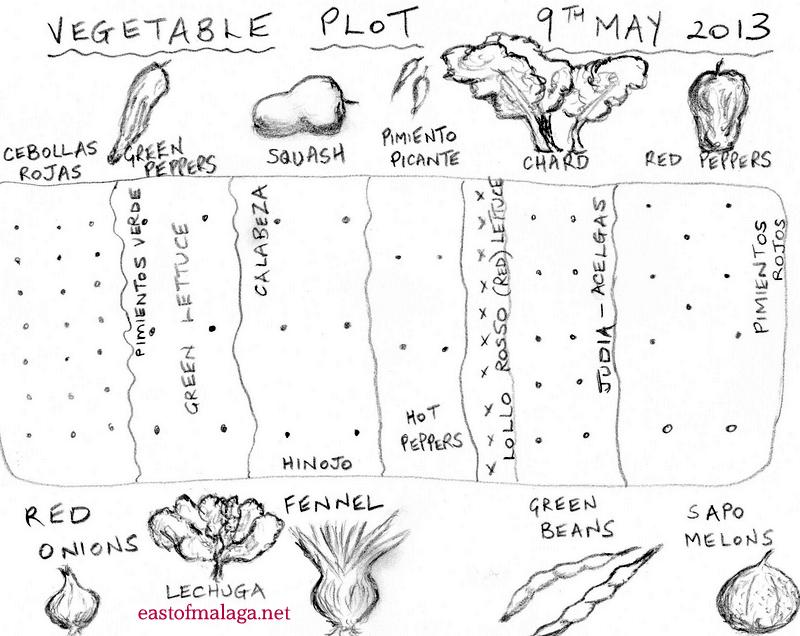
We were able to buy some little plug plants in Vélez-Málaga, at a total cost of just over 11 euros and, after quite a bit of digging, raking and throwing out stones, we finally got to plant red, green and hot peppers, chard, squash, green beans, red and green lettuce, red onions, fennel and melons.

After three days, I can report that the little plants appear to be doing well.  I’ll keep you posted on their progress!

Vegetable plot - planting plan

Previous posts you might find interesting:

A Slice of Life: Garden and Plant Irrigation

Flowering snapshot of a January day around the garden

Wildflowers of Andalucía: Dutchman’s Pipe

Wildflowers of Andalucía: Dutchman’s Pipe

Wildflowers of Andalucia

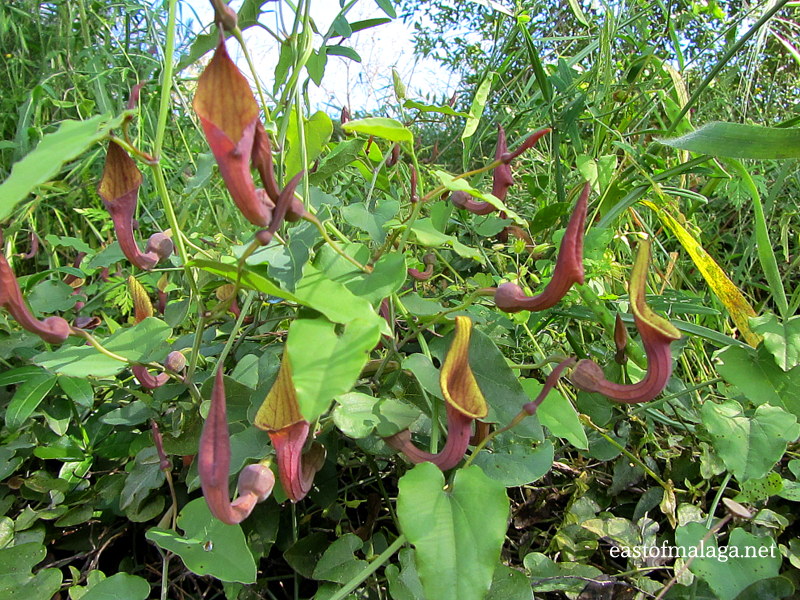
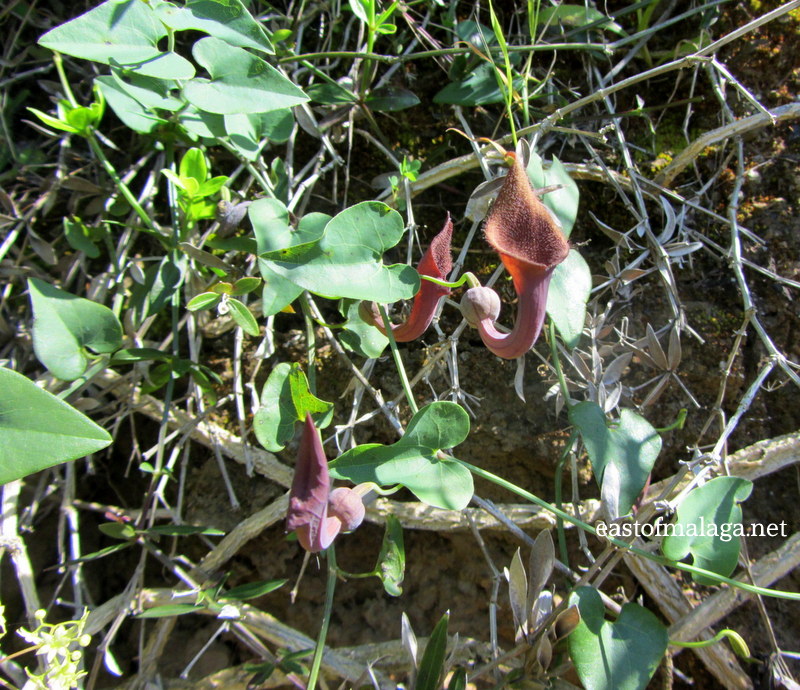
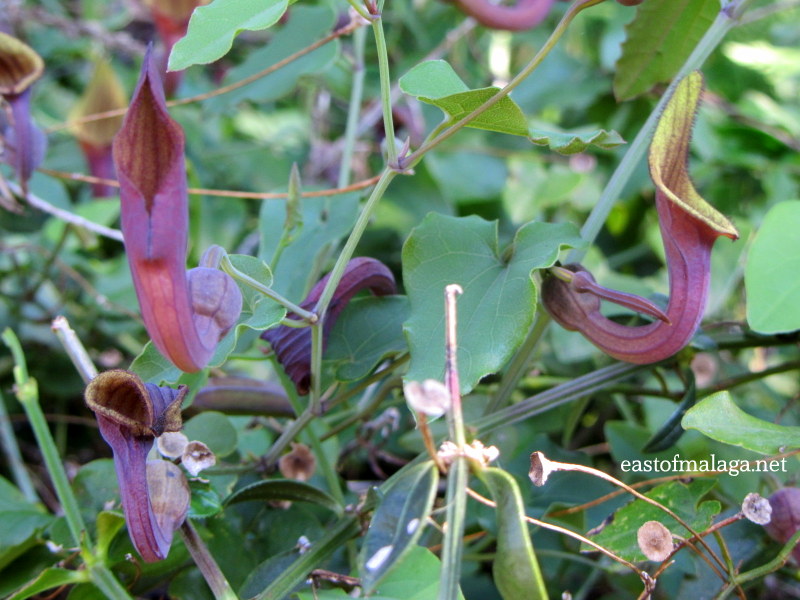
When I was wandering in the garden the other day, I noticed these gorgeous wildflowers growing in the shade of some of the almond trees.  Strangely enough, there is just this one patch of them, and I’ve never noticed them before!  They are a purple/brown colour (some with a yellow/beige interior), have heart shaped leaves, and are a climber/vine.

I looked in my flower book, but couldn’t identify them, so I posted a photo onto Facebook and sure enough, someone knew what they were – Aristolochia baetica.

Wildflowers of Andalucia

According to Wikipedia they belong to the Aristolochia/birthwort family, with their common names “Dutchman’s pipe” and “pipevine” being an allusion to old-fashioned meerschaum pipes at one time common in the Netherlands and Northern Germany.

Birthwort” (e.g. European birthwort A. clematitis) refers to these species’ flower shape, resembling a birth canal.

Dutchman's Pipe

I think they look like a bird’s nest full of baby birds with their beaks open, waiting to be fed!  What do YOU think?

You might also enjoy:

Wildflowers of Andalucía: Bloomin´ lovely!

A Slice of Life: Garden and Plant Irrigation

CBBH Photo Challenge: KNOBS AND KNOCKERS

Wildflowers of Andalucía: Bloomin´ lovely!

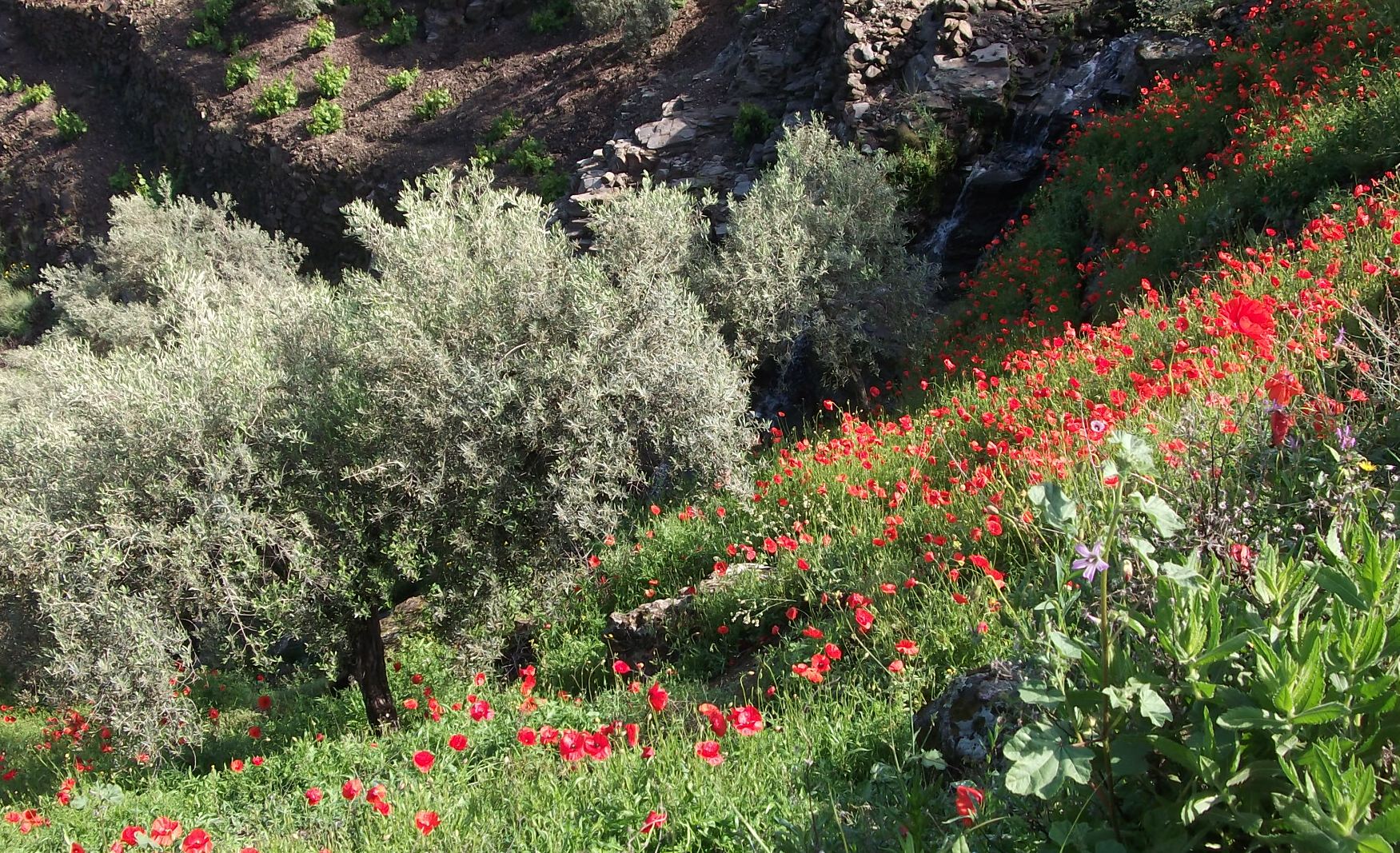
 Particularly in spring and early summer, the hills around the Axarquía are a riot of colour, with a rich variety of beautiful wild flowers.

The blues and purples of the wild rosemary and lavender contrast with the golden yellow of the broom and gorse, which in turn make way for the pink Convulvulus and purple Vipers Bugloss.   There are many varieties of wild Mediterranean orchids to be found, as well as irises, gladioli, stunning red poppies and pink and purple wild Sweet Peas.


The wild flowers reach their climax at this time of year in early May, as the oleanders on the hillsides and in the river beds signal the arrival of summer.

If you want to see wild flowers at their best, head off into the Parque Natural de Las Sierras de Tejeda y Almijara in the Axarquía.

Don´t forget to take your camera!

You might also like to look at:

Flowering snapshot of a January day around the garden

A Slice of Life: Garden and Plant Irrigation

CBBH Photo Challenge: Multi-Coloured

Cost of Living: East of Málaga, Spain – April 2013

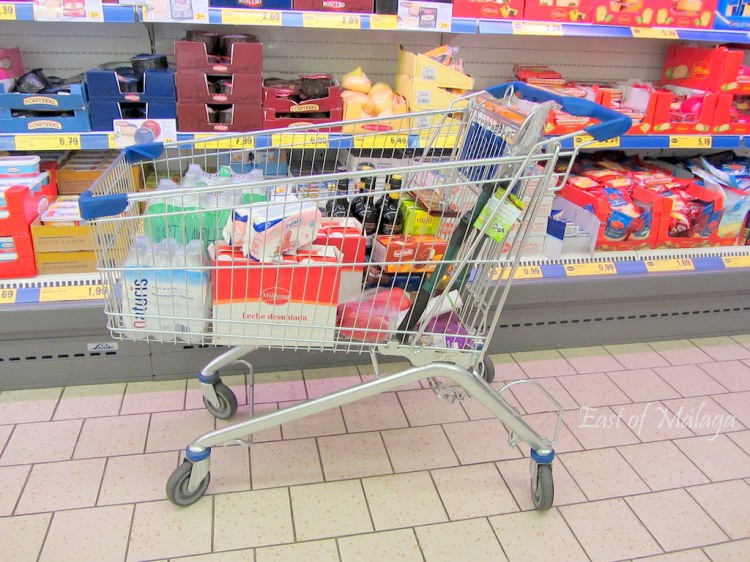
Shopping trolley in Lidl supermarket, Spain

Edited to add: When you’ve read this article, make sure you also look at my up-to-date Cost of Living in Spain: (Málaga edition) for July 2015, now available HERE.

Whenever I travel, I´m always interested to know how much things cost and, every day, people from around the world find my blog by searching for the cost of living in Spain.

Back in August and November 2012, I posted some receipts for groceries I had bought here in southern Spain, which proved to be very popular articles. 

But I wanted to do something a bit different, so I decided that rather than post the prices of random items of shopping that you may, or may not be interested in, I would come up with a list of standard grocery items, which I will update the prices of, two or three times a year.   This list can easily be changed, so if there are any other basic items you would like me to include, please let me know in the comments section, below.  This way, if anyone else wants to do something similar, we can have a direct comparison between countries.

To make such direct comparison simple, I have once again used the Spanish Supermarket – Mercadona in Torrox Costa.

This month’s prices are a bit of a mixed bag, with some prices remaining stable, yet others increasing or decreasing.

So, here´s the Standard Grocery List I used previously.  The first prices are as they were in August 2012 – the second prices (in bold) are as they were last November, with this month’s prices in RED alongside.

Standard Grocery List

Milk (semi –skimmed UHT, own brand), 1 litre  0.54 €      0.54 €     0.53 €

Loaf  (white, baguette 250g)   0.45 €    0.45 €     0.45 €

Eggs (12, own brand caged, medium) 1.35  €     1.35  €     1.35  €

Chicken breasts (1kg, boneless, skinless)  5.50 €     5.50 €     5.80 €

Apples (1kg, green, Golden Delicious) 1.35 €     1.00 €     1.65 €

Oranges (1kg) 1.39 €     0.89 €    0.79 €

Bananas (1kg) 1.25 €    1.15 €     1.35 €

Potatoes (1kg) 0.92 €    0.89 €      0.96 €

Lettuce (1 head, Iceberg) 0.85 €    0.85 €    0.85 €

Water (1.5 litre bottle) 0.45 €    0.36 €     0.42 € (for a 2 litre bottle)

Domestic Beer (1 litre bottle, Cruzcampo) 1.29 €    1.20 €    1.20 €

Fish  (1kg Salmon steaks) 8.75 €    8.75 €      9.50 €

Toilet rolls (pack of 6, own brand) 1.95 €    1.95 €    1.95 €

Washing powder (Box, 35 washes, Elena brand) 5.94 €   4.87 €     4.87 €

Olive oil (1 litre, extra virgin, own brand) 3€    2.75 €   (5 litres 12.99€)    2.99 €   (5 litres 13.99 €)

Coca-Cola (1.5 litre) 1.09 €    1.00 €    1.00 €

Butter (250g, own brand) 0.98 €    0.98 €     0.98 €

Sugar (1kg, white) 0.95 €    0.93 €    0.93 €

The following two items were only introduced in November’s grocery list:

Coffee (ground, 250g, Santa Cristina)  1.79 €      1.89 €

Beef mince (Store brand, pre-packed, 1kg)   5.43 €    3.80 € (for 700g)

New items added to the list:

Red Peppers (1kg, loose)  2.29 €

Green pointed “Italian” Peppers (1kg, loose)  1.99 €

Tomatoes  (1kg, loose)  1.19 €

Currency Conversion from XE €1 = 1.31   USD
0.85   GBP
1.24   AUD
1.33   CAD
1.53   NZD
11.66   ZAR
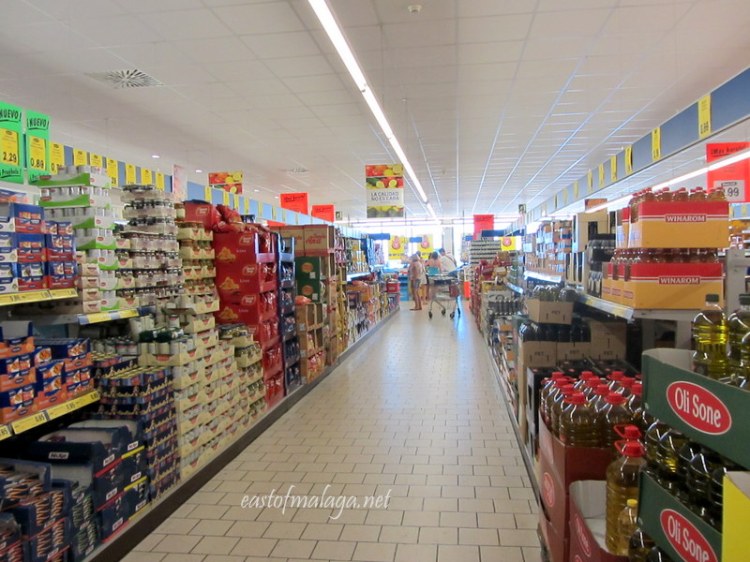
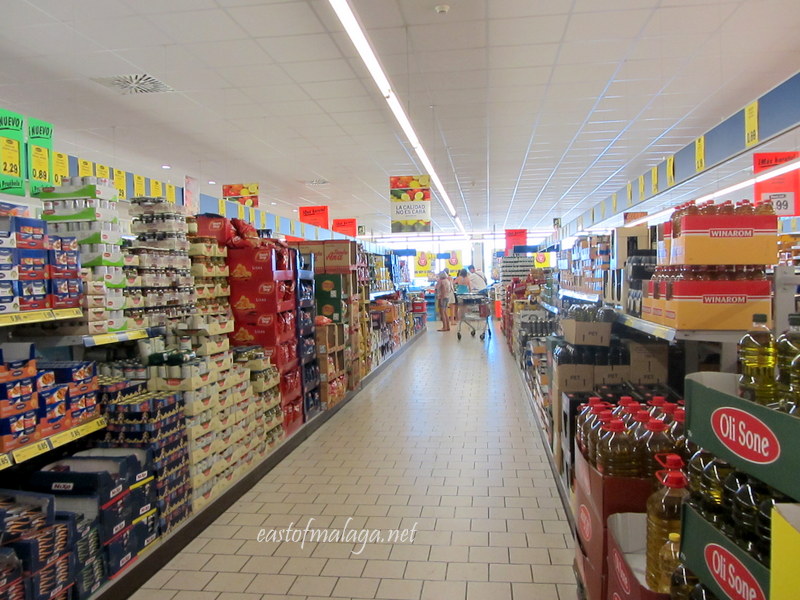
Inside of Lidl supermarket, Algorrobo, Spain

Other household expenses

Gas:  We don´t have mains gas here – we use bottles of butane gas.   In August, a 12.5kg bottle of Butane gas cost 16.45 € – falling to 16.10 € in November.  They are now 17.15 € .   One bottle used to last (on average) 21 days (for two people… though around 4 weeks in summer) for all hot water, showers and cooking on a gas hob.  Last September we had a new gas water heater fitted and, even though it has a larger capacity for water heating than the previous one, it appears to use significantly less gas.  It´s early days yet, but the first bottle lasted five weeks (rather than three weeks).  I´ll keep my eye on how that goes.

Electricity:  For a 3 bedroom/2 bathroom detached house in the countryside with a swimming pool, we pay an average of 100 € per month.   The cost of consumption for us is slightly lower in winter with heating/lighting, as opposed to air conditioning/lighting/swimming pool pump running for 8 hours a day, in the summer months.

Water: We are not connected to mains water, so when we bought our house part of the purchase cost was for a share in a local water company.  We have a 14,000 litre water deposit in which to store our house water.  Our water share gives us an allowance of up to 17,500 litres of water each week at reduced cost, though if we use more than this, the price rises steeply.  Needless to say, we don´t use this amount of water, even allowing for swimming pool top-ups and garden irrigation.  The water company, Patamalara, doesn´t always sent out their bills regularly and much of the cost appears to depend on the amount of repairs that have been undertaken on the system, but over the past twelve months our annual water bill has amounted to 92 €.
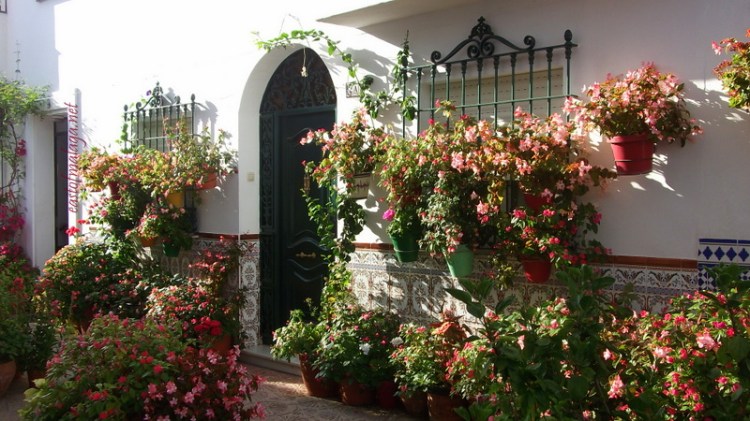
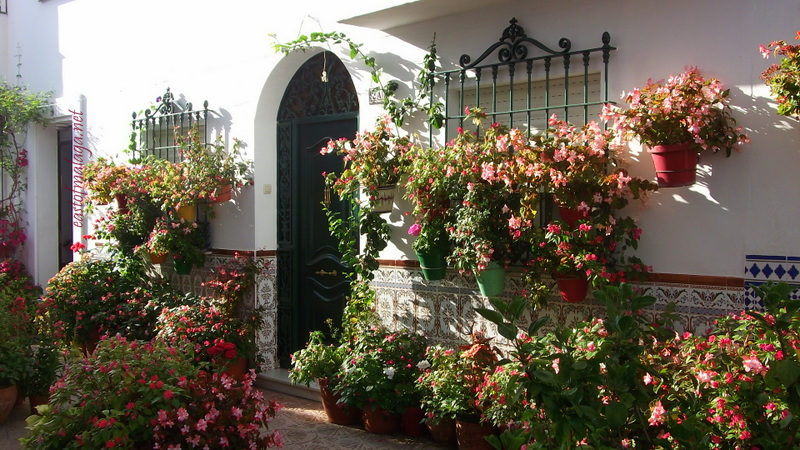
Village house in Torrox pueblo, Spain

IBI – Council Tax:   Paid yearly to the local council.  Last year´s bill was 338€

Internet:  29 € per month with unlimited downloads (within reason).  Speeds up to 3 Mbps

Petrol/Gasoline:  In August 1 litre of 95 octane petrol was 1.49 €.   In November 2012 the price had fallen to 1.40 €.   The price is now 1.48 €

Vehicle excise duty:  We have a Peugot 307 and pay 51 € per year.

Eating out:  Glass of wine or beer, including one tapa is 1 € – 1.50 €.  Menu of the day (three course meal, served at lunchtime, including bread and one glass of beer, wine or a bottle of water) 8 – 10 €

How do prices compare where you live? 

You might also enjoy these articles:

Menú del Día: Great food at a budget price

Cost of Living: East of Málaga, Spain  –  August 2012

Cost of Living: East of Málaga, Spain – November 2012

Goats on the road: I kid you not