¡Feliz Navidad!

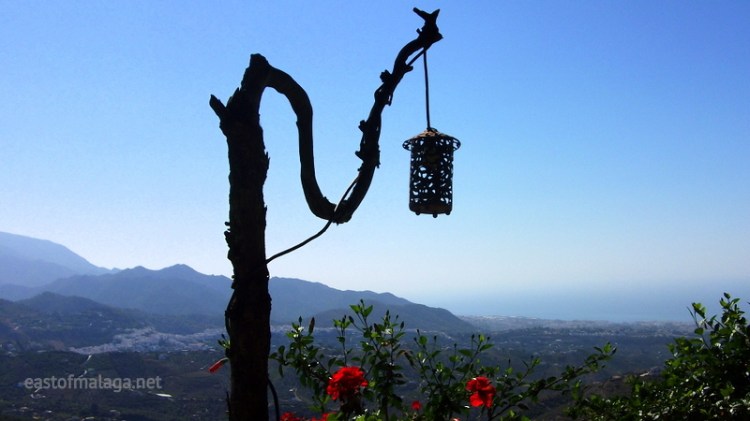
Looking across to Frigiliana, Spain

This is the view from the terrace of Los Caracoles Restaurant and Hotel, on the scenic road from Torrox pueblo to the pretty, mountain village of Frigiliana.    Towards the bottom left you can see the white village (pueblo blanco) of Frigiliana and, over to the right, the nearby town of Nerja, with the Mediterranean Sea in the background.

This view never fails to take my breath away …. no matter how many times I see it!

And it’s exactly the kind of view that’s typical of a sunny Christmas Day, here in southern Spain.

My Christmas wish for all my readers and followers is that love, hope and happiness fill your hearts this holiday season, and may all your dreams and wishes have wings.

¡Feliz Navidad! 

This post is my response to the Travel Theme: Festive and Sunday Post: Christmas.

Whilst you’re here, you might also like to look at:

A Celebration of Fried Breadcrumbs

AVE: Taking the Fast Track from Málaga to Madrid

CBBH Challenge: SIMPLE PLEASURES

A Celebration of Fried Breadcrumbs: Migas Festival in Torrox pueblo

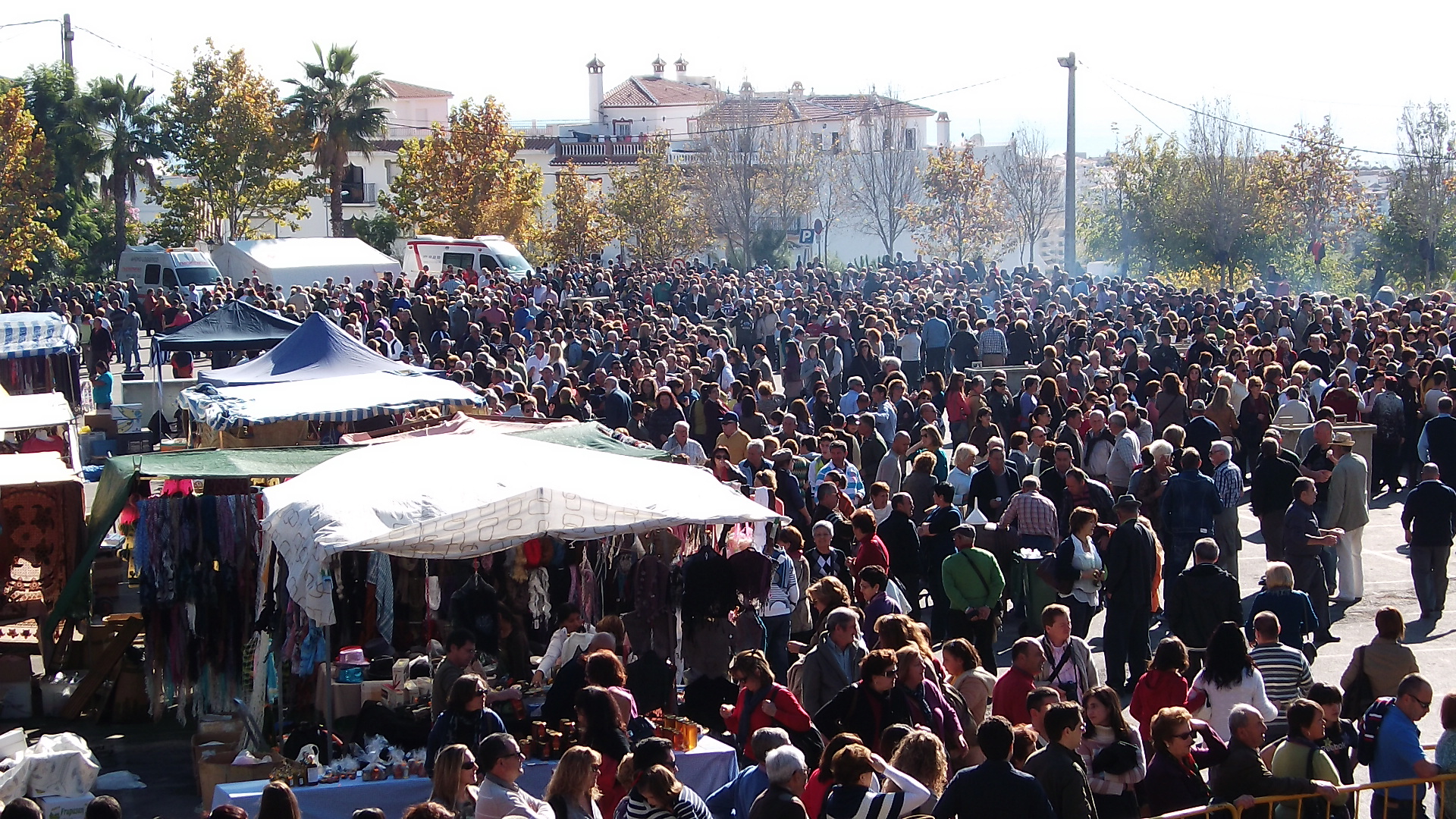
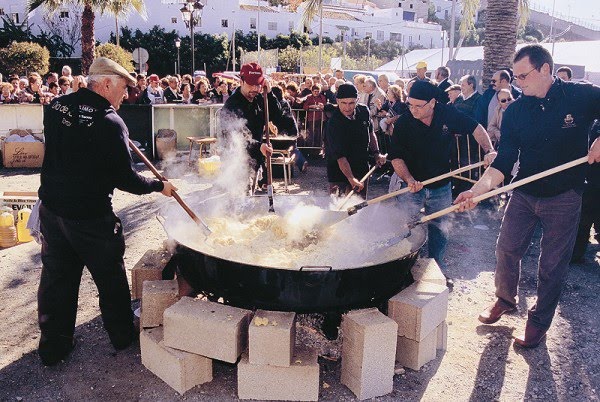
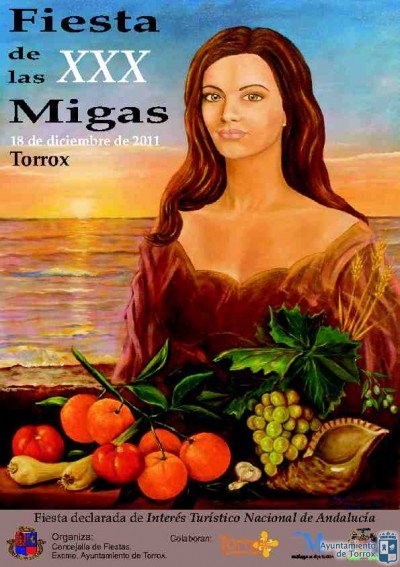
You might not expect ingredients for the perfect Christmas party to include 2000 kilos of flour, 500 litres of olive oil and 3000 litres of sweet Moscatel wine, but that´s exactly what´s required  to cater for the 40,000 guests who visit the annual  Migas Festival in the village of Torrox.

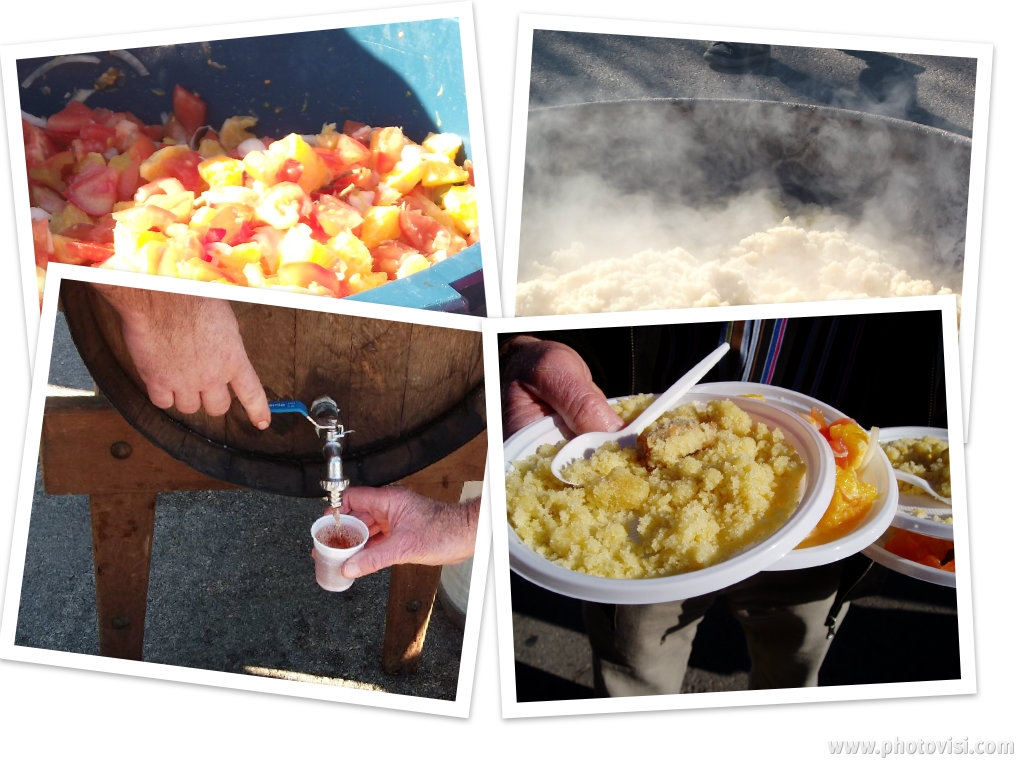
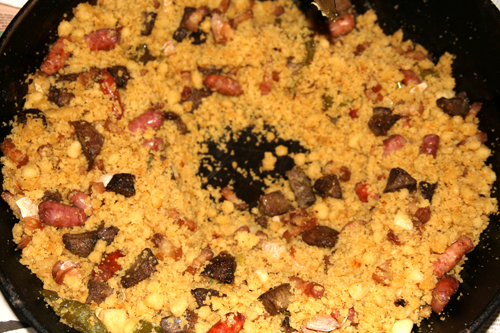
Many towns and cities throughout the world have unique dishes that encompass their overall culture and tradition.  Migas is a traditional Andalucían peasant dish often made from breadcrumbs, although in Torrox the migas are made with flour.  Normally served as an accompaniment to a main dish, of fried fish for instance, migas comprises of fried bread crumbs liberally laced with garlic, and may also contain small pieces of chorizo, ham or peppers.

Each year, on the last Sunday before Christmas, (so, this coming Sunday – December 23rd 2012)  this gastronomic festival which has been declared of “National Tourist Interest” by the Junta de Andalucía, will serve more than 40,000 visitors. 

Whoever said “there is no such thing as a free lunch”,  obviously had never visited Torrox pueblo!

From early in the morning, teams of cooks prepare the migas for free distribution to local residents and visitors to the festival.  The ringing of a bell is the signal for everyone to come and collect their plate of migas, which is served with a glass of local wine and an “arriera” salad  (made with oranges,  tomatoes, potatoes, onions and olives) to accompany the meal.

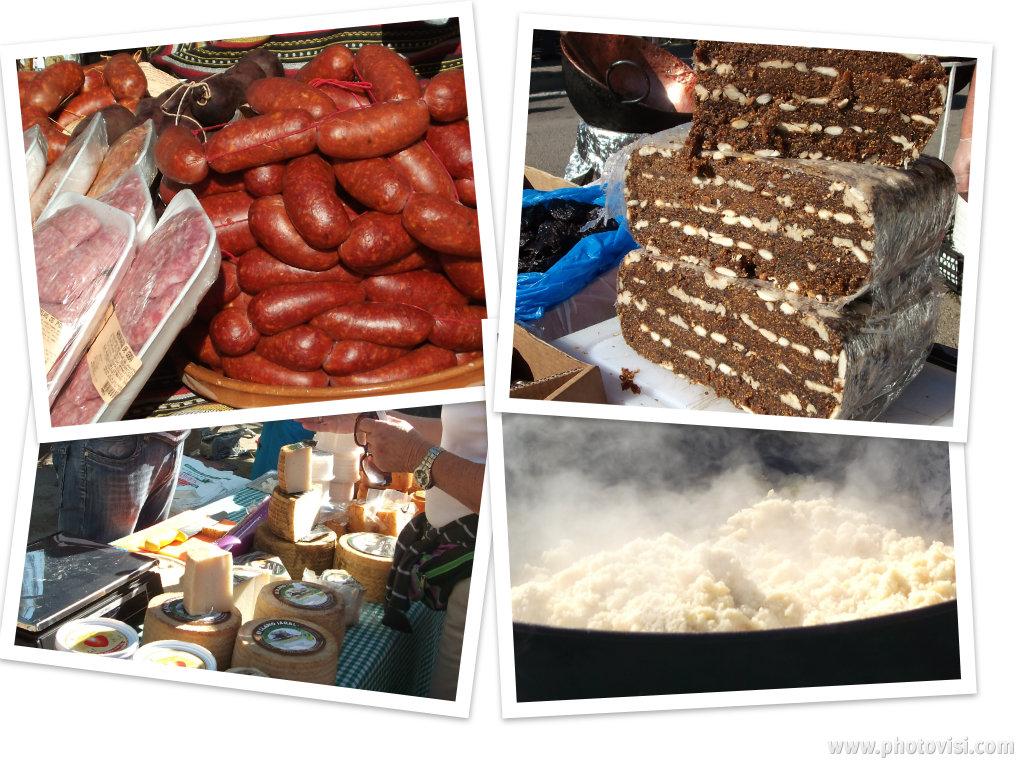
There is plenty to do during a day at the Migas festival  because as well as free food and drink there are many craft stalls, traders selling fine cheeses, chorizo, cakes, nuts and sweets, the opportunity to enjoy guided walks through the village, and street artists, as well as choirs and local dance groups, who all help to create a wonderful festive atmosphere.

Of course, in true Spanish tradition, this is just another excuse for a party, but on a warm, sunny December day, why would you not pursue that with some vigor?

(BTW – didn´t they do well getting Angeline Jolie to pose for last  year´s poster?  😉

You might also enjoy:

La Noche de San Juan: Families, fires and football!

The heart of Cómpeta: El Paseo de las Tradiciones

CBBH Photo Challenge: Simple Pleasures


CBBH Photo Challenge: BLUE

This month´s CBBH Photo Challenge is leaving me feeling anything but BLUE – because I just love the colour!

According to this website: “Color is a meaningful constant for sighted people and it’s a powerful psychological tool.  By using color psychology, you can send a positive or negative message, encourage sales, calm a crowd, or make an athlete pump iron harder.

Psychology of Color: Blue

Ask people their favorite color and a clear majority will say blue. Much of the world is blue (skies, seas). Seeing the color blue actually causes the body to produce chemicals that are calming; but that isn’t true of all shades of blue. Some shades (or too much blue) can send a cold and uncaring message. Many bedrooms are blue because it’s a calm, restful color. Over the ages blue has become associated with steadfastness, dependability, wisdom and loyalty (note how many uniforms are blue). People tend to be more productive in a blue room because they are calm and focused on the task at hand. Some studies are showing that weight lifters can lift more weight in a blue gym – in fact, nearly all sports are enhanced in blue surroundings.”

windmills of la mancha, Spain

The best examples of restored “Don Quixote”  Spanish windmills can be found in Consuegra, not far from Toledo in central Spain, where several mills spike the hill just outside of town.  I certainly had some tilting to do, to capture not only the sails, but also the magnificent blue of the wide open sky.

BLUE PAINTED DOOR IN THE HAMLET OF ACEBUCHAL, ANDALUCIA

This blue painted door can be found in The Lost Village of Acebuchal,  situated in the heart of the Sierras de Tejeda, Almijara and Almara Natural Park.   The village, which sits on the traditional muleteers’ route between Granada and Malaga was abandoned and in ruins from 1949 to 1998, but has now been beautifully renovated, restoring the original style.

plumbago in low light

When I bought my new Canon Powershot SX220HS camera back in June,  I was playing around with the low-light setting, and managed to capture the beautiful blue plumbago plant growing in my garden.  It´s such a pretty colour.

Lady in blue - Colmenar, Spain

A few weeks ago, I travelled to the village of  Colmenar to meet up with another local blogger.  Whilst I was waiting in the square opposite the Town Hall (Ayuntamiento) at the appointed time, I couldn´t help but notice this couple sitting on a nearby bench, deep in discussion.  My eye was drawn to the colour of the woman´s clothing, which was the most amazing shade of blue. 

Street sign for Calle Beso, Torrox, Spain

This street-sign in the nearby white village of Torrox always makes me smile.  Beso in Spanish means “kiss” – so this is Kiss Street!

Balcony blue - Cómpeta, Spain

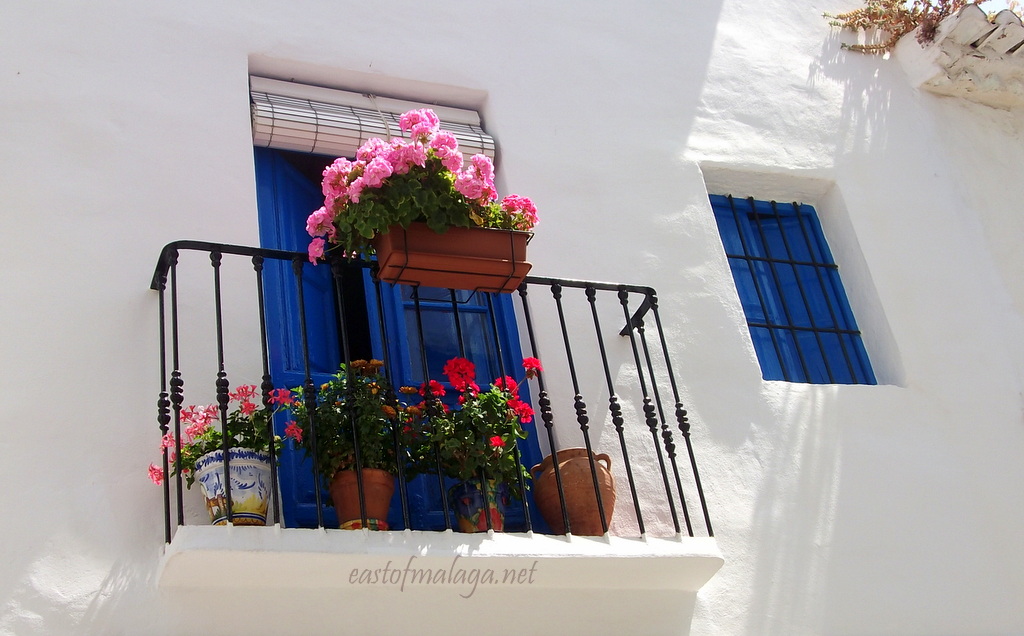
My final image for this month´s Photo Challenge is from my home village of Cómpeta, and shows a pretty balcony, filled with flowers, against the  deep blue painted windows as their background.

This month´s CBBH Featured Blogs:

** Alyson at the Algarve Blog is a very talented artist and, along with her hubby Dave (a peanut-butter-loving photographer), give regular glimpses into their expat life in southern Portugal.

I am particularly enjoying reading Aly´s A – Z of Portugal, where she takes each letter of the alphabet and writes a different post using the letter as the basis for a post, about things she cares for in Portugal.   This is a very easy blog to read, with many stunning photographs, which always makes me glad that Portugal is an easy drive from my home in southern Spain.

** Talking of a friendly blog with great photos leads me on to my next choice – the Lucid Gypsy.   Gilly describes herself as “a middle aged techno hen with a passion for travel, writing, reading and well, life” – and is very busy working full time, studying and crafting pretty things in the beautiful south west of England.

Gilly loves taking part in Word and Photo Challenges and is always quick to leave an encouraging comment.  Why not pop over and say HELLO to her?

So that´s the CBBH Photo Challenge for November, folks!

Remember, all you have to do is post your entry by the end of the monthlink back to this blog and, most importantly,  don´t forget to add links to any two blogs that you´ve commented on during the past month, so that we can all HOP OVER and have a look.  Make sure you FOLLOW THIS BLOG so you don´t miss next month´s exciting challenge!

For more information on how the CBBH Photo Challenge works click here.

I hope everyone taking part enjoys the exposure the CBBH Photo Challenge offers to featured blogs and, who knows, you may end up finding a new favourite!  I´m looking forward to seeing your interpretations.

[CBBH logo Image credit: (cc) Mostly Dans]
The Day of the Dead: A Celebration of Life

Entrance to the cemetery at Comares, Spain

Customs and celebrations to honour the end of the harvest, the change of the seasons and the passage of life into death come together in many notable traditions at this time of the year.

The festival of Todos los Santos (All Saints´ day)  is celebrated throughout Spain as a national holiday on November 1st each year.

Tending the graves in Competa cemetery for Todos Los Santos

Although the American-style “ghosts and ghouls” type of Halloween is now creeping into the Spanish calendar each year (sadly), traditionally this time is celebrated here in a different form, as “El Día de los Muertos” or the “Day of the Dead” .

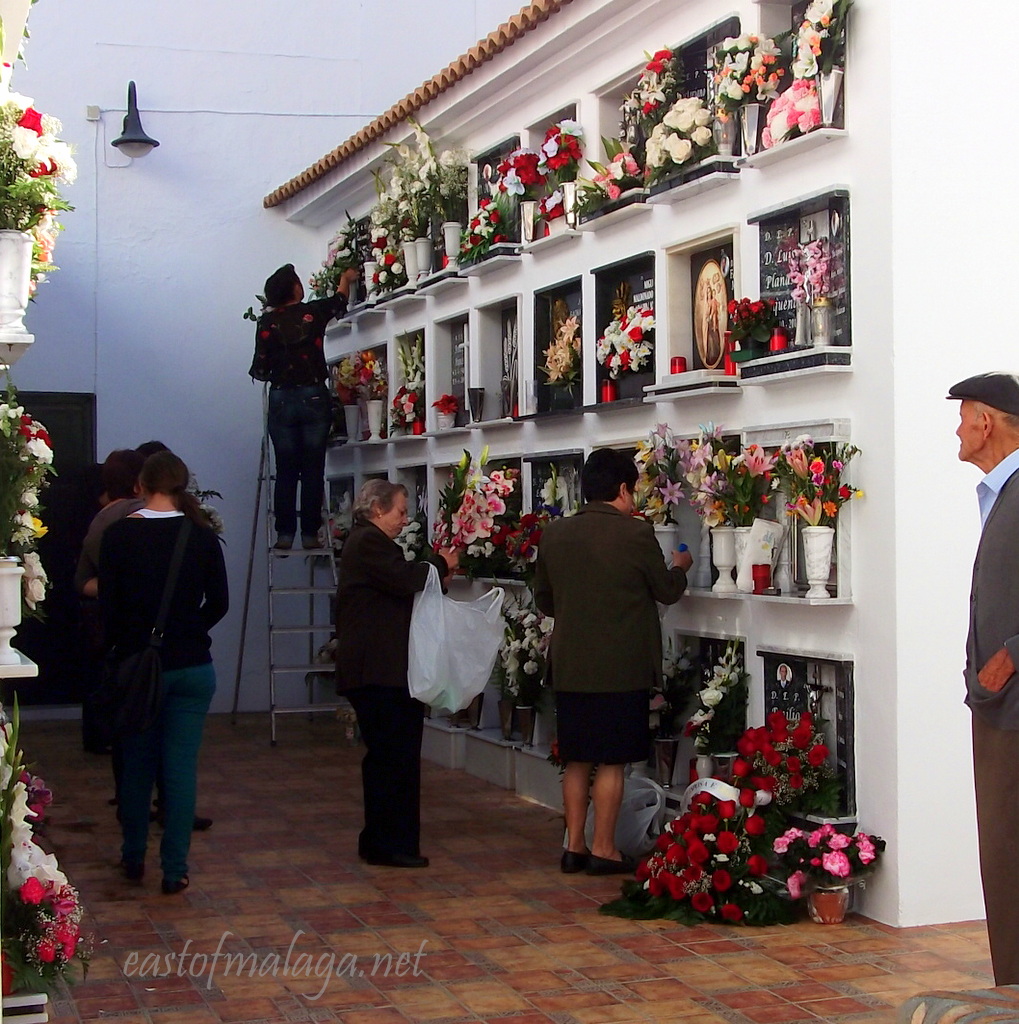
The three-day event, beginning on the evening of October 31 and ending on November 2 (All Souls´ day) sees cemeteries packed with families paying homage to their dead.   Family members tend the gravestones of their loved ones by painting, weeding and cleaning them, and by placing fresh flowers and candles.

Cleaning the gravestones in Competa cemetery, Spain

Climbing up the steps to tend the grave in Competa, Spain

We often visit our local cemetery on November 1st, and apart from the sheer number of people, the first thing that always strikes me is the overwhelming fragrance of fresh flowers.

Family members of all ages arrive carrying vases, buckets, bottles of water, cleaning items, candles and arms full of flowers.   The atmosphere is not at all solemn and the sound of chatter is everywhere, with people greeting each other with kisses and hugs.  Each member of the family plays their part in the cleaning and tending of the grave and, when they were finally satisfied, they wandered around the cemetery, looking at other graves to remember the dead,  before leaving.

Fresh flowers on all the newly-tended graves in Competa, Spain

Cómpeta cemetery, Spain

What I particularly like about this lovely Spanish tradition is that all of the frightening aspects of the afterlife are taken out of it.  This is a commemoration for loved ones with nothing ghoulish or scary involved.   Exactly as it should be, in my opinion.

How do you honour loved ones who have passed away, in your part of the world?  

Here are some other posts that I hope you might enjoy:

The heart of Cómpeta: El Paseo de las Tradiciones

The Buddhist Stupa of the Eastern Costa del Sol