Goats on the road: I kid you not

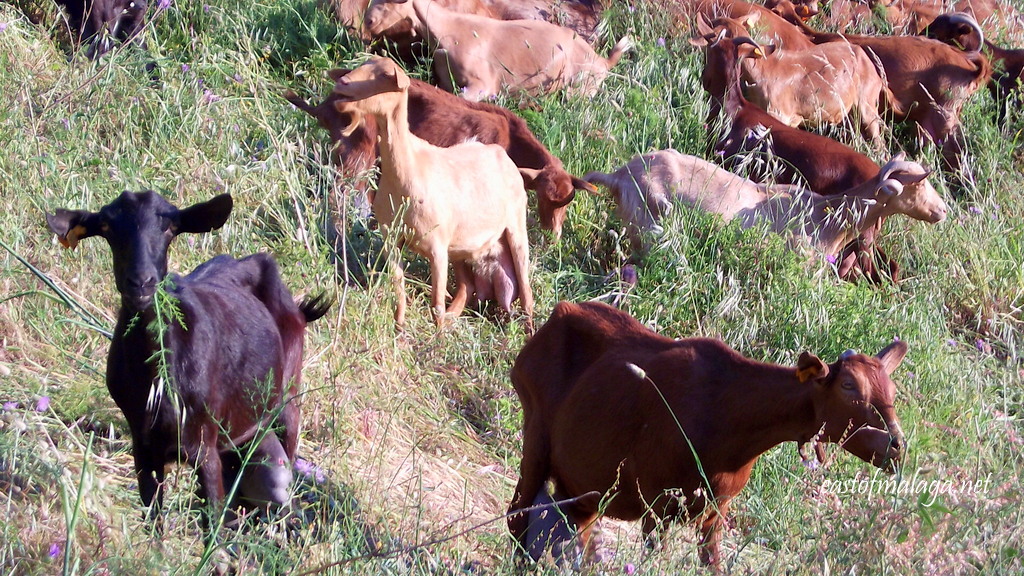
One of the unexpected delights of living east of Málaga, is coming across herds of goats whilst negotiating the picturesque, curvy mountain roads.   The beauty and tranquility of the local landscape is enough to lift the spirits, even on the greyest of days, especially when you come face to face with a herd of ninety goats meandering along the road.

I love meeting the goats and always wind down my car window to say “hola” and pass the time of day with the goatherd, as well as telling the goats what good girls they are!

It´s amazing how even though some of the goats climb up the rocks above the road to nibble at whatever plants take their fancy, and some stray perilously close to the edge, they all stay pretty much together.   I dread to think how many would be left in the herd if I was in charge of them!

The sight of a herd of goats never fails to make me smile – no matter how often I see them!

Goats on the road to Cómpeta, Andalucía, Spain

Goats on the hillside outside Cómpeta, Andalucía, Spain

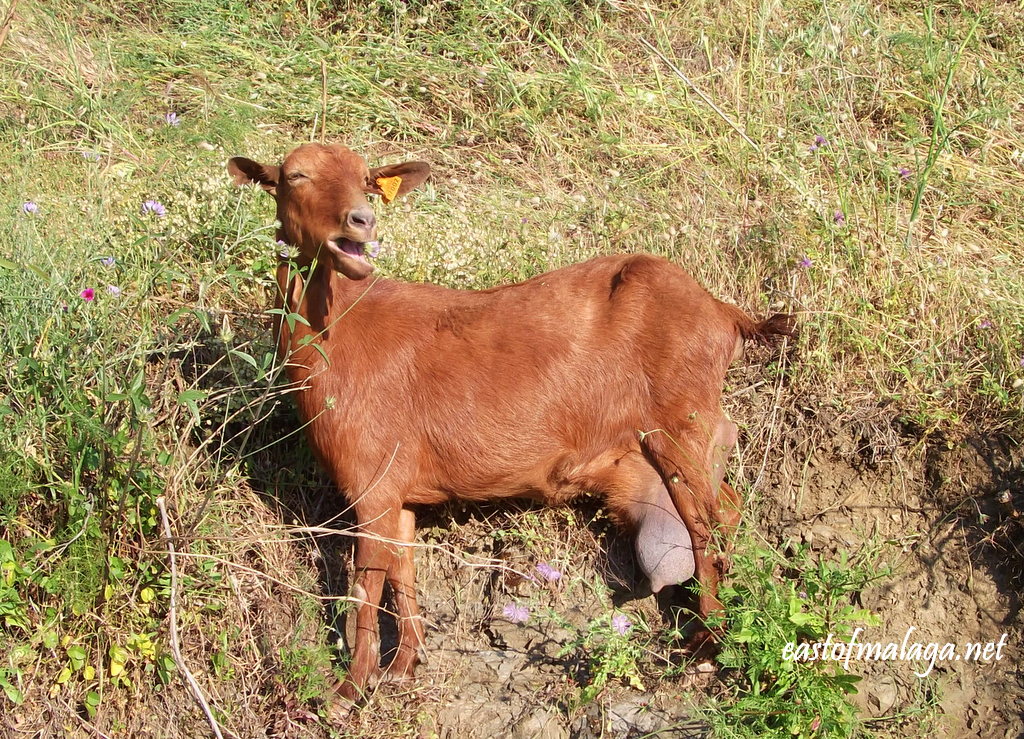
Goat on a hillside outside Cómpeta, Andalucía, Spain

This post is my contribution to the WordPress Photo Challenge: Happy and to Travel Theme: Animals


Whilst you´re here, why not have a look at:

East of Málaga: So near, yet so far away

All at sea with the Virgen del Carmen

Photographs I love …. and why!


Venturing further afield: A long weekend in Santander

We love to travel not only locally, but throughout Spain, so I will also include information, from time to time, about where we have visited.  Usually these places can either be driven to within a few hours of our home, east of Málaga, or we will have flown there from Málaga (AGP) airport.

Banco de Santander

It´s pretty easy to pick up some cheap flights from Mágaga to Santander, the elegant capital city of the province of Cantabria, which is located on the northern coast of Spain, between Asturias and the Basque Country, overlooking the Bay of Biscay.

The port city of Santander has many clean, golden beaches and is home to the magnificent coastal resort of El Sardinero, which became popular with the Spanish upper classes during the late 19th century.  The wonderful beaches together with the promenade and the Magdalena Peninsula are some of the main attractions for tourists.

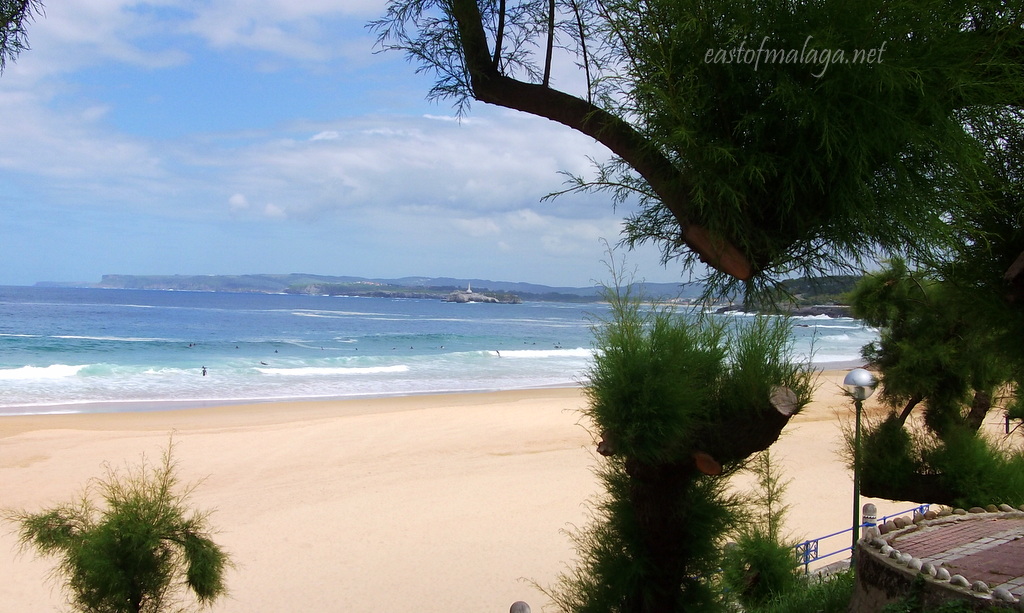
El Sardinero Beach, Santander, Spain

El Sardinero Beach views, Santander, Spain

Santander fell victim to a great fire in 1941.   Fanned by a strong southerly wind, the fire burned for two days, destroying the greater part of the medieval town centre and gutting the city’s Romanesque cathedral.  The historic quarter includes a number of majestic buildings which are situated against an incredible natural backdrop of sea and mountains.

In the early part of the 20th century King Alfonso XIII chose this part of the Cantabrian coast as his summer retreat and many fine buildings sprung up to accommodate the needs of the aristocracy and court officials who followed the King and Queen.

Elegant buildings in Santander, Spain

Santa Iglesia Cathedral, Santander, Spain

Town Hall, Santander, Spain

Of course, one of the more pleasant things to do in Santander is to bustle along with the locals towards the many superb tapas bars in the old part of the city.  It´s amazing what a good glass of Rioja Crianza and a mouthful of seafood can do for you!

We spent our evenings strolling along the streets seeking out the busiest tapas bars – with their customers spilling out onto the pavements outside –  and diving straight in there, to try out our next round of  scrummy pintxos.

Rioja and scrummy tapas at a bar in Santander, Spain

Santander also provides a great base for touring many well-known cities and sights in northern Spain, which are located right on it´s doorstep.   There´s the  Guggenheim Museum in Bilbao, the Picos de Europa – wheresome of the highest mountains in Europe are to be found, as well as the gastronomic delights of the picturesque city of San Sebastian in the heart of Basque country – but you´ll have to wait for me to tell you about those another time!

You might also enjoy:

The heart of Cómpeta: El Paseo de las Tradiciones

A Weekend Away: Santiago de Compostela

CBBH Photo Challenge: WINDOWS

Whether your first thought is of panes of glass or Operating Systems

– the CBBH Photo Challenge theme for October is WINDOWS!
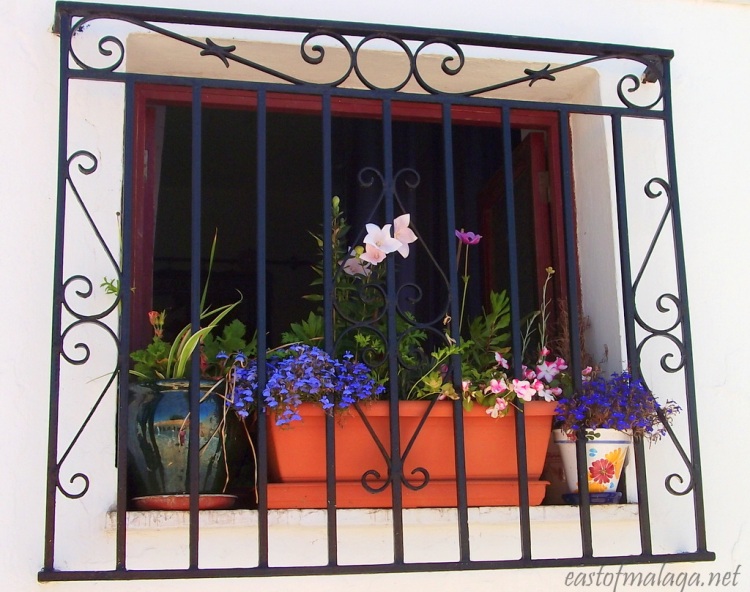
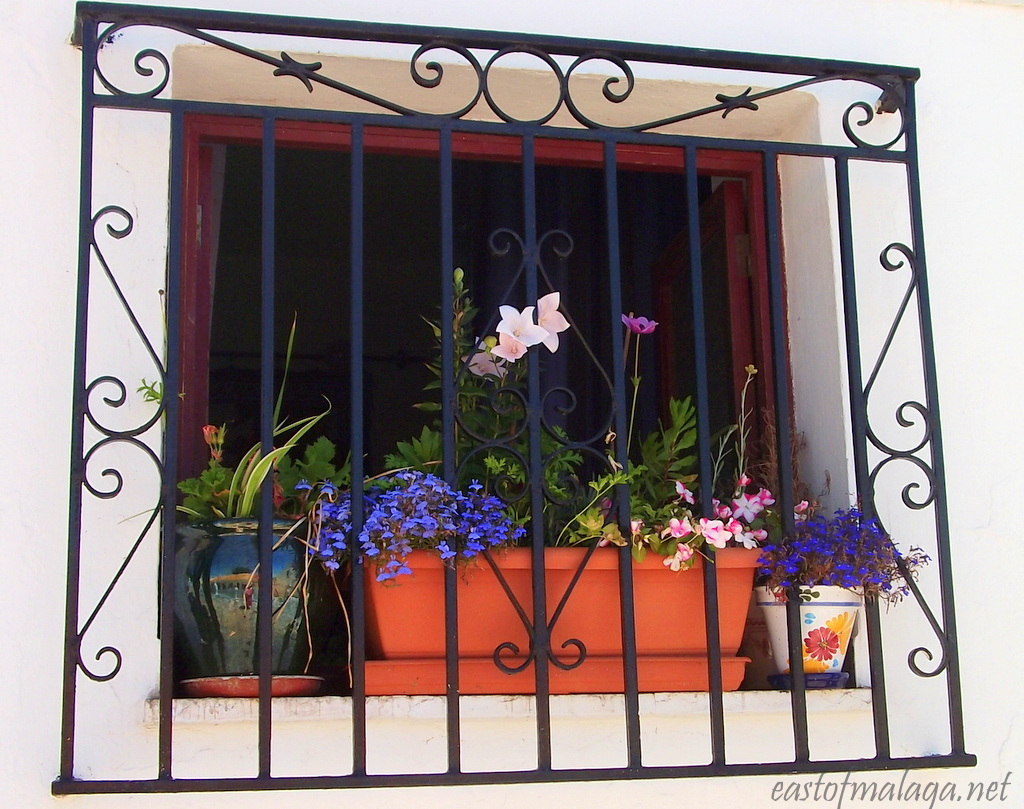
Pretty window in Cómpeta, Spain

I found my first window as I wandered around the streets of the white village of Cómpeta.  You´ve heard me mention this village many times before, because it is the closest to my home in the nearby countryside.  Many of the very pretty village houses have plants outside their windows but inside the metal grills that are a common feature on houses in the area.
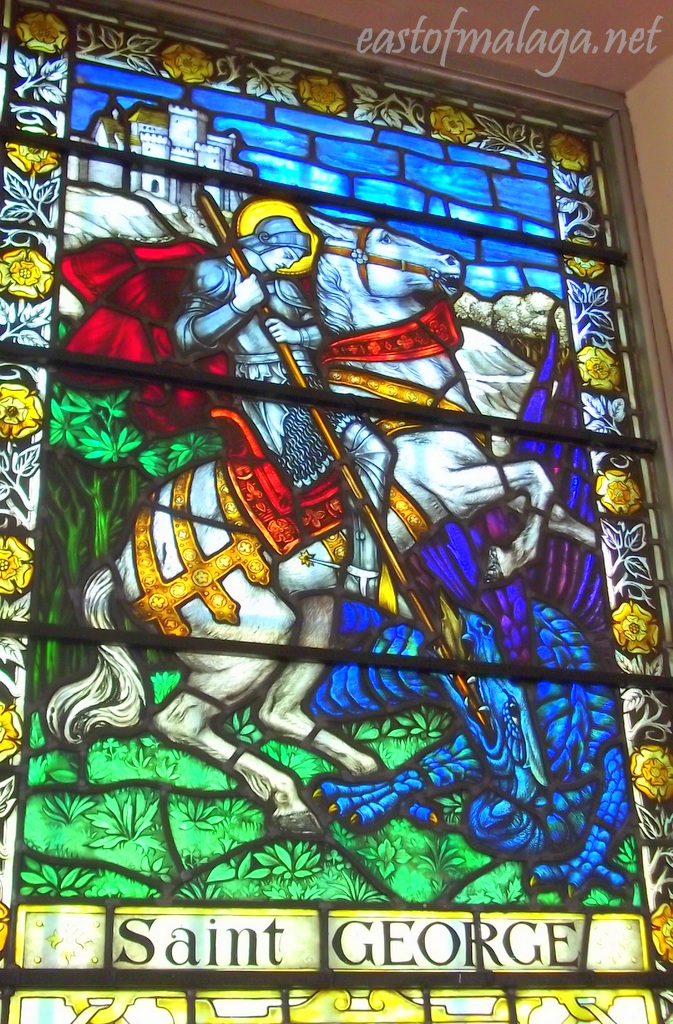
Stained glass window depicting St George slaying the dragon

This beautiful stained glass window is in St George´s Church, the oldest Anglican church in mainland Spain.   St George´s Church can be found within the grounds of the English Cemetery, about 300m east of the bullring in the city of Málaga.
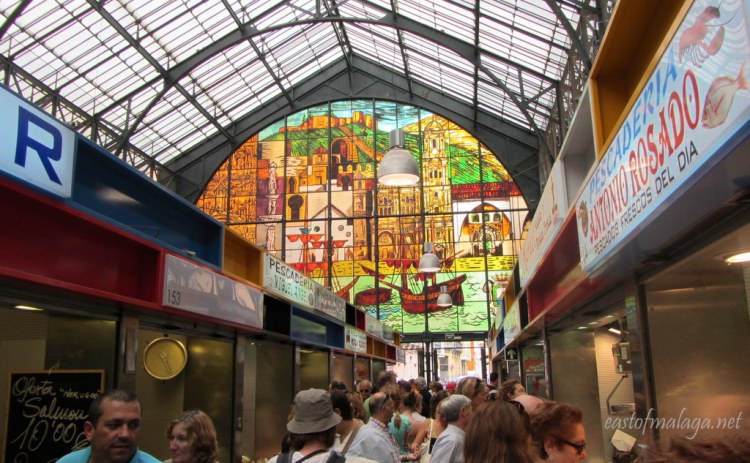
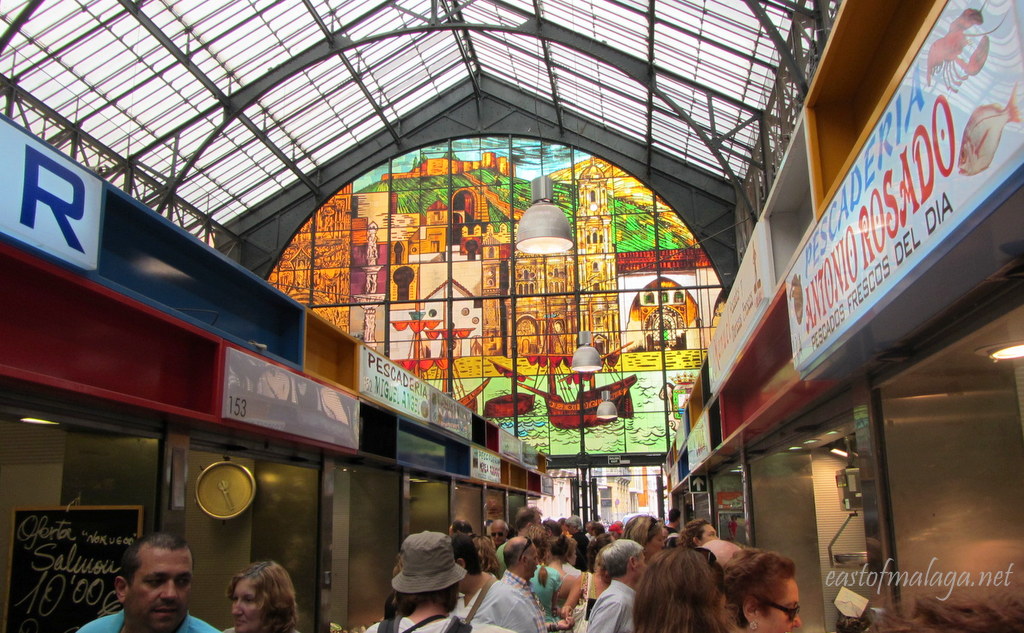
Malaga´s Atarazanas market

Staying in the city of Málaga, here is another stained glass window, but this time it´s inside the Atarazanas Market.  Offering fresh, local produce at fantastic prices the Mercado Central de Atarazanas is most definitely worth a visit if you happen to find yourself in the city.  Joining the bustling crowds of discerning locals at the stalls offering an abundance of seafood, fruit, vegetables, meat, spices and dried fruits is a wonderful way to buy fresh, local produce.
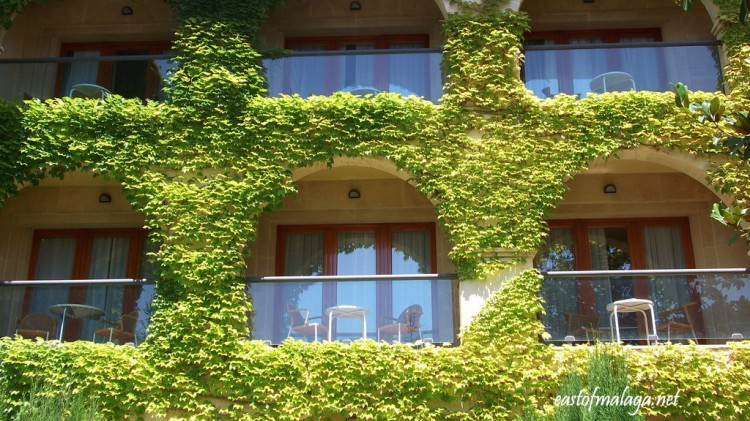
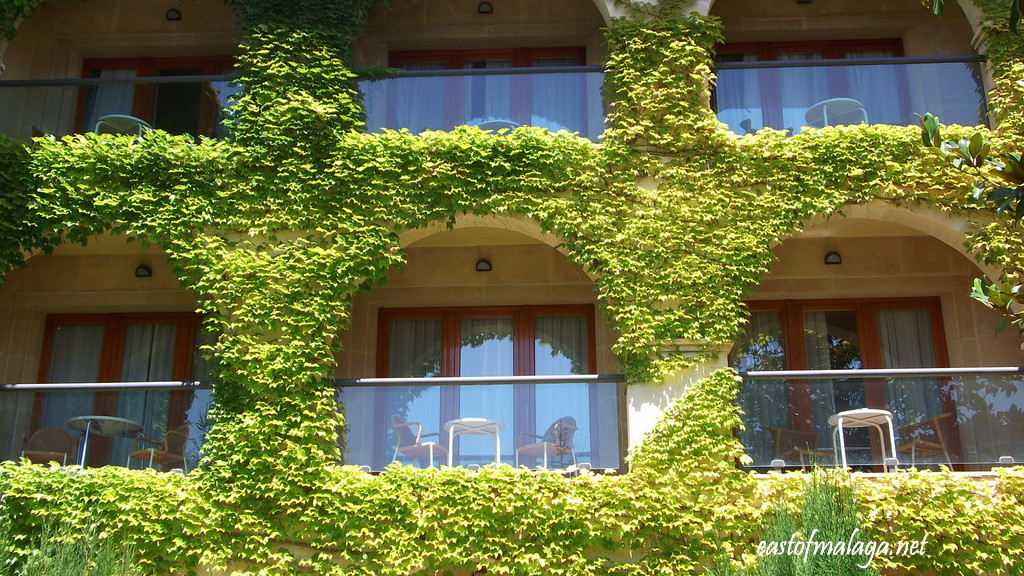
The ivy-clad windows of the Parador in Ronda, Spain

Here are some of the ivy-clad windows and balconies of the Parador in Ronda, where we were fortunate enough to spend a few days last summer.   Paradors are state-run hotels, often located in castles, palaces, monasteries and extraordinary Spanish national heritage buildings. The Parador of Ronda is a luxury hotel in the former town hall, which sits on the edge of a gorge.

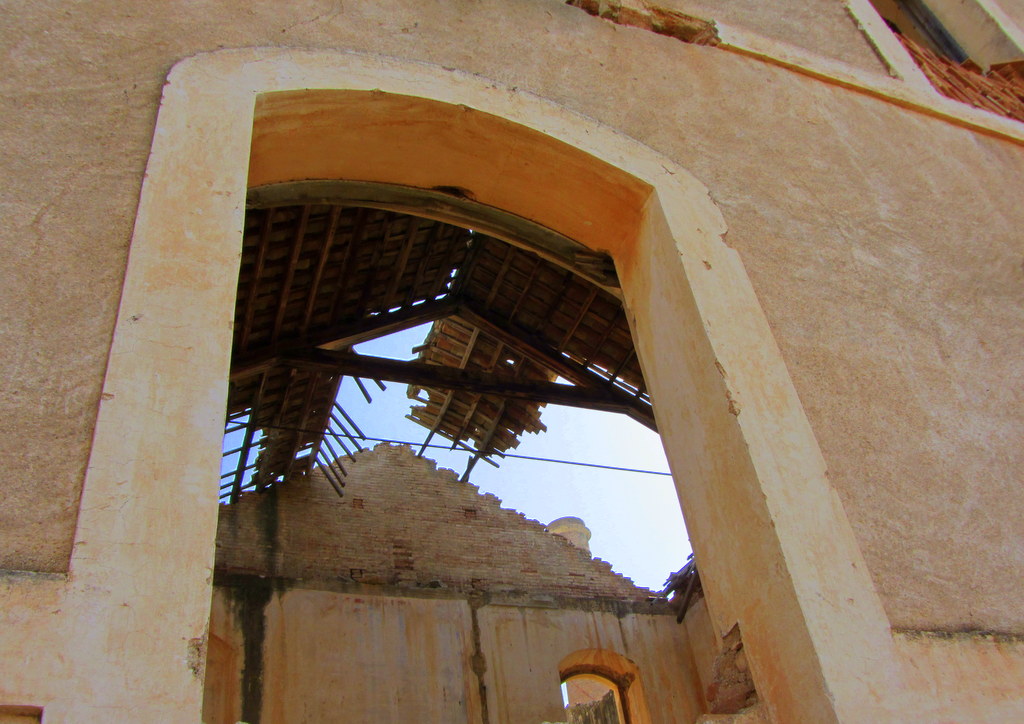
Derelict sugar factory in Maro, Spain

Do you remember when I visited the derelict San Joaquín sugar mill, on the old N340 coast road between Nerja and Maro?   Though the glass in this window is long gone, it was still interesting to peer through at the interior of the building, though unsafe to wander inside given the state of the roof.
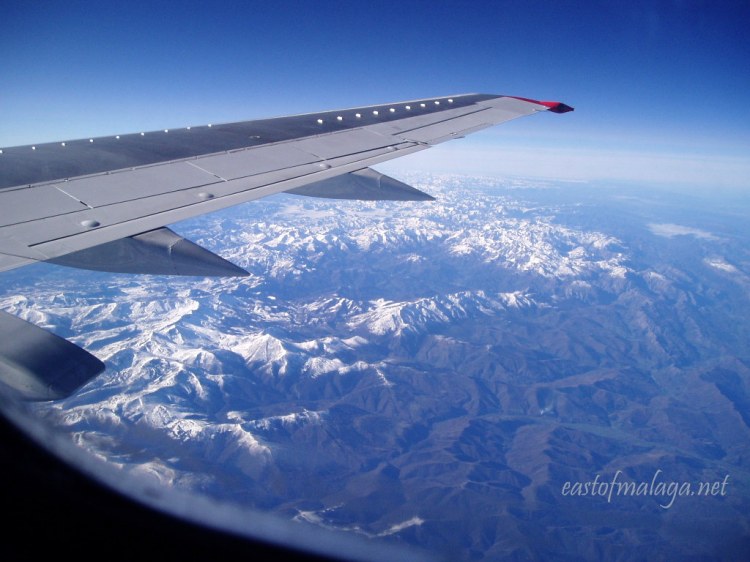
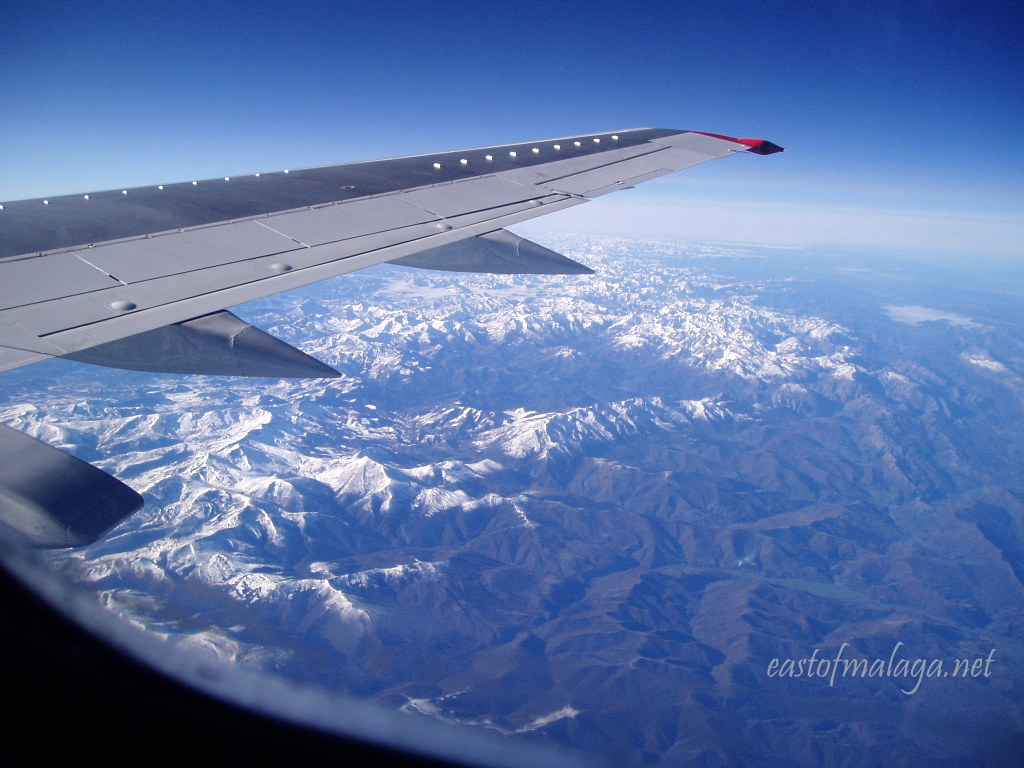
Flying over the snowy mountains of northern Spain, heading south.

The window of an aeroplane gives a unique look at the world from a totally different perspective.  Whenever I fly, I always request of window seat because I love the spectacular views of the world from 35,000 feet!  Here you can see the snowy mountains of northern Spain, as I am flying south, back home from a visit to England.

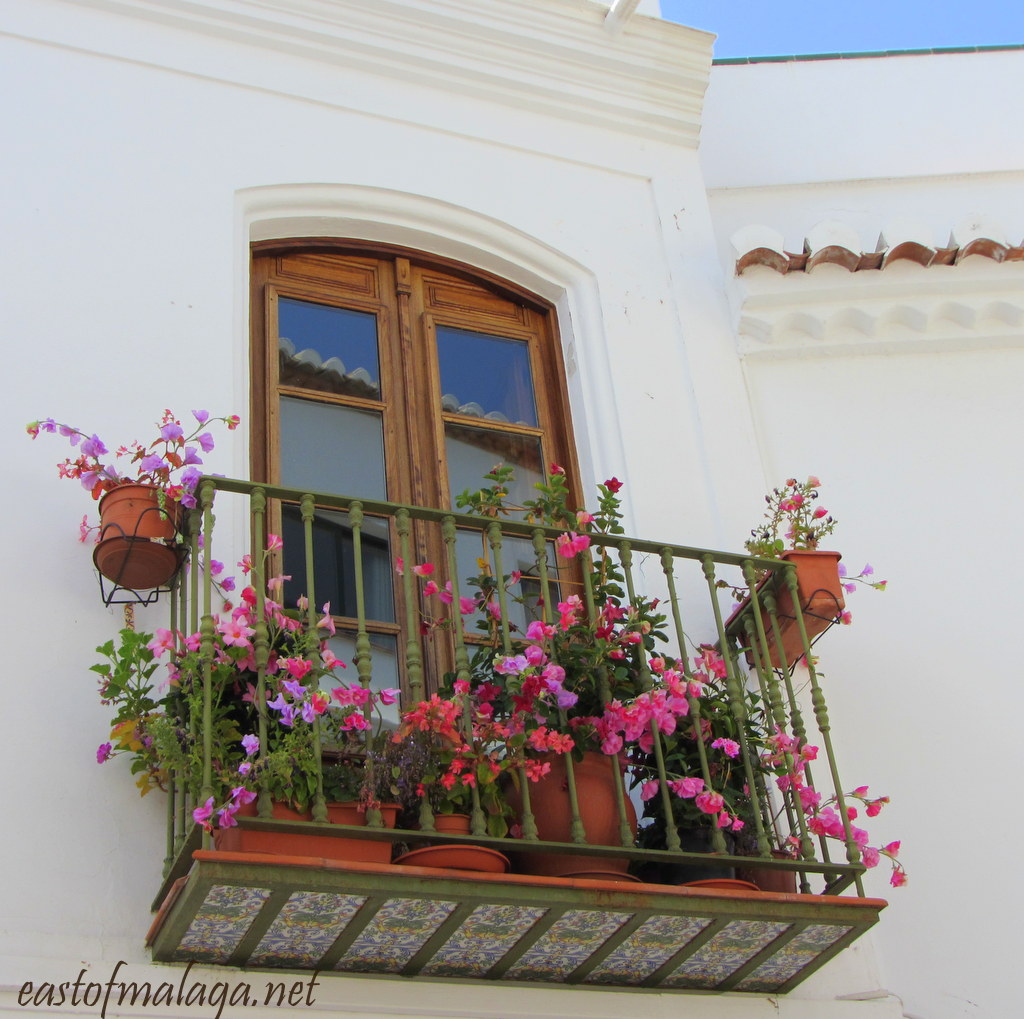
Window and pretty balcony in Nerja, Spain

There is always a lovely display of flowers on this particular balcony in the nearby town of Nerja.  I always think it must be delightful to look out of this window and see all the different shades of pink and purple of the many flowers.  The patterned tiling underneath the balcony is very typical of the area, and I also like the way that the white building opposite and the deep blue sky is reflected in the panes of glass.
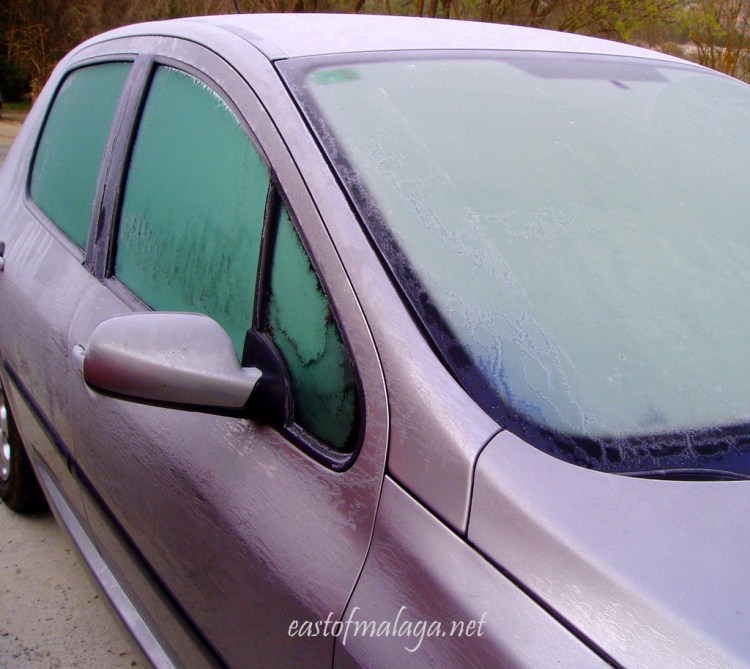
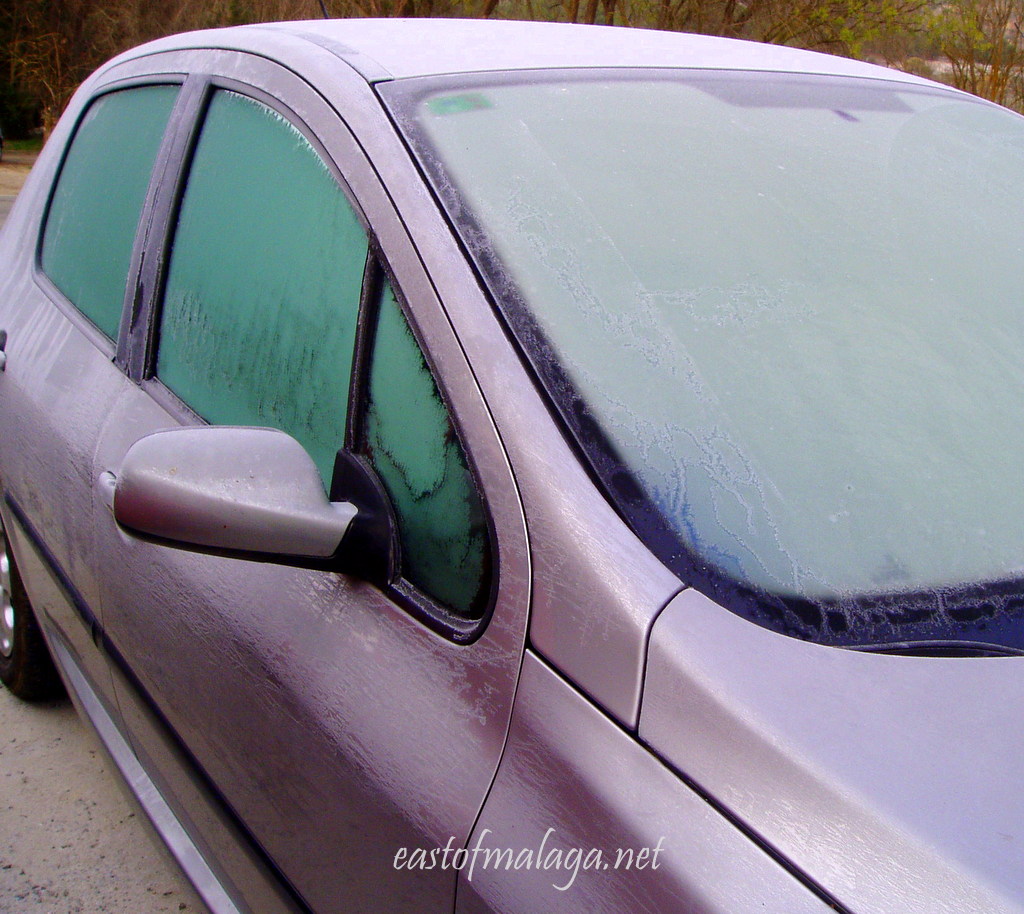
Ice on car windows in Spain

My final window might surprise you, as most people think that it´s always hot and sunny in Spain – all year round.   This photograph was taken a couple of years ago over the  Christmas holidays, whilst we were staying in one of the cave rooms at El Ventorro near to Alhama de Granada.  Being only about 50 kms from the city of Granada with the nearby Sierra Nevada mountains and ski resort,  we awoke one morning to find our car completely iced up.  We didn´t have long to wait though, because by the time we had eaten breakfast, the sun had come up and all the ice had disappeared!

This month´s CBBH Featured Blogs:

** Sally at Deliberately Delicious describes herself as a “Collector of sand dollars.  Adventurer.  Writer.  Weather girl.  Back up singer in a little black dress.  Dancer.  Poet.  Soccer mom.  Bond girl.  Teacher.  Diva.  Walker of beaches.  Seeker of truth and all things delicious in life.”

I have so enjoyed reading about Sally´s adventures this summer, sailing with her friend, Dan, on the western coast of Canada, near to her home in Victoria, British Columbia.  She writes with an easy-reading style, and has  many stunning photographs on her blog.  Deliberately Delicious has quickly become one of my favourite blogs to escape to.

** Whilst we are on the subject of delicious, Natalie at Cook Eat Live Vegetarian features amazing recipes and photographs that you just want to dive straight into!

Diagnosed with breast cancer in 2009, though fortunately now fully recovered, Natalie attributes her swift recovery to a combination of conventional and alternative treatments and to her following a whole foods, mainly plant based diet.

She is  a freelance food writer, photographer and stylist, specialising in delicious vegetarian and vegan cuisine that you wont be able to resist trying!

So that´s the CBBH Photo Challenge for October, folks!

Remember, all you have to do is post your entry by the end of the monthlink back to this blog and, most importantly,  don´t forget to add links to any two blogs that you´ve commented on during the past month, so that we can all HOP OVER and have a look.  Make sure you FOLLOW THIS BLOG so you don´t miss next month´s exciting challenge!

For more information on how the CBBH Photo Challenge works click here.

I hope everyone taking part enjoys the exposure the CBBH Photo Challenge offers to featured blogs and, who knows, you may end up finding a new favourite!  I´m looking forward to seeing your interpretations.

[CBBH logo Image credit: (cc) Mostly Dans]

Brother, Can You Spare a Dime?: The One-Armed Lady of Málaga

Málaga Cathedral has only one tower - the other is as yet unfinished

Málaga Cathedral was constructed between the early sixteenth and late eighteenth centuries and has one very unusual feature.

Have you spotted it yet?

Although the Cathedral´s North Tower is 84 metres high, making this building the second-highest cathedral in Andalucía, after the Giralda Tower in Sevillethe South Tower remains unfinished.

A plaque at the base of the tower informs us that funds raised by the parish to finish it were used instead to help the British colonies (which later became the United States of America) to gain their independence from Great Britain.

This unfinished state has led to the Cathedral being known affectionately as “La Manquita”, which translates into English as  “The One-Armed Lady”.

This post is my response to the Weekly Photo Challenge: Solitary

Related posts:

When life gives you curves, flaunt them!

Travel Theme: Texture

In Plane View: Inside Out

The Buddhist Stupa of the Eastern Costa del Sol

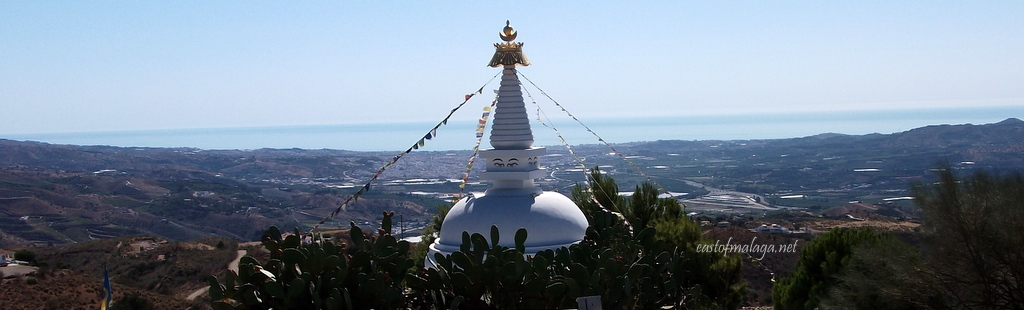
If you are visiting the eastern Costa del Sol, you might not anticipate that there is a beautiful Buddhist Stupa within easy reach of the Mediterranean coast.

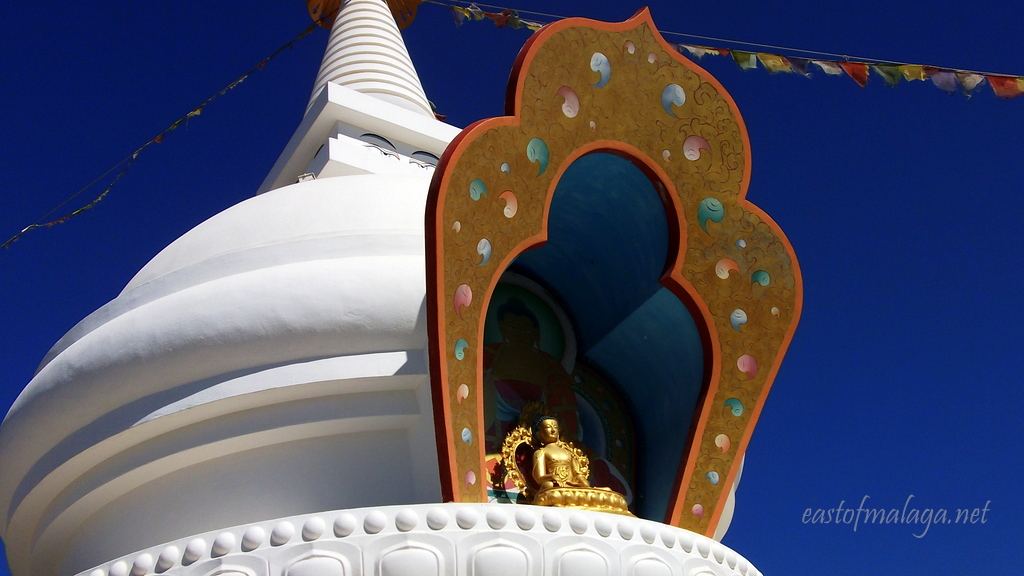
The first Buddhist Kalachakra stupa built in the western hemisphere can be visited about 40 kilometres east of Málaga, north of the town of Vélez-Málaga, near to the Karma Guen Buddhist meditation centre.

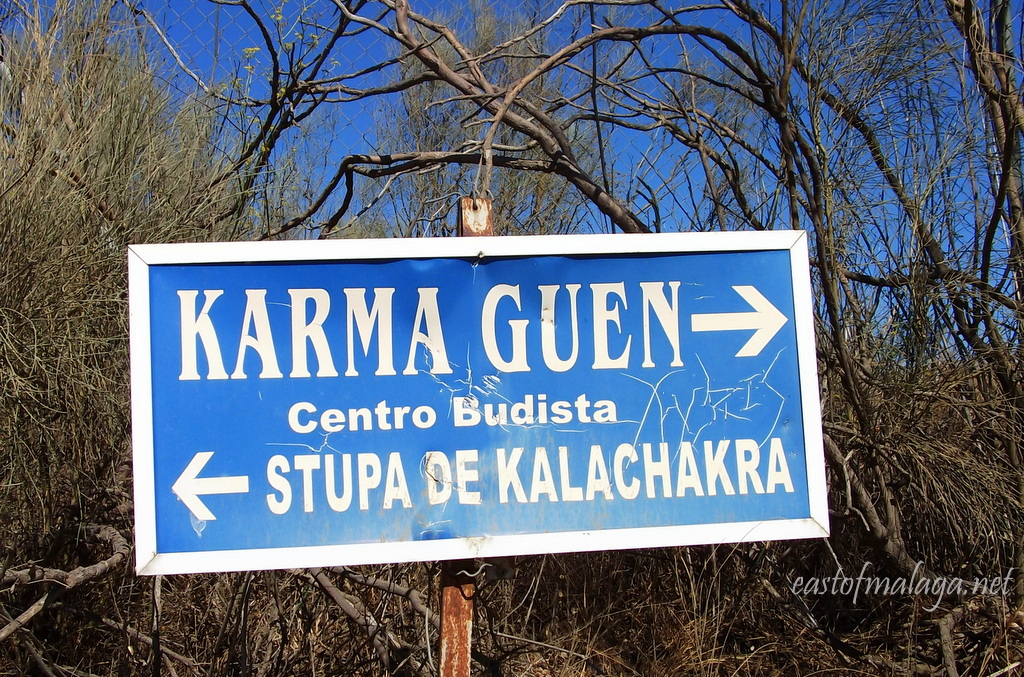
Signpost to the Kalachara Stupa in Velez-Malaga

At the entrance to the Buddhist Stupa, with Monte Maroma behind

The stupa is not easily seen from the surrounding countryside, so where is it?

About a forty minute drive east of the city of Málaga along the A7-E15 Autovía del Mediterraneo to km 272,  take the exit signposted A 356 towards Vélez-Málaga, Viñuela, Colmenar and Zafarraya.  Stay on the A356, bypassing the town of Vélez-Málaga and, after about 7 kilometres, turn left at the junction signed towards El Trapiche.  Approximately one kilometre further, (opposite the Jardines del Trapiche) there is a small sign on the right for the Karma Guen Buddhist centre.  Take this concrete and tarmac road for two kilometres, and then the unmade track up the hill for another two kilometres.

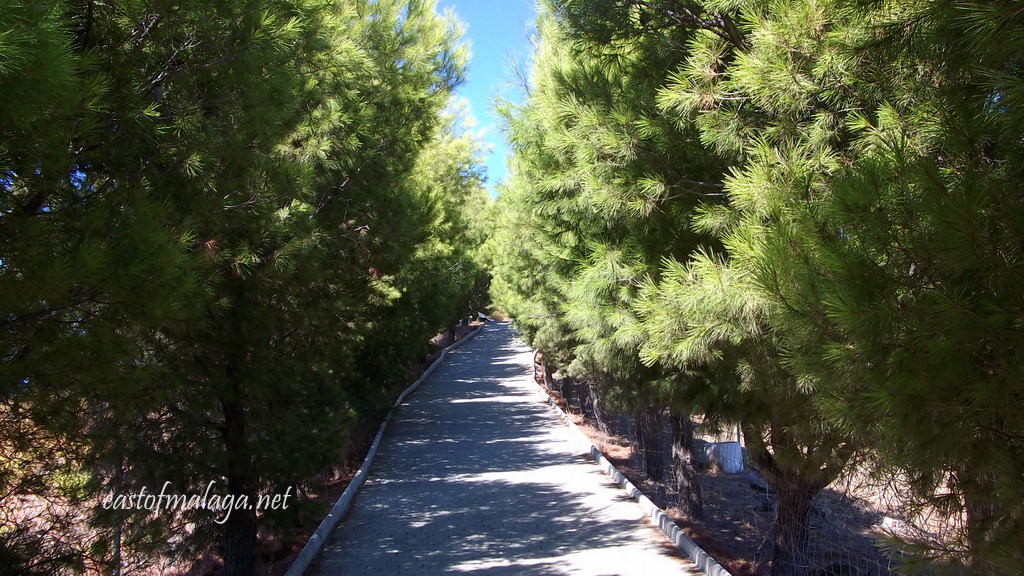
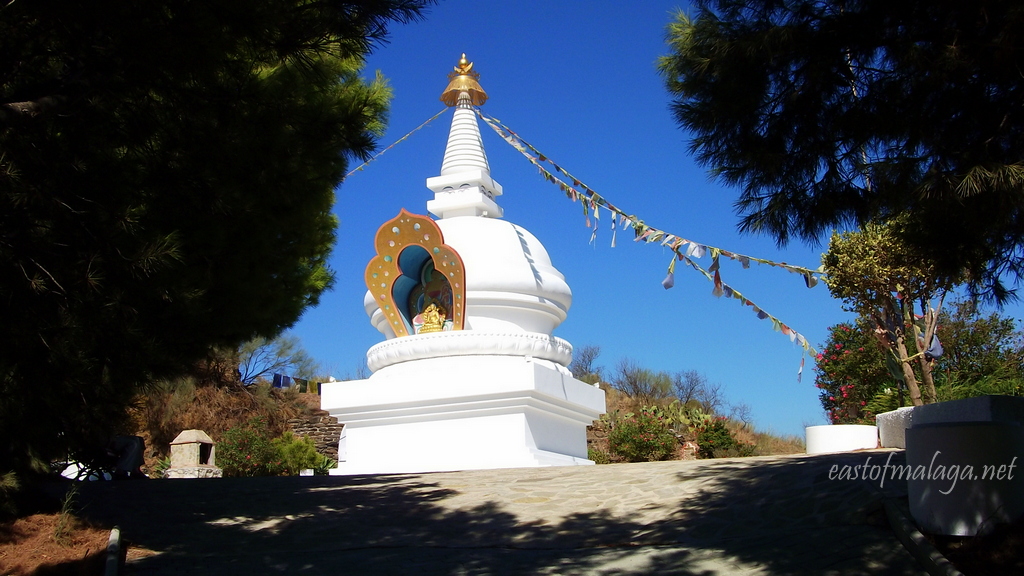
Park and walk through the avenue of pine trees and, all of a sudden, there it is!

Avenue of pine trees leading to the Buddhist Stupa, Vélez-Málaga, Spain

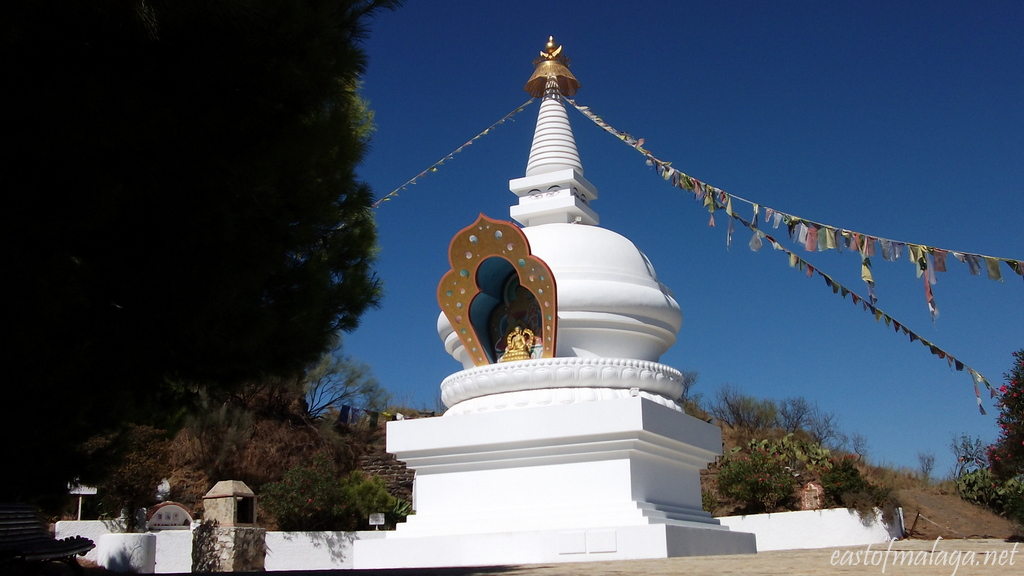
First sight of the Buddhist Stupa in Vélez-Málaga, Spain

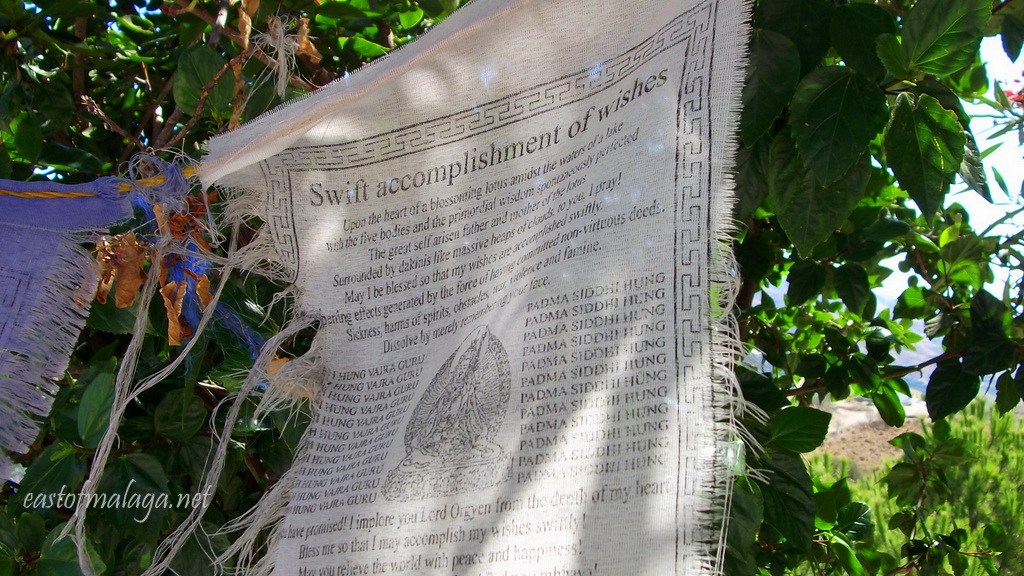
Swift accomplishment of Wishes

Sign at the Buddhist Stupa, Vélez-Málaga, Spain

Within Buddhism, the Stupa is a symbol of universal peace and unity.  It is claimed that they have protective powers and bring about compassion, love and happiness, as well as social, physical and spiritual well-being.

The Kalachakra is the rarest type of stupa.  At the present time, there are only five Kalachakra stupas in the world and this one, near to Vélez-Málaga, was the first to be built in the West.  It was hoped that building this stupa would help to protect Europe against negative energies.

The Golden Buddah statue at the Stupa at Vélez-Málaga, Spain

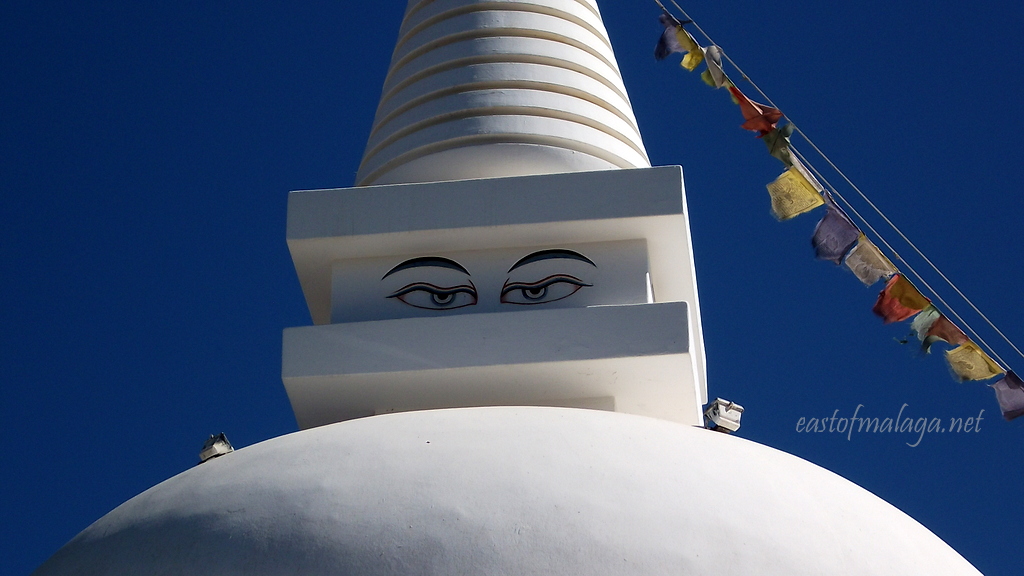
The eyes of the Buddhist Stupa, Vélez-Málaga, Spain

Just like the famous Boudhanath stupa in Kathmandu, this Kalachakra stupa has eyes painted on it, which is a Nepalese custom.

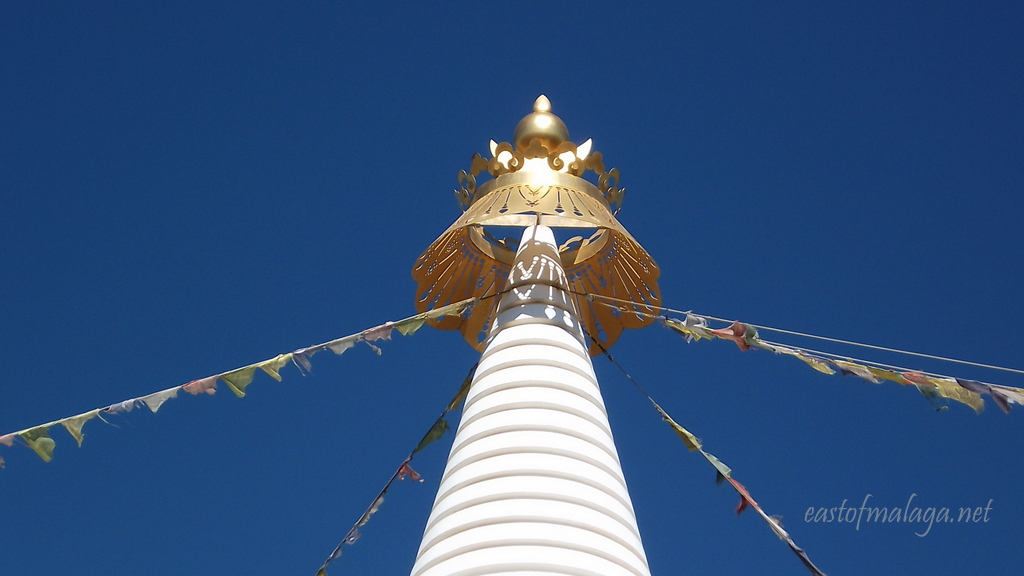
The golden dome of the Stupa glistens in the beautiful sunshine

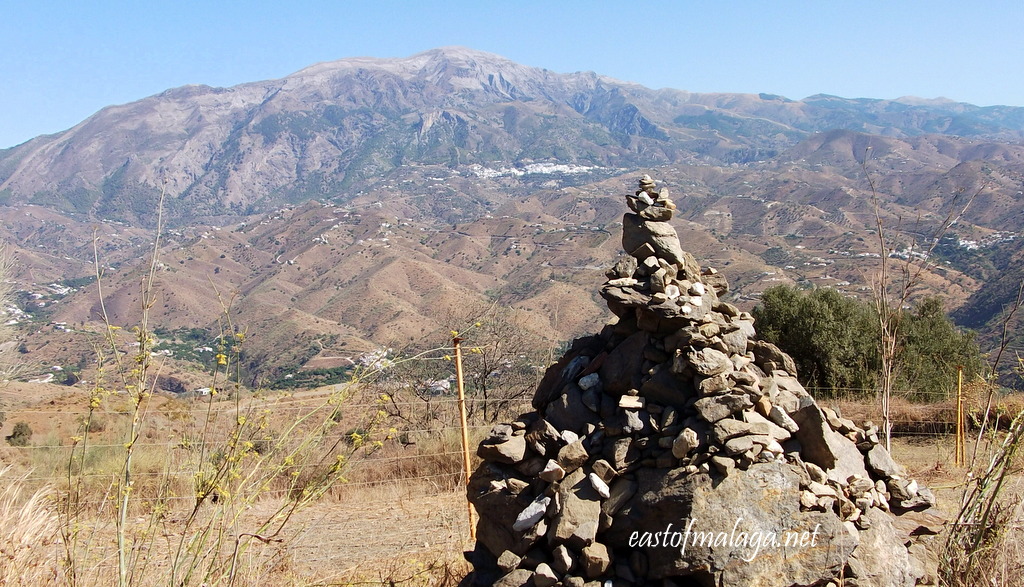
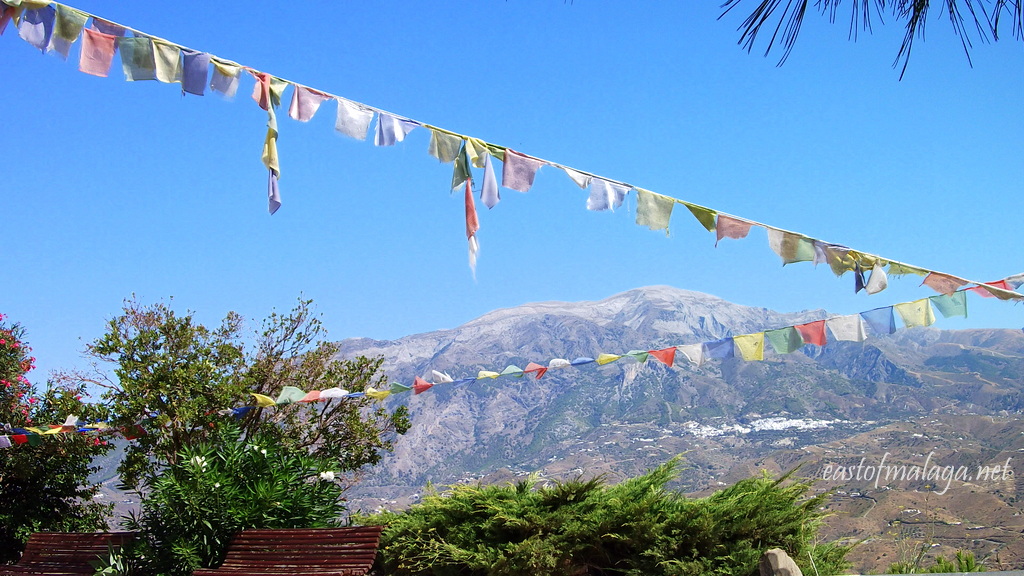
View across to Monte Maroma from the Buddhist Stupa, eastern Costa del Sol

The Buddhist Stupa overlooks the eastern Costa del Sol

The journey to see the Kalachakra stupa at Karma Guen is a relatively easy one (bearing in mind the mountain roads) but the views on arrival both towards the mountains and the sea are magnificent.

The stunning Stupa of Kalachakra at Vélez-Málaga, Spain

I often take visitors to see the Stupa because it´s an unusual and memorable place to visit. 

Where do you take your visitors that surprises them?

This peaceful post is my contribution to this week´s Travel Theme: White and to celebrate the 30th Anniversary of the UN International Day of Peace.

If you enjoyed this post, you might also like to look at:

Bus Services: East of Málaga

A Weekend Away: Santiago de Compostela

Slice of Life: Spanish bars