Recent posts you might enjoy:
F1 and MotoGP in Spain: My Kind of Speed Date
The Old Railway Line at Zafarraya
The Buddhist Stupa of the Eastern Costa del Sol
Recent posts you might enjoy:
F1 and MotoGP in Spain: My Kind of Speed Date
The Old Railway Line at Zafarraya
The Buddhist Stupa of the Eastern Costa del Sol

I’ve only ever seen a dung beetle on TV in a wildlife documentary programme.
Imagine my surprise when I saw this little chap, rolling his ball of poop in my garden, last Sunday afternoon!


The moral of this tale? If you’re having a bad day, just remember – you are not this dung beetle with sh** all over your head!
If you’ve never seen a dung beetle doing what dung beetles do – here’s a YouTube video for you.
ENJOY!
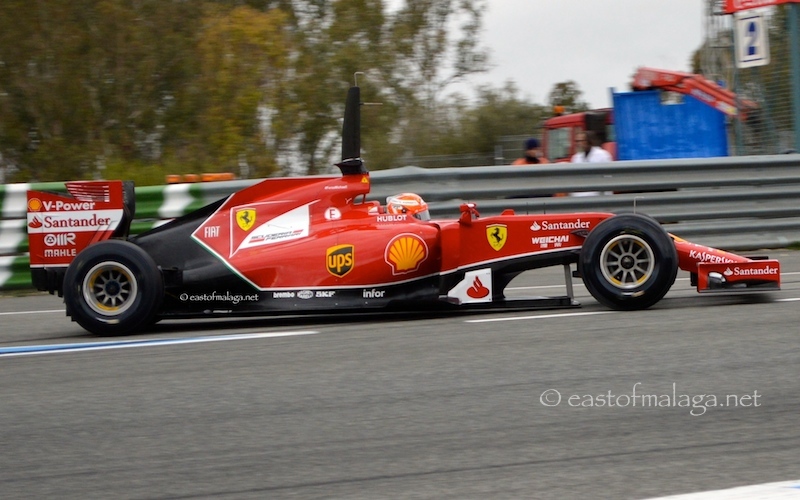
Most football fans know how HUGE Spanish football is within Spain, but what you might not know is how well attended motor-sport events are.
With an unprecedented four MotoGP motorcycle events, a Formula 1 weekend AND winter testing on the Spanish motor-sport calendar, it’s never too long to wait between speed dates!
During the late 1980s and twice in the 1990s, Jerez was the venue for the Spanish and European Grand Prix on the F1 calendar. While it may have lost out to Barcelona and later, Valencia for the actual race, the Circuito de Velocidad (speed circuit) in Jerez has continued to be the place where the F1 teams prefer to conduct their winter testing in late January or early February, each year .


On the morning of Tuesday 28th January, we had an early start for the three hour drive to Jerez from our home, east of Málaga. With good, quiet roads we made excellent progress and were soon within 20kms of Jerez, enjoying our breakfast of coffee and toast, and still in time for the 9am revving of the engines.
The circuit is well used to hosting huge motor-sport events and has a good system in place for funnelling the traffic to the nearby car parks, which cost us just 1 euro to park our car for the day.
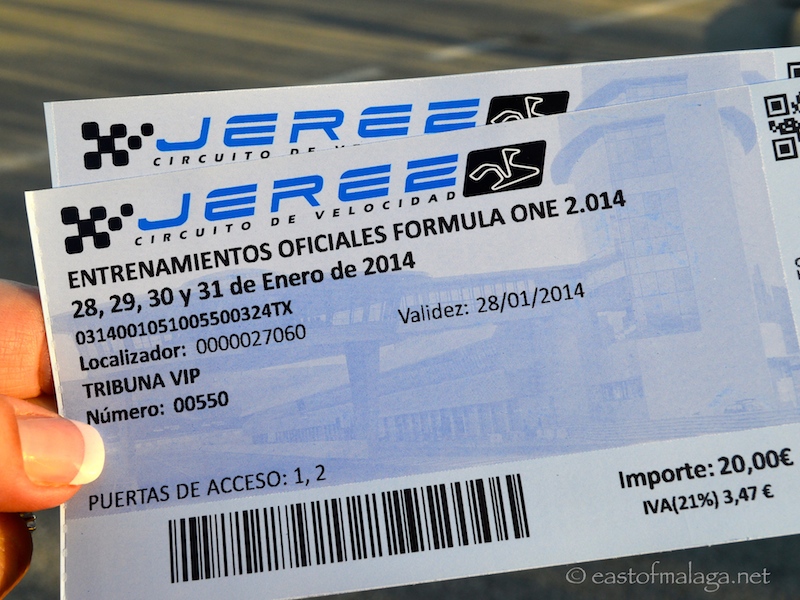
The first time we travelled to Jerez to watch the F1 winter testing was about five or six years ago when only one of the stands was open, the entrance cost for the day was five euros and there were fewer than 200 people there.
Things have changed a bit since then, as now there is a choice of entrance to the VIP tribune area for 20 euros per day or general access for 10 euros per day.
Seating is not allocated within the circuit, leaving you free to move around as you wish, to try to get the best view. Since we were going to be there for the first two of the four days of testing, we decided to take the VIP tickets for the first day and have general access on the second. That way we got access to approximately half of the circuit over the two days.


There are plenty of stalls where you can buy food and drinks or snacks, though you can also do what we did and take a picnic in a cool box.
Among all the stalls selling tee-shirts, flags and caps supporting various F1 (and Moto GP) stars, it was sad to see the irony of the “Sale rail” selling off Michael Schumacher tee-shirts for just 5 euros.
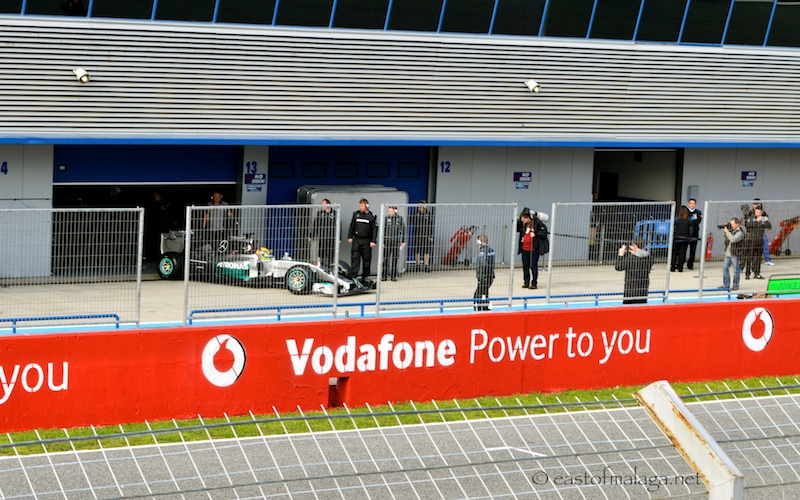
Our first day was spent on the inner part of the track, starting in the VIP tribune, opposite the team garages in the pit lane. Not all the drivers are at the track at any one time, but over the two days we saw Kimi Raikkonen (Ferrari), Jenson Button (McLaren), Sebastian Vettel (Red Bull), Lewis Hamilton and Nico Rosberg (Mercedes), and Sergio Perez (Force India) amongst others.
There were lots of photographers in the pit lane and each time one of the cars fired up, there was a flurry of activity as they jostled to get first sight of the new, updated vehicles with their V6 engines and styling.
Just before the lunchtime break, we witnessed Lewis Hamilton’s spectacular front wing failure which resulted in his vehicle skidding for one hundred metres into the gravel trap and tyre barrier on the first corner. Sadly, even though he was unhurt, this was the last we saw of Lewis, as the next day saw the turn of his team-mate, Nico Rosberg.


On the second day, we were nearer to the entrance, on the outside of the track, and there was definitely more driving action as the teams had adjusted their expectations after their testing sessions on the first day. Every so often, the track marshalls waved their red flags to suspend the action, and out came the pick-up truck to collect a stricken car which had broken down somewhere on track.
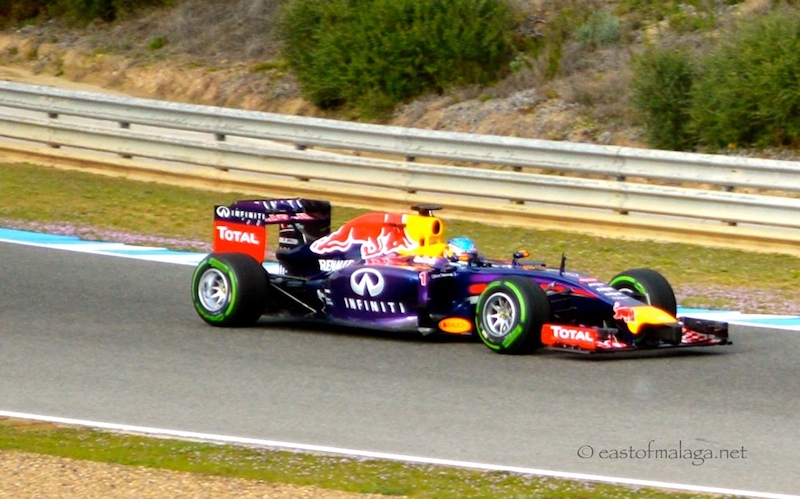
The winter testing days provide the first opportunity for the general public to see the styling and design of the new season’s cars and to hear the difference in the engines as their capacity has been reduced from 2.4 litre V8 to 1.6 litre V6 turbo.
I’ve been a motor-sport aficionado for as long as I can remember, and have attended quite a few Formula 1 and Moto GP events, but it’s always astonishing to see and hear the speed of the cars at the track, as they are greatly distorted on TV with telephoto lenses and microphones.
Bear in mind that these four days are for testing tyre wear, cooling systems, handling and suspension set-up, brakes, reliability and the overall performance of the cars.
It is not a race, so there is no guarantee that any particular cars will be on the track.
World Champion Sebastian Vettel in the Red Bull, for example, only appeared during the final 20 mins of first day, for two individual laps and completed just two further laps on the second day.


I hope you will appreciate the clambering about I had to do to get some of these shots – but it was a good opportunity to put my new Nikon D3200 camera through it’s paces!
Although Jerez is no longer one of the venues for the Spanish Formula 1 Grand Prix, the weekend of May 4th 2014 will see approximately 125,000 motorcycle fans descend upon Jerez for the first of four Spanish dates on the Moto GP calendar – the largest crowd of the MotoGP season worldwide.
How the Spaniards love their motorcycle racing, and no wonder with so many Spanish riders in the line up. Current World Champion Marc Marquez, who won the crown last year despite being a rookie, is just 20 years old and will have his work cut out this season, with previous World Champion Jorge Lorenzo trying to regain the top spot.
If you want to see a lap simulation around the track, click here.
Moto GP dates and venues in Spain for 2014:
4th May – Jerez
15th June – Catalunya (Barcelona)
21st September – Aragón (MotorLand)
9th November – Valencia
Formula 1 race in Spain 2014
11th May – Catalunya, Barcelona
MY SUGGESTION FOR A TRIP:
If you are a fellow petrol-head and want to travel to visit either the F1 winter testing session or the MotoGP in Jerez, it is definitely worth staying in the city for a few nights to visit the sherry bodegas. You could also visit nearby Cadiz which, at over 3000 years old, is one of the oldest continually-inhabited cities in Europe.
The weekend after the MotoGP in Jerez sees the Formula 1 Spanish Grand Prix in Barcelona on May 11th. Flights are available to Barcelona from Jerez with Spanish airline Vueling
You can purchase TICKETS for the MotoGP in Jerez from the circuit, HERE or for the Formula 1 race in Barcelona, HERE.
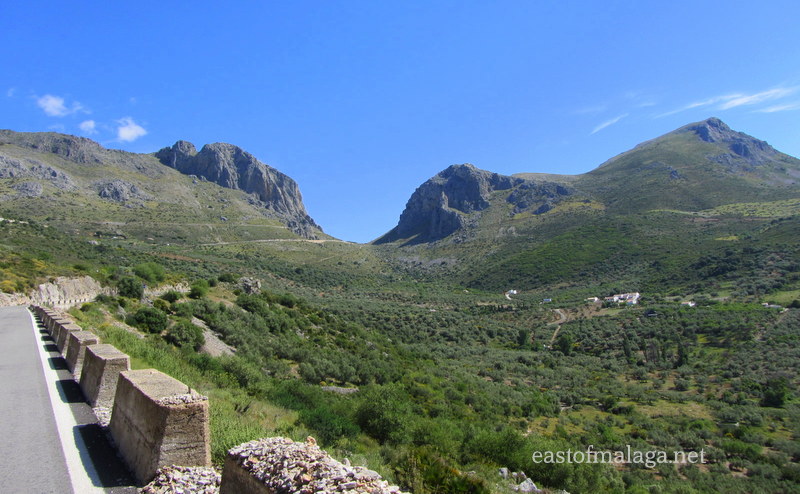
You might remember, I’ve told you before about the spectacular U-shaped Zafarraya Pass (El Boquete de Zafarraya) marking the boundary between the provinces of Málaga and Granada, and which can be seen for miles around.
Standing over 900 metres above sea level, the Pass has been used for centuries as a key route through the sierras, linking lands south-west of Granada, with the towns and villages along the coast, east of Málaga.
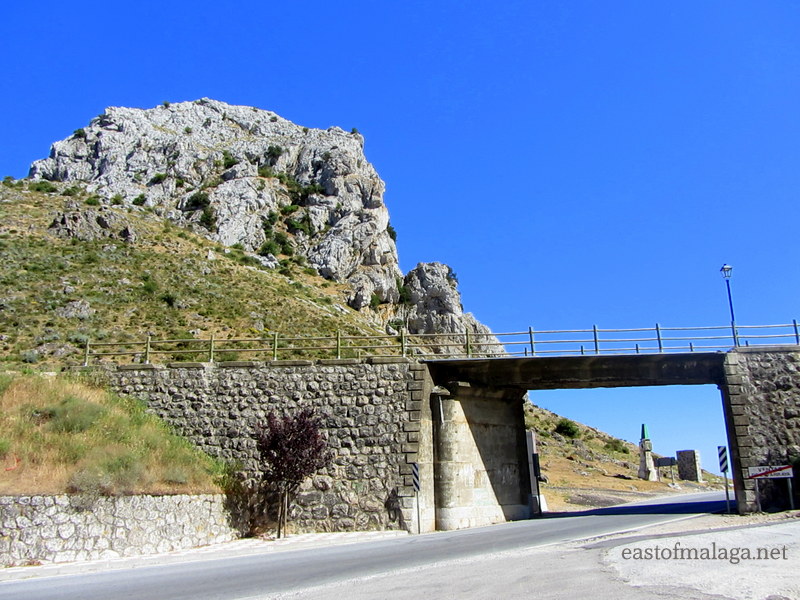
On the approach to the gap in the mountains, above the road on the left, a small tunnel through the rock can be seen. This once formed part of the Periana to Zafarraya railway line, abandoned fifty years ago. The tunnel is now used by horse-riders and walkers who enjoy strolling along the dirt road where the railway once ran.
Last time I went through the Zafarraya Pass, instead of whizzing by, I decided to stop and have a look. After driving under the the old iron railway bridge, I parked in the small car park on the left side of the road.
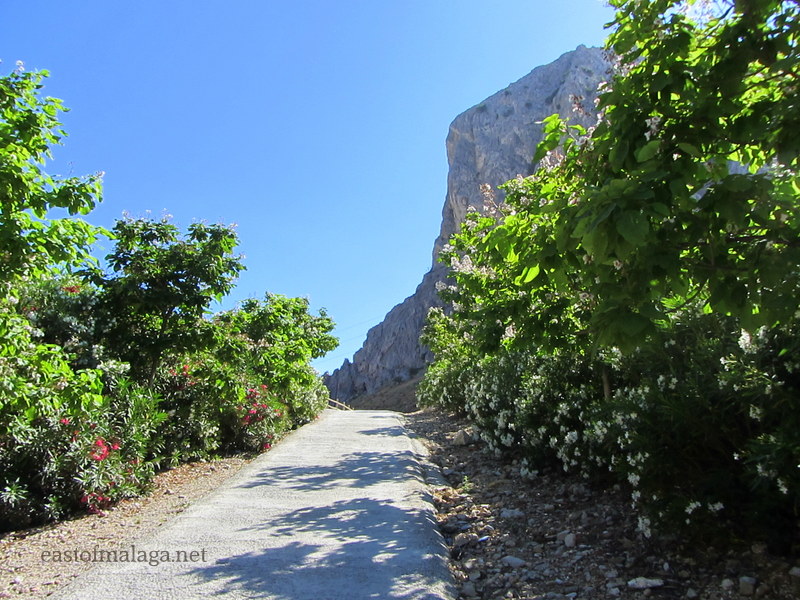
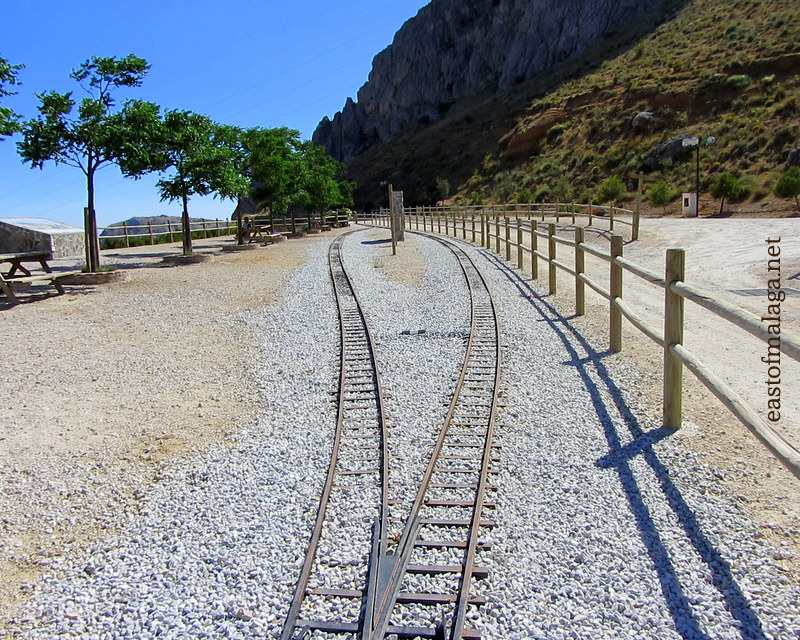
It’s only a few steps up the gentle slope to where the narrow gauge railway once ran. The main tracks were removed long ago, but there is still a short length remaining to illustrate what it must have looked like.

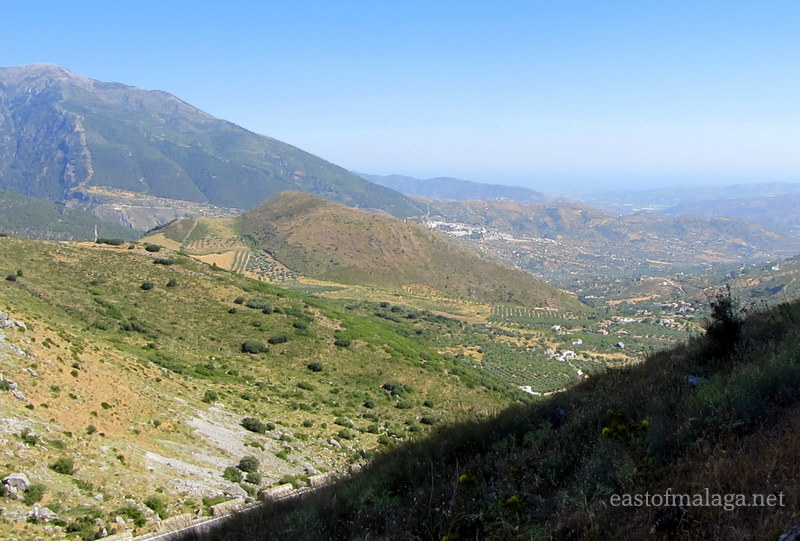
The views from the Mirador El Boquete (lookout point) both across the Pass and down towards the coast are stunning. This is a lovely peaceful place to stop for a picnic, and there are a couple of picnic tables for public use.
From here you can see the peaks of Tajo de la Cueva and El Morron de La Cuña, the hamlets of Espino, Los Cortijillos, Los Pavitos and Los Morales as well as numerous white houses, dotted like paint spots on a canvas, as far as the eye can see. The village of Alcaucín and the Parque Natural lie ahead, overseen by La Maroma, the highest mountain in the Axarquía region at 2066 metres.
If you cast your eyes further down the valley, La Viñuela reservoir and the Mediterranean Sea glimmer in the distance.


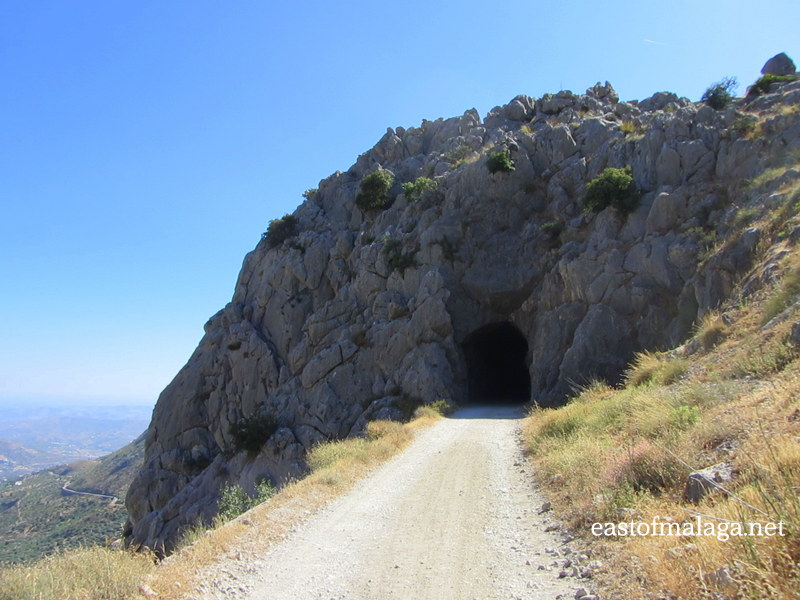
I wandered along the dirt track, and ahead of me I could see the old narrow railway tunnel.
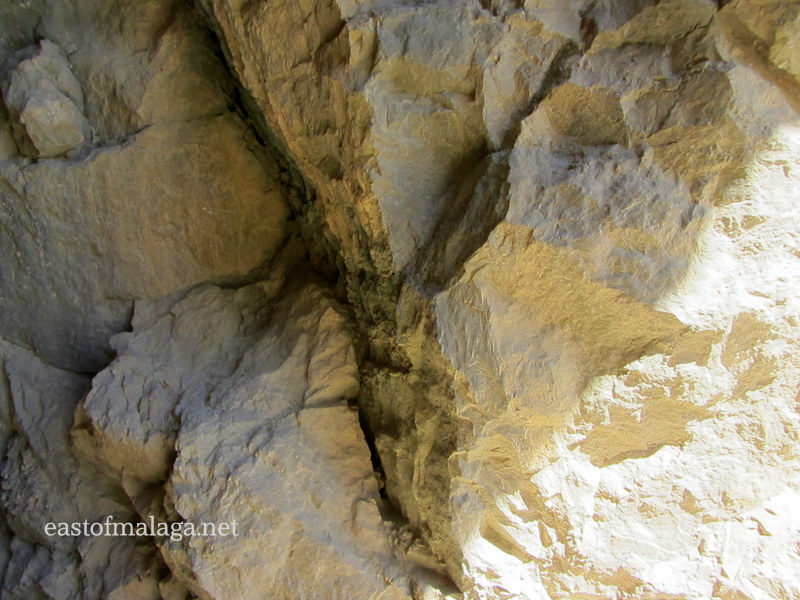
As I approached, the enormity of the task in building the tunnel was obvious. It had been hewn through the rock by hand. What a job!

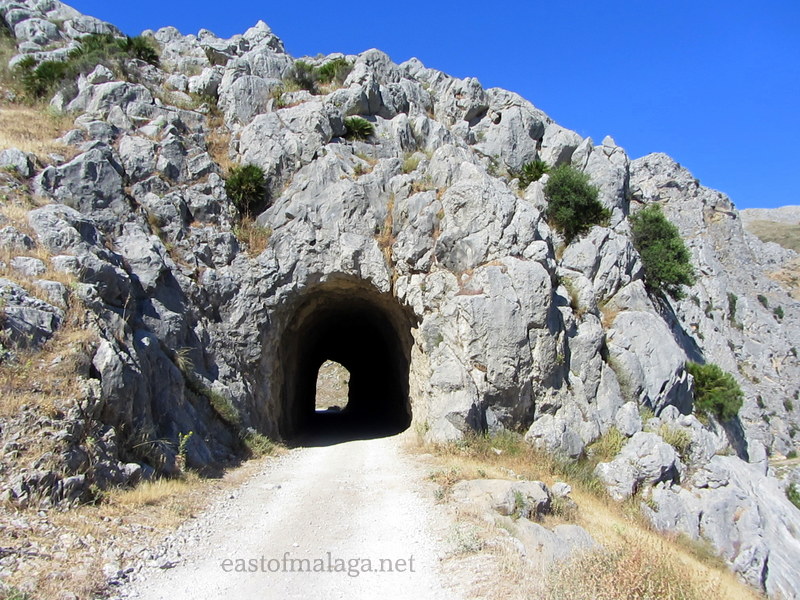
Rather than just strolling as I did, and depending on how fit you are, you might enjoy an adventurous walk or a more gentle ramble from Periana, the source of the old railway line, back to the Boquete de Zafarraya.
Whatever you choose, be sure to watch out for the fabulous birds.

To get to the Zafarraya Pass, drive north from the A7/E15 Autovía del Mediterraneo, past the town of Vélez-Málaga and briefly alongside Lake Vinuela, before heading up the A402, a winding mountain road.
You will see the gap in the mountains ahead, getting closer and closer the higher you climb.
Until I moved to live in Spain, January 6th only meant one thing to me – the twelfth night – or, more importantly, the day you are meant to have all your Christmas decorations packed away until next year.
 [Image credit: Flickr (CC) Paul and Jill]
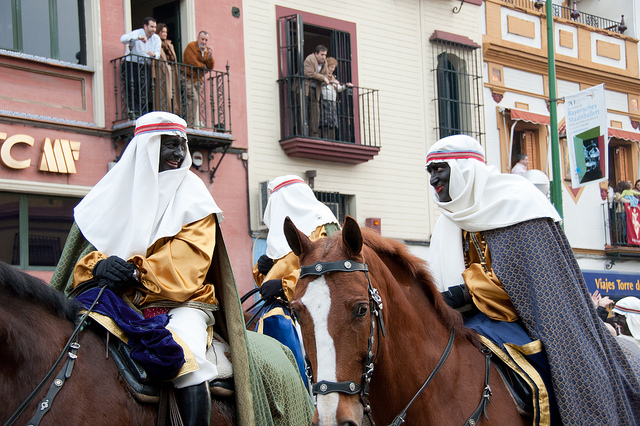
Now, of course, I know that it’s the day that La Fiesta de Los Reyes takes place throughout Spain to celebrate the day the Three Kings arrived in Bethlehem to present the baby Jesus with their gifts of gold, frankincense and myrrh. It is also the most important day for Spanish children, as they receive their festive gifts from the Three Kings rather than Father Christmas (although every year Santa is becoming increasingly popular).
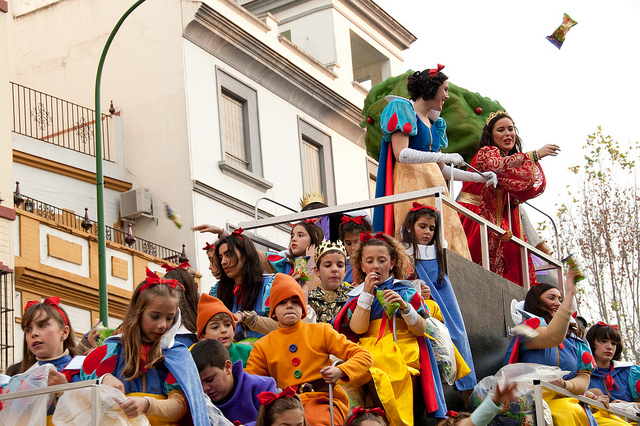
The fun starts on the previous evening, usually with processions passing though most towns and cities. During the late afternoon, the crowds grow in anticipation of the arrival of the Three Kings on huge motorised floats, horseback, camels or, in the case of my local mountain village a year or two ago – in the back of a police car!
 [Image credit: (cc) Paul and Jill]
As daylight fades away, you might hear the drums and music of the approaching parade, heralding the arrival of the Three Kings.
People on the floats throw boiled sweets towards the waiting crowds on either side. But beware! Some of the younger people on the floats can be rather enthusiastic throwers, with sweets being hurled out like missiles! If you’re not careful you’ll get your eye taken out! Many in the crowd come prepared, holding up-turned umbrellas to catch the booty, whilst others just scrabble around the ground, stuffing the fallen sweets in their pockets or bags.
It´s quite a sight to see adults scuttling around grabbing sweets off the floor totally without embarrassment – in fact, it´s easy to get caught up in the excitement of it all!
After the parade, most families head home where, before going to bed, the children will put out something nice to eat and drink for the Three Kings, plus water for their camels. They also leave out their best pair of shoes to be filled with presents. The next morning, if the children have been good then they will find presents in and around their shoes, if not, then only a lump of coal will have been left for them – though I suspect that doesn´t happen very often.
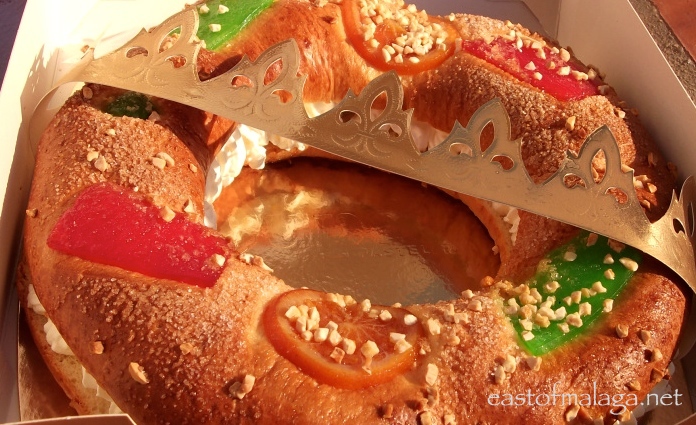
On January 6th, most families gather around the table to enjoy their Roscón de Reyes. This is a ring-shaped bun or sweet bread, sugar-frosted and decorated with fruit flavoured jellies and fruit. The bun is sliced in half and filled with a mock cream mixture. Hidden somewhere in the cream will be a novelty such as small model king and, if you are lucky enough to find one of the hidden figurines in your portion, then tradition has it that you will be blessed with good luck for the coming year. Though I guess it would be bad luck if you inadvertently swallowed it and choked!

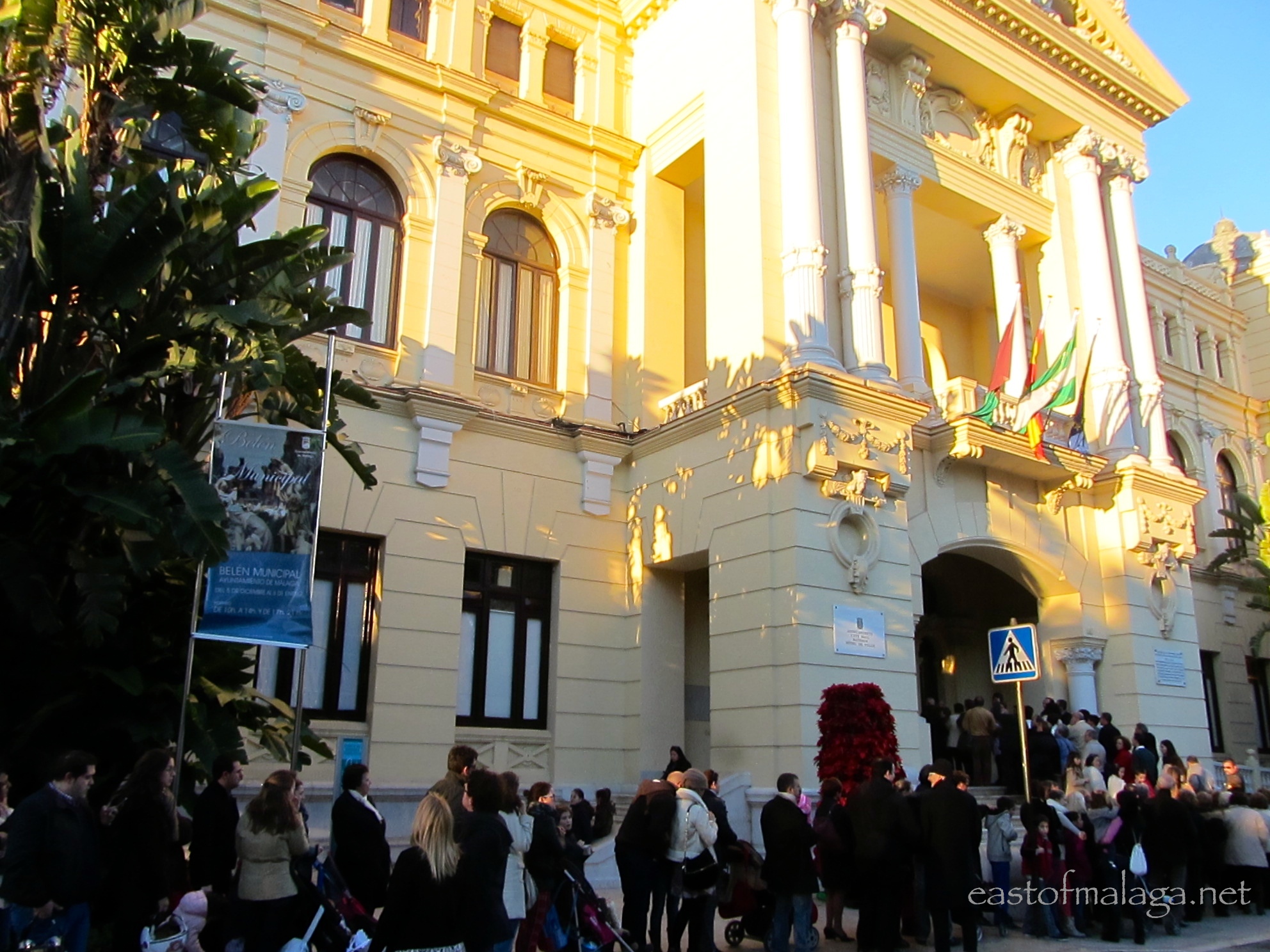
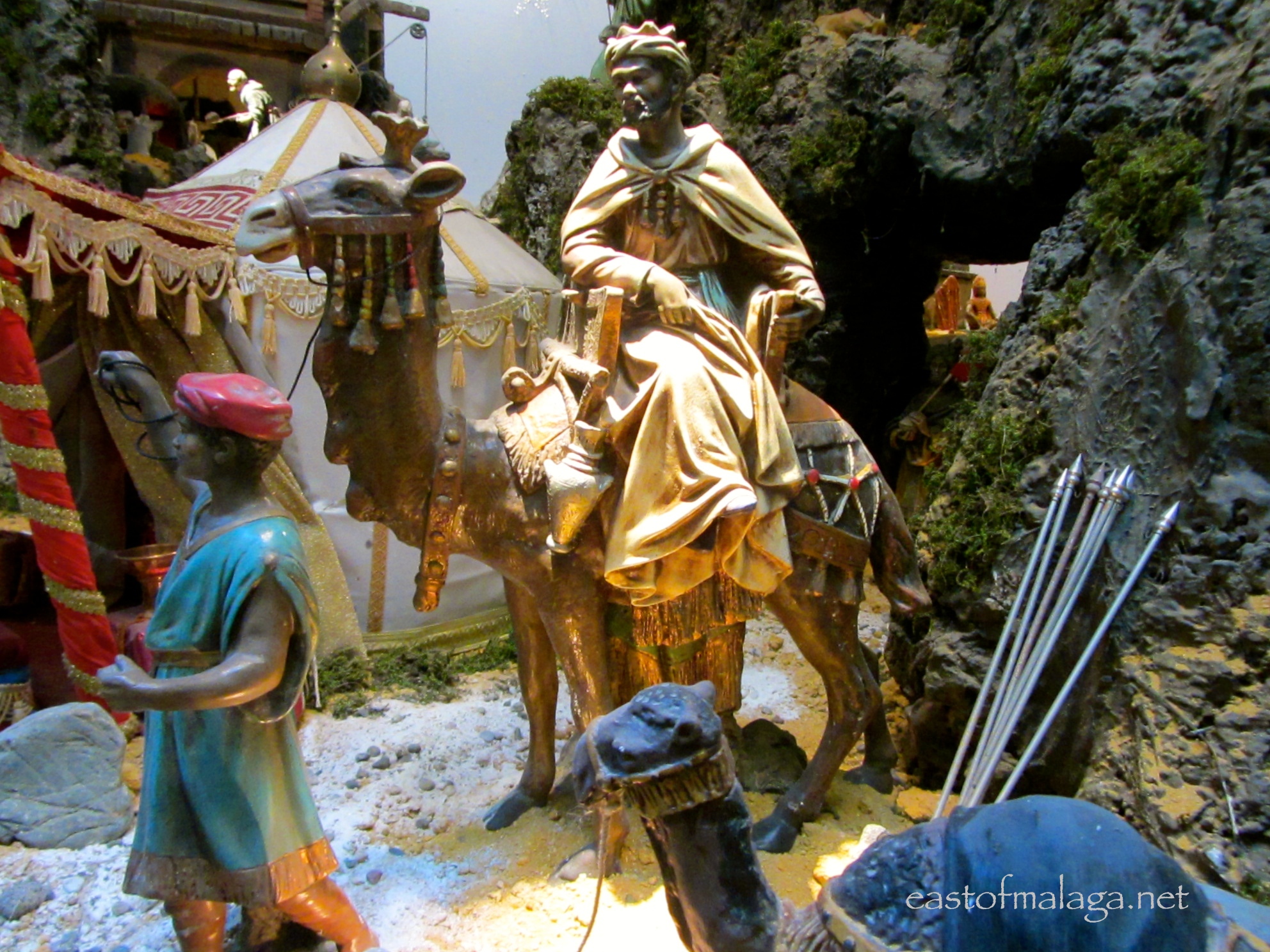 This is also the final opportunity to see one of the many Belénes (Nativity scenes) around the town or city. I photographed this one inside Málaga Town Hall (Ayuntamiento de Málaga) last Sunday. There was quite a queue to get in by the time I left.
You might also like to look at:
The Buddhist Stupa of the Eastern Costa del Sol


 East of Málaga