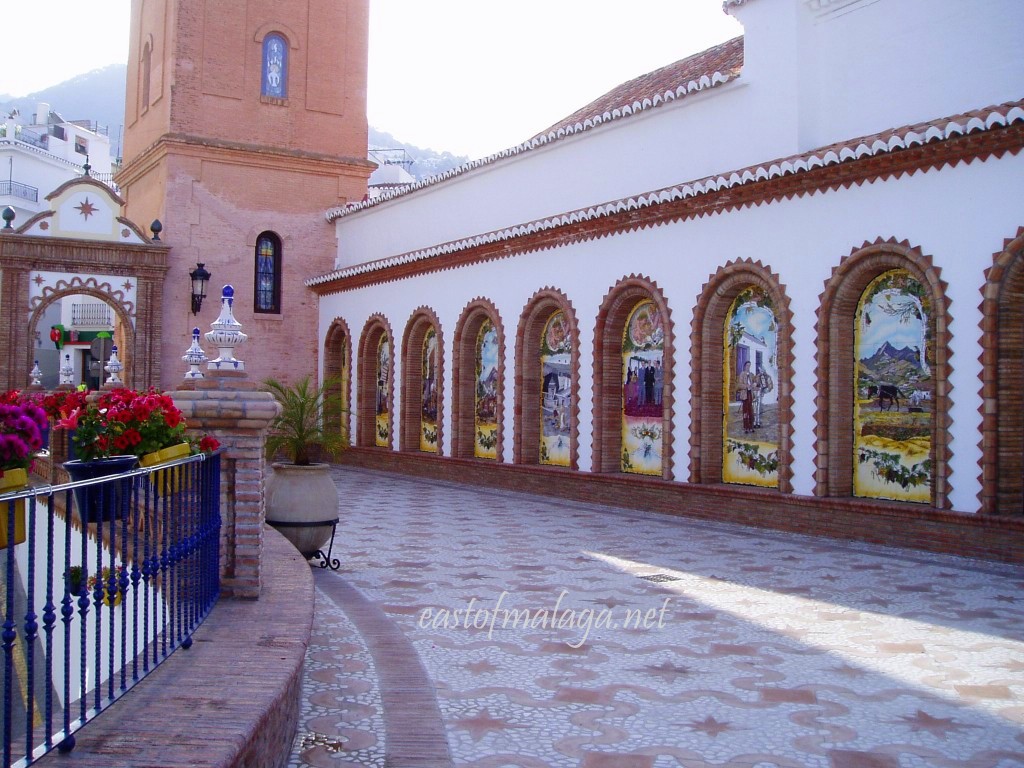
The heart of Cómpeta: El Paseo de las Tradiciones

Paseo de Las Tradiciones, Competa, Spain

El Paseo de las Tradiciones (The Walk of the Traditions) is just off  the main square, Plaza Almijara, of the white, mountain village of Cómpeta.  Completed in 2009 on the site of the old municipal market, El Paseo de las Tradiciones is annexed to the Church of Our Lady of the Assumption (La Iglesia de Nuestra Señora de la Asunción).
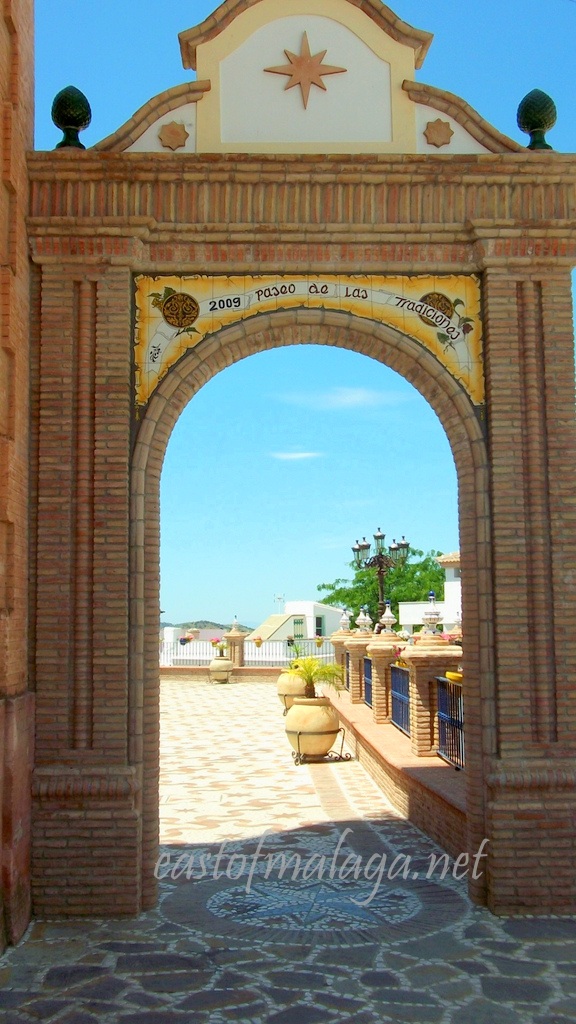
Archway into El Paseo de las Traditiones, Cómpeta, Spain

As you stroll from the busy square, through the archway into the Paseo de las Tradiciones you will discover an oasis of calm.   The floor is decorated with an intricate Moorish pattern of terracotta and white tiles, alongside a series of stunning ceramic murals celebrating the lives of generations of the ordinary working people of the village.
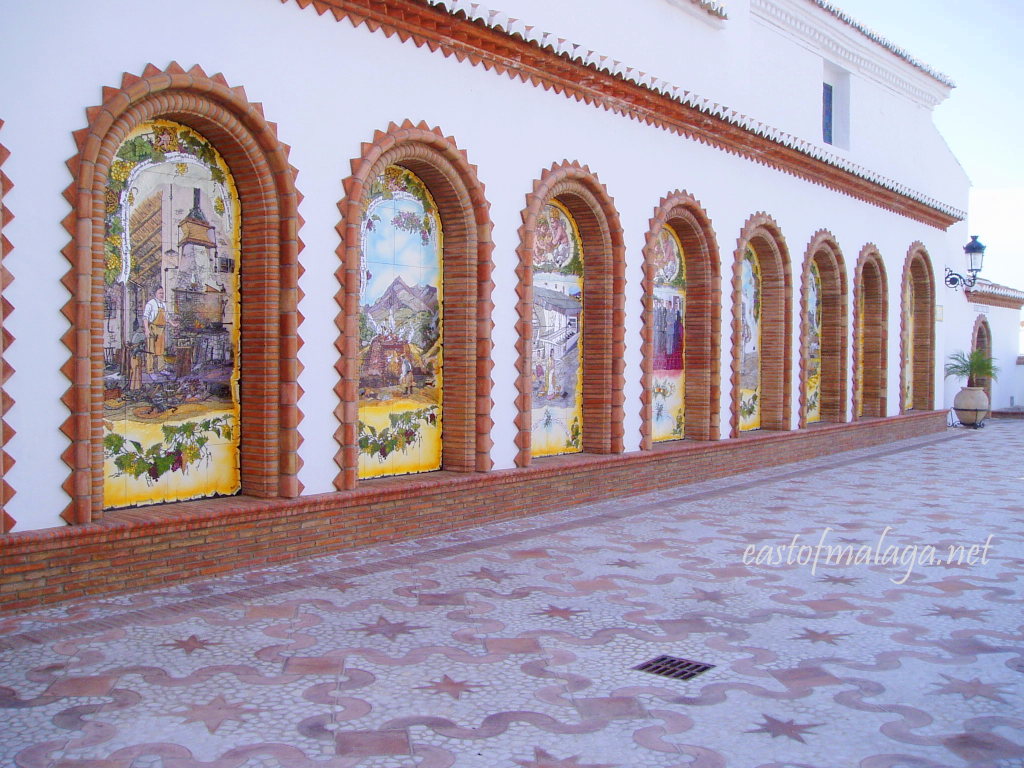
Alcoves in El Paseo de Las Tradiciones, Cómpeta, Spain

One wall of the Paseo de las Tradiciones pays testament to the trades and deeply-rooted traditions of the people of Cómpeta through the ages. The beautifully modern, brightly-coloured tiling in each of the alcoves was developed in the workshop of potter and sculptor, José Antonio Rivas.

The nine alcoves, each 3 metres high and 2 metres wide, not only depict the history of the collecting of the local vines, the muleteers and village smithy, old olive oil factory and the public laundry, but also recognize the contribution made by the Moors, who for 800 years did so much to improve the cultivation of the summer-dry, winter-wet sierras, bringing the first prosperity to the village.
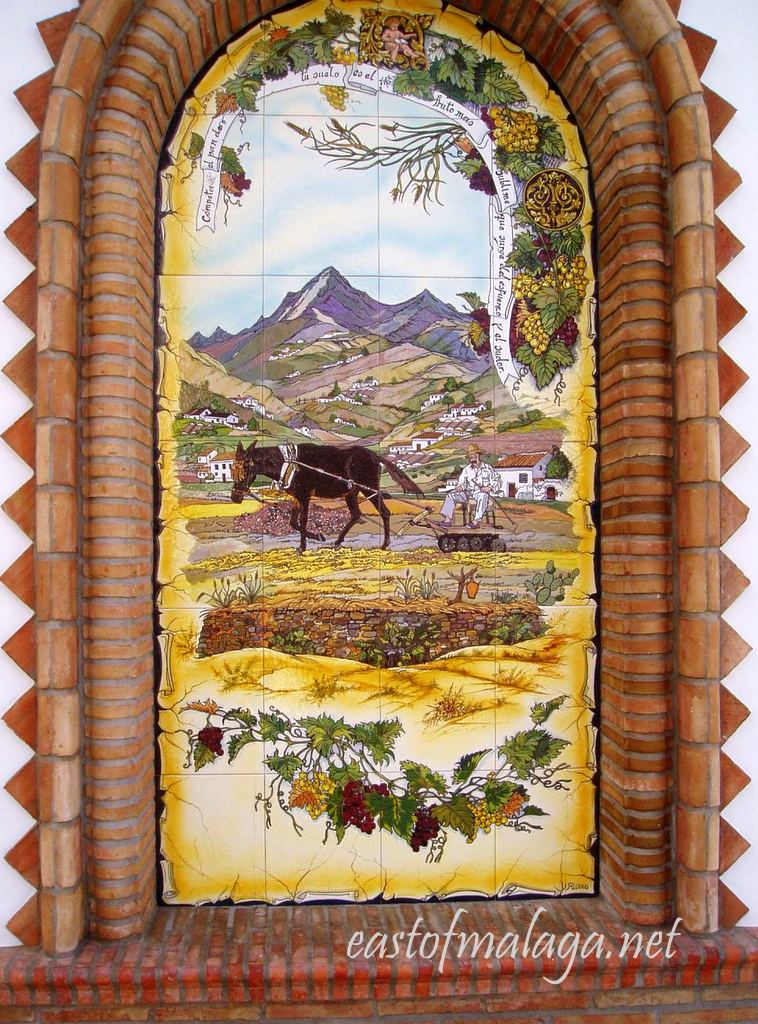
East of Malaga: Competa´s Paseo de las Tradiciones Alcove

The 500 years since the building of the Church of Our Lady of the Assumption have not been easy for the people of Cómpeta.

The expulsion of the Moors, two great earthquakes followed shortly afterwards by a cholera epidemic, and the vine disease phylloxera, which devastated crops all over Europe in the mid-19th century, have all taken their toll.   But the spirit of the villagers continues to thrive, as epitomized throughout the Paseo de las Tradiciones.

Where is your “oasis of calm”?

Whilst you´re here, why not have a look at:

The elegant,  main shopping street of Málaga

I can see Africa from my terrace!

All at sea with the Virgen del Carmen

East of Málaga: So near, yet so far away

Cactus and mountains

Here´s my response to the Weekly Photo Challenge: Near and Far.

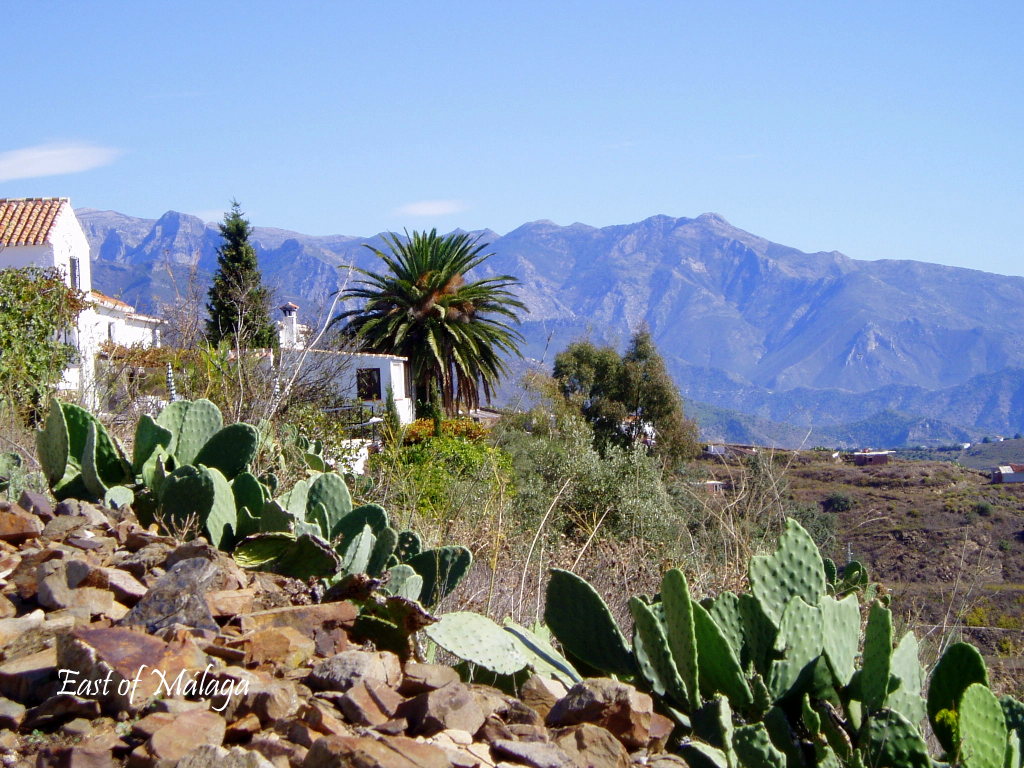
I climbed up the nearest hill to where I live in the countryside between the villages of Torrox and Cómpeta, to capture the cactus in the foreground leading the eye towards the whitewashed house and the distant peaks of the Sierras de Tejeda, Almijara y Alhama Mountains.

Whilst you´re here, why not have a look at:

Following in the footsteps around Comares

In Plane View: Inside Out

Capture the Colour: Red, Green, Blue, Yellow and White

Slice of Life: Spanish bars

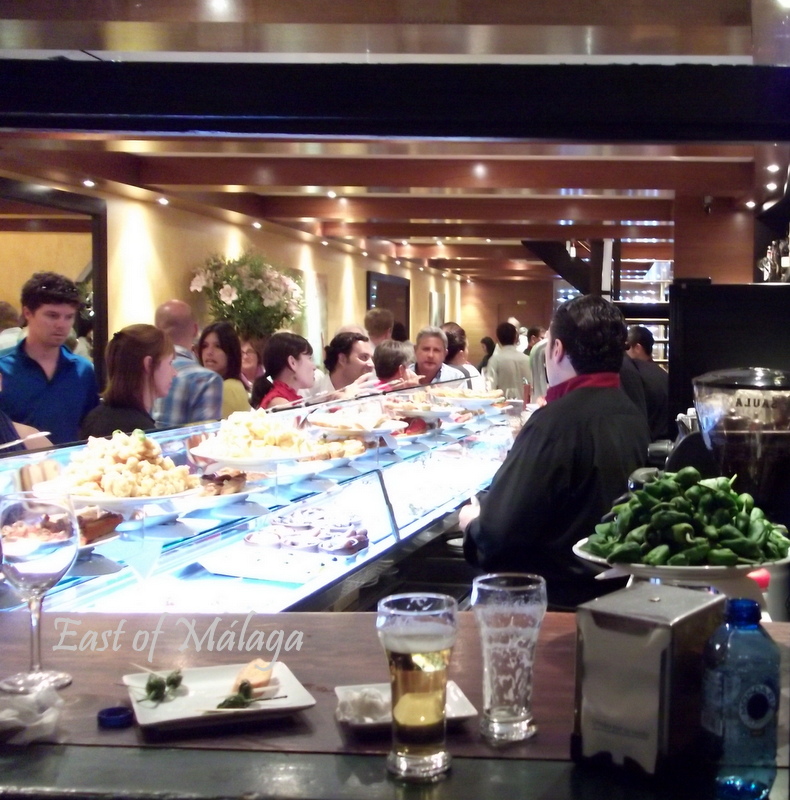
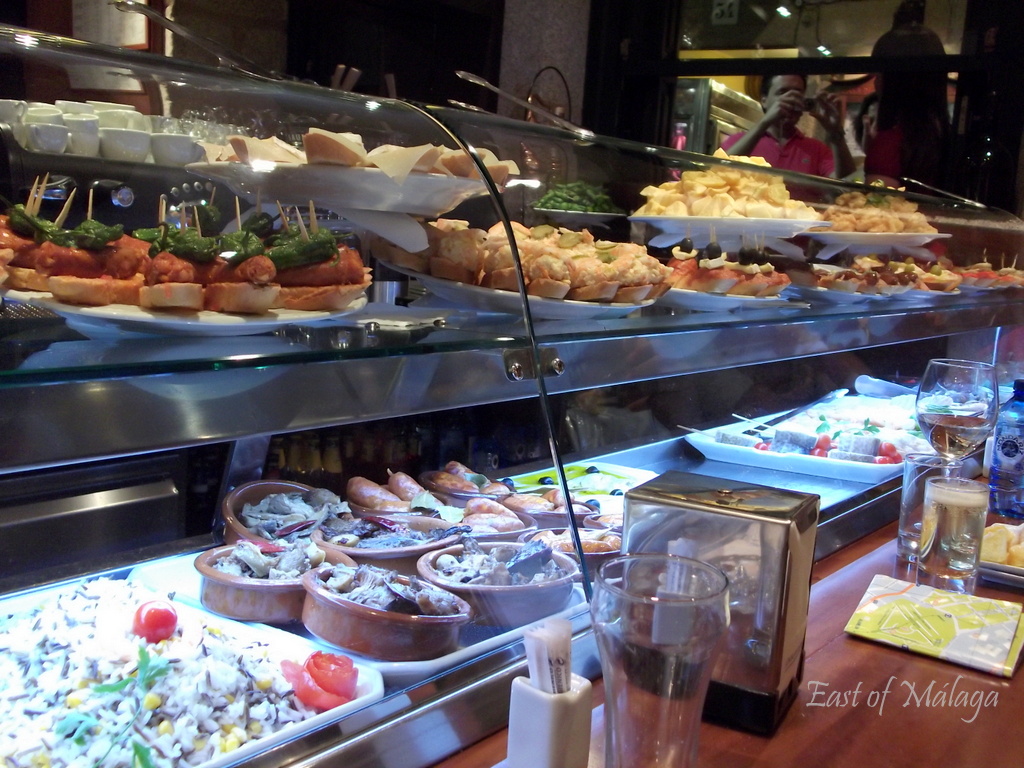
A bar here in southern Spain is very different from a typical British pub.  Although layouts may vary, what you will usually find will be a bar counter, with tall seats around, often with a covered tapas display. This will likely be in two parts, one containing meats and tortillas ready to be heated up and served with your drink, the other with cold tapas and salads. Many bars still serve tapas at an inclusive price with the drink, whilst others serve rather more elaborate nibbles which are charged for individually.

typical tapas bar
One of the main differences with a British pub will be the size of drink. Normally if you ask for a beer (una cerveza) it will be in a smaller glass, either a “tubo” which is a tall tumbler or in a glass not dissimilar to a large wine glass. The only time you will see anyone with a “pint” glass, they will usually be a tourist on the coast.  You will be just as likely to see people at the bar drinking coffee (un café) or a glass of wine (una copa de vino).

Tables away from the bar counter, either inside or outside, are typical café tables with upright chairs, not lounge-type tables and chairs like in British pubs .

There is usually a large display of spirit bottles behind the bar and invariably a leg of Serrano ham on a carving frame.  You should try this typical Spanish  delicacy –  it´s delicious!

Almost everywhere,  customers take all their food and drink and only pay when they are ready to leave.  In busy big city bars, the tapas, usually more sophisticated, will each come with a small wooden skewer and, when you have finished, the barman will count the skewers and charge accordingly.

Tapas to choose

I would recommend you to visit as many bars and cafeterías as possible, especially away from the tourist haunts. Look for places full of Spaniards and litter, in the form of till receipts, on the floor signifying that you have found a good spot.

Some bars, especially on the coast, offer more seafood, but try different ones and you will inevitably find a handful that will become part of your regular tapas trail.

Where´s your favourite Spanish bar?

If you like this article….try also looking here:

The heart of Cómpeta: El Paseo de las Tradiciones

Photographs I love …. and why!

A flowering snapshot of a January day

When life gives you curves, flaunt them!

Casa Batlló, Barcelona

The curvy windows of  Gaudí´s fabulous Casa Batlló in Barcelona. 

Casa Batlló is a key feature in the architecture of modernist Barcelona.  It was built by Antoni Gaudí between 1904 and 1906 having been commissioned by the textile industrialist Josep Batlló.

Nowadays, the spectacular facade is an iconic landmark in the city, as well as being one of my favourite buildings in the world!

This post is my response to the Travel Theme photo challenge: Curves


You might also enjoy looking at:

CBBH Photo challenge: REPETITION

Churros served with thick hot chocolate

Photographs I love …. and why!


Cost of Living in Spain to rise from today

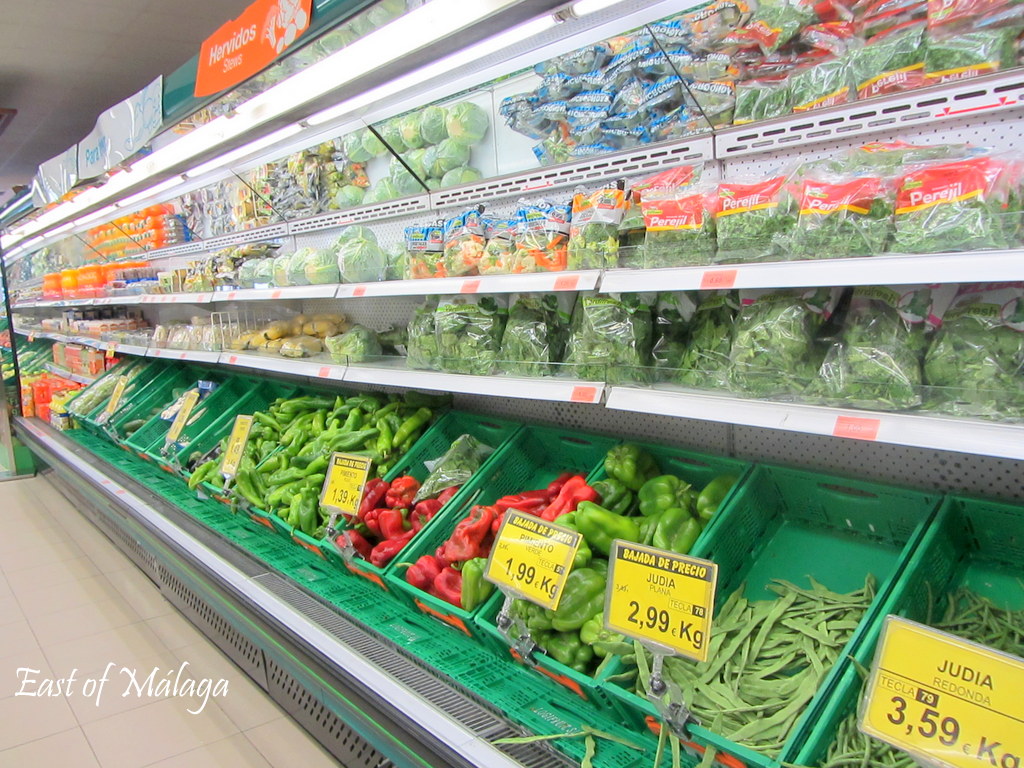
Fresh produce aisle in Spanish supermarket

New IVA/VAT rates came into force throughout Spain today, meaning that already-cash-strapped families will have to tighten their belts still further.

Here´s what´s changed:

The general rate rises from 18% to 21%.

The reduced rate rises from 8% to 10%.   Many items previously included in the reduced rate list are now excluded, with their tax rate rising to 21%.   This means that entrance tickets for theatres, cinemas, shows,  attraction parks etc;  hairdressing; flowers, plants and funeral services will all cost considerably more.

The super reduced rate of 4% remains unchanged.  Again, many items in this category previously have now been excluded and placed within the general rate of 21%.   The cost of many stationery items and school materials will rise steeply  – which won´t go down well with parents as their children return to school shortly.

You can read the full list of changes here .

You might also enjoy reading:

Cost of Living: East of Málaga, Spain August 2012

I can see Africa from my terrace!

Bus Services: East of Málaga