Riddle Me This: The Mysterious Case of the Disappearing Statues

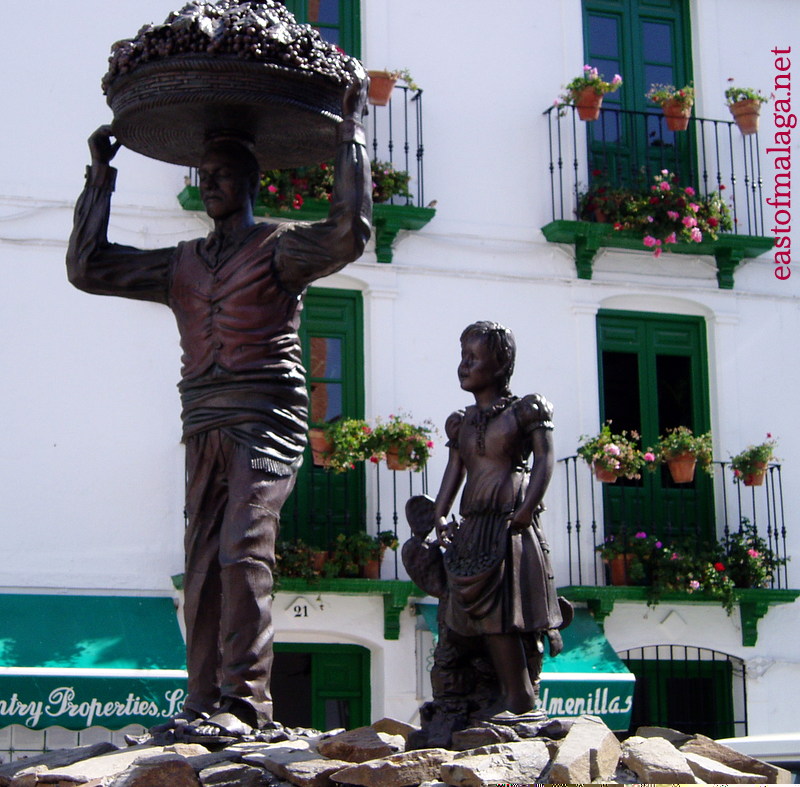
El Vendimiador statue in Plaza Almijara, Competa, Spain

I took this photograph of  the charming El Vendimiador several years ago when it was situated in the main square, Plaza Almijara in the village of Cómpeta.

The statue commemorates centuries of wine-making in the area and shows the grape-picker standing in his sandals on a dry-stone wall.  On his head he carries a basket of freshly-picked grapes and by his side, his young daughter helps with the harvest.  

Despite being sited in the main square, next to the 500 year old Iglesia de Nuestra Señora de la Asunción village church only eight years ago, the statue disappeared a few years later.  I suppose this was to make more room for vehicles to turn around in the tiny square, already half full of tables, chairs and sunshades from the nearby cafes and restaurants.

No-one seemed to know what had happened to the statue and some even suggested it had been damaged during the move.

Fortunately El Vendimiador re-appeared earlier this year at the new Mirador in Competa’s Plaza Vendimia (where he really should have been all along), except now he stands alone, without his daughter.  

Curiouser and curiouser …….!

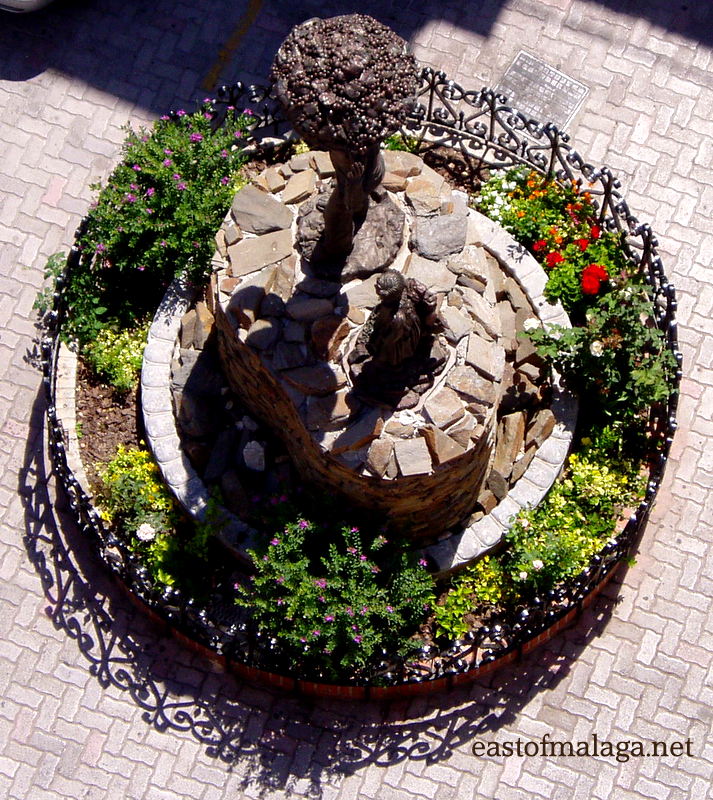
El Vendimiador statue in Plaza Almijara, Competa, Spain (from the church tower)

Looking down on El Vendimiador from the Church tower

This post is my response to this week’s WordPress Photo Challenge: Companionable and to Ailsa’s Travel Theme: Sculpture

You might also enjoy:

Competa´s Noche del vino: Night of wine

The heart of Cómpeta: El Paseo de las Tradiciones

The Day of the Dead: A Celebration of Life

The Spanish Postal Delivery System

[Image credit CC: Ian Britton]

If you choose to live in a town or village in the Axarquía, there will probably be a postal delivery to your house on most week days, just as you would expect in many countries.  Depending on where you live in the world, you might think it strange, but most front doors here in Spain don’t have letter boxes set into them, making mail delivery a little more complicated.

Your correspondence will usually be left in a lockable post box fastened to the wall at the front of your house.  That’s always assuming, of course, that you have a lockable post box.   If you don’t, it’s likely that the postman will push the letters in the gap under your front door.  I can recall when we rented a house in the beautiful white village of Frigiliana, before we bought our present house,  seeing letters poking out from underneath many of the doors, as I walked through the narrow village streets.
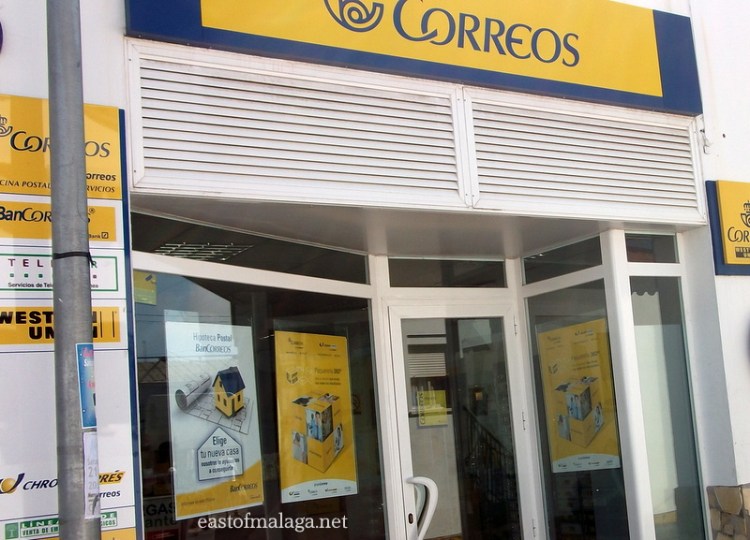
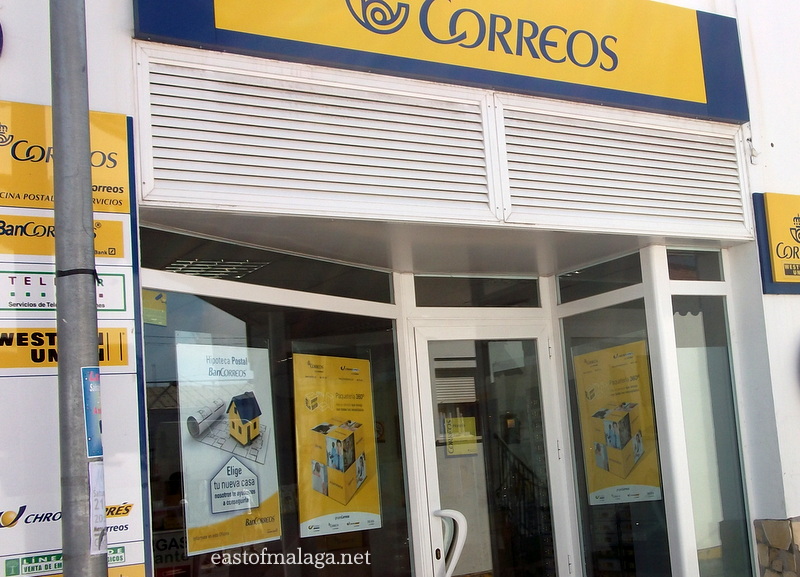
Post Office, Competa, Spain

If you choose to live in the countryside (el campo), you will not have your post delivered to your home, but instead you will need to go to your local village post office to collect it.

Before the post office in the village of Cómpeta moved into new premises a few years ago, this service was free to residents in the area where I live.    We had all been allotted Post Office box numbers (Apartado de Correos) and we would then queue up, as we Brits are so good at, waiting our turn to be given our goodies!

You knew you had truly been accepted into the local community when the Spanish postmistress didn’t need to ask for your post office box number ….she just went to the pigeon-hole, situated behind the counter, and took out your bundle of post!

The Post Office queue was always a sociable event, with locals and expats chatting and listening in to each other’s conversations.  It was always a place to learn what was happening in the village, particularly as you had chance to read the notice board, as you shuffled past it, whilst you were waiting.

Sometimes, of course, the wait would stretch to half an hour, as the queue snaked around the Post Office and out of the door, which would result in people grumbling and moaning about what an old-fashioned system it was.  Personally, I always found it rather charming.

Sadly, the social aspect of mail collection all changed when Cómpeta Post Office moved into a new building and the system was dragged, kicking and screaming, into the 21st century.
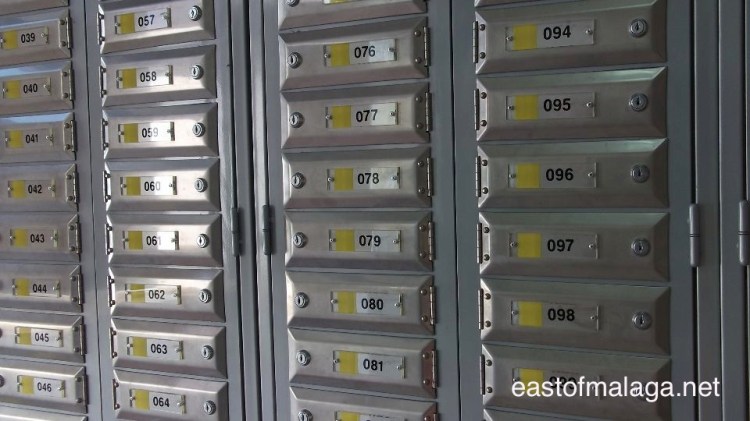
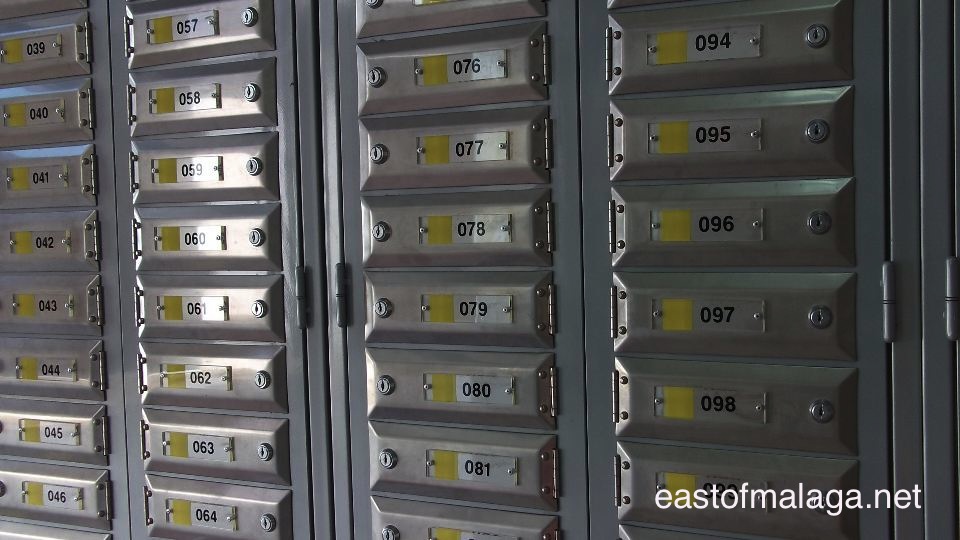
Post Office box, Spain

In order to retain your Apartado de correos address, it would now cost you more than 50 Euros a year.  Each household was issued with a key, so you can visit to collect your mail from your own personal lockable mail box, in racks on the public side of the counter, anytime during post office opening hours.

So nowadays, people drop in – open the box, and are off again within a moment or two and without a drop of gossip in sight!

Shame that …. 😉

What is an aspect of modern life that you think has changed for the worse?

You might also enjoy:

Death in the Afternoon: The Round Cemetery of Sayalonga

A Slice of Life: Garden and Plant Irrigation

Zafarraya Pass: Walking with Neanderthal Man
Easy-to-Make Aromatic Lemon and Rosemary Salt Scrub

Click any image to open a slide show

Even though I always wear gloves for gardening, my hands were still left a bit grubby after preparing the vegetable plot last week, as I still insist on poking around in the soil even when I’ve taken them off!   So I decided to make a very simple salt scrub and my hands were soon good-as-new.  Want to know how I made it?  Here’s how:

 Aromatic Lemon and Rosemary Salt Scrub

I wanted to only use ingredients I have at home, without going out to buy anything – besides which, I needed to use the salt scrub in quick-style!  I used 1 cup of sea salt, 1/2 cup of baby oil, the zest of two lemons and a couple of sprigs of rosemary from the garden.

First of all, I put the sea salt into a bowl, added the baby oil and gave it a little stir.  Then I zested two lemons, pulled the individual rosemary leaves from the sprigs and chopped them roughly.  All that was left was to tip the lemon zest and rosemary into the mixture, give it a final stir and spoon into a pretty jar .

I then added a label and tied something pretty around the outside of the jar and that’s it – done!

Easy peasy lemon squeezy ….. so to speak!

What rewards do you treat yourself with for a job well done?

You might also enjoy:

Easy No-Bake Chocolate, Peanut Butter and Oatmeal Cookies 

Fresh Figs Stuffed with Goat´s Cheese and wrapped in Smoked Bacon

I can see Africa from my terrace!

Thrifty Thursday (Week 31)


The Green, Green Vegetables of Home

Click any image to open a slide show

I’ve mentioned before that we don’t live in a town, city or even a small village.  We live in the open countryside (known locally as el campo), so our garden isn’t the kind of cultivated area we used to have back in England.   Our house was built onto a hill-side of almond trees and indeed, when we moved here almost eight years ago, the only things that were already planted (apart from the naturally-placed wildflowers) were 47 established almond trees, on almost an acre of land.   Of course, the area immediately around the house, car park, swimming pool and terraces is flat but the rest of our land is sloped, and we have chosen to leave a more “natural” look  further away from the house, to blend in with the surrounding countryside.

As time as gone by we have added many more trees, shrubs and bushes and I have previously posted photographs of lemons, apple blossom, bird of paradise flowers, figs, oranges and some of the many beautiful wildflowers at present gracing the garden.

Despite the apparent poor quality of the soil, the valley where we live is extremely green with trees and vines growing down the hillside.  Newly planted trees need care for the first year or two, but once established seem to thrive, provided they are given sufficient irrigation.  

The nature of the ground is generally sloping, rough and rocky with poor, shallow soil over bedrock.  Untended ground is usually very hard (with need for a pick-axe to dig holes for planting) allowing deluges of rain little chance to penetrate the soil, thereby creating deep channels where the water has run off .

However, it’s not all bad news as there are patches of slightly deeper soil here and there, and it’s one of these that last week we decided to transform into a small vegetable patch.

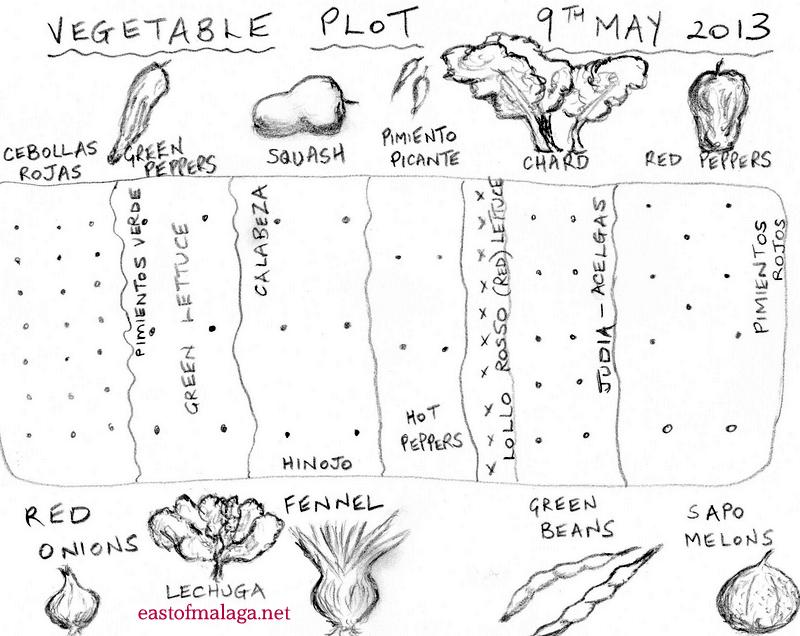
We were able to buy some little plug plants in Vélez-Málaga, at a total cost of just over 11 euros and, after quite a bit of digging, raking and throwing out stones, we finally got to plant red, green and hot peppers, chard, squash, green beans, red and green lettuce, red onions, fennel and melons.

After three days, I can report that the little plants appear to be doing well.  I’ll keep you posted on their progress!

Vegetable plot - planting plan

Previous posts you might find interesting:

A Slice of Life: Garden and Plant Irrigation

Flowering snapshot of a January day around the garden

Wildflowers of Andalucía: Dutchman’s Pipe

Wildflowers of Andalucía: Bloomin´ lovely!

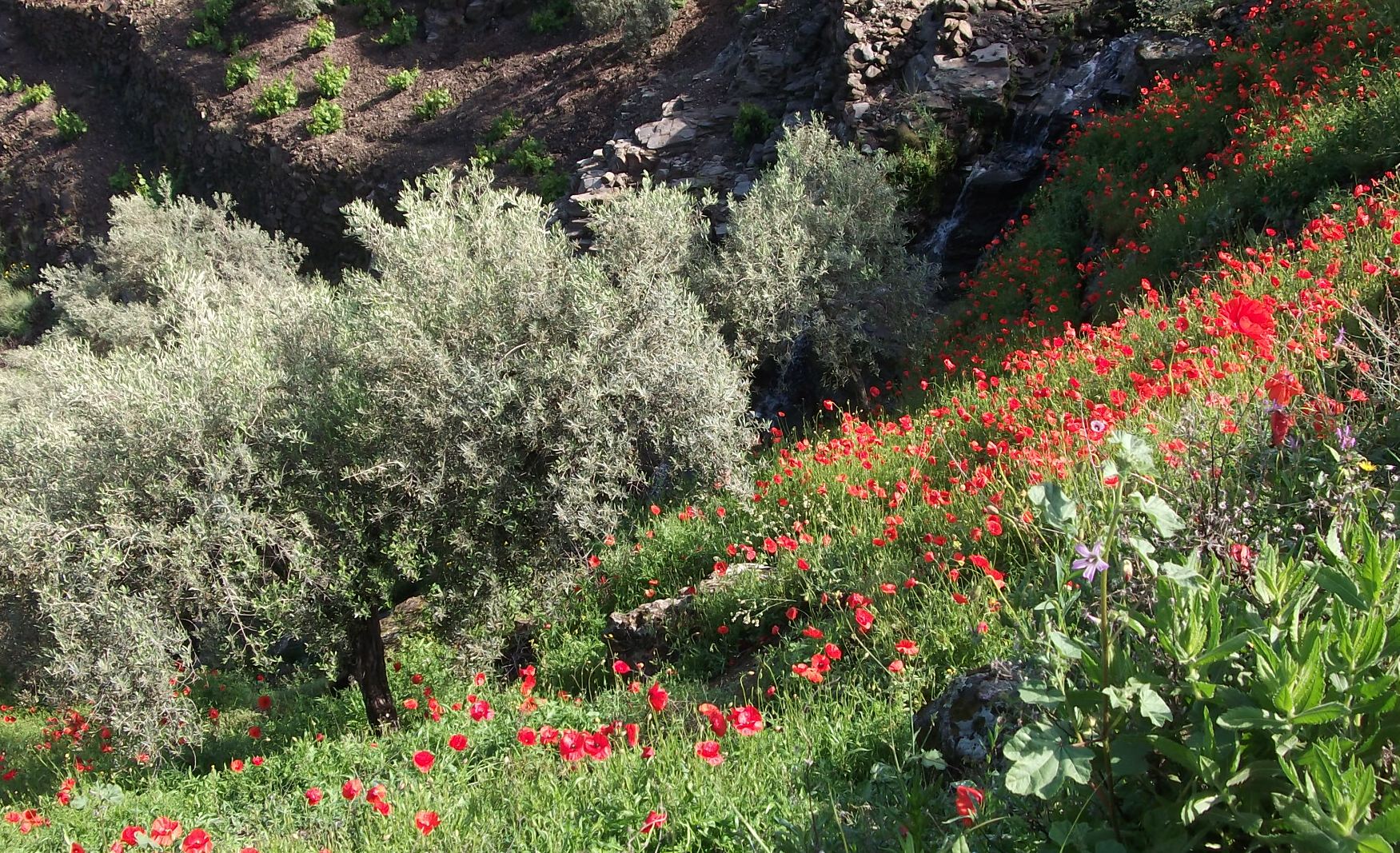
 Particularly in spring and early summer, the hills around the Axarquía are a riot of colour, with a rich variety of beautiful wild flowers.

The blues and purples of the wild rosemary and lavender contrast with the golden yellow of the broom and gorse, which in turn make way for the pink Convulvulus and purple Vipers Bugloss.   There are many varieties of wild Mediterranean orchids to be found, as well as irises, gladioli, stunning red poppies and pink and purple wild Sweet Peas.


The wild flowers reach their climax at this time of year in early May, as the oleanders on the hillsides and in the river beds signal the arrival of summer.

If you want to see wild flowers at their best, head off into the Parque Natural de Las Sierras de Tejeda y Almijara in the Axarquía.

Don´t forget to take your camera!

You might also like to look at:

Flowering snapshot of a January day around the garden

A Slice of Life: Garden and Plant Irrigation

CBBH Photo Challenge: Multi-Coloured