Málaga´s Botanical Gardens: Can you dig it?

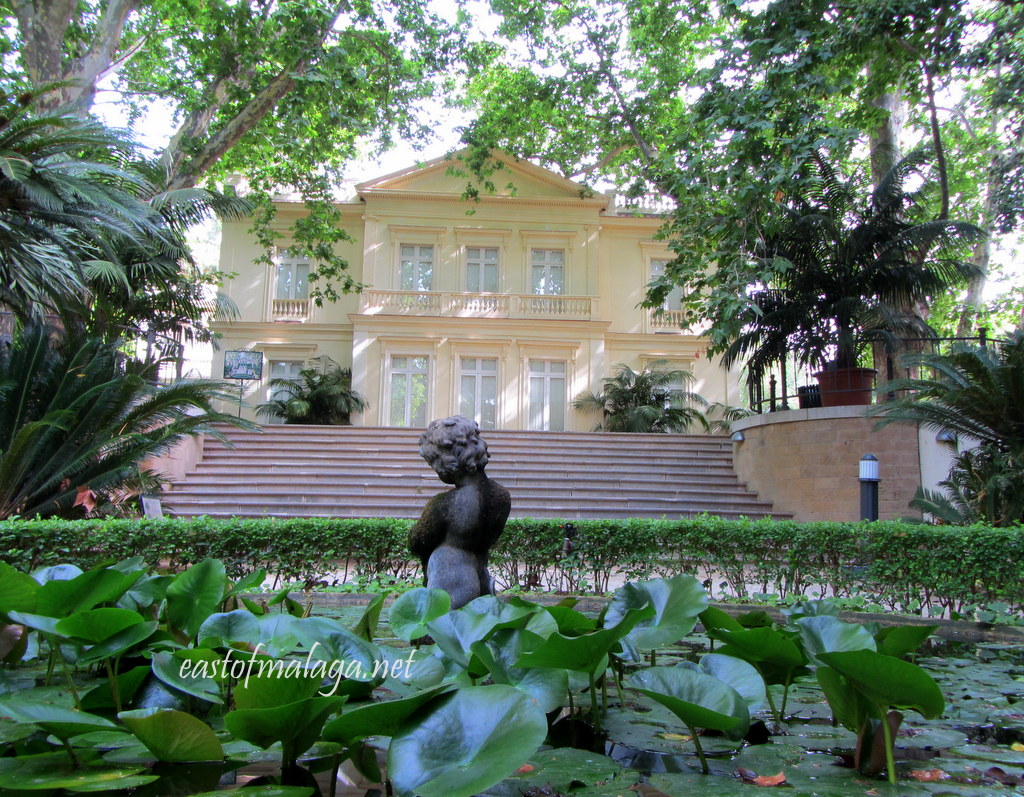
Villa in Jardin Concepcion, Malaga

Botanical gardens around the world are often well worth a visit while travelling, and Málaga’s La Concepción Gardens are no exception.   Just to the north of the city, the stunning  Jardín Botánico-Historico La Conceptión has justifiably attracted a reputation for being amongst the best in Europe.

The gardens were founded in 1850 by Amalia Heredia Livermore and her husband Jorge, the Marquis of Casa Loring, who travelled the world in search of tropical plants for their garden, in the centre of which they built an Andalucían mansion, complete with indoor courtyard.
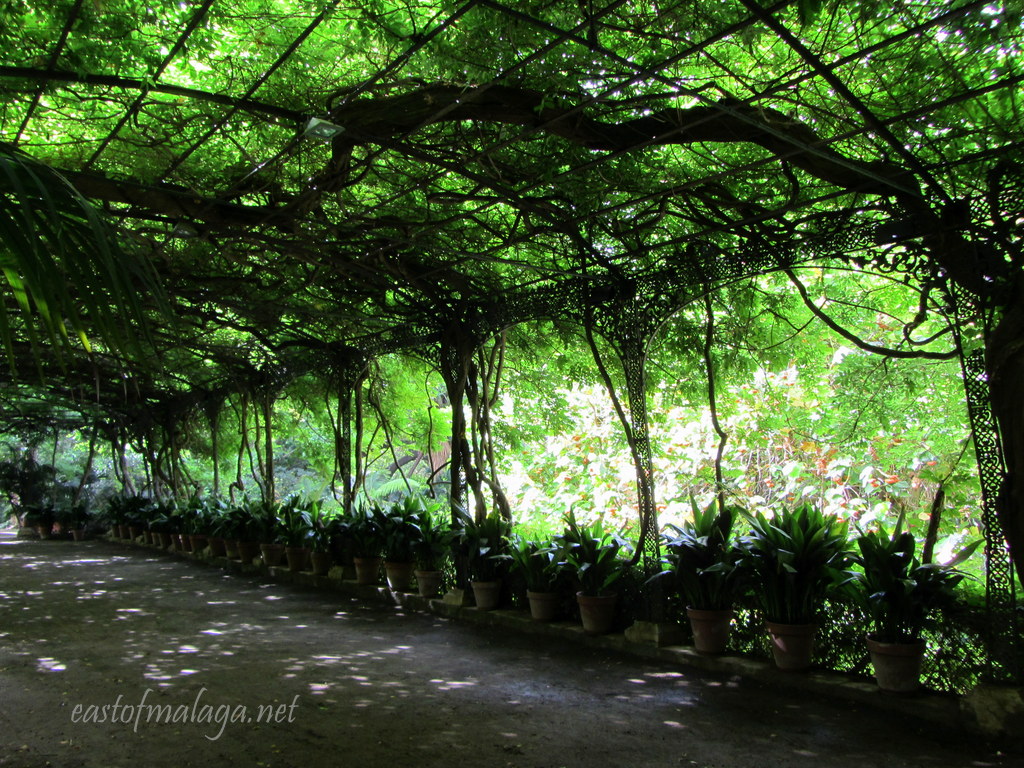
Wisteria Dining Arbour, Jardin Concepcion, Malaga

Wisteria Dining Arbour at Jardin Concepcion, Malaga

During the Loring´s occupation of the property,  Finca La Concepción was well known for the dinner parties which took place in the Wisteria Dining Arbour, often followed by short walking tours of the gardens.  At the time of our visit, the Arbour was being prepared for a wedding, which must be a particularly spectacular setting in April each year, when the wisteria is in bloom.
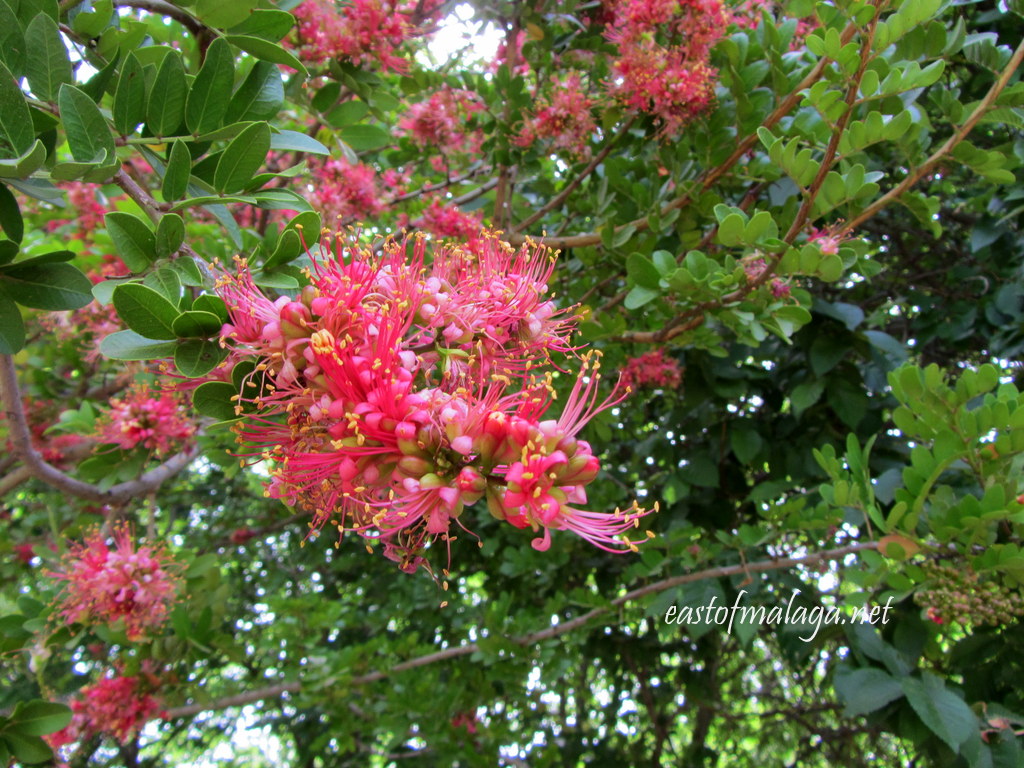
Tree in flower at Jardin Concepcion, Malaga

Jardín Botánico-Historico La Conceptión was declared a historical and artistic garden in 1943, but fell into decline over the years until the garden estate, comprising 49 hectares of established gardens and surrounding forests, were acquired by Málaga City Council in 1990.  Following an extensive programme of renovation, the gardens were opened to the public in 1994.

Roman museum at Jardin Concepcion, Malaga

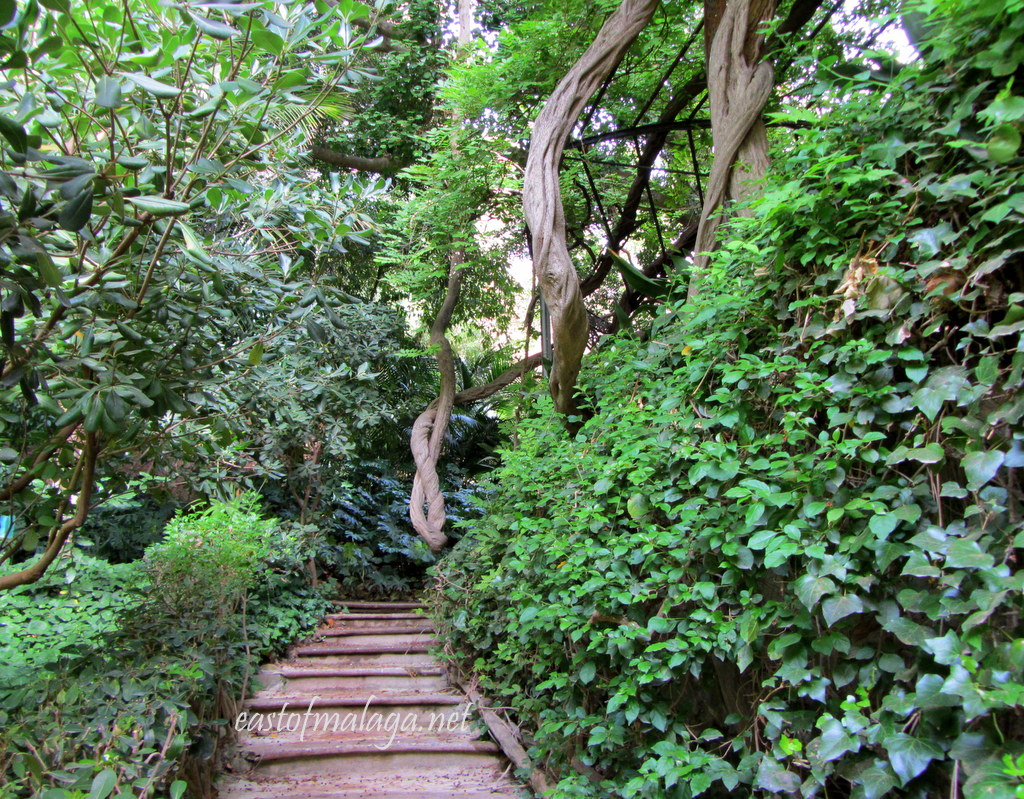
Steps leading to the dining arbout, Jardin Concepcion, Malaga

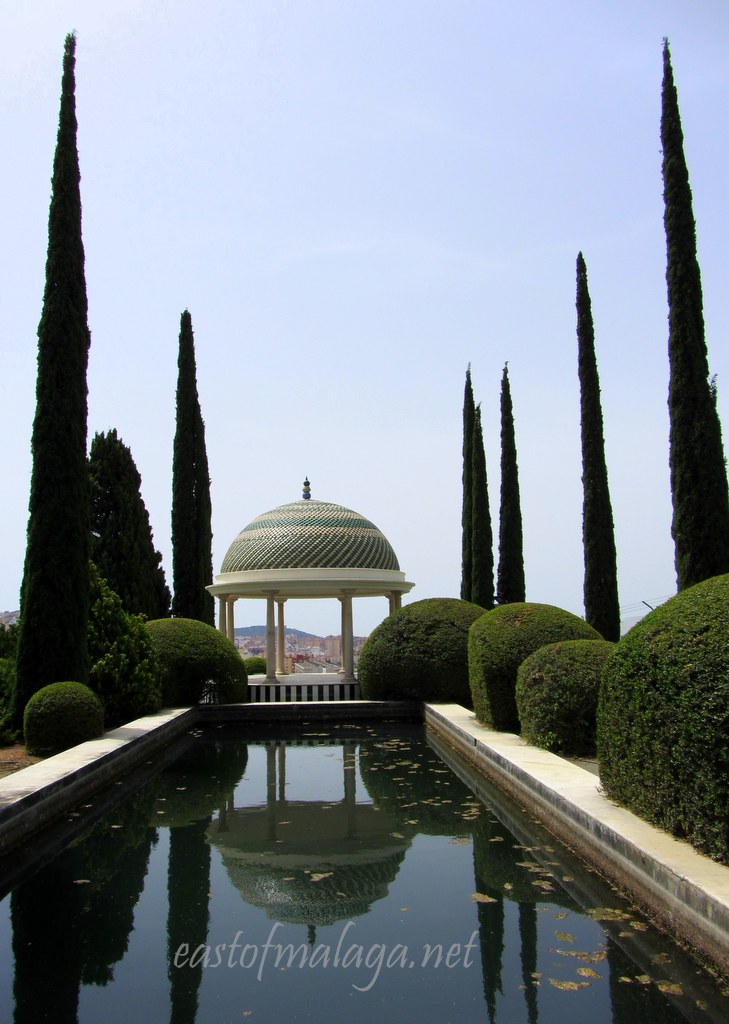
Pagoda and pool, Jardin Concepcion, Malaga

View of Malaga city from Jardin Concepcion Botanical Gardens, Spain

As well as many thousands of plant and tree specimens, architecturally the gardens also contain a few memorable buildings such as the finca, a Doric-columned Museum of ancient Roman sculpture, a number of small bridges crossing waterways, and an Alhambra-inspired pool with pagoda, offering great views over Málaga city.

Garden sprinkler system at Jardin Concepcion, Malaga

Even on a hot summer´s day, it´s a pleasure to  enjoy the cool green shade and occasional sprinklers which may catch you by surprise as they irrigate the surrounding plants.  I was delighted to even capture a rainbow dancing in the water droplets.
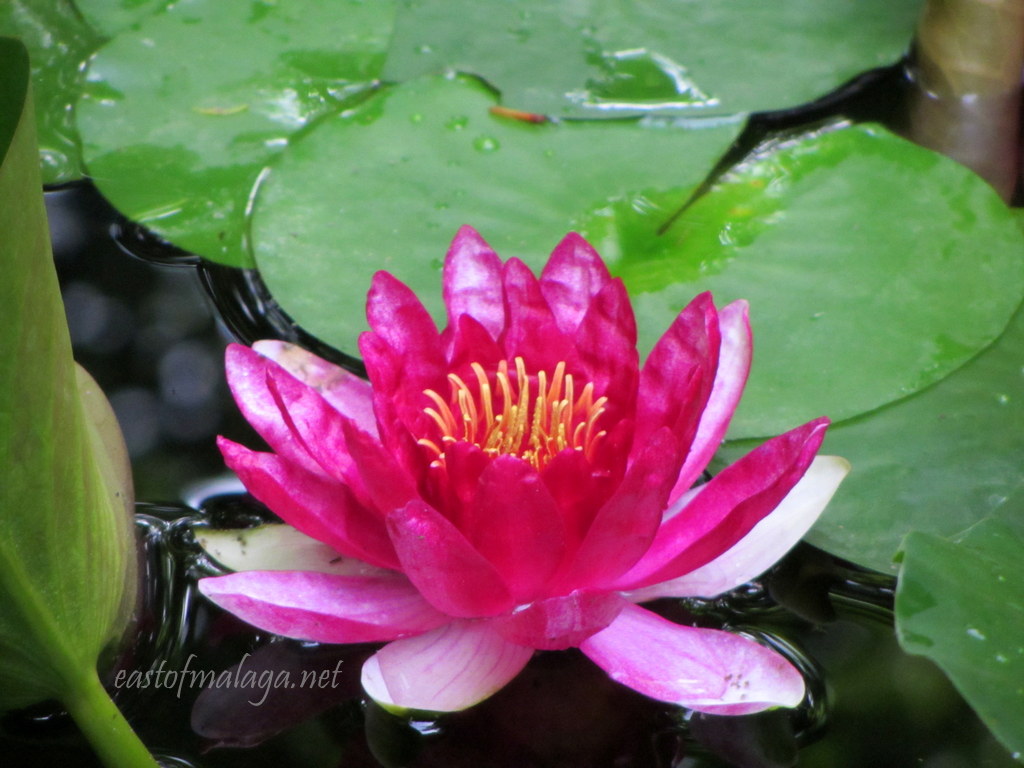
Lily pond at Jardin Concepcion, Malaga

Jardin Concepcion, Malaga

Jardin Concepcion, Malaga

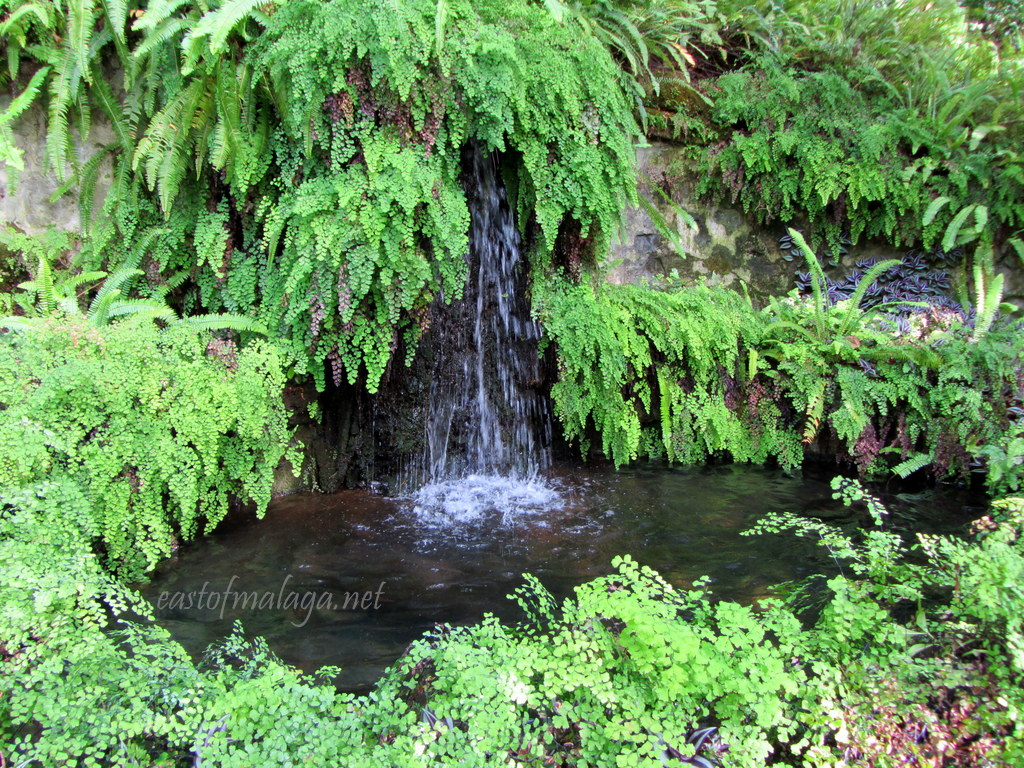
The romantic, landscaped design transports you to a tropical paradise filled with waterfalls, streams, carved benches, lily ponds and thousands of plant specimens from all over the world.   Add to that the beautiful sound of birdsong, turtles, frogs and the occasional squirrel looking for something to eat, and you have found yourself a very pleasant way to spend a sunny morning.
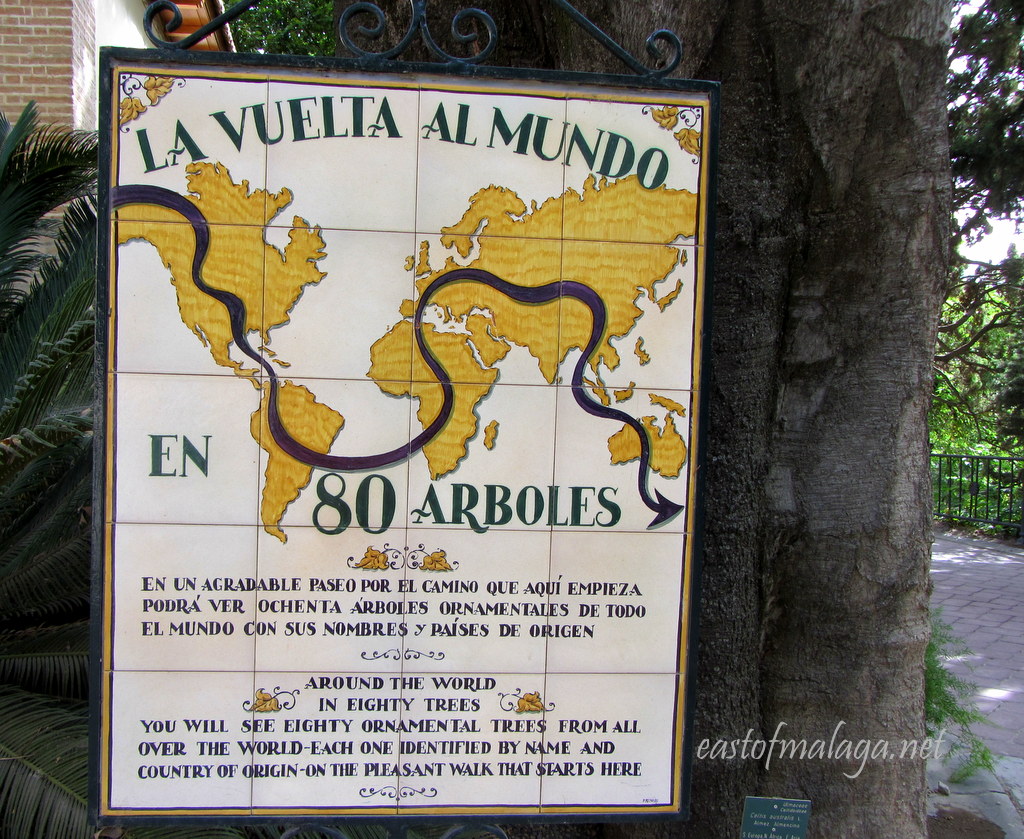
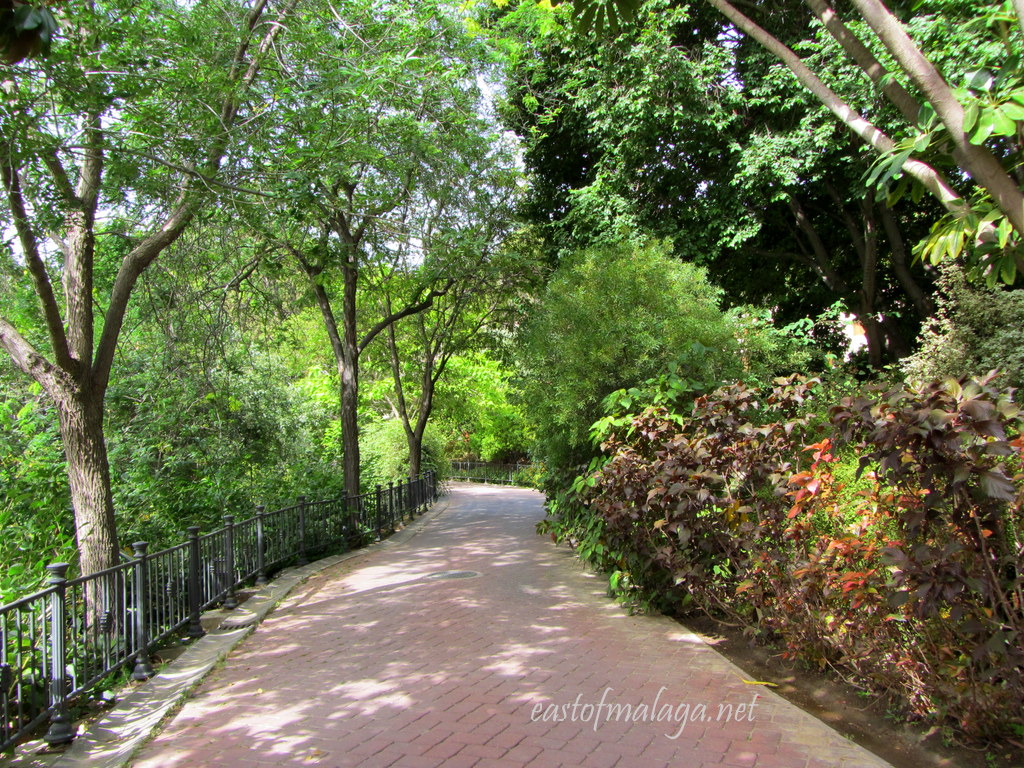
Around the World in 80 Trees at Jardin Concepcion, Malaga

Jardin Concepcion, Malaga

We took about three hours to wander around the gardens, which includes the impressive “Around the World in 80 Trees” exhibit, showcasing trees from every continent.

To find the Botanical Gardens (driving from the Axarquía, east of Málaga) take the Autovía towards Málaga, turning onto the A45  before the citytowards Granada, Córdoba and Seville.  After only a kilometre or so, you will see signs for the Jardín Botánico-Historico La Conceptión.  Exit the A45 at km 140 and follow local signs to the Gardens.  For further details of opening times and entrance prices, visit their website.

Whilst you´re here, you might also enjoy:

Textures of Tree Bark

Foliage after the Rain

CBBH Photo Challenge: Windows

Venturing further afield: A long weekend in Santander

We love to travel not only locally, but throughout Spain, so I will also include information, from time to time, about where we have visited.  Usually these places can either be driven to within a few hours of our home, east of Málaga, or we will have flown there from Málaga (AGP) airport.

Banco de Santander

It´s pretty easy to pick up some cheap flights from Mágaga to Santander, the elegant capital city of the province of Cantabria, which is located on the northern coast of Spain, between Asturias and the Basque Country, overlooking the Bay of Biscay.

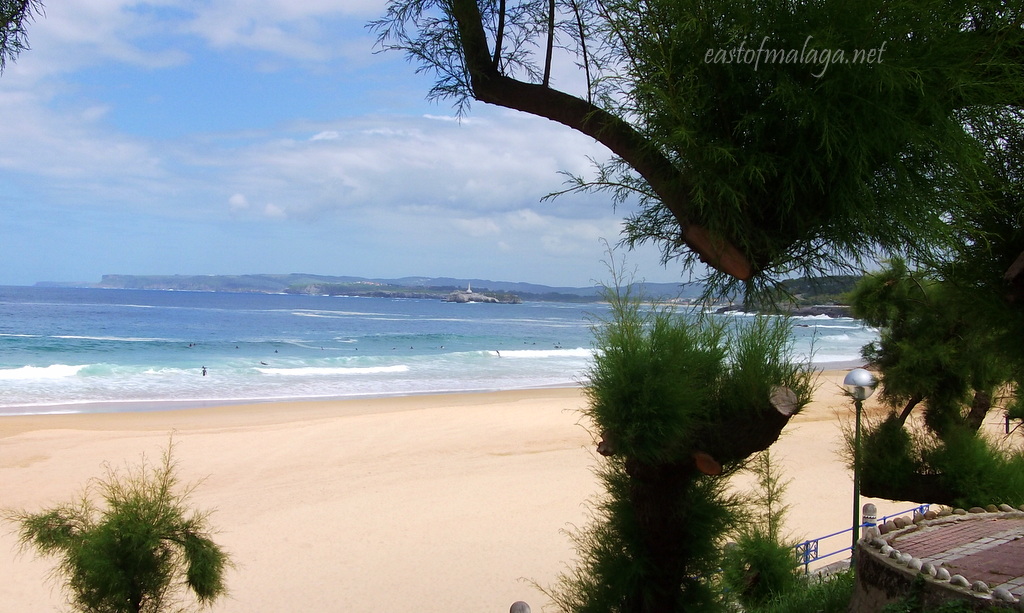
The port city of Santander has many clean, golden beaches and is home to the magnificent coastal resort of El Sardinero, which became popular with the Spanish upper classes during the late 19th century.  The wonderful beaches together with the promenade and the Magdalena Peninsula are some of the main attractions for tourists.

El Sardinero Beach, Santander, Spain

El Sardinero Beach views, Santander, Spain

Santander fell victim to a great fire in 1941.   Fanned by a strong southerly wind, the fire burned for two days, destroying the greater part of the medieval town centre and gutting the city’s Romanesque cathedral.  The historic quarter includes a number of majestic buildings which are situated against an incredible natural backdrop of sea and mountains.

In the early part of the 20th century King Alfonso XIII chose this part of the Cantabrian coast as his summer retreat and many fine buildings sprung up to accommodate the needs of the aristocracy and court officials who followed the King and Queen.

Elegant buildings in Santander, Spain

Santa Iglesia Cathedral, Santander, Spain

Town Hall, Santander, Spain

Of course, one of the more pleasant things to do in Santander is to bustle along with the locals towards the many superb tapas bars in the old part of the city.  It´s amazing what a good glass of Rioja Crianza and a mouthful of seafood can do for you!

We spent our evenings strolling along the streets seeking out the busiest tapas bars – with their customers spilling out onto the pavements outside –  and diving straight in there, to try out our next round of  scrummy pintxos.

Rioja and scrummy tapas at a bar in Santander, Spain

Santander also provides a great base for touring many well-known cities and sights in northern Spain, which are located right on it´s doorstep.   There´s the  Guggenheim Museum in Bilbao, the Picos de Europa – wheresome of the highest mountains in Europe are to be found, as well as the gastronomic delights of the picturesque city of San Sebastian in the heart of Basque country – but you´ll have to wait for me to tell you about those another time!

You might also enjoy:
The heart of Cómpeta: El Paseo de las Tradiciones

A Weekend Away: Santiago de Compostela

Brother, Can You Spare a Dime?: The One-Armed Lady of Málaga

Málaga Cathedral has only one tower - the other is as yet unfinished

Málaga Cathedral was constructed between the early sixteenth and late eighteenth centuries and has one very unusual feature.

Have you spotted it yet?

Although the Cathedral´s North Tower is 84 metres high, making this building the second-highest cathedral in Andalucía, after the Giralda Tower in Sevillethe South Tower remains unfinished.

A plaque at the base of the tower informs us that funds raised by the parish to finish it were used instead to help the British colonies (which later became the United States of America) to gain their independence from Great Britain.

This unfinished state has led to the Cathedral being known affectionately as “La Manquita”, which translates into English as  “The One-Armed Lady”.

This post is my response to the Weekly Photo Challenge: Solitary

Related posts:

When life gives you curves, flaunt them!

Travel Theme: Texture

In Plane View: Inside Out

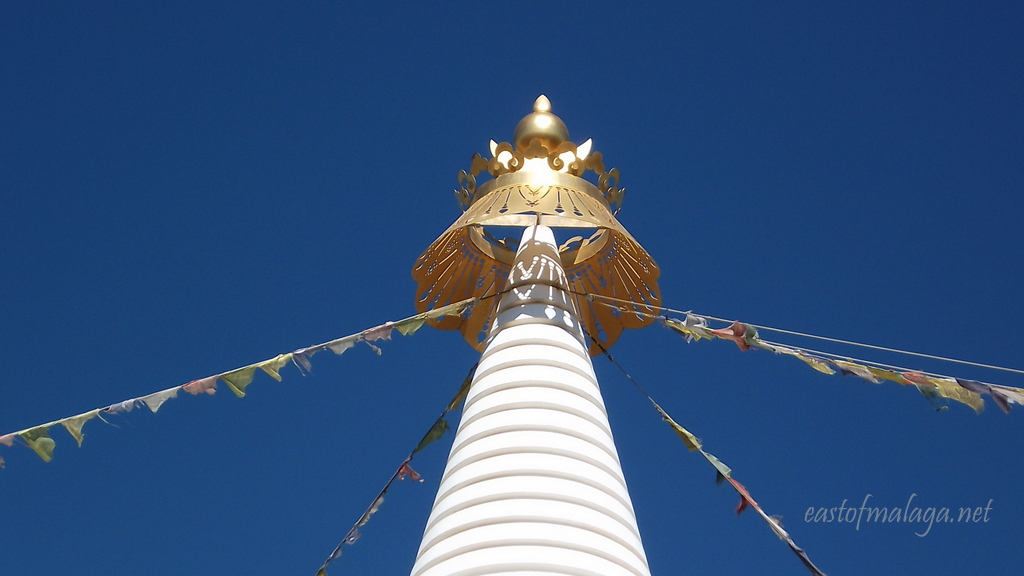
The Buddhist Stupa of the Eastern Costa del Sol

If you are visiting the eastern Costa del Sol, you might not anticipate that there is a beautiful Buddhist Stupa within easy reach of the Mediterranean coast.

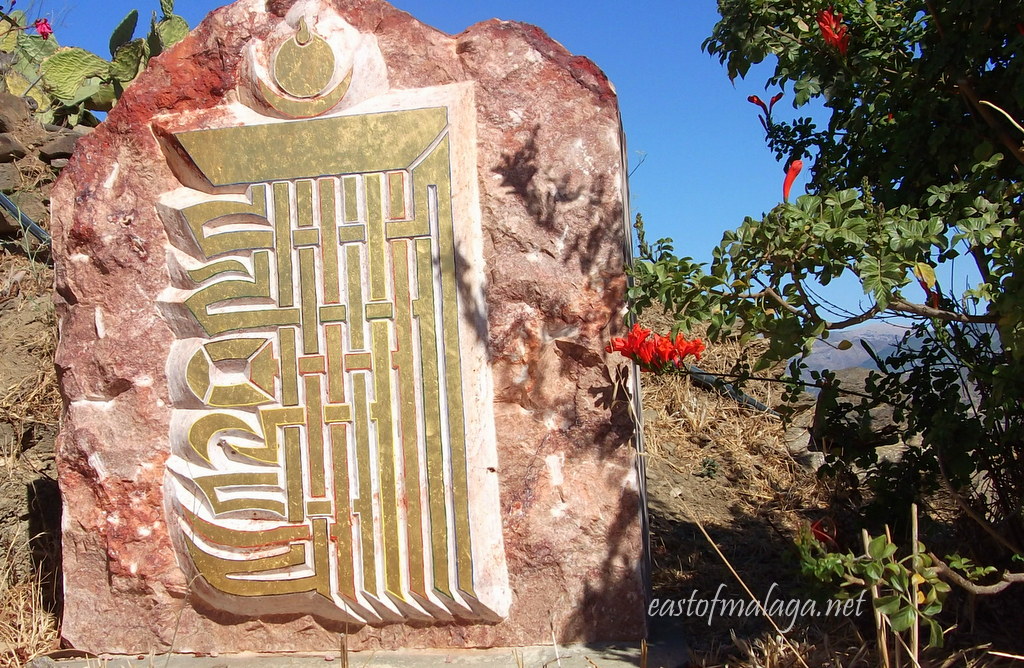
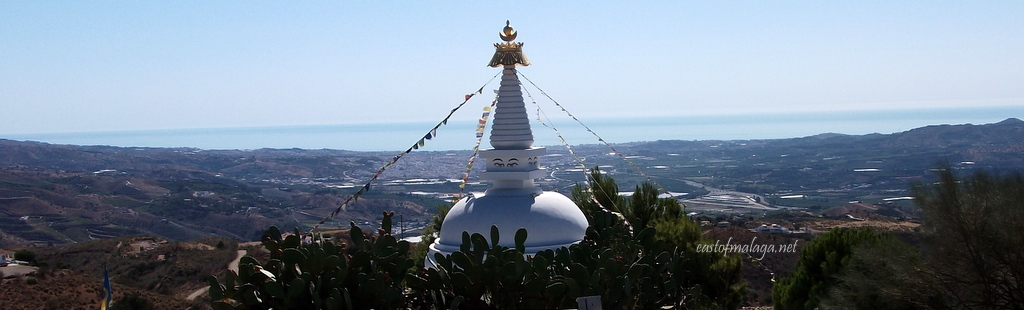
The first Buddhist Kalachakra stupa built in the western hemisphere can be visited about 40 kilometres east of Málaga, north of the town of Vélez-Málaga, near to the Karma Guen Buddhist meditation centre.

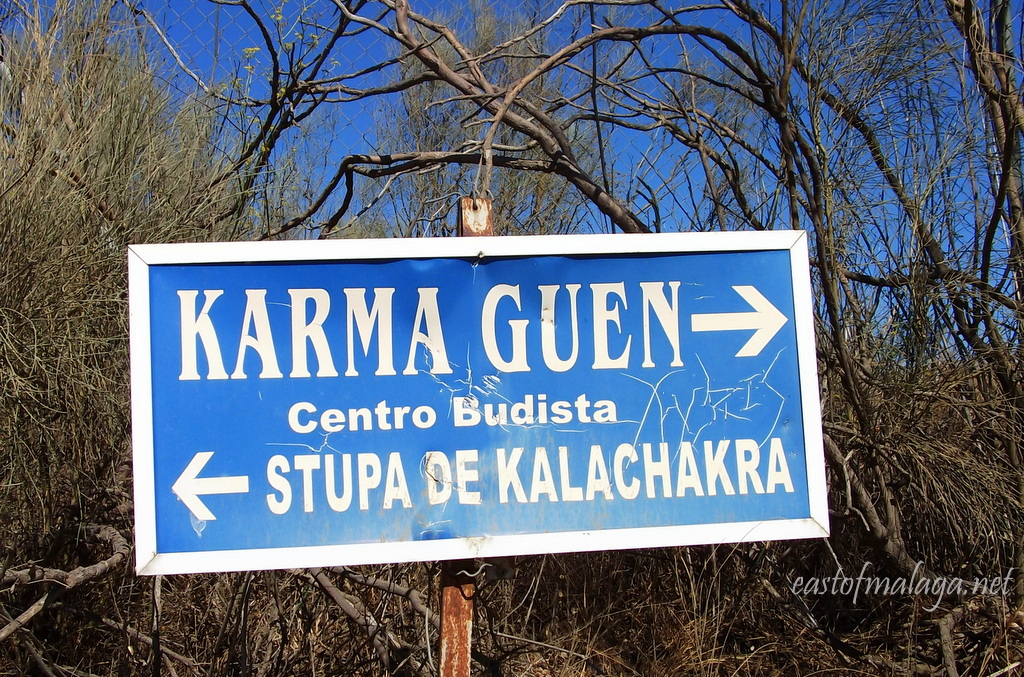
Signpost to the Kalachara Stupa in Velez-Malaga

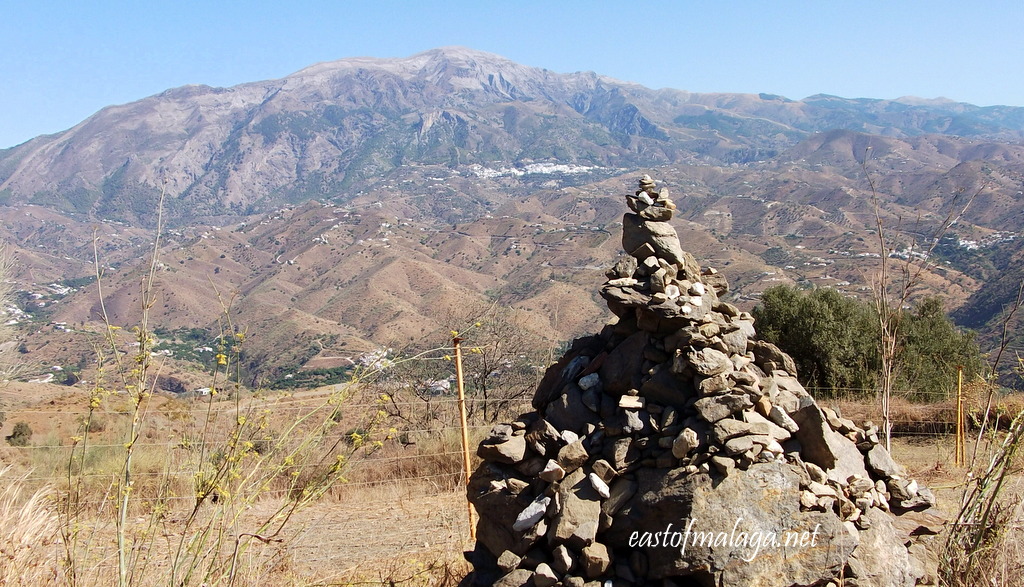
At the entrance to the Buddhist Stupa, with Monte Maroma behind

The stupa is not easily seen from the surrounding countryside, so where is it?

About a forty minute drive east of the city of Málaga along the A7-E15 Autovía del Mediterraneo to km 272,  take the exit signposted A 356 towards Vélez-Málaga, Viñuela, Colmenar and Zafarraya.  Stay on the A356, bypassing the town of Vélez-Málaga and, after about 7 kilometres, turn left at the junction signed towards El Trapiche.  Approximately one kilometre further, (opposite the Jardines del Trapiche) there is a small sign on the right for the Karma Guen Buddhist centre.  Take this concrete and tarmac road for two kilometres, and then the unmade track up the hill for another two kilometres.

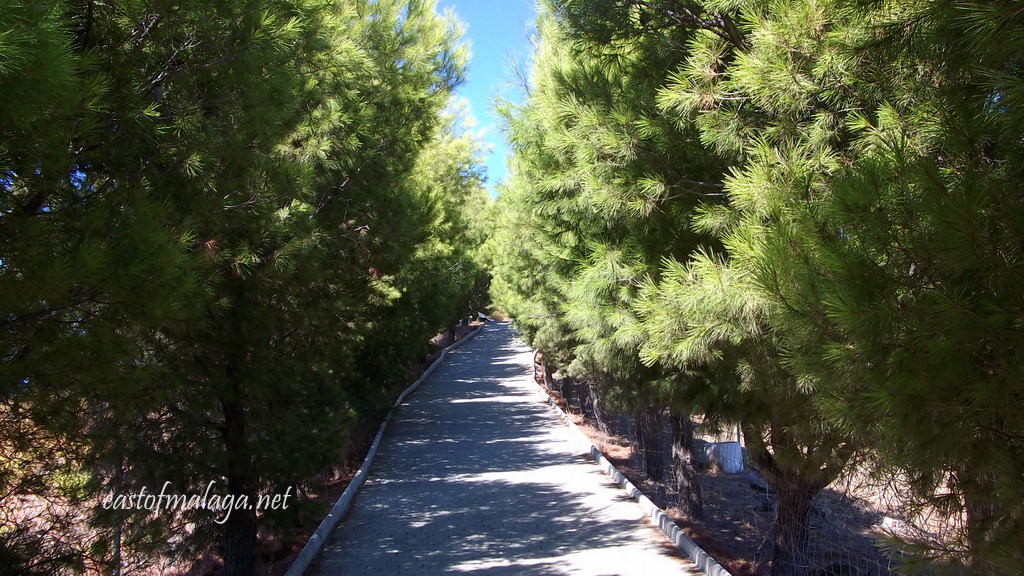
Park and walk through the avenue of pine trees and, all of a sudden, there it is!

Avenue of pine trees leading to the Buddhist Stupa, Vélez-Málaga, Spain

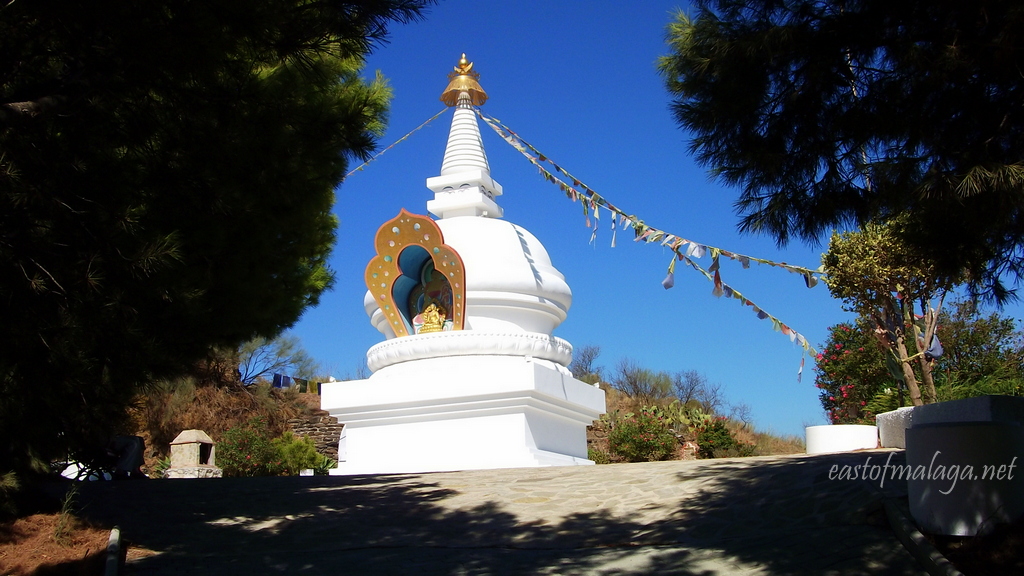
First sight of the Buddhist Stupa in Vélez-Málaga, Spain

Swift accomplishment of Wishes

Sign at the Buddhist Stupa, Vélez-Málaga, Spain

Within Buddhism, the Stupa is a symbol of universal peace and unity.  It is claimed that they have protective powers and bring about compassion, love and happiness, as well as social, physical and spiritual well-being.

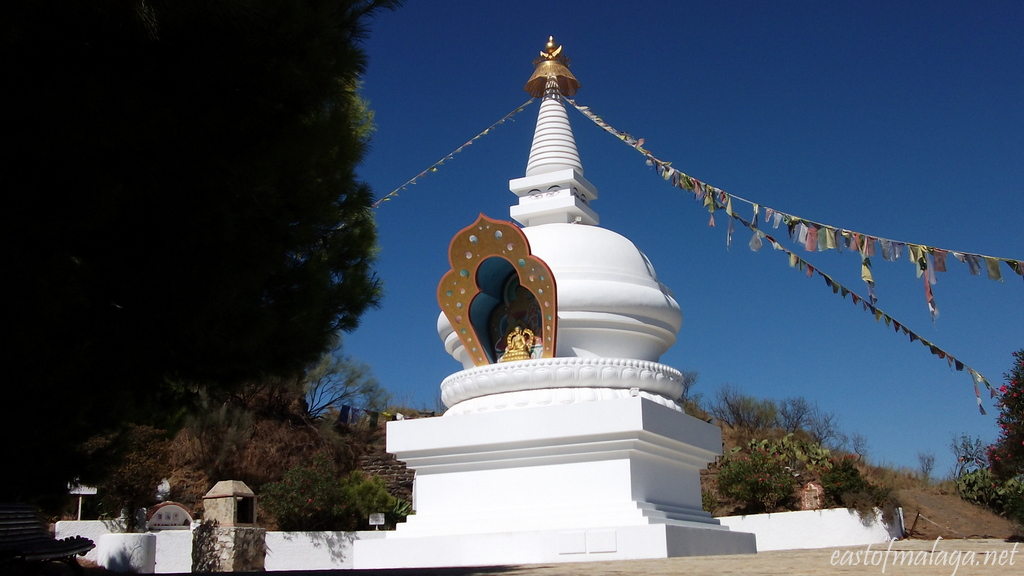
The Kalachakra is the rarest type of stupa.  At the present time, there are only five Kalachakra stupas in the world and this one, near to Vélez-Málaga, was the first to be built in the West.  It was hoped that building this stupa would help to protect Europe against negative energies.

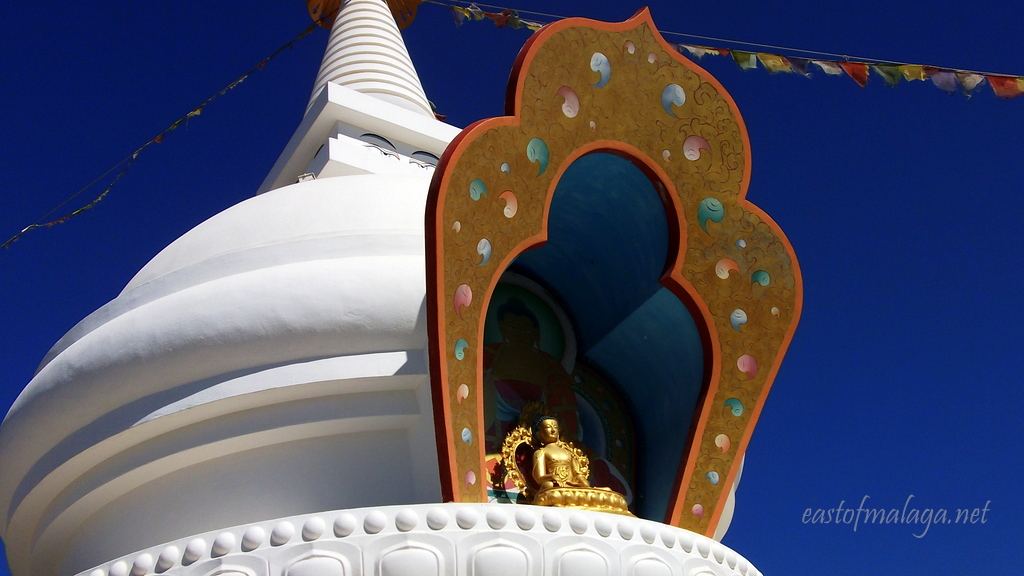
The Golden Buddah statue at the Stupa at Vélez-Málaga, Spain

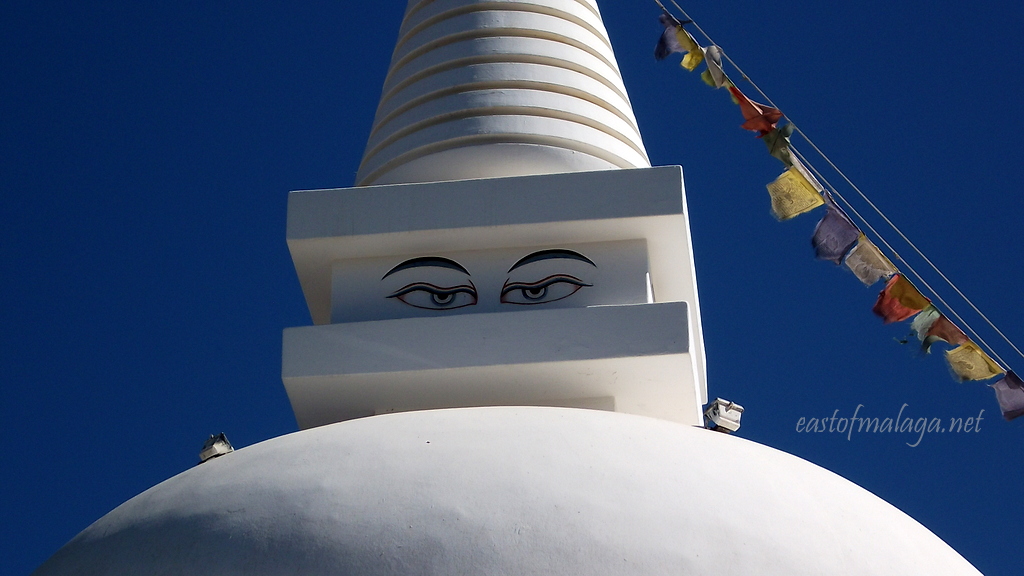
The eyes of the Buddhist Stupa, Vélez-Málaga, Spain

Just like the famous Boudhanath stupa in Kathmandu, this Kalachakra stupa has eyes painted on it, which is a Nepalese custom.

The golden dome of the Stupa glistens in the beautiful sunshine

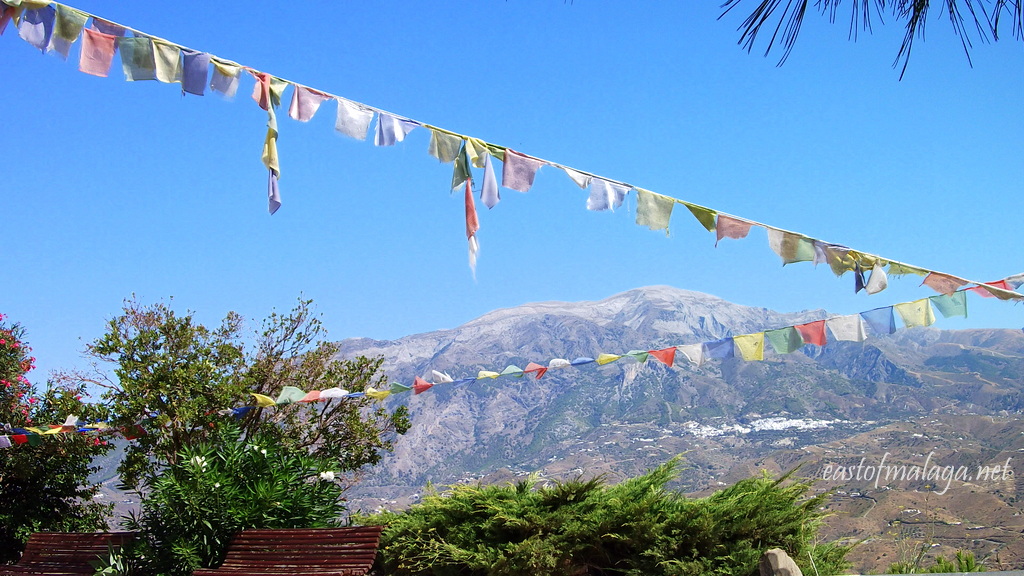
View across to Monte Maroma from the Buddhist Stupa, eastern Costa del Sol

The Buddhist Stupa overlooks the eastern Costa del Sol

The journey to see the Kalachakra stupa at Karma Guen is a relatively easy one (bearing in mind the mountain roads) but the views on arrival both towards the mountains and the sea are magnificent.

The stunning Stupa of Kalachakra at Vélez-Málaga, Spain

I often take visitors to see the Stupa because it´s an unusual and memorable place to visit. 

Where do you take your visitors that surprises them?

This peaceful post is my contribution to this week´s Travel Theme: White and to celebrate the 30th Anniversary of the UN International Day of Peace.

If you enjoyed this post, you might also like to look at:

Bus Services: East of Málaga

A Weekend Away: Santiago de Compostela

Slice of Life: Spanish bars

The heart of Cómpeta: El Paseo de las Tradiciones

Paseo de Las Tradiciones, Competa, Spain

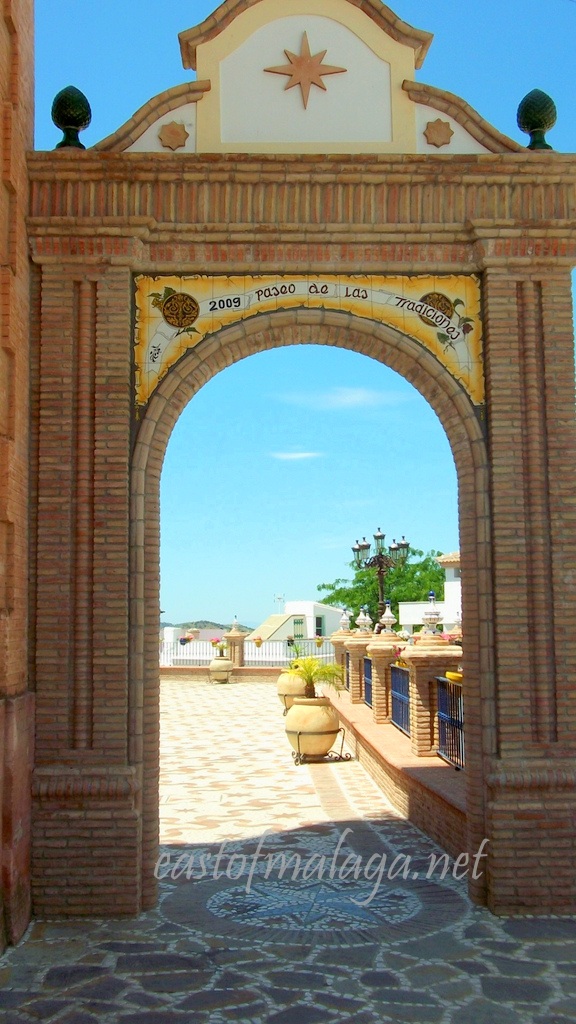
El Paseo de las Tradiciones (The Walk of the Traditions) is just off  the main square, Plaza Almijara, of the white, mountain village of Cómpeta.  Completed in 2009 on the site of the old municipal market, El Paseo de las Tradiciones is annexed to the Church of Our Lady of the Assumption (La Iglesia de Nuestra Señora de la Asunción).

Archway into El Paseo de las Traditiones, Cómpeta, Spain

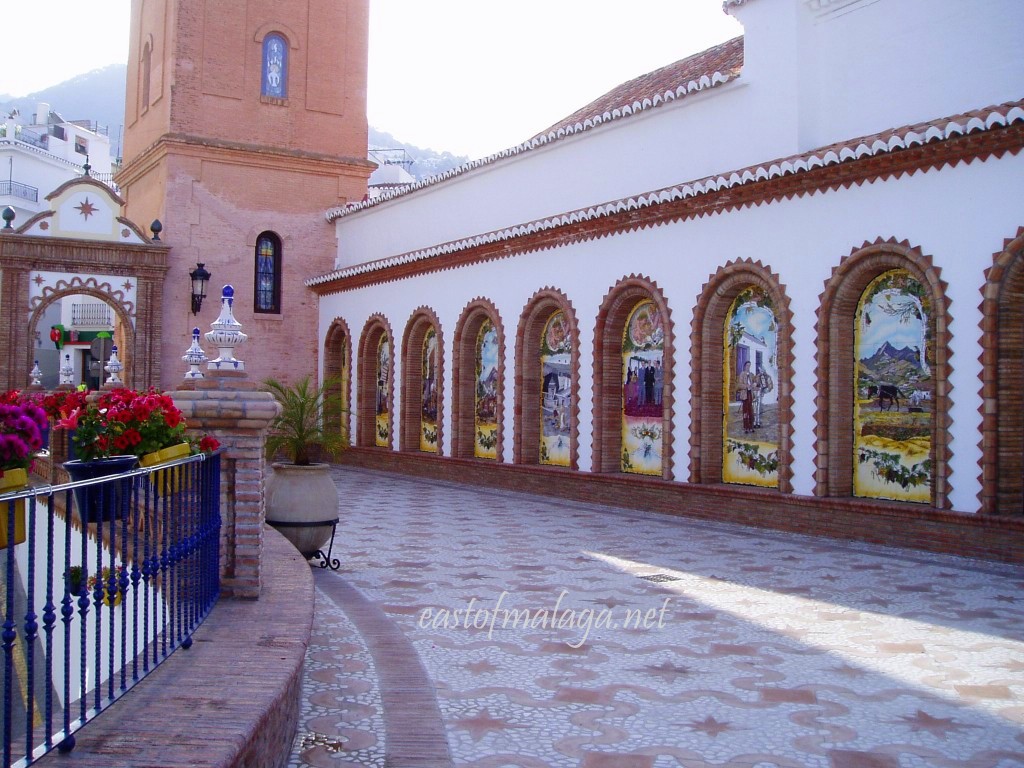
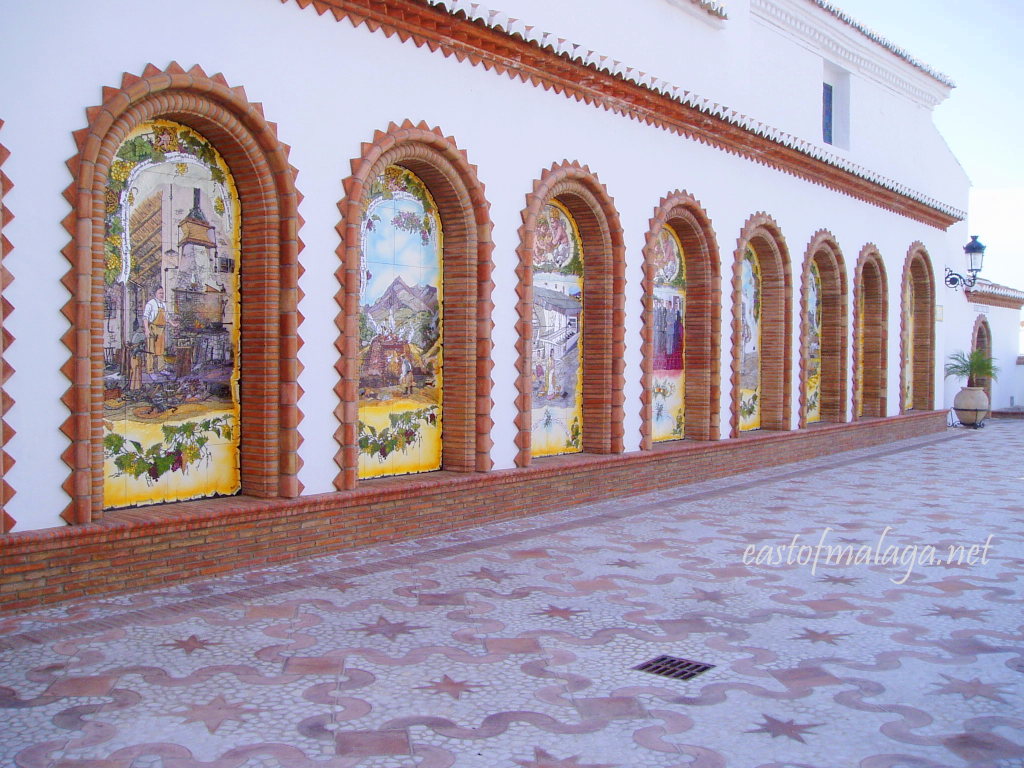
As you stroll from the busy square, through the archway into the Paseo de las Tradiciones you will discover an oasis of calm.   The floor is decorated with an intricate Moorish pattern of terracotta and white tiles, alongside a series of stunning ceramic murals celebrating the lives of generations of the ordinary working people of the village.

Alcoves in El Paseo de Las Tradiciones, Cómpeta, Spain

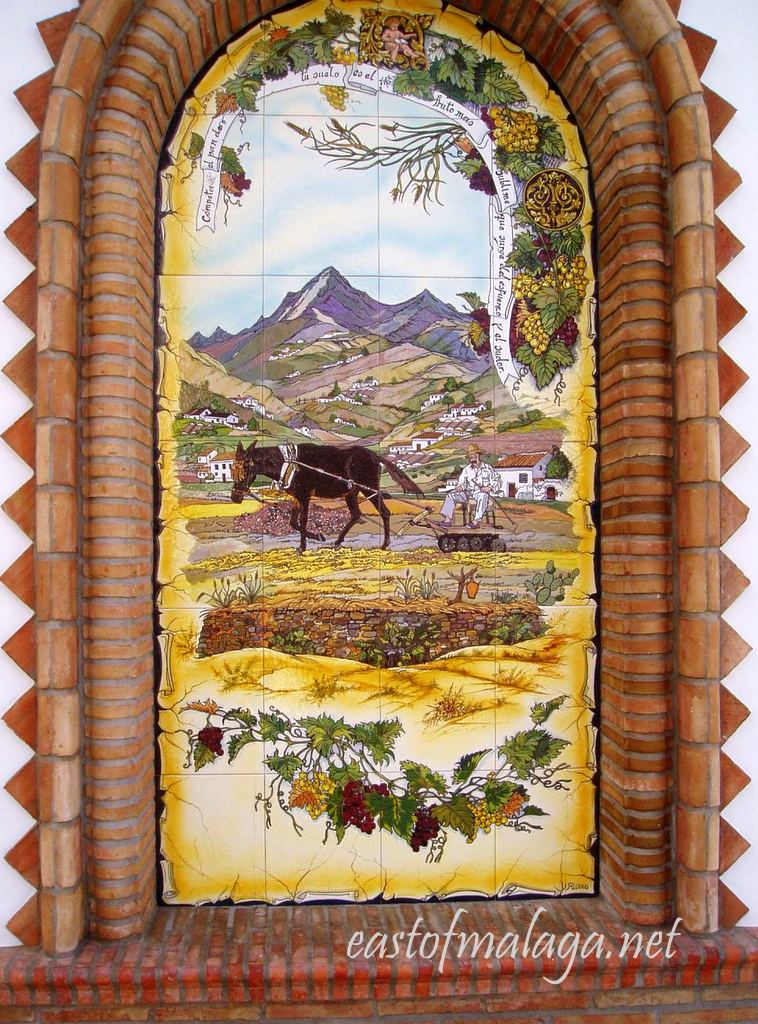
One wall of the Paseo de las Tradiciones pays testament to the trades and deeply-rooted traditions of the people of Cómpeta through the ages. The beautifully modern, brightly-coloured tiling in each of the alcoves was developed in the workshop of potter and sculptor, José Antonio Rivas.

The nine alcoves, each 3 metres high and 2 metres wide, not only depict the history of the collecting of the local vines, the muleteers and village smithy, old olive oil factory and the public laundry, but also recognize the contribution made by the Moors, who for 800 years did so much to improve the cultivation of the summer-dry, winter-wet sierras, bringing the first prosperity to the village.

East of Malaga: Competa´s Paseo de las Tradiciones Alcove

The 500 years since the building of the Church of Our Lady of the Assumption have not been easy for the people of Cómpeta.

The expulsion of the Moors, two great earthquakes followed shortly afterwards by a cholera epidemic, and the vine disease phylloxera, which devastated crops all over Europe in the mid-19th century, have all taken their toll.   But the spirit of the villagers continues to thrive, as epitomized throughout the Paseo de las Tradiciones.

Where is your “oasis of calm”?

Whilst you´re here, why not have a look at:

The elegant,  main shopping street of Málaga

I can see Africa from my terrace!

All at sea with the Virgen del Carmen