

As my contribution to this week’s Travel Theme: Pathways, I’d like to show you Callejon de la Alcuza in the white village of Sayalonga in southern Spain.
With a width of only 56 cms at one end, this is officially the narrowest street in the Axarquía region.
As you might imagine, there’s not much of a traffic problem here!

Other Photo Challenges you might enjoy:
CBBH Photo Challenge: KNOBS AND KNOCKERS
WordPress Photo Challenge: THANKFUL
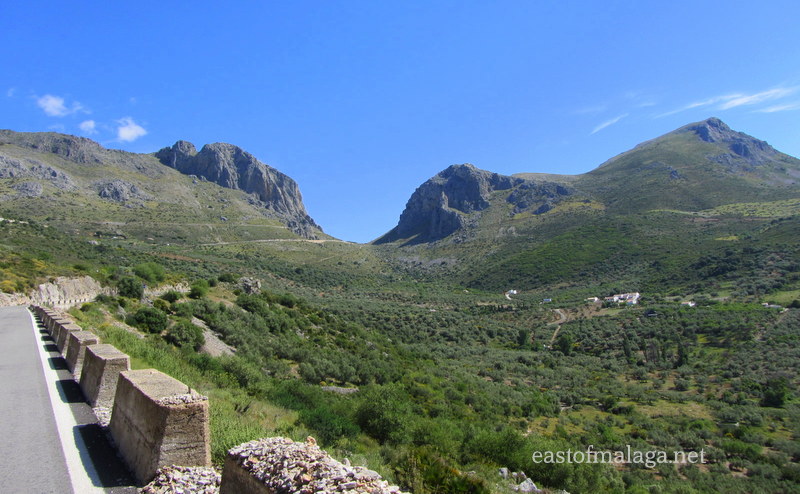
The spectacular U-shaped Zafarraya Pass (El Boquete de Zafarraya) which marks the boundary between the provinces of Málaga and Granada can be seen for miles around. Standing impressively over 900 metres above sea level, the Pass has been used for centuries as a key route through the sierras, linking lands south-west of Granada, with the towns and villages along the coast, east of Málaga.
Although I have made the journey through the Pass many times, I never fail to be impressed by this ancient route through a huge cleft in the mountain spine of the Sierra de Alhama.
The name Zafarraya may have come from the Arab Fahs al-raiyya meaning “field of shepherds”, although there are people who think it derives from Saiarraya, meaning “territory limit”, referring to the fact that at one time Zafarraya belonged to the province of Málaga.
To get there, we drove north from the A7/E15 Autovía del Mediterraneo, past the town of Vélez-Málaga and briefly alongside Lake Vinuela, before heading up the A402, a winding mountain road towards the Pass.
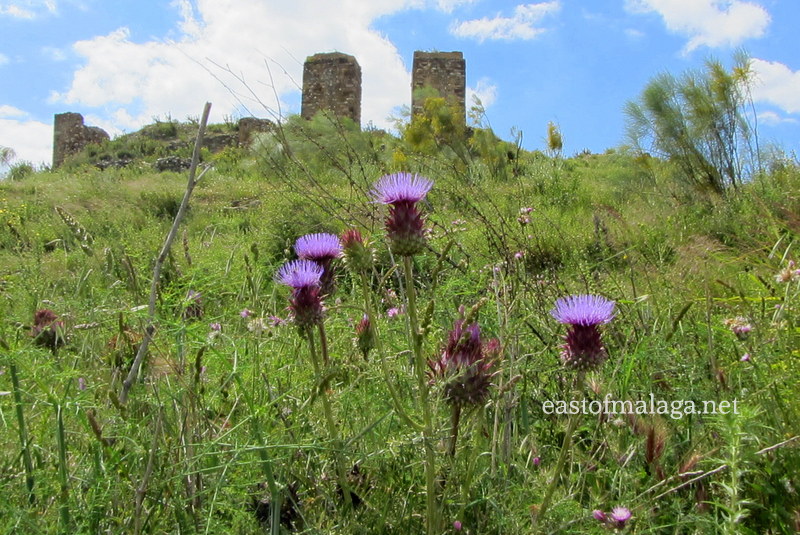
Along the way we stopped at the ruins of Zalía castle (castillo de Zalía) which sits on a hill opposite the white Andalucían village of Alcaucín. It is thought that the Phoenicians established the foundations of the fortress, but the castle was later built by the Moors around the 10th century to guard the ancient Nasrid Route through the Zafarraya Pass from Granada to Málaga.


Even though many of the wildflowers I have told you about over recent weeks have now started to die back near to where I live, they are still flourishing in abundance further inland, so we stopped many times to take in the natural beauty as well as many photographs.


In 1979, a cave was discovered near to the Zafarraya Pass (Cueva del Boquete de Zafarraya), with a subsequent archaeological dig unearthing the best preserved remains of Neanderthal man (radiometrically dating back 30000 years) ever found in Western Europe.
Importantly, the find was one of the first pieces of definite evidence showing that Neanderthals co-existed with modern humans for almost 10,000 years, disproving earlier theories that they had been quickly replaced by modern man.
 Image from: Museo de Málaga
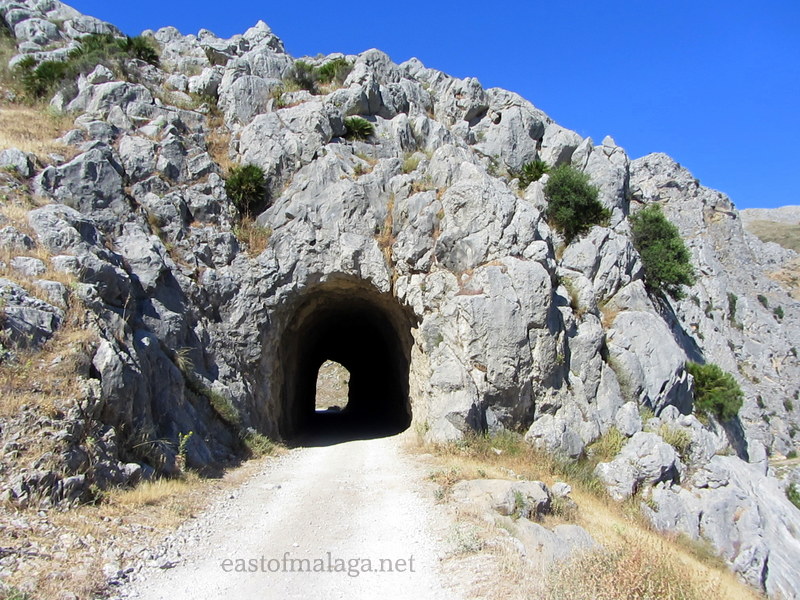
As we approached the gap in the mountains, the entrance to a small tunnel through the rock can be seen, which was once part of the former Periana to Zafarraya railway line, abandoned fifty years ago. The tunnel is now used by walkers who enjoy strolling along the former railway line, which is now a dirt road.
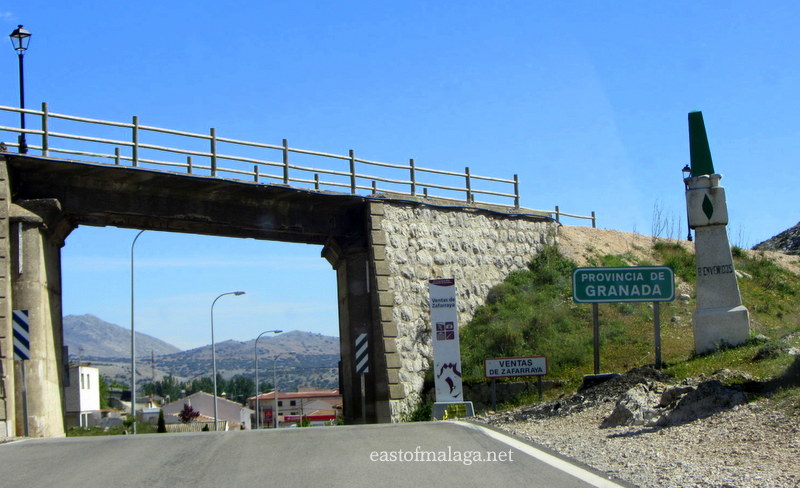
The old railway bridge across the road as you drive through the Zafarraya Pass is a more obvious relic of the old railway line.
It is here that you can find the village of Ventas de Zafarraya, so named because in times long past, travellers would stop for food and shelter at one of the local inns (ventas), where they could also exchange and refresh their weary horses and oxen, before continuing on their long journeys.
These days, Ventas de Zafarraya is almost entirely dedicated to vegetable growing on the fertile, flat land just beyond the village, where many different vegetables including lettuces, artichokes and beans are grown up rustic canes cut from nearby river banks.


Many of them are not much bigger than my little veggie plot at home!
Related articles:
Classic Andalucía: La Alhambra, Granada
Wildflowers of Andalucía: Dutchman’s Pipe
The Green, Green Vegetables of Home
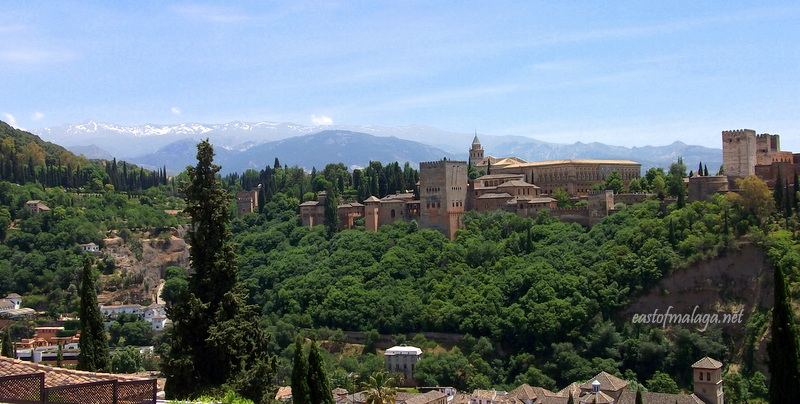 View of the Alhambra from the Mirador de San Nicolás in the Albayzin of Granada.
The Alhambra, a UNESCO World Heritage site is a palace and fortress complex located in the classical Andalucían city of Granada, Spain. It was originally constructed as a fortress in the year 889 and later converted into a royal palace in 1333 by Yusuf I, Sultan of Granada.
La Alhambra’s Islamic palaces were built for the last Muslim emirs in Spain and its court of the Nasrid dynasty. After the Reconquest by the Catholic Monarchs in 1492, some portions were used by Christian rulers. The Palace of Charles V, built by Charles V, Holy Roman Emperor in 1527, was inserted in the Alhambra within the Nasrid fortifications.
After being allowed to fall into disrepair for centuries, the Alhambra* was rediscovered in the 19th century by European scholars and travellers, when restorations commenced.
It is now one of Spain’s major tourist attractions, exhibiting the country’s most significant and well known Arab-Islamic architecture.
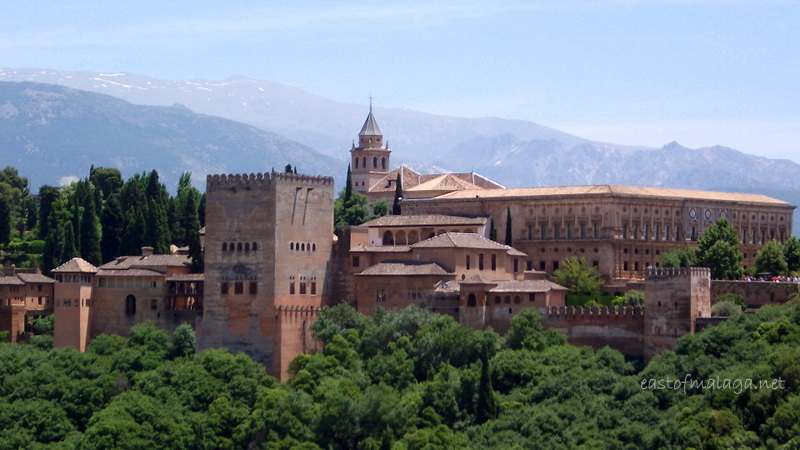 The Palace of Charles V – within the Alhambra, as viewed from the Mirador de San Nicolás in the Albayzin of Granada.
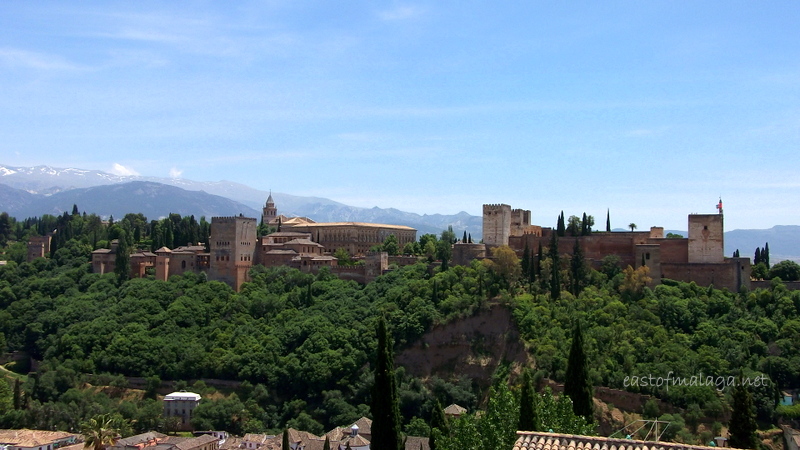 View of the Alhambra from the Mirador de San Nicolás in the Albayzin of Granada.
My final three shots were taken on Monday afternoon as we were having lunch in one of the wisteria-covered restaurants in Paseo de los Tristes. Perched above the Rio Darro at the end of Carrera del Darro, this plaza was once one of the busiest gathering spots in Granada, positioned along a curve of the river between the Alhambra and the Albayzin. These days, Paseo de los Tristes is a popular place to eat, with restaurants lining the north side of the square and magnificent views of the Alhambra soaring above.
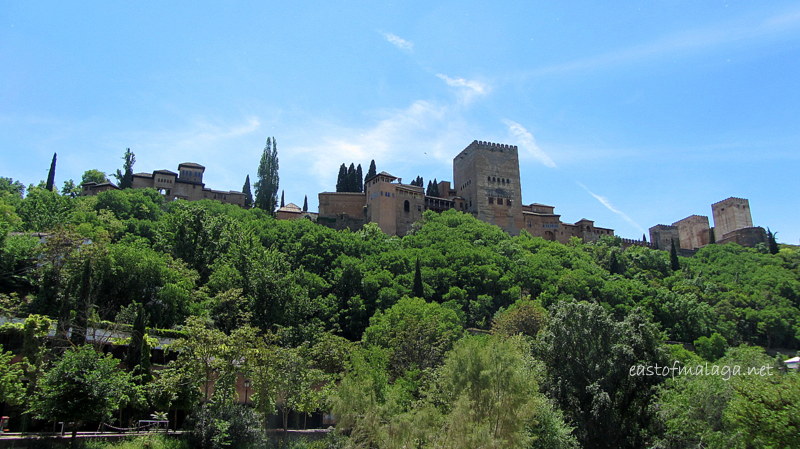 View of the Alhambra from the Paseo de Los Tristes, Granada.
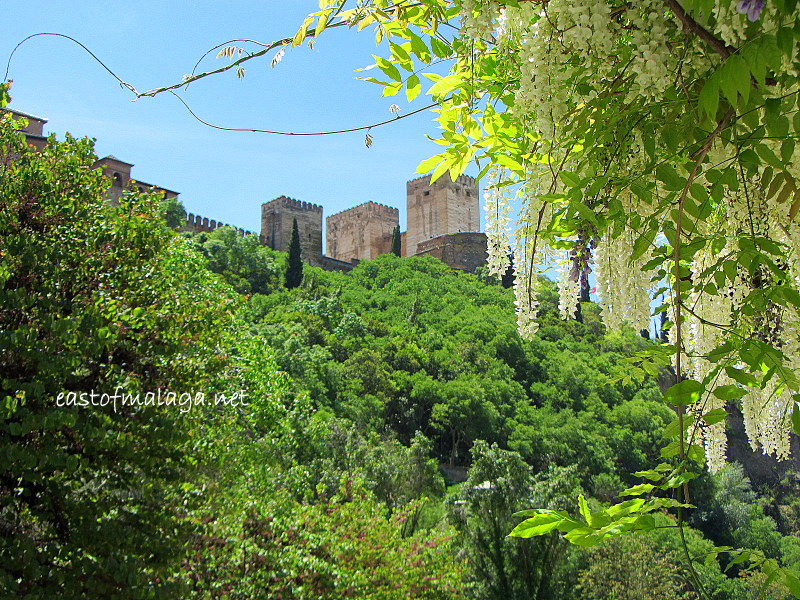 View of the Alhambra through the Wisteria, from the Paseo de Los Tristes, Granada.
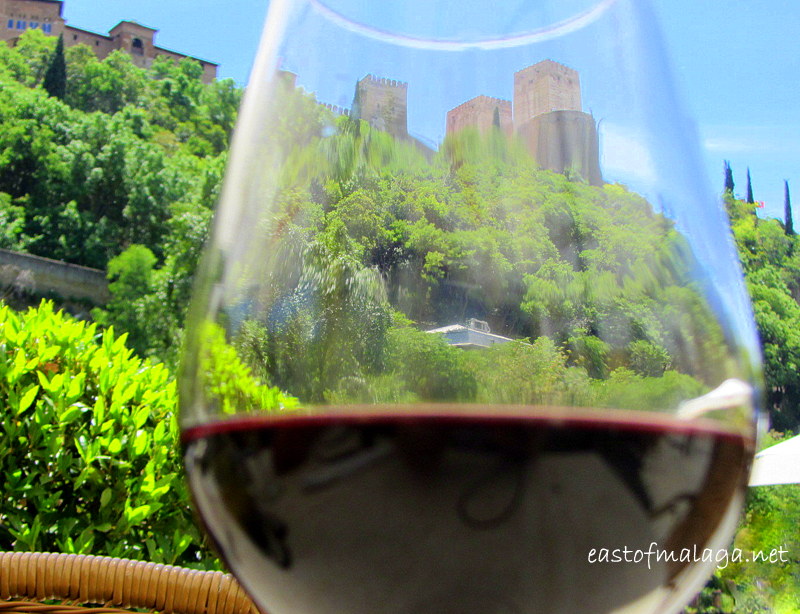 View of La Alhambra viewed through my particularly delicious glass of Rioja, as I was having lunch – CHEERS!
* Information about the Alhambra retrieved from Wikipedia
Related posts:
Ubirr Rock, Northern Territory
OK, OK … I lied!
IKEA is really an acronym comprising the initials and location of the founder of IKEA – Ingvar Kamprad; Elmtaryd (the farm where he grew up) and Agunnaryd (his hometown in southern Sweden).
The company is the world’s largest furniture retailer, with stores in many countries, including Spain.
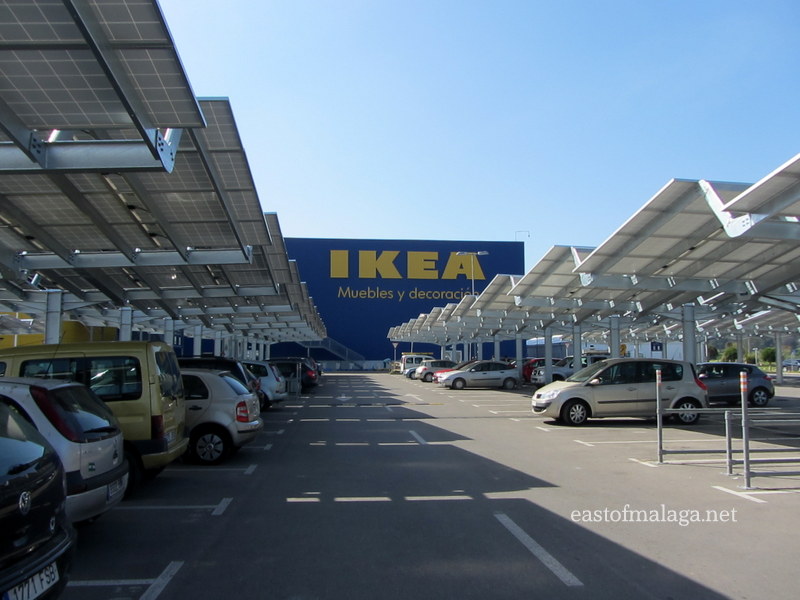
I wanted to pop along to IKEA to pick up some photo frames for a forthcoming Art and Photography Exhibition in Torre del Mar, where I will be displaying some of my photos in June. I haven’t visited my nearest store in Málaga for almost a year, but since my last visit some rather excellent solar panels have been erected as sunshades for cars parked on the 1400-space free car park.
What a innovative idea!
IKEA has invested €4.6 million installing solar panels not only on the car-park sunshades, but also on the roof of the Málaga store, which will produce 2,821 MWh per year – 64 per cent of the amount of energy the store used in 2012.


Did you know that the IKEA logo is blue and yellow to reflect the colours of the Swedish flag? Well you do now!

So, if you’ve recently moved to the Málaga area, and are looking for somewhere familiar to buy your stuff – this might be the place for you!
 The Málaga store has the usual frustrating one-way, anti-clockwise layout, typical of every IKEA I´ve ever been in, whereby you have to walk around the whole store (and it´s a long way) to get to the exit – unless you spot the craftily concealed short-cuts.

IKEA is situated in the Bahia Azul commercial area near Plaza Mayor. If you know where Málaga airport is – well, it´s close by, just off the same road – MA-21 at Exit 2.
Opening hours: Monday-Saturday 10am – 10pm (The store is also open some Sundays and Public Holidays, but it’s best to check the website before you set off)
Address: Av Velázquez, 389, 29004 Málaga, Spain
Website: IKEA website for the Málaga store (in English)
Do you have a degree in IKEA self-assembly furniture? I know I don’t!
Whilst you’re here, why not have a look at:
Spanish football: Estadio La Roselada, home of Málaga CF
AVE: Taking the Fast Track from Málaga to Madrid
CBBH Photo Challenge: MULTI-COLOURED


 East of Málaga