Community: It’s all about pulling together and sharing

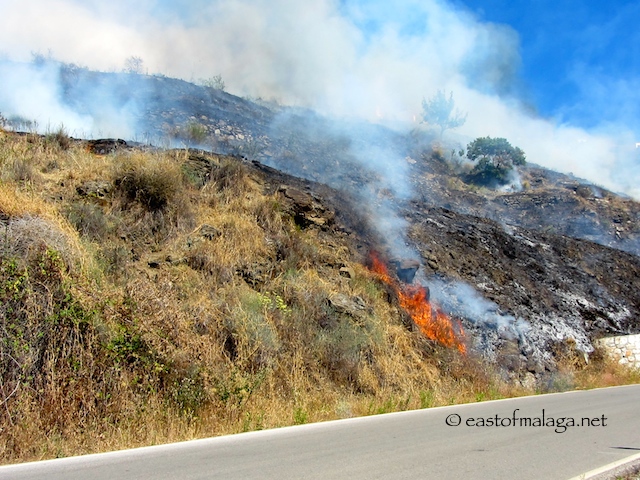
Fire by the roadside, Competa You might remember that towards the end of June last year, we had a large wildfire on the outskirts of my home village of Cómpeta.  This event prompted me to write an article about what we should do about fire prevention and self protection in the event of a wildfire.

Yesterday afternoon, I was on my way home from Málaga when, just before the turn off to my house, I spotted a large plume of smoke, not far away.  Instead of turning towards my home, I carried on up the road towards Cómpeta, and only about 750 metres further on came across a burning hillside.

It was quite surreal as there was no-one else around, yet clearly it appeared that the fire had been burning for at least some minutes as the whole hillside looked to be alight.

I drove past the fire, turned the car around and pulled to the side of the road to call the emergency services (the number to call in Europe is 112) to give the exact location of the fire.

There was nothing else I could do, and I didn’t want my car being in the way of the emergency services, so I took this short video (only about 7 seconds) and then headed home to spread the word.

The fire is not only by the side of the road, but look at the flare-up near the top right of the frame.

After only a couple of minutes I had posted on Twitter and onto my own East of Málaga Facebook page, where I know that lots of local people follow me.  Within no time at all, that post had reached 6,000 people and had been shared 40 times – with lots of comments tagging others to let them know.

THAT’S THE POWER OF COMMUNITY and I am very proud of the community that has grown up around my East of Málaga blog.  

So I’d like to say a great big THANK YOU to each and every one of you and, to those who don’t follow my Facebook page , I’d like to invite you to “Like” the page, click on “Get Notifications” and join in with the community.  

I usually post a couple of times a day, and share many more photos over there.
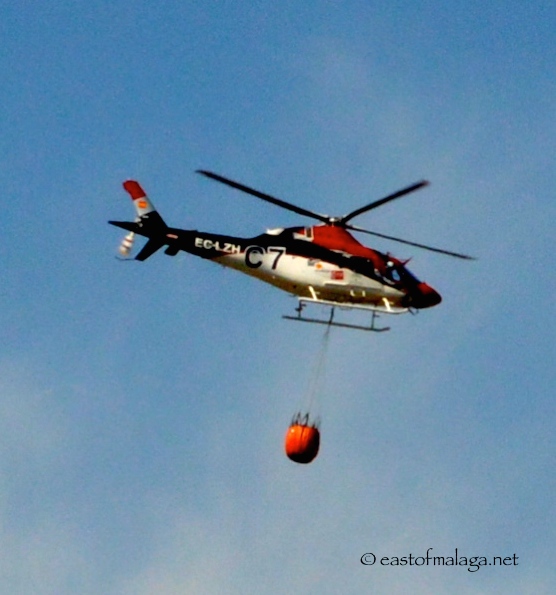
C7 fire helicopter over Competa

C7 fire helicopter carrying water to douse the fire

As for the fire – well, I went back a couple hours later – after the helicopter had left, and the fire appeared to be largely out, though the fire fighters were still there, doing their job.  

Well done, guys and THANK YOU!

The fire is out, but the fire-engine is still near the untouched house

The fire is out, but the fire-engine is still near the untouched house

Fire fighters on the smouldering land, checking for flames

Fire fighters on the smouldering land, checking for flames
What’s YOUR experience of a community all pulling together for the good of others?

Have you met Malaga’s sensational Phoenician Goddess?

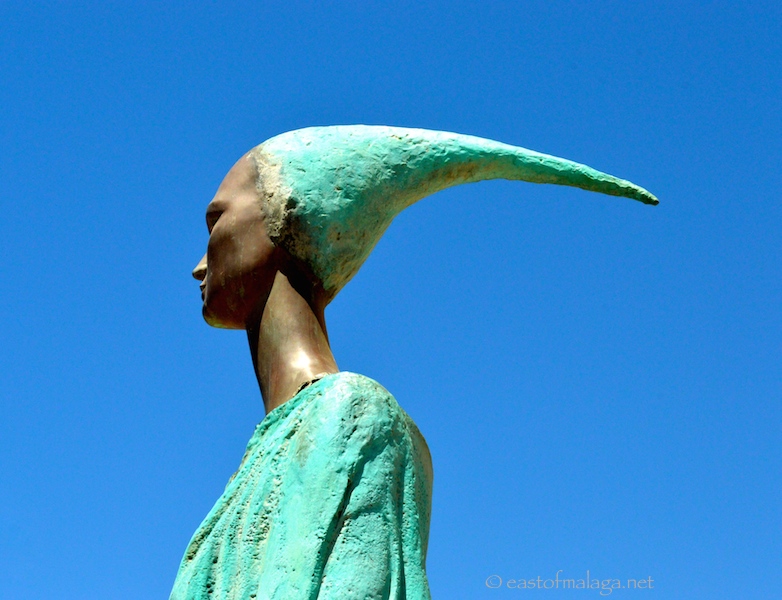
Phoenician goddess, Malac

Allow me to introduce you …..

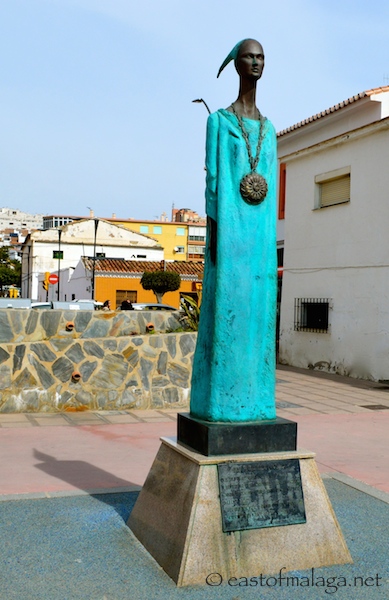
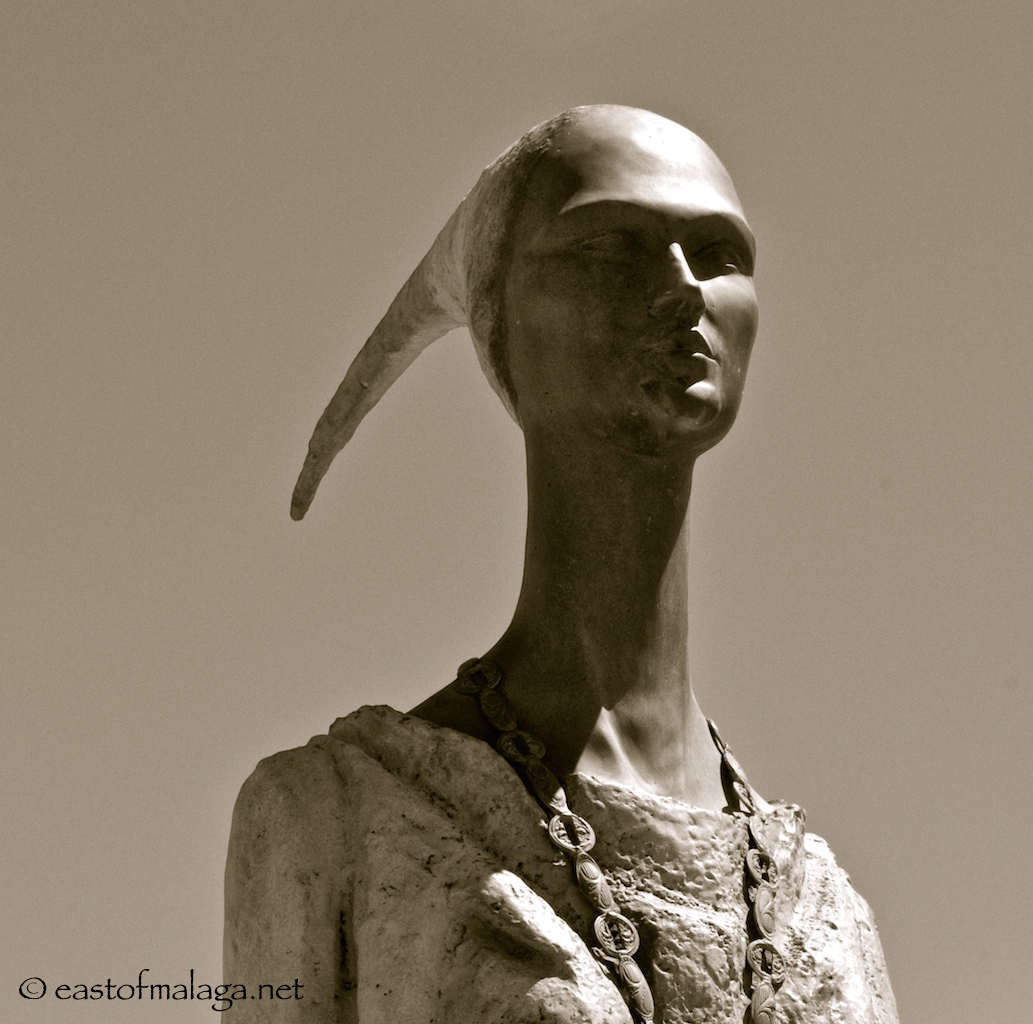
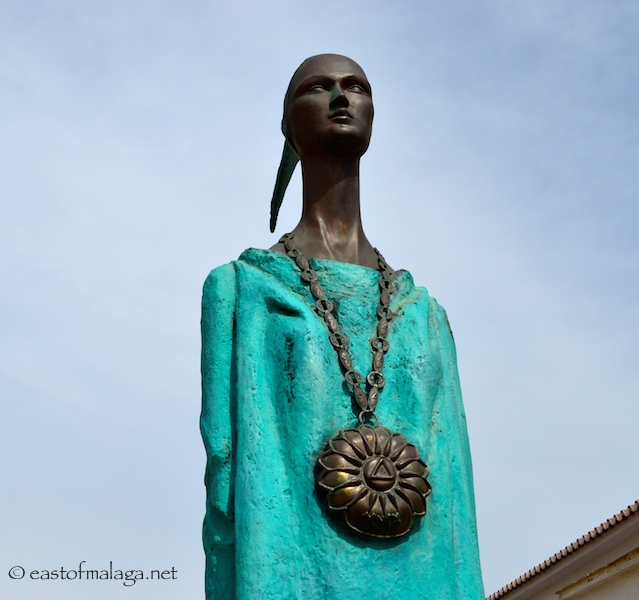
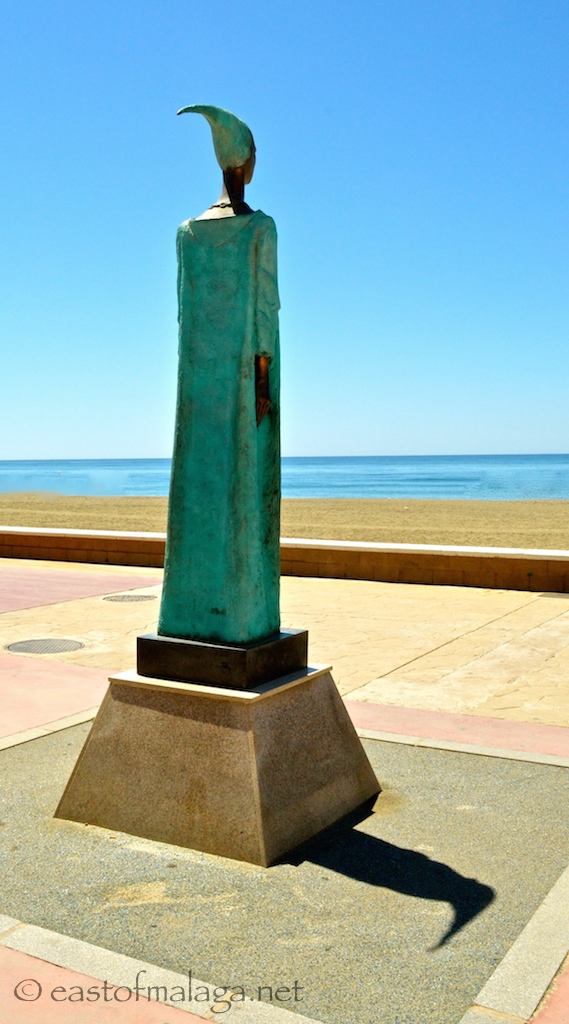
This is Malac, also known as Noctiluca, Goddess of the Moon, the night and of fertility.   This beautiful lady cuts a lonely figure as she stands on the promenade in Rincón de la Victoria, gazing longingly at the sea.

Phoenician goddess, Malac, looks out to sea

Her people, the Phoenicians, who were experienced sailors, navigators and traders, founded the settlement of Malaka (which later developed into the city of Málaga) at the mouth of the Guadalhorce River, around 770BC.  

Yes, Málaga’s history can be traced back more than 2,800 years, making it one of the oldest cities in the world.

Phoenician goddess, Malac in Malaga province, Spain

Málaga’s early inhabitants were mainly engaged in fishing.  They revered their great Goddess, Noctiluca, and worshipped her with offerings and sacrifices at her sanctuary in the present day Cueva del Tesoro (one of only three such marine caves in the world)in Rincón de la Victoria.  

Each year, an image of the deity would be carried in procession and immersed into the sea to provide good fishing for the fishermen.  The Phoenician influence was considerable and many traditions and customs have been bequeathed and continue thousands of years later.  

Phoenician goddess, Malac

To this day, on 16th July each year, sailors and fishermen from villages along the Spanish coast,  parade their statues of the Virgen del Carmen though the streets and introduce her to the sea to bless the waters.

Phoenician goddess, Malac in Malaga province, Spain

The statue of the Phoenician goddess, Malac (Noctiluca) is by well-known Málaga sculptor, Jaime Pimentel.

The divinities may change, but the customs continue.

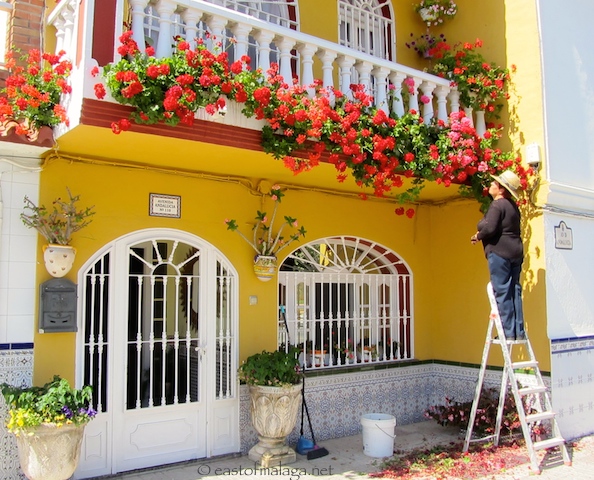
Looking after her geraniums!

Looking after her geraniums

One morning last week, I stopped to have a word with this lady who was cutting the dead flowers from her magnificent display of geraniums.

She told me that she only gave them water twice a week and, of course, they enjoyed the sunshine – (don’t we all?).  At the end of the season, she cuts the plants right back and takes them inside to store them.  After re-potting in January, she gradually reintroduces the plants outside (poco a poco) little by little to warm in the sunshine – and the following summer, they bloom again.

These geranium plants on her terrace are three years old.

So – now you know!

A Peep-show for 20 cents? I know just the place!

Near to the entrance of the old part of the village of Frigiliana is this rather splendid coin-in-the-slot “mechanical theatre”, known as La Casita de Información y La Fantasía (The House of Information and Fantasy).   You might remember these old-fashioned machines from when you were a child – you know the kind, where your coin makes the clown inside laugh manically?

Well, the one in Frigiliana isn’t an old machine, but a more modern version, crafted in the old-style way by a collaboration of artists known as Arte-matico de Bernado y Amigos.  

There are two quite large mechanical theatres back-to-back within the casita, both featuring marionettes, with one entitled “The Moor and his Parrot” and the other “Carmen and Dolores”.   If you were to put your 1 Euro coin into the slot (it’s 2 Euros if you’re a millionaire!), the former will talk about the history of Frigiliana, whilst Carmen and Dolores, depicting two old ladies from the village, chat together about “the good old days”.

So, what about the peep-show, I hear your scream?

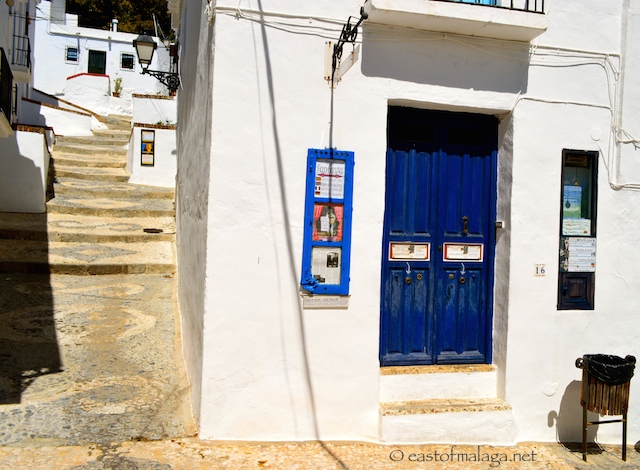
Blue door with peep shows, Frigiliana

Look out for this blue door on Calle Alta (and notice the sign on the wall up the side street)

Well, you’ll have to climb up the steps to the upper part of Frigiliana and, as you wander along Calle Alta, keep a look out for this blue door.  

Can you see the peep-holes?

This time you have a choice of two peep-shows in the door – El Milagro de La Vida (The Wonder of Life) or La Esfera Mágica de Cristal (The Magic Crystal), and the good news is, that even if you are a millionaire, the price is just 20 cents!

The third show, to the right of the blue door will set you back 50 cents (also with no additional cost for rich folk) and this is called The Marvellous Seaview (Merveilleuse vue sur mer).

 Did you notice the sign on the wall, up the side street beside the blue door?

Well, here is the fourth (and final) peep-show in the upper part of Frigiliana village – The Fantastic Harem (Harem Fantastico).  This time, for us poor folk, the cost is 50 cents, (there is a reduced rate of 20 cents – but it’s not very clear how you qualify for that), whilst once again, the millionaires have to pay one Euro.

So there you have it!

What’s the cheapest peep-show YOU’VE ever seen?  On second thoughts – don’t answer that!