Andalucían sizzling hot spicy prawns

Gambas al pil-pil

Gambas pil-pil: There is nothing more typical in Andalucían cookery than spicy prawns served sizzling hot with crusty bread to mop up the juices – together with a glass of chilled white wine or manzanilla, of course!

This quick and easy dish uses three classic ingredients of Spanish cookery – shellfish, garlic and olive oil.   Why …. you’ll even hear sound effects as the sizzling prawns pop and splutter in the hot oil as you bring this time-honoured Andalucían dish to your table.

Maybe you’ve returned home from Andalucía and want to recreate memories of a perfect lunch under the shade of the trees in a quiet plaza. Or you dream of sitting on a sunny terrace overlooking the Mediterranean Sea, watching the palm trees sway in the gentle breeze as the waiter serves your tapas.

Now, what could be more evocative than that?


Here´s what you need for each person:

  • 10-12 large peeled prawns (uncooked) per person for a starter, or 15-17 for a light main course (gambas)
  • 2-3 tablespoons of olive oil (aceite de oliva)
  • A few stems of flat-leaf parsley (perejil)
  • 2 plump cloves of garlic (ajo)
  • 2 teaspoons of paprika spice, adjust according to taste.  Alternatively, if you can find it, use specially prepared pil-pil spice, sold at most Spanish street-markets on the spice stall. Most recipes omit this ingredient, but without it the dish lacks the classic colour and depth of flavour.
  • 1 small dried hot chilli pepper
  • Fresh, crusty bread or rolls
  1. Heat the oven to 220 degrees C.
  2. Peel, clean and de-vein the prawns. Wash them in cold water and dry thoroughly.
  3. Chop the garlic into small slices.
  4. Finely chop the parsley reserving some for the garnish.
  5. Chop the dried chilli pepper, discarding the seeds if you prefer a less fiery flavour.
  6. When the oven comes to temperature put the olive oil into a small ovenproof dish (use one per person), and put in the oven for 3-4 minutes or until the oil starts to bubble.
  7. Remove the dish or dishes from the oven, stir in the paprika powder, peppers, garlic and most of the parsley.
  8. Add the prawns, ensuring they are well coated with the mix.
  9. Return to the oven for 4-5 minutes, until the oil is bubbling vigorously and the prawns have just turned pink. Don´t overcook them as they will become rubbery.
  • Garnish with remaining parsley, and serve immediately, still in the ovenproof dishes, while the oil is still bubbling.
  • Serve with a well-chilled white wine and fresh crusty white bread to mop up the spicy oil.

Let’s talk about tapas!

First of all, what are tapas?

It is thought that originally in the wine-making regions of Andalucia una tapa (the word “tapar” in Spanish means“to cover”), in the form of a small plate or lid was placed over glasses of wine to keep fruit flies away.  Titbits of food were then placed on the dish to be eaten with the wine.   How I so love the Spanish that it is unacceptable that a fly ends up in your drink, but it´s fine if it lands on the accompanying snack!

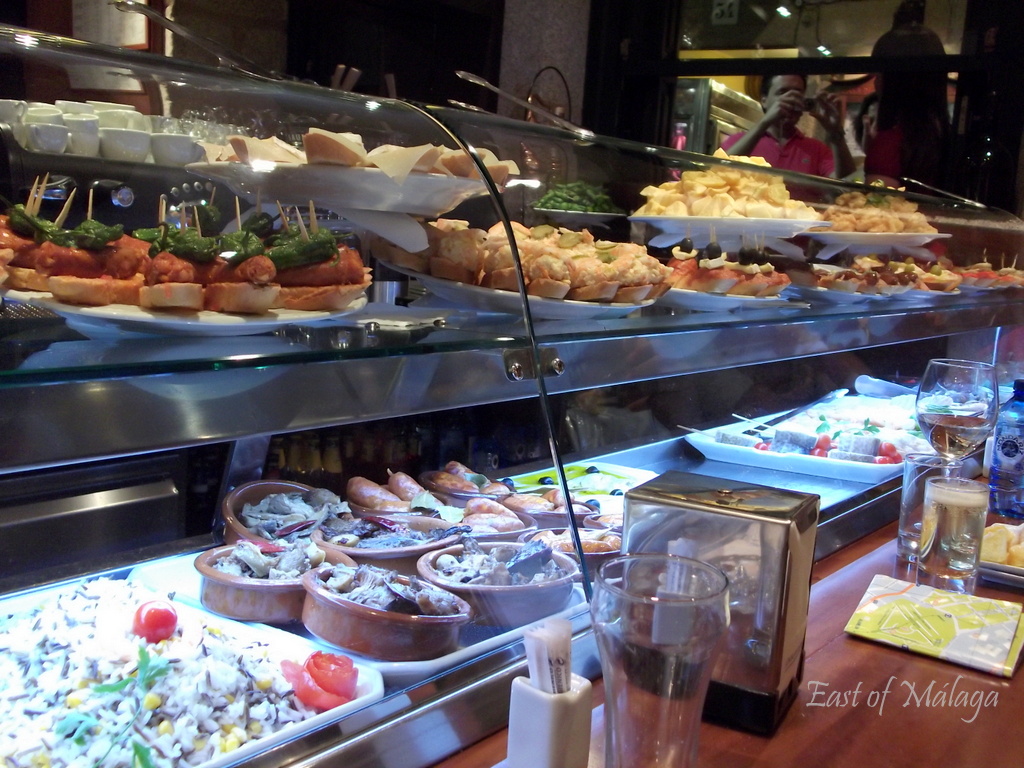
Tapas selection at a bar in Santiago de Compostela

Other stories suggest that tapas were invented by a bar owner in Seville, who decided to put a cover (tapa) over his guests´ glasses of wine, using a slice of bread to keep out flies. He later put a piece of ham or cheese on top, so that his customers could have a bite to eat with their drink.

Either way, the idea spread, so that nowadays the types of food served as tapas are limitless.  Most Spaniards don´t drink alcohol without a tapa and many bars provide them free of charge.


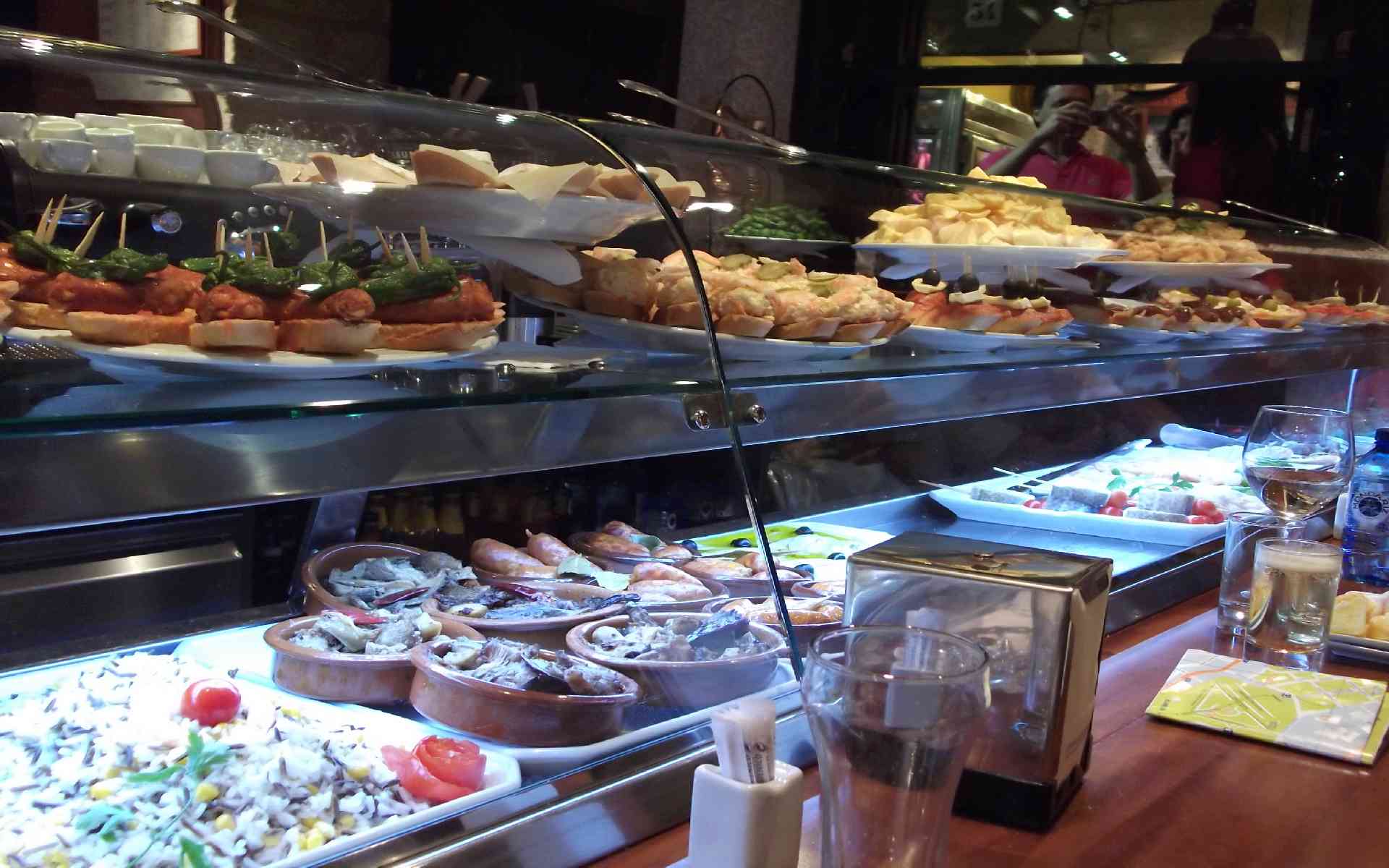
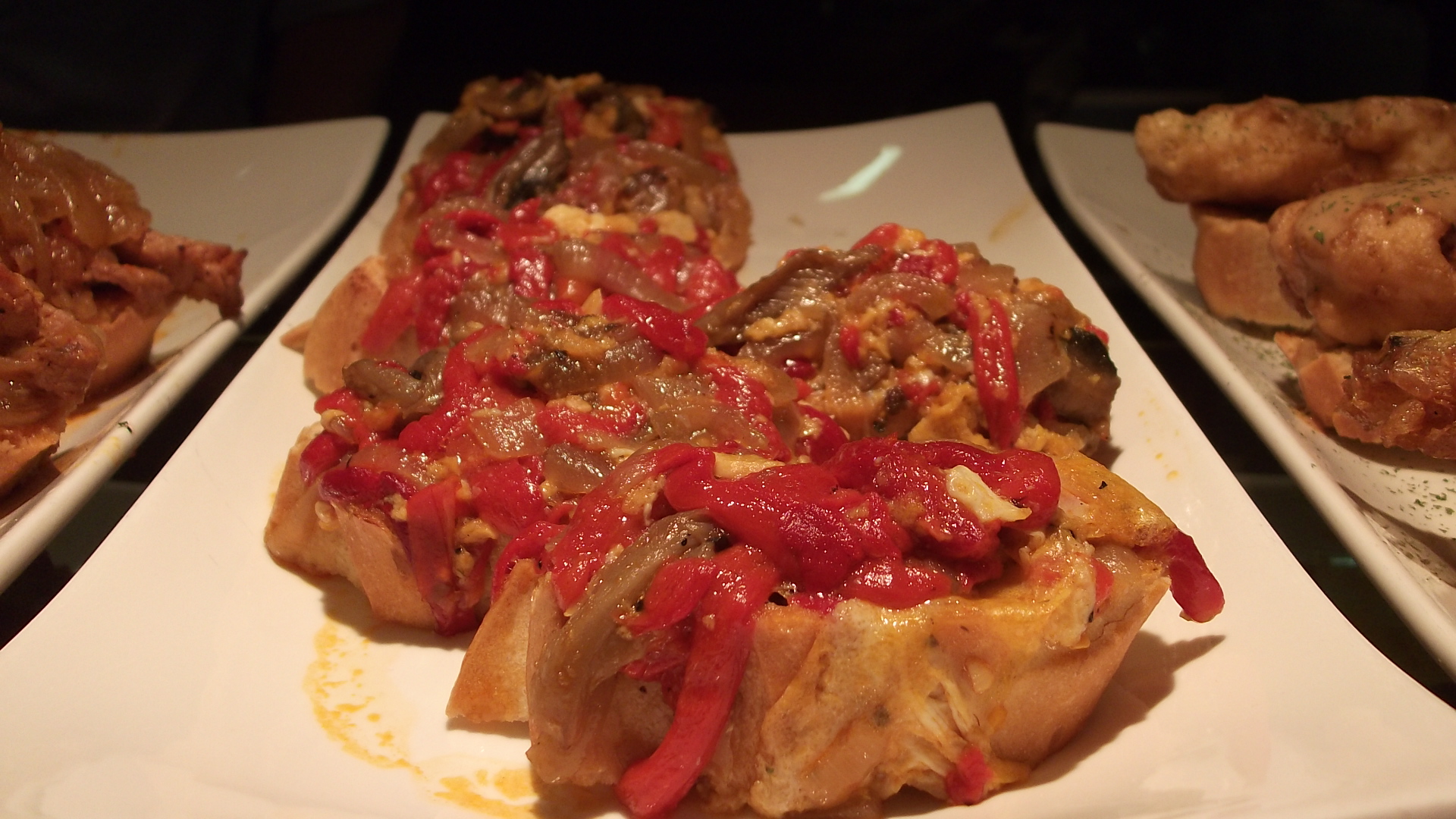
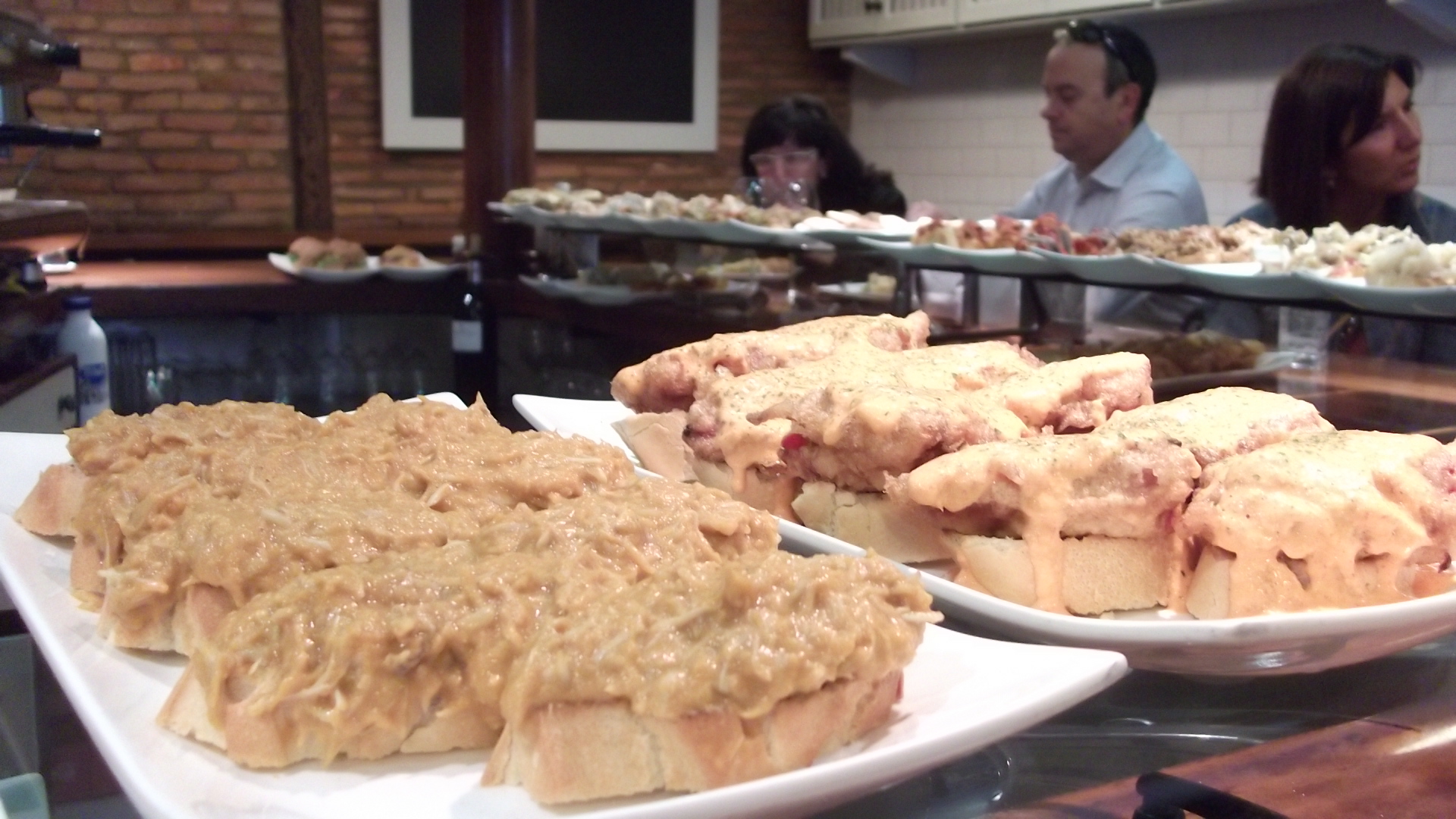
The Spanish equivalent of “fast food” is usually displayed in refrigerated glass units on the bar and served in small terracotta glazed dishes. Some examples of the type of tapas normally available include gambas (whole cooked prawns in their shells), boquerones (fresh anchovies in olive oil, vinegar and garlic), chorizo (spicy Spanish sausage), albondigas (meatball…often in a creamy almond sauce), queso (cheese…often manchego), habas con jamon (broad beans with ham), ensalada rusa (Russian salad) or just a few olives.

Your choice of tapas is usually accompanied by a small piece of crusty bread which helps to counteract the adverse effects of the alcohol through drinking on an empty stomach.

In many establishments, if you stand at the bar along with the locals you will be given one tapa free with each drink you buy.   That’s right …. free food!

Should you choose to sit away from the bar, you can pay for a tapas or two (usually for one euro or less in this part of Spain), or opt for a larger serving known as a ración (ration) or medio ración (half ration). This is a great way to eat a variety of dishes, and a pretty sociable activity as groups generally tend to share their dishes.

The food is generally very good, even in remote villages around the Axarquia.

Where is your favourite tapas bar?   Which tapa do you choose, time and time again?


You might also like to look at:

All at sea with the Virgen del Carmen

La Noche de San Juan: Families, fires and football!

Bus Services: East of Málaga


Slice of Life: Spanish bars

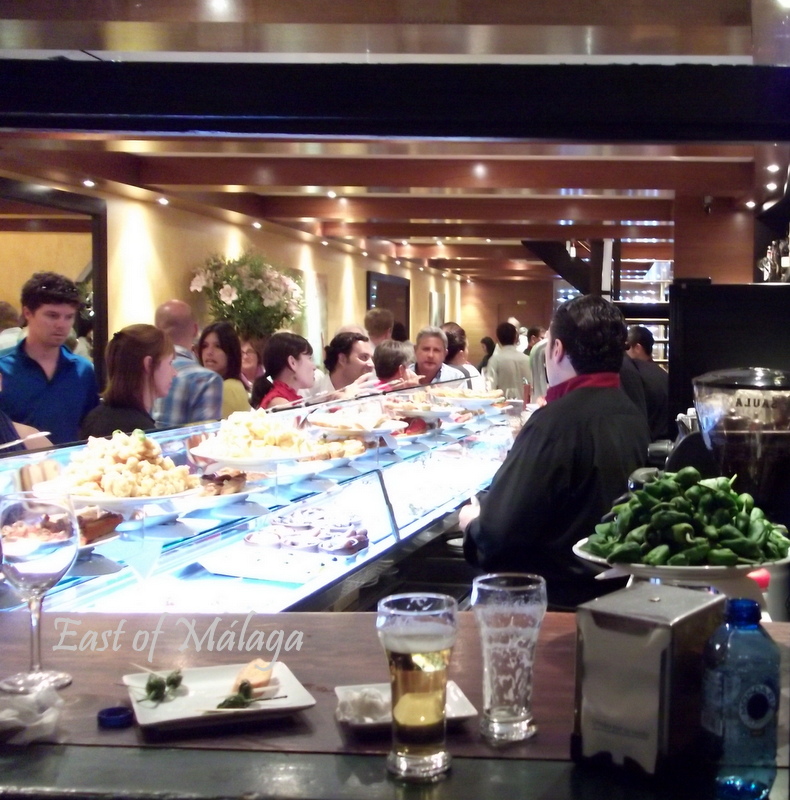
A bar here in southern Spain is very different from a typical British pub.  Although layouts may vary, what you will usually find will be a bar counter, with tall seats around, often with a covered tapas display. This will likely be in two parts, one containing meats and tortillas ready to be heated up and served with your drink, the other with cold tapas and salads. Many bars still serve tapas at an inclusive price with the drink, whilst others serve rather more elaborate nibbles which are charged for individually.

typical tapas bar
One of the main differences with a British pub will be the size of drink. Normally if you ask for a beer (una cerveza) it will be in a smaller glass, either a “tubo” which is a tall tumbler or in a glass not dissimilar to a large wine glass. The only time you will see anyone with a “pint” glass, they will usually be a tourist on the coast.  You will be just as likely to see people at the bar drinking coffee (un café) or a glass of wine (una copa de vino).

Tables away from the bar counter, either inside or outside, are typical café tables with upright chairs, not lounge-type tables and chairs like in British pubs .

There is usually a large display of spirit bottles behind the bar and invariably a leg of Serrano ham on a carving frame.  You should try this typical Spanish  delicacy –  it´s delicious!

Almost everywhere,  customers take all their food and drink and only pay when they are ready to leave.  In busy big city bars, the tapas, usually more sophisticated, will each come with a small wooden skewer and, when you have finished, the barman will count the skewers and charge accordingly.

Tapas to choose

I would recommend you to visit as many bars and cafeterías as possible, especially away from the tourist haunts. Look for places full of Spaniards and litter, in the form of till receipts, on the floor signifying that you have found a good spot.

Some bars, especially on the coast, offer more seafood, but try different ones and you will inevitably find a handful that will become part of your regular tapas trail.

Where´s your favourite Spanish bar?


If you like this article….try also looking here:

The heart of Cómpeta: El Paseo de las Tradiciones

Photographs I love …. and why!

A flowering snapshot of a January day


Street Markets around the Axarquía

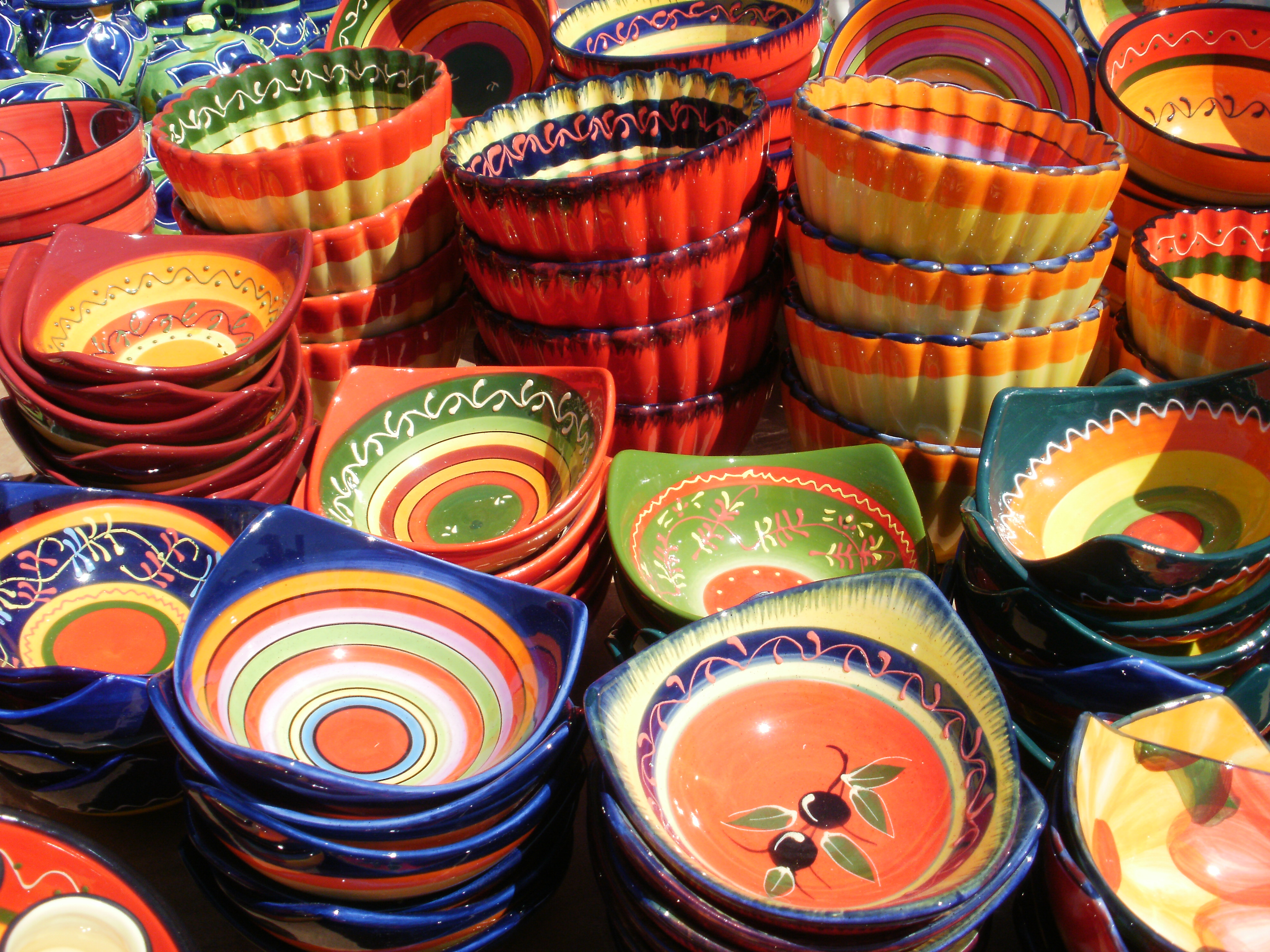
Colourful, bustling street-markets are very much a part of everyday life here in Andalucía, for both locals and tourists alike. Every day of the week there is an open-air market in one or other of the pretty white villages or towns in the area.


Items for sale include brightly painted pottery, locally grown fruit and sometimes irregularly-shaped vegetables, spices, olives and nuts, as well as clothing, handbags, shoes and jewellery.

Often the slowly shuffling crowd will come to a complete standstill, as a new baby (much to the delight of his young mother) is fussed over and kissed by a multitude of Spanish women, amid cries of “guapo” (which means that the baby is gorgeous!), totally oblivious to all around them.


When waiting to be served at a busy fruit and vegetable stall,  with customers standing several deep all around, you just have to stand your ground and shout up when you think it´s your turn, or the little old ladies wearing black will surely push their way in front of you!

These photos were taken at the street-market at Caleta de Vélez, but this is a fairly typical scene across the Axarquía.  It is wonderful to buy such fresh, locally-grown fruit and vegetables.

Beats the supermarkets any day, with good prices too!

Why not visit a local market today? There’s sure to be one!

MONDAY:         Torrox pueblo and Torrox Costa

TUESDAY:        Nerja,  Trapiche (Farmers Market)

WEDNESDAY:    Algarrobo Costa,  Rincón de la Victoria

THURSDAY:  Frigiliana,  Torre Del Mar,   Vélez-Málaga

FRIDAY:   Almuñecar, La Cala Del Moral (Rincón de la Victoria)

SATURDAY:   Cómpeta, Caleta de Vélez, El Palo (Málaga)

SUNDAY:   Nerja (Car Boot)

Where’s your favourite street-market, and why?  Do you know of any others in the Axarquía?

Related posts:

Playing the Spanish Markets

When life gives you curves, flaunt them!

The Buddhist Stupa of the Eastern Costa del Sol