Men Bearing Gifts: Celebrating Three Kings Day

Until I moved to live in Spain, January 6th only meant one thing to me – the twelfth night – or, more importantly, the day you are meant to have all your Christmas decorations packed away until next year.
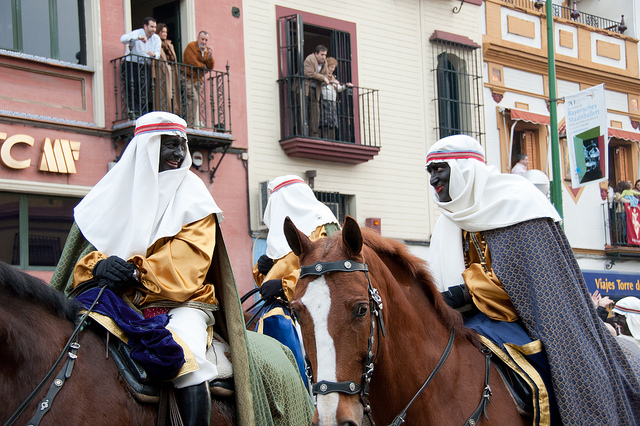
three kings parade[Image credit: Flickr (CC) Paul and Jill]

Now, of course, I know that it’s the day that La Fiesta de Los Reyes takes place throughout Spain to celebrate the day the Three Kings arrived in Bethlehem to present the baby Jesus with their gifts of gold, frankincense and myrrh.   It is also the most important day for Spanish children, as they receive their festive gifts from the Three Kings rather than Father Christmas (although every year Santa is becoming increasingly popular).

The fun starts on the previous evening, usually with processions passing though most towns and cities.  During the late afternoon, the crowds grow in anticipation of the arrival of the Three Kings on huge motorised floats, horseback, camels or, in the case of my local mountain village a year or two ago – in the back of a police car!
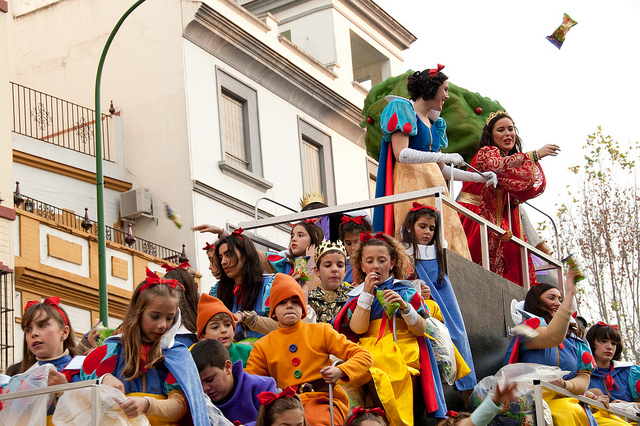
three kings float[Image credit: (cc) Paul and Jill]

As daylight fades away, you might hear the drums and music of the approaching parade, heralding the arrival of the Three Kings.

People on the floats throw boiled sweets towards the waiting crowds on either side.  But beware!  Some of the younger people on the floats can be rather enthusiastic throwers, with sweets being hurled out like missiles!  If you’re not careful you’ll get your eye taken out!  Many in the crowd come prepared, holding up-turned umbrellas to catch the booty, whilst others just scrabble around the ground, stuffing the fallen sweets in their pockets or bags.

It´s quite a sight to see adults scuttling around grabbing sweets off the floor totally without embarrassment – in fact, it´s easy to get caught up in the excitement of it all!

After the parade, most families head home where, before going to bed,  the children will put out something nice to eat and drink for the Three Kings, plus water for their camels. They also leave out their best pair of shoes to be filled with presents.  The next morning, if the children have been good then they will find presents in and around their shoes, if not, then only a lump of coal will have been left for them – though I suspect that doesn´t happen very often.
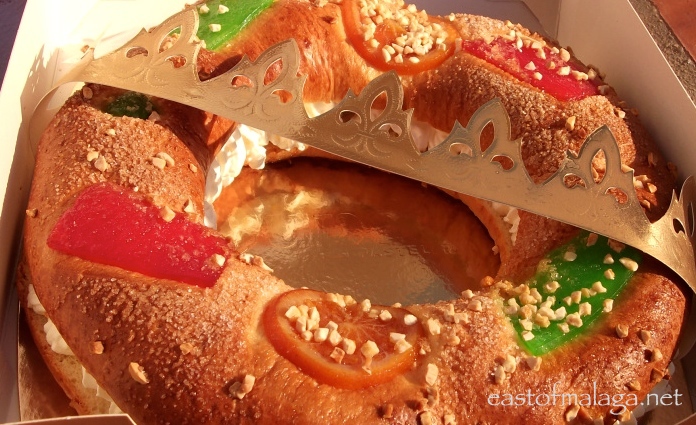
Roscon de Reyes

On January 6th, most families gather around the table to enjoy their Roscón de Reyes.   This is a ring-shaped bun or sweet bread, sugar-frosted and decorated with fruit flavoured jellies and fruit. The bun is sliced in half and filled with a mock cream mixture.  Hidden somewhere in the cream will be a novelty such as small model king and, if you are lucky enough to find one of the hidden figurines in your portion, then tradition has it that you will be blessed with good luck for the coming year.  Though I guess it would be bad luck if you inadvertently swallowed it and choked!

Belen in Malaga Town Hall

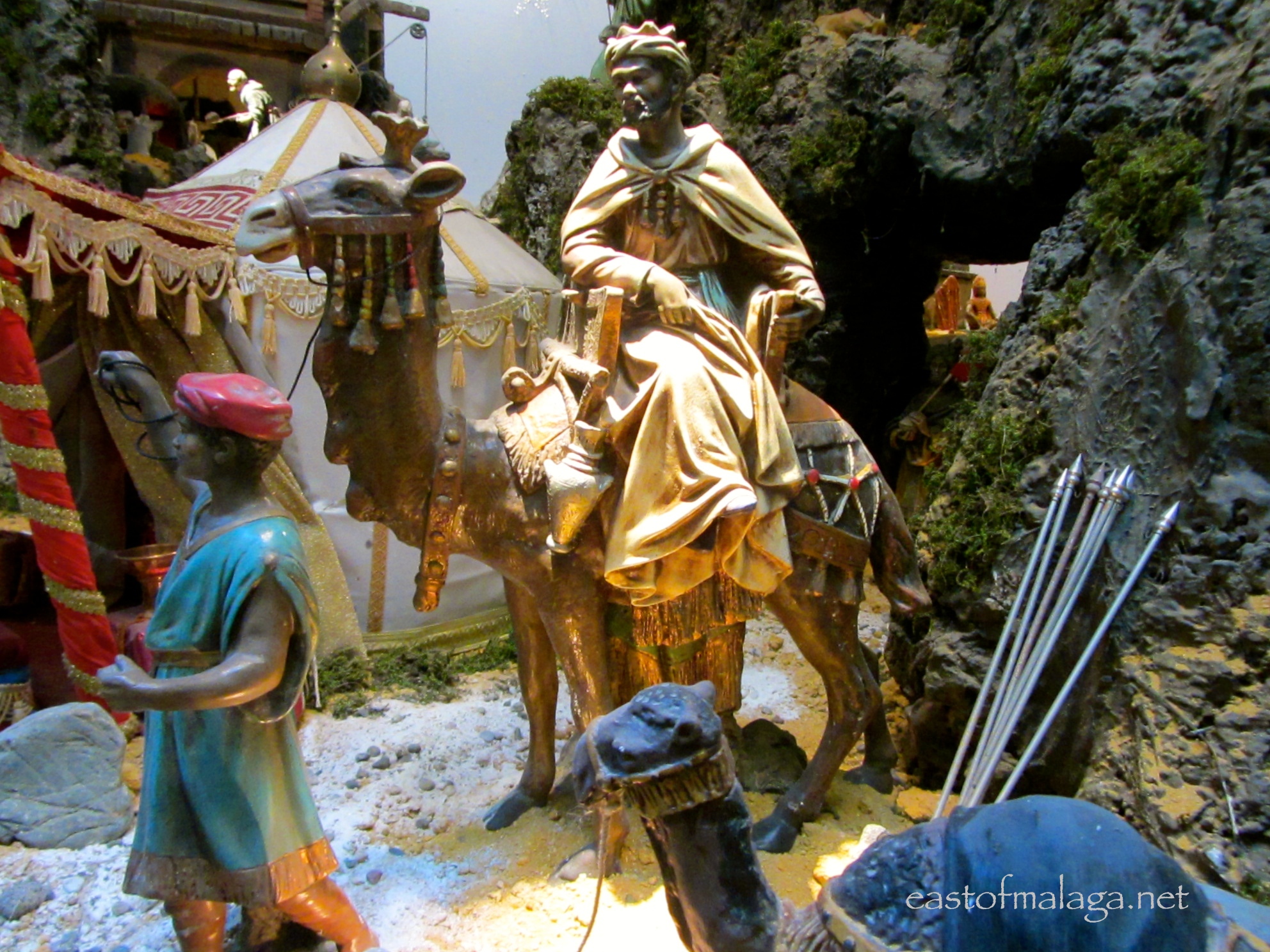
Nativity scene at Malaga Town HallThis is also the final opportunity to see one of the many Belénes (Nativity scenes) around the town or city.  I photographed this one inside Málaga Town Hall (Ayuntamiento de Málaga) last Sunday.  There was quite a queue to get in by the time I left.
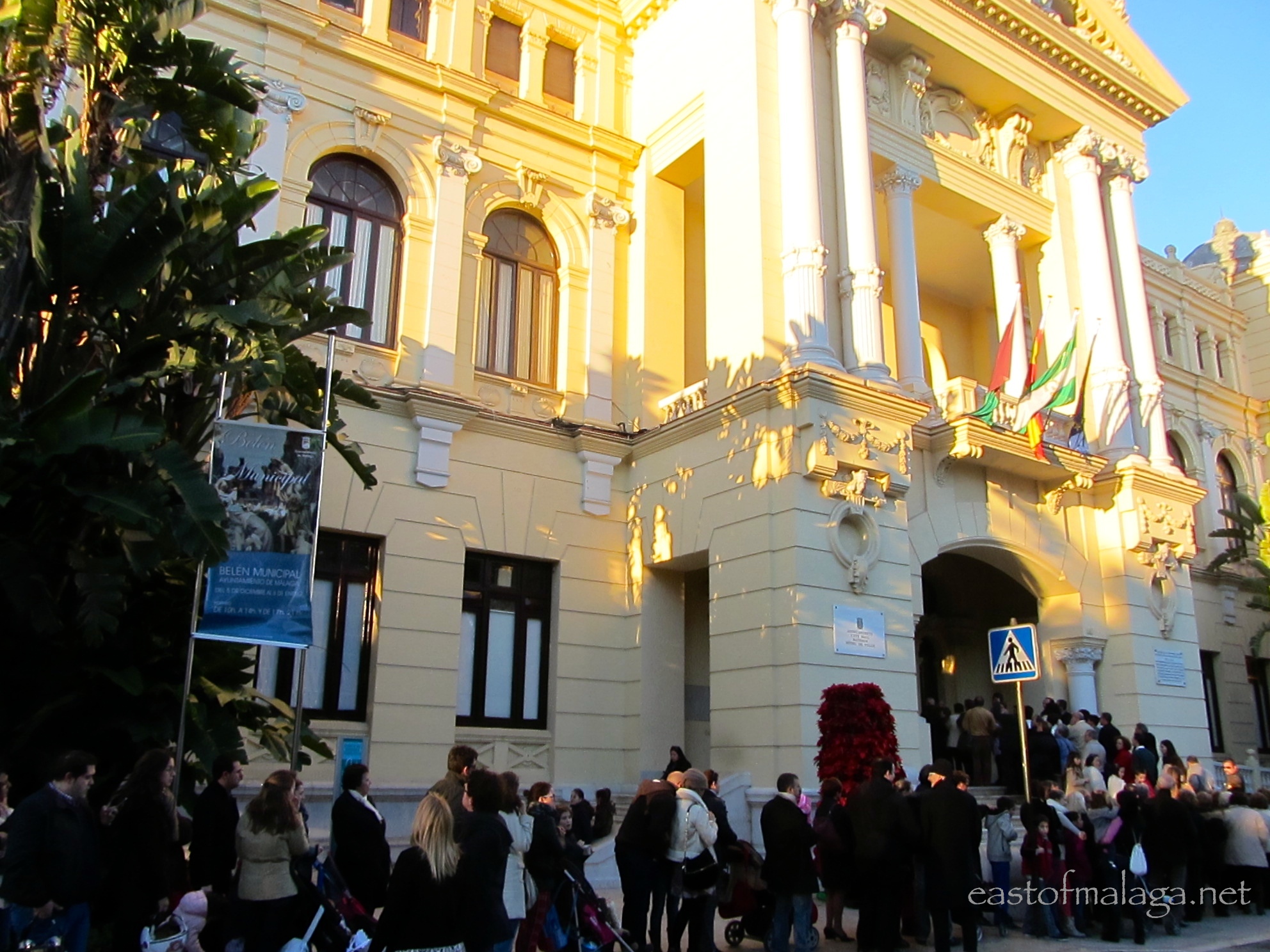
Queue of people to see the Belen at Malaga Town Hall

Which is your favourite fiesta or festival?

You might also like to look at:

My Travel Reflections on 2013

Malaga’s Urban Street Art

The Buddhist Stupa of the Eastern Costa del Sol

Spain’s Christmas Lottery: El Gordo

El Gordo lottey ticketImage credit: alvy (Flickr CC)

Spain as a nation is lottery mad!

It is not uncommon to see a long queue of people outside a state-run lottery kiosk, where various forms of lottery ticket can be purchased. You may even find yourself approached in the street or in bars by people selling tickets.

But it’s at Christmas that their enthusiasm really does go overboard.

It was estimated last year that 98% of all Spanish adults participated in El Gordo (literal translation “The Fat One”), meaning that the Spanish Christmas lottery has the biggest prize pool of any lottery in the world, last year totaling over two and a half billion euros!

Tickets are very expensive, around €200 each, but you don’t have to buy a whole ticket. Most tickets are sold in decimos, or tenths, and often groups of neighbours or families will club together to buy a ticket between them.  This type of communal gambling can mean that whole villages or groups of workers can suddenly become very wealthy.

El Gordo is drawn only once a year, on December 22nd, with the process taking in excess of four hours.

The draw procedure has followed exactly the same form for over 100 years, with the pupils of the San Ildefonso school (formerly reserved for orphans of public servants) drawing the numbers and corresponding prizes, and singing the results aloud in front of the public.  Believe it or not, people sit by their televisions or radios for much of the day, watching or listening to the live broadcast, eagerly awaiting the results.

In the video, the boy is singing “one thousand euros“, which is the prize for that particular number drawn – and the girl sings the winning numbers which will each have that prize of one thousand euros.

To be honest, it’s not the most riveting TV show …. unless they happen to draw your number, of course!

The chances of winning a prize in the Spanish Christmas lottery are around 1:6, though not every one wins a fortune. Those who manage to win back their initial stake tend to spend it by buying a ticket for El Niño, the second largest draw of the year, which takes place on January 6th.

Buena suerte!

Do you ever buy lottery tickets and, more importantly, have you ever won?


Whilst you´re here, why not have a look at:

A Celebration of Fried Breadcrumbs: Migas Festival in Torrox pueblo

Fresh Figs Stuffed with Goat´s Cheese and wrapped in Smoked Bacon

Cost of Living in Spain: August 2013


Day of the Dead: Spanish style

Pumpkin by Thomas Backa (Flickr CC)Image credit: Thomas Backa  (Flickr: Creative Commons)

I don’t like Halloween.  Never have.  Never will.

Not for of any particular religious reasons, but simply because it always seemed a pretty pointless exercise to me.

Until I moved to live in Spain.

Although the American-style “ghosts and ghouls” type of Halloween has now started to creep into the Spanish calendar each year, this time of year is celebrated here in a different form, as “El Día de los Muertos” or the “Day of the Dead”.

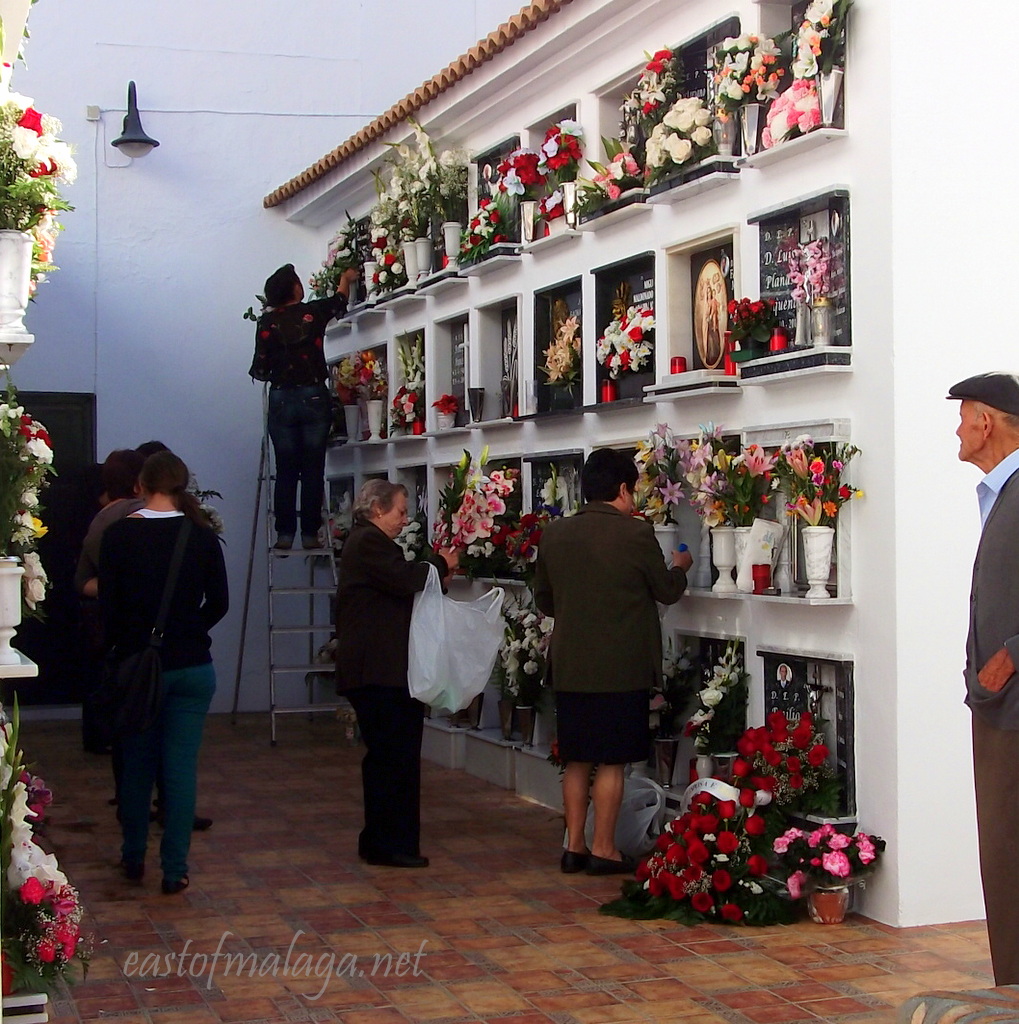
The festival of Todos los Santos (All Saints´ day) is a national holiday on November 1st each year, when cemeteries are packed with families paying homage to their dead and tending the gravestones of their ancestors by placing fresh flowers and candles.

Tending the graves in Competa cemetery for Todos Los Santos

This is a commemoration for loved ones with nothing ghoulish or scary involved and, thankfully, without commercialism.  

Exactly as it should be.

How do you honour loved ones who have passed away, in your part of the world?


Related articles:

Death in the Afternoon: The Round Cemetery of Sayalonga

The Day of the Dead: A Celebration of Life 

The heart of Cómpeta: El Paseo de las Tradiciones


Let’s Talk About Tapas: Boquerones

Tapas: Boquerones in vinegar

Last month, I started a new feature called Let’s Talk About Tapas, when I gave you a general overview of what to expect if you want to eat tapas in Spain.

Each month I will be telling you about different tapas, and often I will include a recipe so you can make them at home for yourself.

So, what are tapas and how did they originate?

Well, it’s thought that originally in the wine-making regions of Andalucía, a cover in the form of a small plate or lid was placed over glasses of wine to keep fruit flies away.  Titbits of food were later placed on the lid to be eaten with the wine.  Remember too, that the word “tapar” in Spanish means “to cover”, which is where we get the word “tapas” from.

Let’s get started with one of my favourite tapas – Boquerones en vinagre (anchovies in vinegar).

Boquerones whole

You can buy boquerones from fish merchants or any supermarket with a fish counter such as Mercadona, where a kilo costs around €3.

They are not very difficult to prepare and are absolutely delicious!   When we first arrived to live in Spain and rented a house for the first twelve months in Frigiliana, my Spanish next door neighbour showed me how she prepared them.

First you need to head and gut the fish.  Do this by holding each fish using two hands – with the tail in one hand and the head in the other.  Squeeze behind the head and pull it off.  Split open the fish with your fingers and take out the guts, backbone and pull off tail.

Boquerones filleted

Rinse in cold water until the water runs clear and place the filleted fish white-side up into dish.

Boquerones soaked in white vinegar and sprinkled with salt

Sprinkle with salt and cover with white wine vinegar.  Depending on how many fish you have, you can arrange them into layers – making sure you perform this same task with each layer.  The top layer of fish needs to be covered with vinegar.

The boquerones will start to turn white almost immediately as they “cook” in the vinegar.

I usually cover the dish with clingfilm and pop it into the fridge overnight to marinade.

Chopped garlic and flat-leaf parsley

Boquerones in olive oil with garlic and parsley

Next morning, drain the salty vinegar away and cover the boquerones with extra-virgin olive oil, lots of chopped garlic and a little freshly chopped parsley – and by lunchtime they will be ready to eat with freshly baked bread.

Eat your boquerones with a glass of chilled white wine or manzanilla (dry fino sherry).

What are your favourite tapas?


Whilst you’re here, you might also enjoy:

Let’s talk about tapas, shall we?

Spanish Omelette: Tortilla Española

A Celebration of Fried Breadcrumbs


All the fun of the Ferias!

Viking ship at Torrox feria, Andalucia, Spain

The ferias are in full flow in the Axarquía region with the latest at Torrox pueblo last weekend.    By day, unassuming white Andalucían village – but by night, OH BOY is it a feast for the senses!

The bright flashing lights of the fairground rides, beautiful flamenco dresses, dancing, live music, the smell and taste of great food and drink, very late nights and, of course, the fireworks!

If you miss one of the nights, don’t worry there are plenty more, as most ferias take place over several days.

This coming weekend it’s Nerja’s turn, with the Feria held on the land between Carabeo and Los Huertos.  Full programme of events, HERE.

See you there! 

Do they know how to party, or what? 🙂

You might also enjoy these related articles:

A Celebration of Fried Breadcrumbs: Migas Festival in Torrox Pueblo

Calle Beso (Kiss Street) in Torrox

Balcón de Europa (Balcony of Europe), Nerja