The Eagle Aqueduct, Maro

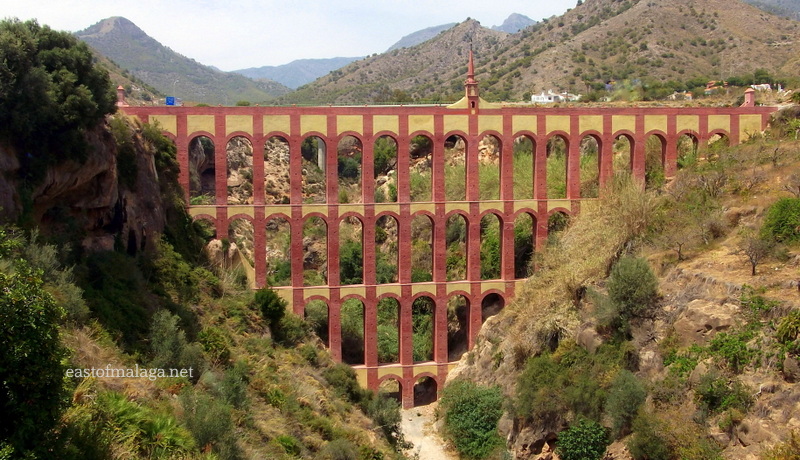
Eagle Aqueduct, Maro, Spain

The Eagle Aqueduct (El Puente del Águila) was built in the 19th century as a means of supplying water to the San Joaquín sugar factory on the outskirts of the town of Nerja.

Damaged during the Spanish Civil War, but recently restored, the Eagle Aqueduct comprises four storeys of superimposed brick arcades with 37 arches.   Soaring high above the spire at the central point of the structure is a weather vane in the shape of a double-headed eagle, from which the aqueduct takes its name.  The structure is 40 metres tall and 90 metres wide, with it’s design being typical of the period of construction, when the Mudéjar-style was very popular.

Situated on the Barranco de la Coladilla and spanning a ravine close to the Nerja Caves and the village of Maro, the aqueduct is visible from the old N340 coast road linking Nerja with Maro.   With a backdrop of the Sierra Almijara, it´s easy to see why this is one of the most photographed images of the local area.   There is a lay-by at the side of the road where you can leave the car to get a good view or to take photographs of the monument.  The area surrounding the aqueduct is public land and free to visit.

Strangely, the facade visible from the viewpoint is the rear of the construction, as the aqueduct faces north.   The Eagle Aqueduct was NOT built by the Romans, as many believe, though the remains of a Roman bridge and the old Roman road to Malaca (Málaga), were unearthed nearby.

Despite the closure of the San Joaquín sugar mill many years ago, the aqueduct continues to be used for the irrigation of local farmland.

Related articles:

Sweet memories: San Joaquín sugar mill

La Viñuela reservoir: Water levels

Travel theme: Architecture

Should Seville’s barefoot nuns have faith in my cake-baking skills?

Just out of the oven

When I was in New Zealand earlier this year, I stayed with a lovely lady called Val, who introduced me to Herman the German Friendship cake.  Val was only part way through the 10-day cycle of making the cake, so I wasn’t able to join in with the fun.  Besides which, I was travelling at the time, so it wasn’t very convenient.

Herman the German is a sourdough cake, often received from a friend as a “starter mix” and which sits on your kitchen counter for ten days, bubbling away, covered with a tea towel.  Along with your starter mix, you also receive written instructions on how to proceed.  On the tenth day, you divide the mixture to share with your friends, and bake your cake.

To be honest, since returning home to Spain from New Zealand, I’d forgotten all about Herman.

A few weeks ago, Sue, a FB friend and fellow expat blogger from Extremadura in Spain, asked if anyone was interested in sharing some of her starter dough for Herman’s Spanish equivalent: Bizcocho de las Carmelitas Descalzas de Sevilla (The Barefoot Carmelite nuns of Seville cake).  I should imagine you were wondering where the nuns came into it!

Anyway, how could I refuse?

All we had to figure out now was how she would get the starter mix to me when we live about 500 kilometres apart!

Fate stepped in – in the form of The Open-Air Theatre Project, a small, rural community from the Alpujarra mountains in southern Spain with their dream of building an open-air theatre.  To cut a long story short, Sue was on her way to meet up with the group, and she kindly diverted from her route to deliver my starter cake-mix, together with a sheet of instructions in Spanish (of course).

She also brought me five jars of the most delicious home-made plum, cherry, fig and loquat jam.  YUMMY!

How lucky am I?

As soon as I got home from meeting Sue, I tipped the bubbling dough mix into a large pot bowl, covered it with a tea towel and, over the next ten days, followed the written instructions to the letter – sometimes adding ingredients, often doing nothing.

Today is the tenth day – so, this morning I set about dividing the mixture into four, in order to be able to give away three “starter mix” portions to friends and neighbours, added the extra ingredients and made my cake!

If you want to have a try yourself, you can get the recipe for Herman the German cake by CLICKING HERE.  Don’t worry if you don’t have any friends anyone to give you the starter mix.  You can always start the cake off, yourself, but I really liked the idea of the sharing bit.  If you live near me and would like one of my starter kits, let me know!

Herman’s Spanish sister cake can be found by Googling “Bizcocho de las Carmelitas Descalzas de Sevilla”, choose one of the links and click on “translate this page” and Bob’s your Uncle – so to speak!

MY TOP TIP: After cooking for 45 minutes, take the cake out of the oven, cover with foil to prevent the top from burning, and pop back into the oven for a further 15 – 20 minutes to make sure the middle is cooked well enough.

So – should Seville’s barefoot nuns have faith in my cake-baking skills?  

I think so – but I’d love to know what you think!

Ermita de la Candelaria, Colmenar

Last summer, I was invited by another expat blogger to join her for a walking tour around her adopted home village of Colmenar.

Set in the heart of the Montes de Mâlaga, a range of mountains close to Málaga city,  Colmenar gets it’s name from the Spanish word for the bee hives (las colmenas de abejas) that were the basis of the local economy for a long time.  Indeed, Colmenar boasts a museum dedicated entirely to honey (Casa Museo de la Miel),  although for some strange reason the museum was closed when we visited.

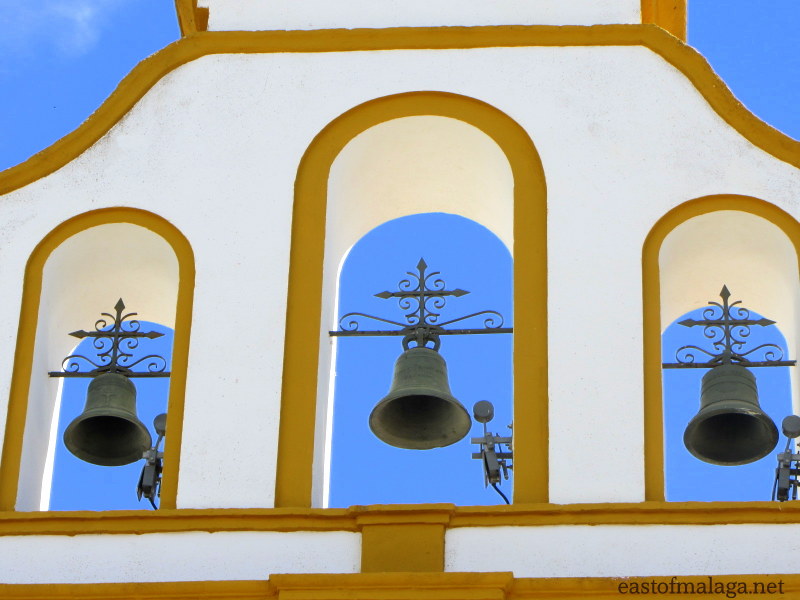
Ermita de la Candelaria, Colmenar, Spain

At the highest point of the village stands the Chapel of Our Lady of Candelaria.  The Virgin of Candelaria is the patron saint of Colmenar, as well as the Spanish-owned Canary Islands, and the chapel was built in gratitude for the lives of Canarian sailors spared during a fierce storm off the Málaga coast, during the 17th century.

Ermita de la Candelaria, Colmenar, Spain

This post is my response to the Weekly Photo Challenge: One Shot, Two Ways

Related articles:

The Bullfighters’ Chapel, Ronda

Triana Bridge, Seville

Weekly Photo Challenge: Fleeting

The Bullfighters’ Chapel, Ronda

Bullfighters' Chapel, Ronda, SpainHere’s my interpretation of this week’s WordPress Photo Challenge: Foreshadow, which is a verb meaning  to act as a warning or sign of indication of a future event”.  


Whilst you’re here, you might like to have a look around:

Riddle Me This: The Mysterious Case of the Disappearing Statues

Photos I love – and why!

Patatas a lo pobre: Poor man´s potatoes

CBBH Photo Challenge: Ancient and Modern

Believe it or not, it’s one year to the day since I published my first CBBH Photo Challenge.  How time flies when you are taking photographs!

Anyway, for this month’s challenge, if I were to I say “Ancient and Modern” – what would you think of?  Would it be hymns, languages, history, art, the Olympics or maybe architecture?  Within one photograph, I want you to show me your interpretation of Ancient and Modern.

Don’t forget that the CBBH Photo Challenge is a little different from some other challenges, in two ways.  First, it’s only once a month – giving you lots of time to consider your entry before the end of the calendar month.  Second, and most important, this is a BLOG HOP (after all, it is the CBBH – Conejo Blanco Blog Hop, meaning white rabbit in Spanish), so DON’T FORGET that in your post you need to add links to two blogs that you have visited and commented on, during the past month.  That way, when we visit each other, we can HOP OVER to your links, connect with others and share a little blog love around!
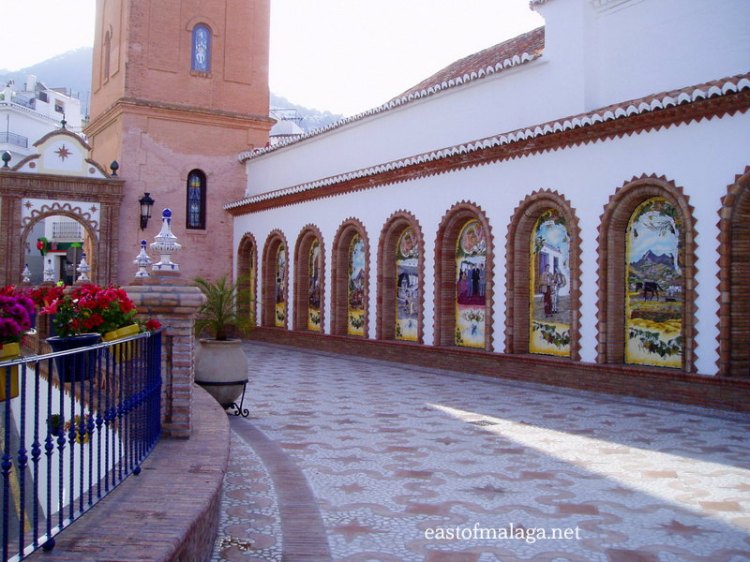
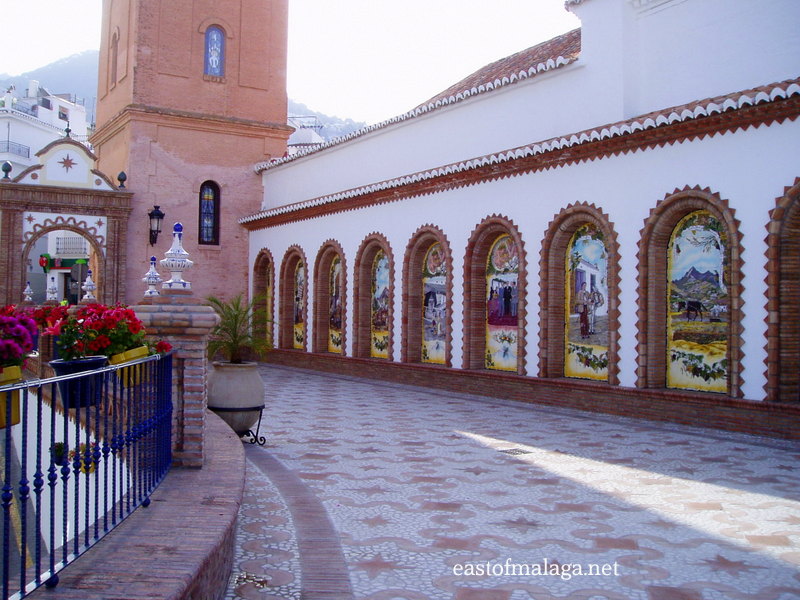
El paseo de las traditions, Competa, Spain

I’ve blogged before about El Paseo de las Tradiciones in the white village of Cómpeta, but it’s a perfect example of the beautiful modern ceramic murals celebrating the lives of generations of the working people of the village, annexed to the 500 year old Church of Our Lady of the Assumption (La Iglesia de Nuestra Señora de la Asunción).
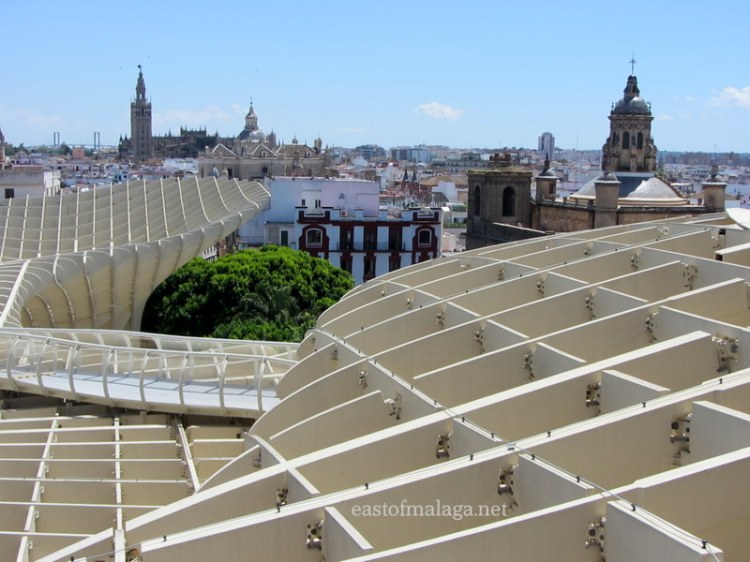
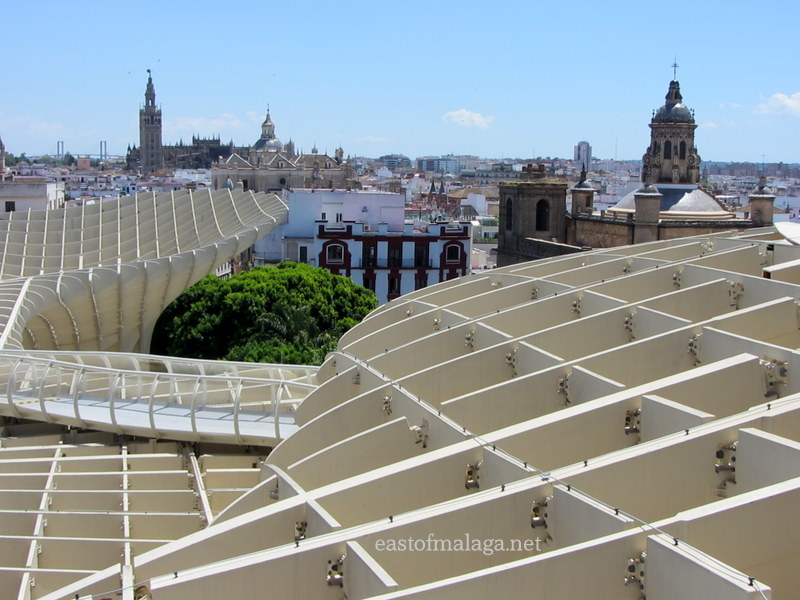
Giralda, Sevilla cathedral and setas

Here you can see the 15th century Cathedral  in Seville, with its famous Giralda Bell Tower, as viewed from the very modern Metropol Parasol.  More popularly known as Las Setas (the mushrooms), this huge wooden structure was built between 2005 and 2011 in the heart of the city.  It seems people either love it, or hate it.  I LOVE it! 
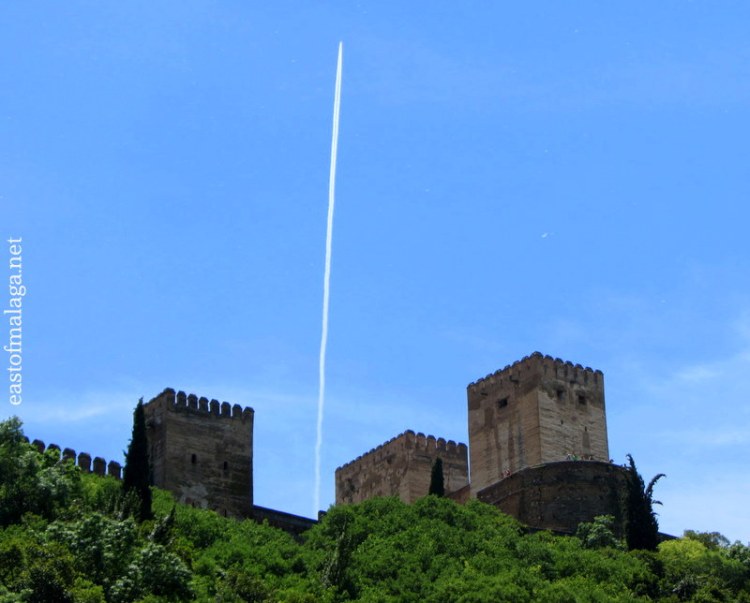
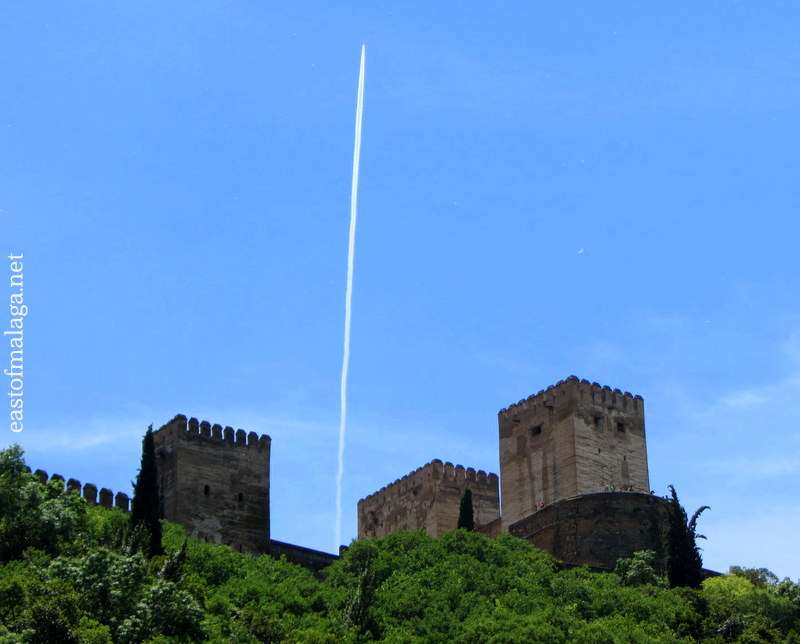
Jet trail over the Alhambra, Granada, Spain

Back in May, I visited the city of Granada and, whilst we were having lunch in one of the wisteria-covered restaurants in Paseo de los Tristes, in the shadow of the Alhambra, I grabbed my camera when I saw a jet appear above the turrets of the ancient monument.  It was this shot that first gave me the idea of this month’s theme.
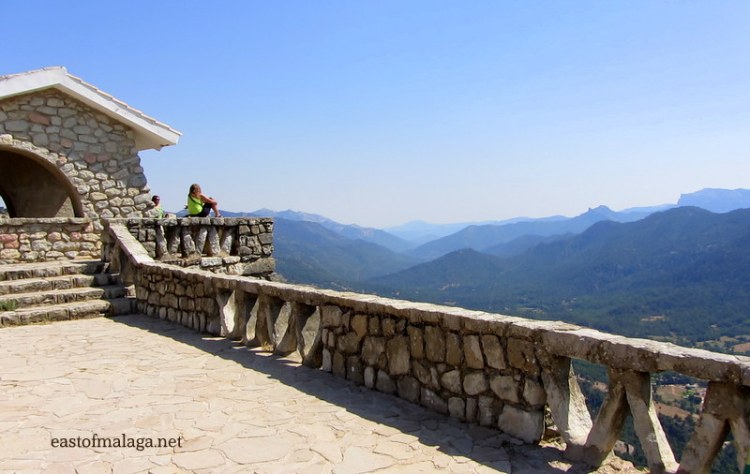
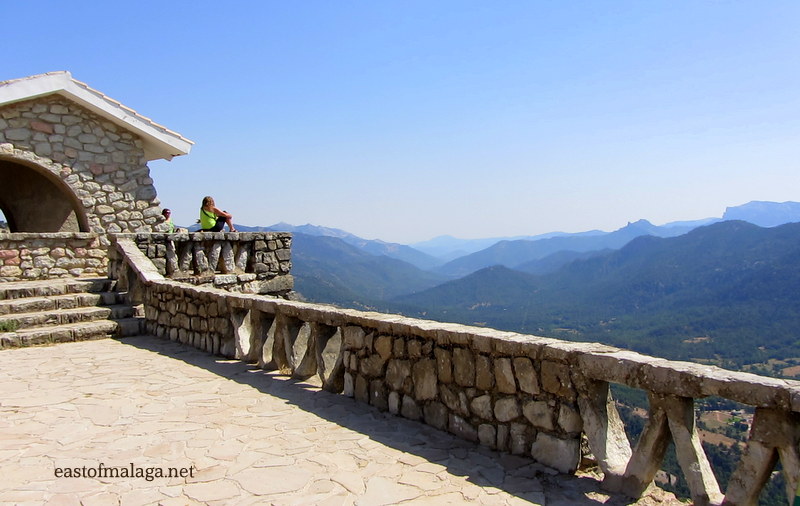
Mirador in Cazorla National Park, Spain

And finally, this modern stone architectural structure (known in Spain as a mirador – or look-out point) is sited to take advantage of a the scenic view over the UNESCO World Heritage Cazorla National Park in Jaén province.  The Parque Natural de las Sierras de Cazorla, Segura and La Villas, to give its complete name, is Spain’s largest national park and the second largest in Europe.  It’s marvellous to just gaze out and wonder at who has looked across these same mountains in days gone by.

My Featured Blog Links for this month:

**  Spain for pleasure follows the adventures, misadventures and quiet musings of an earnest (British) expat living “la vida loca” in Granada.  I was amazed (and envious) to read Josh’s tale of when he played a part in the best EVER water-fight in Lanjaron, but one of my favourite posts is hisPiste 2 Playa Projectwhen he took the ultimate day trip from Granada to ski in the morning in the Sierra Nevada mountains and sunbathe on a Mediterranean beach in the afternoon.  Quite why he had to do it dressed in a giraffe onesie (especially on a nudist beach) is beyond me – but that’s Josh for you!!  When he’s not having such interesting adventures, Josh earns his keep teaching English as a foreign language, so if this is something you might be interested in, head over and take a look at his blog.  You’re sure to find something of interest –  I always do!

**  con jamón spain are a couple of Brits who have recently moved from London, England to live in Órgiva, in the popular Alpujarras region of Andalucía, for one year.   Set in the foothills of the Sierra Nevada mountains, Órgiva is situated an hour and three quarters’ drive east from Málaga, and 45 minutes south from the city of Granada. Con jamon spain are a couple of carnivores who have totally changed how they live over the past few weeks, and have discovered how to make delicious vegetarian pizzas, using fresh produce bought from the local Thursday market.   Their regular posts make me want to jump in the car and visit Órgiva, right away – especially if it involves watching goats eating sugar cane, right at the end of their road!   I’d love you to pop over, say “HOLA” to them and follow their adventures – I’m sure you’ll have a great time 🙂

CBBH Blog Hop

So that´s the CBBH Photo Challenge for August, folks!

Remember, all you have to do is post your entry by the end of the month, tag your entry ‘CBBH Photo Challenge’,  link back to this blog and, most importantlydon´t forget to add links to any two blogs that you´ve commented on during the past month, so that we can all HOP OVER and have a look.  Make sure you FOLLOW THIS BLOG so you don´t miss next month´s exciting challenge!

For more information on how the CBBH Photo Challenge works click here.

I hope everyone taking part enjoys the exposure the CBBH Photo Challenge offers to featured blogs and, who knows, you may end up finding a new favourite!  I´m looking forward to seeing your interpretations.

[CBBH logo Image credit: (cc) Mostly Dans]