Cost of Living: East of Málaga, Spain – April 2013

Shopping trolley in Lidl supermarket, Spain

Edited to add: When you’ve read this article, make sure you also look at my up-to-date Cost of Living in Spain: (Málaga edition) for July 2015, now available HERE.

Whenever I travel, I´m always interested to know how much things cost and, every day, people from around the world find my blog by searching for the cost of living in Spain.

Back in August and November 2012, I posted some receipts for groceries I had bought here in southern Spain, which proved to be very popular articles. 

But I wanted to do something a bit different, so I decided that rather than post the prices of random items of shopping that you may, or may not be interested in, I would come up with a list of standard grocery items, which I will update the prices of, two or three times a year.   This list can easily be changed, so if there are any other basic items you would like me to include, please let me know in the comments section, below.  This way, if anyone else wants to do something similar, we can have a direct comparison between countries.

To make such direct comparison simple, I have once again used the Spanish Supermarket – Mercadona in Torrox Costa.

This month’s prices are a bit of a mixed bag, with some prices remaining stable, yet others increasing or decreasing.

So, here´s the Standard Grocery List I used previously.  The first prices are as they were in August 2012 – the second prices (in bold) are as they were last November, with this month’s prices in RED alongside.

Standard Grocery List

Milk (semi –skimmed UHT, own brand), 1 litre  0.54 €      0.54 €     0.53 €

Loaf  (white, baguette 250g)   0.45 €    0.45 €     0.45 €

Eggs (12, own brand caged, medium) 1.35  €     1.35  €     1.35  €

Chicken breasts (1kg, boneless, skinless)  5.50 €     5.50 €     5.80 €

Apples (1kg, green, Golden Delicious) 1.35 €     1.00 €     1.65 €

Oranges (1kg) 1.39 €     0.89 €    0.79 €

Bananas (1kg) 1.25 €    1.15 €     1.35 €

Potatoes (1kg) 0.92 €    0.89 €      0.96 €

Lettuce (1 head, Iceberg) 0.85 €    0.85 €    0.85 €

Water (1.5 litre bottle) 0.45 €    0.36 €     0.42 € (for a 2 litre bottle)

Domestic Beer (1 litre bottle, Cruzcampo) 1.29 €    1.20 €    1.20 €

Fish  (1kg Salmon steaks) 8.75 €    8.75 €      9.50 €

Toilet rolls (pack of 6, own brand) 1.95 €    1.95 €    1.95 €

Washing powder (Box, 35 washes, Elena brand) 5.94 €   4.87 €     4.87 €

Olive oil (1 litre, extra virgin, own brand) 3€    2.75 €   (5 litres 12.99€)    2.99 €   (5 litres 13.99 €)

Coca-Cola (1.5 litre) 1.09 €    1.00 €    1.00 €

Butter (250g, own brand) 0.98 €    0.98 €     0.98 €

Sugar (1kg, white) 0.95 €    0.93 €    0.93 €

The following two items were only introduced in November’s grocery list:

Coffee (ground, 250g, Santa Cristina)  1.79 €      1.89 €

Beef mince (Store brand, pre-packed, 1kg)   5.43 €    3.80 € (for 700g)

New items added to the list:

Red Peppers (1kg, loose)  2.29 €

Green pointed “Italian” Peppers (1kg, loose)  1.99 €

Tomatoes  (1kg, loose)  1.19 €

Currency Conversion from XE €1 = 1.31   USD
0.85   GBP
1.24   AUD
1.33   CAD
1.53   NZD
11.66   ZAR
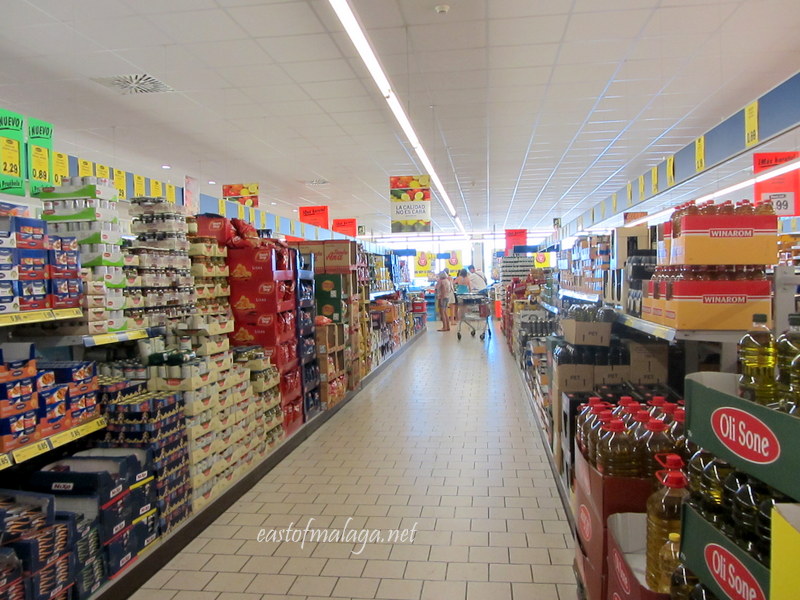
Inside of Lidl supermarket, Algorrobo, Spain

Other household expenses

Gas:  We don´t have mains gas here – we use bottles of butane gas.   In August, a 12.5kg bottle of Butane gas cost 16.45 € – falling to 16.10 € in November.  They are now 17.15 € .   One bottle used to last (on average) 21 days (for two people… though around 4 weeks in summer) for all hot water, showers and cooking on a gas hob.  Last September we had a new gas water heater fitted and, even though it has a larger capacity for water heating than the previous one, it appears to use significantly less gas.  It´s early days yet, but the first bottle lasted five weeks (rather than three weeks).  I´ll keep my eye on how that goes.

Electricity:  For a 3 bedroom/2 bathroom detached house in the countryside with a swimming pool, we pay an average of 100 € per month.   The cost of consumption for us is slightly lower in winter with heating/lighting, as opposed to air conditioning/lighting/swimming pool pump running for 8 hours a day, in the summer months.

Water: We are not connected to mains water, so when we bought our house part of the purchase cost was for a share in a local water company.  We have a 14,000 litre water deposit in which to store our house water.  Our water share gives us an allowance of up to 17,500 litres of water each week at reduced cost, though if we use more than this, the price rises steeply.  Needless to say, we don´t use this amount of water, even allowing for swimming pool top-ups and garden irrigation.  The water company, Patamalara, doesn´t always sent out their bills regularly and much of the cost appears to depend on the amount of repairs that have been undertaken on the system, but over the past twelve months our annual water bill has amounted to 92 €.
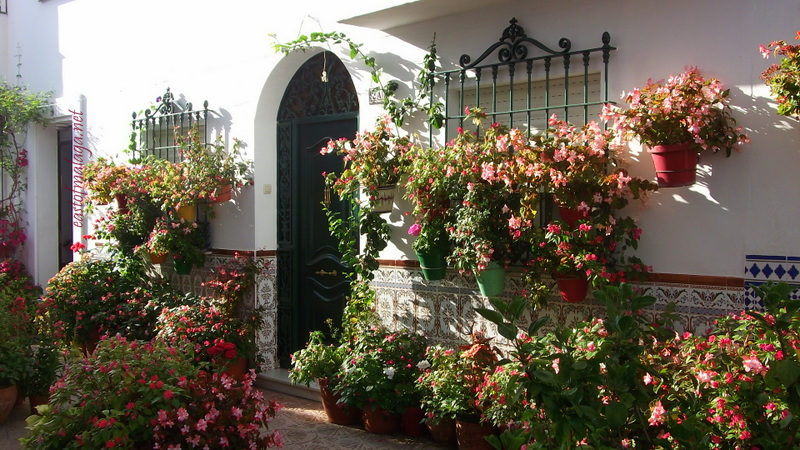
Village house in Torrox pueblo, Spain

IBI – Council Tax:   Paid yearly to the local council.  Last year´s bill was 338€

Internet:  29 € per month with unlimited downloads (within reason).  Speeds up to 3 Mbps

Petrol/Gasoline:  In August 1 litre of 95 octane petrol was 1.49 €.   In November 2012 the price had fallen to 1.40 €.   The price is now 1.48 €

Vehicle excise duty:  We have a Peugot 307 and pay 51 € per year.

Eating out:  Glass of wine or beer, including one tapa is 1 € – 1.50 €.  Menu of the day (three course meal, served at lunchtime, including bread and one glass of beer, wine or a bottle of water) 8 – 10 €

How do prices compare where you live? 

You might also enjoy these articles:

Menú del Día: Great food at a budget price

Cost of Living: East of Málaga, Spain  –  August 2012

Cost of Living: East of Málaga, Spain – November 2012

Goats on the road: I kid you not

East of Málaga: The Weather in Winter

Statistics can give a general indication but don’t show detailed variation.  Indeed, one of the things that differentiate the winters (or any of the other seasons, for that matter) from northern European weather is that there is less variation.  Although we can have severe rainy periods at this time of year, most of the days in between are remarkably steady. This is due to the high pressure systems that keep storms away from us, in the main.

December is generally a sunny month and this winter it has been exceptionally so, with hardly any cloudy days and afternoon temperatures often well into the 20 degrees Celcius – so typical of a lovely June afternoon in England.

Another very important factor around the shortest day in late December is that unlike English afternoons, when darkness descends by 4pm, here in southern Spain it doesn’t go dark until around 6.30pm – a wonderful bonus!

January, and especially February can seem a little harsh sometimes, especially when we know of the prolonged hot, dry weather to come later in the year.  But it is all relative. Yes, we can get stormy weather during the first two months of the year and occasionally if we have two or three dark and windy days together, we begin to doubt the sun will return.  Never fear. Very soon the sunshine does come back and we can usually count on temperatures around 18C each afternoon.

Frost is virtually unknown with the very lowest overnight temperatures around 3C, though normally it does not fall below 7 or 8C.   After rainy days at this time of year, we may see a dusting of snow on the top of nearby Monte Maroma, but that is at a height of 2069 metres.

It has to be said, though, that a few times each winter there will be very strong winds often coming down from the north, swirling over the mountain peaks and these can be unpleasant indeed.

All in all though, winters here, east of Málaga, are comparable to good spring weather in northern Europe and, as we are situated about 18 degrees of latitude further south of much of northern Europe, the sun is that same degree of angle higher in the sky, meaning that there is genuine warmth in its rays.

Life continues outdoors during the majority of winter days, and long, cold, rainy periods are virtually unknown.

Whilst you´re here, why not have a look at:

East of Málaga: The Weather in Summer

Photographs I love …. and why!

Spanish football: Estadio La Roselada, home of Málaga CF

Málaga Club de Fútbol is based at Estadio La Roselada in Málaga. The team currently plays in Spain’s top football league, known as La Liga.

If you are staying in Málaga Province and you love football, why not look out for match during your stay?

[Image credit: (cc) Miwipedia]

The 29,000-capacity La Rosaleda Stadium (The Rose Garden) is a two-tiered bowl with a great atmosphere on match day.   Located to the north of the city, the stadium is well-served by public transport.

If you’re travelling by car, you should be able to find a free parking space in La Rosaleda Shopping Centre Car Park – a couple of hundred metres away.   Failing that, there is usually plenty of space to park on local streets.

For most games, getting seats on match day is generally fairly easy – the obvious exceptions being the FC Barcelona and Real Madrid games.

When considering the list of home fixtures and ticket availability and pricing, it’s worth bearing in mind that the Spanish Football Association only release information regarding which games are to be televised one week before the fixture.  So when you are planning your visit, you need to ensure that you are in  Málaga between the Saturday afternoon and the Monday morning for your chosen weekend.  Confirmed kick-off times first appear at the Spanish FA Website.

If you can’t get to the match, you can always watch live coverage of most English and Spanish football matches in many bars around the Axarquía.

Have you ever been to a football match in Spain?  Who did you support?


You might also enjoy:

CBBH Photo Challenge: Reflection

Spanish Football:  It doesn’t get any bigger than this!

The heart of Cómpeta: El Paseo de las Tradiciones


Flowering snapshot of a January day around the garden


Following on from my previous post showing you the beautiful almond blossom, I thought you might enjoy a flavour of the delights of a day in January, east of Màlaga – garden style!

What does your garden look like on a January day?

You might also enjoy:

Wildflowers of Andalucía: Bloomin´ lovely!

The Buddhist Stupa of the Eastern Costa del Sol

A Celebration of Fried Breadcrumbs

AVE: Taking the Fast Track from Málaga to Madrid

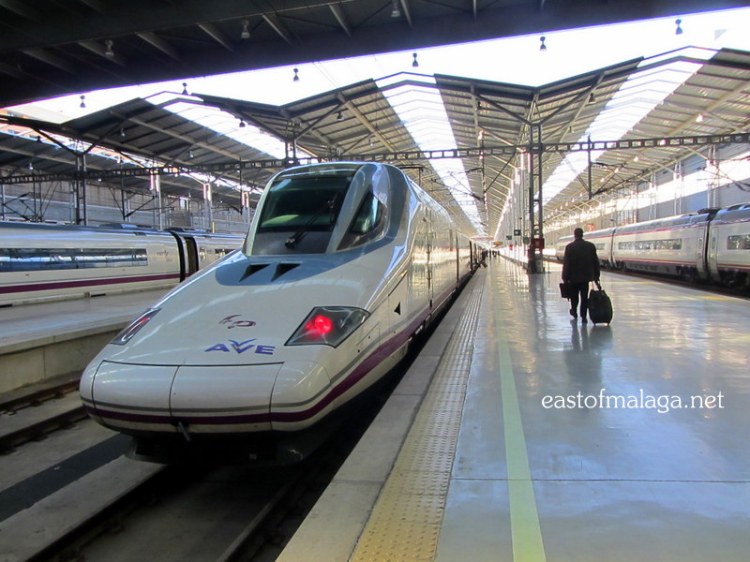
AVE train waiting at Malaga station

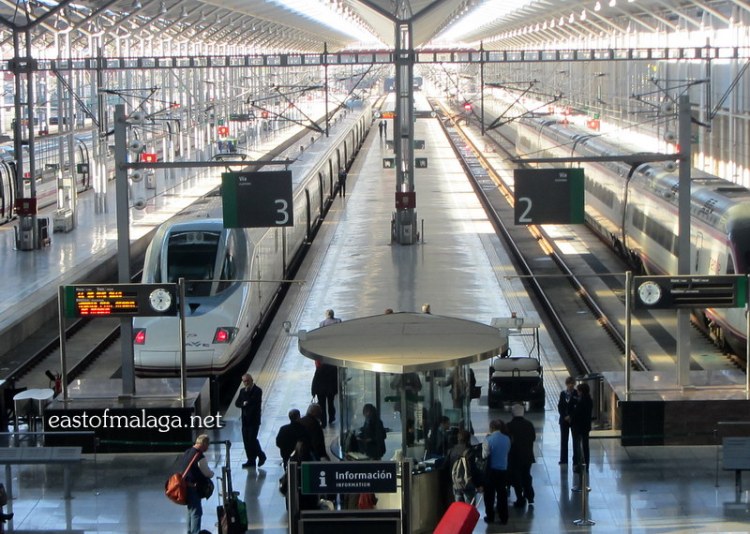
AVE train waiting at Platform 3, Malaga railway station

Whenever we need to travel to Madrid, it can sometimes be a bit of a bind having to go by road.   Even though the roads in Spain are usually very good, with light traffic compared to the UK, there is always the problem of what to do with the car at the other end.  To be honest, flights are not that much quicker once you factor in all the waiting around and security checks.  So on a recent trip to Madrid, we decided to let the train take the strain.

Our journey from Málaga to Madrid was one we had been particularly looking forward to, as we had managed to secure some bargain-priced First Class tickets for the AVE train (the initials stand for Alta Velocidad Española, and AVE is also the Spanish word for bird).  

High-speed AVE trains link major cities in Spain at up to 187mph and, if you book in advance online, you can find some great cheap fares at the official Spanish rail website, RENFE.  We found one-way First Class tickets for 53€ each, while on the same train the Tourist Class Economy tickets were selling for 89€.  I always knew it paid to travel in style!

Club lounge at Malaga Railway Station, Spain

Inside the Club Lounge at Malaga Railway Station

Club lounge at Malaga Railway Station, Spain

Drinks available in the Club lounge at Malaga Railway Station.

On arrival at María Zambrano station in Málaga we were afforded the luxury of the Club Lounge, where we could help ourselves to free hot and cold drinks, snacks, watch TV, read a selection of newspapers, catch up with some work, or just relax in the comfy chairs whilst awaiting the departure of our train.   The 11.05am AVE train, left promptly on time, heading for Madrid’s Puerta de Atocha station, a distance of 512 kilometres.

Spanish AVE train waiting at Malaga Railway Station, Spain

The sleek, white AVE high-speed train waits at the platform for our departure.

The sleek, white, Spanish-built AVE train sports the kind of futuristic nose more familiar on Japan’s Bullet Trains.  With a journey time of 2 hours 35 minutes, no lengthy security checks or waiting at airport gates to contend with, and ample leg-room with comfortable seating, the AVE train is a vastly superior experience to any budget airlines over the same route in terms of price, time and comfort.

First Class coach on the AVE train, Spain

Inside the First Class coach

Drinks and sandwiches on the AVE train

Drinks and sandwiches along the way.

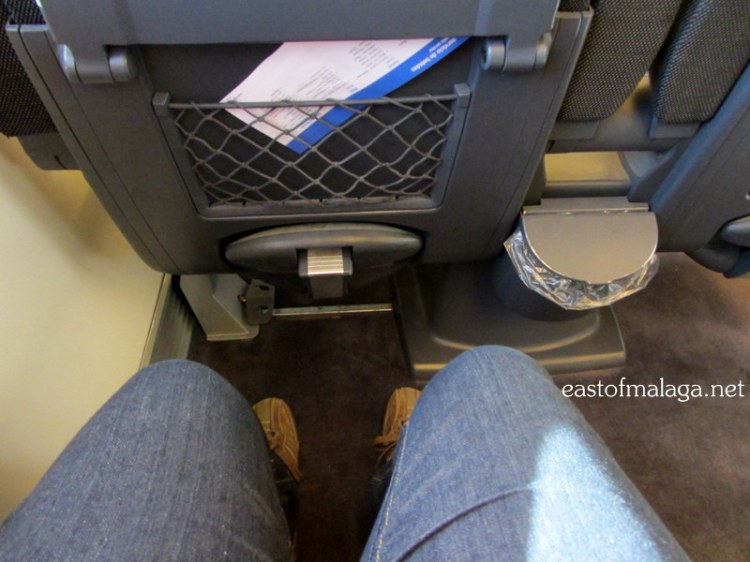
Comfy seats and lots of leg-room on the AVE train in Spain

Comfy seats and lots of leg-room.

We were offered a welcome drink of our choice as soon as the train pulled out of the station, and it wasn’t long before we were watching thousands of olive trees flash by.  Once the one brief stop at Córdoba was behind us, it was time for the attendants to offer hot towels and yet more drinks and sandwiches. Eat your heart out British Rail!

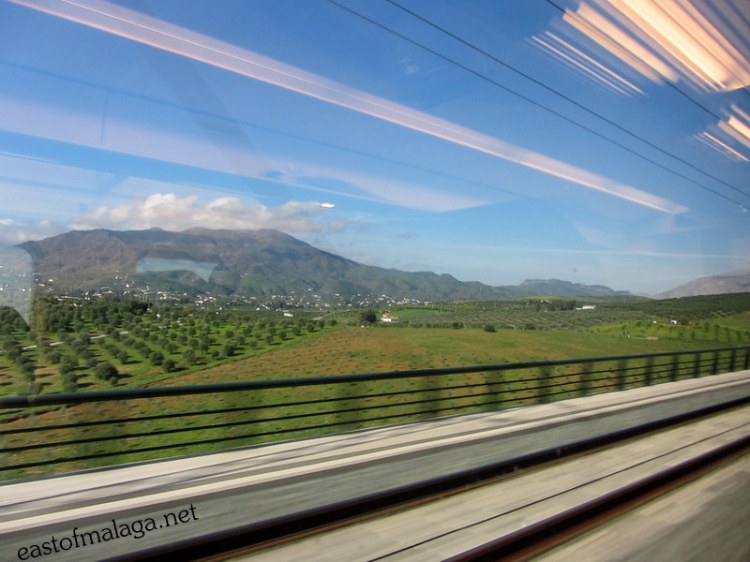
The Spanish countryside flashes by as we travel on the AVE train

The Spanish countryside flashes by as we travel at up to 301kms/hour on the AVE train.

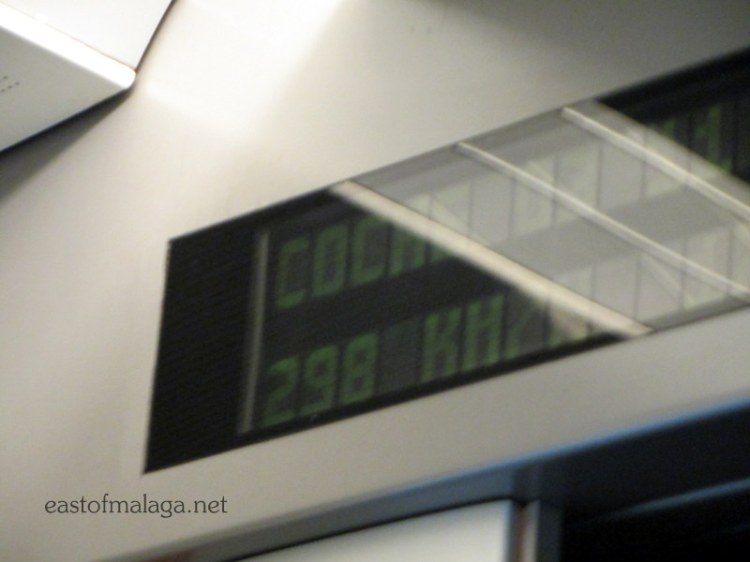
298 kms per hour on the high speed AVE train in Spain

The indicator shows 298 kms per hour on the high speed AVE train but we later reached 301 kms per hour!

Blasting our way through the Spanish countryside, we watched the on-board speed indicators at either end of the carriage climb ever higher, until we finally reached the maximum 301 kms per hour – 187 mph.   Rail company Renfe is so confident that its trains will reach their destination on time, that it promises to refund the full ticket price on any journey that is more than five minutes late.  How about that?  Eat your heart out again, British Rail!

Needless to say, after a relaxing journey, we arrived in Madrid refreshed and just ahead of schedule.

For anyone wanting to make the onward journey to Madrid’s Barajas Airport, I would highly recommend the Airport Express shuttle bus rather than the much more confusing Metro train (which involves three changes and is not good if you are lugging heavy suitcases with you).  The Airport Express Shuttle Bus starts its journey right outside Atocha railway station, and will have you at the airport within 35 minutes for only 5€.  Click on the link to MadridMan’s excellent information about times of buses etc, with very helpful photographs to help you identify the Airport Express shuttle bus.

What’s your favourite method of transport?  How would you travel if money or time was of no object?

You might also like to have a look at these articles:

Cost of Living: East of Málaga, Spain – November 2012

East of Málaga: Following in the footsteps around Comares

Frigiliana: Photographs I love – and why!