One trip EVERY month: The Dolmens of Antequera

Antequera, Spain
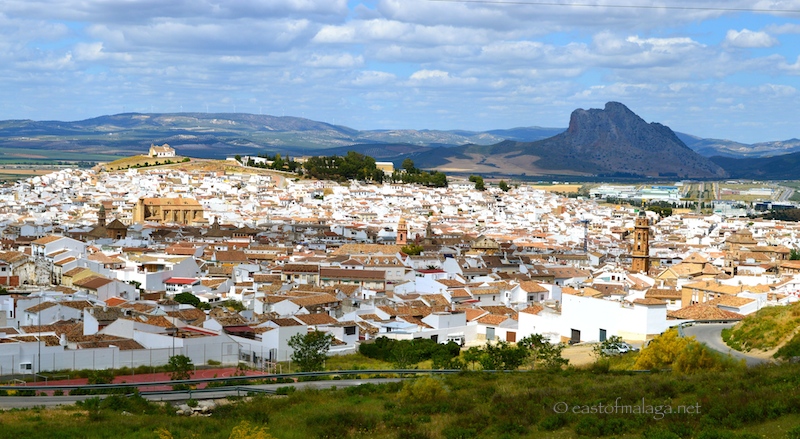
The city of Antequera is known as “the heart of Andalucía” (el corazón de Andalucía) due to its central location between the major cities of Seville, Córdoba, Granada and, of course, Málaga, which lies only 45 kms to the south.

Because of the sedimentary basin forming extensive plains that begin where the mountains of Málaga dramatically end, Antequera is a bustling, agricultural centre where farmers from the surrounding fertile land in the Guadalhorce Valley, go to stock up on everything from seeds to tractor tyres.

The city owes its main origins to the Romans, who named it Antikaria, meaning “the Ancient City”, because they recognised several pre-historic sites located in the town, which indicated that the area had been previously inhabited.
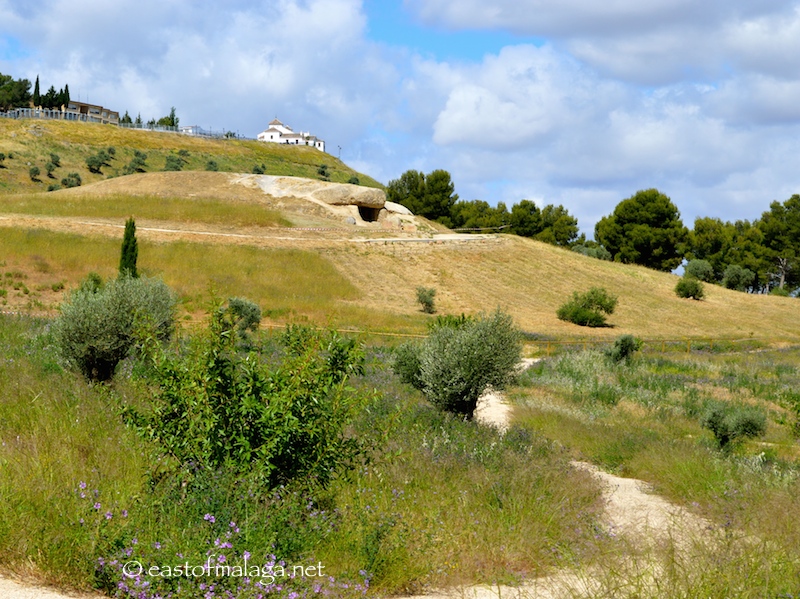
Menga Dolmen, Antequera, Spain

On the northern outskirts of the city there are two Bronze Age burial mounds (barrows or dolmens), the Dólmen de Menga and the Dólmen de Viera, dating from the 3rd millennium BC.  They are the largest such structures in Europe.  The larger one, Dólmen de Menga, is twenty-five meters in diameter and four meters high, and was built with thirty-two megaliths (huge stones), the largest weighing about 180 tons.  After completion of the chamber (which probably served as a grave for the ruling families) and the path leading into the center, the stone structure was covered with earth and built up into the hill that can be seen today (Wikipedia: Antequera).
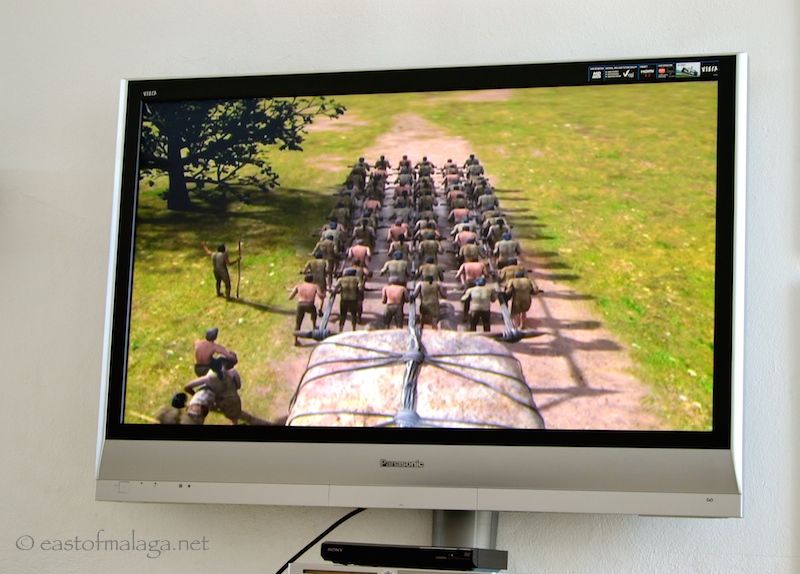
Animated film at theDolmens, Antequera

When we arrived at the visitor centre last Thursday, there were two coach loads of Spanish school children outside, waiting to see the 10 minute animated film showing how the dolmens were probably constructed.  We nipped in ahead of them to watch the film being shown in French, which was easy to follow, but it can also shown in English on request.

We then followed the newly-laid path from the Visitor Centre to the Dólmen de Menga.

Menga Dolmen, Antequera, Spain

The entrance to the grandest of these megalithic monuments, the Dólmen de Menga, faces the prominent rock formation known as Peña de los Enamorados, (“The Lovers’ Rock”), which you might remember I wrote about last year. 

View from the Menga Dolmen, Antequera, Spain

Sleeping Giant, Antequera, Spain

 It is clearly no accident that if you stand just inside the entrance to the Menga dolmen you can see the head of the Sleeping Giant perfectly framed in the portal, suggesting that the rock may have had some cultural, ritual or religious significance.

Indeed, during the summer solstice, as the sun rises behind the mountain, it penetrates right into the mouth of the burial chamber.

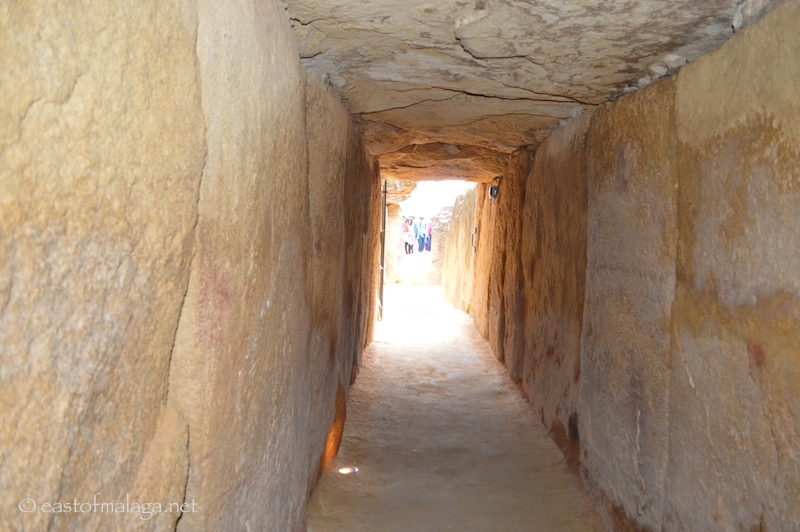
The Dólmen de Viera is a corridor tomb with better-cut stones, consisting of a long narrow passage, barely two metres in height, leading to a smaller burial chamber.  The Viera dolmen is not as impressive as the Menga dolmen, but still well-worth a look.
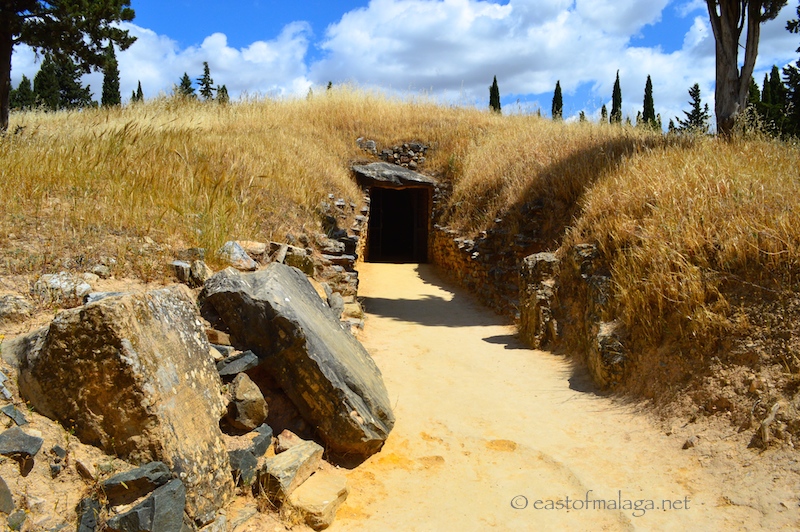
El Romeral Dolmen, Antequera, Spain

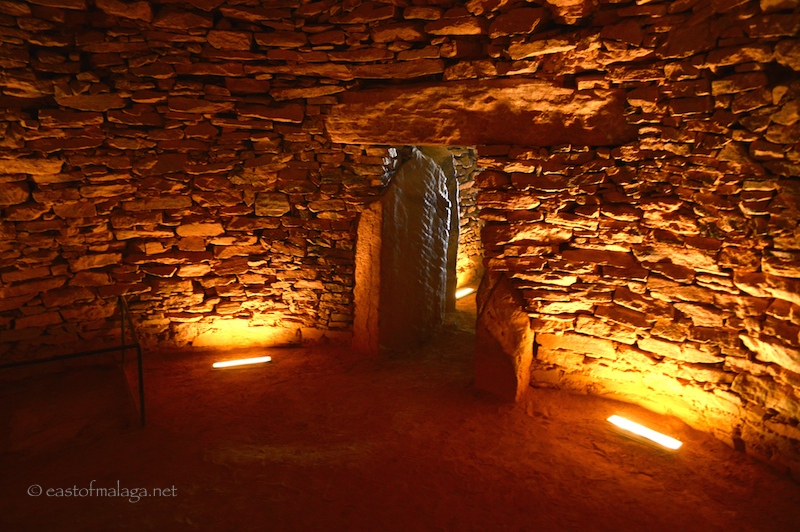
We had to jump back into the car and drive a further three kilometres to the third megalithic sepulchre, the Tholos of El Romeral, built five hundred years later than the other two dolmens.  In many ways, this was my favourite tomb and bears a striking resemblance to the tholos tombs built by the Minoans in Crete, also during the Bronze Age.

A large number of smaller stones were used in the construction of El Romeral dolmen which, unusually for this type of monument, faces west.

As with many Spanish monuments, the directional signage to the Dolmens sometimes leaves a little to be desired, but if you’re persistent you’ll find them once you’ve turned off the A45 from Málaga.

Entrance is free, with opening times being Tuesday-Saturday 9am – 6pm and Sunday 9.30am – 2.30pm.  Closed Monday.
One Trip EVERY Month Logo

This post is my contribution to the One Trip EVERY Month Challenge.

If you’d like to join me, here’s how:

  • Each month, visit somewhere and then write about your trip or describe it using photographs – whichever suits you best.
  • Don´t forget to title and tag your entry ’One Trip EVERY Month Challenge’, and link back to this page.
  • Display the Challenge logo on your post or in your sidebar.
  • HAVE FUN!

Are you ready to join me by taking ONE TRIP EVERY MONTH? What are you waiting for?

GO!

Cordoba’s Patio Festival 2014


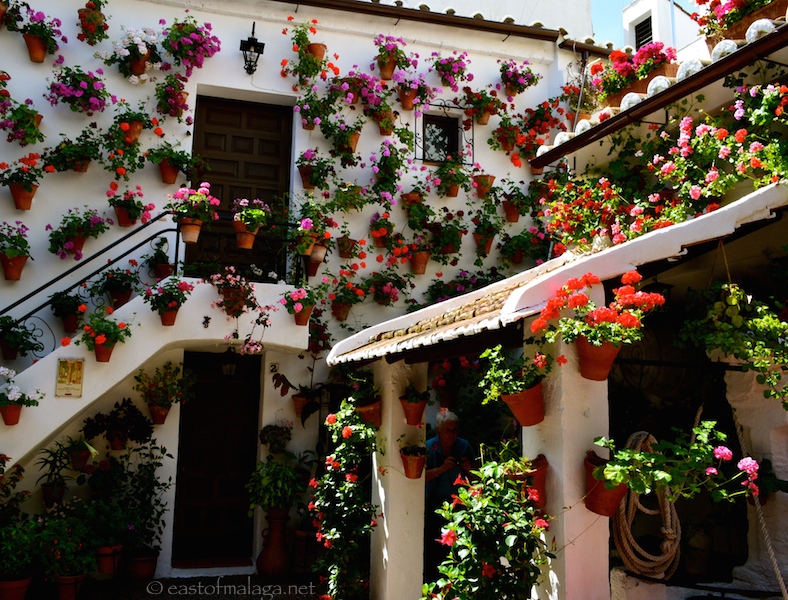
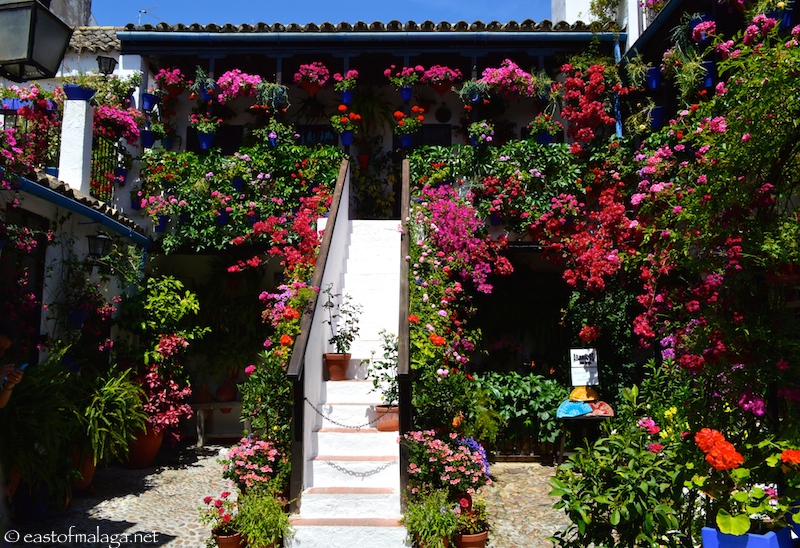
Patio Festival, Cordoba , Spain

Even though I live in Spain, where it was Mother’s Day last Sunday, I still celebrate the day at the end of March, at the time of Mother’s Day in England, because that’s where I’m from and my family live there.

But, I know that many of you are celebrating Mother’s Day today, so I’ve got a real treat for you.

This slideshow requires JavaScript.

Last week I visited Cordoba, one of my favourite cities in Spain, for the annual Patio Festival (La Fiesta de Los Patios de Cordoba).  

 The old part of the city consists of narrow cobble-stone streets with the houses white-washed to keep them cool during the very hot summers.  Many of these old houses or apartments are situated around a private, interior courtyard accessible only to residents.

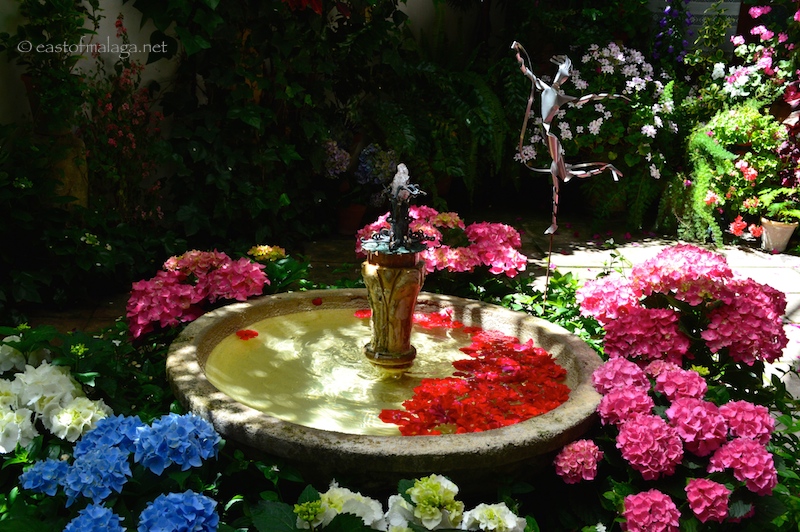
Patio Festival, Cordoba , Spain

The origin of these courtyards can be traced to Roman times, when the courtyard (known as an atrium) was a place where rainwater was collected.

Later, the Moors who dominated this area of Spain for so long, made the courtyard a much more social space.  They planted vines so that their branches could offer shade during the very hot summer months, and pretty water features and pots of flowers were added making the patios a place where neighbours could get together and enjoy the cooler temperatures.

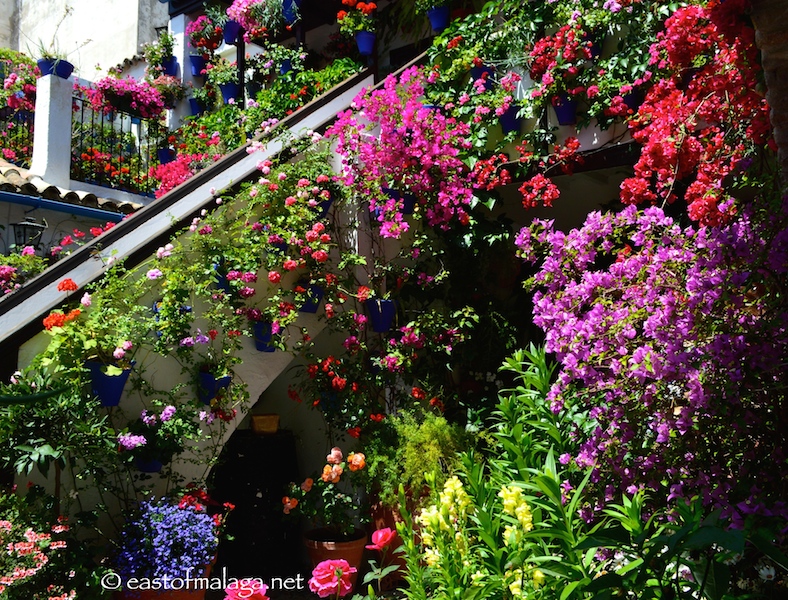
Patio Festival, Cordoba , Spain

Of course, these courtyards or patios form part of private houses, so are normally closed to the general public.   But, for two weeks in May each year, as families compete for the most beautiful patio in Cordoba, they are thrown open so that members of the public can visit each of these patios.

Patio Festival, Cordoba , Spain

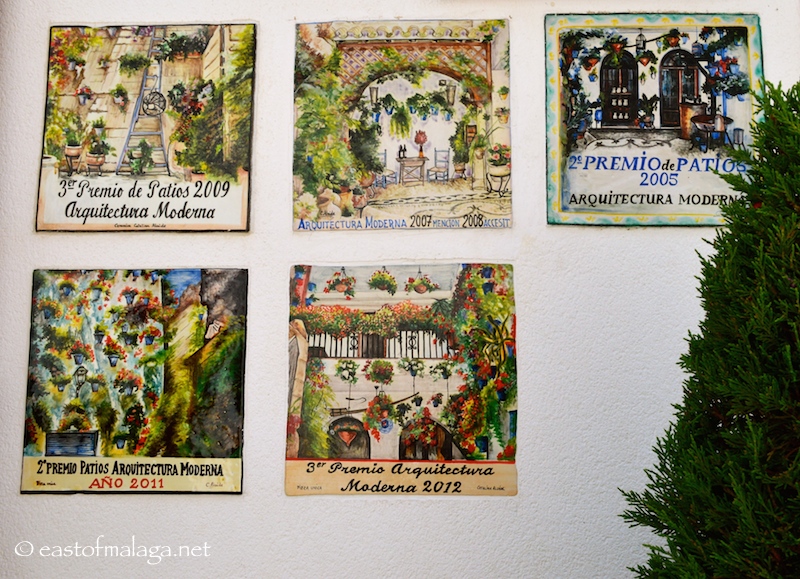
A few have plaques on the wall outside, announcing their previous successes in the Patio Festival, but all of the competing patios are identified by two little conifer trees in red pots outside the gate.

All, but one or two of the Patios are FREE to visit, though a small donation is appreciated (but not obligatory) as you leave.

Bear in mind that Los Patios de Cordoba is a very popular (and famous) Festival in Spain, with hoards of tourists – both international and local – descending on the city every day.  Weekends are especially busy, and a free ticketing system has now been established, to enable some semblance of order and safety when visiting the often tiny patios.  (See link below to get your free tickets).

Patio Festival, Cordoba , Spain

You can collect a map from the Tourist Office, on which six colour-coded routes to visit are identified, each with between 8-12 patios to visit.  (See link below to download a map).

The competing patios are open from 11am – 2pm and 6pm – 10pm each day from 5th – 18th May 2014.

How would you fancy watering all these pots?

Further information:

HISTORY OF THE PATIOS

PROGRAMME

DOWNLOAD A MAP OF THE ROUTES

FREE TICKETS


Following the tapas route around Torre del Mar

Ruta de la Tapa, Torre del Mar

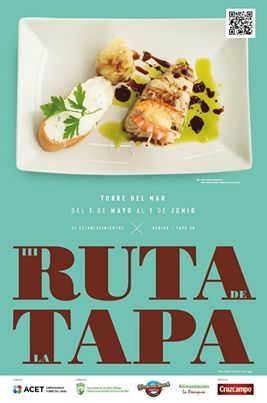
From 1st May until 1st June, Torre del Mar is hosting the third “La Ruta de la Tapa” (Tapas route) around the town.  With 24 establishments taking part, and a drink plus tapa for only 2 euros, it’s a great way of trying out some new places to eat.

Here’s how to join in the fun!

  • Choose one of the bars and restaurants taking part, and when you go in mention that you are taking part in La Ruta de la Tapa.  You will be served with a specially prepared, gourmet tapa and offered a choice of drink.
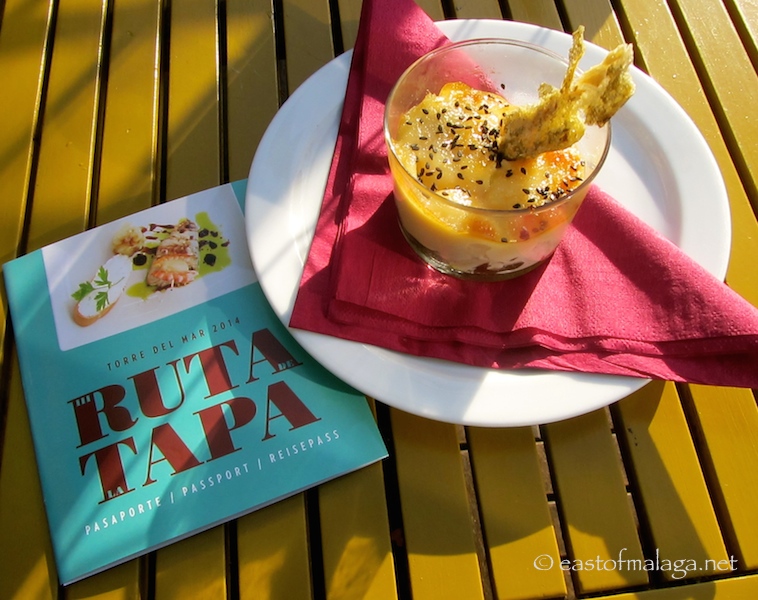
  • Ask for a Tapas Route Passport and have them stamp it.
  • Each establishment is numbered and shown on the map on the back of the Passport.   Follow the route around Torre del Mar.
  • Make sure to get a stamp in your Tapas passport for each new place you visit and eat one of the special tapa.
  • When you’ve visited all 24 establishments, hand in your completed and stamped passport for a chance to win 300 euros!

Here are some of the tasty (and not so tasty) tapas I’ve enjoyed so far this month:

Vintash - Ruta de la Tapa, Torre del Mar

This is “Bacalao en tres textures con muselina de alioli”  which is a cod-fish tapa from Vintash, Avda. Andalucia esquina con C/Bateria (and one of my favourites, so far!)

Las Yuccas, Ruta de la Tapa, Torre del Mar

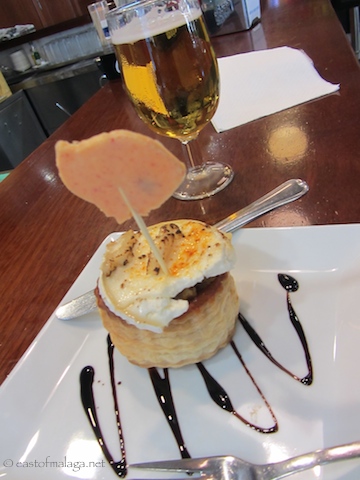
Next is “Volován con morcilla de Burgos, queso de cabra y piruleta de chocolate blanco con chorizo”,  a black pudding dish with a white chocolate lollipop from Las Yucas, Avda. Andalucia 64, dup. (Yes, another favourite).

Bar Centro - Ruta de la Tapa, Torre del Mar

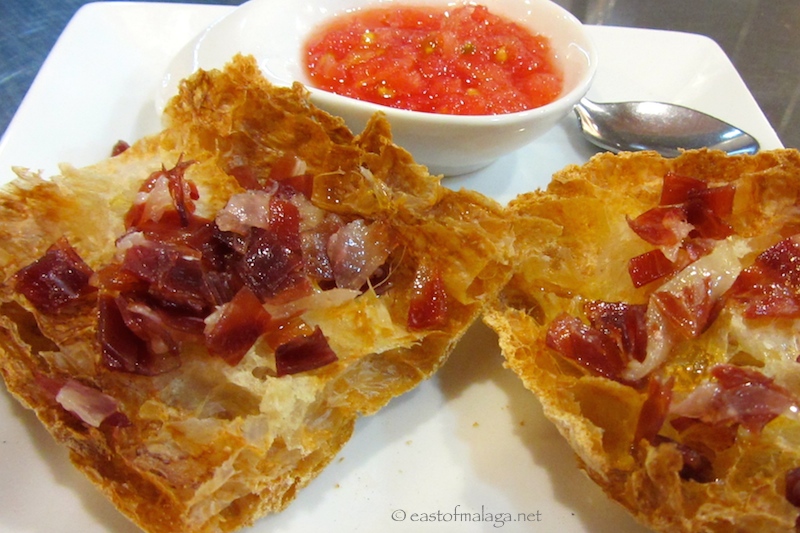
Café Bar Centro, Calle del Mar 25, offered delicious Spanish ham with “Coca de pan de cristal con Ibérico”.

Brujas - Ruta de la Tapa, Torre del Mar

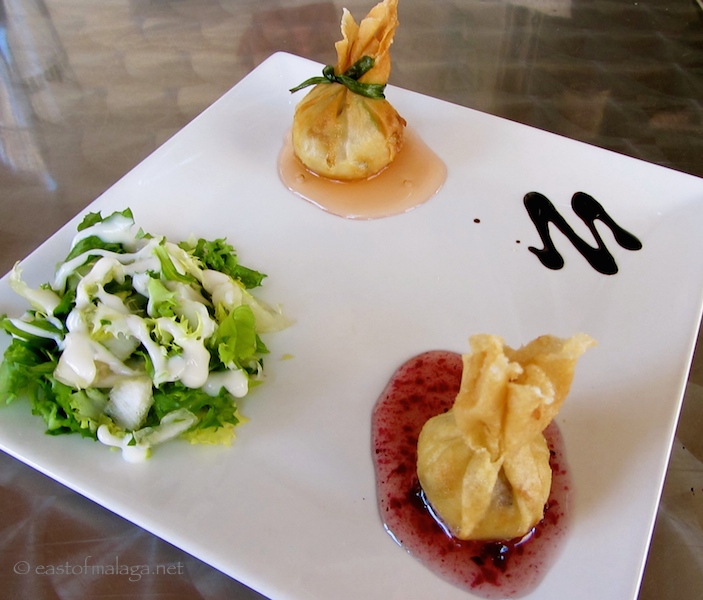
The tapa at Brujas, Paseo Maritimo, Ed. California IV bajos, is “Redondo de verdura, queso y salsa de arandanos” – delicious vegetables, goat cheese and cranberries  (and yet another of my personal favourites!)

20 de Tapas - Ruta de la Tapa, Torre del Mar

“Delicias de primavera” is Spring-time on a plate at 20 de Tapas at Avda. Toré Toré.

Mi Mundo - Ruta de la Tapa, Torre del Mar

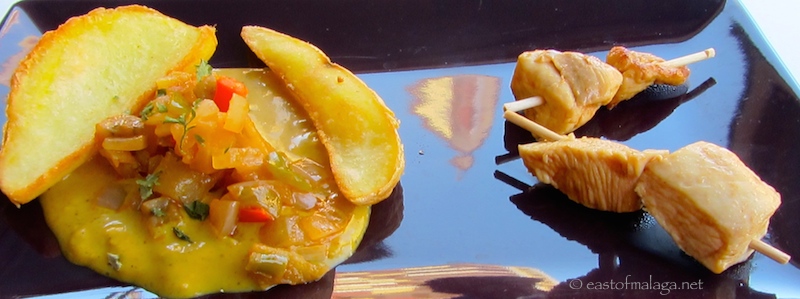
“Mini brochetas de polo braseado con salsa Tikka Masala y patatas artisanas” is a delicious chicken curry dish from Mi Mundo, Avda. Toré Toré 16.

A Lareira - Ruta de la Tapa, Torre del Mar

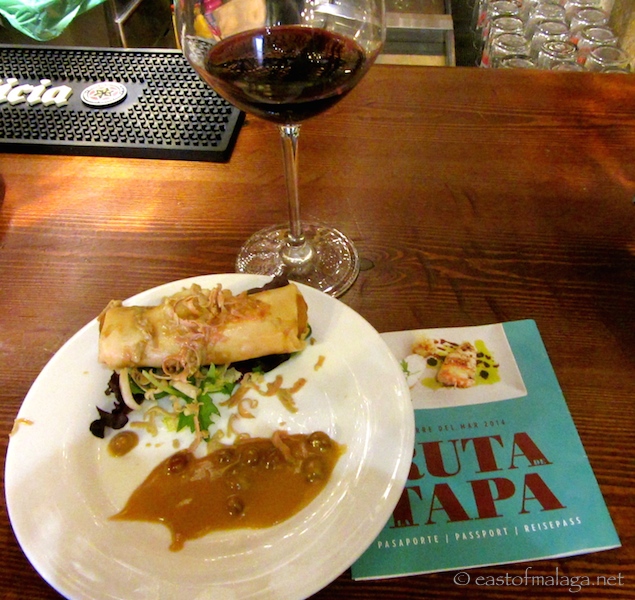
“Roll relleno de pollo y setas silvestres, con reducción de vino de Málaga y virutas de foie” is another tasty chicken dish from A Lareira, Calle Pasillo Batería, 7.

Casa Andrés - Ruta de la Tapa, Torre del Mar

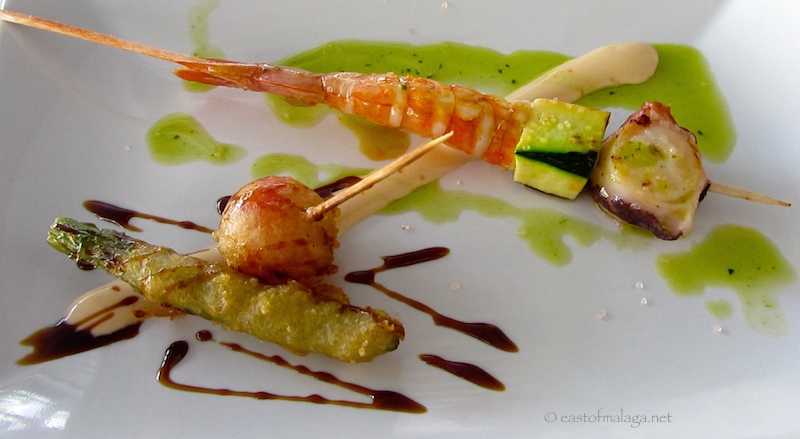
“Brocheta marinera con verduras en tempura y mahonesa de marisco” , is a delicious fish-skewered tapa from Casa Andrés, Paseo de Larios 36.

El Rincón de Paco - Ruta de la Tapa, Torre del Mar

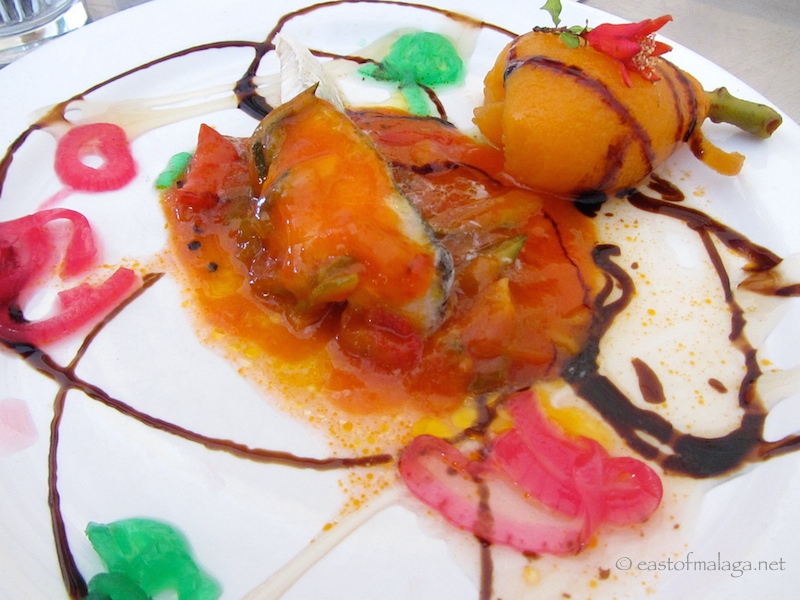
And last and, in my opinion, very much the least, is “Bacalao Rincón de Paco” offered by El Rincón de Paco (Number 11 on the tapas route) on Paseo Maritimo.  On paper it should have been OK (cod), but it was drizzled in loads of unidentifiable sweet stuff, and what the bright pink and green things were, I don’t know!   I left my glass of red wine (vino tinto)  which tasted like vinegar – so all in all they will be getting 0/5  **Shudder**


So, these are the bars and restaurants I have visited so far on La Ruta de la Tapa in Torre del Mar, but I’ve lots more places to visit before June 1st.   Wish me luck!  

Which of these tapas would you like to try?  Or, if you are in La Axarquía and joining in – which is YOUR favourite tapa?


FYI … there is a similar Ruta de la Tapa going on in Nerja during May, too.  Click HERE for information 🙂


Almanzor: a famous son of Torrox pueblo


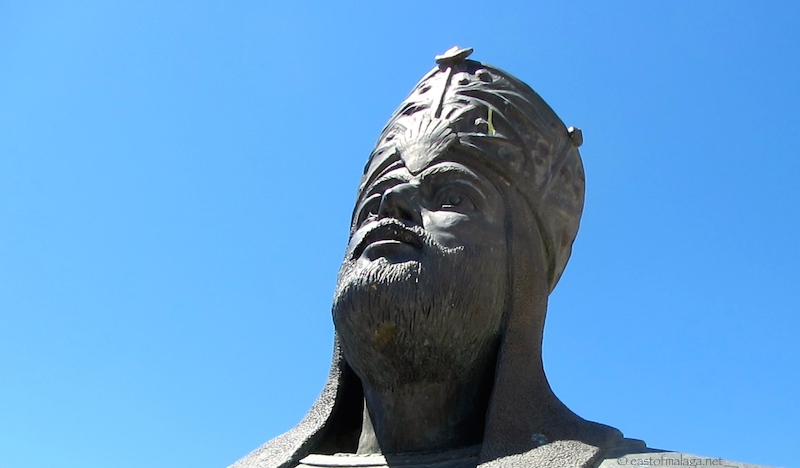
Meet Muhammed bin Abi Amir, better known by his honorific title of al-Mansur  (“the Victorious“).

  Almanzor in Torrox, Spain

Almanzor (as he is known in Spain) was the military and political leader of al-Andalus, a medieval Muslim state, occupying, at the pinnacle of its power, most of what are today Spain, Portugal, Andorra and part of southern France.

Born near Algeciras in southern Spain in the year 938 to an Arab family of Yemeni descent, Almanzor spent his early years at the family home in the village of Torrox (then known as Turrux), before moving to Córdoba to study law.

His political career began with humble origins, though eventually Almanzor went on to become the leader of the Caliphate of Córdoba, devoted to destroying the Christian kingdoms of Spain by carrying out 56 raids between 978 and the time of his death in 1002.

Almanzor is commemorated as a famous (some might say infamous) son of Torrox village, in the main square, Plaza de la Constitution.

Almanzor in Torrox village, Spain

You can read more about Almanzor here and here.

Who are the famous (or infamous) sons and daughters from your local village?