Men Bearing Gifts: Celebrating Three Kings Day

Until I moved to live in Spain, January 6th only meant one thing to me – the twelfth night – or, more importantly, the day you are meant to have all your Christmas decorations packed away until next year.
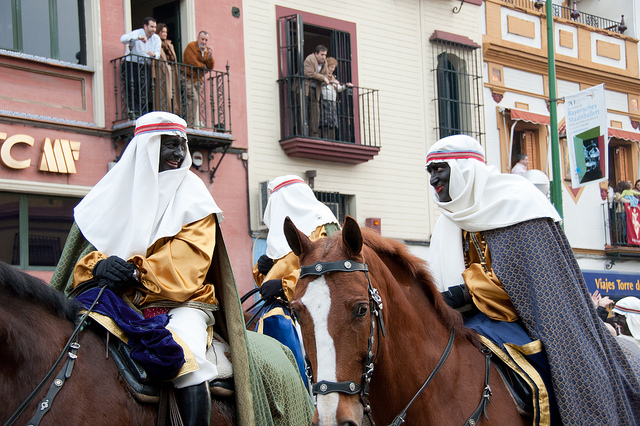
three kings parade[Image credit: Flickr (CC) Paul and Jill]

Now, of course, I know that it’s the day that La Fiesta de Los Reyes takes place throughout Spain to celebrate the day the Three Kings arrived in Bethlehem to present the baby Jesus with their gifts of gold, frankincense and myrrh.   It is also the most important day for Spanish children, as they receive their festive gifts from the Three Kings rather than Father Christmas (although every year Santa is becoming increasingly popular).

The fun starts on the previous evening, usually with processions passing though most towns and cities.  During the late afternoon, the crowds grow in anticipation of the arrival of the Three Kings on huge motorised floats, horseback, camels or, in the case of my local mountain village a year or two ago – in the back of a police car!
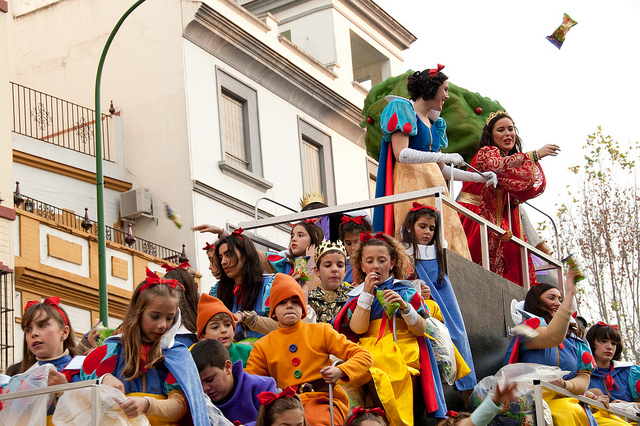
three kings float[Image credit: (cc) Paul and Jill]

As daylight fades away, you might hear the drums and music of the approaching parade, heralding the arrival of the Three Kings.

People on the floats throw boiled sweets towards the waiting crowds on either side.  But beware!  Some of the younger people on the floats can be rather enthusiastic throwers, with sweets being hurled out like missiles!  If you’re not careful you’ll get your eye taken out!  Many in the crowd come prepared, holding up-turned umbrellas to catch the booty, whilst others just scrabble around the ground, stuffing the fallen sweets in their pockets or bags.

It´s quite a sight to see adults scuttling around grabbing sweets off the floor totally without embarrassment – in fact, it´s easy to get caught up in the excitement of it all!

After the parade, most families head home where, before going to bed,  the children will put out something nice to eat and drink for the Three Kings, plus water for their camels. They also leave out their best pair of shoes to be filled with presents.  The next morning, if the children have been good then they will find presents in and around their shoes, if not, then only a lump of coal will have been left for them – though I suspect that doesn´t happen very often.
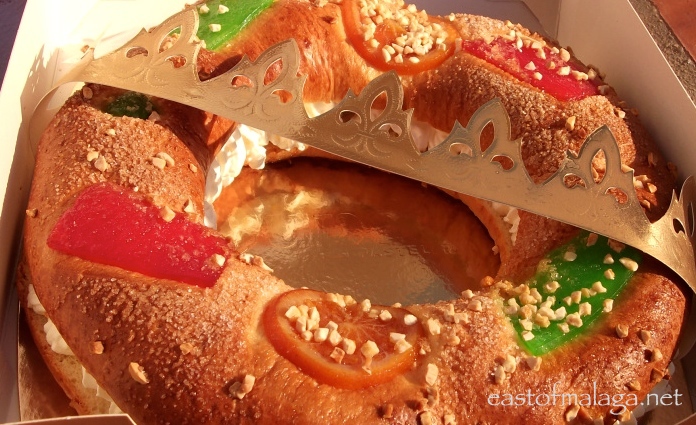
Roscon de Reyes

On January 6th, most families gather around the table to enjoy their Roscón de Reyes.   This is a ring-shaped bun or sweet bread, sugar-frosted and decorated with fruit flavoured jellies and fruit. The bun is sliced in half and filled with a mock cream mixture.  Hidden somewhere in the cream will be a novelty such as small model king and, if you are lucky enough to find one of the hidden figurines in your portion, then tradition has it that you will be blessed with good luck for the coming year.  Though I guess it would be bad luck if you inadvertently swallowed it and choked!

Belen in Malaga Town Hall

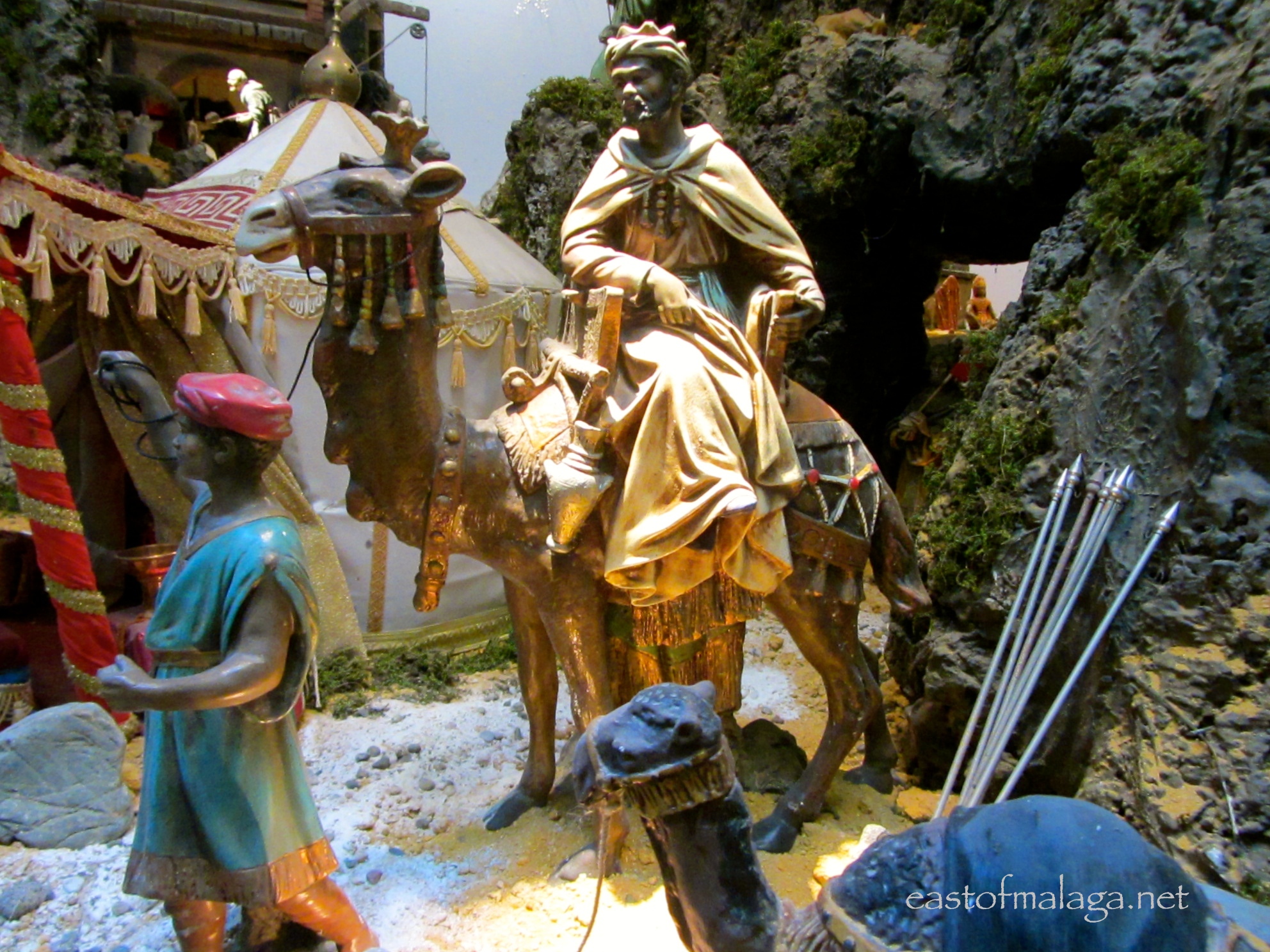
Nativity scene at Malaga Town HallThis is also the final opportunity to see one of the many Belénes (Nativity scenes) around the town or city.  I photographed this one inside Málaga Town Hall (Ayuntamiento de Málaga) last Sunday.  There was quite a queue to get in by the time I left.
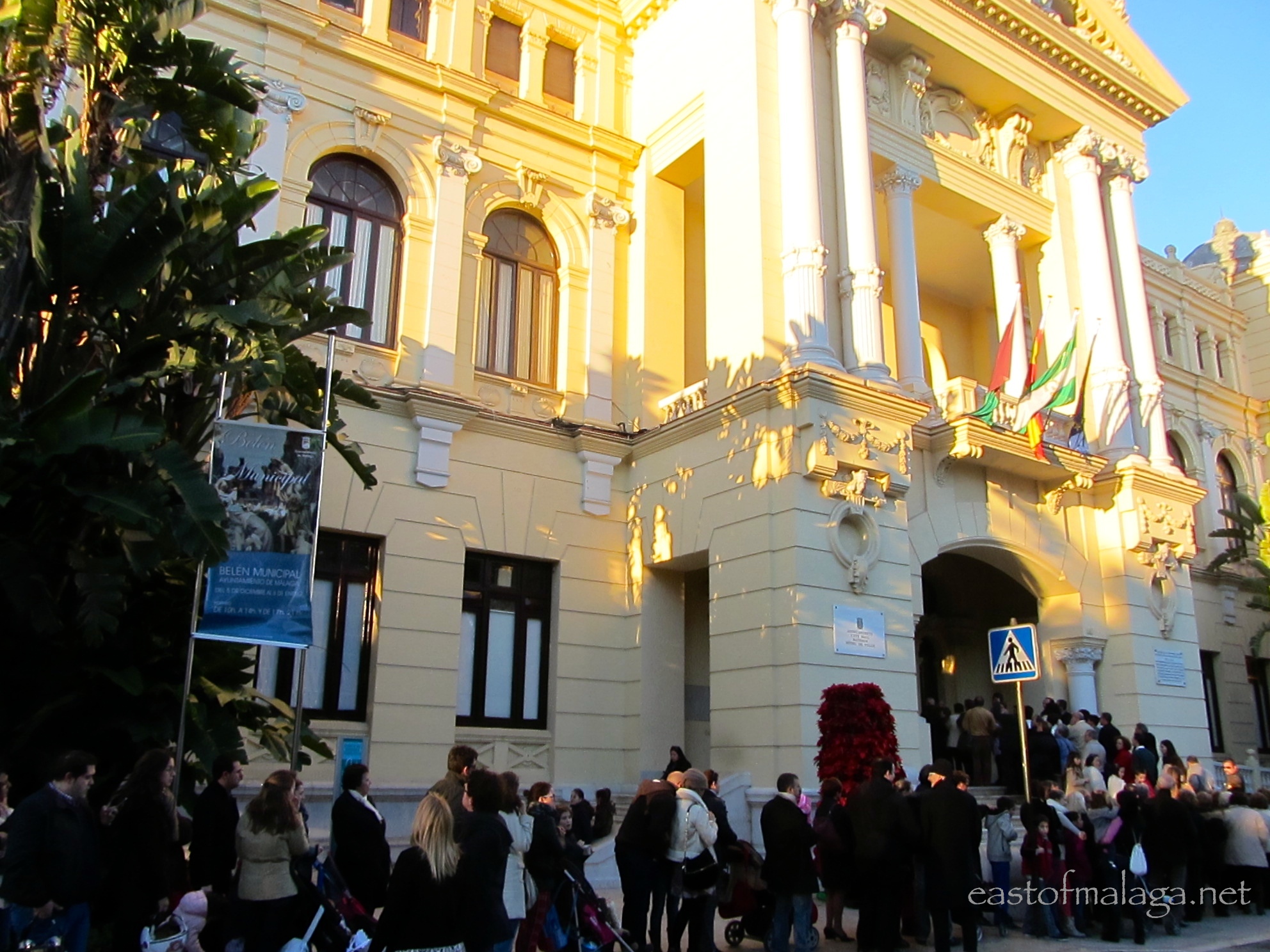
Queue of people to see the Belen at Malaga Town Hall

Which is your favourite fiesta or festival?

You might also like to look at:

My Travel Reflections on 2013

Malaga’s Urban Street Art

The Buddhist Stupa of the Eastern Costa del Sol

Day of the Dead: Spanish style

Pumpkin by Thomas Backa (Flickr CC)Image credit: Thomas Backa  (Flickr: Creative Commons)

I don’t like Halloween.  Never have.  Never will.

Not for of any particular religious reasons, but simply because it always seemed a pretty pointless exercise to me.

Until I moved to live in Spain.

Although the American-style “ghosts and ghouls” type of Halloween has now started to creep into the Spanish calendar each year, this time of year is celebrated here in a different form, as “El Día de los Muertos” or the “Day of the Dead”.

The festival of Todos los Santos (All Saints´ day) is a national holiday on November 1st each year, when cemeteries are packed with families paying homage to their dead and tending the gravestones of their ancestors by placing fresh flowers and candles.

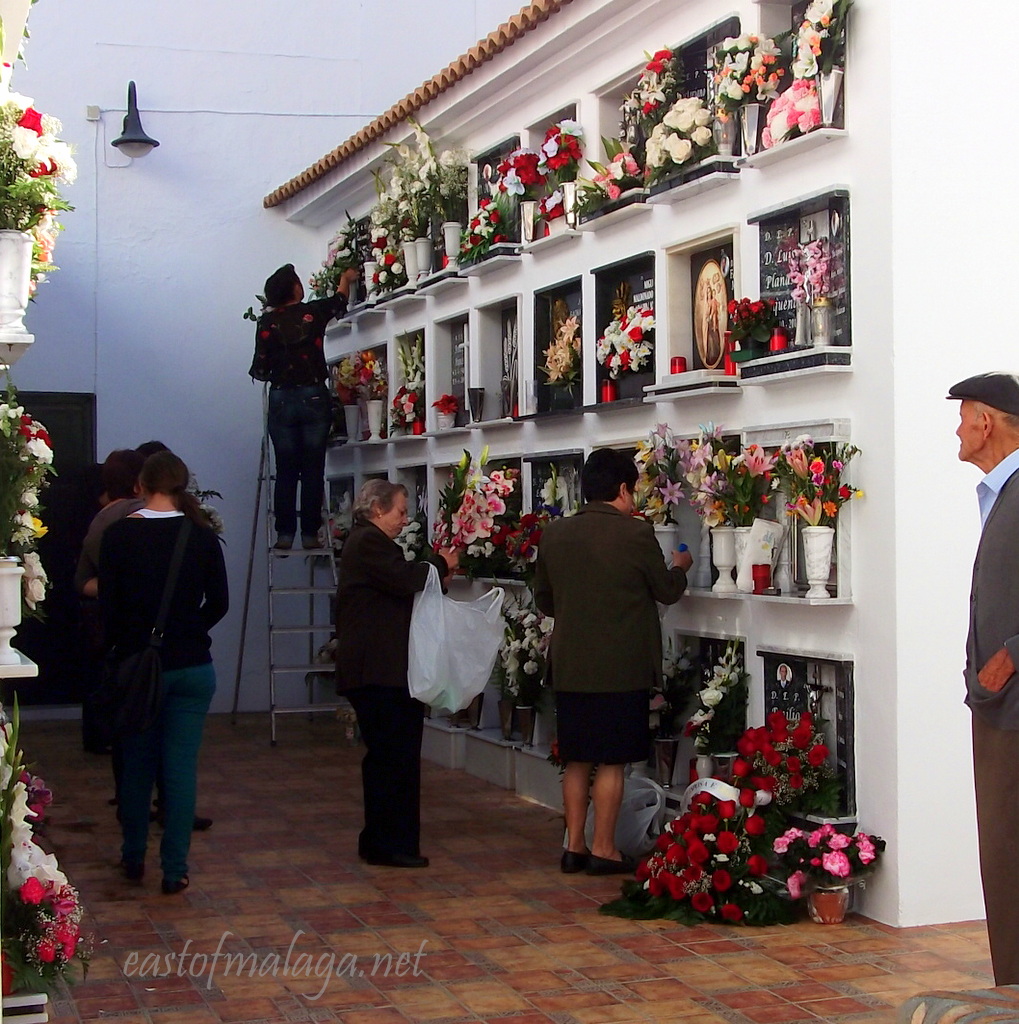
Tending the graves in Competa cemetery for Todos Los Santos

This is a commemoration for loved ones with nothing ghoulish or scary involved and, thankfully, without commercialism.  

Exactly as it should be.

How do you honour loved ones who have passed away, in your part of the world?


Related articles:

Death in the Afternoon: The Round Cemetery of Sayalonga

The Day of the Dead: A Celebration of Life 

The heart of Cómpeta: El Paseo de las Tradiciones


Venturing further afield: A long weekend in Zaragoza

We love to travel not only locally, but throughout Spain, so I will also include information, from time to time, about where we have visited.  Usually these places can either be driven to within a few hours of our home, east of Málaga, or we will have flown there from Málaga (AGP) airport.

Zaragoza and the River Ebro, Spain

We managed to find some cheap return flights from Málaga with Ryanair  to Zaragoza in northern Spain.  If you take only hand luggage, there are often bargains to be had,  so if you have a few days to spare, it is well worth spending a long weekend in this beautiful city.

Situated in the northeast of the country on the river Ebro, Zaragoza was once an important Roman colony, a thriving Muslim city and a cornerstone of the Catholic Spanish empire.   This ancient city has the fortune of being located between Madrid, BarcelonaValencia and Bilbao, which probably accounted for it’s prominence.

Zaragoza is Spain’s fifth largest city and is the capital of the immense autonomous region of Aragon.

Roman walls in Zaragoza, Spain

Deriving its name from the Roman Emperor Caesar Augustus,  Zaragoza has a real Roman theme to it, with an 80 metre section of  the old city walls still surviving, as well as a forum, theatre and baths.

We lost no time in getting to know this charming city which, despite having a population of over 700,000,  feels surpringly small and easy to get around.

Zaragoza cathedral

We visited the beautiful Baroque Catedral-Basílica de Nuestra Señora del Pilar and took the scenic elevator inside the highest tower for magnificent views over the River Ebro and the city.

Palacio de la Aljafería, Zaragoza

We were amazed by the Palacio de la Aljafería  which pre-dates the Moorish Alhambra Palace in Granada, and is the home of the regional parliament of Aragon.  The Mudéjar Architecture of Aragon, including the Basilica, La Seo Cathedral and the  Aljafería Palace have been designated a UNESCO World Heritage Site.

Zaragoza is a city that may not figure on the typical tourist trail around Spain but, nevertheless, may just be one of its best kept secrets! 


You might also enjoy:

A weekend away: Santiago de Compostela

Venturing further afield: San Sebastián in the heart of Basque country

A long weekend in Santander


Should Seville’s barefoot nuns have faith in my cake-baking skills?

Just out of the oven

When I was in New Zealand earlier this year, I stayed with a lovely lady called Val, who introduced me to Herman the German Friendship cake.  Val was only part way through the 10-day cycle of making the cake, so I wasn’t able to join in with the fun.  Besides which, I was travelling at the time, so it wasn’t very convenient.

Herman the German is a sourdough cake, often received from a friend as a “starter mix” and which sits on your kitchen counter for ten days, bubbling away, covered with a tea towel.  Along with your starter mix, you also receive written instructions on how to proceed.  On the tenth day, you divide the mixture to share with your friends, and bake your cake.

To be honest, since returning home to Spain from New Zealand, I’d forgotten all about Herman.

A few weeks ago, Sue, a FB friend and fellow expat blogger from Extremadura in Spain, asked if anyone was interested in sharing some of her starter dough for Herman’s Spanish equivalent: Bizcocho de las Carmelitas Descalzas de Sevilla (The Barefoot Carmelite nuns of Seville cake).  I should imagine you were wondering where the nuns came into it!

Anyway, how could I refuse?

All we had to figure out now was how she would get the starter mix to me when we live about 500 kilometres apart!

Fate stepped in – in the form of The Open-Air Theatre Project, a small, rural community from the Alpujarra mountains in southern Spain with their dream of building an open-air theatre.  To cut a long story short, Sue was on her way to meet up with the group, and she kindly diverted from her route to deliver my starter cake-mix, together with a sheet of instructions in Spanish (of course).

She also brought me five jars of the most delicious home-made plum, cherry, fig and loquat jam.  YUMMY!

How lucky am I?

As soon as I got home from meeting Sue, I tipped the bubbling dough mix into a large pot bowl, covered it with a tea towel and, over the next ten days, followed the written instructions to the letter – sometimes adding ingredients, often doing nothing.

Today is the tenth day – so, this morning I set about dividing the mixture into four, in order to be able to give away three “starter mix” portions to friends and neighbours, added the extra ingredients and made my cake!

If you want to have a try yourself, you can get the recipe for Herman the German cake by CLICKING HERE.  Don’t worry if you don’t have any friends anyone to give you the starter mix.  You can always start the cake off, yourself, but I really liked the idea of the sharing bit.  If you live near me and would like one of my starter kits, let me know!

Herman’s Spanish sister cake can be found by Googling “Bizcocho de las Carmelitas Descalzas de Sevilla”, choose one of the links and click on “translate this page” and Bob’s your Uncle – so to speak!

MY TOP TIP: After cooking for 45 minutes, take the cake out of the oven, cover with foil to prevent the top from burning, and pop back into the oven for a further 15 – 20 minutes to make sure the middle is cooked well enough.

So – should Seville’s barefoot nuns have faith in my cake-baking skills?  

I think so – but I’d love to know what you think!