Cost of Living: East of Málaga, Spain – April 2013

Shopping trolley in Lidl supermarket, Spain

Edited to add: When you’ve read this article, make sure you also look at my up-to-date Cost of Living in Spain: (Málaga edition) for July 2015, now available HERE.

Whenever I travel, I´m always interested to know how much things cost and, every day, people from around the world find my blog by searching for the cost of living in Spain.

Back in August and November 2012, I posted some receipts for groceries I had bought here in southern Spain, which proved to be very popular articles. 

But I wanted to do something a bit different, so I decided that rather than post the prices of random items of shopping that you may, or may not be interested in, I would come up with a list of standard grocery items, which I will update the prices of, two or three times a year.   This list can easily be changed, so if there are any other basic items you would like me to include, please let me know in the comments section, below.  This way, if anyone else wants to do something similar, we can have a direct comparison between countries.

To make such direct comparison simple, I have once again used the Spanish Supermarket – Mercadona in Torrox Costa.

This month’s prices are a bit of a mixed bag, with some prices remaining stable, yet others increasing or decreasing.

So, here´s the Standard Grocery List I used previously.  The first prices are as they were in August 2012 – the second prices (in bold) are as they were last November, with this month’s prices in RED alongside.

Standard Grocery List

Milk (semi –skimmed UHT, own brand), 1 litre  0.54 €      0.54 €     0.53 €

Loaf  (white, baguette 250g)   0.45 €    0.45 €     0.45 €

Eggs (12, own brand caged, medium) 1.35  €     1.35  €     1.35  €

Chicken breasts (1kg, boneless, skinless)  5.50 €     5.50 €     5.80 €

Apples (1kg, green, Golden Delicious) 1.35 €     1.00 €     1.65 €

Oranges (1kg) 1.39 €     0.89 €    0.79 €

Bananas (1kg) 1.25 €    1.15 €     1.35 €

Potatoes (1kg) 0.92 €    0.89 €      0.96 €

Lettuce (1 head, Iceberg) 0.85 €    0.85 €    0.85 €

Water (1.5 litre bottle) 0.45 €    0.36 €     0.42 € (for a 2 litre bottle)

Domestic Beer (1 litre bottle, Cruzcampo) 1.29 €    1.20 €    1.20 €

Fish  (1kg Salmon steaks) 8.75 €    8.75 €      9.50 €

Toilet rolls (pack of 6, own brand) 1.95 €    1.95 €    1.95 €

Washing powder (Box, 35 washes, Elena brand) 5.94 €   4.87 €     4.87 €

Olive oil (1 litre, extra virgin, own brand) 3€    2.75 €   (5 litres 12.99€)    2.99 €   (5 litres 13.99 €)

Coca-Cola (1.5 litre) 1.09 €    1.00 €    1.00 €

Butter (250g, own brand) 0.98 €    0.98 €     0.98 €

Sugar (1kg, white) 0.95 €    0.93 €    0.93 €

The following two items were only introduced in November’s grocery list:

Coffee (ground, 250g, Santa Cristina)  1.79 €      1.89 €

Beef mince (Store brand, pre-packed, 1kg)   5.43 €    3.80 € (for 700g)

New items added to the list:

Red Peppers (1kg, loose)  2.29 €

Green pointed “Italian” Peppers (1kg, loose)  1.99 €

Tomatoes  (1kg, loose)  1.19 €

Currency Conversion from XE €1 = 1.31   USD
0.85   GBP
1.24   AUD
1.33   CAD
1.53   NZD
11.66   ZAR
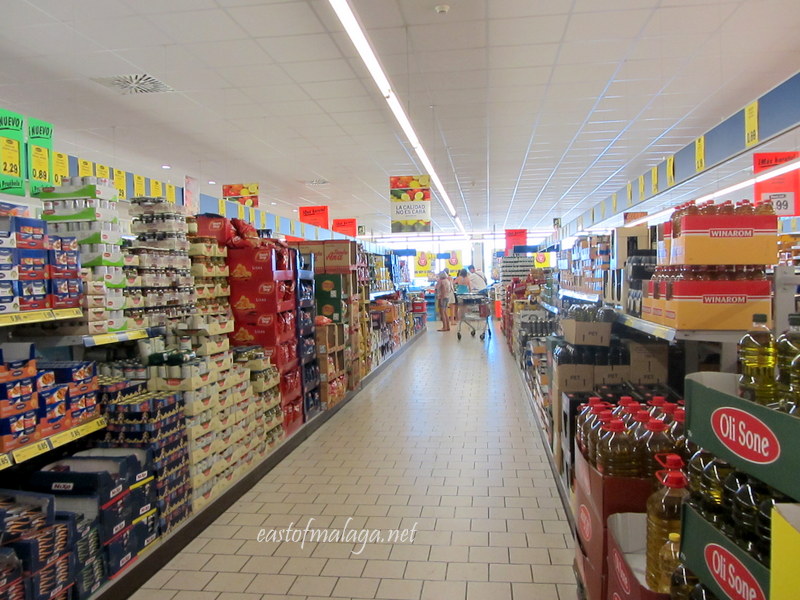
Inside of Lidl supermarket, Algorrobo, Spain

Other household expenses

Gas:  We don´t have mains gas here – we use bottles of butane gas.   In August, a 12.5kg bottle of Butane gas cost 16.45 € – falling to 16.10 € in November.  They are now 17.15 € .   One bottle used to last (on average) 21 days (for two people… though around 4 weeks in summer) for all hot water, showers and cooking on a gas hob.  Last September we had a new gas water heater fitted and, even though it has a larger capacity for water heating than the previous one, it appears to use significantly less gas.  It´s early days yet, but the first bottle lasted five weeks (rather than three weeks).  I´ll keep my eye on how that goes.

Electricity:  For a 3 bedroom/2 bathroom detached house in the countryside with a swimming pool, we pay an average of 100 € per month.   The cost of consumption for us is slightly lower in winter with heating/lighting, as opposed to air conditioning/lighting/swimming pool pump running for 8 hours a day, in the summer months.

Water: We are not connected to mains water, so when we bought our house part of the purchase cost was for a share in a local water company.  We have a 14,000 litre water deposit in which to store our house water.  Our water share gives us an allowance of up to 17,500 litres of water each week at reduced cost, though if we use more than this, the price rises steeply.  Needless to say, we don´t use this amount of water, even allowing for swimming pool top-ups and garden irrigation.  The water company, Patamalara, doesn´t always sent out their bills regularly and much of the cost appears to depend on the amount of repairs that have been undertaken on the system, but over the past twelve months our annual water bill has amounted to 92 €.
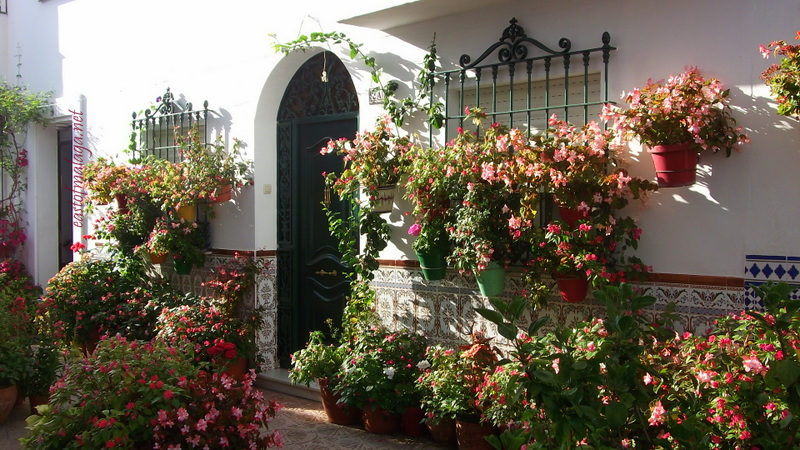
Village house in Torrox pueblo, Spain

IBI – Council Tax:   Paid yearly to the local council.  Last year´s bill was 338€

Internet:  29 € per month with unlimited downloads (within reason).  Speeds up to 3 Mbps

Petrol/Gasoline:  In August 1 litre of 95 octane petrol was 1.49 €.   In November 2012 the price had fallen to 1.40 €.   The price is now 1.48 €

Vehicle excise duty:  We have a Peugot 307 and pay 51 € per year.

Eating out:  Glass of wine or beer, including one tapa is 1 € – 1.50 €.  Menu of the day (three course meal, served at lunchtime, including bread and one glass of beer, wine or a bottle of water) 8 – 10 €

How do prices compare where you live? 

You might also enjoy these articles:

Menú del Día: Great food at a budget price

Cost of Living: East of Málaga, Spain  –  August 2012

Cost of Living: East of Málaga, Spain – November 2012

Goats on the road: I kid you not

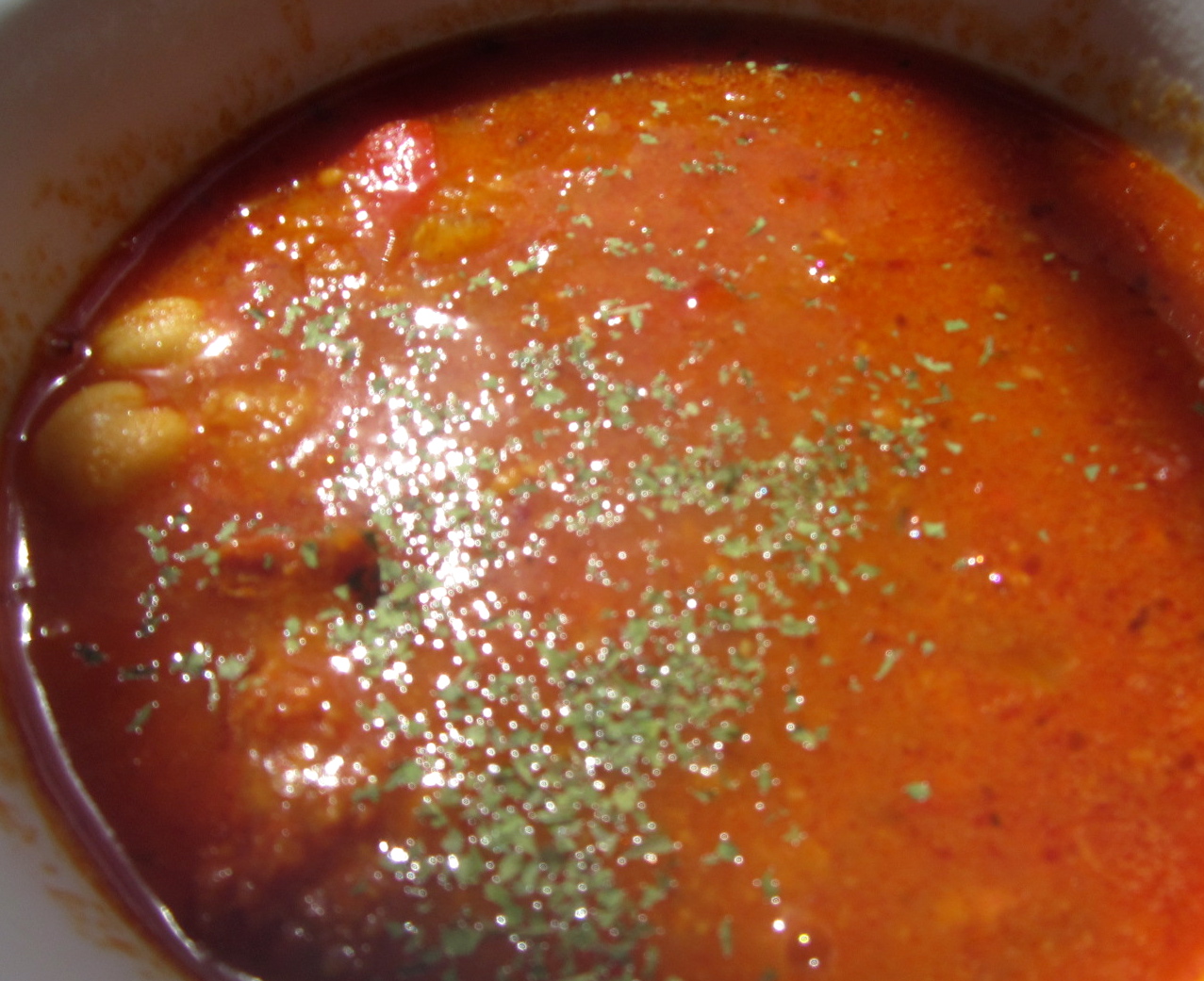
Chickpea and chorizo soup with smoky paprika bread

Chickpea and chorizo soup

Well, we’ve arrived safely home in Spain after being Down Under for the past four months.  We’ve had an amazing time, but it’s always good to be back in your own bed, and with more possessions than you can fit into a suitcase, isn’t it?

Although it has just started raining as I write this post, the three days since we arrived home have been sunny and warm, but the evenings soon feel chilly once the sun has gone down.   So what better to warm us up than a bowl of hot soup, especially one full of Spanish flavours?


To make this delicious Chickpea and Chorizo soup, you will need the following ingredients:

1 tablespoon extra virgin olive oil

2 (340g) chorizo sausages (chopped coarsely)

1 large brown onion (diced)

1 medium red pepper (diced)

2 cloves garlic (crushed)

400g can chopped tomatoes

1 level teaspoon of dried mixed herbs (or use fresh if you have them)

750mls (3cups) chicken stock

400g jar of chickpeas (drained and rinsed)

For the Smoky Paprika Bread, you will need:

1 level teaspoon smoked paprika

1 clove garlic (crushed)

50g butter (softened)

1 loaf of crusty bread (sliced thickly)

Heat the oil in a large saucepan over a medium-high heat and add the chorizo.  Cook, stirring until slightly browned.  Remove from the pan with a slotted spoon  and set aside.

Add the diced onion, red pepper and garlic to the pan.  Cook, stirring until the onion has softened.  Add the undrained tomatoes and the chicken stock and bring to the boil.

Reduce heat and simmer, partially covered for 10 minutes, stirring occasionally.

Stir in the chickpeas.

Remove two cups of soup and purée in a blender.  Return to pan along with the chorizo.  Season to taste with salt and freshly ground black pepper.  (I like to add a few whole black peppercorns to the soup to give it an extra bite).

To make the Smoky Paprika Bread – combine smoked paprika, garlic and softened butter in a small bowl.  Spread half of the flavoured butter onto the bread slices and pop under the grill until browned.  Turn each slice over, spread the remaining butter and toast the second side until browned and crisp.

Serve the soup with Smokey Paprika Bread immediately.

Que approveche!


You might also enjoy:

Patatas a lo pobre: Poor man´s potatoes

Fresh Figs Stuffed with Goat´s Cheese and wrapped in Smoked Bacon

The heart of Cómpeta: El Paseo de las Tradiciones 

Venturing further afield: San Sebastián in the heart of Basque country

We love to travel not only locally, but throughout Spain, so I will also include information, from time to time, about where we have visited.  Usually these places can either be driven to within a few hours of our home, east of Málaga, or we will have flown there from Málaga (AGP) airport.

Overlooking La Concha Bay, San Sebastian, Spain

You might remember, a while ago, I told you about a trip we had taken to Santander, on the northern coast of Spain.  In that post, I promised to tell you more about the rest of our journey, so here it is!

After a great overnight stay at a little gem of a hotel (the Jardin Secreto in Santander), we hired a car and travelled along the northern coast of Spain to San Sebastián, only 20 kilometres from the French border.

On the way to San Sebastian, Spain

There is much more rainfall here than where we live on the south coast of Spain, making the landscape generally much greener.

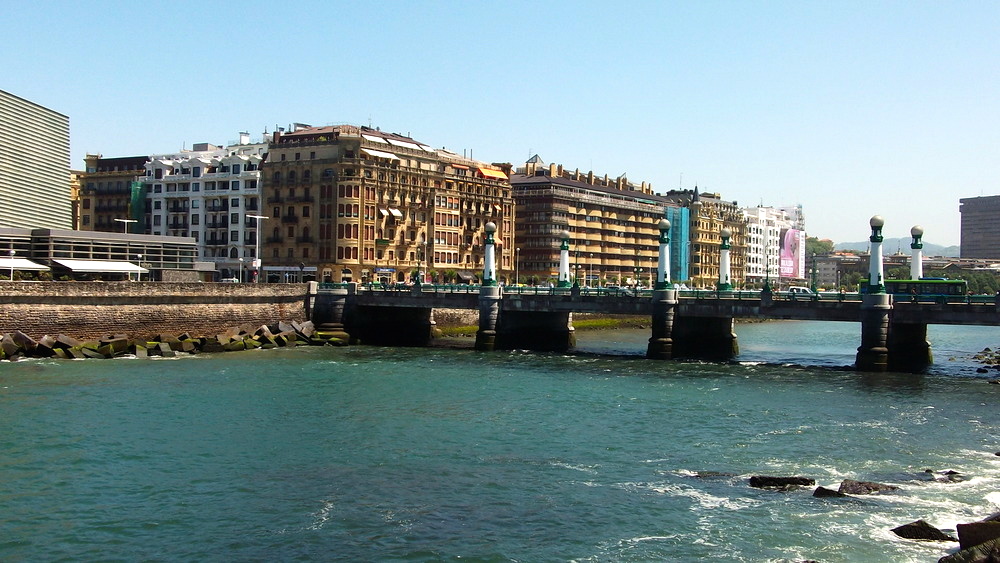
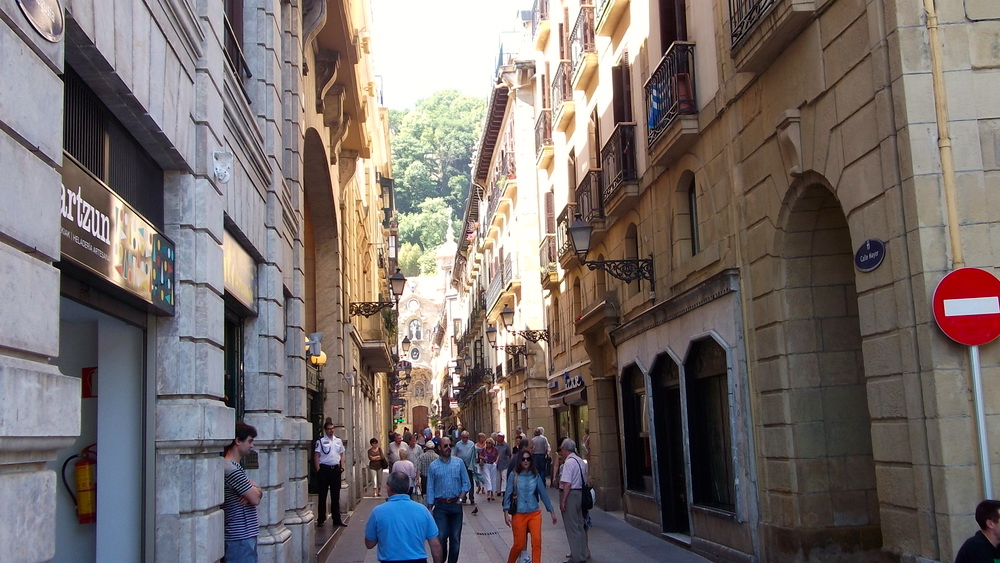
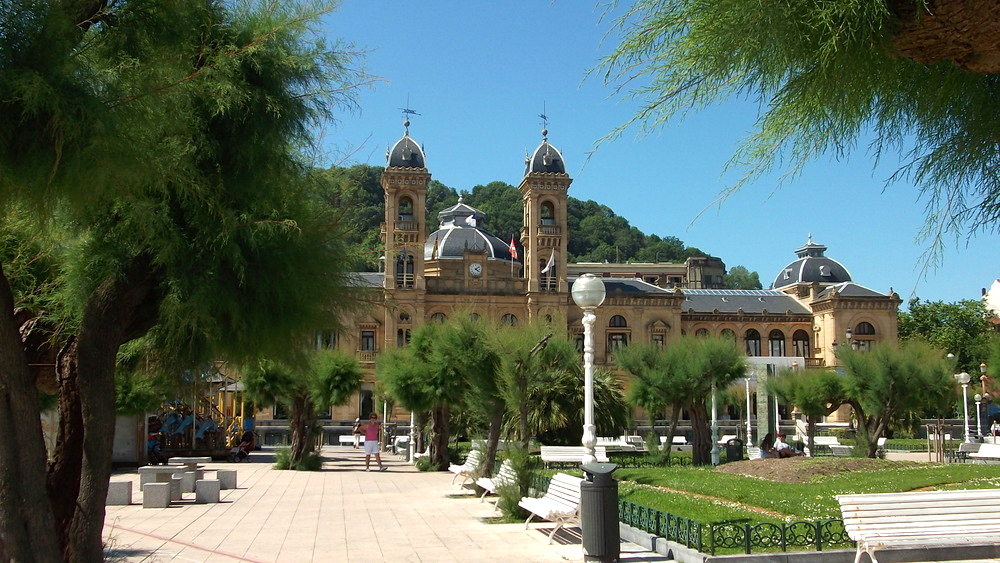
San Sebastián, also known as Donostia, lies along a white, sandy bay in the heart of Basque Country.   It’s easy to fall in love with San Sebastián as the streets unfold to overlook La Concha Bay, with Monte Igeldo offering a wonderful vantage point for enjoying views over the city, as you can see in the first photograph.

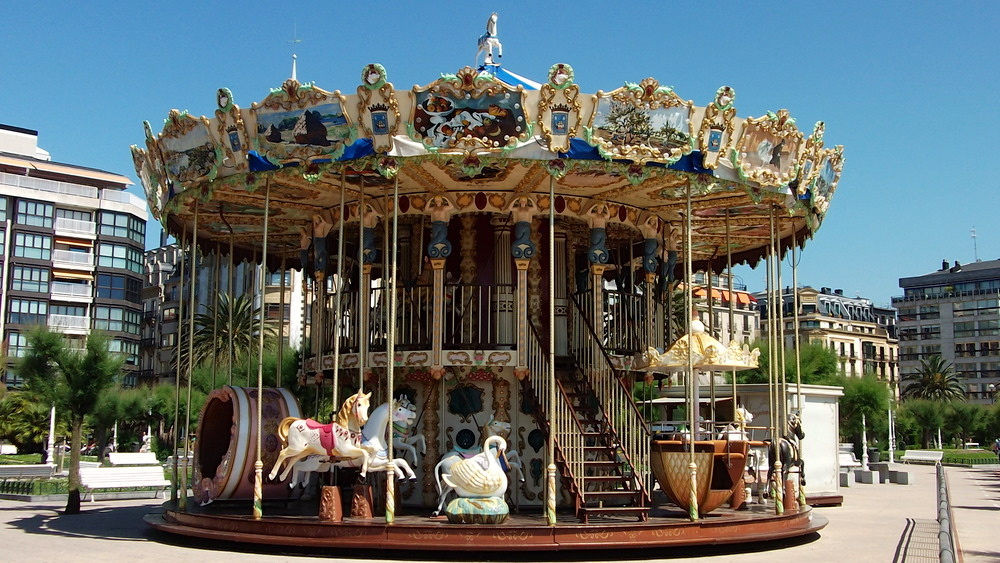
San Sebastian

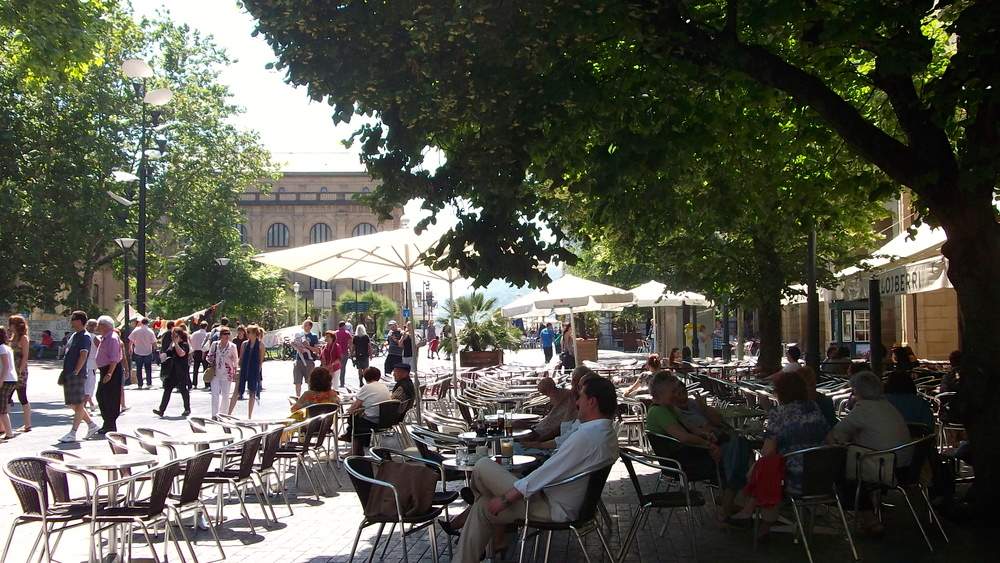
San Sebastian

San Sebastian

San Sebastian

San Sebastian

There is a lovely promenade with elegant railings and street lamps, as well as wonderful bridges crossing the Rio Urumea as it meanders along to the Bay of Biscay.

San Sebastián is a cosmopolitan city with a strong Basque character, which is as evident in cultural events as well as in cuisine.      The city is renowned for its Basque cuisine with a trio of 3-starred Michelin restaurants to be found nearby – compare that to only four be found in the whole of the UK!

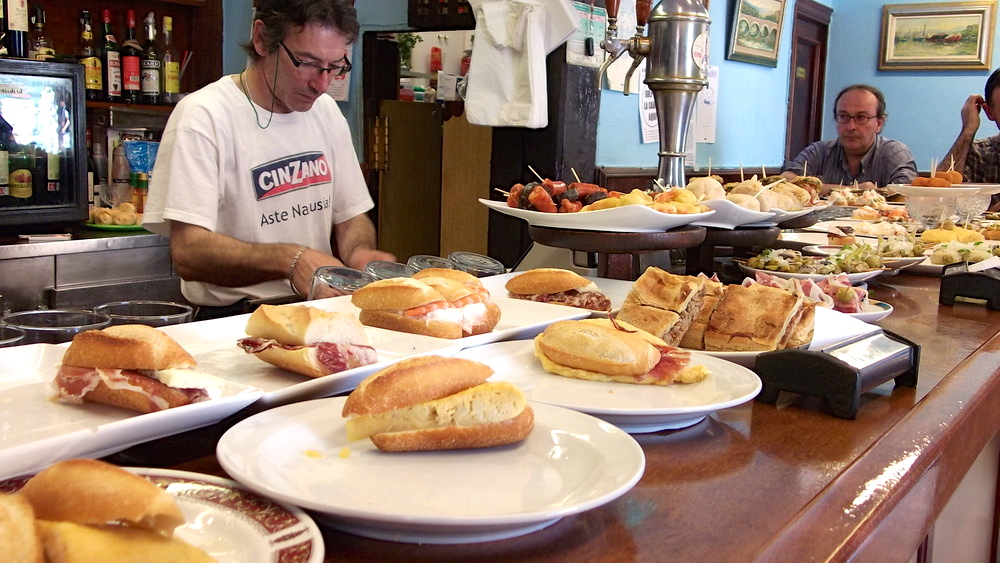
Tapas in a San Sebastian bar, Spain

The city is the epicentre of Basque gastronomy, where food makes a major contribution to the social life of the Basque people.  To share and to enjoy it with them is a truly unique experience.  Just take a look at all the tapas set out on the counter in the photograph, and this was just a little bar down a side street!

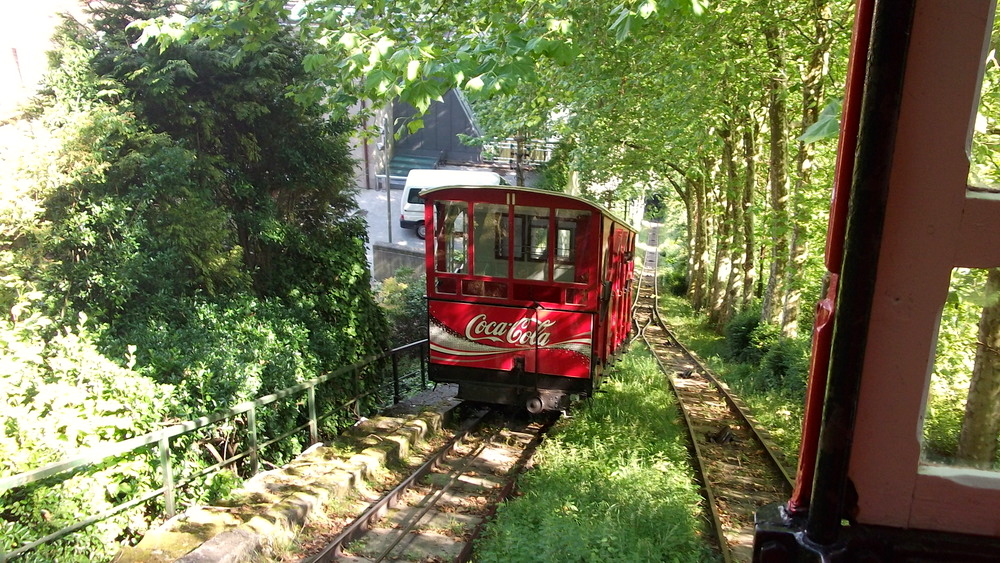
Funicular railway, San Sebastian, Spain

We caught the funicular railway to the peak of Monte Igeldo for magnificent views across the city and the scallop-shaped bay complete with golden sand and sparkling turquoise water.

In June of last year, San Sebastián was chosen to be the European Capital of Culture in 2016, so maybe I will get another chance to continue my love affair with this beautiful city, which has more than a whiff of Monaco about it.

Do you know of an area renowned for it’s fabulous cuisine?  Why not share it below, so we can all come and visit!

You might also enjoy:

A weekend in Santiago de Compostela

The heart of Cómpeta: El Paseo de las Tradiciones

CBBH Photo Challenge: VIEW FROM AN AIRCRAFT

As some of you already know, I am not at home in Spain right now but gadding off around the world, as I often do during our winter months.   I was racking my brains to think of a photo challenge I haven’t seen anywhere else and, as I am always camera-ready-in-hand whenever I fly, I thought that VIEW FROM AN AIRCRAFT might produce some spectacular entries for this month’s CBBH PHOTO CHALLENGE.

I LOVE flying!

Whenever I fly, I always request a window seat.  I love the view through an aeroplane window – because it means I´m going somewhere!   These often spectacular views give a unique look at the world from a totally different perspective,  and which simply cannot be seen from the ground.  Sometimes I will see countries that I will never set foot in, and even if there is nothing spectacular to see, just looking at cloud patterns or sunrises can be fascinating.

With tight security rules and ever busier airports continuing to change air travel, rediscovering the romance of the window seat may be the most practical way to make flying more enjoyable.

So, Señores Pasajeros (Ladies and Gentlemen) please ensure your seat-belt is securely fastened, your tray table is stowed and your seat-back is in the upright position, and join me in enjoying a smooth approach into Abu Dhabi International Airport in the United Arab Emirates; Christchurch International Airport on the South Island of New Zealand and, of course, Malaga’s own Costa del Sol Airport on the south coast of Spain.

Approaching Abu Dhabi

Abu Dhabi International (AUH) is one of the fastest growing airports in the world in terms of passenger numbers.  I took this shot as we were coming in to land just after sunrise.  You can see the first light shining off the houses on the left of the photograph.  It’s quite amazing to see so many buildings in the middle of the desert!

Snowy mountains over central South Island, New Zealand

Christchurch International Airport (CHC) provides not only the gateway to the South Island of New Zealand but also, with the development of many scientific expeditions, to Antarctica itself.  The South Island  is divided along its length by the Southern Alps, the highest peak of which is Aoraki/Mount Cook at 3754 metres (12,316 ft).  As you can see, there was still plenty of snow on the Southern Alps when this photo was taken earlier this month, even though it is now summer in the southern hemisphere.

Approaching Malaga

I couldn’t finish without a photograph taken on the approach to Malaga’s Costa del Sol airport (AGP).   This sight is always good to see, because no matter how much I love travelling, it means I will soon be home – and that’s always a good feeling too, isn’t it?

This month´s CBBH Featured Blogs:

** Jo Bryant at Chronicles of Illusions is an Australian freelance writer now living with a demented fox terrier, two cats and a cockatiel in the Bay of Plenty, New Zealand.   Jo always has plenty to say about life and I have particularly enjoyed reading her “Small StonesMindful Writing Challenge during the past month.  Why not pop over there right away and take a look at exactly what I mean?

Jo takes the most amazing photographs and has something new to post most days.  I don’t know how she finds the time, but I’m hoping to find out quite soon, as Jo and I are planning on meeting up when I get to the Bay of Plenty!


** If you want real, authentic, Italian home-cooking, then you should hop straight over to see what John has on offer From the Bartolini Kitchens.   His recipes are always easy to follow (often with step-by-step photographs) and I especially loved his recent post describing how to make his Mom’s broth – which is sure to see off even the most dastardly of flu viruses!

John is a passionate cook who shares not only family recipes handed down from generation to generation, but wonderful tales of his childhood and family.  How blessed he is to have been born into such a loving and close Italian family.   When you visit John’s pages, be sure to tell him that Marianne sent you 🙂

CBBH Blog Hop

So that´s the CBBH Photo Challenge for February, folks!

Remember, all you have to do is post your entry by the end of the month,  link back to this post and, most importantlydon´t forget to share links to any two blogs that you´ve commented on during the past month, so that we can all HOP OVER and have a look.  Make sure you FOLLOW THIS BLOG so you don´t miss next month´s exciting challenge!

For more information on how the CBBH Photo Challenge works click here.

I hope everyone taking part enjoys the exposure the CBBH Photo Challenge offers to featured blogs and, who knows, you may end up finding a new favourite!  I´m looking forward to seeing your interpretations.

[CBBH logo Image credit: (cc) Mostly Dans]


A Celebration of Fried Breadcrumbs: Migas Festival in Torrox pueblo

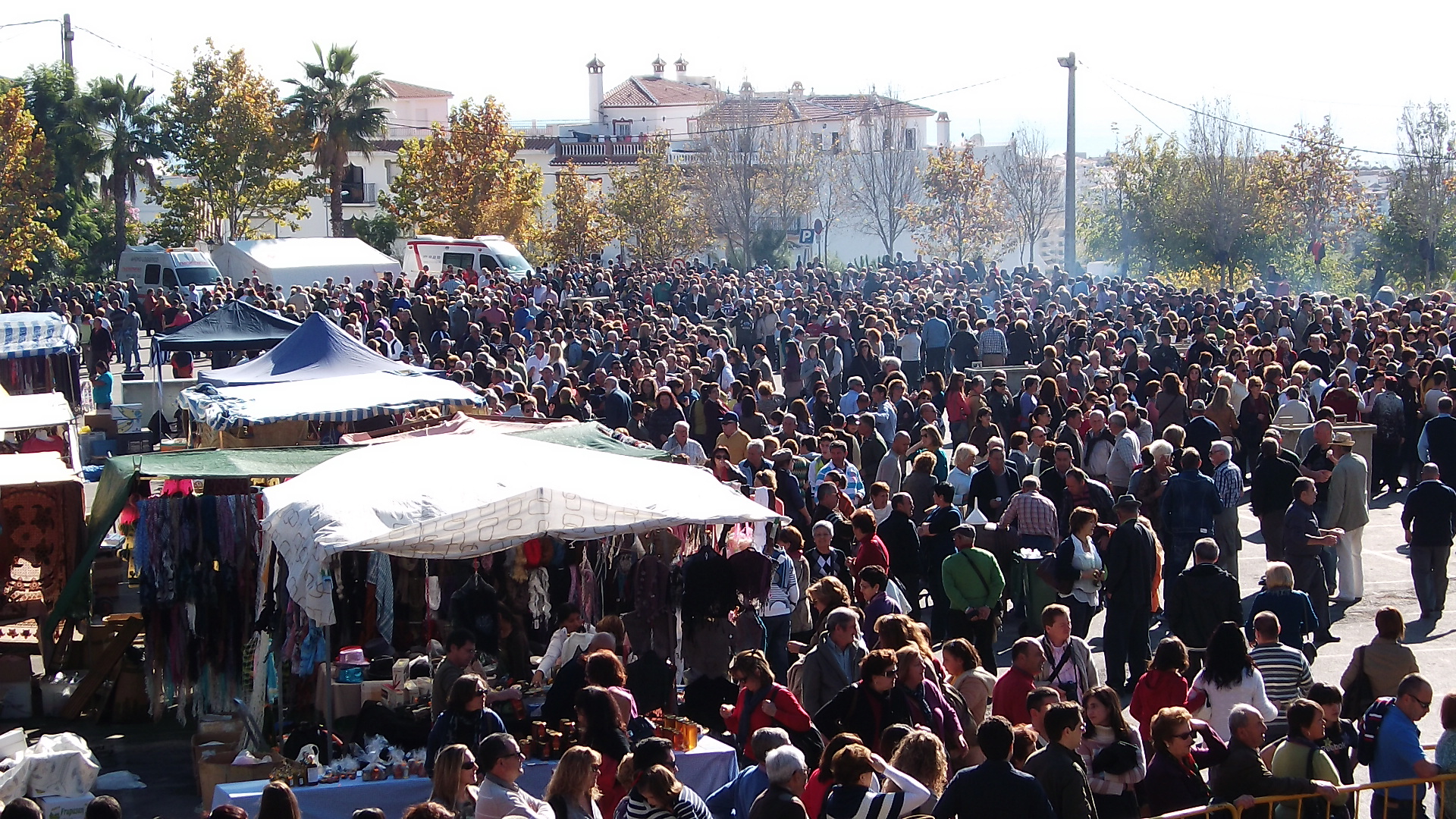
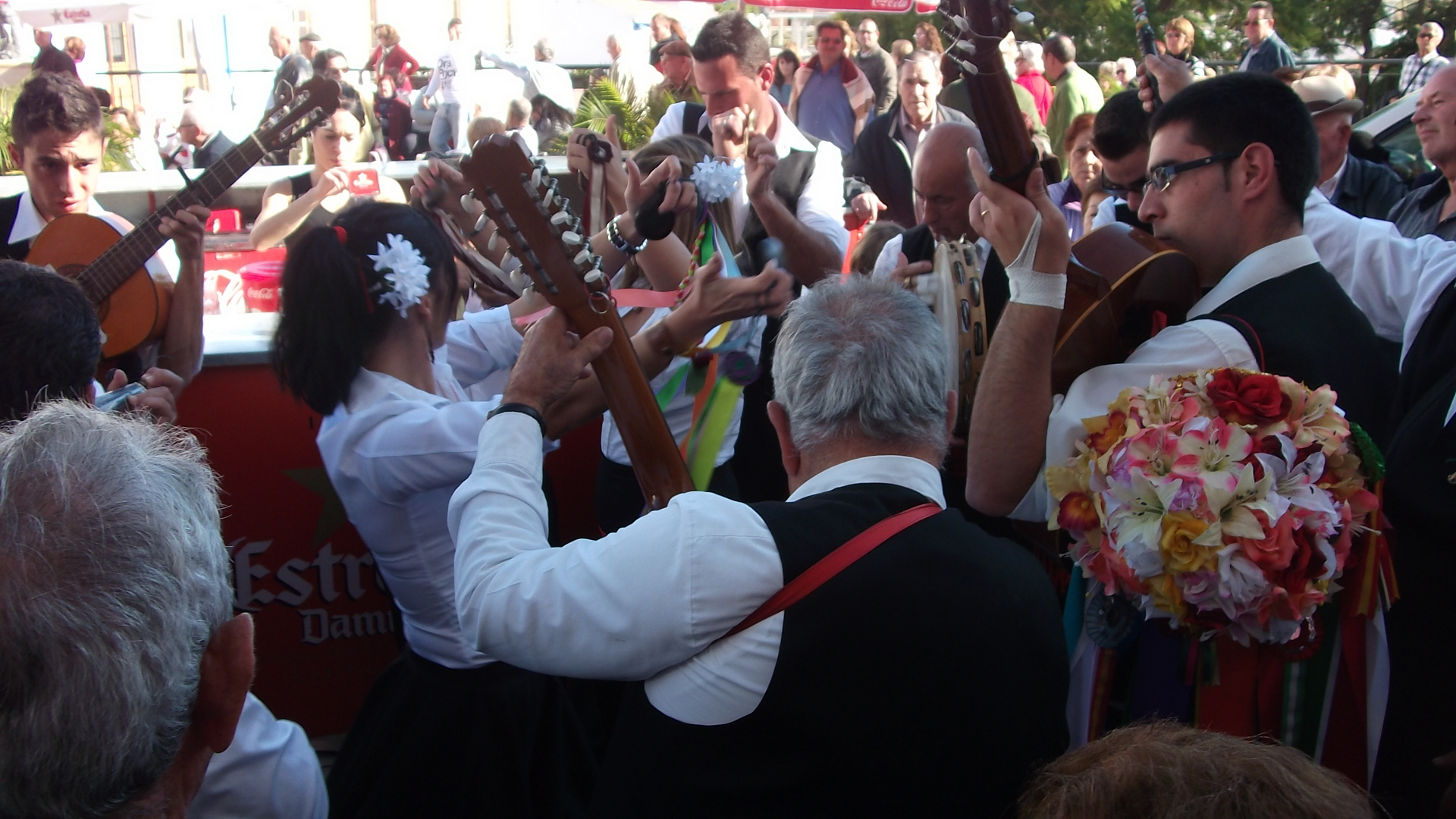
You might not expect ingredients for the perfect Christmas party to include 2000 kilos of flour, 500 litres of olive oil and 3000 litres of sweet Moscatel wine, but that´s exactly what´s required  to cater for the 40,000 guests who visit the annual  Migas Festival in the village of Torrox.

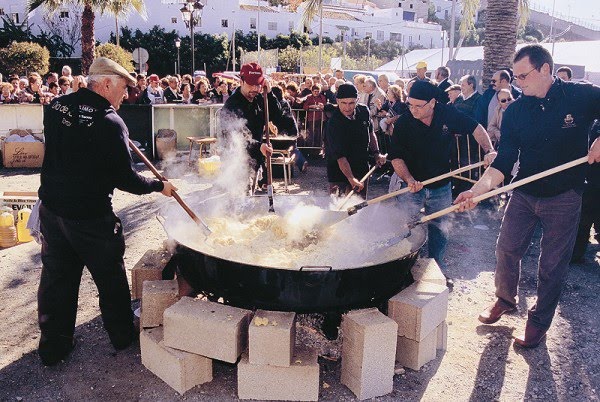
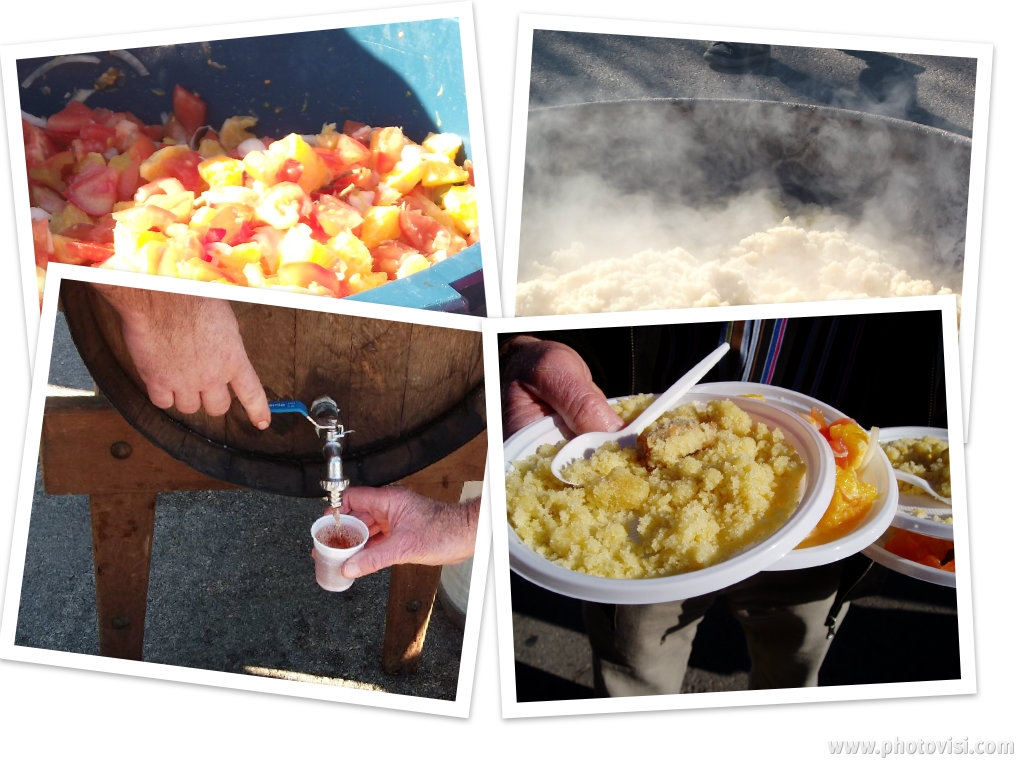
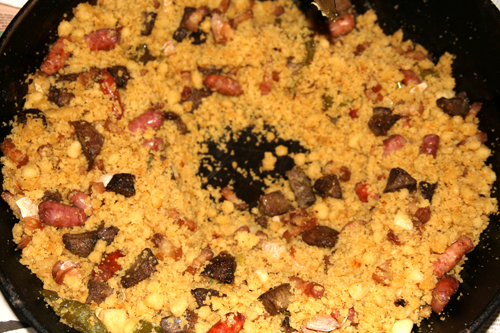
Many towns and cities throughout the world have unique dishes that encompass their overall culture and tradition.  Migas is a traditional Andalucían peasant dish often made from breadcrumbs, although in Torrox the migas are made with flour.  Normally served as an accompaniment to a main dish, of fried fish for instance, migas comprises of fried bread crumbs liberally laced with garlic, and may also contain small pieces of chorizo, ham or peppers.

Each year, on the last Sunday before Christmas, (so, this coming Sunday – December 23rd 2012)  this gastronomic festival which has been declared of “National Tourist Interest” by the Junta de Andalucía, will serve more than 40,000 visitors. 

Whoever said “there is no such thing as a free lunch”,  obviously had never visited Torrox pueblo!

From early in the morning, teams of cooks prepare the migas for free distribution to local residents and visitors to the festival.  The ringing of a bell is the signal for everyone to come and collect their plate of migas, which is served with a glass of local wine and an “arriera” salad  (made with oranges,  tomatoes, potatoes, onions and olives) to accompany the meal.

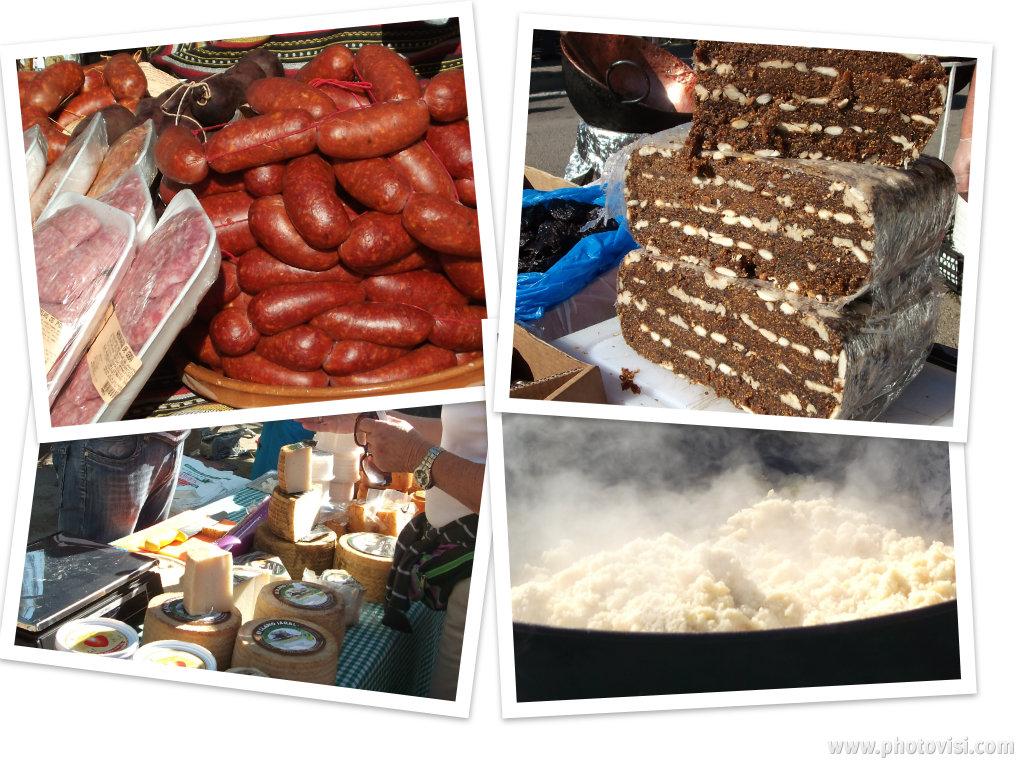
There is plenty to do during a day at the Migas festival  because as well as free food and drink there are many craft stalls, traders selling fine cheeses, chorizo, cakes, nuts and sweets, the opportunity to enjoy guided walks through the village, and street artists, as well as choirs and local dance groups, who all help to create a wonderful festive atmosphere.

Of course, in true Spanish tradition, this is just another excuse for a party, but on a warm, sunny December day, why would you not pursue that with some vigor?

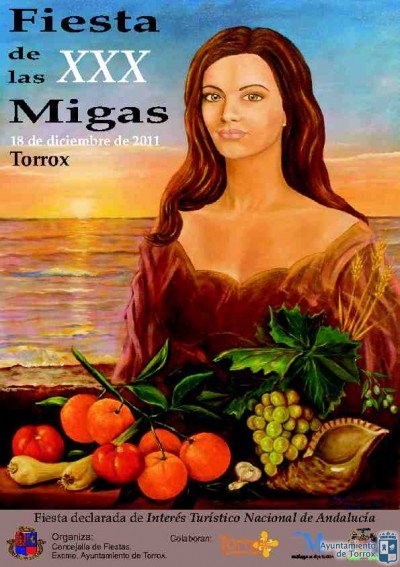
(BTW – didn´t they do well getting Angeline Jolie to pose for last  year´s poster?  😉

You might also enjoy:

La Noche de San Juan: Families, fires and football!

The heart of Cómpeta: El Paseo de las Tradiciones

CBBH Photo Challenge: Simple Pleasures