Edited to add: When you’ve read this article, make sure you also look at my up-to-date Cost of Living in Spain: (Málaga edition) for July 2015, now available HERE.
 Many people find themselves reading my blog because they have searched for the term “Cost of living in Spain“. In August 2012, I posted my first article about the cost of living here in the Axarquía region, east of Málaga, and have continued to write updates every four months throughout the past year. They have proved to be some of my most popular posts. Of course, all the information is relative. What is right for one person will be totally different for another. We have found that living like locals – eating seasonal fruits and vegetables, buying Spanish brands and eating out in bars and restaurants full of Spaniards, has enhanced our experience of moving abroad. If you move to Spain and your choice is to buy only international branded food and drink, or dine out at tourist restaurants, then your cost of living will be considerably more expensive than mine. Bear in mind that the costs I will publish are relevant to me, living here on the eastern Costa del Sol. Prices in other areas of Spain may be different.
ACCOMMODATION: Buy or rent?
We moved to Spain eight years ago, and for the first twelve months rented a townhouse in the village of Frigiliana. We wanted to experience a full year, during every season, before we committed to purchasing our current home. I would recommend that course of action to anyone considering moving abroad. Most people know about the financial crisis affecting Spain at the moment, so I wont go into the price of houses or apartments. Search Google for estate agents in Spain if you´re interested, and you´ll find out far more information than I can give you here. If you do decide to purchase, you will most likely need a sizeable deposit and may find difficulty obtaining a mortgage, should you need one. Bear in mind also the fluctuating currency exchange rate between your home currency and the Euro if you need to transfer large amounts of money into Spain. Fortunately for us, when we bought our house, the exchange rate was €1.51 for each British pound sterling (£1). Today’s rate would only give €1.16 for each British pound – a considerable difference. You can find a lovely apartment to rent, with 2-3 bedrooms, 1-2 bathrooms and a communal pool, on the coast but away from the main tourist area, for €450- €500 per month (on an 11 month contract). In more rural areas it would cost less, or in urban/touristy areas the prices would be higher. It’s easy to find a detached villa with a private pool and a large garden for €1000 a month (and often less). So, when you compare the price of some rented accommodation, in a not very nice area of many cities in the UK (for example), you can see the attraction for people wanting a cheaper option, living in Spain. MY TOP TIPS: It´s only when you are actually here in Spain that you can discover the full selection of rental options that are available. Almost everyone you meet knows someone who has an apartment to rent, and many of these will never find their way onto any English language website. If you´re serious about renting a place in Spain, get yourself over here and start asking around. You could also try haggling over the cost of the rent – the worst they can say is ¨No”! 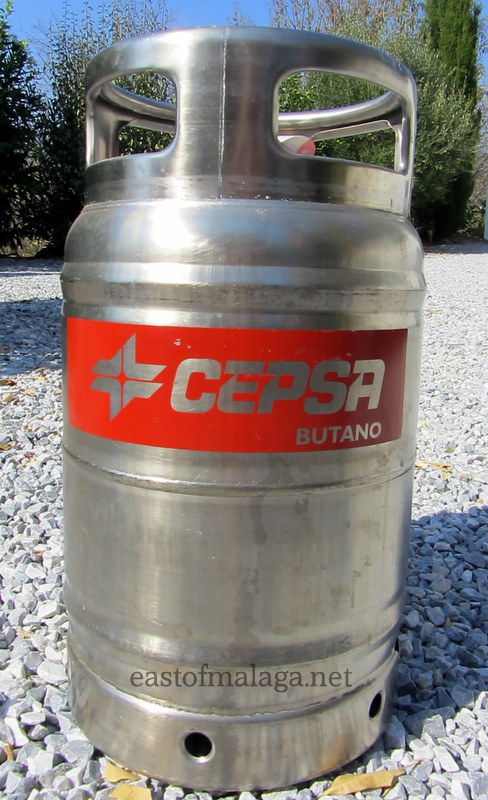
UTILITIES
Like many places in the world, the cost of household utility bills has risen considerably over the past few years. Electricity: For a 3 bedroom/2 bathroom detached house in the countryside with a swimming pool, we pay around €100 per month. The cost of consumption for us in winter is for heating and lighting, whereas in summer it’s for lighting and the swimming pool pump running for 8 hours a day. Added to that, we also have air conditioning units in the living room and master bedroom, though we use them sparingly – preferring to open windows during early morning and late evening. Sometimes though, especially in July and August, you just have to put the air-con on! Gas: We are not connected to a piped gas supply here, so we use bottles of butane gas. This is a common feature throughout many areas in this part of Spain. A year ago, a 12.5kg bottle of Butane gas cost €16.45. They are now €17.50. For us, one bottle lasts (on average) three to four weeks for two people, although this could be longer in summer, (depending on how many visitors we have), for all hot water, showers and cooking on a gas hob. Last September we had a new, much more efficient gas water heater fitted and, even though it has a larger capacity for water heating than the previous one, it uses significantly less gas. Water: We are not connected to mains water because we live in the countryside, so when we bought our house part of the purchase cost was for a share in a local water company. We have a 14,000 litre water deposit in which to store our house water. Our water share gives us an allowance of up to 17,500 litres of water each week at reduced cost, though if we use more than this, the price rises steeply. Needless to say, we don´t use this amount of water, even allowing for swimming pool top-ups and garden irrigation in the summer months. Our water company, Patamalara, send out their bills every two months, and some of the cost appears to depend on the amount of repairs that have been undertaken on the system. Over the past twelve months our annual water bill has amounted to €97. IBI or Council Tax: Paid yearly to the local council. This year’s bill is €337 – the same as it has been for the past five years. Bear in mind, we don’t have a rubbish collection here as we live in the countryside, so we have to take all our household waste to one of the collection centres in a local village – but this is no problem as we take it when we are on our way somewhere. When we lived in the UK, we used to pay four times this amount – over eight years ago! Telephone: Living in a mountainous area of the countryside, Telefónica (the largest fixed phone and ADSL operator in Spain) are unable to supply us with land-line telecommunications. We therefore rely on Skype (via the internet) for most calls (which are free to other Skype users, or by using credit, if not) and have a pay-as-you-go mobile phone with Movistar (also owned by Telefonica). Internet: We use a wireless internet option costing €29 (inclusive of IVA tax) per month, with unlimited downloads (within reason). Speeds up to 3 Mbps. House and Contents Insurance: Based on the re-building costs of the house, including contents, we pay €227 per annum with Linea Directa. 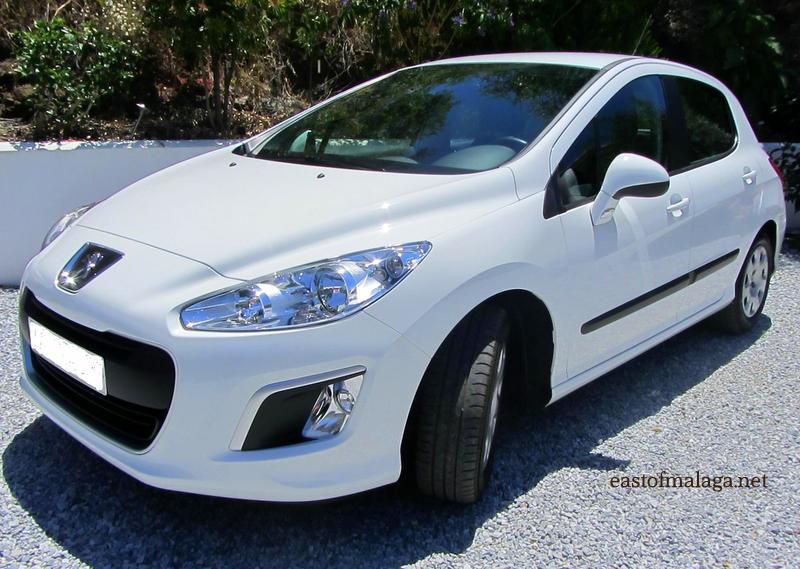
MOTORING COSTS
The cost of motoring in Spain has risen considerably over the past few years. The price of Diesel (gasoil) at the Repsol garage at Torrox Costa is €1.42 per litre. Unleaded petrol (gasolina sin plomo) 95 Octane is €1.52 per litre. As in most countries, branded petrol stations such as Repsol are often more expensive for petrol and diesel compared to supermarkets and hypermarkets such as Carrefour. New cars are expensive in Spain, and even though advertising billboards might seem to offer competitive prices (for example using Plan PIVE – a government help scheme offered when trading in a ten-year-old car for a brand new one), the reality is that many special deals are often only available when taking out expensive finance agreements. We found this out for ourselves this summer when we changed our 9 year-old Peugot 307 for a six-month-old Peugot 308. Cash is NOT king around these parts, it seems. Second-hand vehicles (often with high mileage) hold their values well in Spain, making a comparable model of the same age in the UK (for example) much cheaper. Car tax (Impuesto vehiculos traccion mechanica) is based on fiscal horsepower (which bears no resemblance to the mechanical horsepower of the vehicle) and is a means by which the taxation is calculated. For our Peugot 308 the cost is €51 per annum. Our car insurance for an almost new Peugot 308 1.6 E-HDI (with Linea Directa – the Spanish equivalent of Direct Line in the UK), for fully comprehensive cover with legal assistance included, and an excess of €150 costs €570 per year. There are some toll roads on the western Costa del Sol, but fortunately none in the Axarquía, east of Málaga. 
PUBLIC TRANSPORT
Spain’s public transport system is relatively cheap and reliable. Trains: Because of the mountainous terrain there are no trains running through La Axarquía, though you can catch a train from Málaga to many other Spanish cities, including Granada, Seville, Córdoba, and Madrid. I can certainly recommend the AVE train (Spain´s equivalent of the Bullet Train) as an alternative to budget flights, with favourable prices being found in advance, online, via state-owned train operator, RENFE. Buses: The main bus operator here is Alsina Graells (ALSA for short). Their website is in English, and from here you can study bus schedules and purchase tickets in advance of your trip. There are generally plenty of buses between towns and cities, and they usually leave on time. Buses may be infrequent to remote villages in the Axarquía, with often only one bus per day or none at all at the weekend. The cost of a bus ticket with ALSA, from Nerja to Málaga, (approx. 60 kms) one way is 4.43 € or €8.02 for a return trip. 
ENTERTAINMENT
Eating out: Menu del Día (menu of the day, usually at lunch time) 3 course meal, including bread and one glass of beer, wine or a bottle of water) 8 – 10 € Evening dinner for 2: (three courses) at a mid-priced restaurant, including a glass of wine 40 € Tapas – small beer or glass of wine including a tapa 1-2 € (depending on whether it’s a tourist area or not). Cinema ticket (International release, Yelmo cinema, Malaga) 8.60 € Round of GOLF (2 players + buggy, Baviera Golf course at La Caleta de Vélez) 97 € Cigarettes (pack of 20, Marlboro) 4.75 € 
STANDARD GROCERY LIST
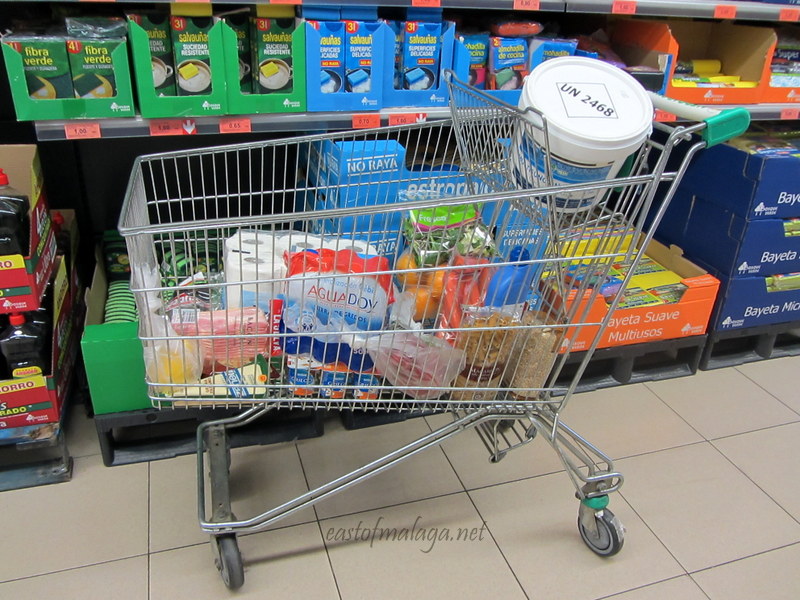
This is the Standard Grocery List I have published previously. The first price shown is as it was in August 2012, with this month’s prices in RED alongside. If there is only one price indicated, this is a new introduction to the list. For the sake of comparison, I used the Spanish Supermarket – Mercadona. Milk (semi–skimmed UHT, own brand), 1 litre 0.54 € 0.59 € Loaf (white, baguette 250g) 0.45 € 0.45 € Loaf (white, Bimbo brand, 460g 100% natural) 1.49 € Butter (250g, own brand) 0.98 € 1.05 € Sugar (1kg, white) 0.95 € 0.93 € Coffee (ground, 250g, Santa Cristina) 1.79 € 1.89 € Eggs (12, own brand caged, medium) 1.35 € 1.35 € Olive oil (1 litre, extra virgin, own brand) 2.75 € (5 litres 12.99€) 3.35 € (5 litres 15.50 €) Rice (1kg, long grain, own brand) 0.71 € Pasta (1kg, own brand) 0.79 € Pasta (500g, wholewheat) 0.99 € Tinned tuna (6 x 80g, own brand) 3.39 € Chicken breasts (1kg, boneless, skinless, packaged)) 5.50 € 5.80 € Pork chops (1kg) 4.60 € Beef mince (Store brand, pre-packed, 1kg) 5.43 € 3.80 € (for 700g) Fish (1kg Salmon steaks) 8.75 € 13.50 € Fish (1kg Dorada, Gilt-head bream) 6.95 € Apples (1kg, green, Golden Delicious) 1.35 € 2.00 € Oranges (1kg) 1.39 € 1.19 € Bananas (1kg) 1.25 € 1.29 € Potatoes (1kg) 0.92 € 1.25 € Lettuce (1 head, Iceberg) 0.85 € 0.85 € Red Peppers (1kg, loose) 2.29 € 1.95 € Green pointed “Italian” Peppers (1kg, loose) 1.99 € 1.35 € Tomatoes (1kg, loose) 1.19 € 0.99 € Coca-Cola (1.5 litre bottle) 1.09 € 1.09 € Water (1.5 litre bottle) 0.45 € 0.42 € (for a 2 litre bottle) Domestic Beer (1 litre bottle, Cruzcampo) 1.29 € 1.25 € Imported beer (6 x 25cl bottles Heineken) 3.05 € Bottle wine (medium priced) 3.00 € to 3.50 € Colgate toothpaste (100 ml) 1.75 € Pantene shampoo (300 ml) 3.00 € Toilet rolls (pack of 6, own brand) 1.95 € 1.95 € Washing powder (Box, 35 washes, Elena brand) 5.94 € 4.87 € Currency Conversion from XE €1 = 1.34 USD 0.85 GBP 1.48 AUD 1.40 CAD 1.70 NZD 13.70 ZAR So, tell me – HOW DO PRICES COMPARE WHERE YOU LIVE? Whilst you’re here, you might be interested in these articles: Cost of Living in Spain Series: Watching The Currency Market When Buying And Selling Spanish Property AVE: Taking the Fast Track from Málaga to Madrid






 East of Málaga