Cost of Living in Spain Series: Watching The Currency Market When Buying And Selling Spanish Property

House in Spain

When I got to point #2 in a recent article entitled 10 Ways To Save Money When Buying Your Spanish Property, it had me casting my mind back almost nine years to when we were about to buy our first property abroad, here in Andalucía.

We had sold our house back in the UK in record time, and were renting a town-house in the pretty, mountain village of Frigiliana.

Having never rented a property before, it seemed sensible to see if we liked the area as a place to put down roots, as well as to experience the full range of the seasons of the year, before we actually bought somewhere. After all, the weather may have been hotter in summer or cooler in winter than we had imagined – and indeed, it was!

We made many house-hunting trips to various towns and villages, both inland and along the coast towards Málaga, and eventually as far along the western Costa del Sol as Estepona. For various reasons, but mainly because of fewer high-rise buildings and built-up areas, we decided that the Axarquía region, to the east of Málaga, was the place for us.

We knew we would be transferring a sizeable chunk of the proceeds of our UK house sale via a currency firm (into Euros) to pay for our new house, so we took the opportunity to keep an eye on the fluctuating currency market.

As a result, we were able to jump in right at the top, to bag a cool €1.50 euros for each £1 sterling.  This gave us almost ten thousand euros more than we had originally been expecting, which was enough to put a brand new kitchen with matching appliances into our new property. Quite a bonus!

And yes, I do know that the market could have gone the other way, but on this occasion, it didn’t.
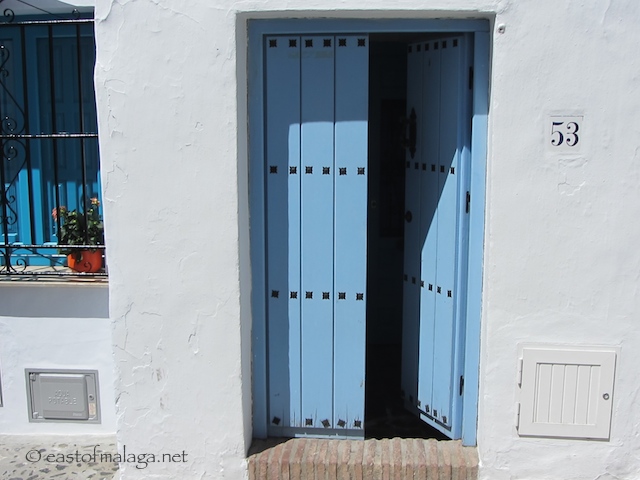
Blue door in Frigiliana, Spain

Over the next few years, the British Pound made a steady decline against the Euro until it almost hit parity (when £1 only bought €1.08, at its lowest rate).  This meant that for many British expats living in Spain and relying on an income, savings or a pension from the UK, their income in real terms had reduced by almost one third.

Then, of course, came La Crisis, as it is known in Spain, when the difficult economic situation has meant that some British expats who may not have carefully planned for their future (as well as some who did) have been left in the unfortunate position of having to sell up and return to the UK.

Things have improved a little over the last few years, with the current exchange rate against the British Pound being €1.26 as of today’s date (15th July 2014).  But there are still anguished mutterings amongst British expat house sellers that they are having to accept lower prices than they paid for their properties, several years ago.

I want to look at this in more detail, using reverse psychology to see if the situation is really as bad as they think.
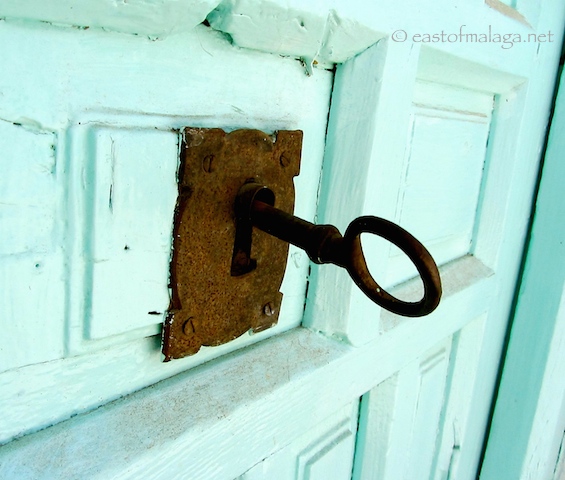
Key in house door

Back when I bought my house in January 2006, with the exchange rate at £1 buying €1.50, a €300,000 euro house in Spain actually cost £200,000.  To keep the figures simple, let’s assume that almost nine years later the price of that house has not risen at all and is sold today for €300,000.  Converted back into British Pounds (again keeping it simple, so let’s use €1.25 for each £1) then the initial £200,000 investment now converts from the €300,000 sale price, to £240,000 an increase of 20%, due entirely to currency fluctuations.

Even if that self-same house were sold for only €280,000 (€20,000 less than was paid for it) the conversion into British Pounds would be £224,000 – which is still an increase of 12% over the £200,000 that was initially paid for the property.

So maybe the situation is not quite as bad as some people imagine.
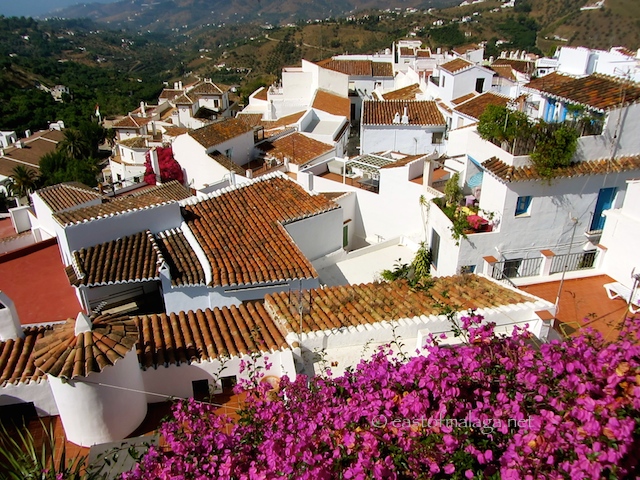
Rooftops of Frigiliana, Spain

Of course, my example above is a simple one and does not take into account any of the following:

  1.  Capital gains (or any other) tax which might become due once the house is sold.
  2.  Where under-declarations were made at the time of purchase (when everyone in Spain was expected to pay for part of the price of the house in cash,  and furtively sneak  €80,000 to the vendor in a plastic, Mercadona shopping bag).
  3.   Legal and/or estate agents fees.

Whilst the above example is only applicable if someone is selling up in Spain and moving back (or at least sending their money back) to the UK,  if you are selling and want to re-purchase in Spain, because of the current housing market, you are now in a powerful position to negotiate prices when buying your next property.
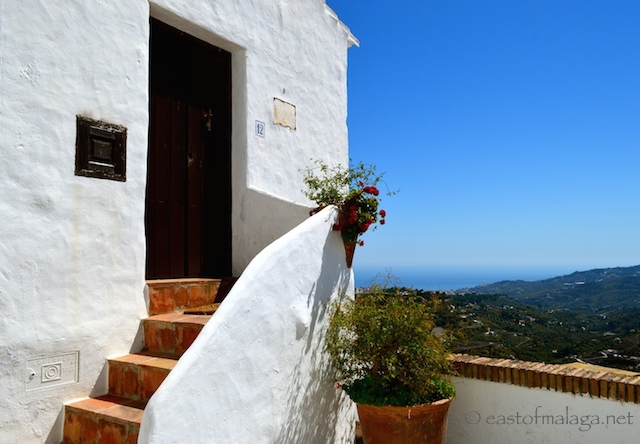
Stairway to Heaven

To illustrate my point, I have only used simple, rounded figures, and it’s always wise to take legal and financial advice when making substantial property purchases.  

The purpose of this post is to indicate the advantage of never under-estimating the fluctuation of the currency market, which is a point often missed, or at least not discussed, as it should be.

This post is not meant to offer legal advice, merely an observation.


Summer Sunshine Salad

Sunshine salad

It’s that time of year when it’s often too hot to eat anything heavy, so this lovely salad not only looks good, but is quick to prepare and really tasty, too.

SUMMER SUNSHINE SALAD

As with most of my recipes,  feel free to use more of the ingredients that you like, and substitute the ones you don’t.

Put three eggs in their shells into a pan of water and bring to the boil.  Allow the eggs to boil for 5-6 minutes, then plunge the boiled eggs into cold water.  Once they are completely cool, remove them from their shells and cut into quarters.

Whilst the eggs are boiling, chop some carrot, red pepper, green pepper and red onion into small pieces.  Place all the ingredients into a dish and add salt and pepper, extra virgin olive oil, and lemon juice, to your taste.  Mix together.

I also added some freshly chopped coriander or cilantro (though you could just as easily use flat-leaf parsley if you prefer), a small jar of ready-prepared red kidney beans and a tin of  tuna.

All I had to do then was arrange my boiled eggs in a circle to complete my Summer Sunshine Salad.  🙂

Serve with crusty bread and a glass of chilled, white wine.

What could be nicer on a hot summer’s day?


Wildfires in Spain: What you should do

Competa fire June 29th 2014

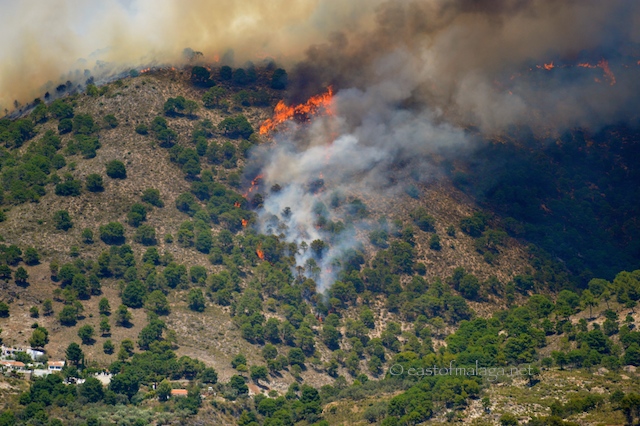
Those of you who follow my Facebook page will already know about the devastating wildfire which spread throughout the Cómpeta countryside last Sunday.

At the height of the blaze there were more than 200 fire-fighters on the ground, assisted by up to 19 fire-fighting aircraft, including helicopters, water-carrying planes, and spotter aircraft.  Personnel were drafted in from the whole of Málaga province and beyond, to the blaze which started around 1pm, but quickly spread over an area of 100 hectares (250 acres) into the Sierras de Tejeda, Alhama and Almijara Natural Park.

Five houses were damaged and the local football pitch destroyed during the day, as well as 500 people being required to evacuate their homes overnight.  

Fortunately there were no injuries reported.

Competa fire June 29th 2014

Rumours are rife that the fire was started either maliciously or as a result of “bad agricultural practices”, but whatever the truth, it was a frightening experience for many local residents and visitors, alike.

You can read Maggie’s account of being caught up with the evacuation HERE or see Adrian’s photos of the aftermath of the fire around Cruz del Monte area, where residents were evacuated, HERE. 

Below is a collage of some of the photographs I took throughout the day.

If you live in a forest in Spain or within 500 metres of one, you are required by law to have a fire prevention and self protection plan in place, just in case a fire should occur.

It’s a sad fact of life, that only around one quarter of all forest fires are started by natural causes, such as lightning.  The rest are as a result of negligent practices or intent.   So, it makes perfect sense that if you are visiting or living in the Andalucían countryside, you should be in a position to consider your options, if you are caught near a wildfire.

Many of the local people have been aware of fires in the countryside all of their lives, but wildfires are not something that many visitors or expats have ever had to deal with, coming as many of us do, from wet, northern European countries.  We are unprepared. 

So what should we do?

Helicopter fighting the Competa fire, 29th June 2014 Fire prevention: 

  •  Have a safe zone around your house, where there is less vegetation.  Keep that area free of dried grass, weeds or other flammable materials.
  • Cut back any branches of trees that overhang your house.
  • Pay particular attention to discarded garden prunings and wood stores, making sure they are a safe distance from the house.
  • Keep gas bottles either within the house or in a safe place some distance away.
  • Don’t allow dead leaves to accumulate on your roof or gutters.
  • When outside,  ensure that all lit cigarettes are completely extinguished before you leave them.
  • Never BBQ near to trees or flammable materials, and always have the garden hose nearby.

Self protection:

BE PREPARED!   Prepare an advance plan with your family, considering what you will each do in the event of fire and how you will communicate with each other.  Also think about how your pets fit into your plans.

  • Review all your possible emergency escape routes, making sure they are never blocked.
  • Always have at least one quarter of a tank of fuel in your vehicle.
  • Prepare a list of items to be taken in an Evacuation Pack.

In the event of FIRE:

  • Call the TOLL-FREE Emergency telephone number 112.  DO NOT ASSUME THAT SOMEONE ELSE HAS ALREADY CALLED.  They may be thinking the same thing.  If you can’t speak Spanish, ask to speak to someone who speaks English.
  • Close all doors and windows in your house.
  • Bring all flammable outdoor chair cushions inside the house.
  • Make safe any exterior gas bottles.
  • STAY CALM and follow your escape plan (if necessary), taking with you your Evacuation Pack.

 What should be in an Evacuation Pack?

Everyone’s will be different, but here are some items you might consider important enough to include:

  • Personal papers – such as passports, birth and marriage certificates, house deeds or rental contract, medical cards, insurance policies.
  • Photographs – either in albums, on flash drives, external hard drives or portable computers.  Also take any charging cables you may require.
  • Medication – paper prescriptions (if you have them), pills, or items kept in the refrigerator such as insulin.
  • Money – enough to tide you over until you can visit an ATM.
  • Emergency food, water and clothing – including snacks, pet food, baby formula, nappies, sanitary items, bottled water.
  • Battery-powered radio – to listen to emergency bulletins on local radio station.
  • Mobile telephone (and charging cable) – complete with contact telephone numbers and addresses.
  • Irreplaceable precious items – but only small ones that will not hinder your escape.

Fire in the campo, Competa

If you live in Málaga province, you might also consider joining the excellent Local Fire and Weather watch group on Facebookcovering the Costa del Sol and inland areas.  

I do not hold myself out as an expert on fire prevention and consider many of the above points to be common sense.  If you can think of anything I have missed that you consider important enough to be included on this list, please let me know in the comment section.

Please follow East of Malaga on Facebook – there are many more photos and posts on there each day that never appear on this blog.  Look in the footer at the bottom of this page to “Like”.

Game of Thrones, Series 5 WILL BE filmed in Andalucía, Spain

Alcazar, Seville, Spain

IT’S OFFICIAL!

The eagerly anticipated announcement that Game of Thrones fans have been awaiting has been made.  The United States Ambassador to Spain, James Costos, has confirmed that Series 5 of the popular TV series will be filmed in Andalucía, Spain.

The Royal Alcázars in Seville (Reales Alcázares de Sevilla), which is the oldest Royal palace in Europe, has been chosen as the main venue for the filming of Series 5 of the Game of Thrones.  The Alcázar, originally a Moorish fortress, was declared a UNESCO World Heritage Site in 1987, and the palace is one of the best remaining examples of mudéjar architecture.  (Filming will take place from 14th – 22nd October 2014).

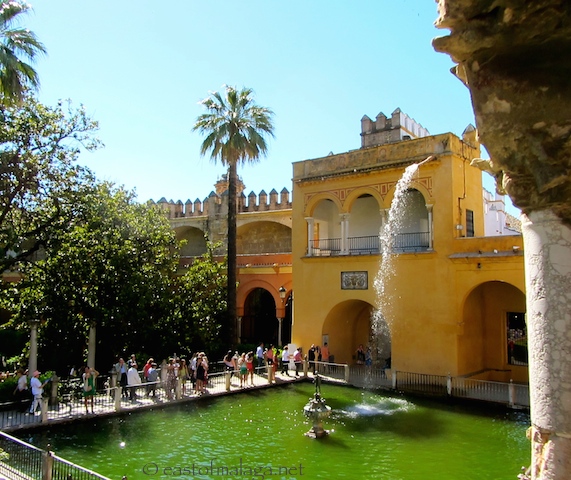
Mercury's Pool in the Alcazar gardens, Seville

Mercury’s Pool in the Alcazar gardens, Seville.


Gold ceiling of the Ambassador's Hall, Seville Alcazar

Gold ceiling of the Ambassador’s Hall, inside the Alcazar of Seville.

It has also been confirmed that filming will take place within the historic town of Osuna, in Seville province – the origins of which date back three thousand years.

Whilst the exact locations of all filming within Andalucía for the Water Gardens of Dorne is still being kept secret, it’s understood that the Alcázar of Córdoba, the Alhambra Palace in Granada and the Alcázar of Málaga have yet to be completely ruled out.

This is good news for Andalucía with a boost to the economy in the region of €80 million euros, creating around 900 permanent and 5000 temporary jobs, as well as a growth in tourism to the area.

EDITED TO ADD: The Spanish producer chosen by US TV network, HBO, for the filming of ‘Game of Thrones’, has just issued a casting call for Series 5.   Interested persons should register with the following email address:

castingjuegodetronos@gmail.com

At this stage, specific characteristics for actors have not been announced – but hey – GO FOR IT! 

Which location would be your choice?  Would you like to be an extra in Game of Thrones?