Apocalyptic skies over southern Spain

IMG_2269

Apocalyptic skies over southern Spain

Apocalyptic skies over southern Spain

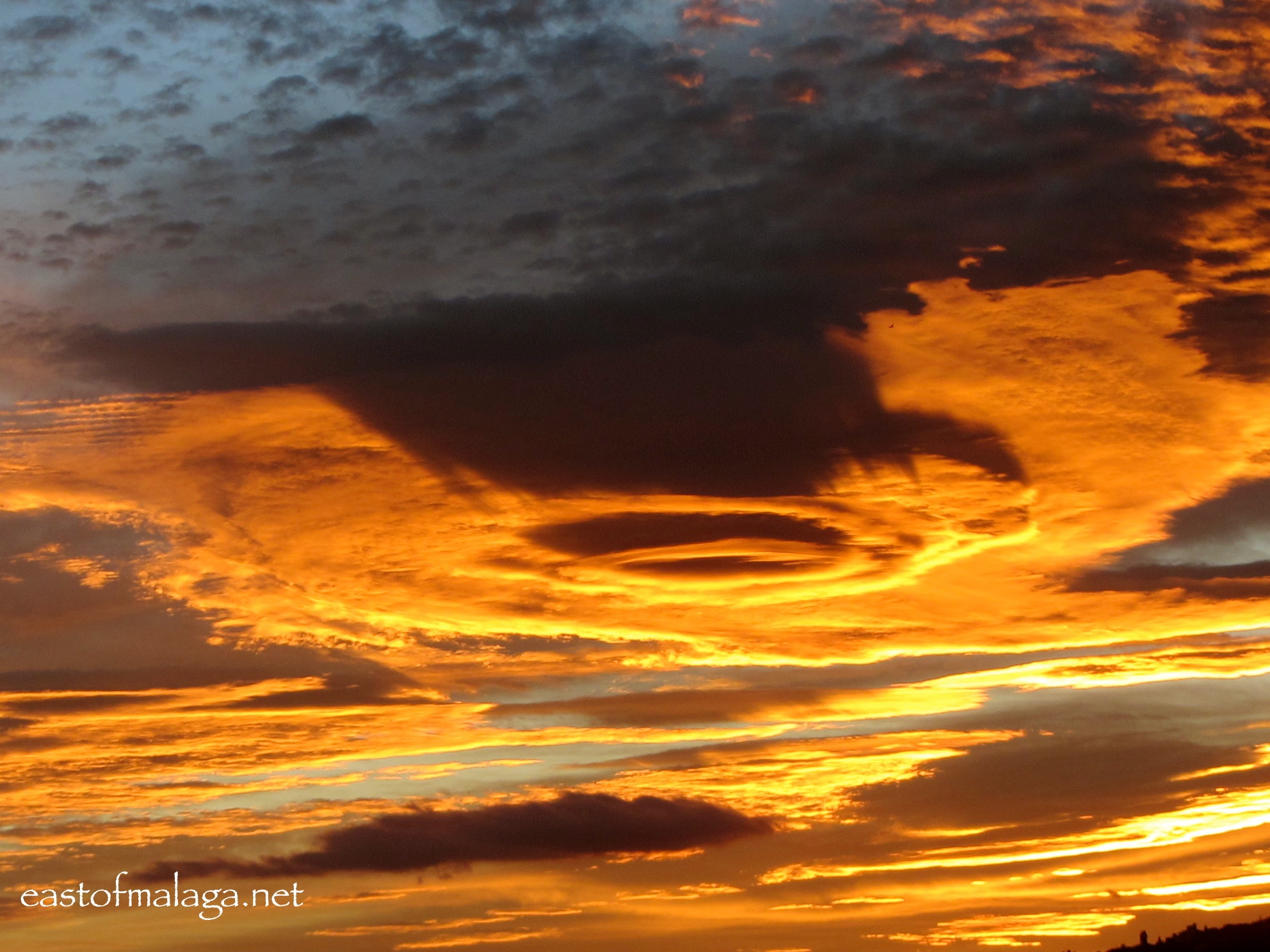
Just wanted to show you the amazing sunset scene here, last night and the DRAMATIC LENTICULAR CLOUD.

According to Wikipedia, lenticular clouds are stationary lens-shaped clouds that form in the troposphere, normally in perpendicular alignment to the wind direction. Due to their shape, they have been offered as an explanation for some Unidentified Flying Object (UFO) sightings.

In mountainous regions where stable moist air flows over a mountain or a range of mountains, a series of large-scale standing waves may form on the downwind side.  If the temperature at the crest of the wave drops to the dew point, moisture in the air may condense to form lenticular clouds.

What’s the most unusual skies or sunset you’ve ever seen?

Tell me all about it (or provide a link to a photo) in the comment section below.


Other links you might enjoy:

I can see Africa from my terrace!

Same subject, different time

Giving thanks for the most beautiful sunsets


Are YOU missing out?

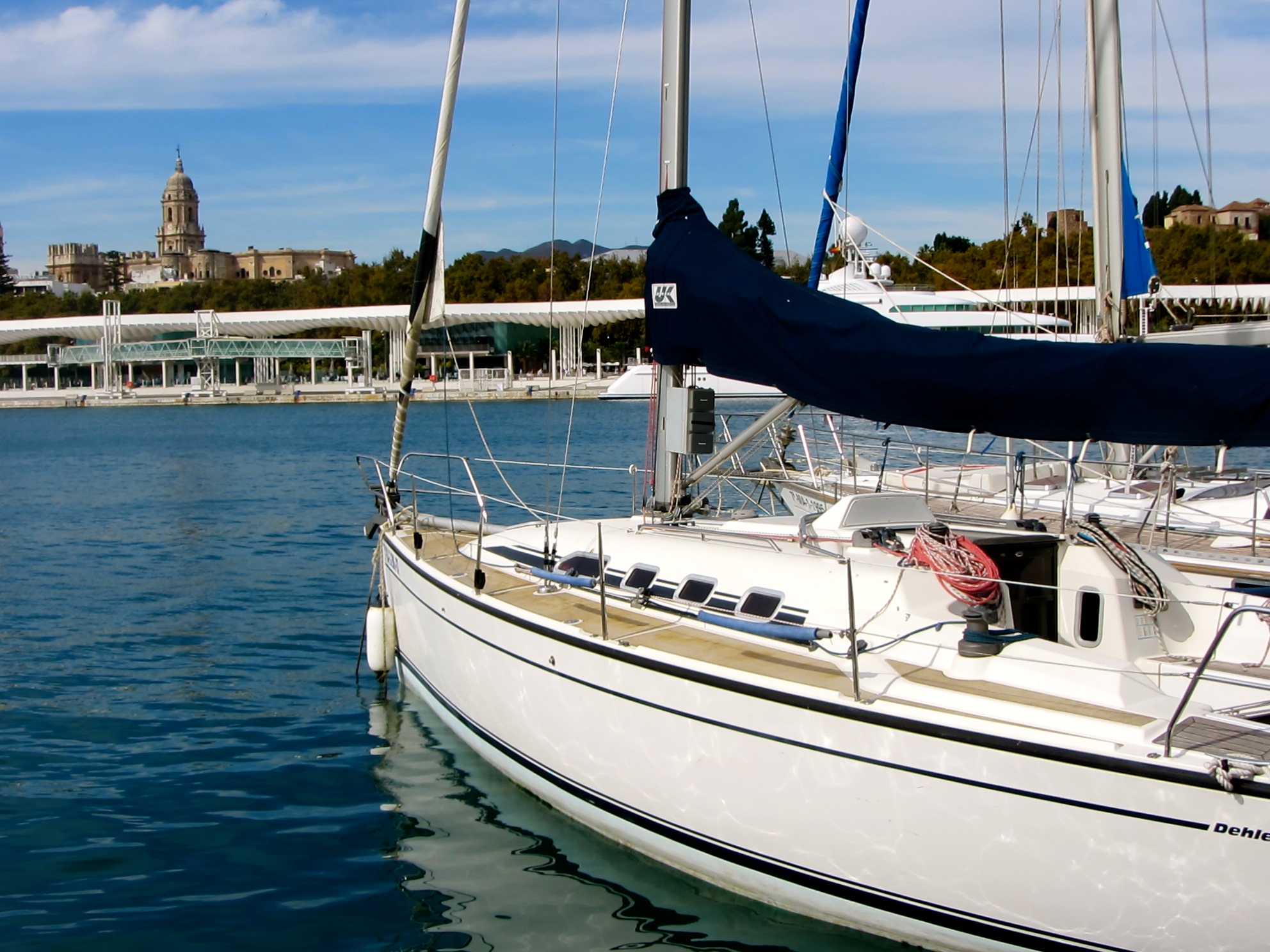
View of Malaga cathedral from Muello Uno, Malaga

Yesterday, we spent the day wandering around the city of Málaga.  This photo was taken at Muelle Uno, the fabulous new port and marina.  It was a beautiful sunny November day with lots of people strolling around.  The restaurants were full to bursting!

During the summer, I extended the social media of East of Málaga blog to include Facebook and Twitter, where I post lots of articles and photos that never get included here on the blog.

I posted the above photo on my Facebook page yesterday, but unless you are already a fan, you would never have got to see it.

Recent posts on Facebook and Twitter include photos of my visit to Nerja cemetery last Friday evening for Dia de los Muertos (Day of the Dead), information on courses to promote winter mountain safety or identifying varieties of mushrooms found in the Natural Park of Sierras Tejeda, Almijara and Alhama and How to Complete the EX15 for NIE Application in Spain.

Make sure you don’t miss out by clicking the “Like” or “Follow” boxes in the sidebar.

Let me know if you follow me, in the comments below – and I’ll follow you right back!

Popular posts:

Let’s Talk About Tapas: Boquerones

The Buddhist Stupa of the Eastern Costa del Sol

Easy No-Bake Chocolate, Peanut Butter and Oatmeal Cookies

Day of the Dead: Spanish style

Pumpkin by Thomas Backa (Flickr CC)Image credit: Thomas Backa  (Flickr: Creative Commons)

I don’t like Halloween.  Never have.  Never will.

Not for of any particular religious reasons, but simply because it always seemed a pretty pointless exercise to me.

Until I moved to live in Spain.

Although the American-style “ghosts and ghouls” type of Halloween has now started to creep into the Spanish calendar each year, this time of year is celebrated here in a different form, as “El Día de los Muertos” or the “Day of the Dead”.

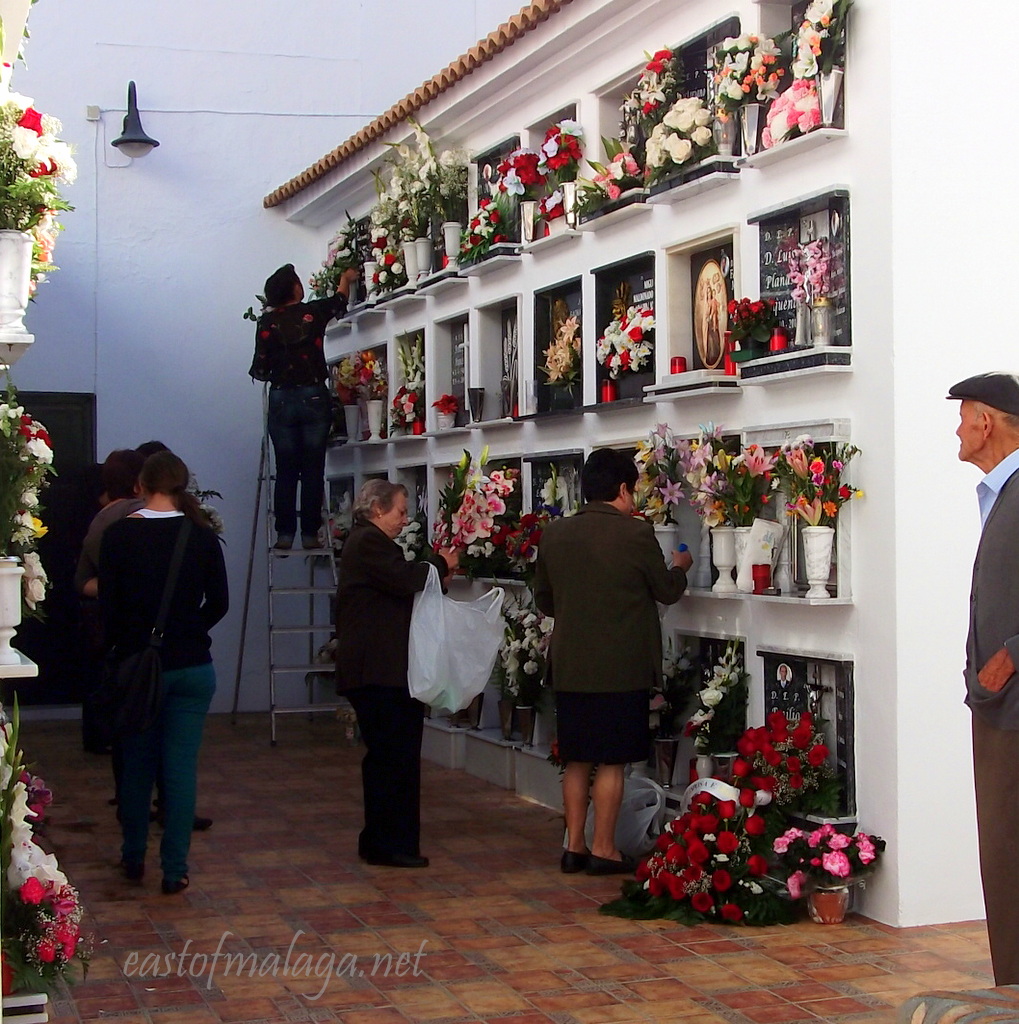
The festival of Todos los Santos (All Saints´ day) is a national holiday on November 1st each year, when cemeteries are packed with families paying homage to their dead and tending the gravestones of their ancestors by placing fresh flowers and candles.

Tending the graves in Competa cemetery for Todos Los Santos

This is a commemoration for loved ones with nothing ghoulish or scary involved and, thankfully, without commercialism.  

Exactly as it should be.

How do you honour loved ones who have passed away, in your part of the world?


Related articles:

Death in the Afternoon: The Round Cemetery of Sayalonga

The Day of the Dead: A Celebration of Life 

The heart of Cómpeta: El Paseo de las Tradiciones


Let’s Talk About Tapas: Boquerones

Tapas: Boquerones in vinegar

Last month, I started a new feature called Let’s Talk About Tapas, when I gave you a general overview of what to expect if you want to eat tapas in Spain.

Each month I will be telling you about different tapas, and often I will include a recipe so you can make them at home for yourself.

So, what are tapas and how did they originate?

Well, it’s thought that originally in the wine-making regions of Andalucía, a cover in the form of a small plate or lid was placed over glasses of wine to keep fruit flies away.  Titbits of food were later placed on the lid to be eaten with the wine.  Remember too, that the word “tapar” in Spanish means “to cover”, which is where we get the word “tapas” from.

Let’s get started with one of my favourite tapas – Boquerones en vinagre (anchovies in vinegar).

Boquerones whole

You can buy boquerones from fish merchants or any supermarket with a fish counter such as Mercadona, where a kilo costs around €3.

They are not very difficult to prepare and are absolutely delicious!   When we first arrived to live in Spain and rented a house for the first twelve months in Frigiliana, my Spanish next door neighbour showed me how she prepared them.

First you need to head and gut the fish.  Do this by holding each fish using two hands – with the tail in one hand and the head in the other.  Squeeze behind the head and pull it off.  Split open the fish with your fingers and take out the guts, backbone and pull off tail.

Boquerones filleted

Rinse in cold water until the water runs clear and place the filleted fish white-side up into dish.
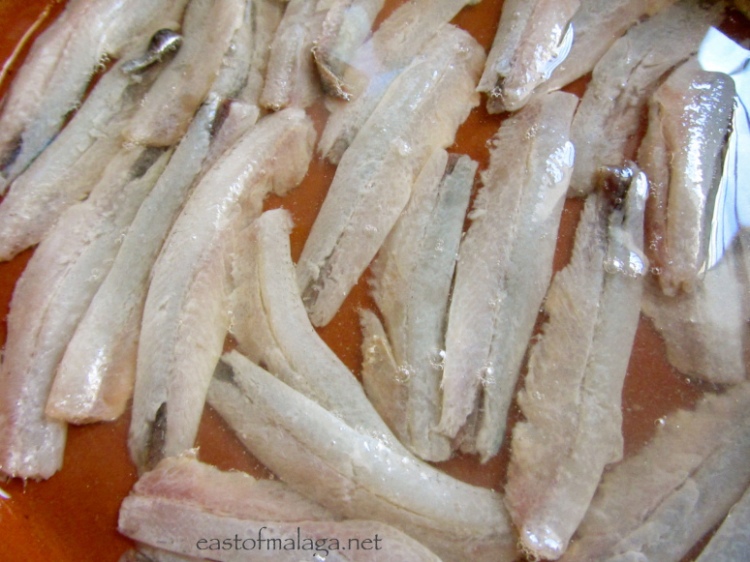
Boquerones soaked in white vinegar and sprinkled with salt

Sprinkle with salt and cover with white wine vinegar.  Depending on how many fish you have, you can arrange them into layers – making sure you perform this same task with each layer.  The top layer of fish needs to be covered with vinegar.

The boquerones will start to turn white almost immediately as they “cook” in the vinegar.

I usually cover the dish with clingfilm and pop it into the fridge overnight to marinade.

Chopped garlic and flat-leaf parsley

Boquerones in olive oil with garlic and parsley

Next morning, drain the salty vinegar away and cover the boquerones with extra-virgin olive oil, lots of chopped garlic and a little freshly chopped parsley – and by lunchtime they will be ready to eat with freshly baked bread.

Eat your boquerones with a glass of chilled white wine or manzanilla (dry fino sherry).

What are your favourite tapas?


Whilst you’re here, you might also enjoy:

Let’s talk about tapas, shall we?

Spanish Omelette: Tortilla Española

A Celebration of Fried Breadcrumbs


East of Málaga: The Weather this Autumn

View across to the coast, east of Málaga, in autumn

Towards the end of August we usually start to look forward to some relief from the long hot summer.

The early autumn thunderstorms arrived on time this year to bring some relief for the parched ground.    The normal pattern would be that these first autumn rains arrive anywhere from mid September to early October, after which the weather cools down a little.

This year has proved to be an exception, as by mid October, we still await a break in the weather and the glorious summer goes on.

Typically these warm sunny days will continue towards Christmas-time with a few rainy periods in between.  The main difference between here and the UK, for example, is that we don’t end up with grey skies for weeks at a time.

The autumn and early winter sun can be surprisingly warm, but this year has proved warmer and drier than normal, with virtually unbroken sunshine and temperatures between 24-29C, which would make a beautiful midsummer day in northern Europe.

A by-product of this has been brilliant clear blue skies.

Looking east from the Balcón de Europa, Nerja

Certainly, along with May and June, the climate here during September and October can be the most pleasant of the year. Visitors from the north would still be wise to take similar precautions against the sun as in summer, but the nights are more comfortable to sleep with overnight temperatures in the range 17C to 19C compared with the low to middle twenties Celsius during July and August.

All in all, it’s a wonderful time of year to visit the area to the East of Málaga.


You might also enjoy:

Cost of Living in Spain: August 2013

CBBH Photo Challenge: PAIRS

A Weekend Away: Santiago de Compostela