The Festival of Virgen del Carmen

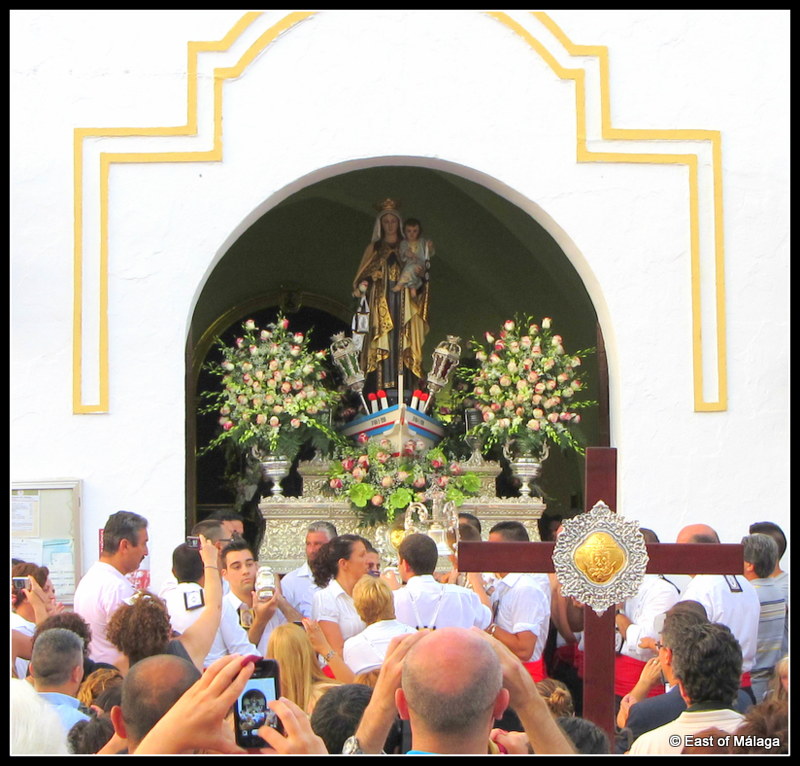
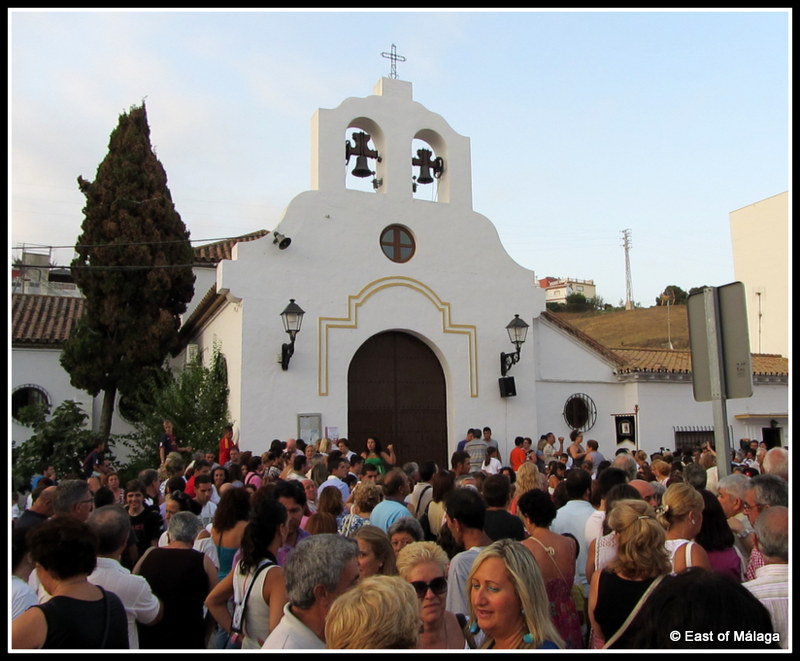
Crowd outside the church waiting for the doors to open

In a festival that dates back several hundred years, many coastal towns and fishing villages in Spain celebrate the Fiesta del Día de Virgen del Carmen as the protector of mariners and fishermen.

Every year around 16th July, spectacular maritime processions of decorated fishing boats known as jabegas head out to sea carrying their precious cargo – an effigy of the Virgen del Carmen, to bless their fishing grounds.

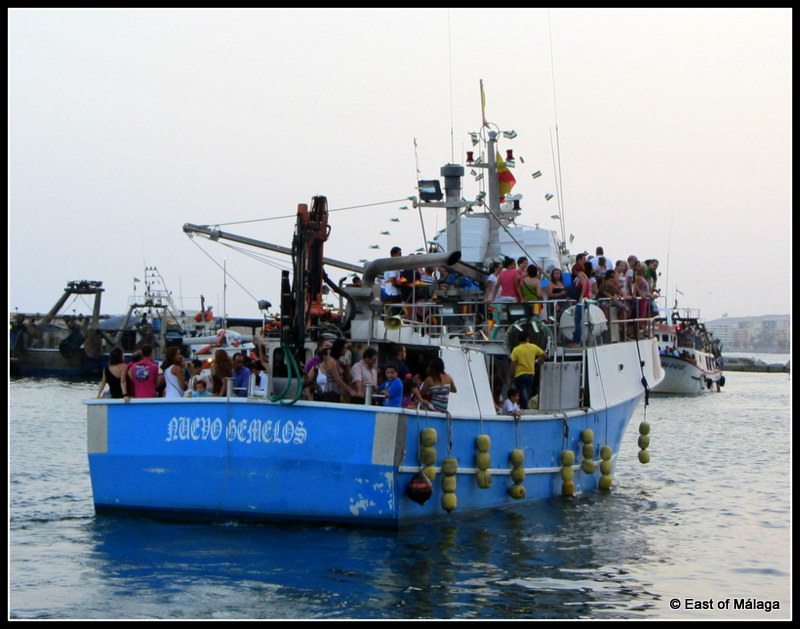
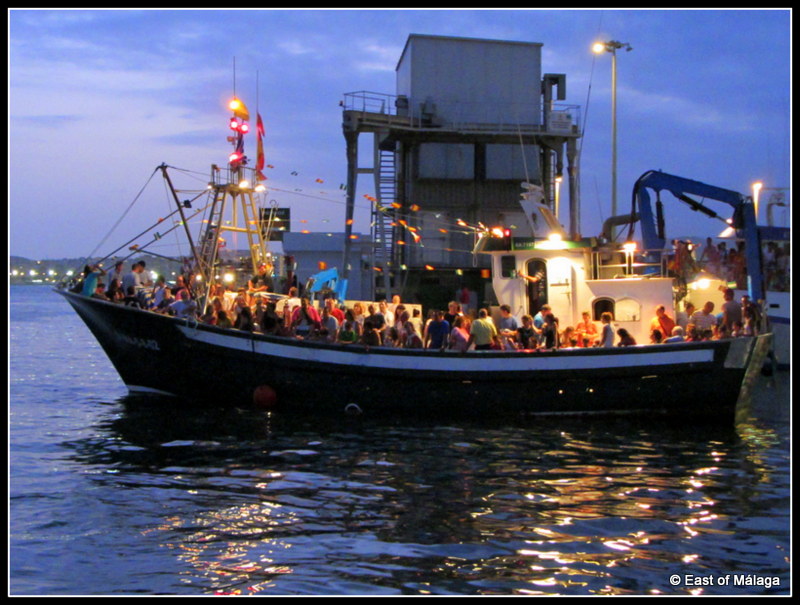
The vessels, many decorated with brightly coloured flags and bunting, each crowded with people, gather under the late dusk sky patiently waiting for the official party of sailors, fishermen, clergy and authorities to bring the Statue of the Virgin on board the boat that will lead the procession.

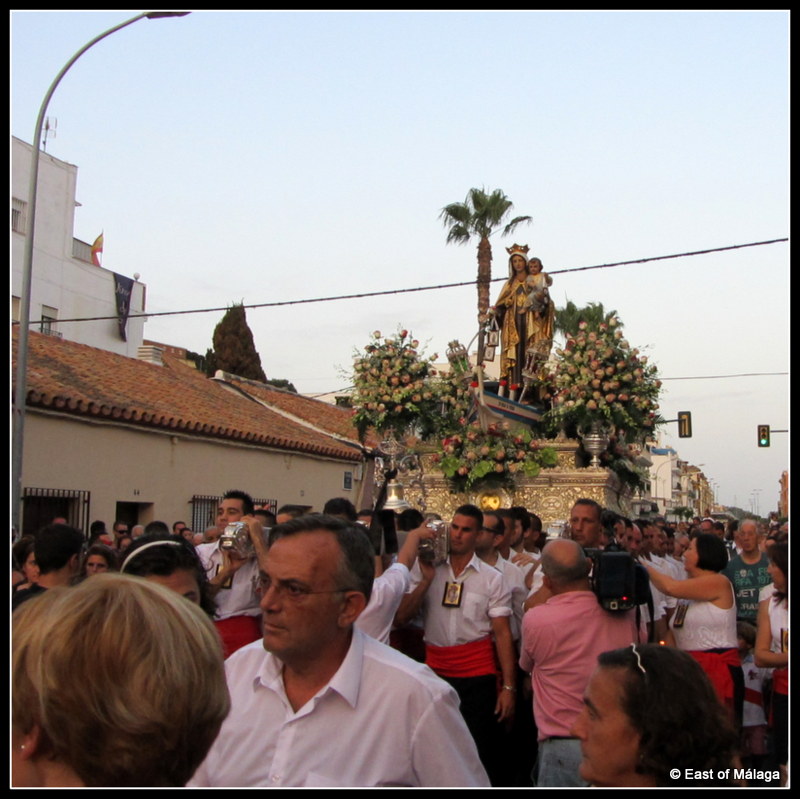
But before that, the Virgen del Carmen is paraded through the streets for all to see.  There is an air of excitement with people surging forward for the best views as the parade passes by, before making its way to the water´s edge.

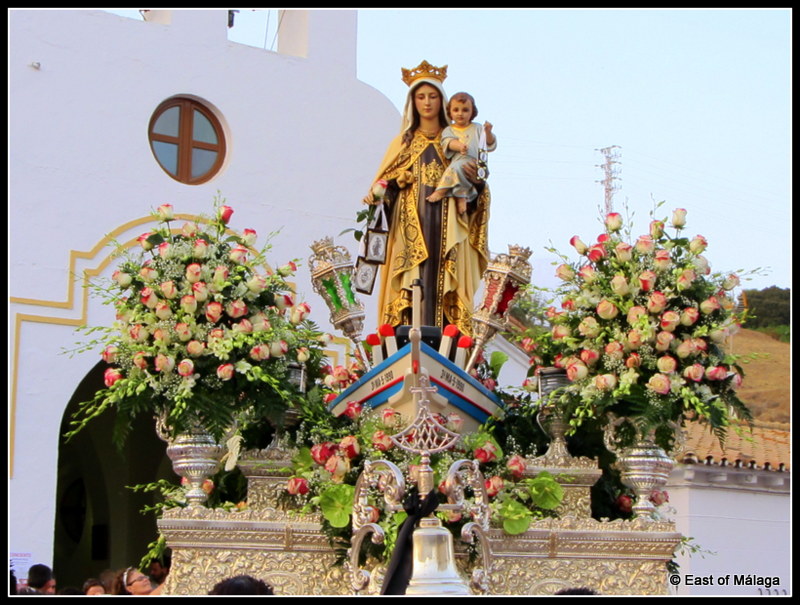
Doors open - and there she is!

Virgen del Carmen 2012

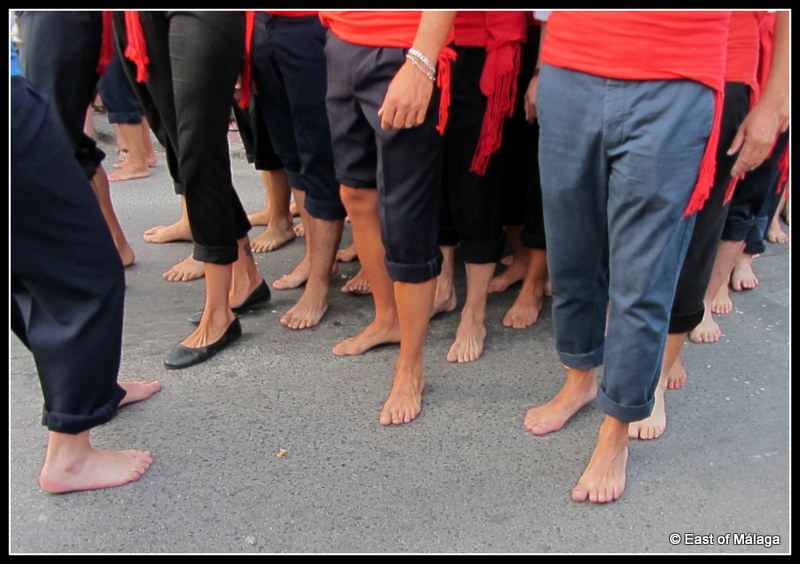
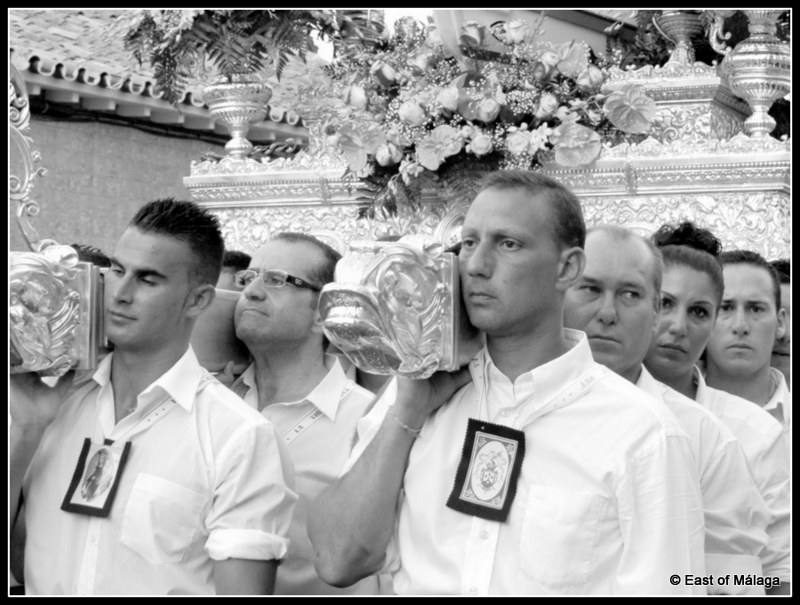
Carrying the statue with bare feet

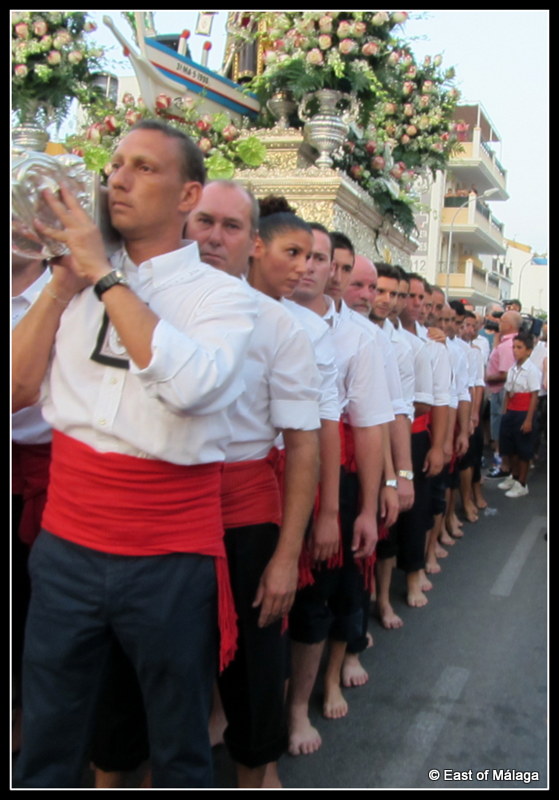
The line of bearers carrying the Virgen del Carmen

Solemn faces as they carry the statue through the streets

The crowds jostle for position to get the best view

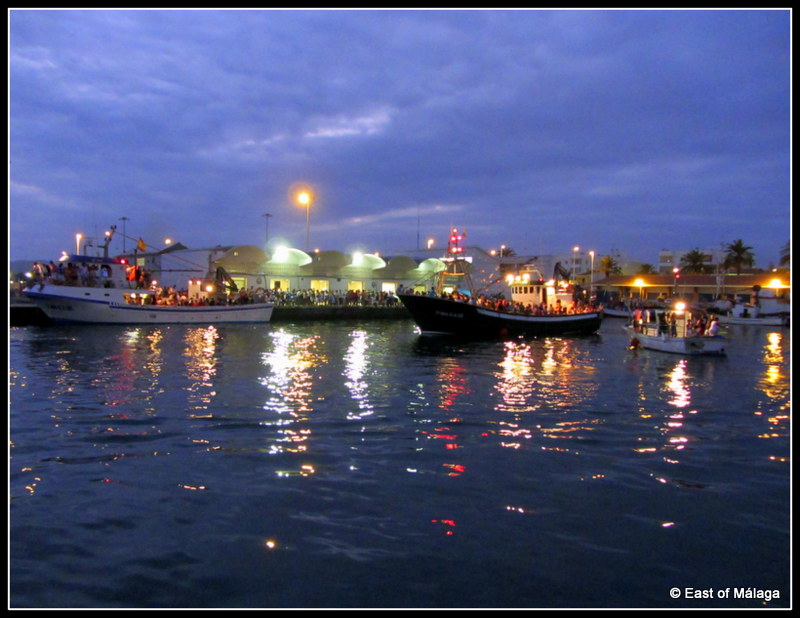
Crowded boats waiting for the Virgen del Carmen to arrive at the harbourside

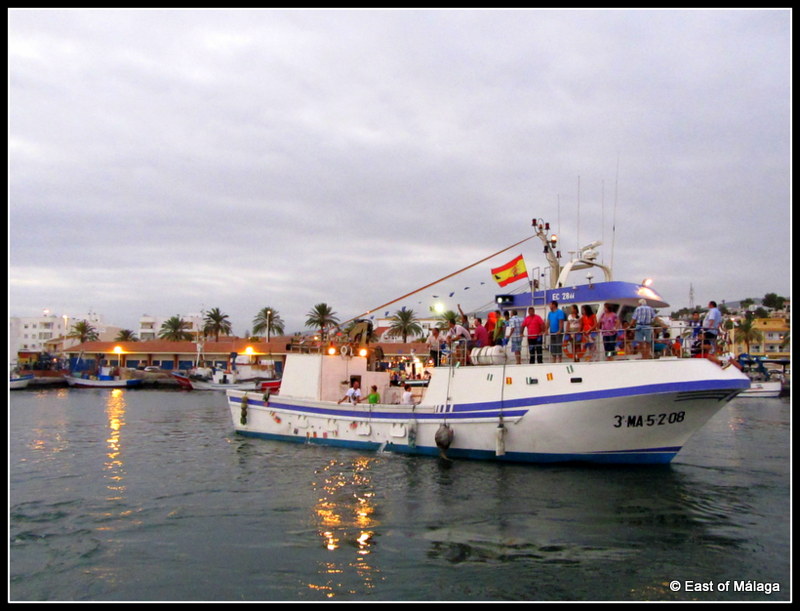
Caleta de Velez harbour as dusk falls

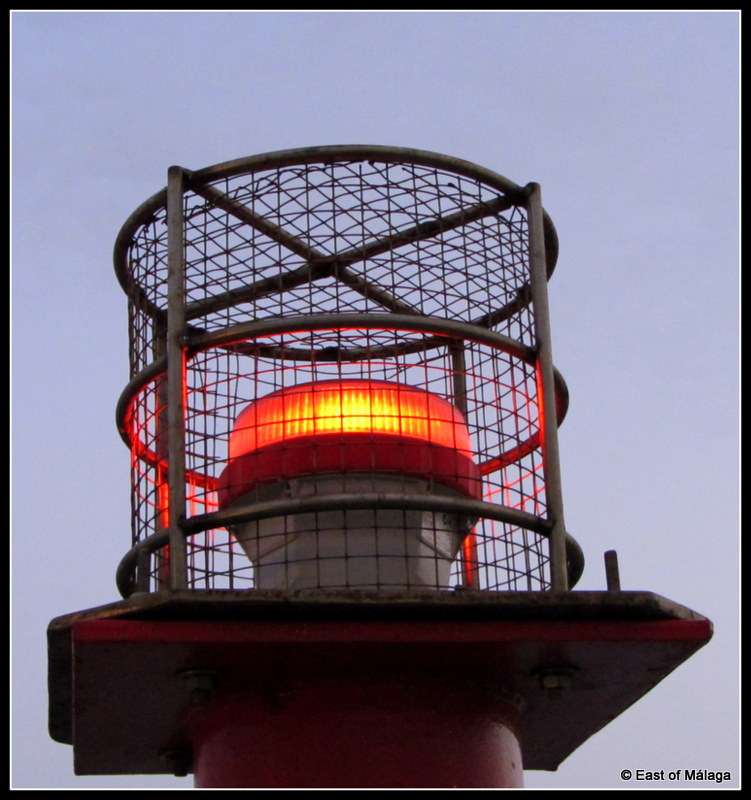
Harbour marker beacon flashes

Boats awaiting the arrival of the Virgen del Carmen

Excited people crowd onto the boats

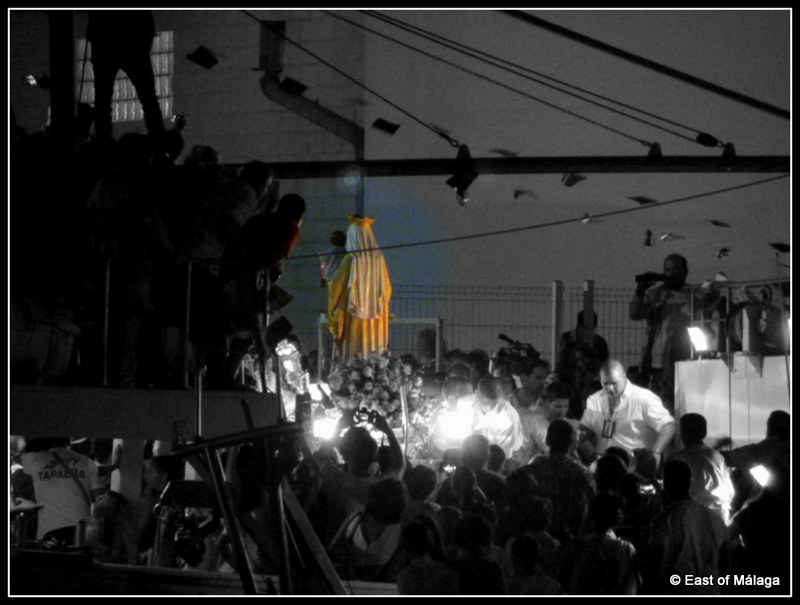
The statue of Virgen del Carmen being loaded onto the boat

Celebrations vary slightly from town to town along the coast, east of Málaga.  In La Caleta de Vélez the parade is held each year on the feast day of the Virgen del Carmen, 16th July.   Some towns and villages celebrate the following weekend, but there will be posters displayed in local shops, announcing the day and time, if you want to join in the festivities.

My photographs show last year´s celebrations in La Caleta de Vélez, situated at the mid-coastal point of La Axarquía region.

In the video below, you can see the festivities held in 2011 in the town of Torre del Mar, just along the coast from La Caleta de Vélez.

Which is your favourite Spanish festival or fiesta?


Whilst you´re here, why not have a look at the following articles too?

The heart of Cómpeta: El Paseo de las Tradiciones

Patatas a lo pobre: Poor man´s potatoes

Weekly Photo Challenge: The Golden Hour

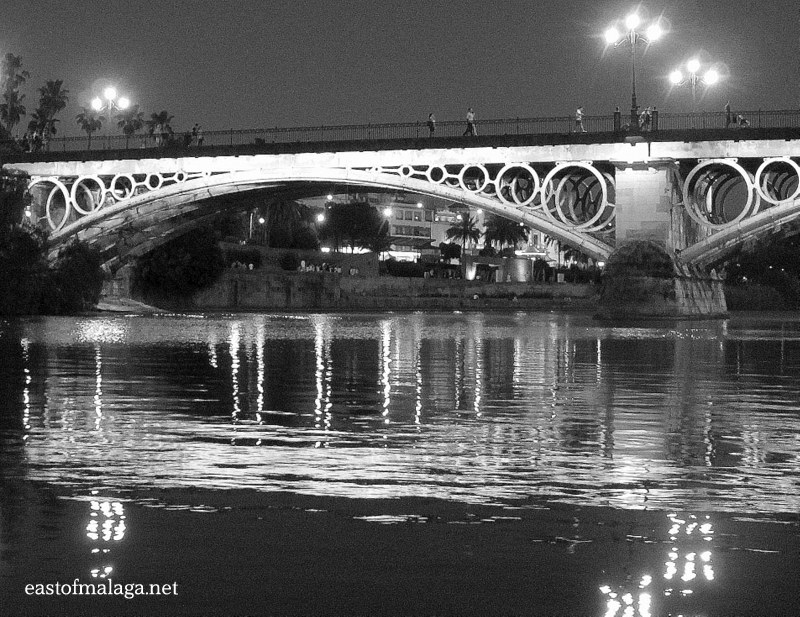
Triana Bridge, Seville

Triana Bridge, Seville

At the stroke of midnight on December 31st 1999 I was standing in Plaza Nueva in the centre of the Andalucían city of Seville with thousands of other people, to welcome in the new millennium.  So, it was with some nostalgia that I returned for a few days recently, to be reminded of the delights that Seville has to offer – both old and new.  I’ll be letting you know all about that in another post coming up soon, but for now, I want to show you the Isabel II bridge, more popularly known as Puente de Triana.

Until 1852, the only way across the Guadalquivir River was by using a makeshift bridge, originally formed in 1171 by chaining 13 boats together between the river banks. In 1847, French engineers Fernando Bernadet and Gustavo Steinacher began work on the Isabel II bridge, linking the Gypsy neighbourhood of Triana with the city centre of Seville.

It’s a pleasant stroll across Triana bridge which has become known for its love-locks, a custom by which padlocks are fixed to a gate, fence or bridge by sweethearts as a symbol of their eternal love.  Because of the numbers involved, this practice has now become frowned upon, and the locks are periodically removed.

As you will gather, I took the above photo whilst enjoying an evening cruise along the Rio Guadalquivir.  I love the way the lights from the bridge are reflected in the gently flowing water.

I also want to take this opportunity to announce the winner of my recent draw to win 6 handwritten postcards from Spain is …… Sylvia of Another Day in Paradise!  

CONGRATULATIONS – I WILL BE SENDING YOUR FIRST POSTCARD VERY SOON 🙂

Related posts:

Black & White Photo Challenge: Bridges

Weekly Photo Challenge: Nostalgic

Travel Theme: Motion

CBBH Photo Challenge: I Spy with my Little Eye

I Spy with My Little Eye


   “You can’t depend on your eyes when your imagination is out of focus.”   –  Mark Twain


Do you remember the childrens’ guessing game “I Spy with my little eye“?

Often used in answer to cries of “Are we nearly there yet?” during a long car journey or whilst waiting for an appointment, this game not only encourages participants to actively look out for items related to the game, but also to home in on the world around them.

Imagine though, that as well as looking through your own eyes, you were encouraged to appreciate the point of view of others.  To develop the ability to imagine what life would be like if we were not constrained by our own vantage point.

For this month’s CBBH Photo Challenge, my question to you is: “WHAT DO YOU SPY WITH YOUR LITTLE EYE?”  Show me something either wholly from your point of view, or alternatively imagine what something would be like from someone else’s point of view.
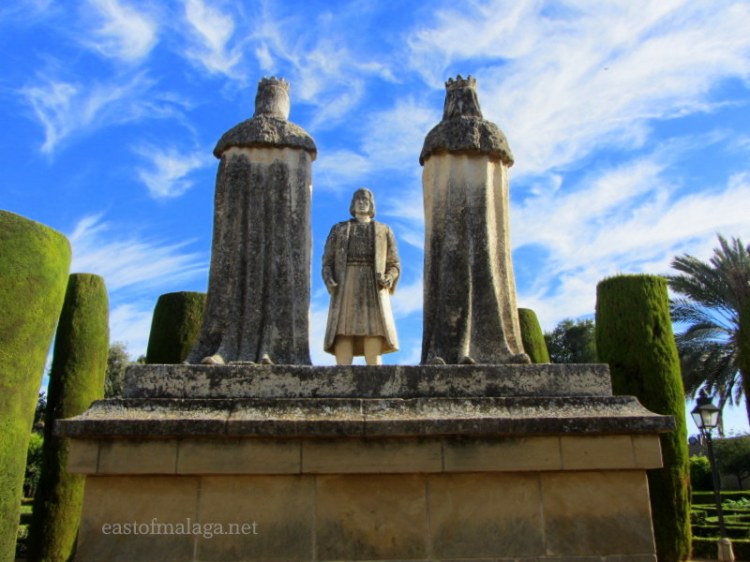
Christopher Columbus before the Ferdinand and Isabella, Cordoba, Spain

Situated in the gardens of the Alcázar of Córdoba, (also known as the Alcázar of the Christian Monarchs), this monument commemorates the meeting between the Catholic Kings, Ferdinand II of Aragon together with his wife, Isabella I of Castile, and the explorer, Christopher Columbus.  After continually lobbying at the Spanish court and following years of negotiations,  Cristóbal Colón (as he is known in Spain) finally achieved success in 1492 by securing funds to support his quest from the Christian Monarchs.  Ferdinand and Isabella bade Columbus farewell as he set out to chart unknown territory and discover what (for Europeans) was a new world.   The Monument of the Catholic Kings is set amongst shafts of  sharply pruned cypresses within the spectacular gardens of the Royal Fortress.  One can only imagine what would have happened had Columbus been unsuccessful.

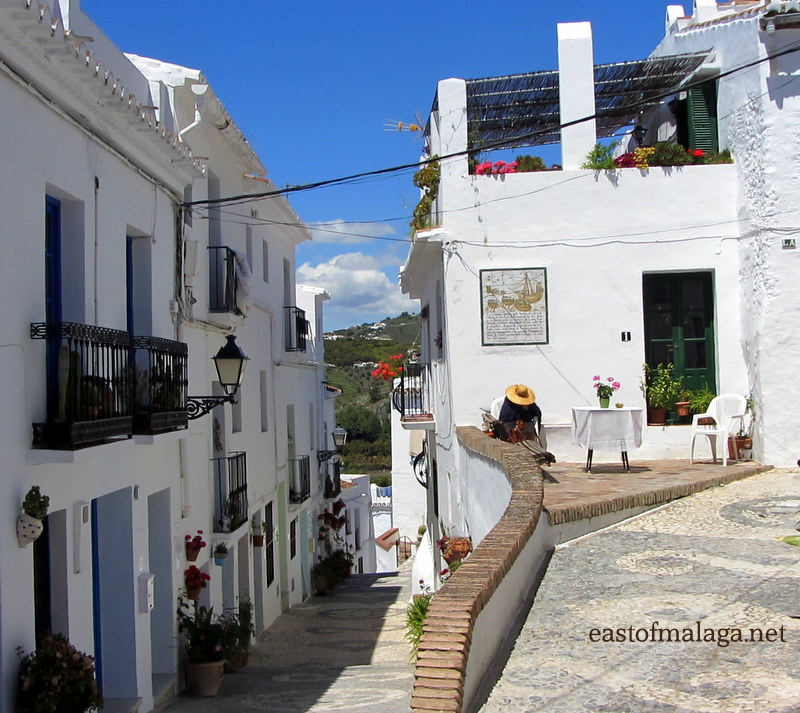
Calle Alta, Frigiliana, Spain

Here you can see Calle Alta (High Street) in the upper part of the white village (pueblo blanco) of Frigiliana.  There is no motor vehicle access up the steep streets to this part of the village, which remains largely how it must have looked hundreds of years ago, when the village was occupied by the Moors.  Can you see the old lady asleep in her chair outside her front door? Above her head there is one of a number of plaques to be found around the village which tell the history of Frigiliana.  Everytime I visit, I wonder when was the last time some of the frail, old people who live in and around Calle Alta came down to visit the rest of the village.

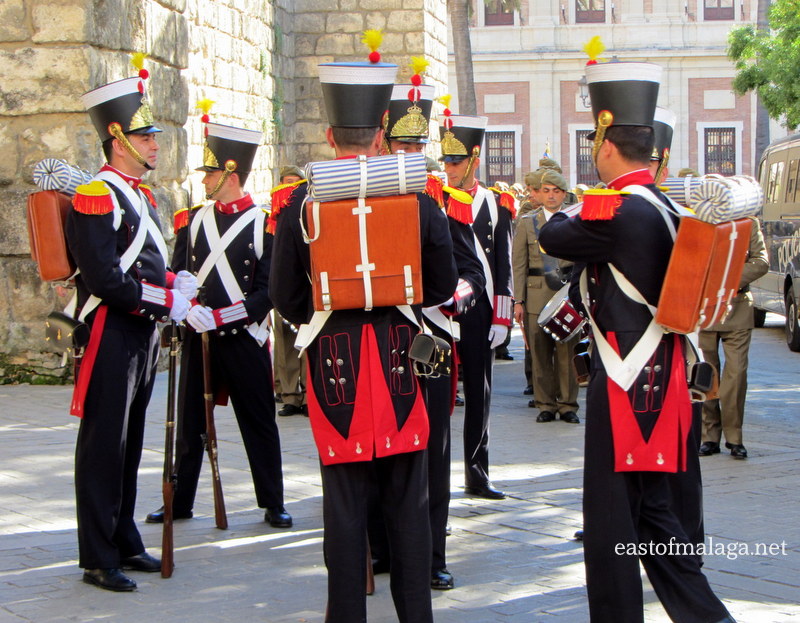
Soldiers wearing historical uniforms in Seville, Spain

This year, I was fortunate to be in the capital city of Andalucía, Seville, for the huge processions to celebrate the religious festival of Corpus Christi.  The night before the festivities, the streets are strewn with rosemary and flower petals, balconies are draped with shawls, and shrines are erected at various points along the route.   An unusual feature of Corpus Christi celebrations comes at the end of the procession, when the dance of “Los Seises” is performed in the Cathedral by young choirboys dressed in medieval-style costumes.  The main procession started around 8.30am and finished back at the Cathedral around midday.  This year, however, there were further processions in the city, later in the day, as this was also The Armed Forces Day!  Now, anyone who knows me will tell you that I have a soft spot for a man in uniform 😉  so my eye was drawn to these soldiers who were wearing authentic historical uniforms.  Of course, it’s difficult to envisage the difficulties faced not only by the men who wore these original uniforms with their lack of modern equipment, but also by today’s soldier with the benefit of up-to-date weaponry, but fighting a total different kind of foe.

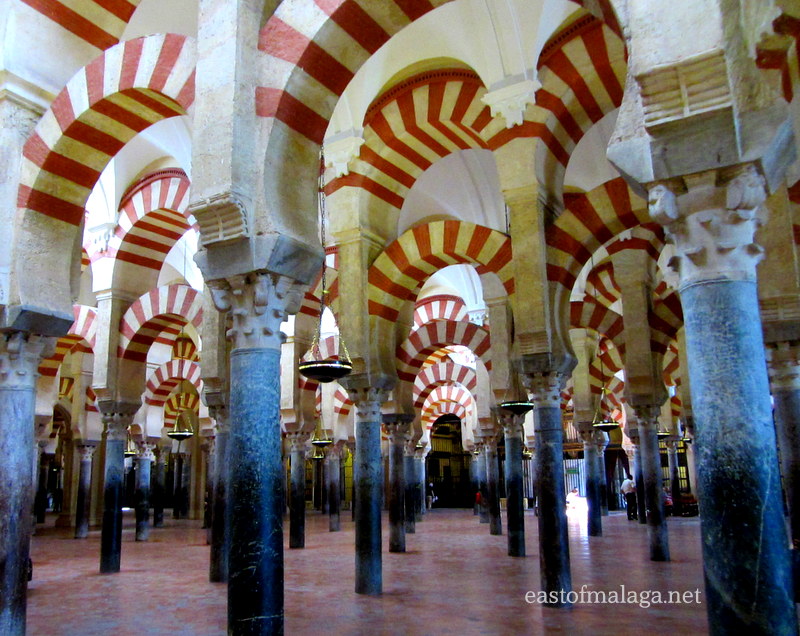
Mezquita, Cordoba, Spain

There has been a religious building on the site of the Catholic Christian Cathedral of Córdoba, more popularly known as the Mezquita, since 600AD.    The original Visigothic Church of St Vincent became a mosque and, over the years a number of alterations and domes with skylights were built to admit extra light.  The 16th-century saw the start of 250 years of work commence to build a Christian Cathedral in the centre of the mosque (hence the often-used description of ‘Mezquita-Cathedral’).  The building exhibits a range of changing architectural styles and is most notable for its arcaded hypostyle hall, with 856 columns of jasper, onyx, marble, and granite.  The famous alternating red and white double arches were a new introduction to architecture at the time, permitting higher ceilings than would otherwise be possible with relatively low columns.  Whenever I am wandering around the Mezquita, I can’t help but wonder about the men who worked on building these magnificent columns.  Could they have foreseen their work would still be standing more than one thousand years later?
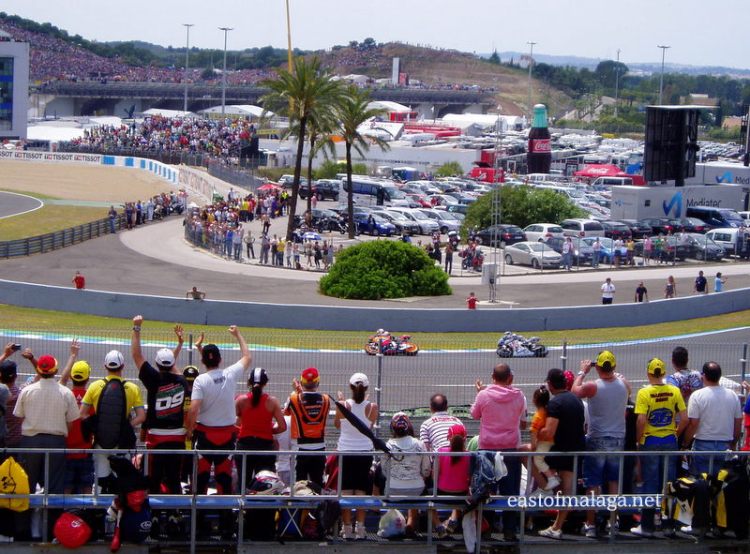
Moto GP from Jerez, Spain

Being a bit of a petrol-head, I love the smell of testosterone…sorry, petrol fumes, whether it’s Formula 1 or MotoGP, so my final image for this month’s challenge was the view I had when I visited the Andalucían city of Jerez, to see the annual MotoGP motorcycle world championship race.  We don’t like to get tickets for the stands, as we prefer to wander around amongst the true fans, trying to get the best view.  There are some real characters turn up for these races – some in fancy dress, others playing instruments and banging drums, some setting off fireworks, as well as usually someone wandering around with a leg of Serano ham and a big knife, offering to cut you a slice!  There are usually 125,000 spectators at the race-track and the majority of them arrive on motorcycles themselves.  It’s the only place I have ever seen a traffic jam consisting solely of motorbikes!  Of course, this was my view of the race, but what must it be like to be one of the riders in the race ?  Would you be excited or terrified?

This month’s CBBH Featured Blogs are two of the nicest lady bloggers on the internet:

Thank you ladies for your continuing support of my blog and it is my pleasure to feature you both this month.

** The Hidden Spain Blog  features tales from an area of Spain I have yet to visit – Extremadura.  Sue writes her Letters from Extremadura which feature recipes, days out, as well as fantastic posts about return visits on the ferry to the UK.  I particularly enjoyed her recent post “A Grand Day Out” – (I soooo love Wallace and Gromit – don’t you?) when she visited Trujillo during the first weekend in May for the National Cheese Fair.  Sue is a great photographer and supplies us with a multitude of shots to give us a real flavour of the Hidden Spain.  I’d love you to hop over and say HOLA!

** Sonel’s Corner of the world is in South Africa and not only does she give us an insight into this beautiful place she calls home, but her blog is awash with tutorials and help for all us of lesser mortals who can never hope to take such wonderful photographs.   Check out her newly launched Black and White Photo Challenge.  Sophia is one of the nicest ladies you could hope to meet in the blogging world and is always ready with a word of encouragement, a friendly comment and big HUG 🙂  

Conejo Blanco BLOG HOP Photo Challenge

So that´s the CBBH Photo Challenge for July, everyone!

Remember, all you have to do is post your entry by the end of the month, tag your entry ‘CBBH Photo Challenge’,  link back to this blog and, most importantlydon´t forget to add links to any two blogs that you´ve commented on during the past month, so that we can all HOP OVER and have a look.  Make sure you FOLLOW THIS BLOG so you don´t miss next month´s exciting challenge!

For more information on how the CBBH Photo Challenge works click here.

I hope everyone taking part enjoys the exposure the CBBH Photo Challenge offers to featured blogs and, who knows, you may end up finding a new favourite!  I´m looking forward to seeing your interpretations.

[CBBH logo Image credit: (cc) Mostly Dans]
Riddle Me This: The Mysterious Case of the Disappearing Statues

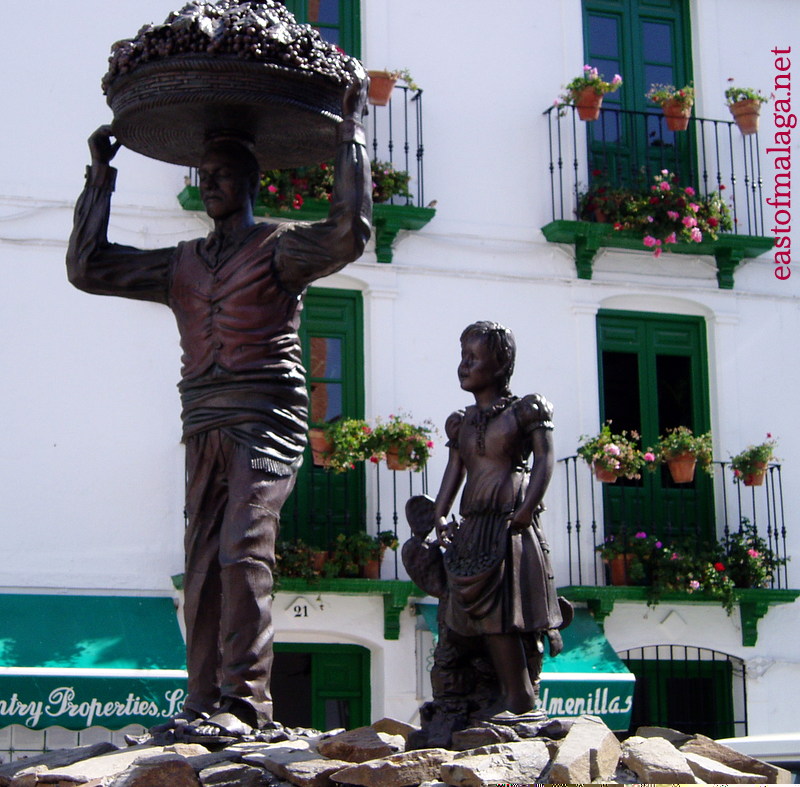
El Vendimiador statue in Plaza Almijara, Competa, Spain

I took this photograph of  the charming El Vendimiador several years ago when it was situated in the main square, Plaza Almijara in the village of Cómpeta.

The statue commemorates centuries of wine-making in the area and shows the grape-picker standing in his sandals on a dry-stone wall.  On his head he carries a basket of freshly-picked grapes and by his side, his young daughter helps with the harvest.  

Despite being sited in the main square, next to the 500 year old Iglesia de Nuestra Señora de la Asunción village church only eight years ago, the statue disappeared a few years later.  I suppose this was to make more room for vehicles to turn around in the tiny square, already half full of tables, chairs and sunshades from the nearby cafes and restaurants.

No-one seemed to know what had happened to the statue and some even suggested it had been damaged during the move.

Fortunately El Vendimiador re-appeared earlier this year at the new Mirador in Competa’s Plaza Vendimia (where he really should have been all along), except now he stands alone, without his daughter.  

Curiouser and curiouser …….!

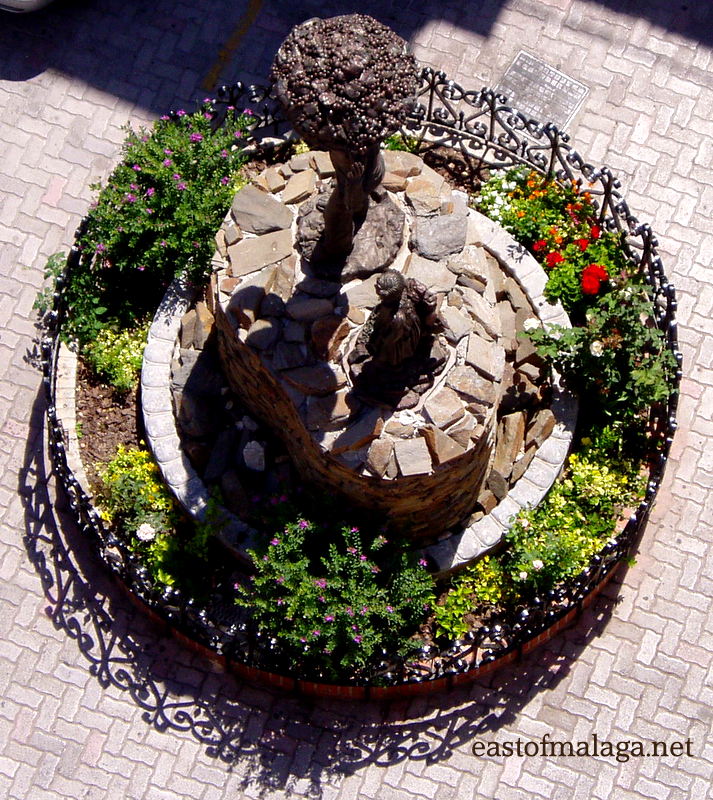
El Vendimiador statue in Plaza Almijara, Competa, Spain (from the church tower)

Looking down on El Vendimiador from the Church tower

This post is my response to this week’s WordPress Photo Challenge: Companionable and to Ailsa’s Travel Theme: Sculpture

You might also enjoy:

Competa´s Noche del vino: Night of wine

The heart of Cómpeta: El Paseo de las Tradiciones

The Day of the Dead: A Celebration of Life

The Spanish Postal Delivery System

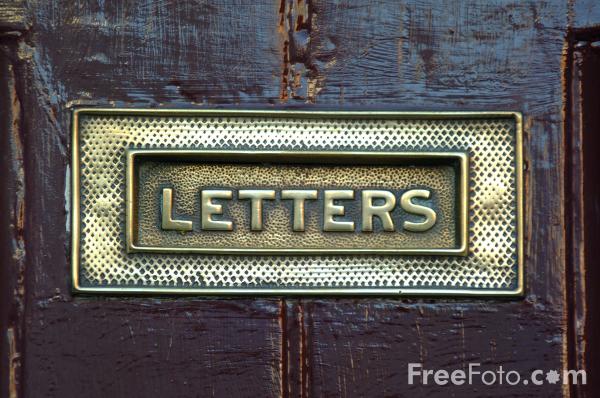
[Image credit CC: Ian Britton]

If you choose to live in a town or village in the Axarquía, there will probably be a postal delivery to your house on most week days, just as you would expect in many countries.  Depending on where you live in the world, you might think it strange, but most front doors here in Spain don’t have letter boxes set into them, making mail delivery a little more complicated.

Your correspondence will usually be left in a lockable post box fastened to the wall at the front of your house.  That’s always assuming, of course, that you have a lockable post box.   If you don’t, it’s likely that the postman will push the letters in the gap under your front door.  I can recall when we rented a house in the beautiful white village of Frigiliana, before we bought our present house,  seeing letters poking out from underneath many of the doors, as I walked through the narrow village streets.

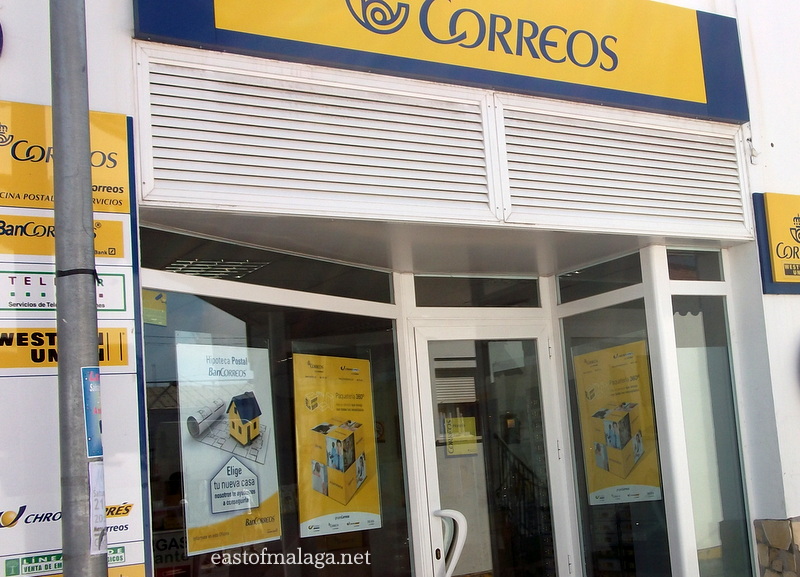
Post Office, Competa, Spain

If you choose to live in the countryside (el campo), you will not have your post delivered to your home, but instead you will need to go to your local village post office to collect it.

Before the post office in the village of Cómpeta moved into new premises a few years ago, this service was free to residents in the area where I live.    We had all been allotted Post Office box numbers (Apartado de Correos) and we would then queue up, as we Brits are so good at, waiting our turn to be given our goodies!

You knew you had truly been accepted into the local community when the Spanish postmistress didn’t need to ask for your post office box number ….she just went to the pigeon-hole, situated behind the counter, and took out your bundle of post!

The Post Office queue was always a sociable event, with locals and expats chatting and listening in to each other’s conversations.  It was always a place to learn what was happening in the village, particularly as you had chance to read the notice board, as you shuffled past it, whilst you were waiting.

Sometimes, of course, the wait would stretch to half an hour, as the queue snaked around the Post Office and out of the door, which would result in people grumbling and moaning about what an old-fashioned system it was.  Personally, I always found it rather charming.

Sadly, the social aspect of mail collection all changed when Cómpeta Post Office moved into a new building and the system was dragged, kicking and screaming, into the 21st century.

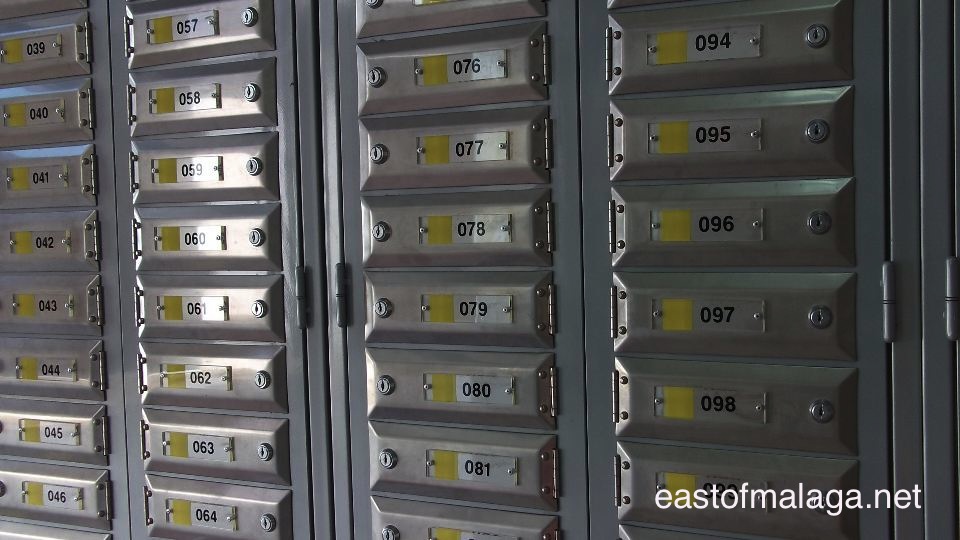
Post Office box, Spain

In order to retain your Apartado de correos address, it would now cost you more than 50 Euros a year.  Each household was issued with a key, so you can visit to collect your mail from your own personal lockable mail box, in racks on the public side of the counter, anytime during post office opening hours.

So nowadays, people drop in – open the box, and are off again within a moment or two and without a drop of gossip in sight!

Shame that …. 😉

What is an aspect of modern life that you think has changed for the worse?

You might also enjoy:

Death in the Afternoon: The Round Cemetery of Sayalonga

A Slice of Life: Garden and Plant Irrigation

Zafarraya Pass: Walking with Neanderthal Man