At the entrance to the Mediterranean Sea

Entrance to the Mediterranean Sea

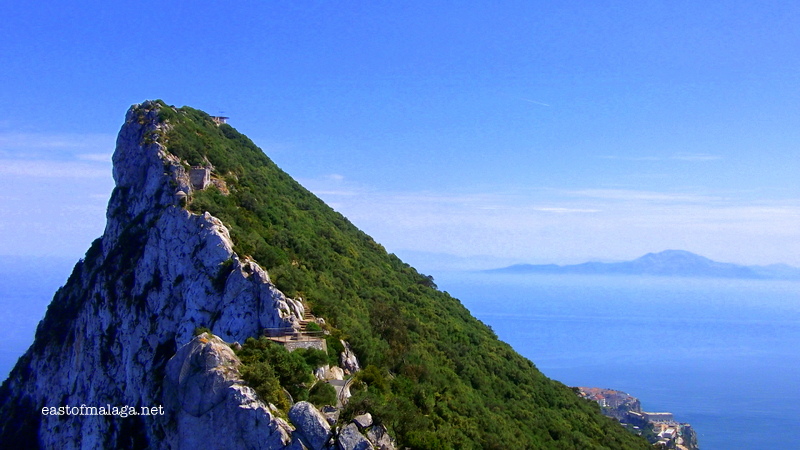
The Rock of Gibraltar, one of the Pillars of Hercules in Greek mythology, has a strategic location on the Strait of Gibraltar where the Atlantic Ocean meets the Mediterranean Sea, with Europe to the north and the continent of Africa to the south.

Standing at the top of the Rock of Gibraltar it’s magical to look across the entrance of the Mediterranean Sea towards Morocco in North Africa – only nine miles away!

I hope you´ve enjoyed this spectacular entrance, which is my contribution to this week´s Sunday Post.

Other posts you may be interested in:

CBBH Photo Challenge:  Multi-Coloured

Venturing further afield: San Sebastián in the heart of Basque country

The Day of the Dead: A Celebration of Life

Venturing further afield: San Sebastián in the heart of Basque country

We love to travel not only locally, but throughout Spain, so I will also include information, from time to time, about where we have visited.  Usually these places can either be driven to within a few hours of our home, east of Málaga, or we will have flown there from Málaga (AGP) airport.

Overlooking La Concha Bay, San Sebastian, Spain

You might remember, a while ago, I told you about a trip we had taken to Santander, on the northern coast of Spain.  In that post, I promised to tell you more about the rest of our journey, so here it is!

After a great overnight stay at a little gem of a hotel (the Jardin Secreto in Santander), we hired a car and travelled along the northern coast of Spain to San Sebastián, only 20 kilometres from the French border.

On the way to San Sebastian, Spain

There is much more rainfall here than where we live on the south coast of Spain, making the landscape generally much greener.

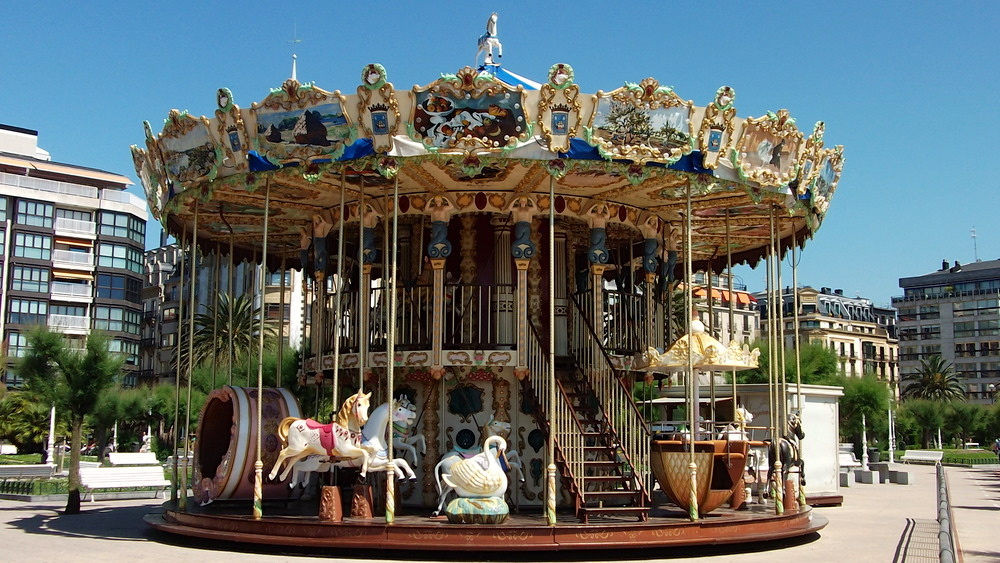
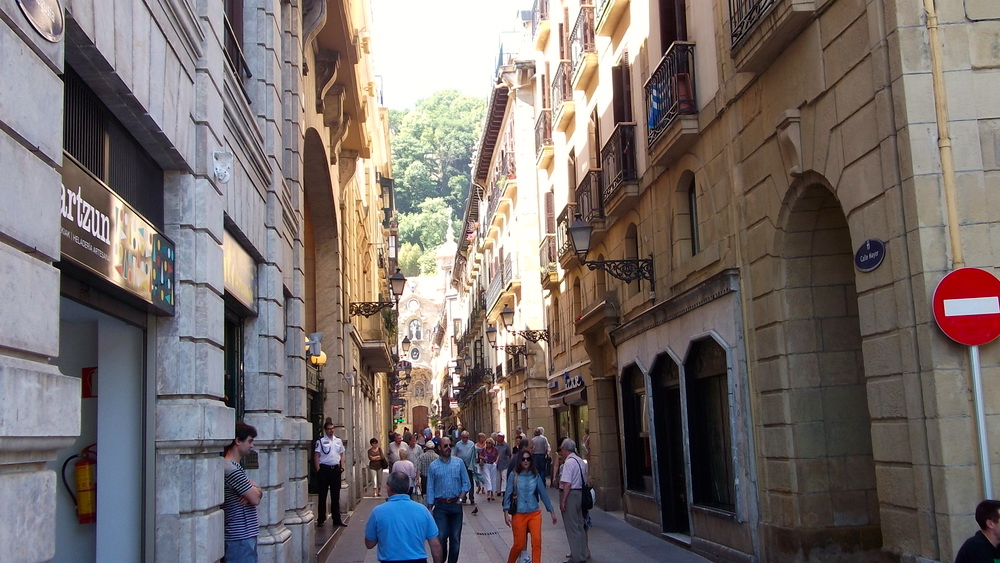
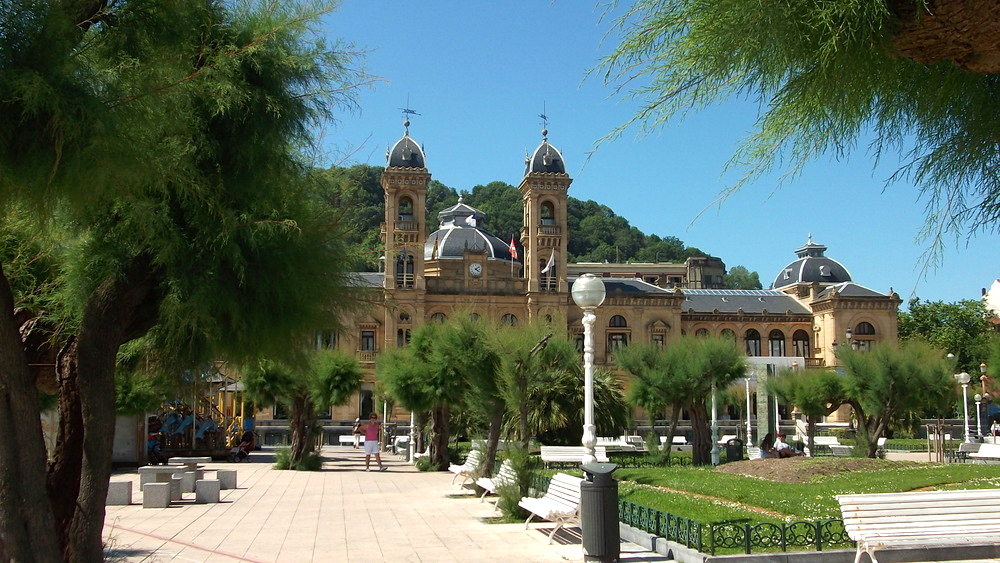
San Sebastián, also known as Donostia, lies along a white, sandy bay in the heart of Basque Country.   It’s easy to fall in love with San Sebastián as the streets unfold to overlook La Concha Bay, with Monte Igeldo offering a wonderful vantage point for enjoying views over the city, as you can see in the first photograph.

San Sebastian

San Sebastian

San Sebastian

San Sebastian

San Sebastian

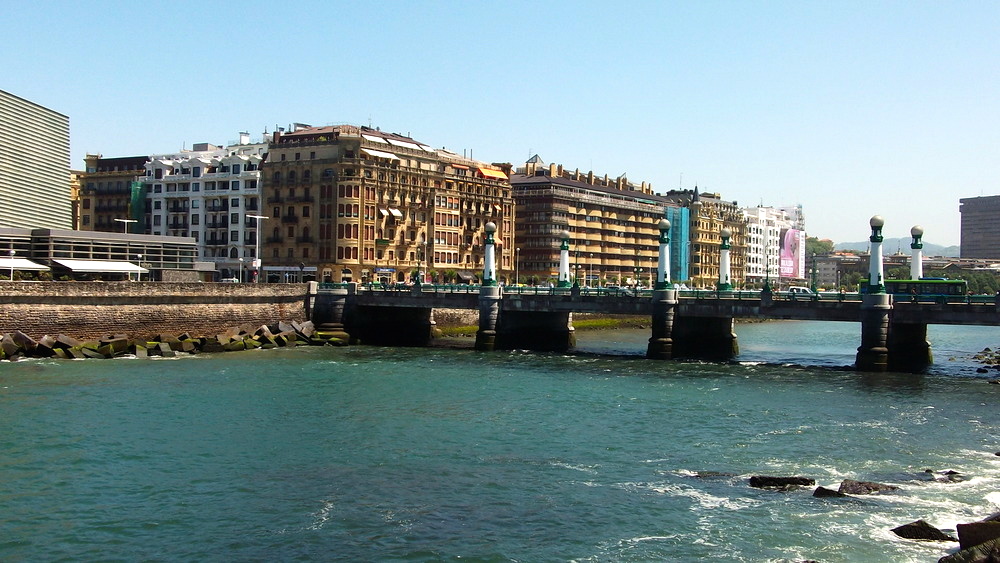
There is a lovely promenade with elegant railings and street lamps, as well as wonderful bridges crossing the Rio Urumea as it meanders along to the Bay of Biscay.

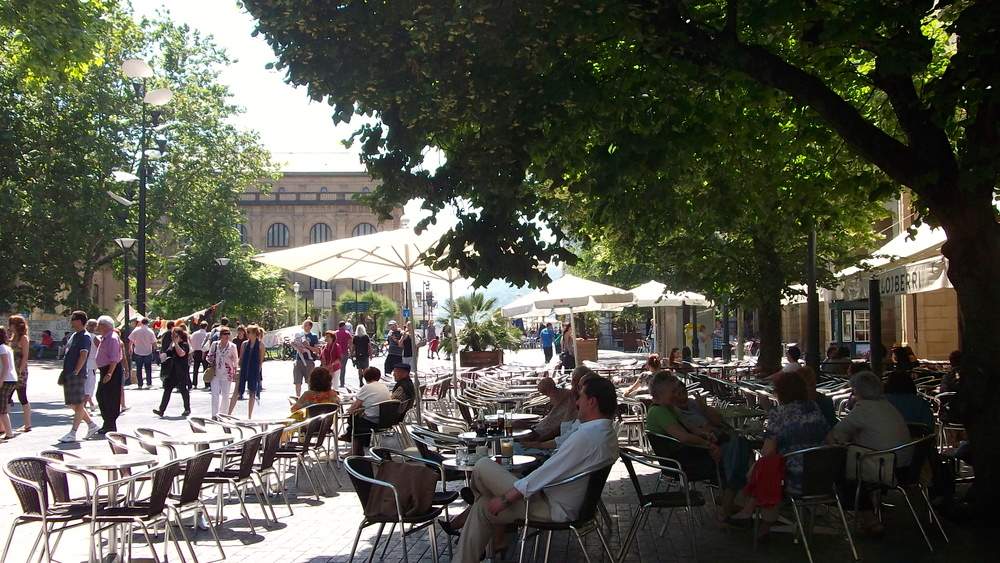
San Sebastián is a cosmopolitan city with a strong Basque character, which is as evident in cultural events as well as in cuisine.      The city is renowned for its Basque cuisine with a trio of 3-starred Michelin restaurants to be found nearby – compare that to only four be found in the whole of the UK!

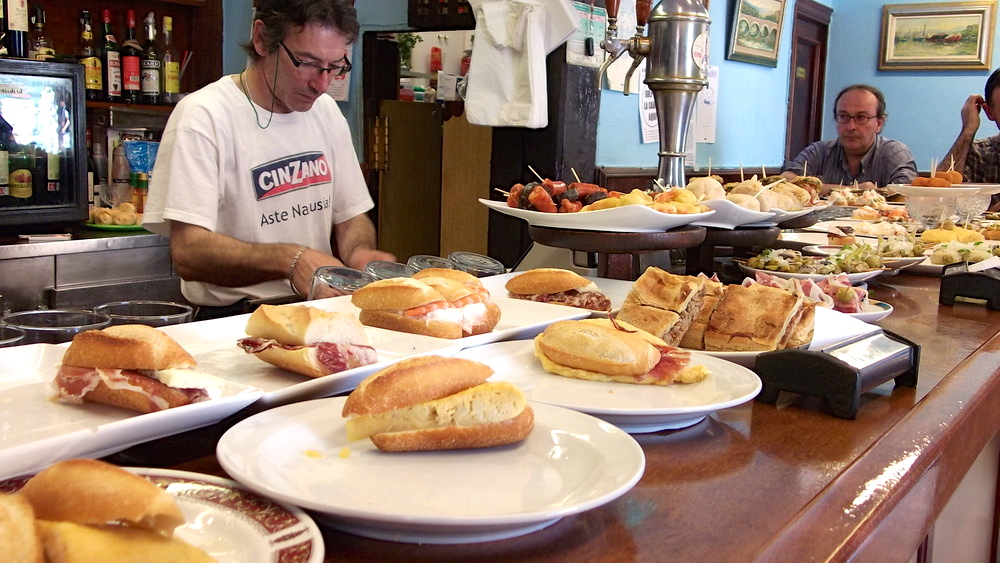
Tapas in a San Sebastian bar, Spain

The city is the epicentre of Basque gastronomy, where food makes a major contribution to the social life of the Basque people.  To share and to enjoy it with them is a truly unique experience.  Just take a look at all the tapas set out on the counter in the photograph, and this was just a little bar down a side street!

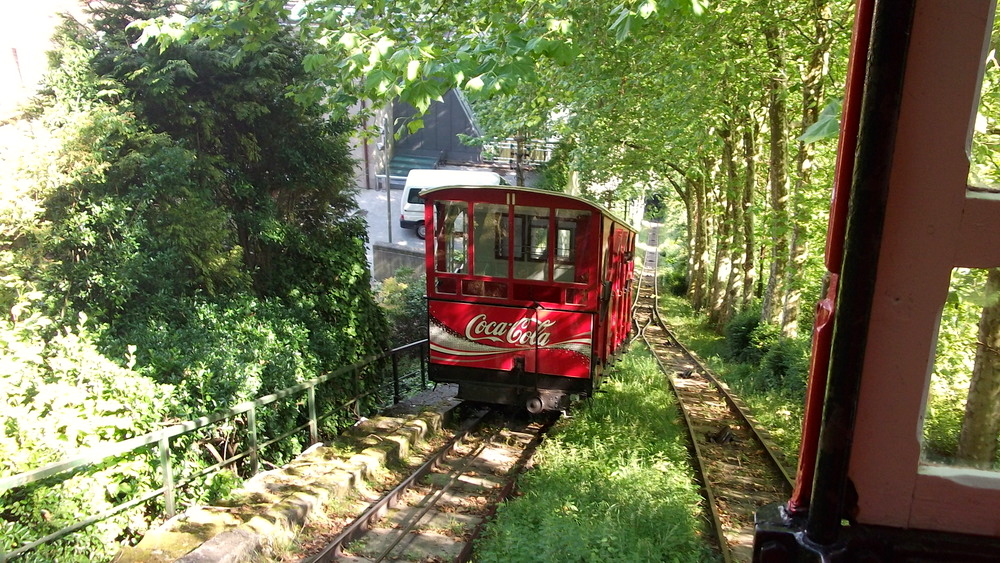
Funicular railway, San Sebastian, Spain

We caught the funicular railway to the peak of Monte Igeldo for magnificent views across the city and the scallop-shaped bay complete with golden sand and sparkling turquoise water.

In June of last year, San Sebastián was chosen to be the European Capital of Culture in 2016, so maybe I will get another chance to continue my love affair with this beautiful city, which has more than a whiff of Monaco about it.

Do you know of an area renowned for it’s fabulous cuisine?  Why not share it below, so we can all come and visit!

You might also enjoy:

A weekend in Santiago de Compostela

The heart of Cómpeta: El Paseo de las Tradiciones

Spanish football: Estadio La Roselada, home of Málaga CF

Málaga Club de Fútbol is based at Estadio La Roselada in Málaga. The team currently plays in Spain’s top football league, known as La Liga.

If you are staying in Málaga Province and you love football, why not look out for match during your stay?

[Image credit: (cc) Miwipedia]

The 29,000-capacity La Rosaleda Stadium (The Rose Garden) is a two-tiered bowl with a great atmosphere on match day.   Located to the north of the city, the stadium is well-served by public transport.

If you’re travelling by car, you should be able to find a free parking space in La Rosaleda Shopping Centre Car Park – a couple of hundred metres away.   Failing that, there is usually plenty of space to park on local streets.

For most games, getting seats on match day is generally fairly easy – the obvious exceptions being the FC Barcelona and Real Madrid games.

When considering the list of home fixtures and ticket availability and pricing, it’s worth bearing in mind that the Spanish Football Association only release information regarding which games are to be televised one week before the fixture.  So when you are planning your visit, you need to ensure that you are in  Málaga between the Saturday afternoon and the Monday morning for your chosen weekend.  Confirmed kick-off times first appear at the Spanish FA Website.

If you can’t get to the match, you can always watch live coverage of most English and Spanish football matches in many bars around the Axarquía.

Have you ever been to a football match in Spain?  Who did you support?


You might also enjoy:

CBBH Photo Challenge: Reflection

Spanish Football:  It doesn’t get any bigger than this!

The heart of Cómpeta: El Paseo de las Tradiciones


AVE: Taking the Fast Track from Málaga to Madrid

AVE train waiting at Malaga station

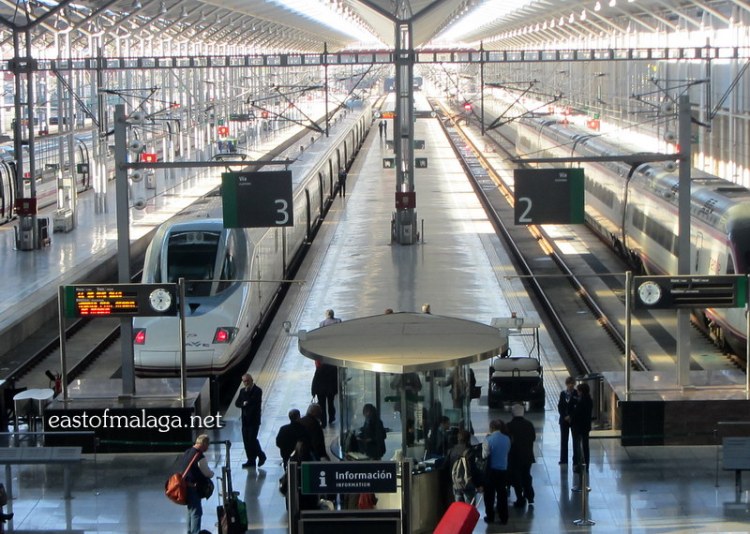
AVE train waiting at Platform 3, Malaga railway station

Whenever we need to travel to Madrid, it can sometimes be a bit of a bind having to go by road.   Even though the roads in Spain are usually very good, with light traffic compared to the UK, there is always the problem of what to do with the car at the other end.  To be honest, flights are not that much quicker once you factor in all the waiting around and security checks.  So on a recent trip to Madrid, we decided to let the train take the strain.

Our journey from Málaga to Madrid was one we had been particularly looking forward to, as we had managed to secure some bargain-priced First Class tickets for the AVE train (the initials stand for Alta Velocidad Española, and AVE is also the Spanish word for bird).  

High-speed AVE trains link major cities in Spain at up to 187mph and, if you book in advance online, you can find some great cheap fares at the official Spanish rail website, RENFE.  We found one-way First Class tickets for 53€ each, while on the same train the Tourist Class Economy tickets were selling for 89€.  I always knew it paid to travel in style!

Club lounge at Malaga Railway Station, Spain

Inside the Club Lounge at Malaga Railway Station

Club lounge at Malaga Railway Station, Spain

Drinks available in the Club lounge at Malaga Railway Station.

On arrival at María Zambrano station in Málaga we were afforded the luxury of the Club Lounge, where we could help ourselves to free hot and cold drinks, snacks, watch TV, read a selection of newspapers, catch up with some work, or just relax in the comfy chairs whilst awaiting the departure of our train.   The 11.05am AVE train, left promptly on time, heading for Madrid’s Puerta de Atocha station, a distance of 512 kilometres.
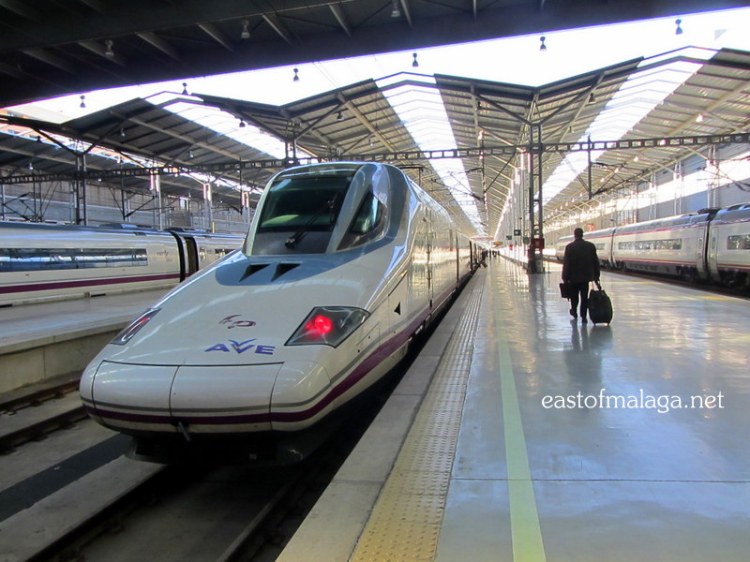
Spanish AVE train waiting at Malaga Railway Station, Spain

The sleek, white AVE high-speed train waits at the platform for our departure.

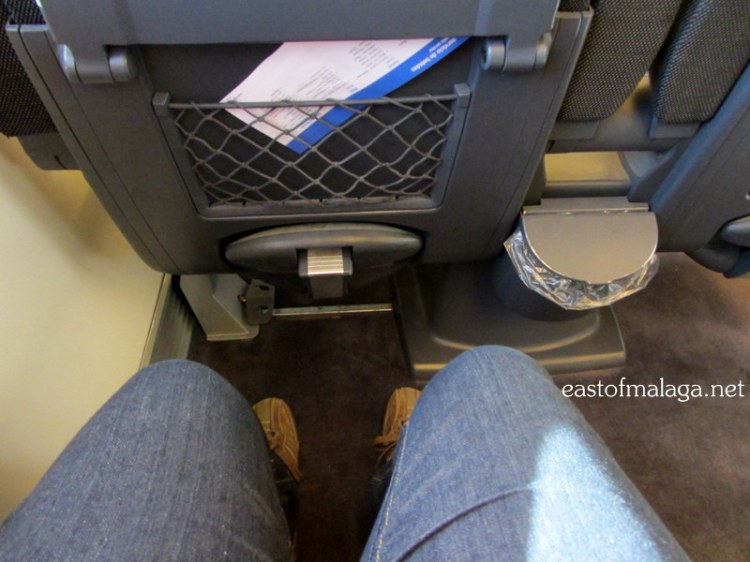
The sleek, white, Spanish-built AVE train sports the kind of futuristic nose more familiar on Japan’s Bullet Trains.  With a journey time of 2 hours 35 minutes, no lengthy security checks or waiting at airport gates to contend with, and ample leg-room with comfortable seating, the AVE train is a vastly superior experience to any budget airlines over the same route in terms of price, time and comfort.

First Class coach on the AVE train, Spain

Inside the First Class coach

Drinks and sandwiches on the AVE train

Drinks and sandwiches along the way.

Comfy seats and lots of leg-room on the AVE train in Spain

Comfy seats and lots of leg-room.

We were offered a welcome drink of our choice as soon as the train pulled out of the station, and it wasn’t long before we were watching thousands of olive trees flash by.  Once the one brief stop at Córdoba was behind us, it was time for the attendants to offer hot towels and yet more drinks and sandwiches. Eat your heart out British Rail!
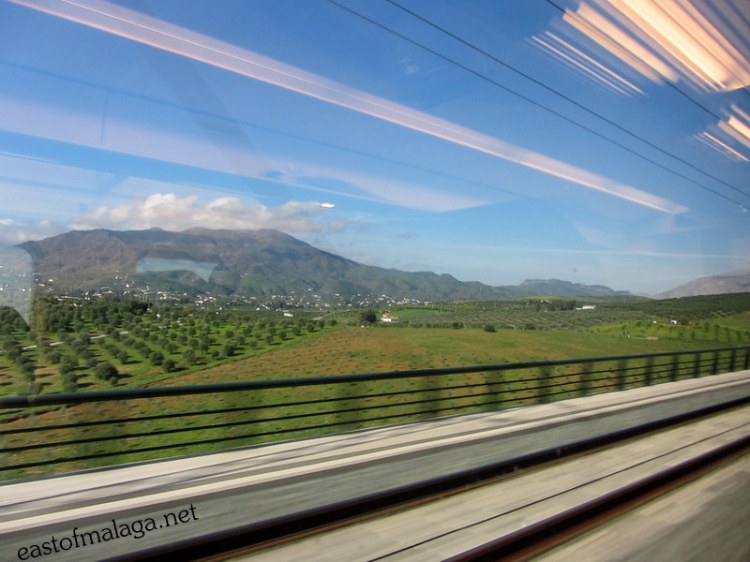
The Spanish countryside flashes by as we travel on the AVE train

The Spanish countryside flashes by as we travel at up to 301kms/hour on the AVE train.
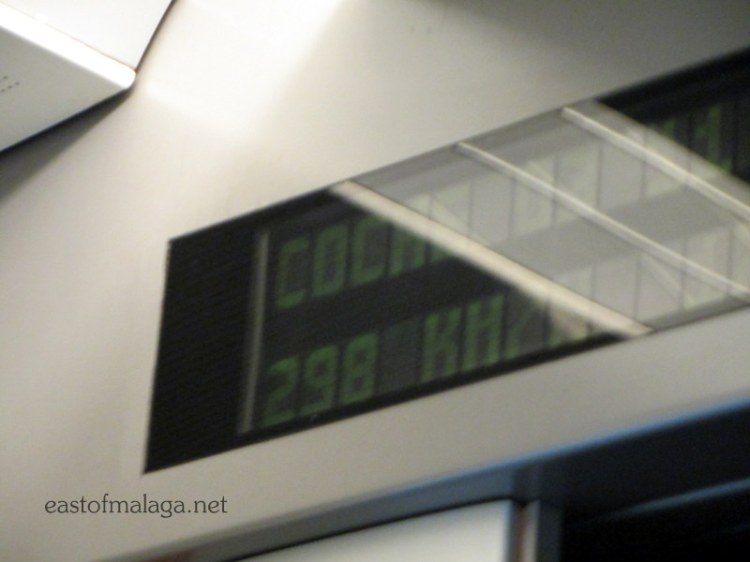
298 kms per hour on the high speed AVE train in Spain

The indicator shows 298 kms per hour on the high speed AVE train but we later reached 301 kms per hour!

Blasting our way through the Spanish countryside, we watched the on-board speed indicators at either end of the carriage climb ever higher, until we finally reached the maximum 301 kms per hour – 187 mph.   Rail company Renfe is so confident that its trains will reach their destination on time, that it promises to refund the full ticket price on any journey that is more than five minutes late.  How about that?  Eat your heart out again, British Rail!

Needless to say, after a relaxing journey, we arrived in Madrid refreshed and just ahead of schedule.

For anyone wanting to make the onward journey to Madrid’s Barajas Airport, I would highly recommend the Airport Express shuttle bus rather than the much more confusing Metro train (which involves three changes and is not good if you are lugging heavy suitcases with you).  The Airport Express Shuttle Bus starts its journey right outside Atocha railway station, and will have you at the airport within 35 minutes for only 5€.  Click on the link to MadridMan’s excellent information about times of buses etc, with very helpful photographs to help you identify the Airport Express shuttle bus.

What’s your favourite method of transport?  How would you travel if money or time was of no object?

You might also like to have a look at these articles:

Cost of Living: East of Málaga, Spain – November 2012

East of Málaga: Following in the footsteps around Comares

Frigiliana: Photographs I love – and why!
All Things Bright and Geometrical

Sunbeams in the Mezquita, Cordoba

Last week, it was my great pleasure to pay a return visit to the Mezquita in the UNESCO Historic Centre of Córdoba,  where I was delighted to capture these dazzling sunbeams making their geometric patterns against the famous red and white arches.

Isn´t nature wonderful?

This post is my response to the WordPress Photo Challenge: GEOMETRIC ; Travel Theme: BRIGHT and this week´s Sunday Post: WONDERFUL.

Related posts from:

New York, USA

Bornholm, Denmark

Tomar, Portugal