All at sea with the Virgen del Carmen

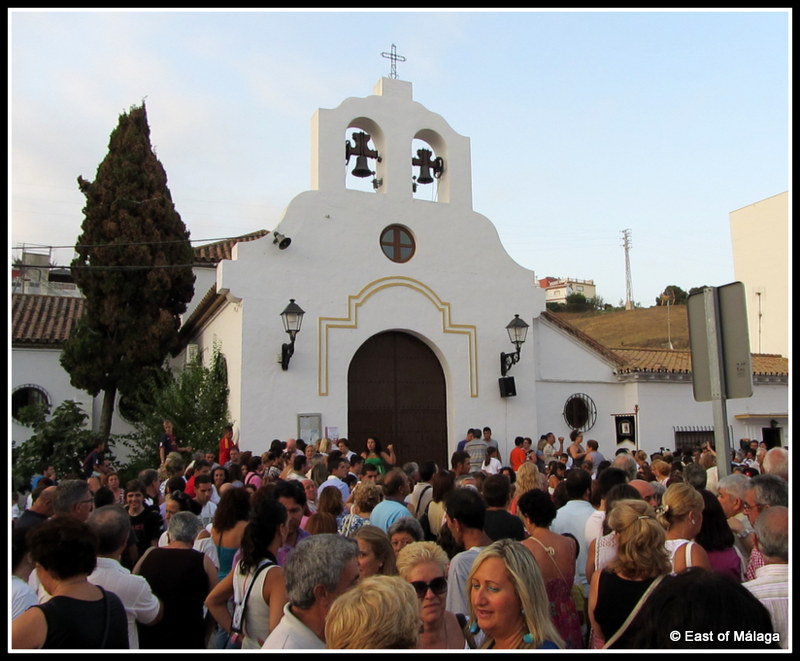
Crowd outside the church waiting for the doors to open

In a festival that dates back several hundred years, many coastal towns and fishing villages in Spain celebrate the Fiesta del Día de Virgen del Carmen as the protector of mariners and fishermen.

Every year on 16th July, spectacular maritime processions of decorated fishing boats known as jabegas head out to sea carrying their precious cargo, an effigy of the Virgen del Carmen, to bless their fishing grounds.

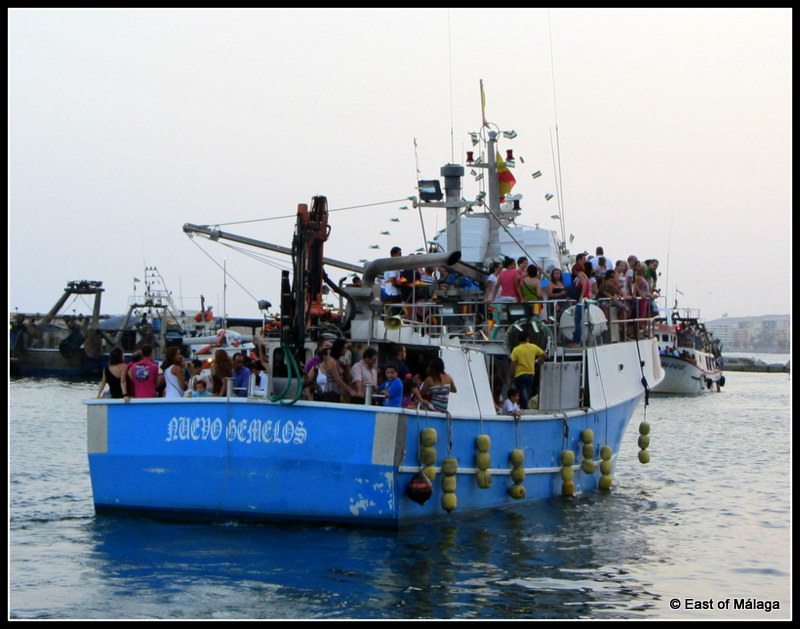
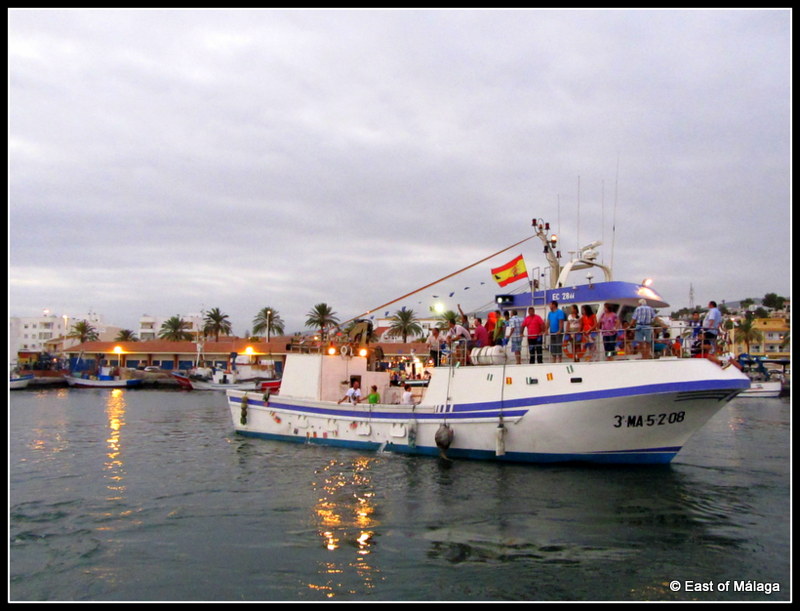
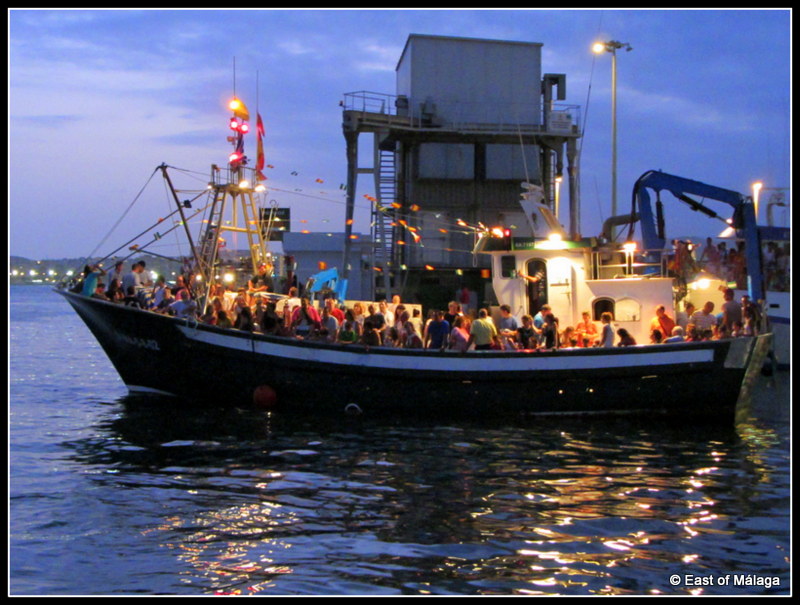
The vessels, many decorated with brightly coloured flags and bunting, each crowded with people, gather under the late dusk sky patiently waiting for the official party of sailors, fishermen, clergy and authorities to bring the Statue of the Virgin on board the boat that will lead the procession.

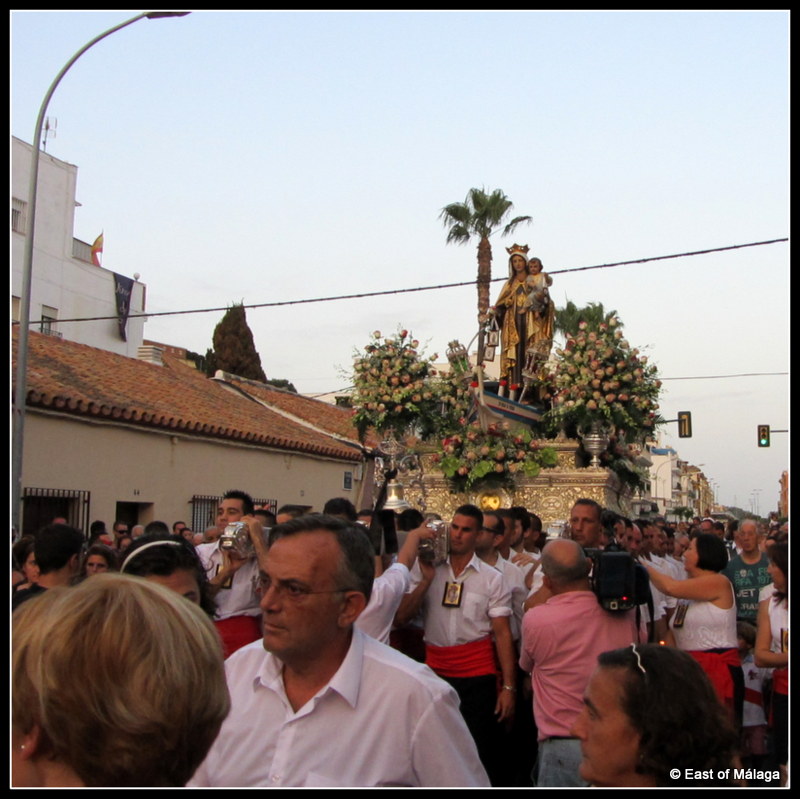
But before that, the Virgen del Carmen is paraded through the streets for all to see.  There is an air of excitement with people surging forward for the best views as the parade passes by, before making its way to the water´s edge.
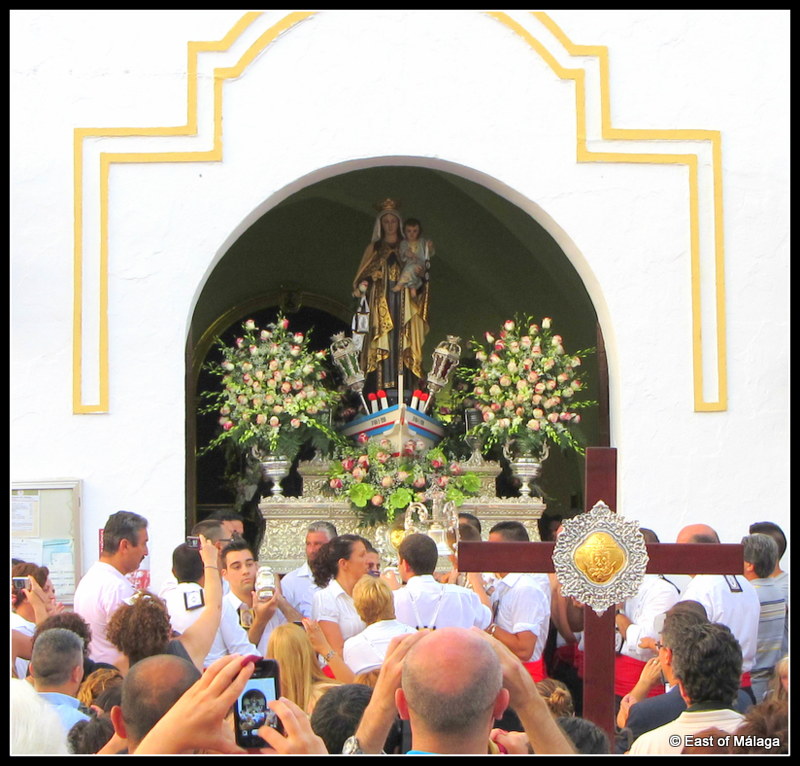
Doors open - and there she is!

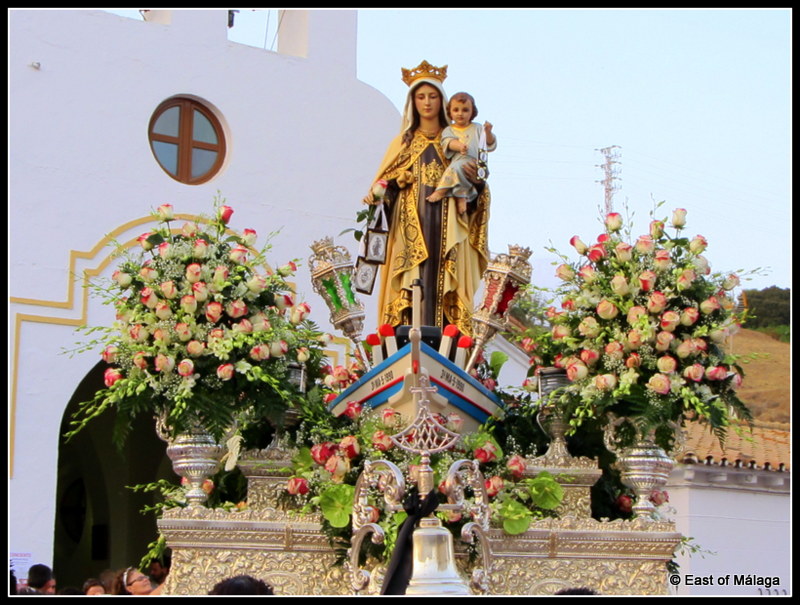
Virgen del Carmen 2012

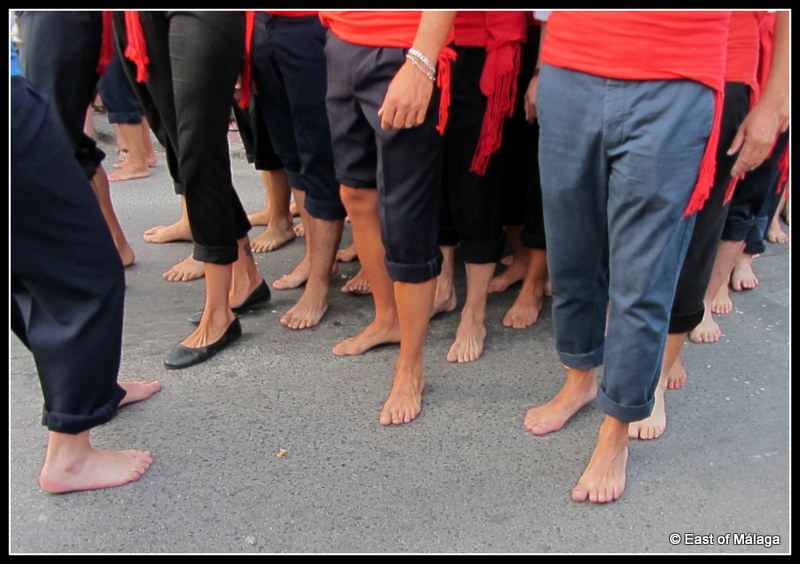
Carrying the statue with bare feet

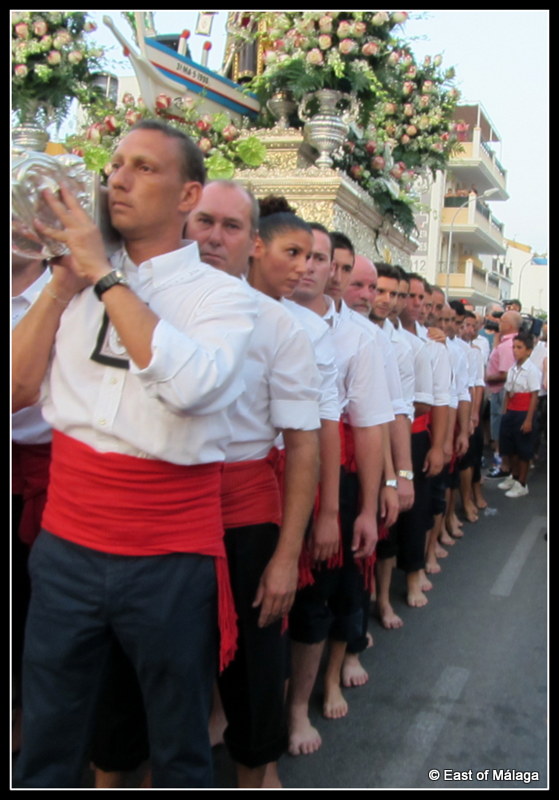
The line of bearers carrying the Virgen del Carmen

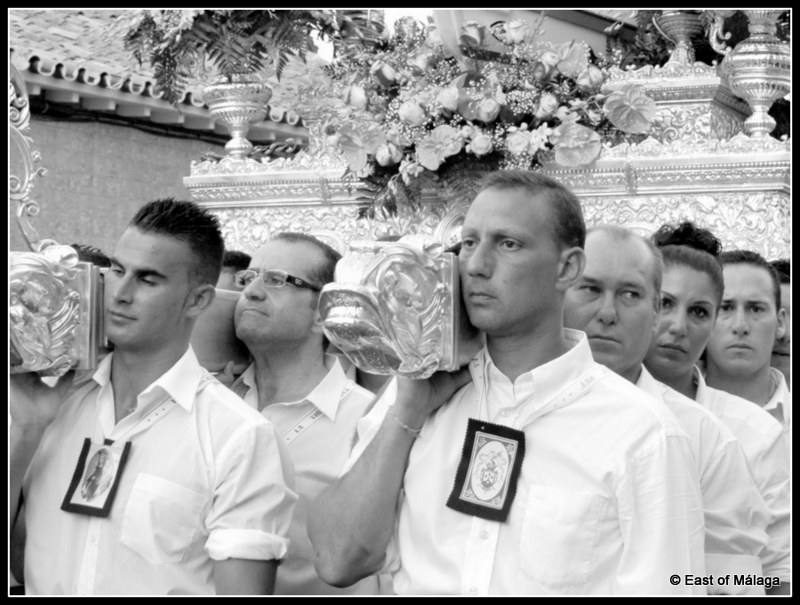
Solemn faces as they carry the statue through the streets

The crowds jostle for position to get the best view

Crowded boats waiting for the Virgen del Carmen to arrive at the harbourside

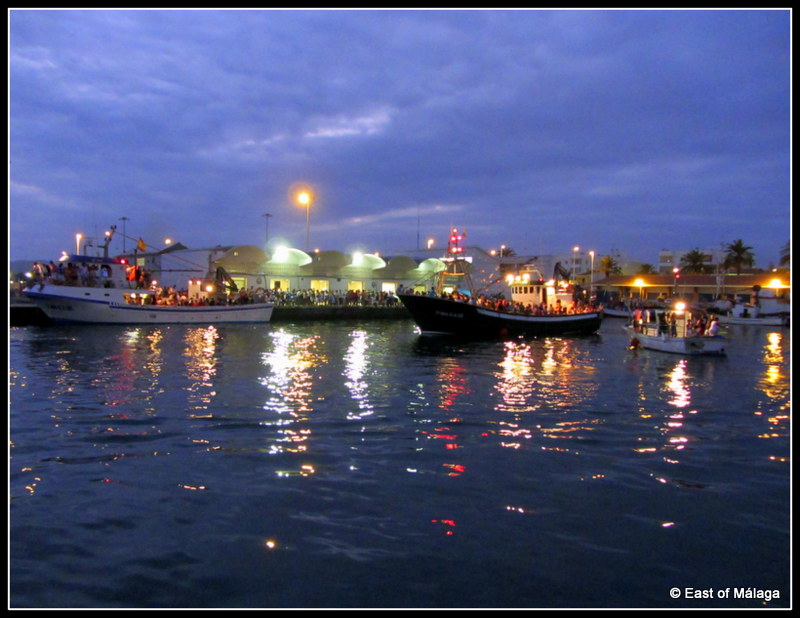
Caleta de Velez harbour as dusk falls

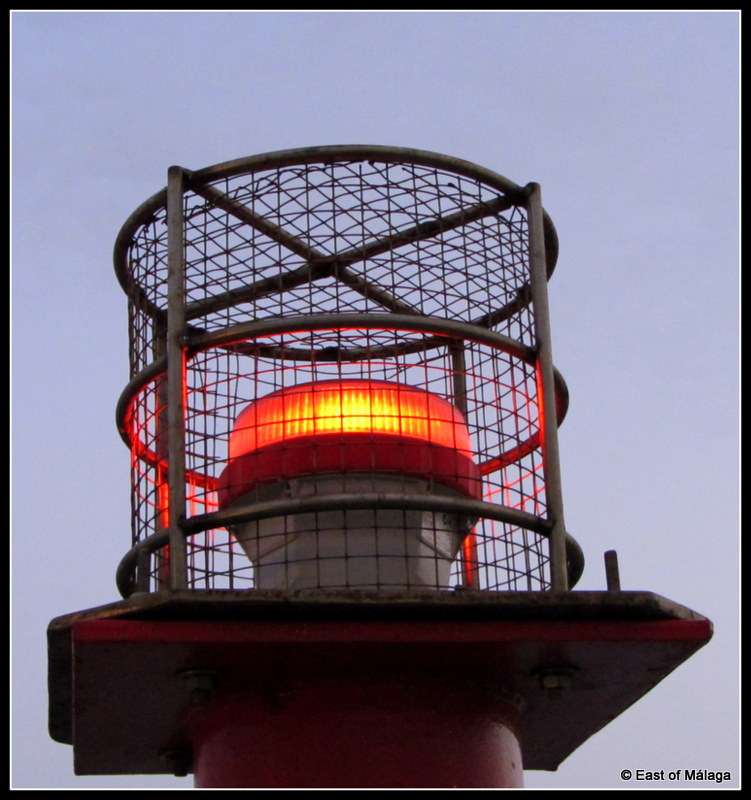
Harbour marker beacon flashes

Boats awaiting the arrival of the Virgen del Carmen

Excited people crowd onto the boats

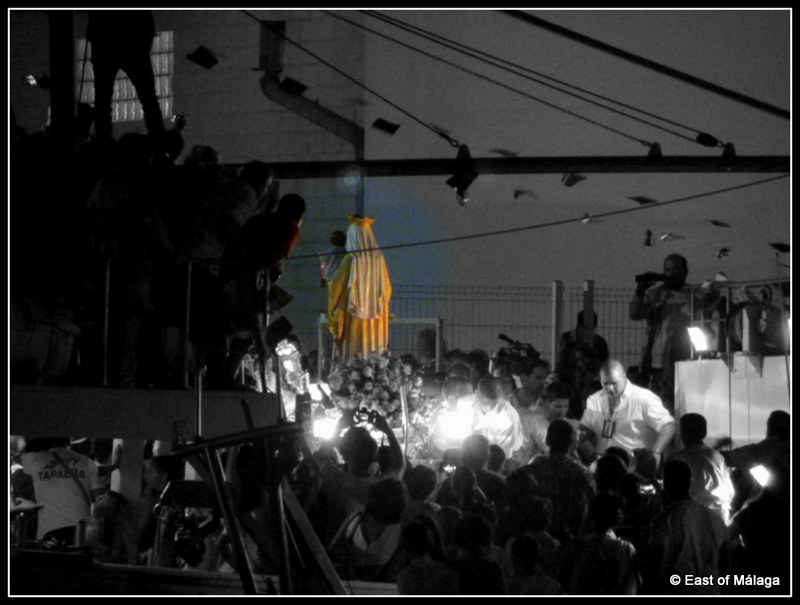
The statue of Virgen del Carmen being loaded onto the boat

Celebrations vary slightly from town to town along the coast, east of Málaga.  My photographs show last night´s celebrations in La Caleta de Vélez, situated at the mid-coastal point of La Axarquía.

The video below shows the celebrations held last year in the town of Torre del Mar, just along the coast from La Caleta de Vélez.

Which is your favourite Spanish festival or fiesta?

Whilst you´re here, why not have a look at the following articles too?

The heart of Cómpeta: El Paseo de las Tradiciones

Patatas a lo pobre: Poor man´s potatoes

Spanish Bank Protest – Flamenco style!


This video has been making the rounds on Twitter and Facebook. It is a flamenco flash mob at a Spanish bank, and they sing a Bulería with the title: “Bankia, lungs and gills”.

Why am I never there when these things happen?

Found here

La Noche de San Juan: Families, fires and football!

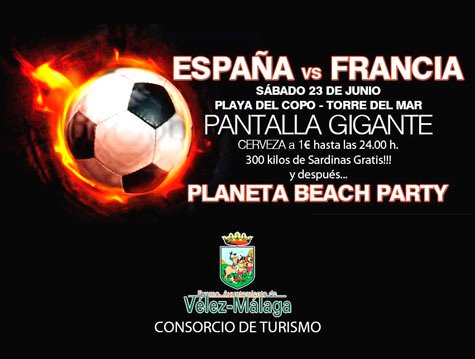
españa-francia football poster

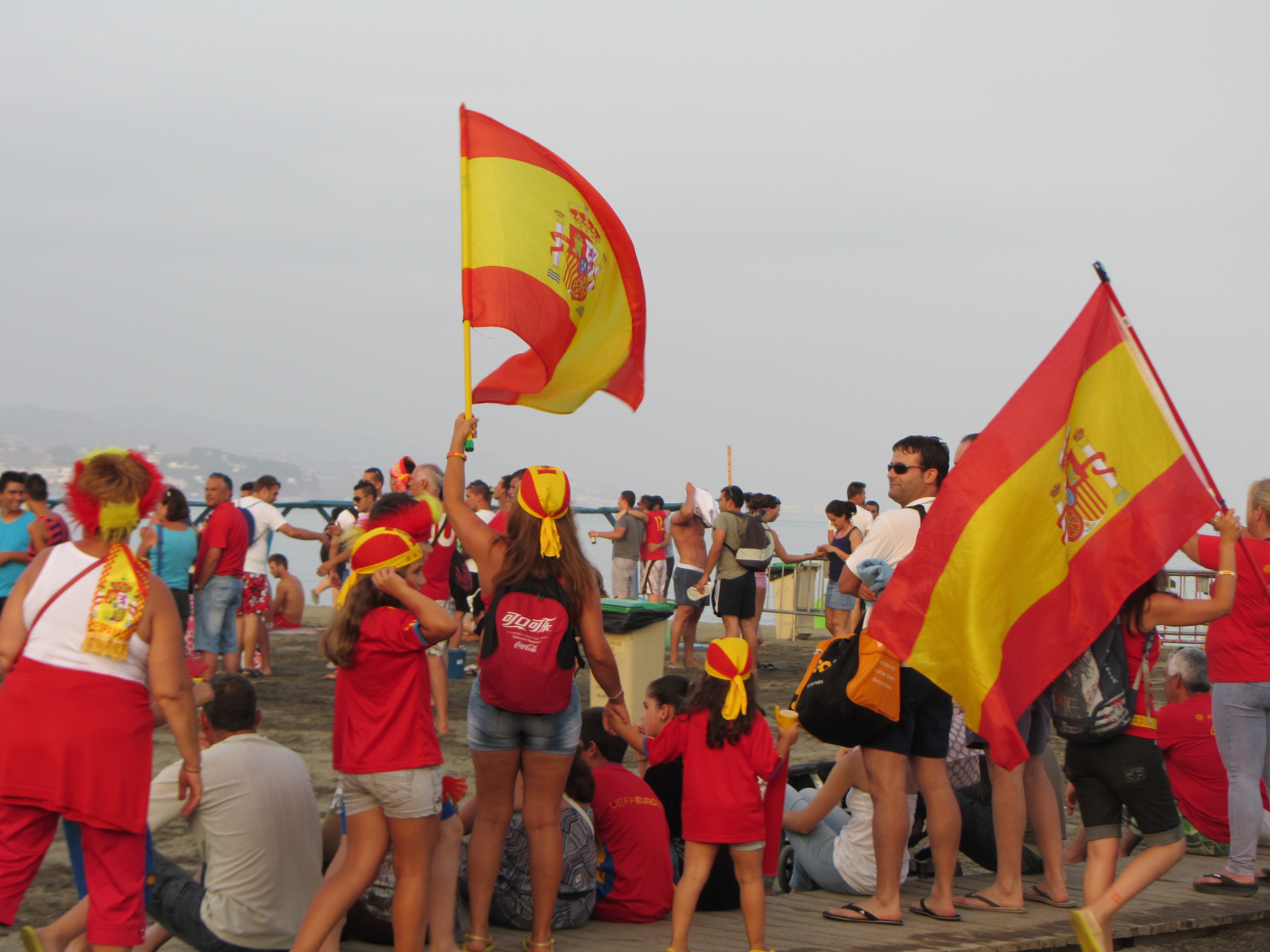
Last night, we joined the beach party at Torre del Mar to celebrate the summer solstice, but first, there was the small matter of a football matchSpain were playing France in the quarter finals of Euro 2012!  

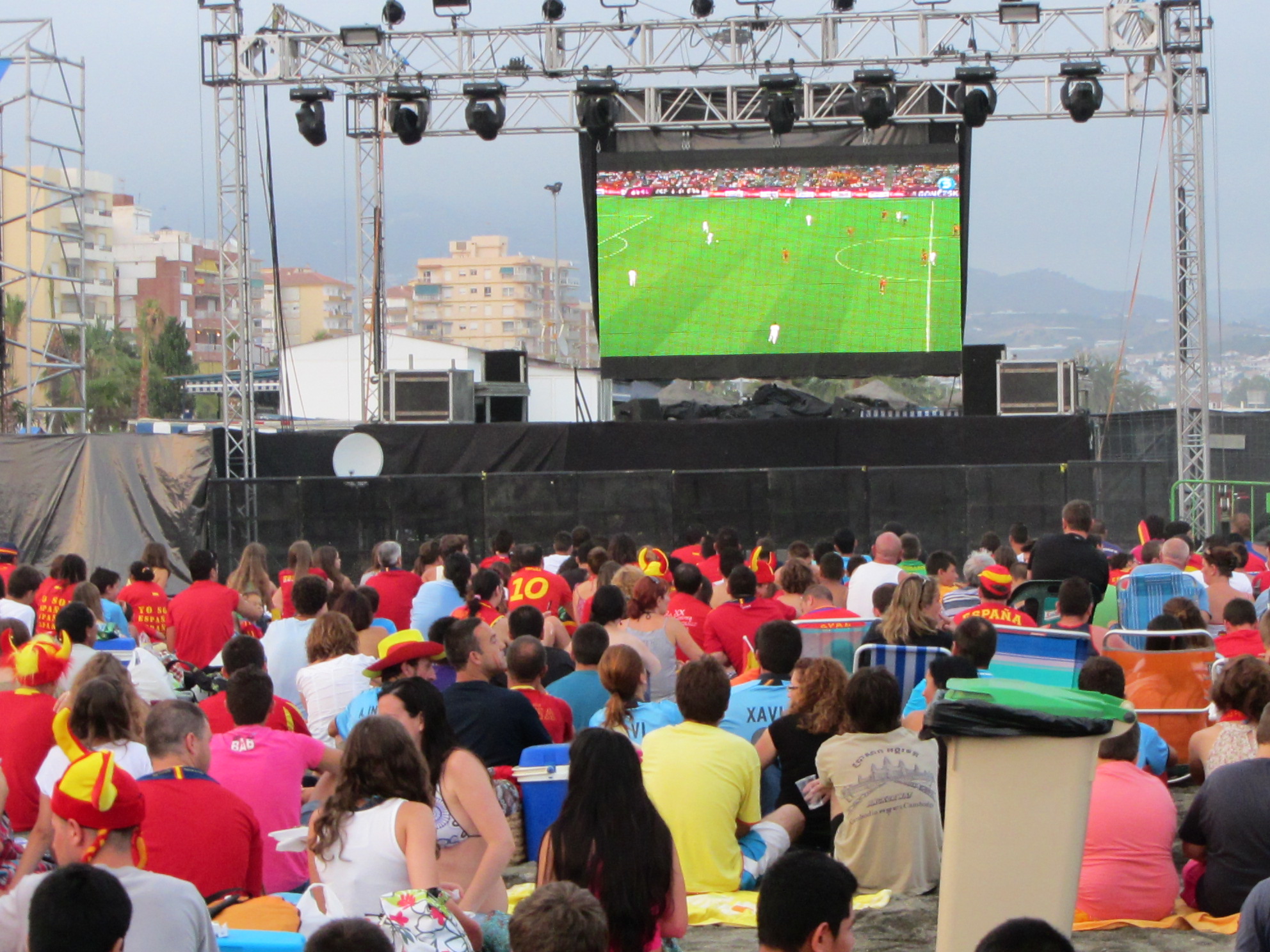
Huge TV screen on the beach

A huge TV screen had been erected on the stage where the live music would be performed later in the evening, and everyone was vying for the best position to see the match.  I´m sure you can imagine the atmosphere when the goals were scored and Spain won their place in the semi-finals!

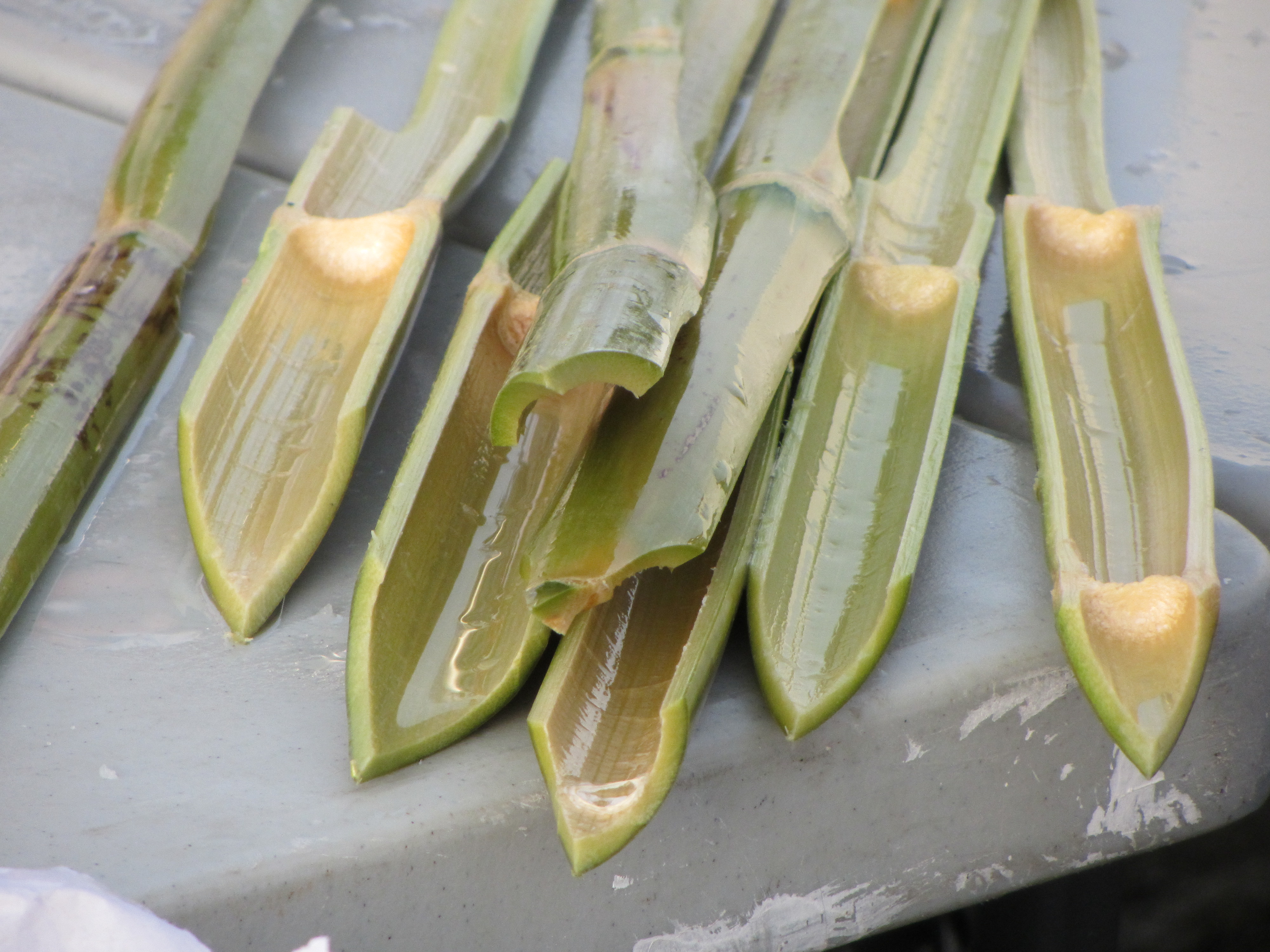
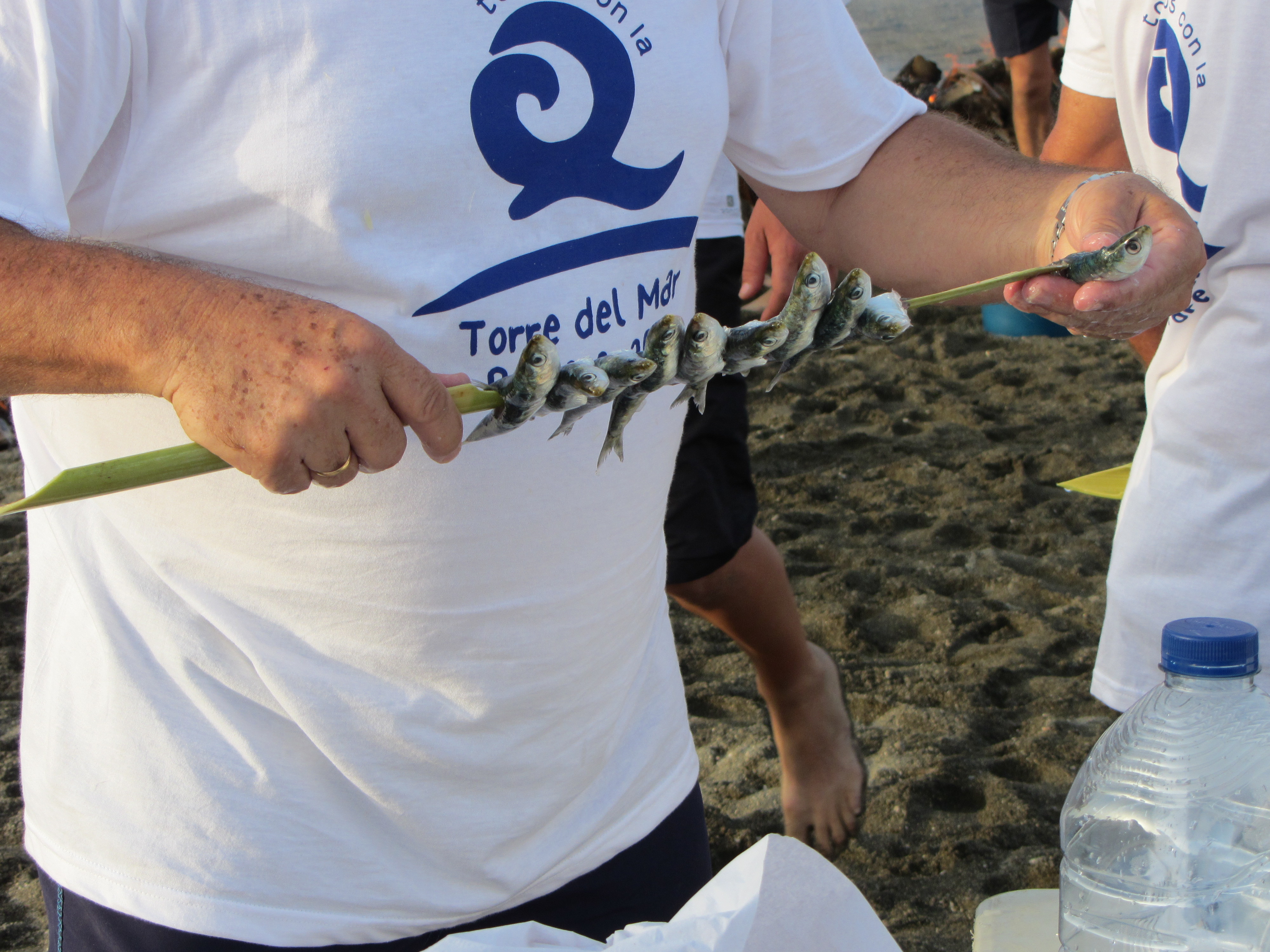
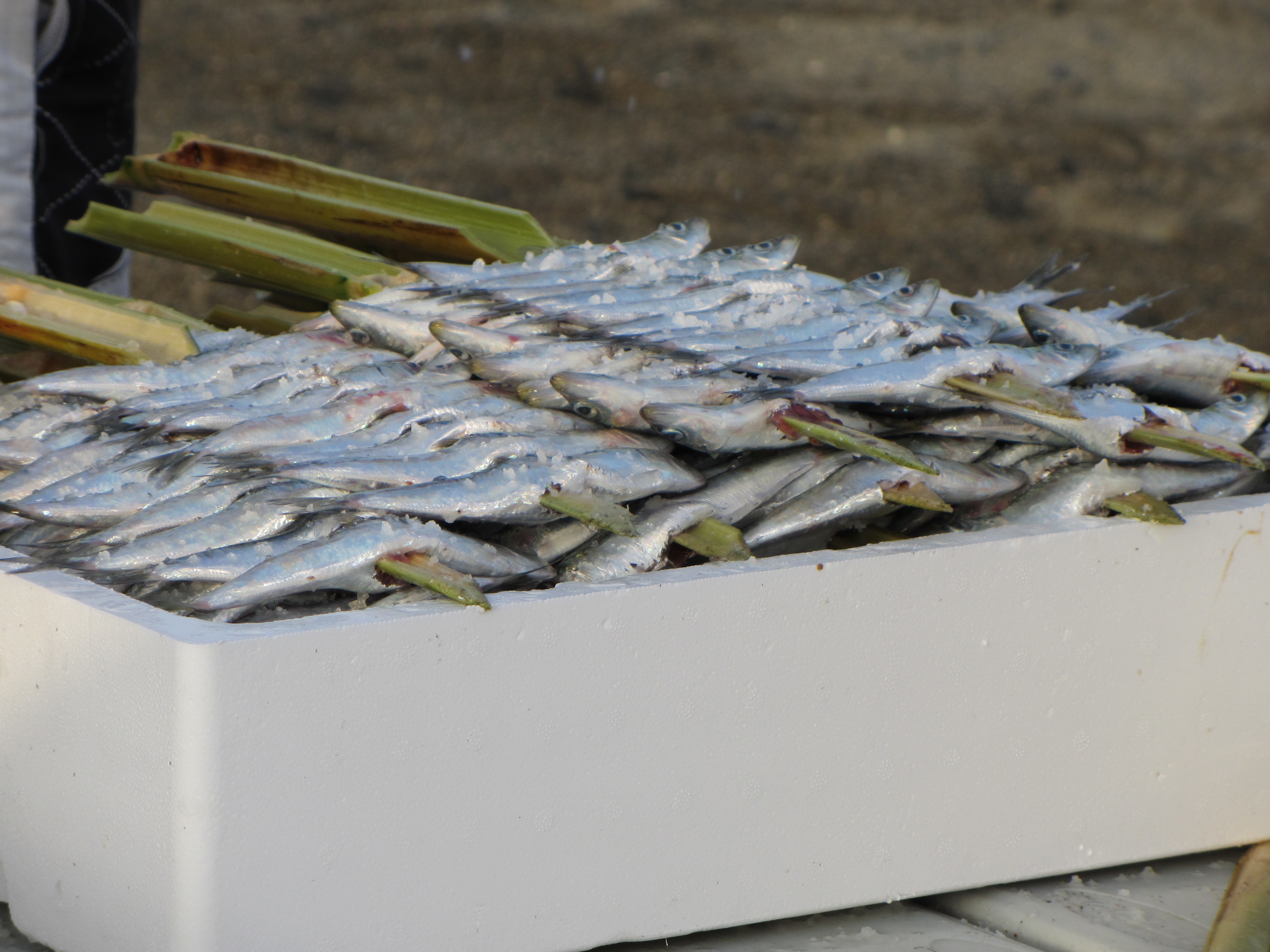
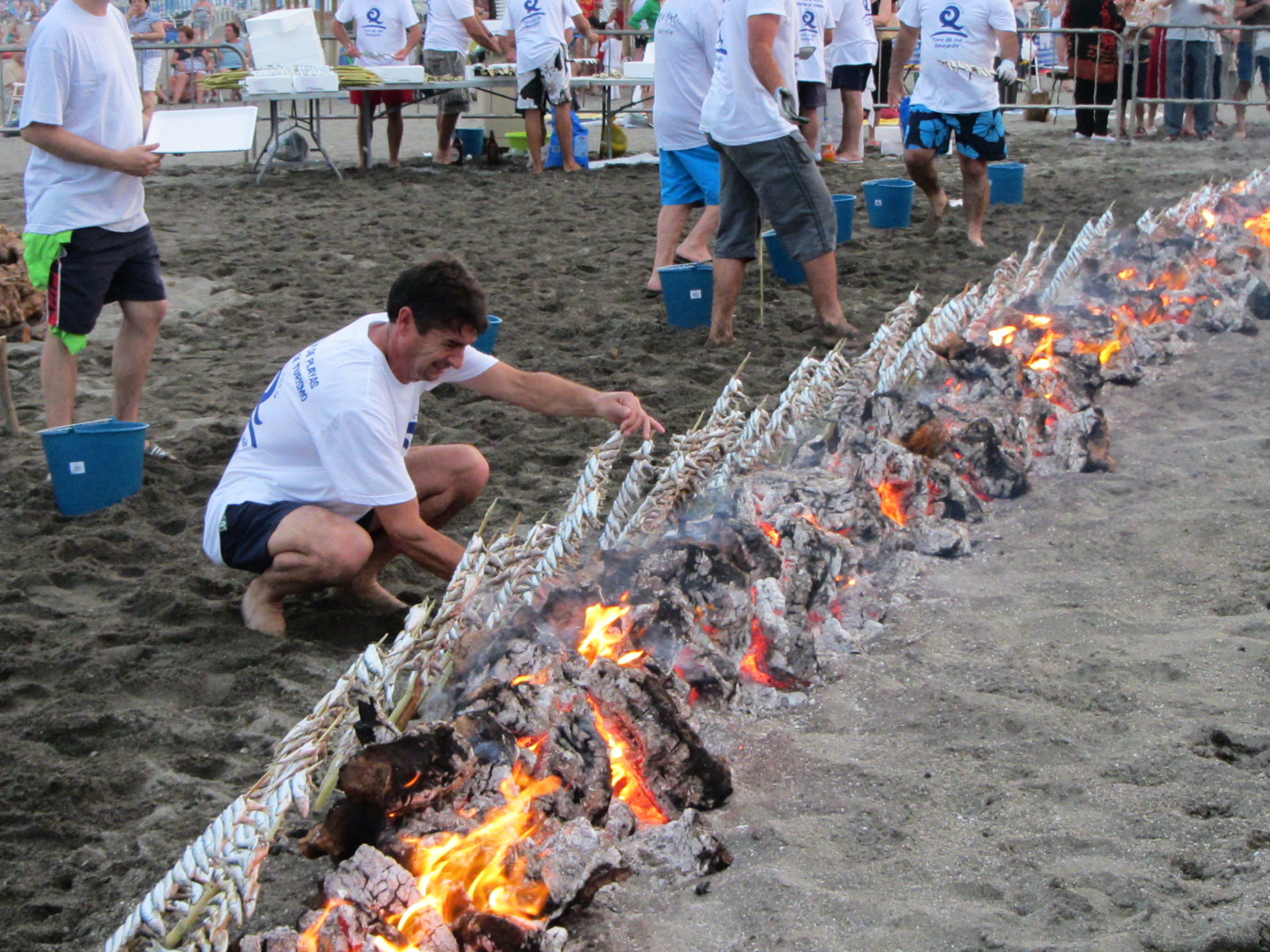
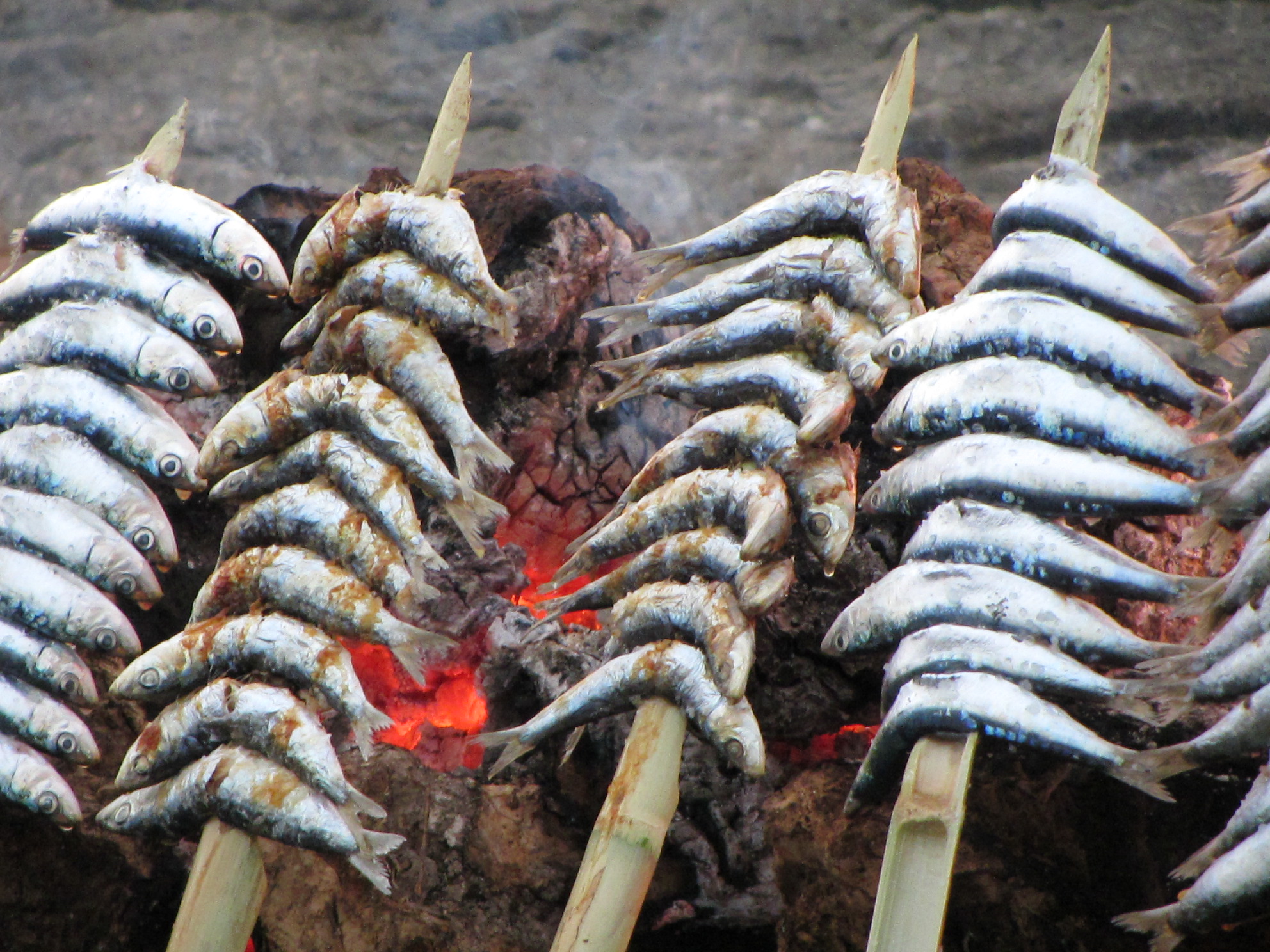
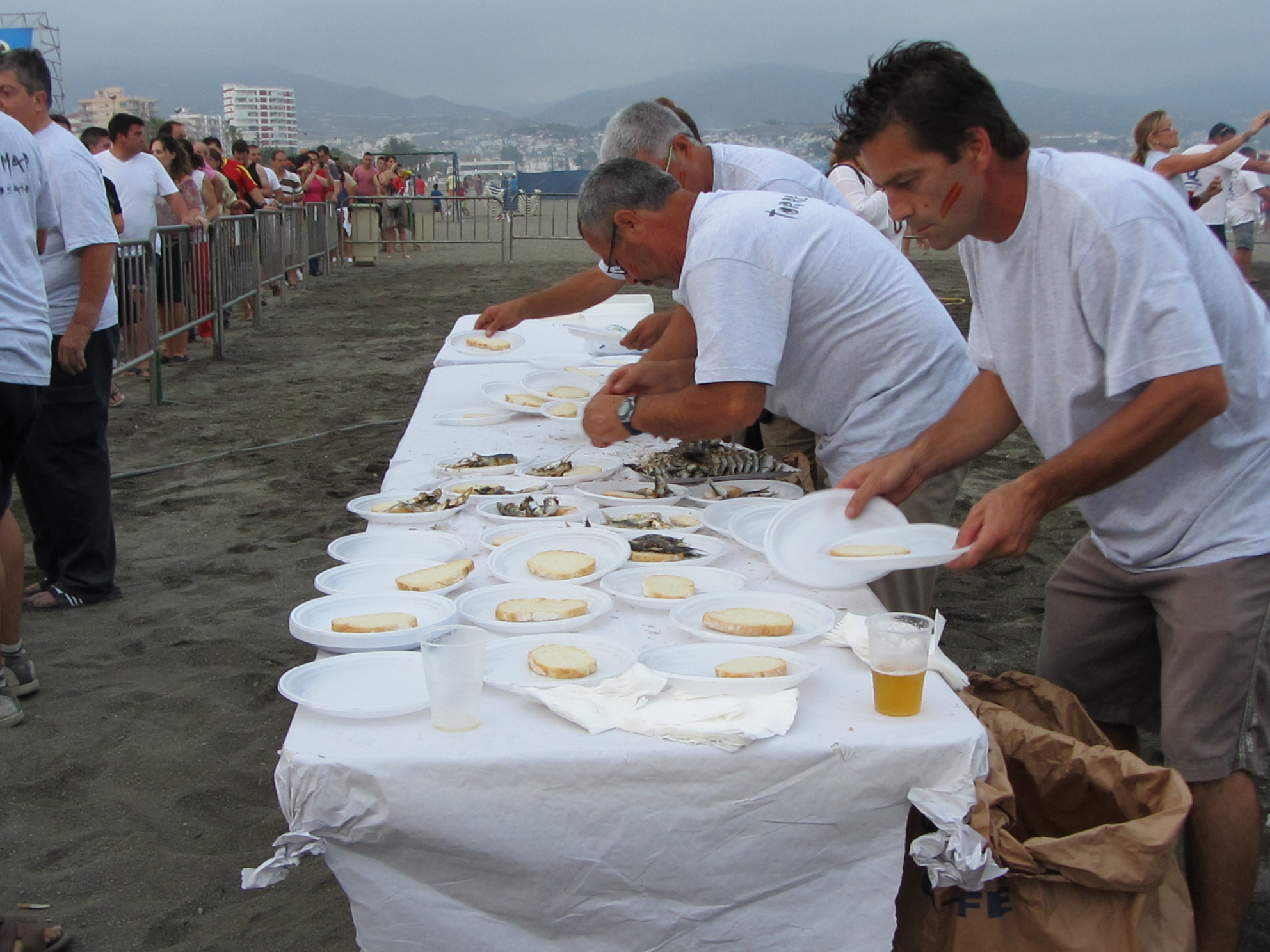
Waving the flag for Spain In the meantime, there was much work to be done.  Long lines of wood were being set alight in preparation for the hundreds of kilos of sardines that were to be barbecued and given out free, later.  A team of guys were sharpening bamboo skewers and threading them with sardines ready to be cooked.

sharpened bamboo skewers for the sardines

threading the sardines onto the bamboo skewers

Sardines ready to cook on the wood fires

cooking the sardines

the sardines are almost ready

serving the free sardines to everyone

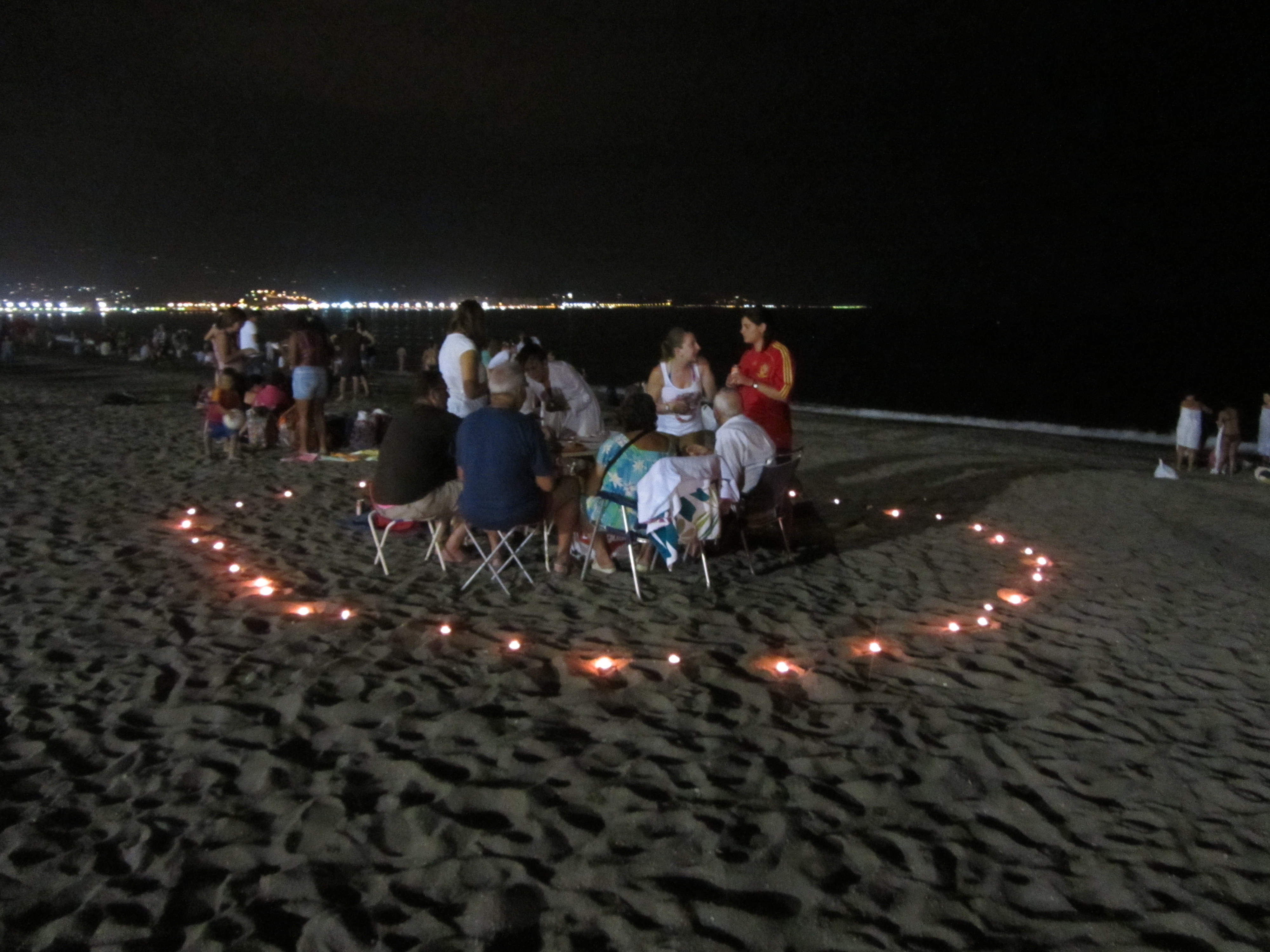
La noche de San Juan is the only time of the year when bonfires and camping are allowed on the beach, so many people take advantage, bringing their own BBQs and tents to spend the whole night partying, dancing and drinking with their friends.  It´s a lovely atmosphere with people of all ages joining in the fun, including groups of old ladies and children.  As with all celebrations here in Spain, whole families enjoy the festivities together, without any threat of drunken yobbos spoiling the fun.

The whole family enjoying San Juan together

La noche de San Juan, in honour of St John the Baptist, is not a religious gathering.  It is about change – night into day, fire and water, with many cleansing rituals associated with it.  According to tradition, if you jump over a bonfire on this night, and rush into the sea at midnight, your body and soul will will be cleansed and purified.  What it´s really all about is families and friends getting together and eating, drinking and just having a great time!

Think Isle of White festival without the mud!  La Noche de San Juan is a Midsummer Night´s Dream – Spanish style!

Whilst you´re here, you might also like to have a look at:

La Noche de San Juan: Beaches and Bonfires

La Fiesta de Los Reyes: Celebrating Three Kings Day

A Celebration of Fried Breadcrumbs: The 30th Annual Migas Festival

Cherimoyas and Irrigation on the Costa Tropical

This is a guest post, written by a fellow blogger who lives in  the hill-top village of Salobreña about a half hour´s drive further along the coast, east of Málaga.  The area is known as the Costa Tropical and is noted for growing many tropical fruits, not least of which is the cherimoya – which you may know better as the custard apple.  Anyway, after reading Marty´s post, why not pop along and have a look at her blog and revel in her wonderful photography. 

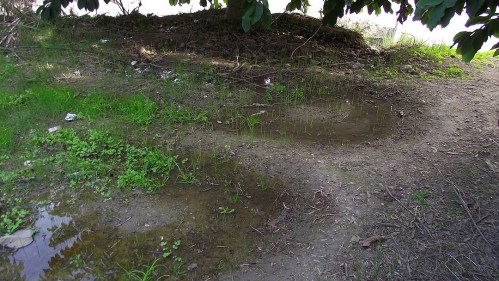
Water can be seen zigzgging its way around the individual trees

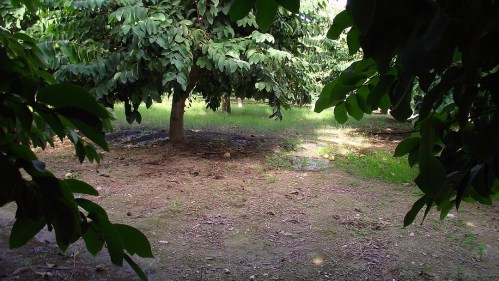
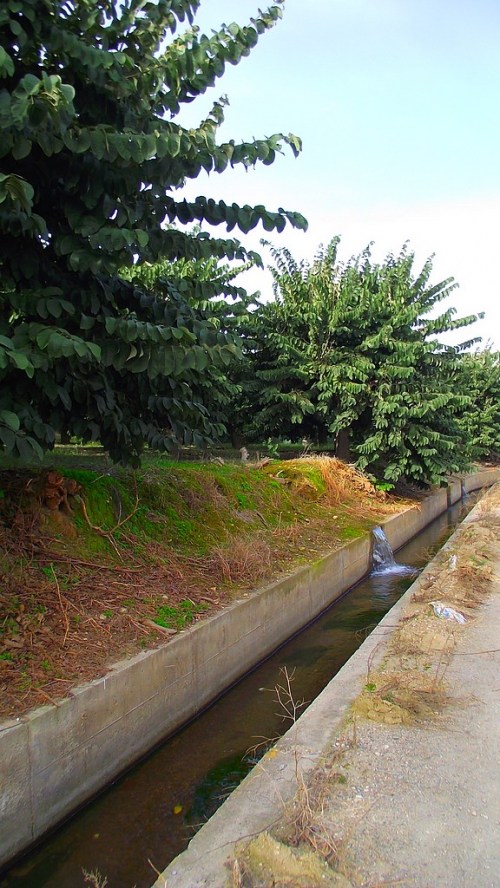
On my trip into the campo yesterday I came across this orchard expelling its excess irrigation water into one of the ubiquitous concrete channels that cut through the countryside here.  Life giving water is diverted to the farms and orchards throughout the area.  A complicated grid of canals ensure that each farm is supplied with water by diversion from the canals once or twice a week.  Each farmer on his scheduled day diverts water into his farm and that excess is then collected and carried on to next farm.  You can thank the Moors for this ingenuity.

Saturation point

The excess water makes its way back to the canal to be carried on to the next farm

Sediment and plant life take hold within the canal

In the orchard, water is carried around each tree in zigzagging trenches designed to slow the flow of water so to ensure that the soil all around the tree is sufficiently saturated. The excess water then simply falls back into the canal and is carried away.  Along with the water, is carried important nutrients for and from the soil as well as small stones, and sediment.  These heavier items gather in the canal around the entry point and eventually plant life takes hold and life shoots up, seemingly out of nothing.  Due to this fact, the canals are dredged regularly to ensure the flow of water continues.

Cherimoya middle of November

This particular orchard is consists solely of  Cherimoya trees.  These are a delicious winter fruit grown only in this region in all of Europe.  One of the unusual things about the cherimoya is that it is hand pollinated.  Scores of men and women, paint brushes in hand pollinate each flower to ensure a good uniform crop.  Within weeks of harvest, the trees are pruned,  stimulating new growth and making harvest the next year simpler.  It is easier to pick fruit from  smaller trees, less goes to waste due to being out of the reach of the picker.

A friend with a ripe cherimoya ready for eating

In this last photo, my friend  and I stopped and spoke to a farmer about the cherimoya, which instigated an invite onto the finca,  followed by a sampling of cherimoya, guava, oranges, lemons and avocados to take away.  A great day!

The Fat One beckons

[Image: alvy]

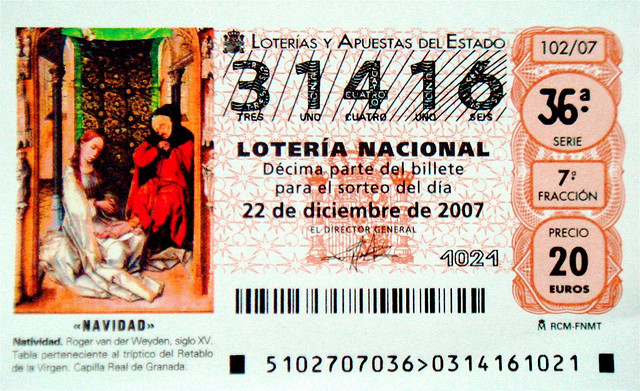
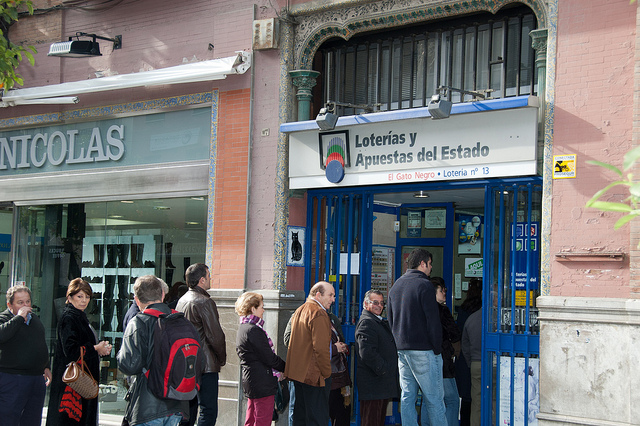
On December 22nd each year, all Spanish eyes are focused on El Gordo (the Fat One) Christmas lottery draw.

The three-hour televised event for ‘The Fat One‘  will bring the whole country to a near standstill as millions will leave work and pack bars to watch it.

The winning numbers are drawn by school children, from two large gold drums in the Grand Salon of the Spanish National Lottery in Madrid.

Tough economic times have resulted in an increase in the number of people buying tickets for this year´s lottery draw.  Ticket sales are reported to be 29% higher than last year, with  each Spanish citizen spending an average of €70 in an effort to win the top prize.

[Image: (cc) Paul and Jill ]

El Gordo, the biggest lottery in the world, will sprinkle €2.5 billion in holiday cheer across the country today, handing out winnings eagerly welcomed by a nation facing 20 percent unemployment.

Have you got your ticket?

Buena suerte!

You might also enjoy:

Christmas in Spain: Féliz Navidad

Spain’s Christmas Lottery: ‘El Gordo’ or ‘The Fat One’