Driving in Spain: Back on the Throttle!


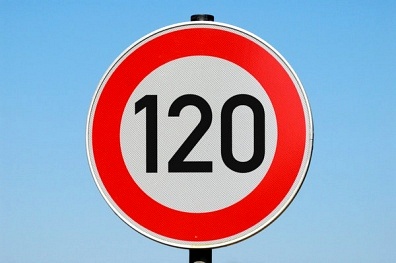
The Spanish Government has announced that the speed limit on the country’s motorways will revert to 120 kilometers per hour from July 1st.

Earlier in the year, the maximum speed limit was reduced to 110 kilometres per hour in an attempt to cut fuel consumption after oil prices soared due to unrest in the Middle East.  Following the recent drop in oil prices, the Cabinet no longer believes that the lower speed limit is necessary.

However, this decision to change the speed limits on the motorways back to 120 kilometres per hour just three months after lowering them has led to some debate in the Spanish Press, particularly as the cost of changing the signs alone will be in the region of 230,000 Euros.  This is because the new limit stickers, which were placed over the original signs, cannot be removed without damaging the signs. Therefore, new stickers with the 120 limit will be placed over the old ones repeating the cost of the original sign changes.

I´m as surprised that the decision has been made to revert to the higher speed limit, as I was that most people adhered to the new lower limit.

At least it should make someone happy!

What do you think?  Should the government have kept the maximum speed limit at 110 kph?

You might also be interested to read:

Easy driving directions from Málaga airport

La Noche de San Juan: Beaches and Bonfires

Image: To Uncertainty and Beyond

The Spanish tribute to the summer solstice is the Fiesta of San Juan (St John the Baptist), celebrated each year on the night of June 23rd.   This is not a traditional, religious festival when effigies are paraded through the streets.   San Juan is less about costumes, finery and organised events and more about meeting friends and loved ones, eating and drinking together, and having fun.

Many towns and villages along the coast, east of Málaga, allow the beaches to be used as campsites for a single night, turning La Noche de San Juan into one of the biggest fiestas of the year.  So, as the sun sets on the evening of 23rd June, people head down to the beaches to put up their tents, build bonfires, light barbeques, and prepare food – including fresh sardines on skewers. The sound of Spanish guitars and smoke from the many bonfires fill the air.

Image: gildemax

The roots of the Feast of San Juan have their origin in ancient Pagan tradition, as man has long ascribed importance to certain days of the year, with mid-summer´s eve being no exception.  These days, of course, the celebration and parties are more of an excuse for a good time!  There is a friendly atmosphere that crosses age, culture and background, with visitors invited to join in the fun.

You might also see large papier-mâché caricatures being burned, to bring good luck.  Originally these effigies were meant to represent Judas Iscariot, but nowadays the religious significance seems to largely have been lost.  The caricature could just as easily be of a local or national, famous or indeed infamous figure.

Midnight is the climax of the San Juan festival when many town halls arrange huge firework displays, although tradition has it that once the clock strikes twelve you should jump over the bonfire to cleanse the body and soul, and then rush into the sea to wash away evil spirits and be granted eternal beauty.


Image: John_DL

Certain festivals seem to summarize life in Spain, with its love of having a good time in the company of friends and loved ones. The magical night of San Juan is one such event. It is a celebration that is all about change – night to day and fire to water.  The fire to purify, and water to recuperate, refresh, and rejuvenate.

La Noche de San Juan always promises to be a memorable evening and one that certainly needs to be experienced, given half a chance.

Where would you like to be partying the night away on La Noche de San Juan?

If you enjoyed this article, why not have a look at:

Day of the Cross: Día de la Cruz

The heart of Cómpeta: El Paseo de las Tradiciones

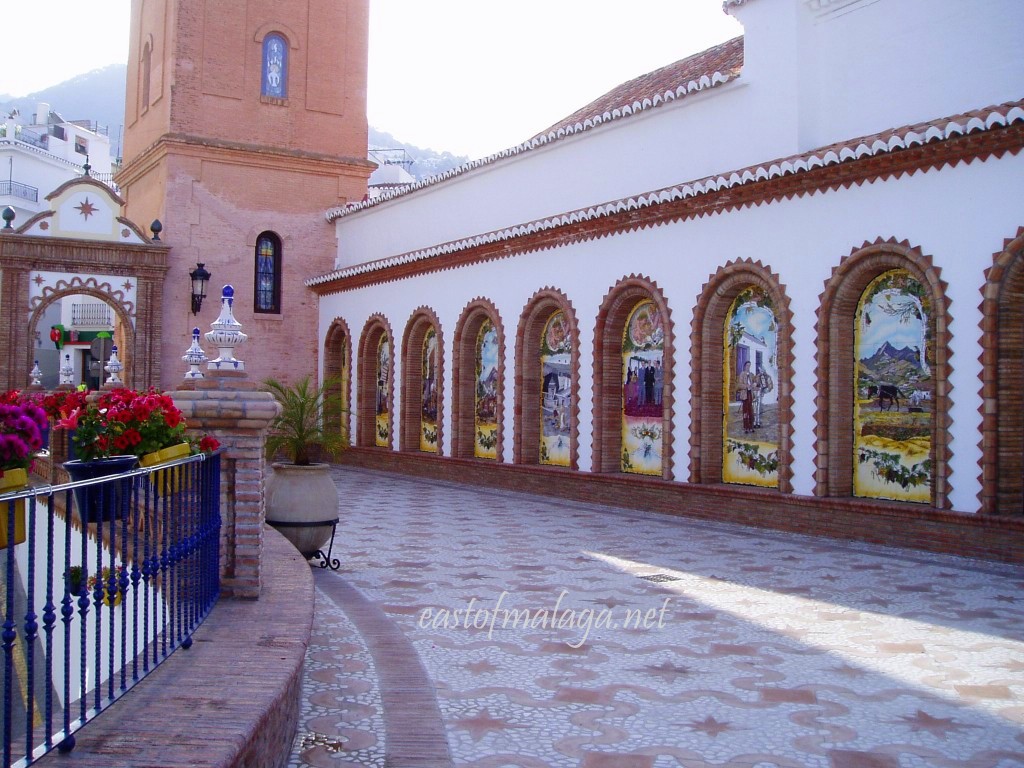
Paseo de Las Tradiciones, Competa, Spain

You can find El Paseo de las Tradiciones (The Walk of the Traditions) in the main square, Plaza Almijara, of the white, mountain village of Cómpeta. Completed in 2009 on the site of the old municipal market, El Paseo de las Tradiciones is annexed to the Church of Our Lady of the Assumption (La Iglesia de Nuestra Señora de la Asunción).

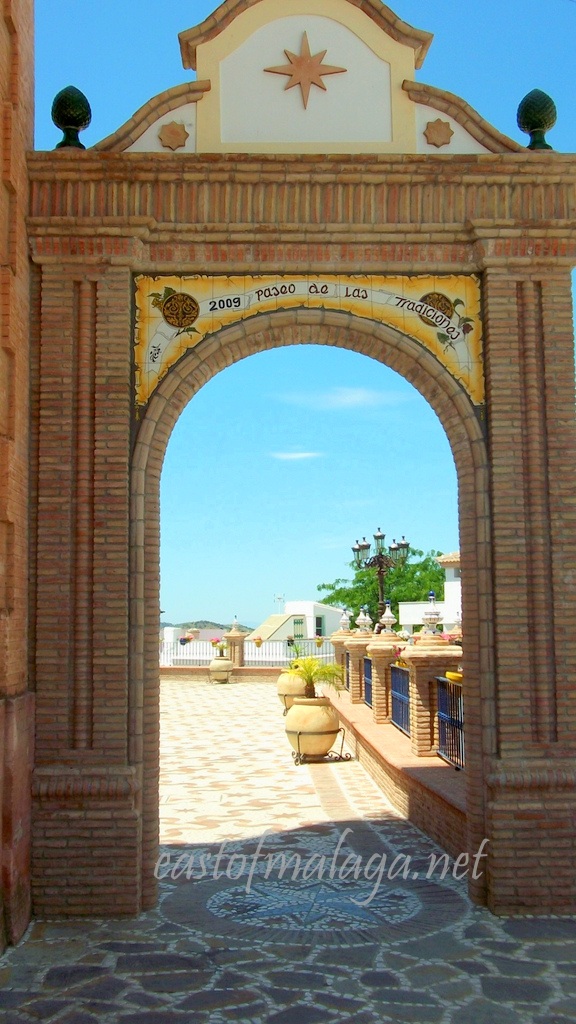
Archway into El Paseo de las Traditiones, Cómpeta, Spain

As you stroll from the busy square, through the archway into the Paseo de las Tradiciones you will discover an oasis of calm.   The floor is decorated with an intricate Moorish pattern of terracotta and white tiles, alongside a series of ceramic murals celebrating the lives of generations of the ordinary working people of the village.

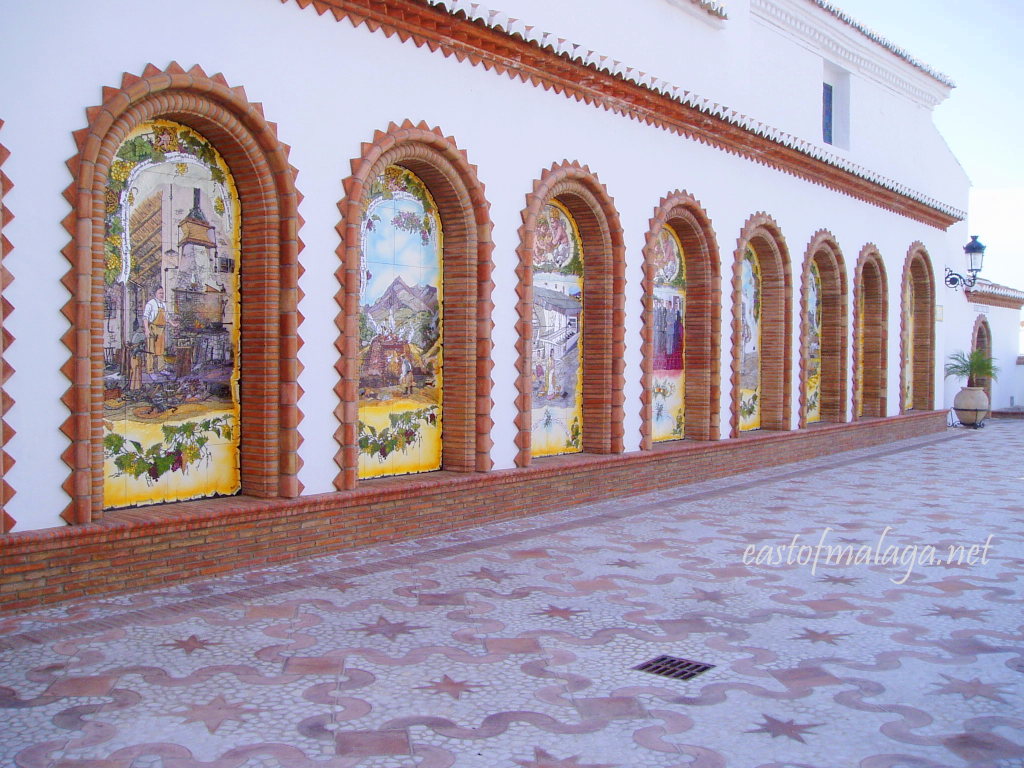
Alcoves in El Paseo de Las Tradiciones, Cómpeta, Spain

One wall of the Paseo de las Tradiciones pays testament to the trades and deeply rooted traditions of the people of Cómpeta through the ages. The beautifully modern, brightly coloured tiling in each of the alcoves was developed in the workshop of potter and sculptor, José Antonio Rivas.

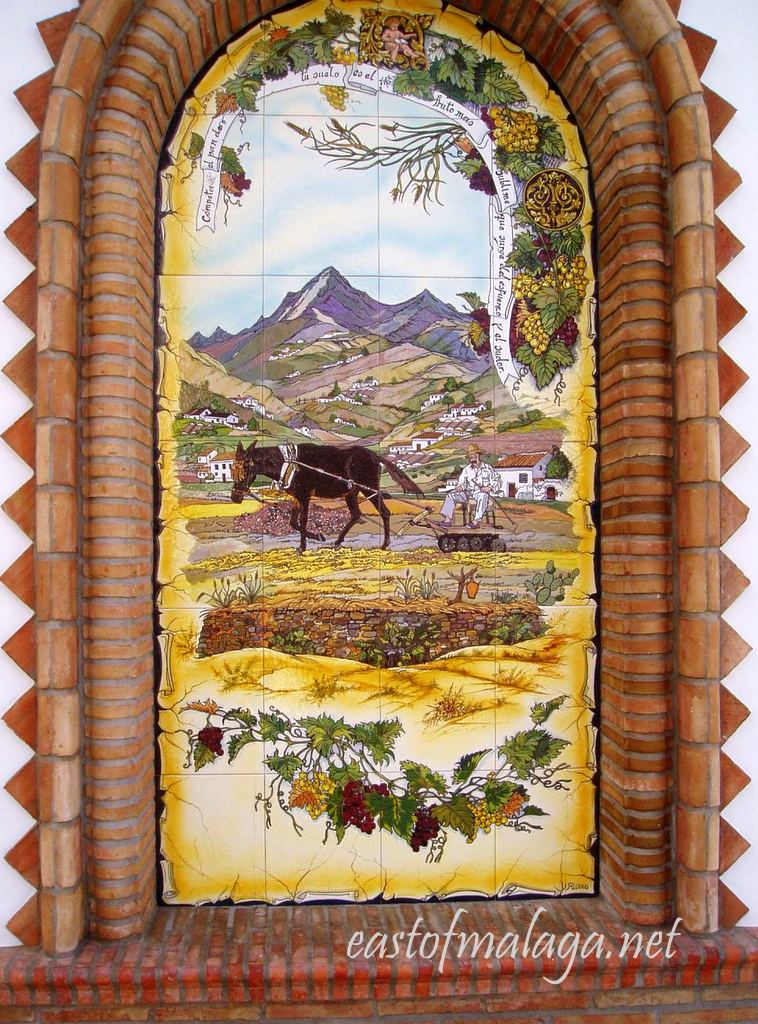
The nine alcoves, each 3 metres high and 2 metres wide, not only depict the history of the collecting of the local vines, the muleteers and village smithy, old olive oil factory and the public laundry, but also recognize the contribution made by the Moors, who for 800 years did so much to improve the cultivation of the summer-dry, winter-wet sierras, bringing the first prosperity to the village.

East of Malaga: Competa´s Paseo de las Tradiciones Alcove

The past 500 years since the building of the Church of Our Lady of the Assumption have not been easy for the people of Cómpeta.  The expulsion of the Moors, two great earthquakes followed shortly by a cholera epidemic, and the vine disease phylloxera,which devastated crops all over Europe in the mid-19th century, have all taken their toll, but the spirit of the villagers continues to thrive, as epitomized throughout the Paseo de las Tradiciones.

Where is your “oasis of calm”?

Whilst you´re here, why not have a look at:

The elegant,  main shopping street of Málaga

I can see Africa from my terrace!

All at sea with the Virgen del Carmen


East of Málaga: The Weather in Summer


In this beautiful area of La Axarquía, east of Málaga, the weather in summer is typically hot with little or no rainfall.  You can expect summer temperatures to be between 30 degrees Celsius to 35 degrees Celsius during the day, with overnight temperatures rarely dropping below 20 degrees Celsius.  Clear blue skies are virtually guaranteed.


As for clothing, or what to wear for your summer holiday on the eastern Costa del Sol – you will be able to wear shirt sleeves, sundresses or T-shirts and shorts every day, including in the evening.

In August, the weather can be almost unbearably hot with some days reaching 40 degrees Celsius or more.  Fortunately, on most days, there is  a cooling breeze, particularly during the afternoon.

Because the humidity is low you won’t feel that the temperature is as high as the thermometer is showing, so it is particularly important to take precautions by keeping out of the sun between 12 o’clock and 3 o’clock.  Always wear a high protection sun cream and drink lots of water.  It would also be sensible to wear a hat and sunglasses.


If you are renting a villa or apartment in the summer you may want to look for one with air conditioning or at least with ceiling fans, otherwise you may have trouble sleeping at night, especially if you are coming on holiday from a northern European country where the temperatures are usually much lower.

Do you enjoy the heat of summer or do you prefer the cooler, winter months?

Try also looking here:

A Slice of Life: Garden and Plant irrigation

Over the moon: Spectacular viewing of total lunar eclipse

This coming Wednesday (15th June), there will be a total lunar eclipse with Spain, and in particular the area east of Málaga,  being one of the best vantage points in the world to observe the complete cycle.

A total lunar eclipse occurs when the Earth casts its shadow on the full moon, blocking the sun’s rays which otherwise reflect off the moon’s surface. Some indirect sunlight will still pierce through, to give the moon an eerie hue.

Image credit: (cc) alexindigo

The eclipse itself, when the moon will slowly turn from bright silver into a dark red globe, will last for one hour and 41 minutes, although the entire process will last for more than five hours.  The eclipsed Moon can often appear a coppery colour at totality due to sunlight being refracted by the Earth’s atmosphere, but airborne ash from the recent eruptions of volcanoes in Iceland and Chile, as well as existing airborne pollution, will add to the darkening effect.

The maximum eclipse will be at 10.41 pm, when the Earth comes between the sun and the moon, to cover the moon with its shadow.

The good news is that unlike solar eclipses, lunar eclipses are completely safe to watch. You don’t need any kind of protective filters. You can watch the lunar eclipse with nothing more than your own two eyes. An ordinary pair of binoculars will help magnify the view and will make the red coloration brighter and easier to see.

This should be a spectacular sight, especially as there is so little light pollution here in the Spanish countryside (el campo).

In case you are somewhere in the world where you cannot view the total lunar eclipse in person, you can view it here, including one broadcast live from Spain!

Where will you be watching from?

Whilst you´re here, why not have a look at:

Coast, Villages or Countryside: The Open Countryside