East of Málaga: The Weather in Autumn

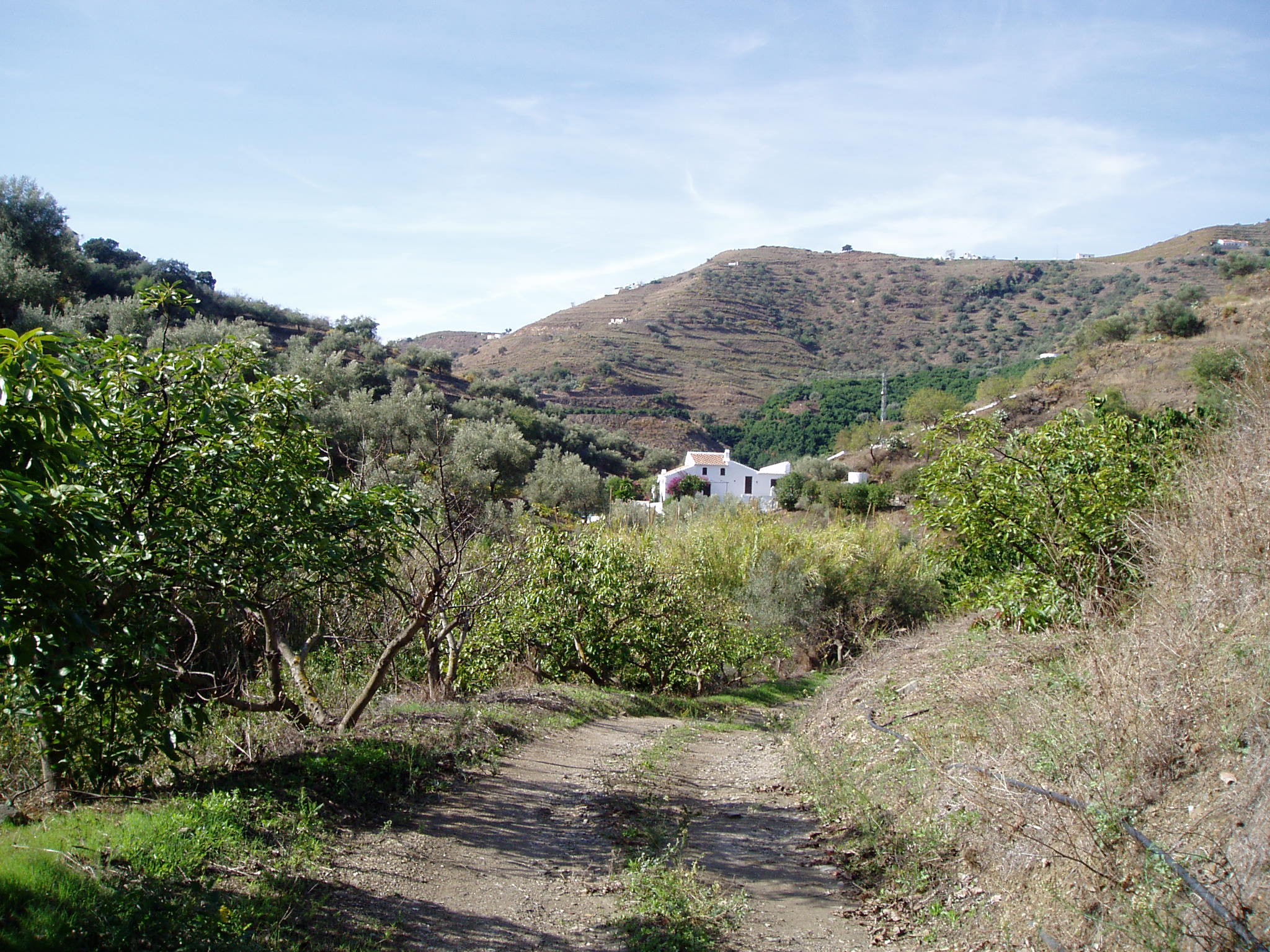
View across to the coast, east of Málaga,  in autumn

Towards the end of August we usually start to look forward to some relief from the long hot summer. This year, we were hoping that the autumn thunderstorms would arrive on time to bring some relief for the parched ground.    The normal pattern would be that these first autumn rains arrive anywhere from mid September to early October. This year has proved to be an exception, as by mid October, we still await a break in the weather.

Typically the warm sun continues towards Christmas-time with a few rainy periods in between.  The autumn and early winter sun can be surprisingly warm, but this year has proved warmer and drier than normal, with virtually unbroken sunshine and temperatures between 24-28C, which would make a beautiful midsummer day in northern Europe.  A by-product of this has been brilliant clear blue skies.

Looking east from the Balcón de Europa, Nerja

What is certain is that, together with May and June, the climate here during September and October can be the most pleasant of the year. Visitors from the north would still be wise to take similar precautions against the sun as in summer, but the nights are more comfortable to sleep with overnight temperatures in the range 15c to 18c compared with the low to middle twenties Celsius during July and August.

All in all, it is a wonderful time of year to visit our area to the East of Málaga.

You might also enjoy:

East of Malaga: The Weather in Summer

A Year in the Life of an Almond Tree: Andalucían Style!


Almond trees in blossom in Andalucía

We start off each year with a wonderful show of pink and white blossom spilling down the hillsides.  Flowers appear in early January and their petals often look like snow on the surrounding hills and mountains.

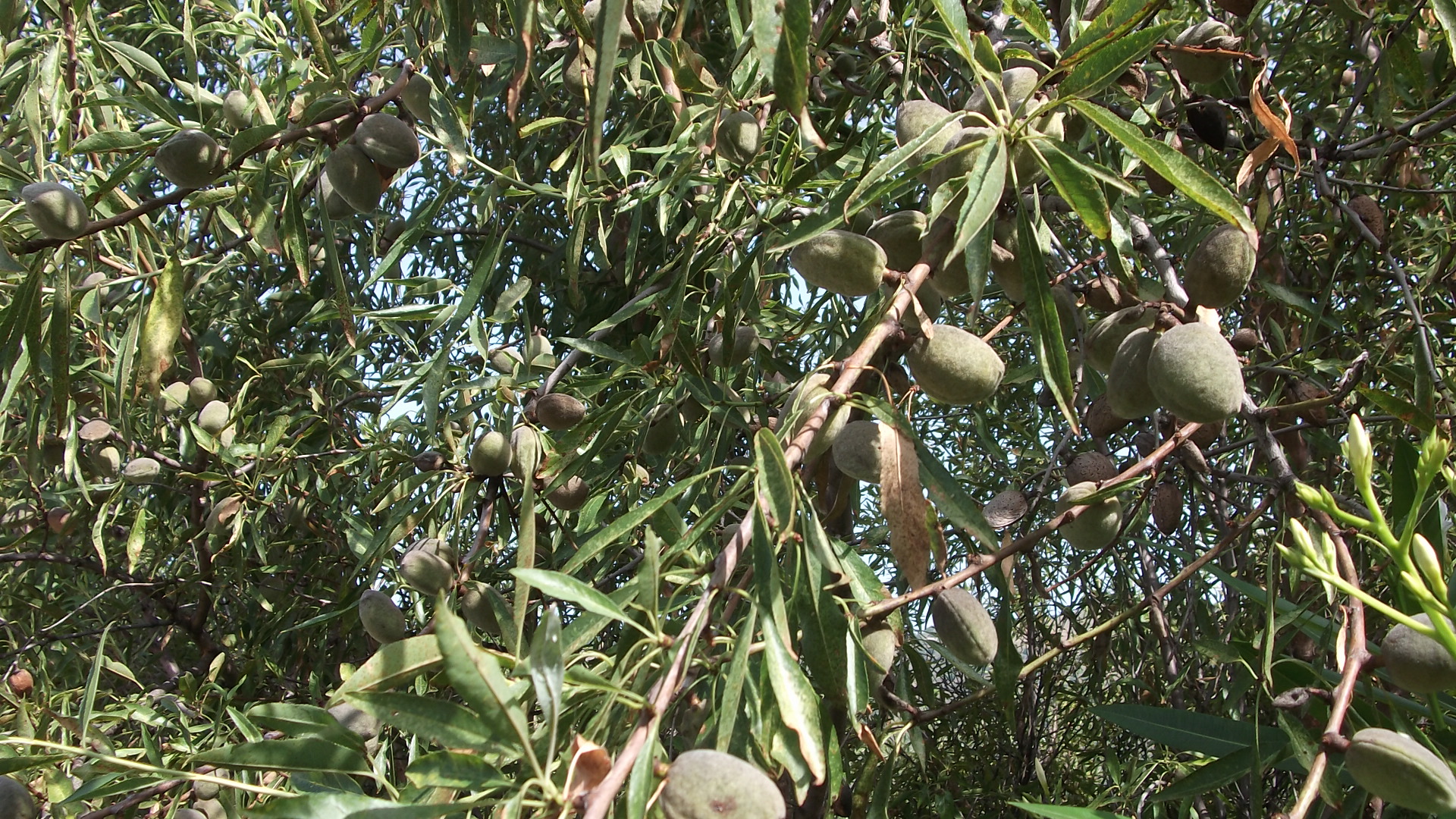
As we move into Springtime, the almond nuts begin to swell, hidden within their soft green velvety cases.

Finally, at the end of a long hot summer, the green velvety cases have dried and cracked open, to reveal and shell of the almond nut inside.  Ready for the picking!


Whilst you´re here, why not have a look at:

The heart of Cómpeta: El Paseo de las Tradiciones

East of Málaga: Embalse de La Viñuela almost full to capacity

[Image credit: (cc) Bart & Co]

According to embalses.net, La Viñuela reservoir (Embalse de La Viñuela), at the heart of the Axarquía, is at 93.53 per cent capacity, which is more than 11 per cent fuller than this time last year, and 42 per cent more than the average for this time of year.

Reservoirs in Málaga Province as a whole are 91.23 per cent full. This figure is  slightly higher than the same time last year, but more than double the average for this time of year over the past decade (43.73 per cent).

What good news!

Where does your water come from?  Do you rely on town or reservoir water, or do you have an independent supply?

Whilst you´re here, why not have a look at:

La Viñuela reservoir: Embalse de La Viñuela

The heart of Cómpeta: El Paseo de las Tradiciones

Lemon Chicken for a Summer´s Day Lunch – East of Málaga

Tracks to country houses: How accessible are they?

In Britain they are known as lanes but here in this area East of Málaga they are known by English residents as tracks or by the Spanish as un carril.

At all events they are the way to connect your country house to a proper tarmac roadway and these tracks vary considerably in length and ease of use.

Some country properties may be quite some way from the highway but, if you are lucky, your house may be within 500 metres or so of the roadway.

What you need to consider when buying a house in the countryside is how easy it will be to drive along your track all year round. Some of these rural access tracks are quite steep or have very sharp bends, while others have a more gradual slope. Bear in mind that most of this area to the east of Málaga is hilly countryside, so straight and flat access will be rare indeed.
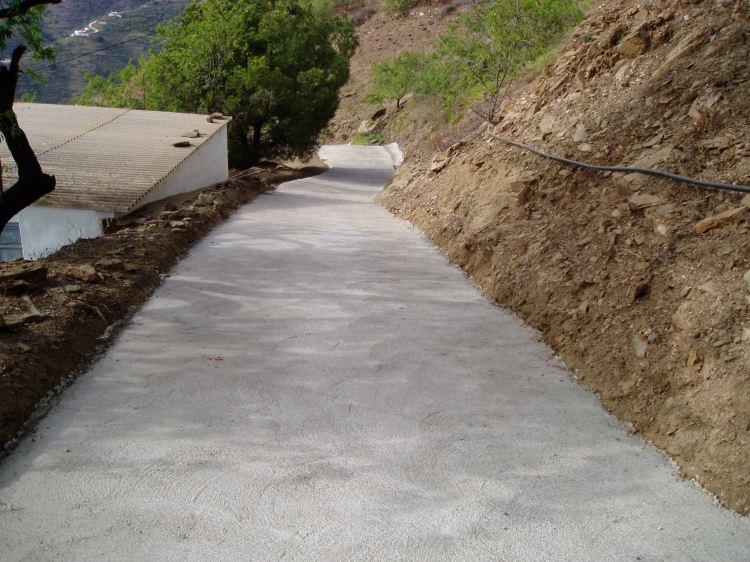

What of the surface? The best of all is well-made reinforced concrete, about 4 metres wide and substantial enough to carry large lorries should deliveries or work be needed.

A commonly found, but not as good as a concrete track, is one made from a mixture of stone, gravel and soil, although this surface should be adequate for fairly level tracks.

It is worth being aware that in this region, known for long, hot and sunny weather during much of the year, winter rains can be quite ferocious and can quickly ruin the stone and gravel surface just described, if there is a substantial slope. The greater the incline, the faster the water flows and it is not uncommon to see storm water forming meandering channels 10 to 30 centimetres deep, cutting away any loose earth, making access for cars very difficult.

For this reason many people living in the countryside opt for a 4-wheel drive vehicle and this includes most of the Spanish rural crop growers. These tough vehicles give added confidence for those who must traverse difficult terrain, but it is important to remember that 98 percent of all your driving will be on normal roads, so only think about a heavy 4-wheel drive vehicle if it seems necessary, or you are inclined to have a liking for them anyway.

Heavy winter rain can also bring down earth and stones in the form of a landslip from ground above the track, especially if the access has been cut into a hillside by a JCB-type digging machine, which is usually the case here in the Axarquía.
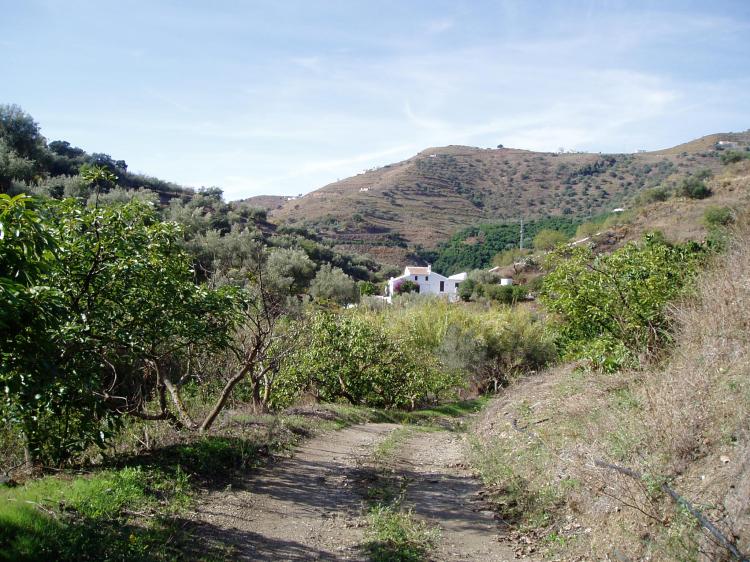

Until you get used to this sort of thing, it can seem quite daunting at first to drive on some country tracks that may have a near vertical cliff above you on one side and a hair-raising drop of many metres on the other side.  Fear not! Your confidence will grow and soon it will be second nature dealing with the track to your house.

Among other considerations, always remember that good access that will remain open for use all year round is a valuable asset.

Where is the worse/best track you have driven down?

You might also enjoy:

Coast, Villages or Countryside:  The Open Countryside

A Weekend Away: Santiago de Compostela

The heart of Cómpeta: El Paseo de las Tradiciones

52nd Annual Nerja Caves Music Festival


This week, the 52nd annual Festival of Music and Dance (Festival de Música y Danza) takes place at the Nerja Caves (Cuevas de Nerja).

If you haven´t visited the Caves, then watch this fantastic YouTube video which will really set the stage for you.

Over the years, the Festival which is one of the most important cultural events of the year in Málaga province, has attracted international artists and musicians from all over the world including Sir Yehudi Menuhin, Montserrat Caballé, Dame Kiri Te Kanawa and José Carreras.

http://www.youtube.com/watch?v=HQ83_poSnkc&feature=related

The natural amphitheatre is a memorable venue for the concerts, with Queen Sofia of Spain, on a couple of occasions, arriving unannounced by helicopter to attend one of  the performances in the la Sala de las Cascadas, which has one of the best acoustic chambers in the world – carved out of the rock by nature herself.