Shopping Centre (Centro Comercial): El Ingenio


You can easily find the El Ingenio shopping centre if you take the exit at km 272 of the A7/E15, Autovia del Mediterraneo.

Free parking is plentiful, beneath large sails which offer shade from the heat of the sun.


There is a good selection of shops spread over two floors including ZaraPull and Bear, Primor, Calzados (for shoes) Dunnes (the Irish equivalent of Marks and Spencer), Casa, C & A and Bookworld (an English bookshop), plus many more.  There is also a choice of mobile telephone shops as well as travel agents and a large supermarket – Eroski.


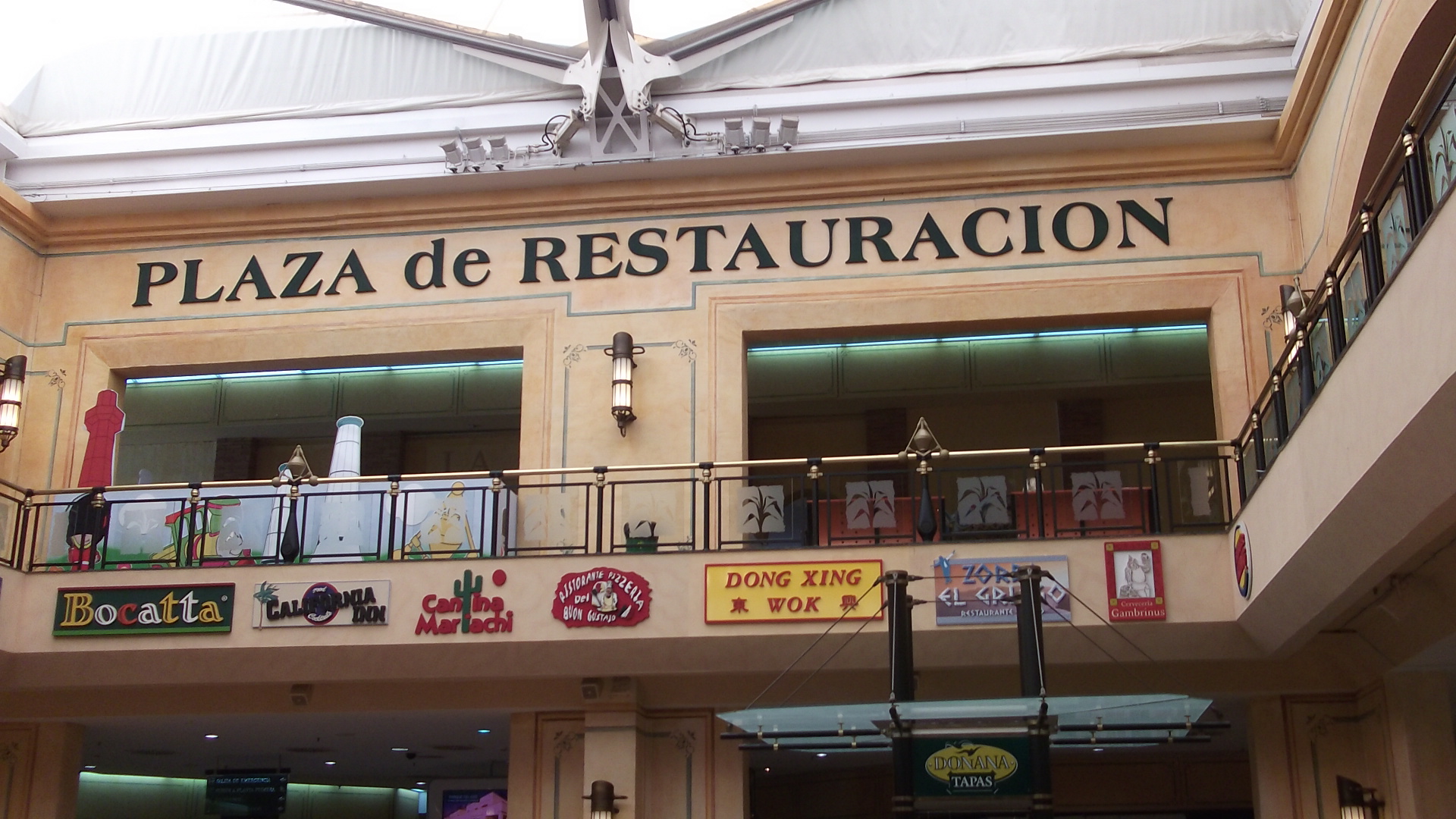
On the upper floor is the Plaza de Restauracion where you can sample any one of a selection of bars and restaurants, before going to see a film at the multi-screen cinema.  A few years ago there was always an original version of a current popular film, but these days the films all appear to be dubbed into Spanish.  That´s a pity, as it usually means that if we want to see a VSOE film we have to travel to Plaza Mayor, near to the airport in Málaga.

Opening hours of the El Ingenio centre are 10am -10pm,  Monday to Saturday – closed Sunday.

Where is your shopping centre of choice?

You might also like to look at:

Cómpeta: El Paseo de las Tradiciones


Venturing further afield: A day trip to Gibraltar

We love to travel not only locally, but throughout Spain, so I will also include information, from time to time, about where we have visited.  Usually these places can either be driven to within a few hours of our home, east of Málaga, or we will have flown there from Málaga (AGP) airport.

This week we have family from England staying with us.  As they are very familiar with the area east of Málaga, we took the opportunity to venture out of the Axarquía.

Driving west from Málaga along the E15/A7, not a single road-sign mentions the British territory of Gibraltar. You just have to figure out when to exit the highway (at La Linea de la Concepción, the Spanish town close to the foot of the Rock). By the time you see a sign for Gibraltar, you are within walking distance!


Photographs cannot prepare you for the physical reality of Gibraltar. The scale of the 430 metre high boulder – sheer on one side, a city of 30,000 people clinging to the bottom third of the other – still causes a jolt when you come over the last ridge to find it looming in front of you.

Gibraltar is a British Overseas Territory located on the southern end of the Iberian Peninsula. The Rock of Gibraltar, one of the Pillars of Hercules in Greek mythology, has a strategic location on the Strait of Gibraltar where the Atlantic Ocean meets the Mediterranean Sea, with Europe to the north and the continent of Africa to the south.

Both famous and enigmatic, Gibraltar contains some of the most extensive military fortifications in Europe, spanning over 1200 years of Moorish, Spanish and British history.   The territory covers just over 6.5 square kilometers and shares a 1.2 kilometre land border with Spain.

Of course, what traditionally attracts the  tourist to Gibraltar doesn´t disappoint either: stunning views of the entrance to the Mediterranean and the mountains of Morocco (including Jebel Musa, the other Pillar of Hercules), St Michael’s Cave, tunnels from the Great Siege of 1779-83 and, of course, the famous Barbary apes – Europe’s only wild monkeys.   Local legend has it that as long as the Barbary Macaque population exists on Gibraltar, the territory will remain under British rule.


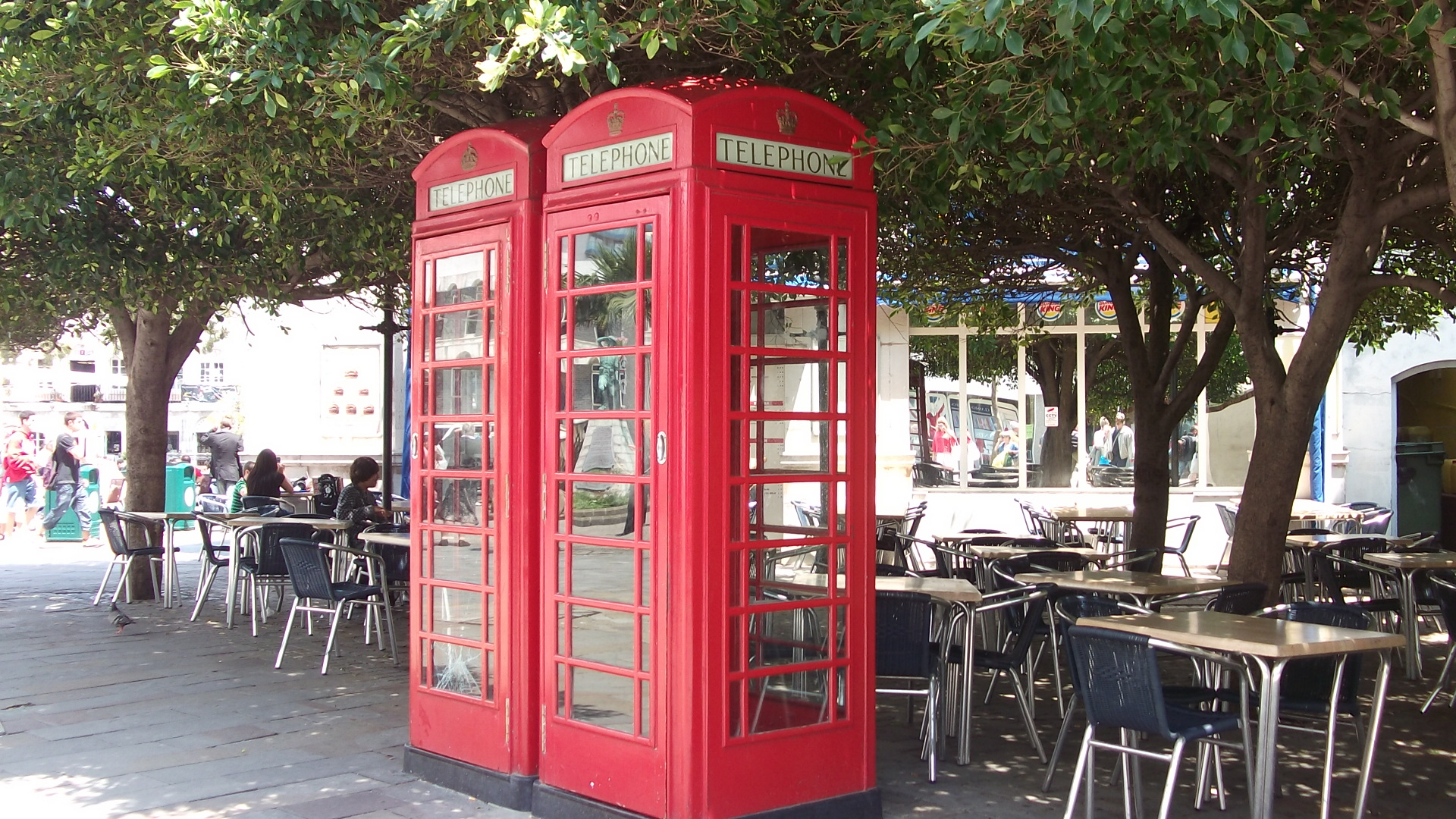
Being so close to Spain, Gibraltar shares the best of both cultures.  You can see Spanish-style houses adorned with Victorian cast-iron balconies from England. The labyrinthine streets and alleys of the old town, reminiscent of nearby Spanish cities such as Cadiz, are dotted with iconic English phone booths, red Royal Mail boxes, bars with names like Lord Nelson and The Angry Friar as well as good old Marks and Spencer!


The old Gibraltar Airport building is shortly to be replaced with a new glitzy glass-fronted one, but the runway, the shortest in the world, will remain the same.  The landing strip crosses the main road into the city, with traffic and passengers being halted to allow aircraft to take off and land.

One of the main reasons we travel the three hours to Gibraltar is to visit Morrison´s, the British supermarket, to buy groceries we can´t find in our local Spanish stores.  We can also pay in Sterling, saving the need to change our money into Euros, as we have to do for our everyday living here in Spain.  Our visitors meanwhile, took advantage of the cheap duty free cigarettes available at a fraction of the cost in the UK.

A good day was had by all!

What do you think about Gibraltar being a British territory?

The Day of the Cross: Día de la Cruz

Día de la Cruz (The Day of the Cross)  is celebrated throughout Spain each year on May 3rd.

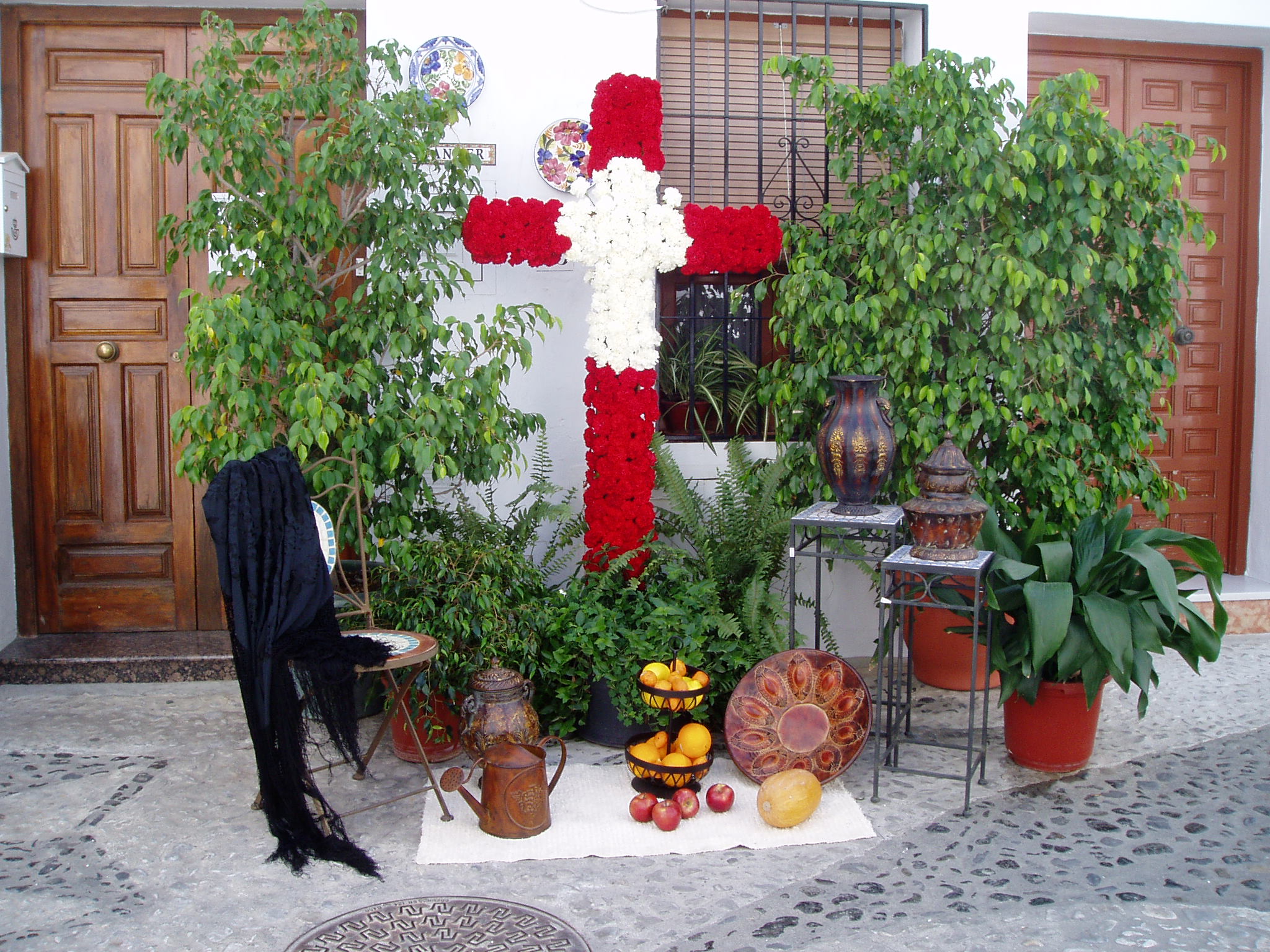
This is a popular festival where crosses decorated with flowers (often carnations) are displayed in public plazas and alleyways throughout most town and villages.

Throughout the pretty white village of Frigiliana, there are usually around twenty of these floral bedecked crosses adorning the streets.    At each cross you may see shawls and fruit on display, as well as morcilla, chorizo, nuts, olives.   The local villagers try to outdo each other with their floral tributes, and offer free tapas and the local sweet wine to visitors who stop to admire their handiwork.

In the early evening, the village band conducts a tour of the crosses, followed by a group of folk musicians and dancers, all colourfully clothed in their best flamenco dresses.

The Day of the Cross celebration in Frigiliana was a casualty of the Civil War and the tradition was only restarted in 1981.  Unlike in many towns and villages,  Día de la Cruz in Frigiliana is not a competitive event but a day to celebrate and enjoy the beautiful flowers and hospitality.

Which is your favourite fiesta or festival in Spain?


Slice of Life: Spanish bars

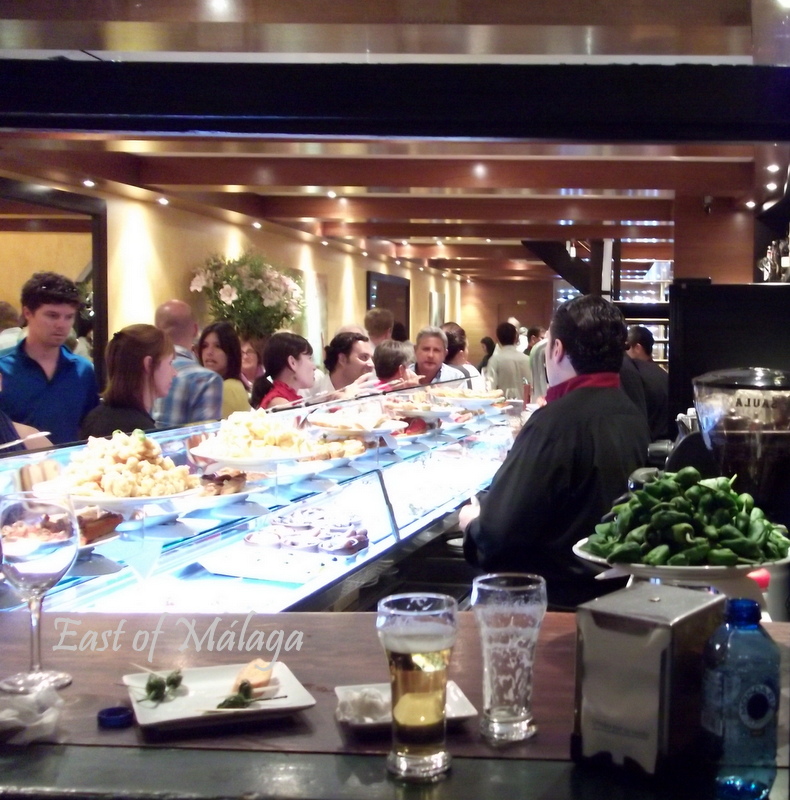
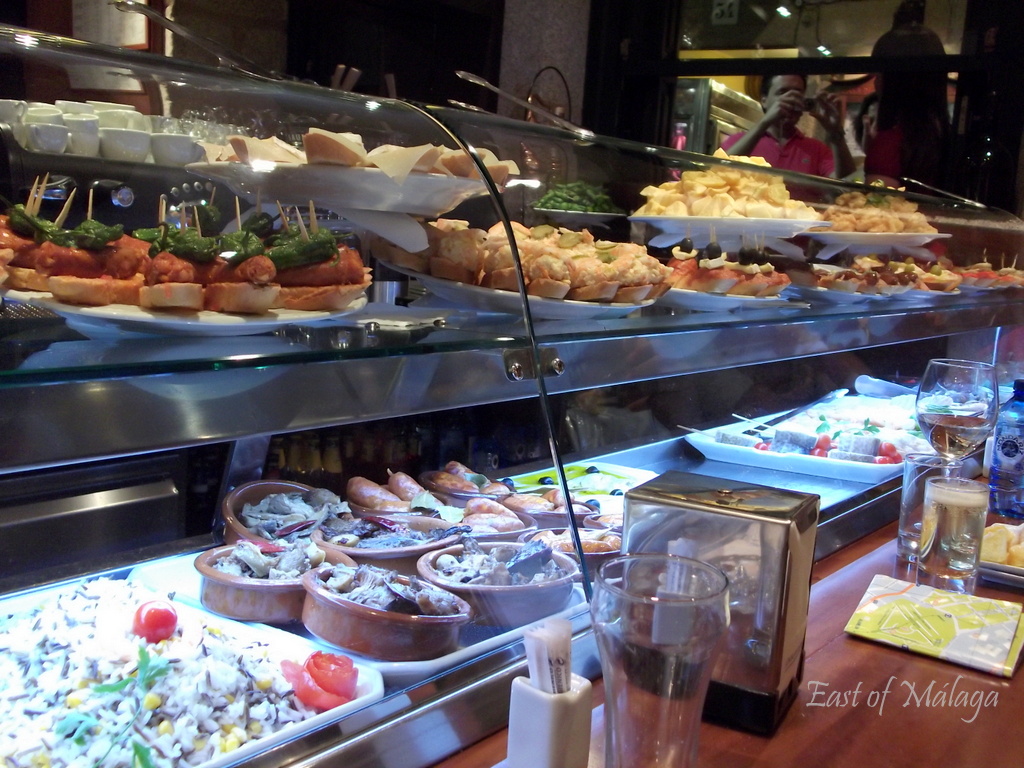
A bar here in southern Spain is very different from a typical British pub.  Although layouts may vary, what you will usually find will be a bar counter, with tall seats around, often with a covered tapas display. This will likely be in two parts, one containing meats and tortillas ready to be heated up and served with your drink, the other with cold tapas and salads. Many bars still serve tapas at an inclusive price with the drink, whilst others serve rather more elaborate nibbles which are charged for individually.

typical tapas bar
One of the main differences with a British pub will be the size of drink. Normally if you ask for a beer (una cerveza) it will be in a smaller glass, either a “tubo” which is a tall tumbler or in a glass not dissimilar to a large wine glass. The only time you will see anyone with a “pint” glass, they will usually be a tourist on the coast.  You will be just as likely to see people at the bar drinking coffee (un café) or a glass of wine (una copa de vino).

Tables away from the bar counter, either inside or outside, are typical café tables with upright chairs, not lounge-type tables and chairs like in British pubs .

There is usually a large display of spirit bottles behind the bar and invariably a leg of Serrano ham on a carving frame.  You should try this typical Spanish  delicacy –  it´s delicious!

Almost everywhere,  customers take all their food and drink and only pay when they are ready to leave.  In busy big city bars, the tapas, usually more sophisticated, will each come with a small wooden skewer and, when you have finished, the barman will count the skewers and charge accordingly.

Tapas to choose

I would recommend you to visit as many bars and cafeterías as possible, especially away from the tourist haunts. Look for places full of Spaniards and litter, in the form of till receipts, on the floor signifying that you have found a good spot.

Some bars, especially on the coast, offer more seafood, but try different ones and you will inevitably find a handful that will become part of your regular tapas trail.

Where´s your favourite Spanish bar?


If you like this article….try also looking here:

The heart of Cómpeta: El Paseo de las Tradiciones

Photographs I love …. and why!

A flowering snapshot of a January day